REVIEW · ROME
Private Pompeii Day Trip from Rome
Book on Viator →Operated by Driverinrome · Bookable on Viator
Get Pompeii without the stress. Private transport makes it easy to go, see, and return. I especially like the hotel pickup and private minivan (no train schedules, no hauling bags, no waiting around). The one catch to plan for: the on-site Pompeii guide option is extra, and the driver can’t act like a licensed guide outside the vehicle.
Once you’re rolling south, the day has a nice rhythm: you’re traveling with comfort, getting useful on-board context in English, and then you arrive at a place where the eruption of Vesuvius in AD 79 literally froze an entire Roman city in ash. I also like that you can choose your style—independent time in the ruins, or an on-site guide if you want the deeper explanations. A long day is part of the deal, so pack a little patience for traffic and heat.
If you’re the type who hates lines and lost time, this is a smart way to see Pompeii from Rome. It also works well for families and mixed-age groups because the drive is handled for you, and you control how much energy you spend walking once you’re inside.
In This Review
- Key points before you go
- A private Pompeii day trip that actually saves you time
- 7:30am pickup and the drive south in an air-conditioned minivan
- Passing Montecassino and seeing Vesuvius looming over Campania
- Arriving at Pompeii: tickets, entrance flow, and how to plan your time
- The Pompeii highlights worth your energy: Forum, baths, Lupanar, and Teatro Grande
- Should you add an on-site guide, and how to choose your style?
- The ride back toward Rome, plus a lunch break on your terms
- Price and value: what $420.31 buys you (and what it doesn’t)
- Who this Pompeii day trip is best for (and who should rethink)
- Quick practical tips so your Pompeii visit feels smooth
- Should you book this private Pompeii day trip from Rome?
- FAQ
- What time does the private Pompeii day trip start?
- How long is the tour?
- Is Pompeii entrance included in the price?
- Does the tour include hotel pickup and drop-off?
- Is the tour private?
- Do I need to book an on-site guide at Pompeii?
- Can I count on the driver to act like a guide inside Pompeii?
- Can I cancel for free?
Key points before you go
- Hotel pickup and drop-off: you’re not figuring out public transport or parking.
- Private minivan for your group: less waiting, more control over pacing.
- English commentary on board: you get context on the drive to Pompeii.
- Optional licensed guide inside Pompeii: pay extra if you want a structured walkthrough.
- Pay your own Pompeii entrance fee: budget about €18 per person (approx.).
- Time management matters: expect a full day, with a set Pompeii visit window of about 2.5 hours.
A private Pompeii day trip that actually saves you time
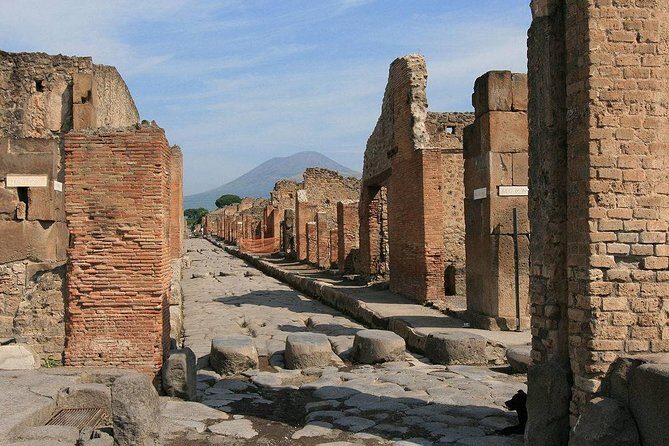
Pompeii is one of those destinations that can feel either effortless or overwhelming, depending on how you get there. Taking the private route means you skip the part of the day where you’d otherwise bargain with trains, buses, timetables, and crowded meeting points. From the moment you’re picked up, your day is built around one goal: get you into Pompeii early enough to enjoy it without feeling rushed.
This tour is built for people who want a clean plan but still like flexibility. You get round-trip transportation from Rome hotels, an English-speaking driver, and a comfortable air-conditioned vehicle. Inside Pompeii, you can go independently or add an on-site guide at your own expense. That optional guide choice is a big deal because Pompeii can be confusing if you arrive cold—there are lots of streets, buildings, and signs, and the site is easy to wander into the wrong priorities.
There’s also a practical advantage: the driver provides live commentary from inside the vehicle. So you’ll get meaningful context during the drive without the tour getting stuck in the legal limits of guide licensing. If you want someone to explain frescoes, street layouts, and building functions while you’re walking around, that’s when you consider the Pompeii guide option.
Other Pompeii day trips from Rome



7:30am pickup and the drive south in an air-conditioned minivan
Your day typically starts at 7:30am, with pickup from a centrally-located Rome hotel. If you’re not ready at the assigned time, the tour can’t be delayed—so set your morning routine early and don’t gamble on a last-minute cappuccino.
The drive is where you build momentum. The vehicle is a private, air-conditioned minivan for your group, and you’ll have on-board live commentary in English. This matters more than it sounds. Pompeii isn’t just “old ruins”—it’s a Roman city with distinct areas (public life, residences, baths, theaters), and a little framing helps you read what you see instead of just staring at stone.
Along the way you get a few geography and history checkpoints:
- You pass through the countryside near Castelli Romani (villages around Lake Albano). It’s not a long stop, but it gives you a sense of how far you’re truly getting from central Rome.
- You drive by the Abbey of Montecassino, famous for the Battle of Montecassino in World War II. The massive complex is visible from the route, and it adds a modern layer of context to the same landscape you’re traveling through.
- You approach the Bay of Naples area, where the shoreline stretches toward Sorrento, with Vesuvius dominating the view.
These drive-by moments don’t replace Pompeii itself. They do, however, make the day feel fuller—like you’re moving through places, not just commuting.
Passing Montecassino and seeing Vesuvius looming over Campania
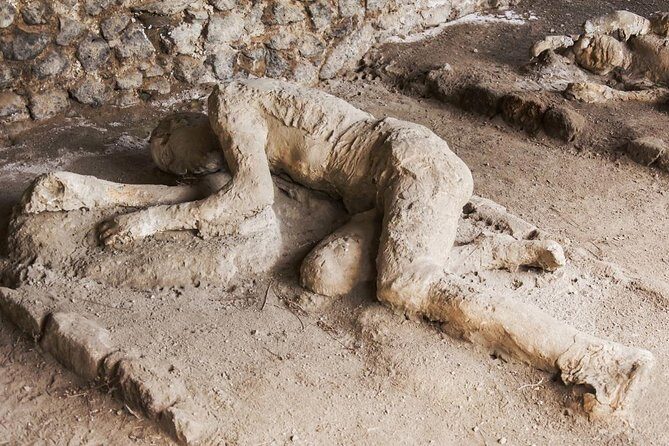
The Bay of Naples and Vesuvius are not subtle. Once you’re close, Vesuvius’ profile becomes hard to ignore, and it changes the mood of the trip. Watching a dangerous volcano from a distance doesn’t feel scary so much as sobering. You remember what you’re going to see: a city buried under volcanic ash in AD 79.
Also, Montecassino is worth noticing even if you don’t step out. It’s one of those places where the landscape carries real history. If you’ve never thought about how World War II shaped Italy’s towns and routes, it’s a quick reminder that people have suffered here long after the Romans disappeared.
One practical note: because your driver can comment only from inside the vehicle, you won’t get extended, on-foot storytelling at every viewpoint. If you want a stop-and-explain style, you’ll likely get more of that once you add a licensed Pompeii guide inside the park.
Arriving at Pompeii: tickets, entrance flow, and how to plan your time
Once you arrive in Pompeii, you pay your own Pompeii entrance fee (about €18 per person, approximate). Then you head into the archaeological park. The tour structure gives you about 2 hours 30 minutes at Pompeii, which is enough for a meaningful visit if you don’t get lost.
Here’s the key: Pompeii is big enough that a wrong turn costs you real time. If you choose to explore independently, go in with a simple mental checklist. You’ll get far more enjoyment if you decide what you want to prioritize before you enter.
If you choose the guide option, you’ll gain speed and clarity. A good guide helps you connect buildings to daily life—who used the baths, how the forum worked, what the theater meant for public culture, and why some rooms and frescoes mattered in Roman society.
Either way, plan for heat and uneven ground. The itinerary assumes a moderate physical fitness level. You don’t need to be a marathon runner, but you do want comfortable walking shoes and water.
The Pompeii highlights worth your energy: Forum, baths, Lupanar, and Teatro Grande

The most satisfying Pompeii visits feel like you’re walking through neighborhoods. The tour description points you to the big, recognizable parts of Roman daily life—and it’s exactly those spots that make the site come alive.
Here’s what to aim for when your time is limited:
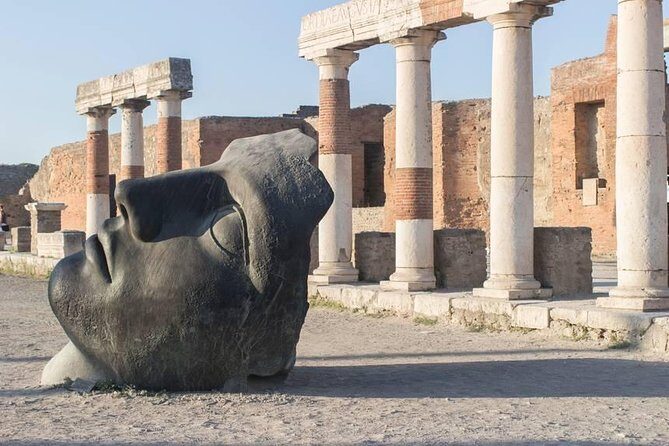
The Forum area
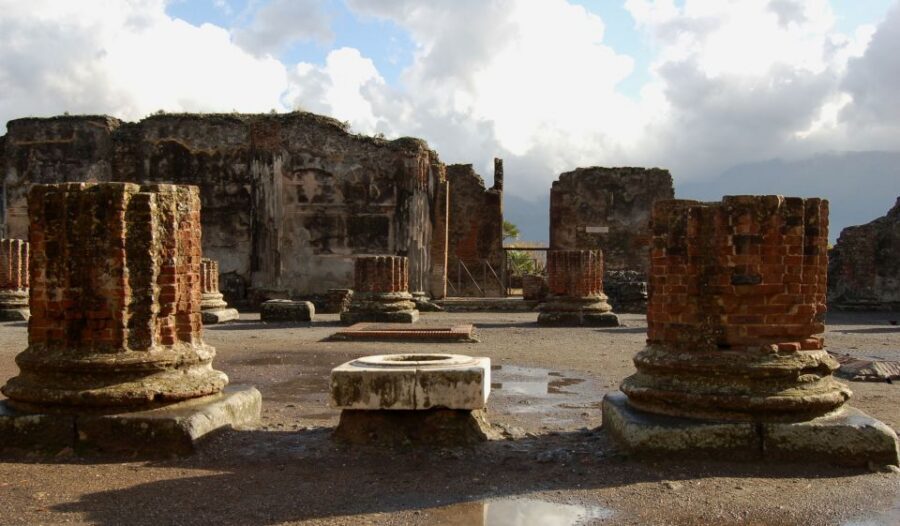
This is the city’s public center—where people met, discussed, and did business. Even in ruins, the Forum gives you a sense of civic power. Look at the structure and imagine the movement: speeches, commerce, passing news.
Thermal baths
Pompeii’s baths help you understand how Romans relaxed and socialized. It’s not just exercise; it’s daily routine, meeting up, and status. If you like places where people actually lived their day, the baths are often a highlight.
Lupanar
This is one of Pompeii’s most infamous stops: a brothel area decorated with frescoes. It can be surprising, but it’s also historically useful because it shows how society functioned beyond what you see in temples or government buildings. If you add a guide, this is one of the areas where explanations can be especially helpful.
Teatro Grande
The Teatro Grande could hold around 5,000 people, and that scale matters. In person, you get a feel for how entertainment and public gatherings shaped Roman culture. Even if you’re not a theater person, it helps you picture daily life as shared events, not private time alone.
Homes, lanes, and public spaces
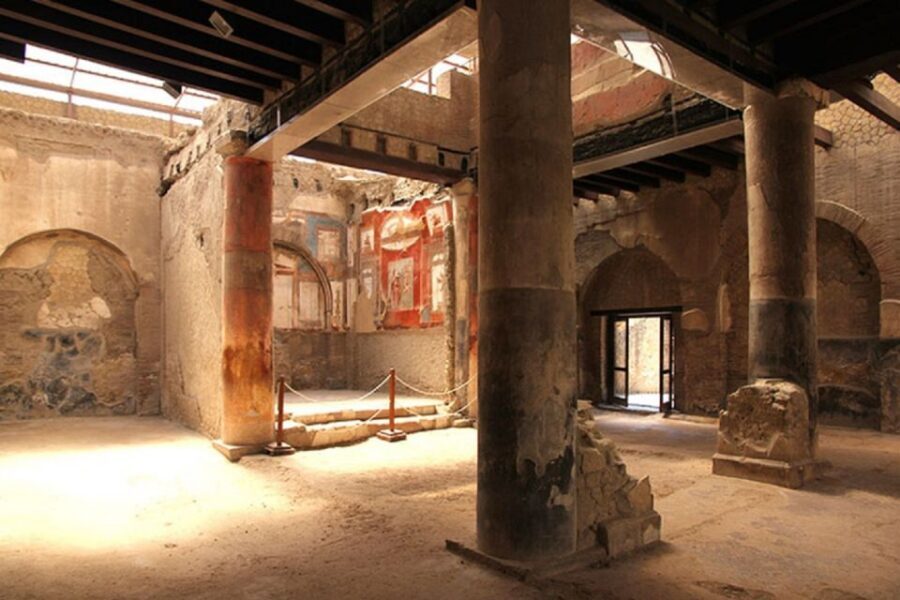
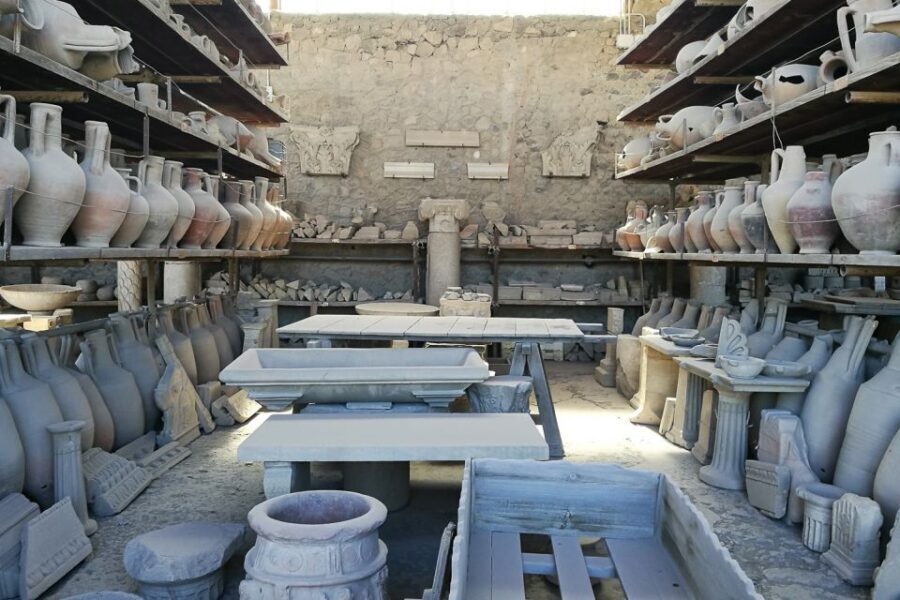
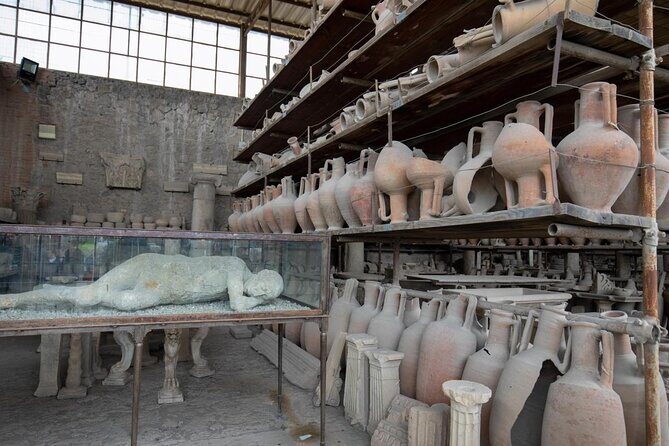
The tour focuses on the kind of city grid where you can see both private and public life. That’s the magic of Pompeii: streets and buildings are preserved in a way that makes the past feel close. You’ll see lanes, residences, and public architecture that help you form a real picture of how a Roman city worked.
Other private and VIP Pompeii tours






Should you add an on-site guide, and how to choose your style?

This tour gives you a fork in the road at Pompeii: explore on your own, or hire an on-site guide of the ruins at your own expense. That optional guide is one of the biggest value decisions you’ll make.
A licensed guide is useful when:
- You want to understand what you’re looking at, not just what exists.
- You prefer a structured route that hits the best parts.
- You enjoy historical context tied to specific buildings—like the forum, baths, and theater.
In some cases, guides such as Barbara or Santiago are mentioned as strong at explaining details and building a clearer picture of Roman life. Other names you may hear in the mix include Alberto and Santiago again, depending on scheduling. (You don’t control who you’ll get, but you can use these as an idea of the type of guide you want: someone who keeps things understandable and points out what matters.)
You might skip the guide if:
- You prefer to wander at your own pace and you’ve done a little prep reading.
- Your group loves photos more than explanations.
- You’re short on energy and want low-pressure time.
One more practical reality: drivers aren’t licensed guides, and due to Italian rules they can only comment and explain attractions from inside the vehicle. So for on-foot interpretation at Pompeii, the guide option is the real pathway.
The ride back toward Rome, plus a lunch break on your terms
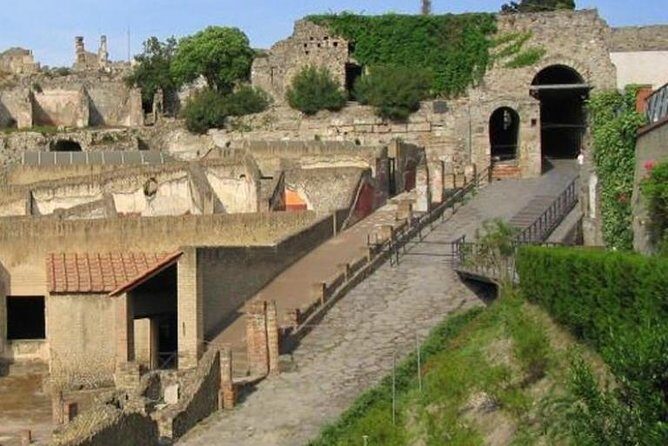
When your Pompeii time ends, you head back to your minivan for the private drive into Rome. The tour description also includes stopping along the way for a meal, on your own expense. That return meal stop is a helpful structure, because it keeps you from having to decide where to eat while you’re tired and hungry.
A few visitors have described lunch help from the driver—suggestions or even assistance with lunch planning—so don’t be shy about asking where to grab something fast and good once you’re on the return route. Just know the tour itself doesn’t include food.
As you come back, you’ll again be looking at Vesuvius and the Bay of Naples region from a road-level perspective. It’s a nice emotional bookend: you arrive seeing Vesuvius looming, and you leave with the memory of what it did—AD 79, ash and lava, and a city preserved in the aftermath.
Price and value: what $420.31 buys you (and what it doesn’t)
At $420.31 per person, the cost is not small. But with private transportation out of Rome, it’s not surprising. You’re essentially paying for time savings, comfort, and less stress.
Here’s what you do get:
- Hotel pickup and drop-off from Rome
- A private air-conditioned vehicle for your group
- A professional, English-speaking driver
- Live commentary on board
- A flexible structure so you can go independent or add a guide
Here’s what you do not get:
- The Pompeii entrance fee (about €18 per person, approx.)
- Food and drinks
- The optional on-site licensed guide (if you choose that route)
So the real value question becomes: does your group benefit from private transport? If you’re traveling in a group, private makes even more sense because you share the ride cost. If you’re two people and you hate public transport, it still can be worth it because the day is long and tiredness is real.
Also, this tour is highly rated, with an overall 4.7/5 from 49 reviews, and about 90% recommended. That’s a good signal that most people feel they got what they paid for: on-time pickups, comfortable driving, and a smooth transfer to Pompeii.
Who this Pompeii day trip is best for (and who should rethink)
This is a strong match if you:
- Want a no-drama way to see Pompeii from Rome
- Prefer private comfort over crowded buses or train changes
- Like the idea of having a choice: independent visit or a Pompeii guide
- Travel as a family or group where schedules need to be coordinated
It’s less ideal if you:
- Want a fully guided experience where every step is explained by a guide included in the price
- Are extremely sensitive to long days and want a shorter outing
- Expect the driver to provide detailed walking explanations at Pompeii (they can’t, due to licensing rules)
If your group loves deep, building-by-building interpretation, budget for the on-site guide option. If your group is happy with “see the big sights” and you’ve got your own planning mindset, independent time works well with smart priorities.
Quick practical tips so your Pompeii visit feels smooth
- Wear shoes you’d walk in for hours. Pompeii ground can be uneven.
- Bring water. The day can be hot, and you’ll be outside.
- Decide your priorities before you enter. With about 2.5 hours, you’ll do better with a plan.
- If you want explanations inside Pompeii, plan to add the licensed on-site guide at your own expense.
- Use the drive time: ask the driver about what you’ll see at Pompeii while you’re still in transit.
Should you book this private Pompeii day trip from Rome?
I’d book it if your main goal is to see Pompeii without the logistics headaches that can steal hours from a limited trip in Italy. The private pickup, the air-conditioned vehicle, and the driver commentary make the day feel organized from start to finish. And with the on-site guide option, you can upgrade your experience if you want deeper context.
I’d think twice if your budget is tight or if you specifically want all-guided services included in the base price. The entrance fee and guide option are extra, and Pompeii visits can feel like a lot if you show up with no priorities.
If you want an efficient, comfortable day that gets you to UNESCO-listed Pompeii and back to Rome—without public transport stress—this is a solid choice.
FAQ
What time does the private Pompeii day trip start?
Pickup is scheduled for 7:30am from your centrally-located Rome hotel.
How long is the tour?
The duration is listed as about 8 hours total, with about 2 hours 30 minutes at Pompeii.
Is Pompeii entrance included in the price?
No. The Pompeii entrance fee is not included and is listed as approximately €18 per person.
Does the tour include hotel pickup and drop-off?
Yes. It includes round-trip transfers from Rome hotels.
Is the tour private?
Yes. This is a private service for your group only with a private vehicle.
Do I need to book an on-site guide at Pompeii?
You can explore independently, or you can hire an on-site licensed tour guide of the ruins at your own expense if you want deeper explanations.
Can I count on the driver to act like a guide inside Pompeii?
The driver is not a licensed tour guide. They can comment and explain attractions only from inside the vehicle, so walking explanations at the site would come from the licensed on-site guide option.
Can I cancel for free?
Yes. There is free cancellation up to 24 hours before the experience start time for a full refund, based on local time.