REVIEW · NAPLES
Castellammare di Stabia: Mount Vesuvius & Pompeii Ruins Trip
Book on GetYourGuide →Operated by MOTORENT S.R.L. · Bookable on GetYourGuide
Two Campania icons in one focused day. You start with Mount Vesuvius and its crater views, then move straight to Pompeii with an audio guide that helps you make sense of what you’re seeing. It’s built for people who want big sights without the headache of planning every link in the chain.
I especially like the round-trip bus transfer—pickup and return are handled, so you can focus on the day instead of schedules. I also like how the Pompeii audio guide turns scattered stones into a readable story as you walk.
One thing to plan for: the crater walk from the 1,000-meter start is a real step-down workout. It’s manageable, but you’ll want good shoes and a steady pace.
In This Review
- Key Things That Make This Trip Worth Your Time
- Why This Vesuvius + Pompeii Day Works So Well
- Getting Started at Piazza Papa Giovanni XXIII (and Why It Matters)
- Mount Vesuvius: From 1,000 Meters to Crater Views
- The Vesuvius Free Time Window: How to Use 90 Minutes Smartly
- Bus Transfer to Pompeii: The Calm Between Two Extremes
- Entering Pompeii Archaeological Park with an Audio Guide
- Pompeii in 2 Hours: What You Can Realistically See
- The Best Pompeii Stops: Frescoes and the Lupanar
- If Vesuvius Closes: Herculaneum as the Weather Plan
- Skip the Ticket Line: Why It Improves the Whole Day
- Driver and Audio Languages: Getting Help Without a Lecture
- Comfort, Pace, and Who This Tour Suits Best
- Should You Book This Vesuvius and Pompeii Bus Day Trip?
- FAQ
- How long is the trip from start to finish?
- Where do I meet the group?
- What does the schedule look like?
- Is there an audio guide at Pompeii?
- What languages are available for the audio guide?
- What happens if Mount Vesuvius is closed due to weather?
- Is it easy to get tickets and avoid lines?
Key Things That Make This Trip Worth Your Time
- Organized round-trip bus ride from Piazza Papa Giovanni XXIII so you’re not self-navigating between Vesuvius and Pompeii
- Vesuvius crater access by descent starting around 1,000 meters, plus free time for panoramic views
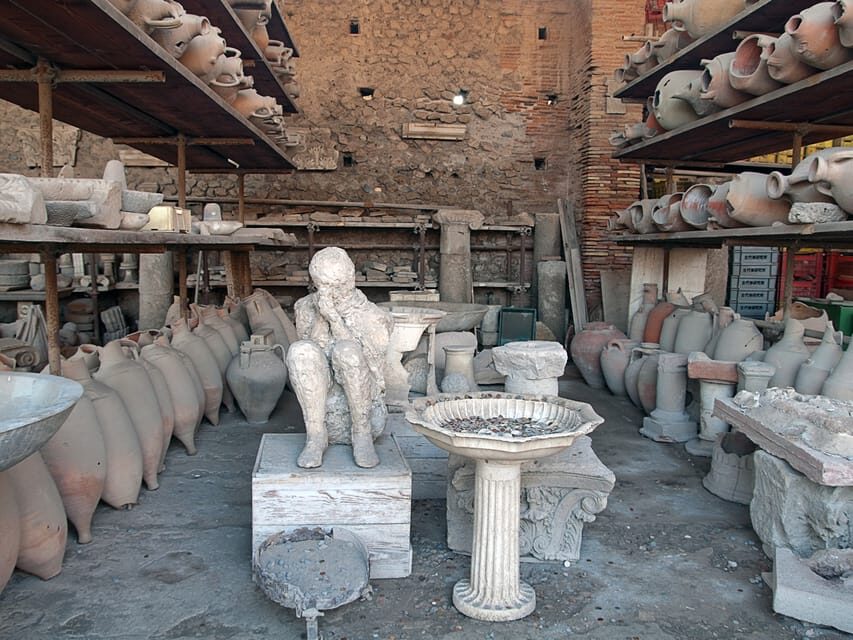
- Pompeii Archaeological Park entry with an audio guide (multiple languages), so you don’t just wander
- Skip the ticket line which saves time when lines can be brutal
- A weather Plan B: if Vesuvius National Park closes, you’ll visit the Herculaneum excavations instead
Why This Vesuvius + Pompeii Day Works So Well
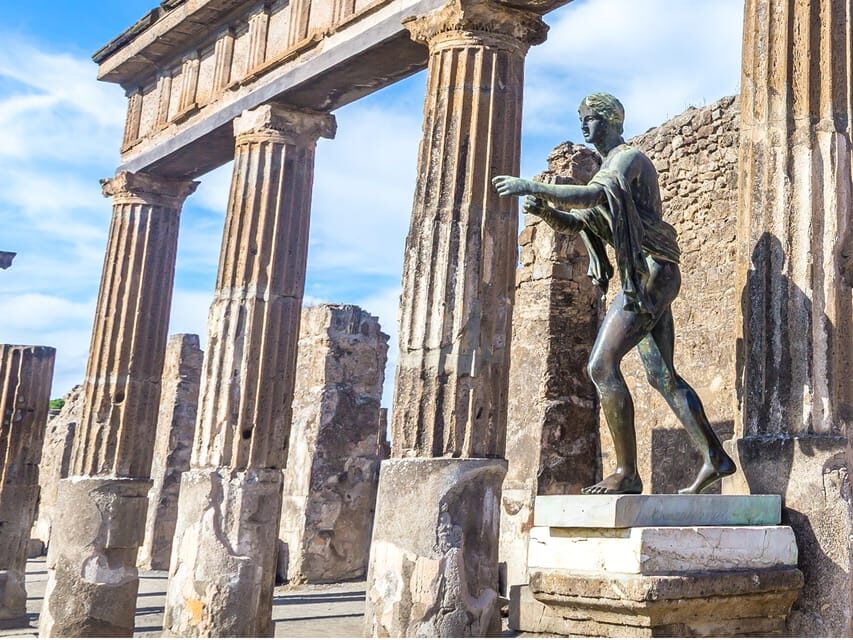
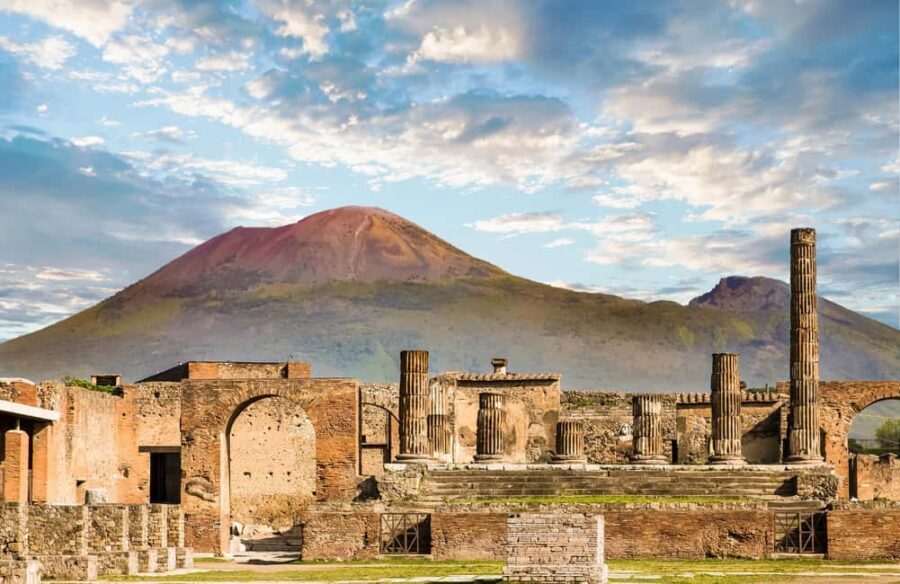
If you only have one day on Italy’s west coast, this pairing is smart. Vesuvius gives you the lived-in drama of an active volcano, and Pompeii shows the human world right under it—cities frozen in 79 AD. Doing both in a single outing keeps your time tight and your logistics simple.
The “make it easy” approach is the real value here. You’re not piecing together transport, entry windows, and museum-style context all on your own. Instead, you get a smooth bus rhythm and guided self-paced exploration. That’s especially helpful if you’re not staying in Naples and don’t want to spend your limited hours negotiating buses.
You also get a decent balance of views and ruins. Vesuvius is about perspective—Gulf of Naples, the Sorrento Coast, and the sense of scale. Pompeii is about details: streets, rooms, frescoes, and the shock of how much still reads like a city.
Other Pompeii + Vesuvius combo tours

Getting Started at Piazza Papa Giovanni XXIII (and Why It Matters)
The meeting point is straightforward: the bus stop at Piazza Papa Giovanni XXIII (coordinates 40.6954345703125, 14.47964859008789). That matters because Vesuvius and Pompeii days can go sideways when people arrive late or unsure where to stand.
The day starts with a comfortable bus ride, and the timing is built like a relay:
- about 40 minutes to Vesuvius
- 1.5 hours at Vesuvius National Park
- about 40 minutes to Pompeii
- 2 hours inside the Pompeii Archaeological Park
- about 30 minutes back
Even without a formal guide narrating every minute, this schedule protects your energy. You’re not stuck waiting around too long at the start, and you’re not sprinting between distant points.
Mount Vesuvius: From 1,000 Meters to Crater Views
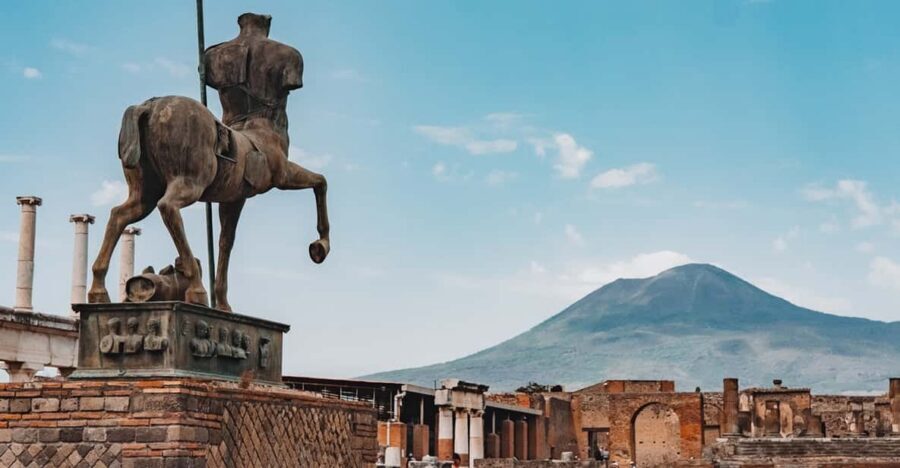
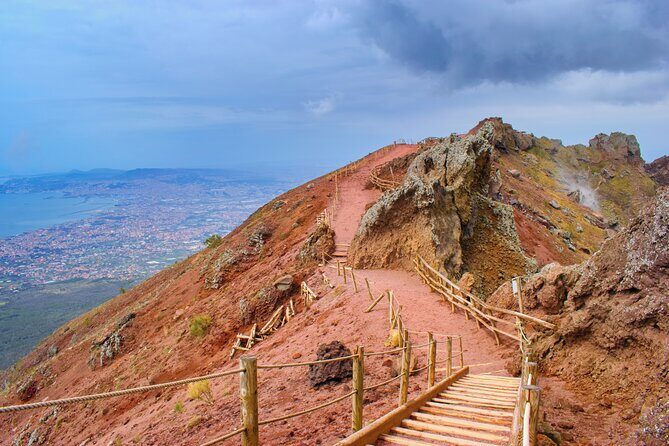
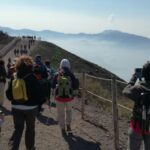
At the Vesuvius stop, you disembark at around 1,000 meters. From there, the plan is a walk down toward the crater, with time for views once you’re down in the right area. The whole experience is paced enough to feel doable, but it’s still a physical activity—this isn’t “sit on a terrace and look.”
What you’ll enjoy most is the broad panorama. From this part of the climb and crater approach, you get sweeping sightlines over the Gulf of Naples and across toward the Sorrento Coast. That’s the big reason to come here. The volcano is not just an object; it’s a viewpoint that connects sea, towns, and terrain.
Practical tip: treat this part like a short hike, not a stroll. Bring comfortable, grippy shoes and plan to take a slower pace if you’re sensitive to uneven ground. If the day is hot, hydrate early—don’t wait until you feel behind.
The Vesuvius Free Time Window: How to Use 90 Minutes Smartly
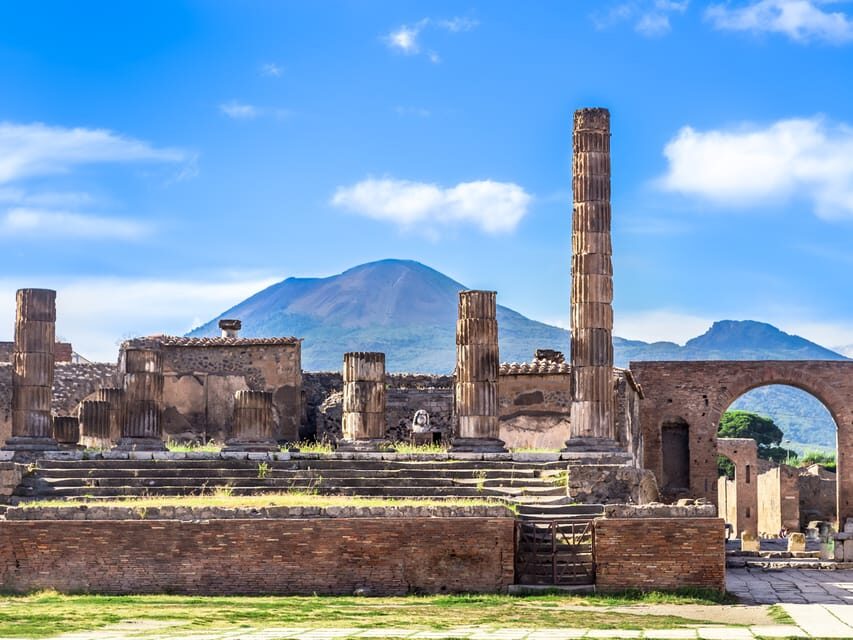
You get about 1.5 hours at the Vesuvius National Park stop. That’s enough time to do two key things without feeling rushed: get to the crater area and take in the views. It’s also enough time to catch your breath, take photos, and decide how much you want to linger.
Here’s the reality: if you spend too long at the earliest viewpoints, you may feel pressured when you want to reach the crater area. If you move too quickly to the crater, you may lose the chance to fully enjoy the Gulf and coastline views.
I’d aim for a simple rhythm:
1) move steadily toward the crater approach
2) pause for a proper view moment
3) spend the last chunk of time where you’re most comfortable, not where the crowd is
That approach fits the time you’re given and keeps the day feeling relaxed.
Bus Transfer to Pompeii: The Calm Between Two Extremes
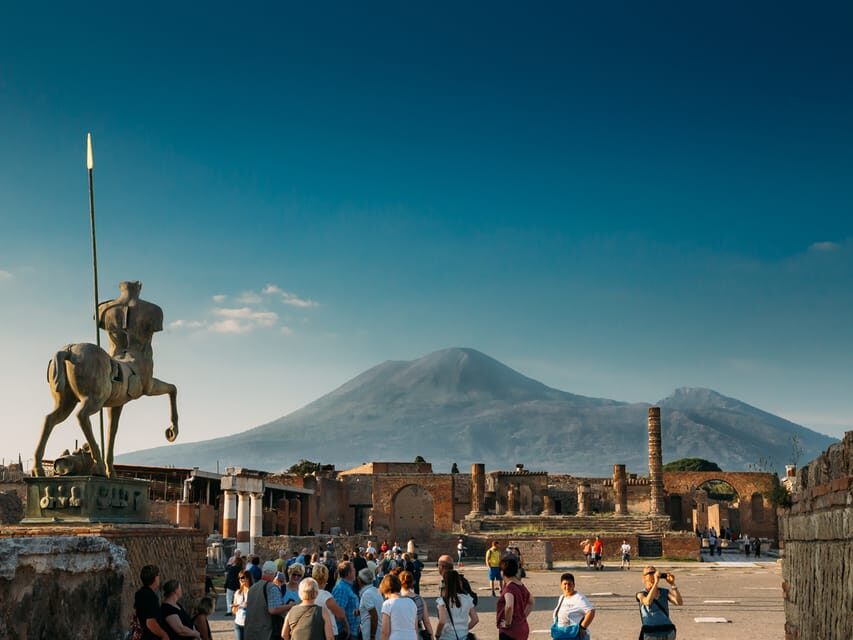
After Vesuvius, the bus ride continues for about 40 minutes to Pompei, Campania. This stretch is more important than it seems. It’s your recovery window—your legs get a break, and you can refocus before the archaeological walking starts.
This is also where the “key selling point” of a package tour shows: you don’t have to figure out what bus line to take or how long it really takes. A well-run day tour keeps momentum without forcing you to stay on your feet nonstop.
You’ll want to arrive mentally ready. Pompeii can feel like information overload at first because the site is huge. The bus timing gives you a clean reset so you can approach Pompeii with a plan.
Other Mount Vesuvius tours and hikes




Entering Pompeii Archaeological Park with an Audio Guide

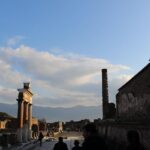
Pompeii is not one single thing. It’s a vast archaeological site, and if you walk in without structure, it’s easy to see a lot but remember little. That’s why the audio guide included here is a big deal.
You can choose from a range of itineraries before you enter the park, and then you receive your audio guide. The languages offered include Chinese, Dutch, English, French, German, Hebrew, Italian, Portuguese, Russian, and Spanish. If you want help turning ruins into real places, that language coverage matters.
The audio guide approach also supports your pacing. You can stop when something catches your eye—like frescoed walls or a doorway—and then resume when you’re ready. It’s a good match for people who like to wander but don’t want to feel lost.
Pompeii in 2 Hours: What You Can Realistically See
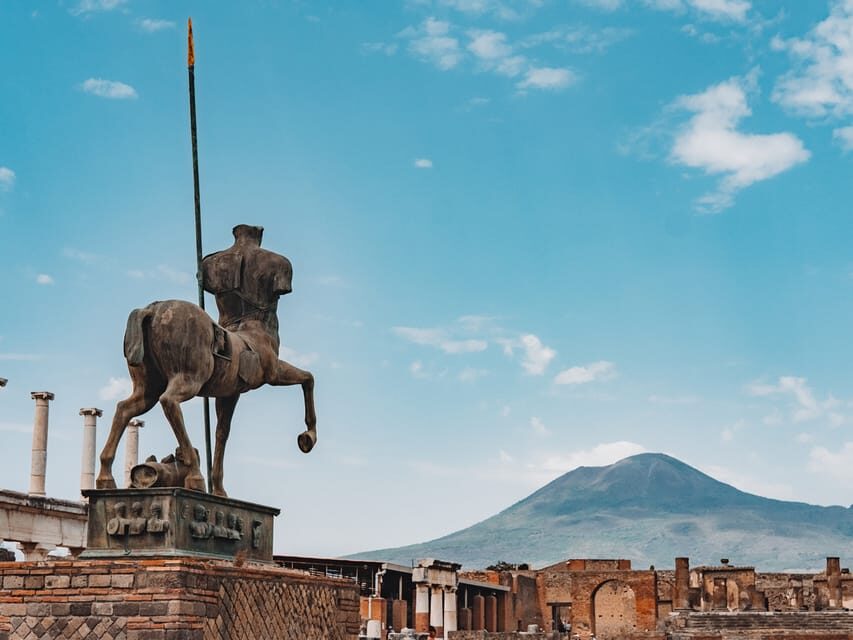
You’re in Pompeii for about 2 hours. That’s not long enough to “cover everything,” but it’s long enough to see major highlights and get oriented. What you’ll likely love most is how the audio guide helps you interpret big spaces fast.
Here’s what makes the time work:
- You’re not forced to follow a strict minute-by-minute route.
- Audio keeps you oriented even when you take breaks.
- You can focus on the areas that match your interests.
The drawback is also built into the duration. If you want long pauses in every room, or you want to read every plaque like a textbook, you may feel the clock. But for most people, 2 hours is a solid intro window—especially paired with Vesuvius.
The Best Pompeii Stops: Frescoes and the Lupanar
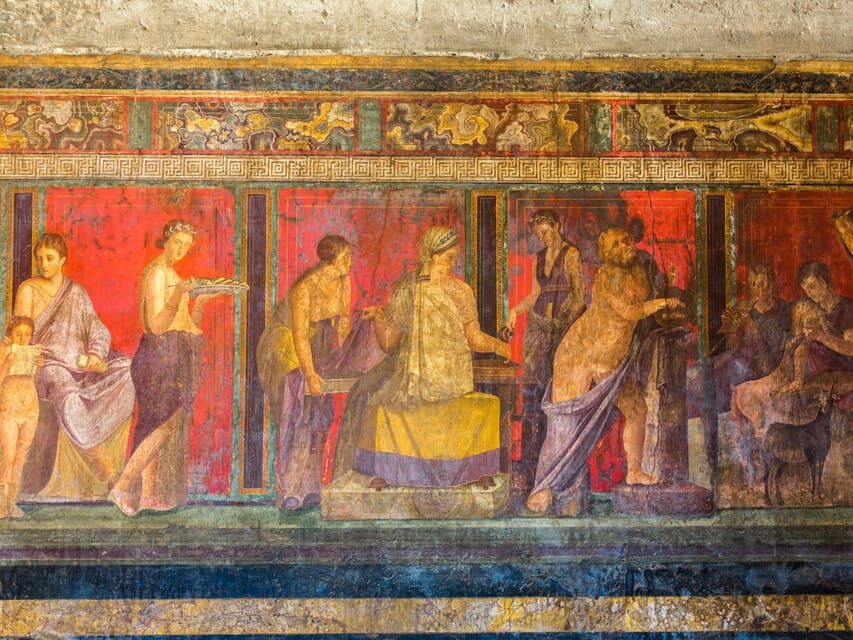
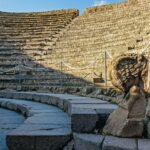
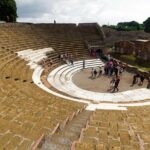
Pompeii’s power comes from small and specific details, not just the idea of an ancient city. This outing gives you time to land on those details, including frescoes and more.
Two highlights to look out for:
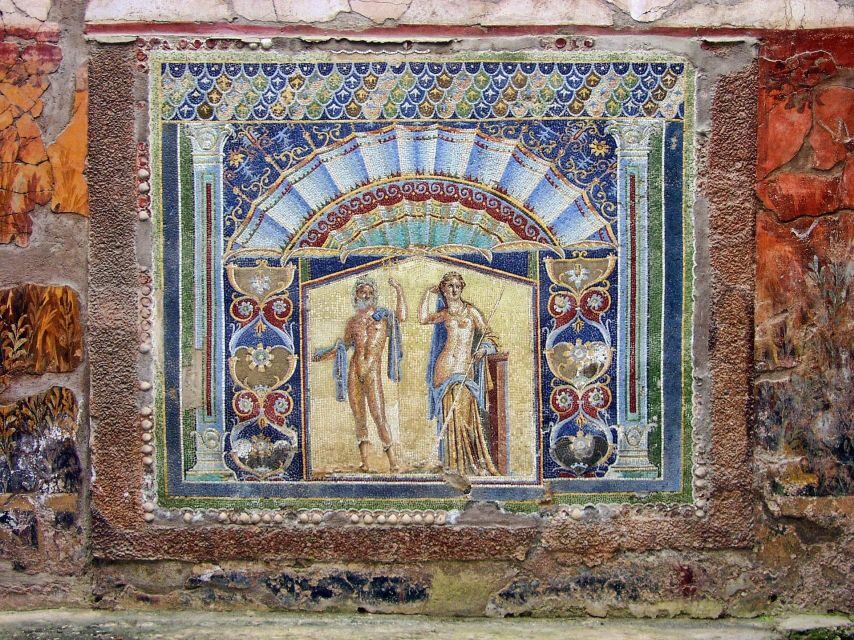
- Ancient frescoes: These help you “see” daily life rather than only architecture. Color and style can make the city feel closer than you expect.
- The lupanar, the city’s brothel: This is one of the most talked-about spaces in Pompeii, and seeing it in context is part of why the site still shocks people (in a good, human way).
Even without a live guide explaining every corner, the combination of audio guidance and the sheer visibility of the rooms helps you connect the dots. You’ll also likely notice how Pompeii’s layout makes it easier to understand movement through the city—streets, courtyards, and the way rooms open off main routes.
Tip: don’t try to do everything. Pick a few “must-see” elements—like fresco areas and the lupanar—and let the rest be bonus.
If Vesuvius Closes: Herculaneum as the Weather Plan
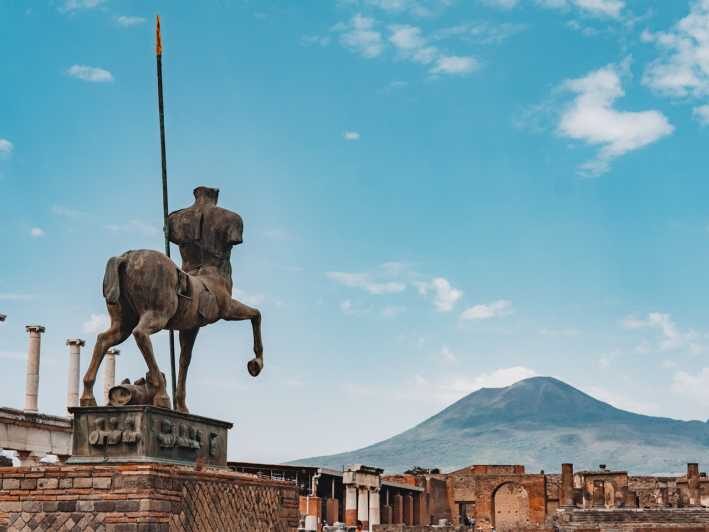
Vesuvius is weather-sensitive. If Vesuvius National Park closes due to inclement weather, the tour includes a visit to the Herculaneum excavations instead. That’s an important safeguard because it prevents you from losing the day to a closed crater.
Herculaneum offers a different kind of contrast. It’s still Roman-era remains and still tied to the same event, but you experience it through another set of preserved structures and street life. If weather hits, the swap is better than getting nothing.
If you’re planning around a specific date, keep in mind this is the operator’s contingency plan. It’s worth accepting the change rather than expecting the schedule to stay identical every time.
Skip the Ticket Line: Why It Improves the Whole Day
Two words: time and stress. Skipping the ticket line means you lose less time at the entrance points and start walking earlier. That matters most on days like this because you don’t have a full day to spend in Pompeii.
The tour’s overall rhythm—bus pickup, organized entry, audio guide distribution, then drop-off—reduces the “standing around” effect that can make short tours feel long.
This kind of streamlined process is also where value lives. You’re not just paying for transport; you’re paying for the handoffs to go smoothly so you can focus on the sights.
Driver and Audio Languages: Getting Help Without a Lecture
The driver speaks English and Italian, which helps if you have questions about where to go or when to be back on the bus. That matters more than it sounds, especially if you’re traveling solo or you prefer clear instructions in a language you understand.
On top of that, the audio guide runs in a wide range of languages. Even if you choose English or another familiar language, knowing the option exists can make the experience feel less intimidating.
The best part is that you’re not stuck listening the whole time. You can pause, walk away, and come back when you want. That flexibility keeps the ruins from feeling like an assignment.
Comfort, Pace, and Who This Tour Suits Best
This is a good fit if you want big results with minimal planning. You’ll probably enjoy it if you:
- want a hassle-free day trip with round-trip bus transport
- care about getting context in Pompeii (audio guide and optional itineraries)
- are okay with a crater walk that’s a step-down hike, not a flat stroll
- like the idea of swapping to Herculaneum if weather shuts Vesuvius
It may be less ideal if you strongly dislike walking on uneven ground or you’re looking for a slow, museum-style pace. The day is structured. You move from place to place on a set timetable.
Also, bring the right mindset: this tour gives you a “best of” pass through two heavy hitters. If you’re the type who wants to spend all day in one site, you’ll probably want separate visits later. But if you want both Vesuvius and Pompeii without turning your vacation into logistics homework, this hits the sweet spot.
Should You Book This Vesuvius and Pompeii Bus Day Trip?
I’d book it if your priority is clarity and momentum. Two major icons, organized transport, audio guide support in many languages, and a crater walk paired with a structured Pompeii visit is a smart use of a limited day.
I would think twice if you want zero physical effort, because the Vesuvius crater approach includes walking from a high starting point. Plan with comfortable shoes and take breaks if you need them.
One more decision factor: you’re protected by the weather plan. If Vesuvius is closed, you still get excavations in Herculaneum, so the day doesn’t automatically turn into disappointment.
If you want to see the centerpieces of Campania efficiently, this is a solid choice.
FAQ
How long is the trip from start to finish?
The total duration is 6 hours.
Where do I meet the group?
You meet at the bus stop at Piazza Papa Giovanni XXIII (coordinates 40.6954345703125, 14.47964859008789).
What does the schedule look like?
The day includes about 40 minutes to Mount Vesuvius, 1.5 hours at Vesuvius National Park, about 40 minutes to Pompeii, 2 hours in Pompeii Archaeological Park, and about 30 minutes back to Piazza Papa Giovanni XXIII.
Is there an audio guide at Pompeii?
Yes. An audio guide is included for Pompeii, with multiple language options.
What languages are available for the audio guide?
The audio guide is available in: Chinese, Dutch, English, French, German, Hebrew, Italian, Portuguese, Russian, and Spanish.
What happens if Mount Vesuvius is closed due to weather?
If Vesuvius National Park closes due to inclement weather, the tour will include a visit of the Herculaneum excavations instead.
Is it easy to get tickets and avoid lines?
The tour includes skip the ticket line.