REVIEW · NAPLES
Herculaneum: Skip-the-Line Guided Tour with Archaeologist
Book on GetYourGuide →Operated by Askos Tours · Bookable on GetYourGuide
Herculaneum feels less like ruins and more like a time capsule. I love how this tour pairs skip-the-line entry with an archaeologist guide, so you start seeing the site faster and you get clear explanations as you walk. I also like that it focuses on how people actually lived in a port town—then shows how the eruption froze it in place.
Your main drawback is simple: the site is vast and very exposed, so you’ll want proper shoes, sun protection, and a rain layer because the tour runs rain or shine.
In This Review
- What makes this Herculaneum tour worth your time
- Why Herculaneum beats Pompeii for many first-timers
- Price and value: what $53 buys you
- Meeting at the Herculaneum ticket office (and finding your guide fast)
- The walking reality: what 2 hours feels like at Herculaneum
- Stop-by-stop: what you’ll see and why each place matters
- Casa dei Cervi: everyday rooms that show a life in motion
- Casa di Nettuno ed Anfitrite: myth, status, and what art meant
- House of Skeletons: the eruption’s human consequence
- Casa dell’Albergo, Herculaneum: a home that hints at broader city life
- Casa del Salone Nero: why preserved interiors feel so modern
- Sacellum of the Augustales (Temple of the Augustales): civic religion made concrete
- Forum and the port-town story: merchants, nobility, and daily movement
- Thermal baths and the Gymnasium: spaces for body, routine, and community
- House of Neptune and Amphitrite: art as a map of identity
- Headsets, group size, and hearing every detail
- After the tour: why included admission changes the whole experience
- Weather, shoes, and what to pack so the ruins don’t beat you
- Who should book this guided archaeologist tour
- Should you book? My practical take
- FAQ
- How long is the Herculaneum skip-the-line guided tour with an archaeologist?
- Does the price include admission to Herculaneum?
- Where do I meet the tour guide?
- What’s included in the tour besides the guide?
- What languages are offered?
- Is the tour suitable for wheelchair users or people with mobility impairments?
What makes this Herculaneum tour worth your time

- Archaeologist-led storytelling: you’re not just looking at walls and rooms; you’re getting the why behind the walls and rooms.
- Skip-the-line access: you trade waiting for walking, which matters at Herculaneum where time on-site feels precious.
- Headsets included: you can hear your guide while moving through rooms and courtyards.
- High-impact stops: the itinerary hits standout areas like the thermal baths, Forum, and the House of Neptune.
- Real preservation details: you’ll learn why Herculaneum kept ceramics, paintings, mosaics, and even carbonized wood.
- Time to keep going: the price includes admission, so after the tour you can wander at your own pace.
Why Herculaneum beats Pompeii for many first-timers
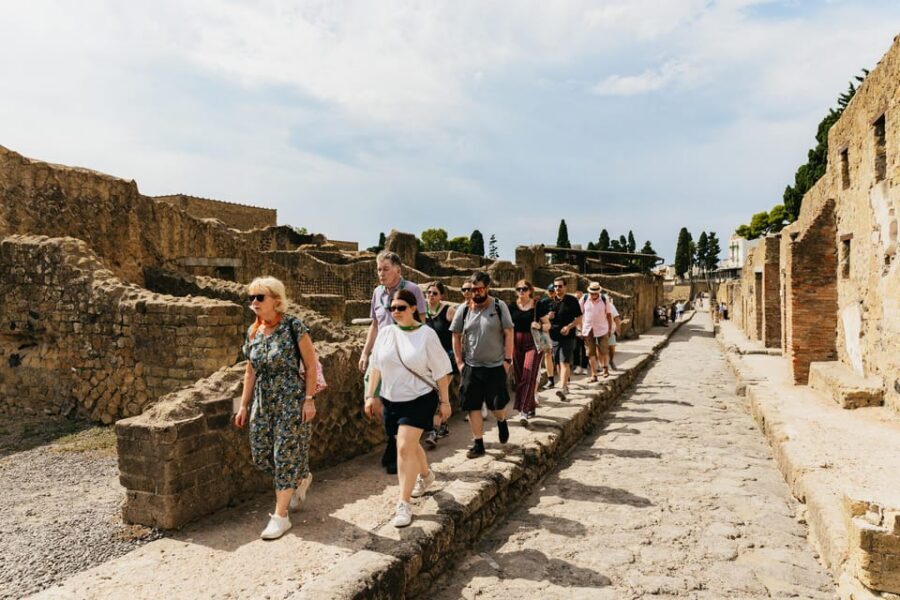
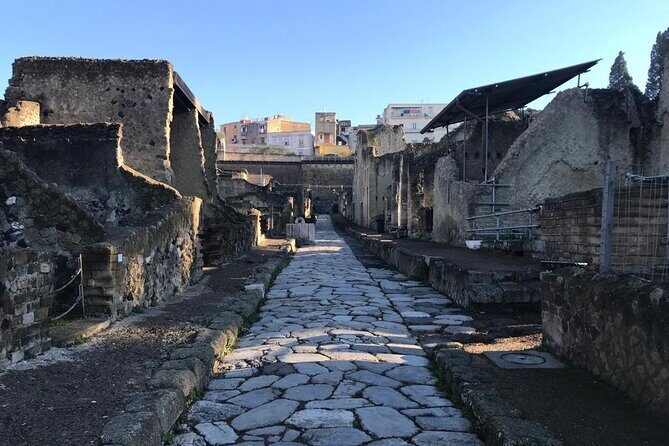
If Pompeii is the big, loud headline, Herculaneum is the quieter one that hits harder. The scale is smaller, and that matters. You can actually follow streets, shopfront-like spaces, courtyards, and building layouts without feeling like you’re sprinting across a massive museum on pavement.
This is also a great choice if you’re curious about the differences between what happened at Herculaneum versus Pompeii. Many guides explain the contrasts in how the disaster unfolded and what that meant for the people and the objects that survived. With an archaeologist leading the walk, those explanations tend to connect the science to what you’re seeing in front of you.
And the skip-the-line part is not a small perk here. Herculaneum can swallow an hour of your day before you even start the good parts. With this tour, you get inside and moving quickly, which helps you enjoy the site instead of bracing for crowds and timing.
Other Pompeii tours with an archaeologist
Price and value: what $53 buys you
At about $53 per person for a 2-hour guided tour, you’re paying for three things: an archaeologist guide, admission fees, and headsets.
Admission alone is listed as 16.00 euros for adults, and the tour price includes entry. That means you’re not paying full admission and then adding a guide on top. You’re bundling the guided time with the ticket, plus the guide’s specialized explanations while you’re on-site. You also get headsets, which make the walk more comfortable, especially when the group shifts from open spaces to tighter rooms.
Your extra costs are mainly what the listing doesn’t include: food and drinks, plus transportation to the meeting point in the area of Naples. If you’re already spending a day touring around Vesuvius, this tends to fit neatly into a half-day plan.
One more value point: because the guide uses a structured route across the highlights, you can leave feeling you “got it,” without needing a second full day to make sense of what you saw.
Meeting at the Herculaneum ticket office (and finding your guide fast)
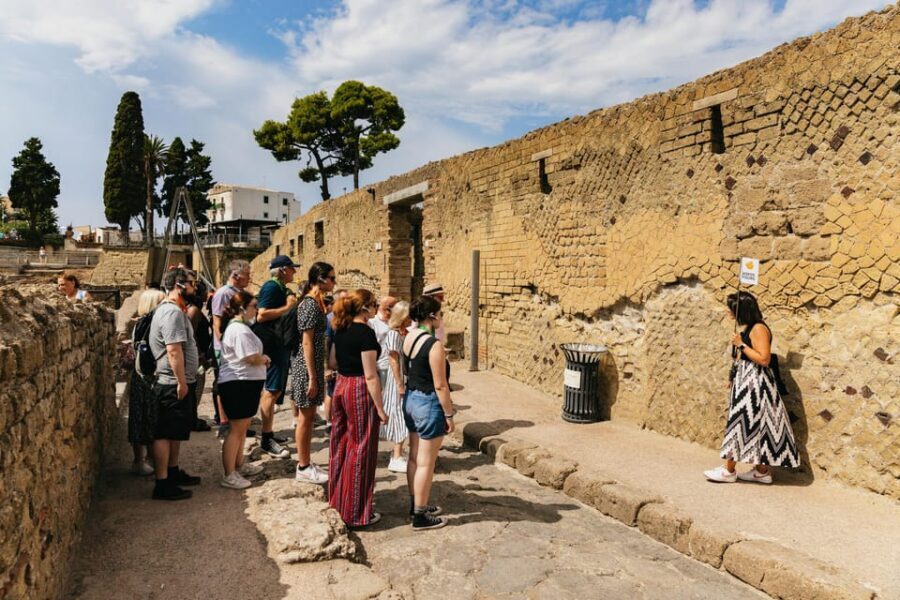
You’ll meet at the Herculaneum ruins ticket office. Your guide holds an Askos Tours sign, which makes it easier than guessing among tour groups at the entrance.
That sounds minor, but it matters on day trips when you’re trying to stay on schedule. One practical tip: arrive with a little buffer so you can match your guide’s sign before you’re rushed.
The tour runs in multiple languages—English, Italian, German, Spanish, and French—so you can choose your comfort level. Reviews often praise guides by name, including Luciano, Diego, Yolanta, Giulia, Roberta, Teresa, and Anna, so if you’re booking close to your dates, you may see which guide is assigned.
The walking reality: what 2 hours feels like at Herculaneum
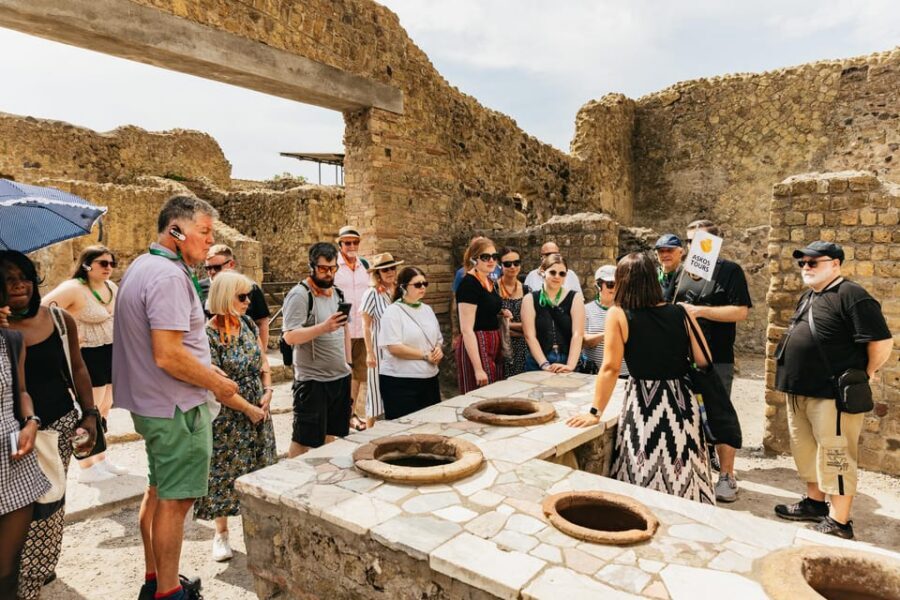
Two hours goes fast here. The site is compact compared with Pompeii, but it’s still dense with rooms, viewing points, and stops that need time to interpret. This tour moves with purpose, covering a large chunk of the highlights rather than lingering for a slow wander.
You’ll also notice the terrain. Herculaneum is exposed, and you’ll be outside quite a bit. Closed-toe shoes are a must. Even if you’ve visited other ruins, you’ll likely feel this difference once you start moving through uneven stone paths and shaded-and-sunlit sections back to back.
One thing that’s worth flagging from real-world experience: on some tours, the audio from headsets can drop if you fall too far behind. So if you care about hearing every detail, try to stay near the front half of the group when your guide moves to the next cluster of rooms.
Stop-by-stop: what you’ll see and why each place matters
Other skip-the-line Pompeii tickets and tours
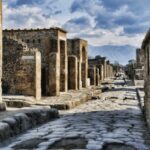

Casa dei Cervi: everyday rooms that show a life in motion
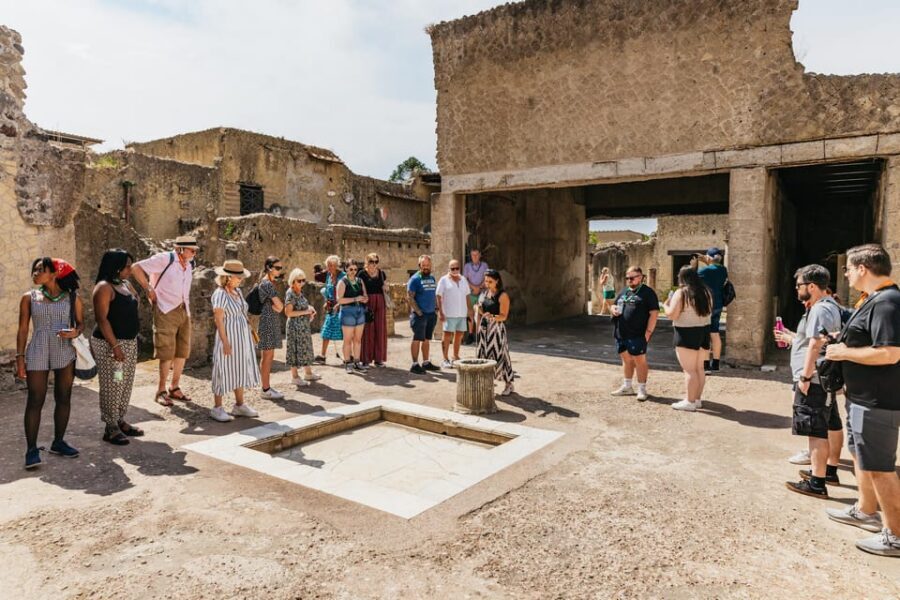
You begin with a close look at the domestic side of Herculaneum, where homes show what people valued—space, privacy, everyday materials, and how families moved between outdoor and indoor areas.
Casa dei Cervi is the kind of stop that helps you stop thinking of Herculaneum as a disaster site and start seeing it as a neighborhood. Even in ruins, the layout can make routines clearer: where people might gather, how light and air could flow, and how rooms connected.
A potential drawback: if you’re expecting big, dramatic monuments, a house can feel quieter at first. But that’s exactly the point. This is where Herculaneum shines for daily life.
Casa di Nettuno ed Anfitrite: myth, status, and what art meant
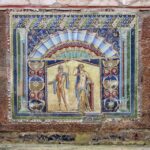
This stop leans into symbolism and status. Neptune and Amphitrite themes connect directly to Roman culture and the way wealthier households displayed taste and identity.
What I like about this type of house stop is that it gives you a framework for reading the decorations. You’re not just seeing preserved remnants of art; you’re learning what those images likely signaled to visitors and neighbors.
House of Skeletons: the eruption’s human consequence
The House of Skeletons is where the story turns personal. You’re guided to places tied to the evidence of how people were caught—then what that looked like in the archaeological record.
This stop is emotionally heavy, even though it’s delivered in an educational way. Still, it’s one of those points where an archaeologist guide can help you keep the focus on what the remains and context actually indicate, instead of letting your imagination do all the work.
Practical note: plan for a slower moment here. If your group moves quickly, you may want to mentally reset before you jump to the next highlight.
Casa dell’Albergo, Herculaneum: a home that hints at broader city life
This is another domestic stop, but it helps show that Herculaneum wasn’t only elite residences. The city’s buildings reflect a range of lives—people working, hosting, trading, and moving through shared civic rhythms.
From a “how to get value” perspective, this matters. If you want more than a few cherry-picked rooms, the guided route keeps building a coherent picture of Herculaneum as a whole.
Casa del Salone Nero: why preserved interiors feel so modern
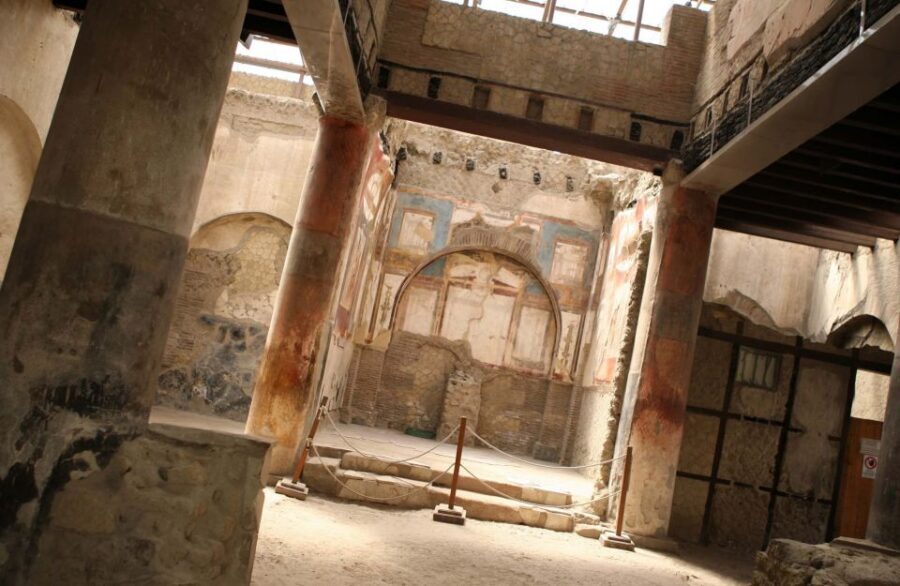
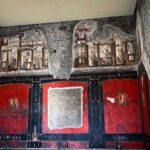
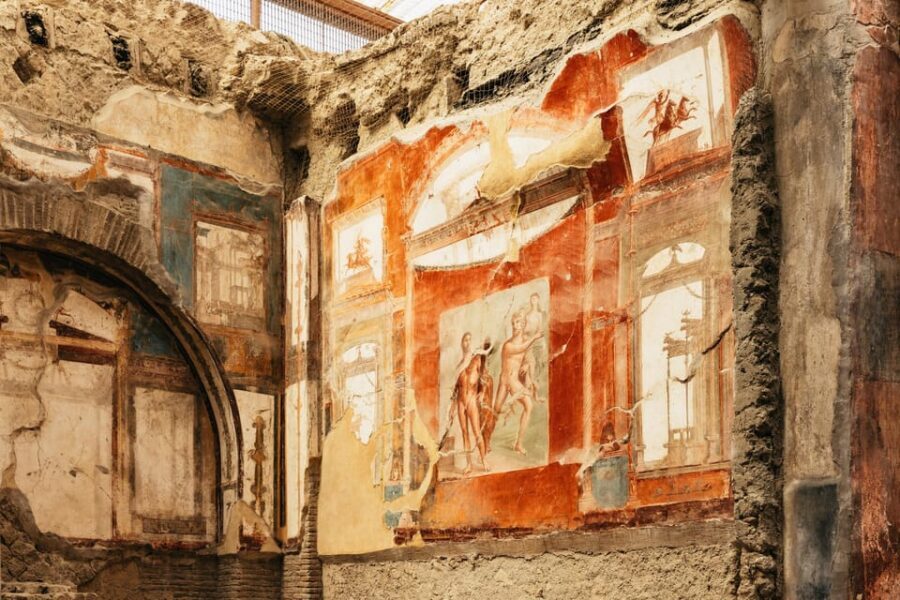
Casa del Salone Nero is where you can start appreciating the survival quality that makes Herculaneum special. The tour highlights well-preserved stone, marble, and ceramics—objects that often survive better than you’d expect.
One of the reasons this site captivates people is the mix of preserved and carbonized material: you may hear about carbonized wood and intact art surfaces like paintings and mosaics. That combination is hard to visualize until you’re standing in the right spot and your guide connects the artifacts to the rooms around you.
If you’re sensitive to being outside in heat or rain, this is also where you’ll feel the weather. Try to time your hydration before you reach the open stretches between clusters.
Sacellum of the Augustales (Temple of the Augustales): civic religion made concrete
The Sacellum of the Augustales brings the tour into public and semi-public religious life. It’s a helpful anchor stop because it connects social roles—who served, what status meant—to how religious space functioned inside a Roman city.
I like this kind of stop because it fills in the gaps between houses and the Forum. The city stops feeling like isolated points and starts feeling like a system.
Forum and the port-town story: merchants, nobility, and daily movement
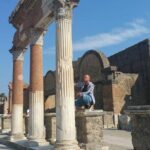
Herculaneum was a former port town, and the guided narrative emphasizes wealthy merchants and nobility. The Forum and surrounding civic spaces help you understand why the city’s wealth concentrated here—trade routes, arrivals, and the kind of social energy that forms when a port grows.
This is also where many archaeologist guides do a good job comparing Herculaneum and Pompeii. The contrasts help you stop treating Roman disasters as identical scenes. Instead, you begin to see how different circumstances can shape what’s preserved and what’s lost.
If your tour timing aligns, you may also get explanations of the waterfront. The story includes the remains of more than 300 people who died trying to escape by taking to the ocean.
Thermal baths and the Gymnasium: spaces for body, routine, and community
The thermal baths and Gymnasium are high value stops for understanding Roman culture beyond politics. These spaces were for routine and social life, not just health. They show you the rhythm of daily schedules: exercise, bathing, meetings, and conversation.
In at least some tours, you’ll hear unique details that bring the Gymnasium’s layout to life—such as references to areas like the swimming pool beneath the structure. That kind of guidance turns an archaeological footprint into something you can almost picture as it functioned.
House of Neptune and Amphitrite: art as a map of identity
You’ll revisit the theme here through the specific pairing of House of Neptune and Amphitrite. It’s not repetitive if your guide explains the artistry as a language—status, values, mythic identity, and the way elite Roman households framed the world around them.
Again, what makes it strong is interpretation. The guide can point out what survived and why it mattered, including discussion of ceramics, paintings, and mosaics.
Headsets, group size, and hearing every detail
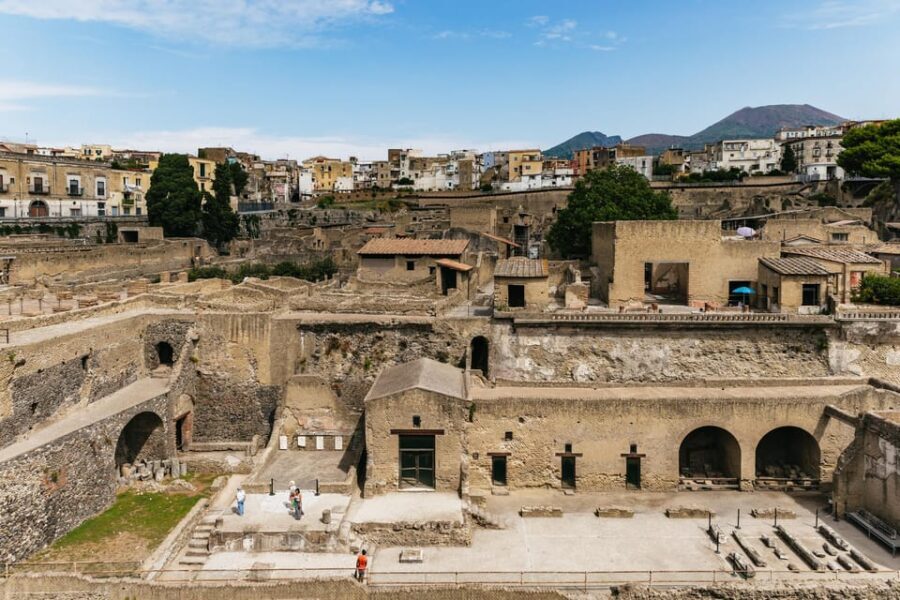
Headsets are included, which I really appreciate for an on-site archaeological tour. Without them, you’re constantly turning your head, losing audio as the group moves across spaces.
That said, stay aware of positioning. In some cases, people in the back can miss portions if the guide moves out of range. If you’re the type who wants the full story without gaps, aim to stay near the front half.
Group size isn’t listed outright, but some tours have been described as around 15 to 20 people. If you’d rather enjoy a quieter pace, this is worth considering. You can still get a lot out of the guide’s route, and then slow down afterward with your included admission.
After the tour: why included admission changes the whole experience
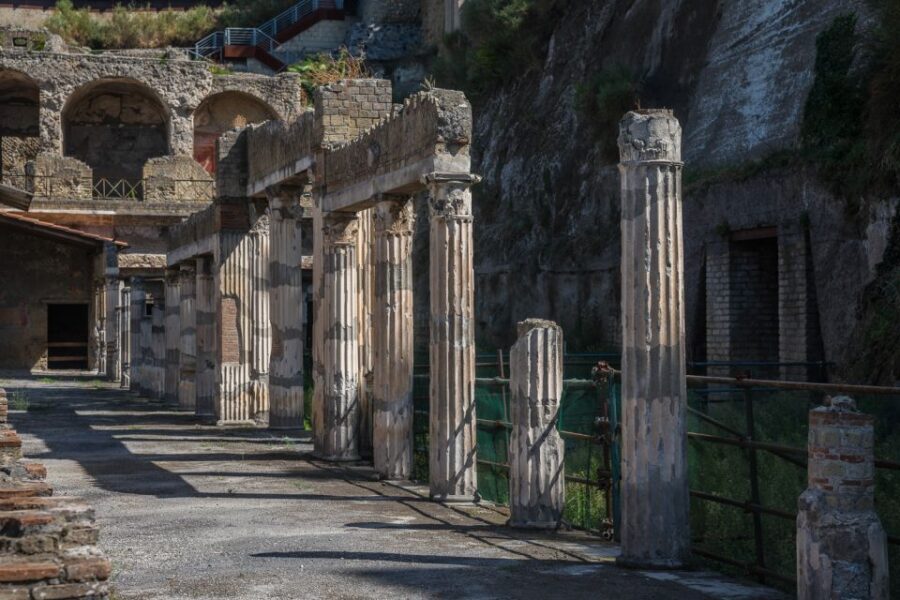
A big advantage of this tour is that admission fees are included. That means once the 2 hours finish, you’re not done. You can return to rooms you want to look at longer or take time to connect what the archaeologist said with what you see in stillness.
This matters especially at Herculaneum, where the details reward patience. A quick tour can feel like it scratches the surface. A guide-led route plus your own slow wander lets you process the site in two stages: first understanding, then noticing.
Weather, shoes, and what to pack so the ruins don’t beat you
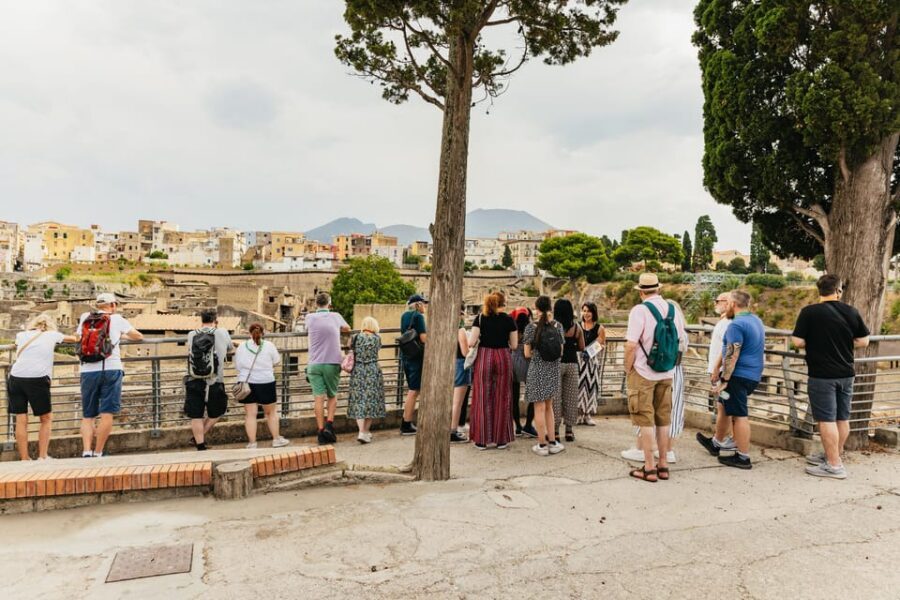
Herculaneum is outdoor-heavy. The tour takes place rain or shine.
Bring:
- Passport or ID card
- Comfortable closed-toe shoes
- Sunscreen and a hat
- A raincoat if the forecast looks questionable
Also keep luggage out of the equation. Luggage or large bags aren’t allowed, so pack light. That reduces hassle when you’re moving through entrances and narrow pathways.
And if you have mobility impairments or use a wheelchair, this tour isn’t suitable. The site’s uneven surfaces and layout make it difficult.
Who should book this guided archaeologist tour
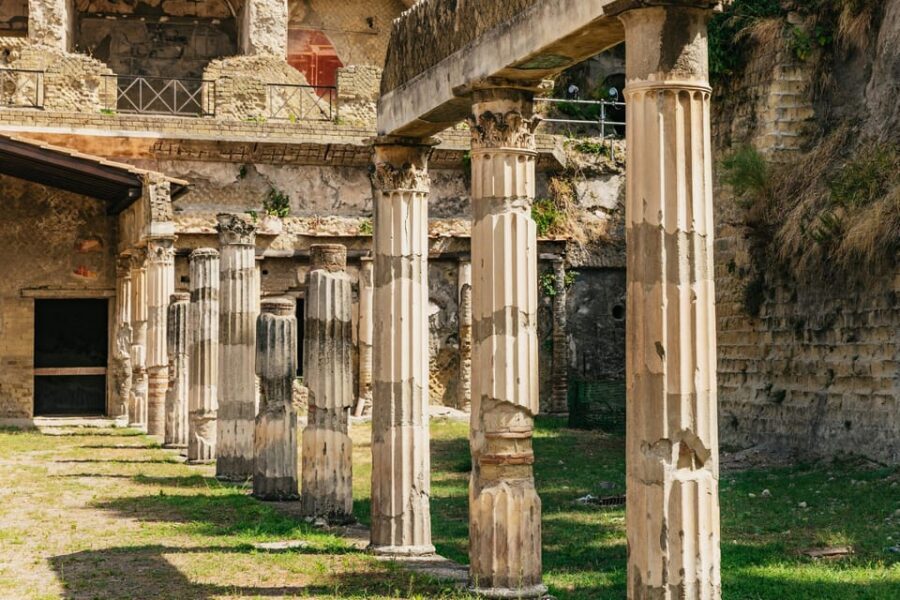
Book it if:
- You want the “why” behind the ruins, not just the what
- You’re visiting Herculaneum as a Vesuvius day and want efficiency
- You care about hearing myth, civic life, and domestic life tied together
- You’d rather cover key highlights in 2 hours than wander without context
You might rethink it if:
- You prefer long, unstructured museum-style time
- You need step-free access and mobility support
- You’re sensitive to outdoor exposure and you didn’t plan for weather
Should you book? My practical take
If your goal is to get maximum meaning out of Herculaneum without wasting your day in lines or guessing what you’re looking at, this tour is a strong yes. The pricing feels fair because it bundles admission, headsets, and an archaeologist guide into a tight 2-hour route that hits major highlights like the thermal baths, Forum, and the House of Neptune.
The biggest reason to book is the guide-led interpretation. Reviews consistently mention guides like Luciano, Diego, Yolanta, Roberta, Teresa, and Anna bringing the site to life with humor and visuals. That kind of explanation turns preserved remnants into a coherent story you can remember long after you leave.
Just come prepared for the reality of being outside on uneven ruins. Then you’ll get the best of Herculaneum: tragedy, art, civic life, and daily routines captured in stone.
FAQ
How long is the Herculaneum skip-the-line guided tour with an archaeologist?
The tour lasts 2 hours at the Archaeological Site of Herculaneum.
Does the price include admission to Herculaneum?
Yes. Admission fees to Herculaneum are included, along with the guided tour and headsets.
Where do I meet the tour guide?
Meet at the ticket office of the Herculaneum Ruins. Your guide will be holding an Askos Tours sign.
What’s included in the tour besides the guide?
Included are the guided tour, admission fees, an archaeologist guide, and headsets.
What languages are offered?
The tour is available in English, Italian, German, Spanish, and French.
Is the tour suitable for wheelchair users or people with mobility impairments?
No. The tour is not suitable for people with mobility impairments or wheelchair users.