REVIEW · NAPLES
Herculaneum 3D Skip the line Walking Tour
Book on Viator →Operated by AR Tour · Bookable on Viator
AR glasses turn rubble into a living street. This Herculaneum 3D skip-the-line walking tour uses augmented reality to help you picture what you’re seeing at Parco Acheologico di Ercolano. You get a guided walk through the main route, plus reconstructions that bring daily life back into view.
Two things I really like: first, the 3D glasses make the site easier to understand than standing around and guessing. Second, the pace is relaxed—long enough to learn, short enough that you’re not exhausted by the walking.
One drawback to keep in mind: the AR moments are not constant. You’ll activate the tech at specific points, and if you’re expecting every step to come with a big visual upgrade, you may feel a bit rushed between stops.
In This Review
- Key things to know before you go
- Herculaneum in 3D: how the AR glasses change what you see
- What you get for the price: skip-the-line entry plus guided AR
- Meeting at Ercolano Ticket Office and planning your 2:30 pm start
- Stop 1 at Parco Acheologico di Ercolano: your guided AR route
- How long it really feels: walking pace, group size, and staying power
- AR 3D reality check: what works best and what to expect
- Guide style: what to listen for and how to get more out of it
- Kids and teen rules: who can use the 3D tech?
- Weather and walking logistics: keeping the day comfortable
- After the tour: use the glasses’ finale as your springboard
- Herculaneum vs. Pompeii: when this tour makes your day better
- So, should you book this Herculaneum 3D tour?
- FAQ
- How long is the Herculaneum 3D skip-the-line walking tour?
- Where do I meet for the tour?
- What language is the tour offered in?
- Do I get admission included with the ticket?
- Does this tour include skip-the-line entry?
- Can kids use the 3D/AR technology?
- Can I bring my own glasses if I need them?
- What happens if I’m late to the meeting point?
- Will the tour run in bad weather?
Key things to know before you go
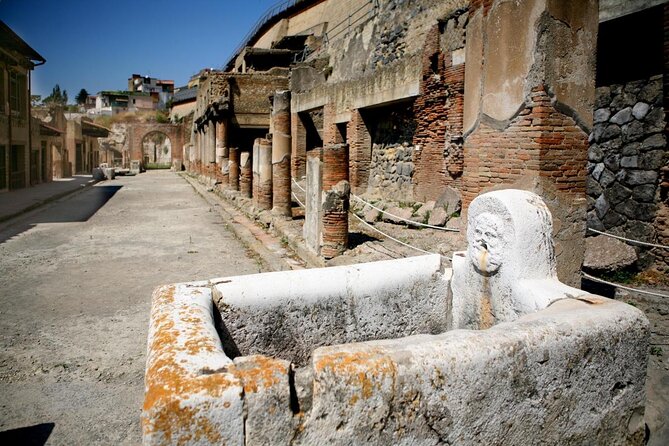
- Skip-the-line + admission included: you’re not juggling tickets and entry lines while the clock ticks.
- AR 3D glasses at set points: the effect kicks in at particular areas along the route.
- Small group size (max 15 people): it’s easier to ask questions and stay oriented.
- A guide-led walk of about 2 hours: helpful for structure at a compact but detail-heavy site.
- You can stay after the tour: once the glasses are returned, you can explore independently.
- Plan for real walking: comfortable shoes matter.
Herculaneum in 3D: how the AR glasses change what you see
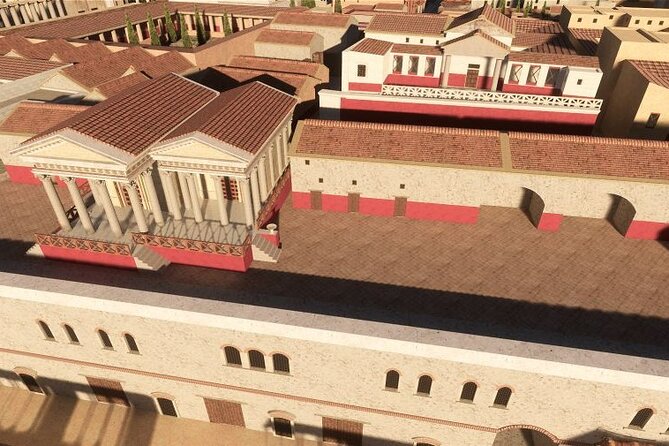
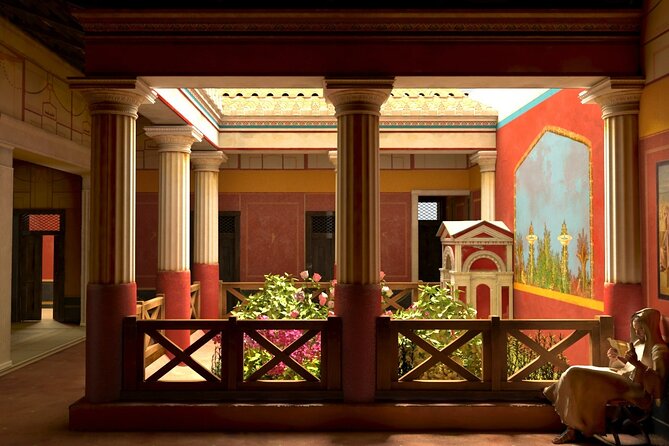
Herculaneum can feel a little abstract at first. You look at walls, floors, and doorways, and your brain has to translate “ruin” into “home, shop, or street.” This tour fixes that problem with augmented reality reconstructions, shown through the 3D glasses.
The best part is that the AR isn’t just a pretty filter. It’s meant to help you connect features you see on the ground—like architecture details and surfaces—with what those spaces likely looked like before the eruption. One reviewer summed it up as a way to see the region before the eruption and understand how people lived. That’s exactly the job the tech is trying to do.
You’ll also notice the tour’s structure supports the technology. The guide leads you along the main route, and then you stop at the moments where the glasses activate. Between those moments, you’re still hearing explanations, but the big visual work happens at key zones rather than continuously.
If you're still narrowing it down, here are other tours in Naples we've reviewed.


What you get for the price: skip-the-line entry plus guided AR
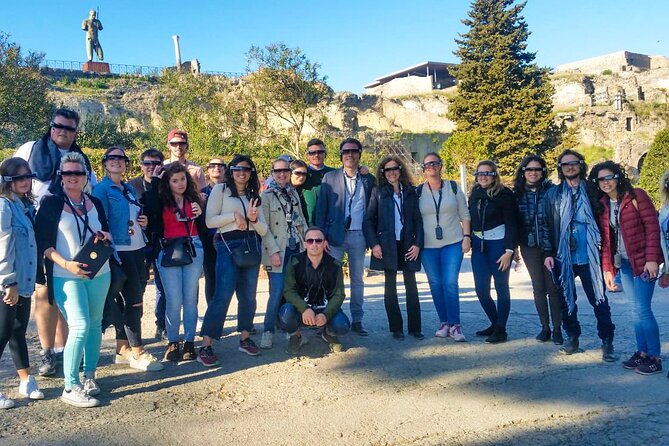
At $48.16 per person for about 2 hours, the value comes from bundling several things that are often separate on other tours: a guided experience, admission ticket included, and skip-the-line entry access. In plain terms, you’re paying for fewer hassles and more “meaning” per minute.
This site is smaller than Pompeii, but that doesn’t mean it’s simple. There are lots of details, and without context it can be easy to miss what matters. Having a guide helps you connect the ruins to real lived spaces instead of treating everything as a list of stones.
Also, this tour is offered in English, and it comes with a mobile ticket. That’s practical in a city where you’ll likely be scanning something anyway. For solo travelers or small groups, the max group size of 15 people can make the whole experience feel more personal than the big, bus-load style entries.
Meeting at Ercolano Ticket Office and planning your 2:30 pm start
The meeting point is the Herculaneum Ticket Office, postal code 80056, in Ercolano. The tour starts at 2:30 pm and ends back at the same meeting spot, with the glasses returned at the end.
Timing is important. Arrive at least 15 minutes early. If you’re late, they’ll wait for a maximum of 5 minutes, then the tour starts for the sake of everyone else. For a smooth afternoon, I’d treat the 2:30 start like it means 2:30—get there early, use the bathroom if needed, and avoid sprinting with a sore ankle right after.
The location is described as near public transportation, which is useful because Naples can be slow and unpredictable. If you’re combining Herculaneum with another stop that day, you’ll feel better when your meeting point is easy to reach and you don’t have to guess how long walking will take.
Stop 1 at Parco Acheologico di Ercolano: your guided AR route
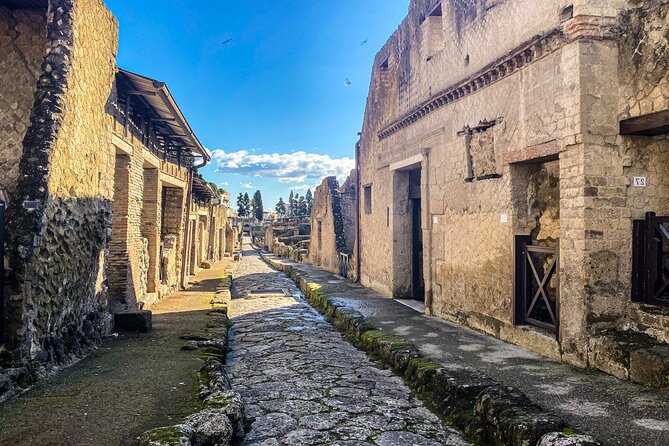
This tour is built around one main stop: Parco Acheologico di Ercolano (Herculaneum). You’ll follow the main route with a guide, and the AR glasses add reconstructions along the way.
Expect a guided walk that helps you see both past and present. The goal is to compare what’s left now with what those spaces may have looked like in everyday life. This is where Herculaneum often wins hearts: it’s not just grand ruins. It’s the kind of place that lets you imagine doors opening, rooms being used, and streets functioning.
One helpful detail: the glasses are activated at multiple areas—around eight zones—during the tour. That’s why the experience can feel like a cycle: walk with the guide → pause at a zone → turn on the glasses → see reconstructions → walk again. If you accept that pattern, you’ll likely enjoy the rhythm. If you want constant high-tech visuals, it can feel uneven.
How long it really feels: walking pace, group size, and staying power
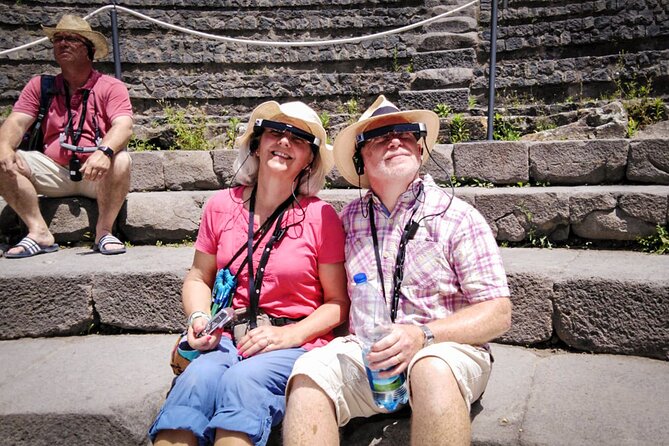
The tour is about 2 hours, and it’s described as a gentle, relaxed walk. That matters because Herculaneum isn’t a “stand still and admire” site. Even though it’s smaller than Pompeii, it still takes effort to move between areas and keep your attention on both guide explanations and what you’re seeing through the glasses.
The group is capped at 15 people, which usually means the guide can keep track of faces and questions. It also helps you avoid the feeling of being herded by a crowd.
One thing to plan for: the glasses can be tiring over time. Some people find the headset around the neck awkward, especially if you’re walking and looking around for a while. If you know you get neck strain, consider taking a brief moment during the walking segments to shift posture—without asking for constant pauses that slow the group.



AR 3D reality check: what works best and what to expect

Let’s talk about the elephant in the room: AR tech is either a game-changer or a gimmick. Here, it sounds like it’s mostly the former—when it’s working and when you use it at the right moments.
What tends to work well:
- The reconstructions help you visualize architecture and daily life.
- The combination of guide talking plus AR stops makes the site easier to process.
- The added dimension helps you understand why Herculaneum is different from Pompeii.
What can disappoint:
- The glasses may be briefly useful if you expect them to run continuously.
- Some commentary can feel limited if you’re not stopping long at each activated point.
- If a pair of glasses has a technical issue, you might notice a time lag between explanations and what you see.
There’s also a practical lesson here. Don’t treat this as a “walk and listen to the audio” experience. It’s a guided route where the AR is a tool, not the entire show. If you pay attention at each activation zone, you’ll get the value.
Guide style: what to listen for and how to get more out of it
Guides clearly matter on this tour. One account highlighted Chiara, describing a friendly approach and a pace that made it feel pleasant rather than rushed. Another described a personable guide with a knowledgeable feel and clear coverage of basics with the AR twist.
So here’s my advice: ask a question at the first or second AR zone. Since the route uses set activations, you don’t want to save all your curiosity until the tech is no longer doing anything. If you can, point at a feature you’re seeing and ask what it likely was in daily life.
Also, if you wear glasses: the info says AR glasses can also be worn by participants who already wear eyeglasses. That’s one less worry, since eye comfort can make or break a tech-based tour.
Kids and teen rules: who can use the 3D tech?

This tour includes AR glasses, but not every age group uses the 3D technology.
- Children under 8 can enter the park with a standard ticket, but they cannot use the 3D technology.
- Children under 18 must show a valid identity document or passport at the ticket office.
- Most people can participate, but because it’s a walking tour, comfortable shoes are still a must.
- AR glasses can be used alongside regular eyeglasses.
If you’re traveling with a family, think about whether your younger child will enjoy watching while others use the tech. The walk itself still matters here, since you’re guided through the ruins, not just watching a show.
Weather and walking logistics: keeping the day comfortable
They note the tour runs regardless of weather conditions, but the cancellation policy also mentions the experience requires good weather and could be rescheduled or refunded if canceled due to poor weather. In real life, that means you should plan for some flexibility and dress like Naples can change its mind fast.
The tour is outdoors and involves walking. Wear proper shoes, bring a layer if the evening is cool, and keep water in your bag. If you’re prone to slipping on stone or uneven ground, be extra careful—ruins are not smooth sidewalks.
One more practical timing tip: the site is easier to navigate with your guide early on. If you show up late, you’re more likely to miss the first orientations that make the AR comparisons click later.
After the tour: use the glasses’ finale as your springboard
At the end, the tour ends back at the meeting point and the AR glasses are returned. Then you can stay in the archaeological park and explore independently as long as you want.
That’s a smart setup. The guided portion helps you build a mental map of what you’re looking at. After that, you can slow down and focus on the parts that caught your attention during the reconstructions—without feeling like you’re being rushed off to the next zone.
If you’re the kind of person who always wants a bit more time in museum spaces, this matters. A guided tech tour can be fast by default; this one gives you a built-in reason to return to the site at your own pace after.
Herculaneum vs. Pompeii: when this tour makes your day better
If you’re planning to visit both Herculaneum and Pompeii, this tour can be a great warm-up. One key advantage is that it helps you understand Herculaneum’s differences, so Pompeii doesn’t feel like the only game in town.
Herculaneum is often described as memorable in its own right, and the AR approach helps you connect that impression to something concrete: the way spaces worked, not just the way they collapsed. So when you later stand amid Pompeii’s ruins, you’ll likely notice contrasts more clearly—what changes, what stays familiar, and how eruption impact shaped different parts of daily life.
So, should you book this Herculaneum 3D tour?
I’d book it if you want:
- A guided structure at Herculaneum instead of wandering with guesswork.
- AR reconstructions that help you “translate” the ruins into lived spaces.
- A small-group feel and a simple, practical format with skip-the-line entry.
I’d think twice if:
- You expect AR effects on every step and detailed narration everywhere.
- You’re sensitive to neck fatigue from wearing a headset for a walking tour.
- You’re the type who prefers long, unscripted time on-site right away (since this is a guided route with set AR activations).
If you’re visiting once, this is a strong way to get oriented fast and come away with a clearer sense of what you’re looking at.
FAQ
How long is the Herculaneum 3D skip-the-line walking tour?
It runs for about 2 hours.
Where do I meet for the tour?
You meet at the Herculaneum Ticket Office, 80056 Ercolano, Metropolitan City of Naples, Italy.
What language is the tour offered in?
The tour is offered in English.
Do I get admission included with the ticket?
Yes. Admission is included with the tour ticket.
Does this tour include skip-the-line entry?
Yes. The experience includes skip-the-line tickets.
Can kids use the 3D/AR technology?
Kids under 8 can access the park with a standard ticket, but they cannot use the 3D technology.
Can I bring my own glasses if I need them?
Yes. The AR glasses can be worn by participants who already wear eyeglasses.
What happens if I’m late to the meeting point?
They will wait for a maximum of 5 minutes. After that, the tour starts out of respect for other participants.
Will the tour run in bad weather?
The tour is stated to take place regardless of weather conditions, but the cancellation policy also notes it requires good weather and could be canceled due to poor weather, with an offer of a different date or a full refund.