REVIEW · NAPLES
Pompeii private tour from Naples. The best choice for cruisers
Book on Viator →Operated by Nino Pezzullo · Bookable on Viator
Pompeii feels close when you skip the hassle. This private 5-hour Pompeii day trip starts in Naples at Stazione Marittima and strings together the city’s top sights in English, led by guides like Nino Pezzullo. It’s built for people on a cruise who want a smooth plan and a real sense of the ruins.
I love that the plan includes admission tickets across key stops, plus a mobile ticket for an easier day at the site. I also like the pacing: short enough to keep you moving, but timed so you can actually read what you’re seeing instead of just rushing.
One possible drawback: this is an efficient route, not a slow wander. With many stops at 10–20 minutes, you’ll need decent walking stamina and good weather to get the full experience.
In This Review
- Key things to know before you go
- Why This Pompeii Private Tour Works So Well for Cruisers
- Getting From Naples to Pompeii: Stazione Marittima and the Peugeot Ride
- Your 5-Hour Route Through Pompeii’s Big Moments
- Porta Marina: Enter Pompeii Through One of the Seven Gates
- Forum of Pompeii: Daily Life’s Center Stage
- Santuario di Apollo: A Worship Spot with Ancient Connections
- Macellum: The City Market and Its Fish-Cleaning Core
- Suburban Baths: Private, Social, and a Bit Provocative
- Casa del Fauno: Wealth on the Street
- Teatro Grande: Greco-Roman Performances in Stone
- Anfiteatro Romano: One of Rome’s Oldest Amphitheaters
- Via dell’Abbondanza: Pompeii’s Main Shopping Street
- Casa dei Vettii: Decorative Wealth with a Mythic Protector
- Panificio di Popidio Prisco: How Bread Was Made
- Basilica: Business and Justice Under One Roof
- Price and Value: Is $216.27 a Smart Deal?
- The Big Advantage: Private Tickets, Short Stops, and a Real Guide
- Practical Tips So You Enjoy Every Stop (Not Just Survive Them)
- Start with footwear and pace
- Use the short stops wisely
- Ask about Naples context
- If your cruise day includes crowds
- Who This Tour Suits Best
- Should You Book This Private Pompeii Tour from Naples?
- FAQ
- How long is the Pompeii private tour from Naples?
- Where do we meet for the tour?
- Is this tour private?
- What language is the tour offered in?
- Are entrance tickets included?
- What vehicle is used for transportation?
- What if the weather is bad?
- Is free cancellation available?
Key things to know before you go
- Cruiser-friendly timing and logistics starting from Stazione Marittima in Naples and returning there
- Private group experience with only your party in the tour (no mixing with strangers)
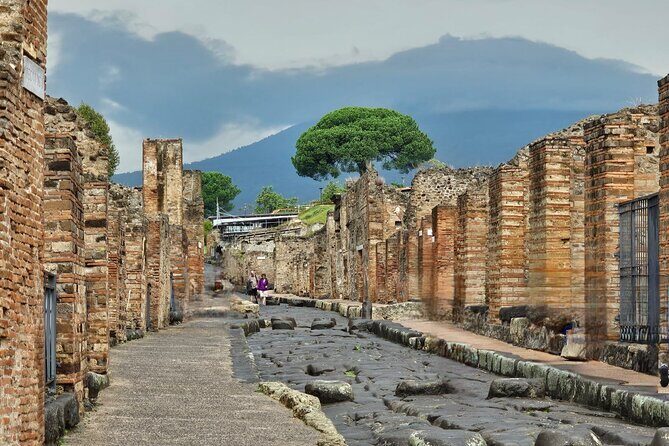
- Major Pompeii sites in one run, from Porta Marina to the amphitheater and big Roman street scenes
- Admission included at multiple stops, so you spend less time sorting tickets
- English tour with communication in advance, including guide updates through WhatsApp in some cases
- Comfortable transport using a Peugeot 3008 (larger vehicles available on request for a supplement)
Why This Pompeii Private Tour Works So Well for Cruisers
If you’re on a cruise, your time in Naples can feel like it has a countdown timer. This tour is designed for that reality: you get a fixed, do-able route with a clear start and end point back in the port area.
The best part is that you’re not piecing together buses, trains, and ticket lines while trying to make the ship. You’re simply going—then returning—back to the same meeting spot in Naples. That kind of structure matters when you’re trying to see Pompeii without turning the day into a stress test.
Also, because it’s private, your group can move at a pace that fits you. If you want a bit more time at the Forum or want to linger at the amphitheater, you’re not stuck behind a crowd-controlled conveyor belt.
Other tours departing from Naples
Getting From Naples to Pompeii: Stazione Marittima and the Peugeot Ride
The tour meets at Stazione Marittima, 80133 Napoli. You start and end there, so you’re not hunting for a meeting point on the far side of town when you’re already tired.
Transport is typically in a Peugeot 3008 (2014 model). If your group needs a larger car or a mini van, you can request it with a supplement. That’s a practical detail for families and small groups who don’t want to squeeze into a compact vehicle.
In at least one real-world pickup example, the guide met the group near the cruise area and they took a short walk to reach the car, then headed to Pompeii. Translation: plan for a brief walk, even if you’re not covering huge distances.
Your 5-Hour Route Through Pompeii’s Big Moments
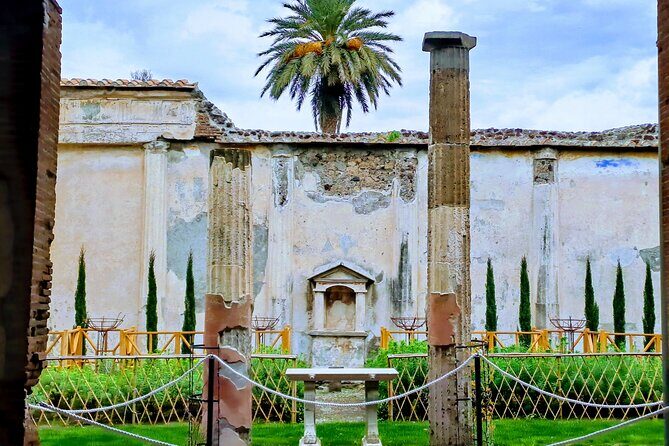
You’ll visit 12 major stops. Each one is short—think 10 to 20 minutes—so you get broad coverage fast. Here’s what you can expect at each stop, and what’s worth your attention.
Porta Marina: Enter Pompeii Through One of the Seven Gates
Your day begins at Porta Marina, one of the seven gates of Pompeii. This gate helps you get your bearings fast because you’re stepping into Pompeii’s layout from a meaningful entrance point, not from some random interior corner.
What to focus on: notice how the city reads like a planned system. Gates weren’t just doors. They were part of how the city controlled movement and trade.
Forum of Pompeii: Daily Life’s Center Stage
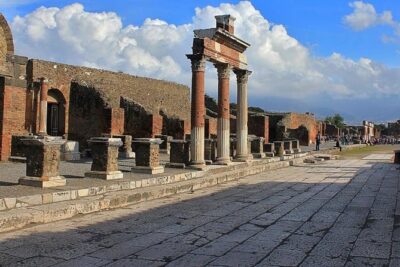
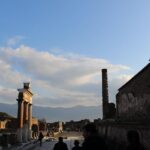
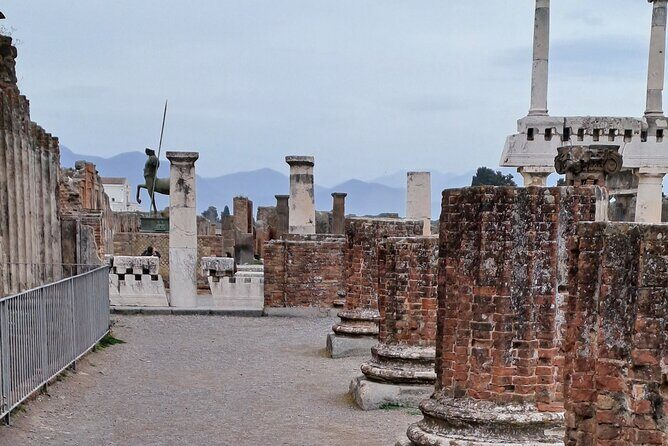
Next is the Forum, the civil center of daily life. Public buildings overlook it, so this is where Pompeii starts feeling like a working city instead of just a ruin.
What to focus on: look for the layout logic. The Forum is where business and justice happened, and the architecture explains why people would gather here day after day.
Other Civitavecchia + cruise shore excursions


Santuario di Apollo: A Worship Spot with Ancient Connections
At the Sanctuary of Apollo, you’re in one of Pompeii’s oldest worship zones. The choice of Apollo is tied to the Greek and Etruscan presence in Campania, which gives you a wider lens than only Rome.
What to focus on: notice the location and setting. Religious spaces were often positioned deliberately, so you’re really learning about how people thought and organized belief.
Macellum: The City Market and Its Fish-Cleaning Core
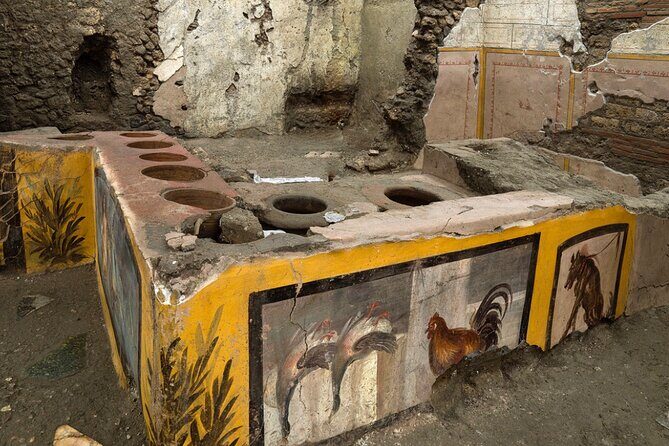
The Macellum is Pompeii’s market area. In the courtyard, there was a circular structure tied to the selling and cleaning of fish.
What to focus on: food culture. Markets show you daily rhythms—where people went, what they handled, and how commerce worked at street level.
A quick heads-up: markets can feel visually repetitive if you rush. If your guide slows down for context, that’s the difference between seeing ruins and understanding them.
Suburban Baths: Private, Social, and a Bit Provocative
The Suburban Baths are different from other thermal facilities because they were private. There are also erotic subject images in the changing room area, advertising activities that took place upstairs.
What to focus on: contrast “Roman bathhouse” with this specific one. Even within one category of public life, Pompeii shows variety.
Consideration: if you’re sensitive to explicit imagery, you might want to take brief pauses and move on quickly. The stop is short, but it’s direct.
Casa del Fauno: Wealth on the Street
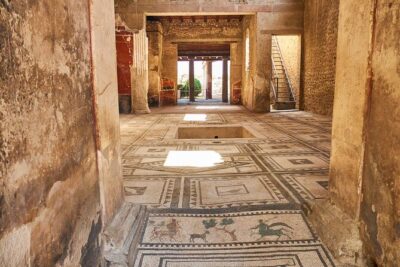
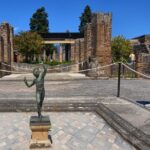
The Casa del Fauno is one of the largest homes in Pompeii. From the street, you can already sense the owner’s wealth and social position.
What to focus on: the power of scale. In Pompeii, house size and details often act like social signatures. This stop helps you understand how different classes lived side by side in the same city.
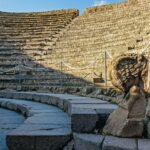
Teatro Grande: Greco-Roman Performances in Stone
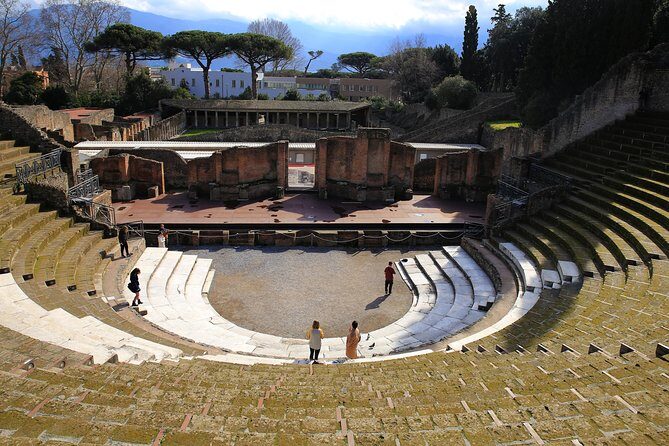
At the Teatro Grande, you’re looking at a theater built around the middle of the 2nd century BC. It hosted Greco-Roman comedies and tragedies.
What to focus on: the relationship between space and performance. Even if you’re not seeing an active show, the design tells you how audiences would have been positioned and why this mattered.
Anfiteatro Romano: One of Rome’s Oldest Amphitheaters
Then comes the Anfiteatro Romano, built around 70 BC and said to have held up to about 20,000 spectators. This is the stop that often makes people stop talking for a moment.
What to focus on: capacity and engineering. The scale of the seating and the physical presence of the structure makes the city’s Roman influence feel tangible.
Via dell’Abbondanza: Pompeii’s Main Shopping Street
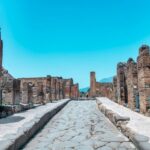
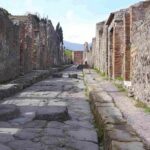
Via dell’Abbondanza was one of Pompeii’s key commercial streets. Think shops, traffic, and everyday browsing—more “city life” than “monument life.”
What to focus on: storefront rhythm. Even when many businesses are gone, you can still read the pattern of street commerce.
If you’re short on energy, this is still a good stop because it helps you reconnect Pompeii to daily routines in a way big buildings can’t.
Casa dei Vettii: Decorative Wealth with a Mythic Protector
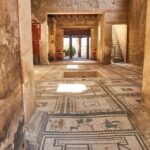
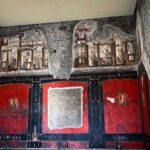
The Casa dei Vettii is among the richest and best-known homes. The story includes protection by Priapus, tied to prosperity. The rooms are richly decorated.
What to focus on: details. This is where Pompeii becomes personal—decor choices, room layout, and how the house performs as a status object.
Panificio di Popidio Prisco: How Bread Was Made
Next is the Panificio di Popidio Prisco, a bakery. You’ll get an explanation of how bread was produced—one of those topics that turns history into something you can almost smell.
What to focus on: production logic. When you understand the process, you stop seeing a “room” and start seeing an operation.
Basilica: Business and Justice Under One Roof
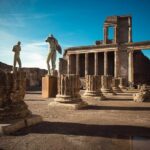
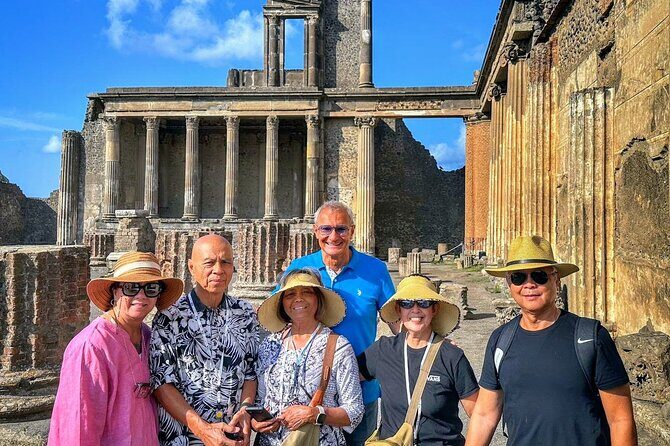
The last stop is the Basilica. It was the most sumptuous building in the Forum, used for business and justice.
What to focus on: civic function. This is the kind of building that explains why the Forum mattered. It’s not just a square—it’s where decisions happened.
Price and Value: Is $216.27 a Smart Deal?
At $216.27 per person, this tour isn’t a budget throw-together. But in your favor, multiple stops include admission tickets, and the format is private.
That matters for two reasons:
- Time saved is money saved. In a port day, getting stuck in lines or figuring out tickets can eat your best hours.
- You’re paying for interpretation, not just entry. A private guide route helps you understand what you’re seeing at each stop—especially when Pompeii can feel like a list of ruins if you don’t have context.
You also get a few practical add-ons: mobile ticket use and group discounts (when applicable). If you’re traveling with family or friends, that can make the per-person cost feel much more reasonable.
One note: the route is packed into about 5 hours. If you love slow museum-style touring, you might feel slightly rushed. If you want a strong overview of Pompeii’s most famous areas without wasting time, this is a good fit.
The Big Advantage: Private Tickets, Short Stops, and a Real Guide
The overall experience is built around reducing friction. In real-world use, people reported that tickets were handled so they could skip the crazy lines, and that pre-arranged tickets helped the day stay smooth.
You also get guide communication in advance. For example, one group mentioned WhatsApp contact and even a video showing the guide’s location. That’s the kind of small, practical detail that prevents confusion at the port.
And the guide experience matters. Nino Pezzullo is repeatedly described as friendly, professional, and able to answer questions about Pompeii and the Naples region. One other guide name, Carmen, also appears in a cruise pickup story, with a personal connection to Pompeii and archaeology mentioned there too.
Balanced take: no tour is perfect. One review mentioned a road accident during pickup and said the tour was still great, but they had difficulty understanding English during the day. That’s a reminder to set expectations: if English clarity is crucial for you, pick your questions and ask for repeat explanations early.
Practical Tips So You Enjoy Every Stop (Not Just Survive Them)
Pompeii rewards attention. It also punishes sore feet. Here’s how I’d set yourself up for a smoother day.
Start with footwear and pace
You’ll cover multiple major areas in 5 hours. Wear shoes you trust for uneven ground and lots of walking. Don’t plan heavy shopping or a long lunch right after—save energy for the return.
Use the short stops wisely
Because each stop is brief, you’ll get the most if you pick what matters to you:
- Want family life and city layout? Focus on the Forum, houses, and street.
- Want culture and power? Spend extra attention at Teatro Grande, amphitheater, and Basilica.
- Want everyday tech? Go for the bakery and market.
Ask about Naples context
One of the strengths of this tour is that Pompeii isn’t treated like a standalone theme park. You’ll often get context tying back to the region. If you ask questions about where ideas came from—Greek, Etruscan, Roman—Pompeii gets easier to understand fast.
If your cruise day includes crowds
A few people noted the benefit of starting early to avoid holiday crowds. If your guide has flexibility that day, go with the earliest feasible start. It usually makes your photos and your sanity better.
Who This Tour Suits Best
This Pompeii private tour is a strong match for:
- Cruisers who want a clear plan and minimal stress
- Small groups who prefer a private experience over large group herding
- People who want a top-sites overview in about 5 hours
- Anyone who appreciates context—how Pompeii worked, not just what it looks like
It may be less ideal for you if you want a long, slow, deep study of only one house or only the archaeology museum side of Pompeii. This is about coverage and understanding, fast.
Should You Book This Private Pompeii Tour from Naples?
I’d book it if you’re on a cruise and you want a structured day that hits the must-see stops without wasting your limited time. The combination of private format, admission included at multiple points, and a known meeting spot at Stazione Marittima makes it feel built for real port-day timing.
Skip it if you’re hoping for a slow “wander and linger” Pompeii experience. You’ll still see a lot, but the clock is part of the design.
If you’re choosing between options, this one tends to win for people who want the big story of Pompeii told clearly, site by site, in English, with less waiting and less head-scratching.
FAQ
How long is the Pompeii private tour from Naples?
The tour lasts about 5 hours.
Where do we meet for the tour?
The meeting point is Stazione Marittima, 80133 Napoli NA, Italy.
Is this tour private?
Yes. Only your group participates.
What language is the tour offered in?
The tour is offered in English.
Are entrance tickets included?
Admission tickets are included for the listed stops.
What vehicle is used for transportation?
Transport is typically carried out with a Peugeot 3008 (2014 model). Larger cars or mini vans are available on request for a supplement.
What if the weather is bad?
The experience requires good weather. If it’s canceled due to poor weather, you’ll be offered a different date or a full refund.
Is free cancellation available?
Yes. You can cancel up to 24 hours in advance for a full refund.