REVIEW · NAPLES
Pompeii: Private Tour with an Archaeologist
Book on GetYourGuide →Operated by Askos Tours · Bookable on GetYourGuide
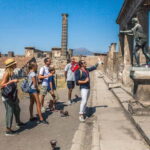
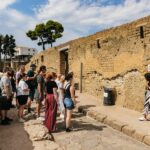
Pompeii feels close when you have a guide. This private archaeologist tour maps the western part of Pompeii from Porta Marina to the amphitheater, explaining what you’re looking at in the streets where Romans lived until Vesuvius buried the city in 79 A.D.
I really like that the walk hits the big public spaces and major houses in a single three-hour loop. You’ll see stops such as the Forum and Basilica, plus home bases like the House of Menander, then round it out with major entertainment venues. I also like the human, question-friendly way the guides teach; names that pop up in past tours include Nicoletta, Patrizia, Jasmine, Silvia, Serenella, and Diego.
One key consideration: Pompeii is a lot of walking on stone, and the site can be slick in rain. The tour runs in any weather, and umbrellas are listed as not allowed, so plan for rain with a practical approach rather than relying on an umbrella.
In This Review
- Key highlights worth your attention
- Why this western Pompeii loop works so well
- Meeting at Porta Marina Superiore: get your bearings fast
- Porta Marina and the early context you’ll carry all day
- Temple of Apollo, the Forum, and Basilica: public life in walking distance
- House of Menander: when the city turns private
- Forum Baths and the daily rhythm of Roman life
- Lupanare brothel stop: the honest side of Pompeii
- House of the Faun and the “bigger picture” of domestic Pompeii
- Large Theatre and the Amphitheater: entertainment and crowd energy
- House of the Vettii: closing on status and everyday signals
- What I’d watch for: walking pace, rain, and site rules
- Value and price: when this private tour is the right spend
- The guide experience: warmth, humor, and room for questions
- Should you book this Pompeii private tour?
- FAQ
- How long is the Pompeii private tour with an archaeologist?
- Where do I meet the guide, and where does the tour end?
- Is skip-the-line admission included?
- Is this a private tour?
- What languages are available for the live guide?
- What should I bring, and are umbrellas or pets allowed?
- Does the tour run in bad weather?
- Is the tour wheelchair accessible?
- Do I pay upfront, and can I cancel for a full refund?
Key highlights worth your attention
- Private archaeologist guide who can answer questions on the spot and point out details most people miss
- Western Pompeii route in 3 hours, hitting the Forum area, major houses, baths, and theaters
- Skip-the-line admission and meeting right at Porta Marina Superiore for an efficient start
- Lupanare brothel stop and plaster casts of victims for a harder, more honest side of the story
- Roman life in real spaces, from public buildings to private homes and entertainment venues
Why this western Pompeii loop works so well
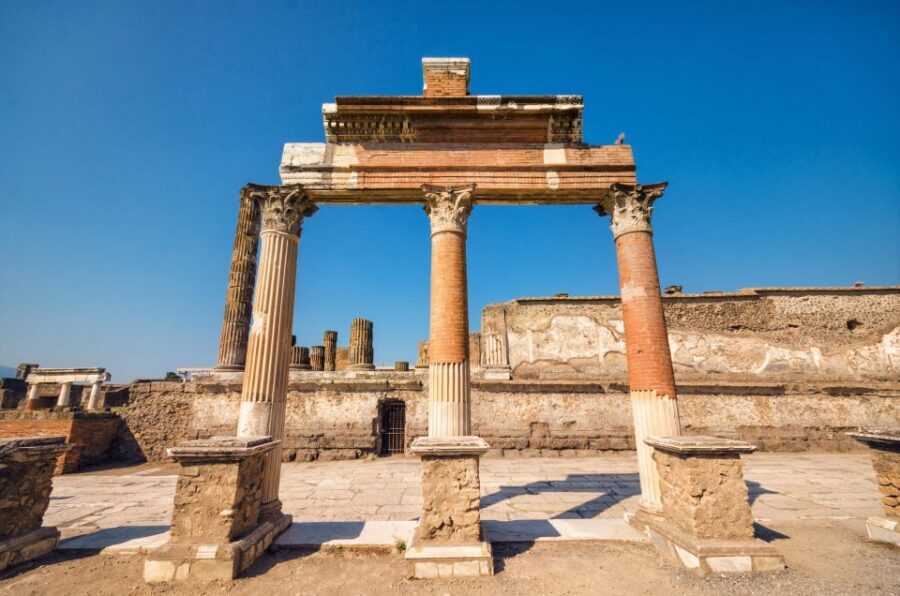
If Pompeii feels overwhelming, you’re not alone. The ruins are spread out, and without a plan, it’s easy to wander past the places that actually explain how the city functioned. This tour is designed to solve that problem with a tight route through the western sectors of town—built around the places where you can see daily life, civic power, and social behavior all in one pass.
The other thing I like is that it’s not just “look at that wall.” The tour is guided by a certified archaeologist-guide, so you get explanations that connect the setting to the people. The Pompeii story is often told as catastrophe first. Here, you get the bigger picture: what Romans did, how public life worked, and how the eruption stopped it all. That contrast hits harder when you’ve just walked through the spaces.
At $508.15 per group up to 1, it’s not a bargain-bin price. But you are buying time, focus, and clarity. In a place like Pompeii—where the site is huge and the details matter—private guidance can turn confusion into momentum.
Other Pompeii tours with an archaeologist

Meeting at Porta Marina Superiore: get your bearings fast
This tour starts at the Pompeii main gate called Porta Marina Superiore. You meet your guide in front of the bar-restaurant Hortus, specifically the building with lemons and oranges hanging outside. That’s a helpful landmark because Porta Marina Superiore is an entrance point you can actually spot, even if you’re new to Pompeii.
From a value standpoint, this is smart. You’re not spending the first part of your time figuring out where to go. You’re already at the edge of the action, stepping into the city route the guide will manage for you.
Also note the end of the experience: it finishes back at the meeting point area (Porta Marina Superiore / Scavi di Pompei – Biglietteria). That matters if you’re trying to keep the rest of your day organized—no long trek across town at the end.
One practical tip: if you’re visiting on the first Sunday of the month, entrance is free, but tickets can’t be reserved ahead of time and entry isn’t guaranteed. If that date matters to you, plan extra flexibility for timing.
Porta Marina and the early context you’ll carry all day
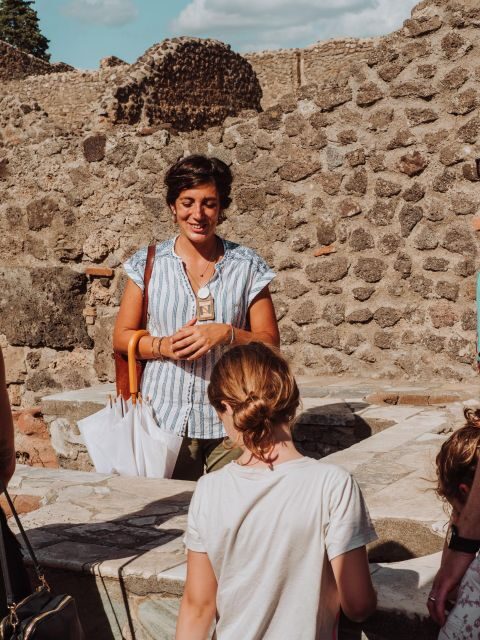
The first real stop after meeting is Porta Marina. As the main gate, it’s the perfect place to start learning how this city was laid out and how people moved through it. Your guide will set the stage so that later stops don’t feel like random highlights. When you understand what a gate means in an urban plan—access, flow, boundaries—you start seeing the city as a system, not a museum of fragments.
What I’d watch for here is how your archaeologist guide frames the big themes: Roman life before Vesuvius, the character of the western part of the city, and the idea that you’re walking through a town that has preserved moments of normal life. That framing is what makes the later homes and public buildings feel personal instead of distant.
Temple of Apollo, the Forum, and Basilica: public life in walking distance
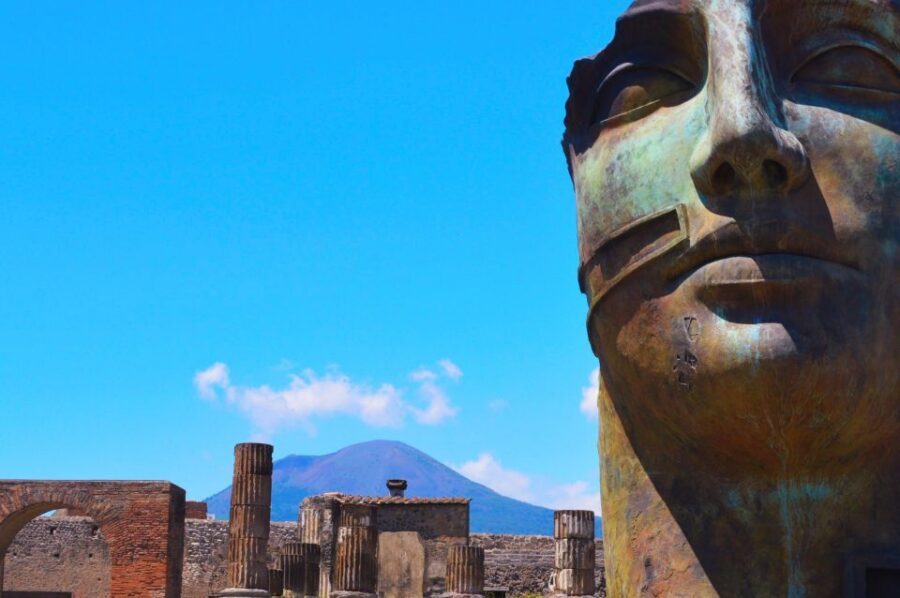
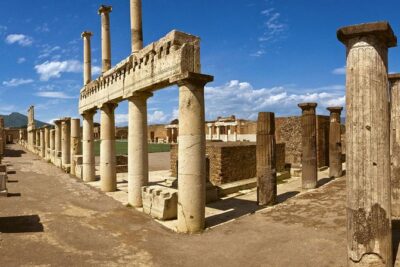
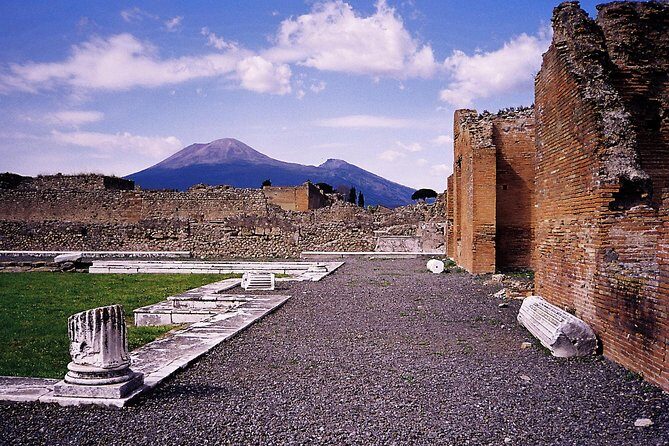
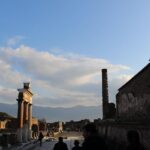
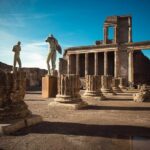
The route then moves through major civic and sacred spaces, including the Temple of Apollo and the Foro Civile di Pompei (the civic forum). You also stop at the Basilica. Even if you don’t know these terms cold, the guide’s job is to translate the function of each place into real meaning—where people gathered, where civic activity happened, and how architecture supported social order.
This is one of the best parts of the tour format: you get public buildings in a sequence that mirrors how you’d experience them if you were a resident moving through the city. Instead of bouncing around the site, you get a coherent story.
A small drawback to keep in mind: public areas can get crowded, and you’re doing a steady walking pace. That’s exactly why having a private guide helps—someone who can steer you through the flow and explain what you’re seeing before you get lost in the crowd.
House of Menander: when the city turns private
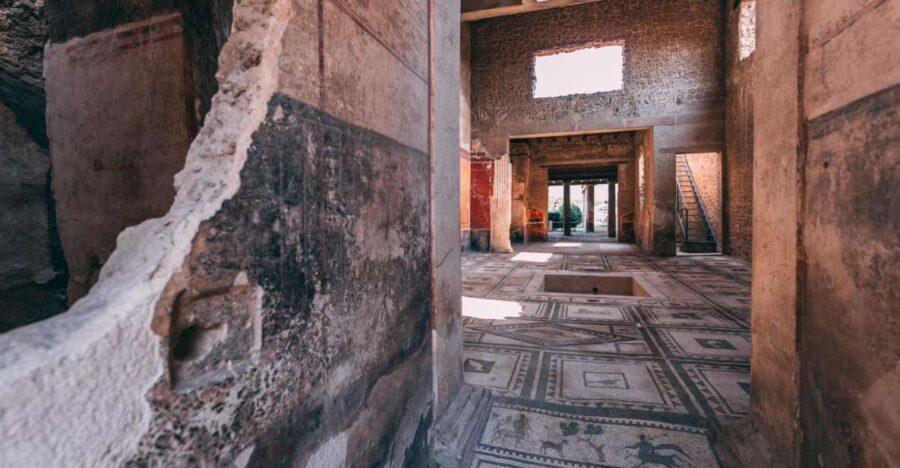
After the public stops, the tour shifts into domestic Pompeii with the House of Menander. A house stop can be a turning point on Pompeii tours because it changes the emotional temperature. You’re moving from civic spaces built for crowds into private rooms that reflect daily routines, family life, and the choices people made with their homes.
What makes this stop valuable is the way an archaeologist can connect the details to human behavior: how wealth, status, and everyday needs show up in design decisions. Even if you’re not an architecture person, this is where the city becomes more relatable.
This is also where you’ll likely appreciate the private format most. In a group tour, you often have to listen while juggling other people’s pace. Here, you can ask questions and slow down without holding up everyone else.
Other private and VIP Pompeii tours


Forum Baths and the daily rhythm of Roman life
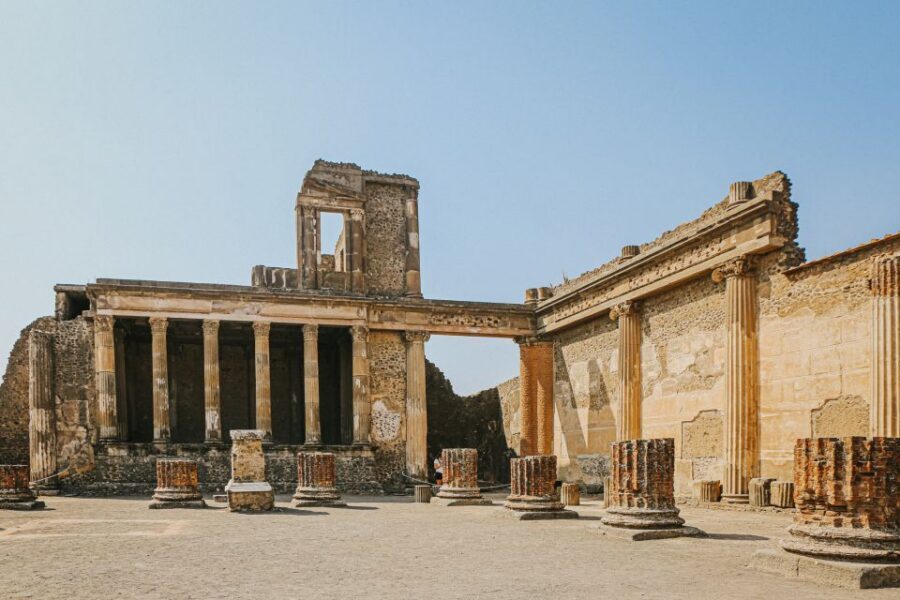
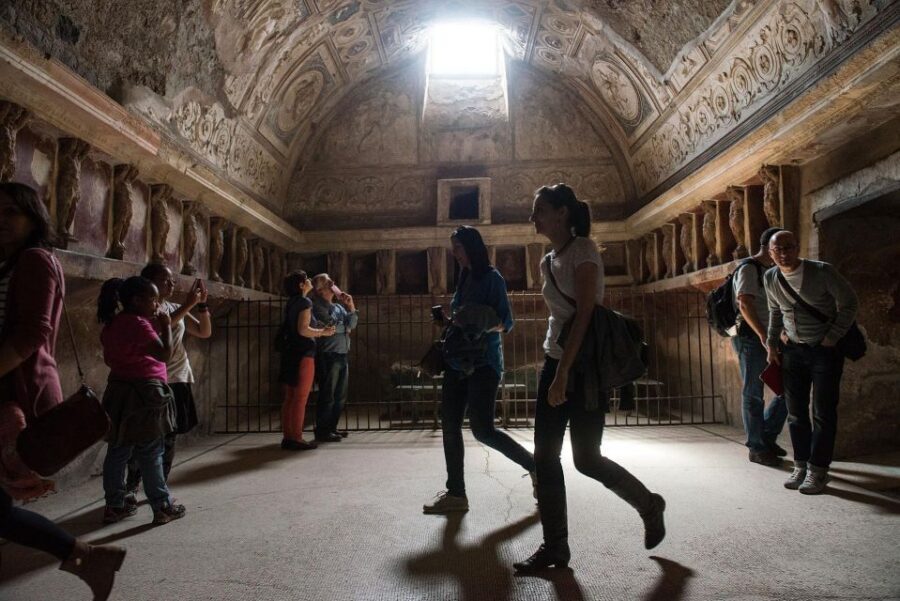
Next comes Forum Baths. Baths are one of those Pompeii topics that can sound broad until you stand in the space and realize how central bathing and social time were to city life. The tour uses this stop to bring the Roman day-to-day into focus, so you’re not only learning about politics and big structures.
Your guide’s explanations matter here because baths aren’t just “a room with water.” They’re a public setting with social rules, routines, and movement through space. An archaeologist can also point out what survives and what you have to infer, which helps you avoid turning Pompeii into a pure guess game.
Also, baths areas tend to involve uneven footing and multiple ground levels. Wear the comfortable shoes you plan to use for the day—this is not the kind of walking where you want to be testing footwear.
Lupanare brothel stop: the honest side of Pompeii
One of the standout stops is the Lupanare, listed on the route as the brothel. This is not a soft stop. Pompeii isn’t only grand villas and temples; it also includes places tied to the social realities of the city. Seeing the Lupanare during a guided walk helps because your guide can explain it in a way that stays grounded and avoids turning it into spectacle.
This is also a part of the tour where the tour’s “human stories” approach really matters. If you’re sensitive to darker content, it’s good to know this stop is part of the route so you can pace yourself mentally. The value is that Pompeii becomes more complete when you understand that daily life included difficult realities, not just beauty and power.
And the tour overview also includes plaster casts of victims. That’s another reminder that you’re walking through a tragedy, not a themed attraction. In a private tour, you can let those moments land without being pulled along by a mass group tempo.
House of the Faun and the “bigger picture” of domestic Pompeii
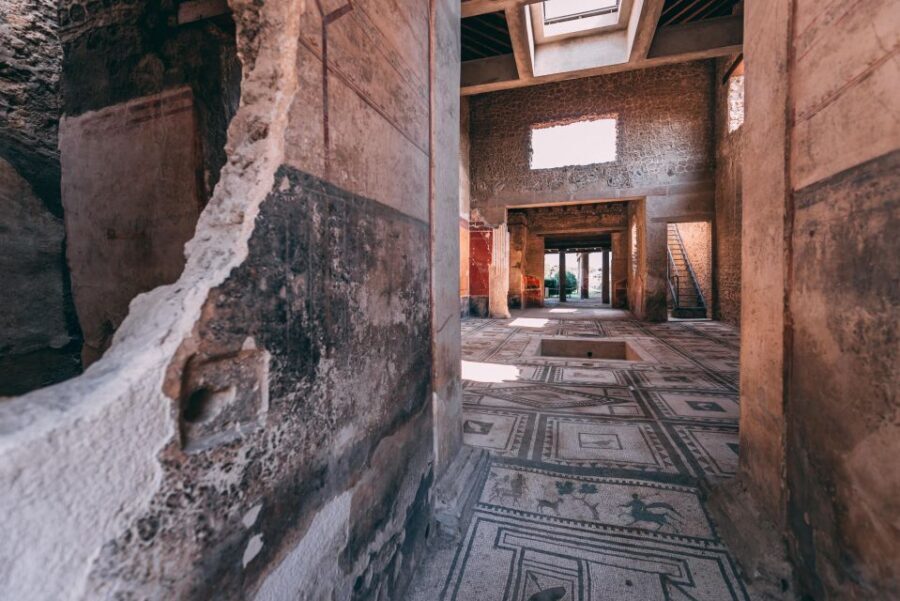
The House of the Faun is another home stop, and it helps you compare what you saw earlier in the House of Menander. Even with the names only, the pattern is the point: Pompeii preserves domestic spaces well enough that a guide can help you understand how different households expressed identity through layout and decoration choices.
The best way to use this stop is to ask questions about what makes a house feel different from a public building. When you can compare privacy, movement, and purpose between these spaces, the city becomes more legible.
Large Theatre and the Amphitheater: entertainment and crowd energy
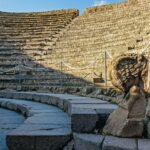
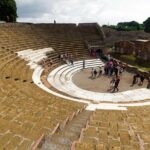
The route includes the Large Theatre and then ends with the Amphitheater of Pompeii. That pairing is smart because it gives you two lenses on entertainment: one tied to staged performances and one tied to spectacle for larger crowds.
Theatres and amphitheaters aren’t only about architecture. They’re about how a city gathers people and creates shared experience. In a guided walk, you’ll get context that helps you connect these spaces to civic life—how leisure and identity played out in public.
One practical thing: by the time you reach the entertainment venues, you’ve usually built up momentum from earlier stops. That helps here, because you can spot design clues and imagine movement through the spaces instead of just looking at stone tiers.
House of the Vettii: closing on status and everyday signals
The House of the Vettii is the last major domestic stop on the route before you move on to the Amphitheater. This timing matters. You finish the domestic portion of the city and then step back into the crowd spaces of entertainment.
That order gives you a nice contrast: private meaning on one side, public experience on the other. If you’re trying to learn Pompeii efficiently, it’s a good structure because it lets your brain categorize what you see. Houses stop feeling like isolated sights and start feeling like a map of social life.
What I’d watch for: walking pace, rain, and site rules
This tour is a walk through Pompeii, and the experience is described as intense. That’s accurate in a practical way. You’ll be on your feet for the full 3 hours, moving through uneven stone surfaces and changes in elevation. Pack in the morning energy, and expect to feel it by the end.
Rain is also real in Campania. The tour runs in any weather condition. The guidance suggests bringing a small umbrella and/or a raincoat in case of rain, but the tour rules say umbrellas aren’t allowed. So I’d plan on a raincoat as your safer bet. If you want to bring anything else, confirm with your guide for what they will allow on your specific day.
Other rule notes from the tour details:
- Umbrellas are not allowed
- Pets are not allowed
- Bring comfortable shoes
If you need accessibility support: the activity lists wheelchair accessibility, but it’s also marked not suitable for wheelchair users. I’d treat that as a “check first” situation rather than a certainty.
Value and price: when this private tour is the right spend
Let’s talk money plainly. This is $508.15 per group up to 1 for a 3-hour private tour with a certified archaeologist-guide, skip-the-line admission fees included, plus disposable earphones for bigger groups.
So when is it worth it?
- When you want a tight route that hits major western Pompeii highlights without wasting time.
- When you care about interpretation—what buildings meant, how people lived, and how the eruption changed everything.
- When your questions matter. The private format is built for back-and-forth, and the guide quality is a big part of what people praise.
- When you want to avoid the “I saw stuff, but I don’t know what it meant” problem.
When might it not be the best fit?
- If you just want a casual stroll and don’t care much about explanations.
- If you’re budget-first and can’t justify a private guide rate.
- If you’re highly sensitive to walking intensity and you can’t adjust your pace.
In other words: you’re paying for clarity and time. Pompeii rewards that kind of spend if you’re the type of person who likes to understand what you’re seeing.
The guide experience: warmth, humor, and room for questions
One of the strongest signals from past tours is that the guides bring more than textbook facts. People highlight guides who are warm and friendly, who answer questions, and who point out small details that change how you read the ruins. Names that appear include Nicoletta, Patrizia, Jasmine, Silvia, Serenella, Annalisa, Diego, Andrea, Paola, Michele, Monica, and Mena.
A practical takeaway: during the tour, don’t wait until the end to ask what you really want to know. If you’re into the volcano and preservation process, bring that up early. If you want the human angle—how ordinary life looked before 79 A.D.—ask directly. Private time is most valuable when you guide the guide.
Some guides also seem flexible with pacing around crowds, and at least one account notes how helpful that was for families with kids. If you’re traveling with teens or children, it’s reasonable to expect you’ll be able to keep them engaged with the right guide approach.
Should you book this Pompeii private tour?
I think this tour is a strong pick if you want Pompeii to make sense fast. The route is structured, the guide is certified, and the experience includes both major public spaces and domestic life—plus darker moments like the brothel and the plaster casts of victims. If you’re the kind of traveler who hates getting lost in a big site, the private format is the point.
Book it if:
- You want skip-the-line entry and a tight 3-hour plan.
- You care about how Romans lived, not just what happened.
- You like asking questions and getting specific answers.
Consider a different option if:
- You’re trying to keep costs low and don’t need an archaeologist guide.
- You can’t handle uneven, continuous walking for 3 hours.
- You have mobility needs and need clarity on the wheelchair/access situation first.
If you do book, wear your comfiest shoes and go in ready to look closely. Pompeii rewards attention, and with this setup you won’t waste it.
FAQ
How long is the Pompeii private tour with an archaeologist?
The tour duration is 3 hours.
Where do I meet the guide, and where does the tour end?
Meet your guide at the Pompeii main gate called Porta Marina Superiore, in front of the bar-restaurant Hortus (the building with lemons and oranges hanging outside). The tour ends back at the meeting point.
Is skip-the-line admission included?
Yes. Skip-the-line admission fees are included.
Is this a private tour?
Yes, it’s a private group tour.
What languages are available for the live guide?
The tour offers live guides in Japanese, English, Spanish, Italian, German, French, Portuguese, Chinese, and Russian.
What should I bring, and are umbrellas or pets allowed?
Bring comfortable shoes. Pets are not allowed, and umbrellas are not allowed.
Does the tour run in bad weather?
The tour takes place in any weather condition. In case of rain, the guidance recommends bringing a small umbrella and/or a raincoat.
Is the tour wheelchair accessible?
The activity lists wheelchair accessibility, but it’s also marked not suitable for wheelchair users. It’s best to confirm directly before booking.
Do I pay upfront, and can I cancel for a full refund?
You can reserve now and pay later, and there is free cancellation up to 24 hours in advance for a full refund.