REVIEW · NAPLES
Pompeii ruins and the city of Naples with private transportation
Book on Viator →Operated by Askos Tours · Bookable on Viator
A full day in two worlds: ancient ruins and Naples streets. This Pompeii and Naples combo works well because you get private transportation door-to-door in Campania and a guided walk through the best-known (and most story-filled) corners of Pompeii. Then you roll straight into Naples for a focused look at the historic center and major sights.
What I like most is how it keeps Pompeii time efficient. You start at Porta Marina and use skip-the-line admission to avoid a big chunk of waiting, which matters when you only have about an hour on site plus short guided stops.
One thing to consider: the day is packed into roughly 7 hours, with many sights outside Pompeii also kept to brief stops (often 10–20 minutes each). If you want long, slow museum-style time, you may feel a bit rushed.
In This Review
- Key things to know before you go
- Private minivan pickup: where this tour wins on stress
- Pompeii entry at Porta Marina: fast start, big payoff
- Pompeii highlights in a tight route: what you actually see
- The Basilica: where commerce and shelter met
- Granai del Foro: marble tables, fountain baths, and casts
- The Forum: Pompeii’s main square
- Main street walk: how the city moved
- Stabian Baths: Pompeii’s oldest thermal complex
- Lupanar: the most famous brothel
- Casa del Fauno: big private residence, bold presence
- Casa del Menandro: wealth shown through architecture and decoration
- Teatro Piccolo and Teatro Grande: public entertainment made physical
- Naples panoramic transfer and a pizzeria lunch in the historic center
- Baroque Piazza del Gesù Nuovo and the Santa Chiara contrast
- Spaccanapoli and Duomo di Napoli: how neighborhoods and cathedrals connect
- San Lorenzo Maggiore and Sansevero Chapel: the quieter wow moments
- Price and time: is $605 per person worth it?
- What it feels like with the right guide (Julia’s impact)
- Who should book this Pompeii and Naples private day?
- Before you go: shoes, heat, and a smart packing checklist
- Should you book this tour?
- FAQ
- How long is the tour?
- Is pickup available?
- Is this tour private?
- What language is the guide?
- Do I need to buy tickets for Pompeii?
- Is lunch included?
- What should I bring?
- What is the cancellation policy?
Key things to know before you go
- Skip-the-line Pompeii entry helps you start seeing things faster.
- Private minivan pickup from ports, hotels, or other Campania accommodations cuts transfer stress.
- A Pompeii route that hits baths, houses, forum spaces, and theaters without feeling aimless.
- Naples highlights across different eras, from Baroque churches to Gothic cathedral details.
- Lunch is built into the day with a pizzeria stop in the historic center (confirm on your booking).
- Professional guide support the whole time, with English language guidance.
Private minivan pickup: where this tour wins on stress
Naples can be chaotic, and getting to Pompeii on your own often turns into a timetable puzzle. This tour is built around modern transportation by minivan, with a driver handling the getting-there part. Your guide is with you for the full experience, so you are not stuck figuring out which entrance to use or where to line up.
Pickup is offered from a lot of places in Campania, including ports and hotels. You meet the driver by holding a sign with your name, which is a small detail that pays off fast—especially if you are arriving by cruise or you are not sure how the pickup zones work. Drop-off returns you to ports in Campania or your accommodation, so you keep your day intact instead of losing it to logistics.
You’ll also appreciate the practical inclusions: taxes, fuel, and parking are covered. That keeps the day from turning into surprise line items when you are already paying for the convenience of a private-style schedule.
If you're still narrowing it down, here are other tours in Naples we've reviewed.
Pompeii entry at Porta Marina: fast start, big payoff
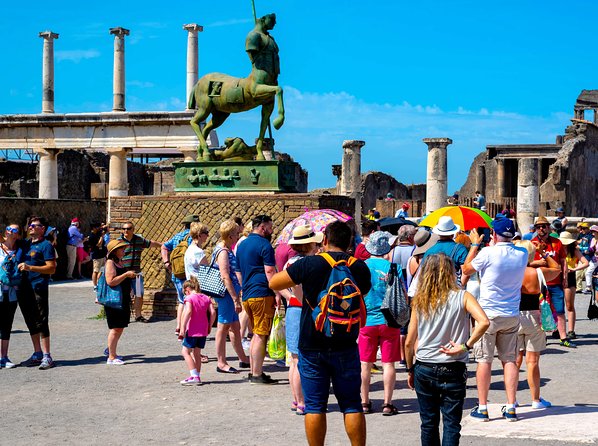
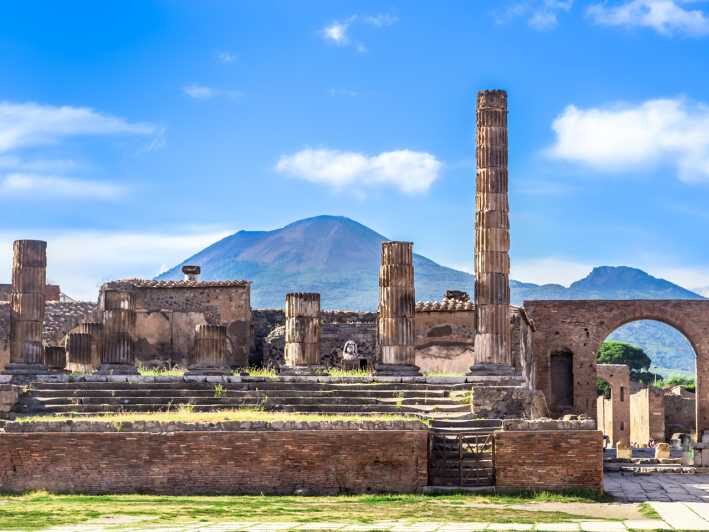
Pompeii is one of those places where timing really matters. The site is enormous, and if you waste time at the gates, your choices shrink. Here, the plan starts with transfer to the ruins and entry from the main entrance called Porta Marina.
The tour uses skip-the-line admission, so you can focus on the route instead of standing around. Once inside, you get around with a guided sequence that moves from major public spaces into daily-life corners and standout buildings. The time allocation is tight, but it is tightly planned: you’re not trying to cover everything, you’re hitting the highlights that explain how Pompeii worked.
One important note: one part of the day’s details indicates Pompeii admission tickets are not included, while the inclusions list says Pompeii admission fees are included in the price. That conflict happens often with tour pages. I’d treat it as a reminder to check your confirmation message before you show up. If you have the skip-the-line part, it should be taken care of—just verify the paperwork so you do not end up scrambling.
Pompeii highlights in a tight route: what you actually see
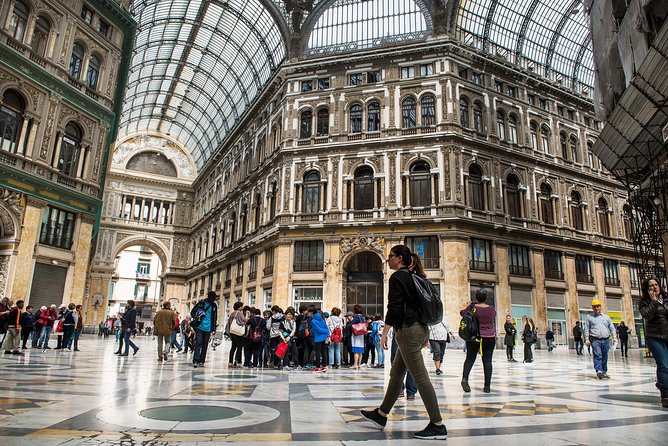
Inside Pompeii, you get a series of focused stops. Think of it as a guided tour that teaches you what you’re looking at. Each stop is short—often around 10–15 minutes—so you’re best off with comfortable shoes and a willingness to move.
The Basilica: where commerce and shelter met
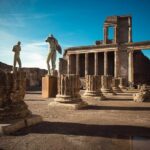
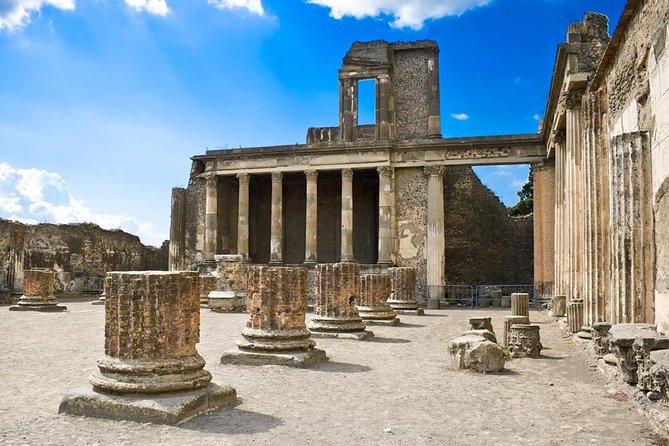
You begin with the Basilica, described as an open portico that served as shelter for merchants and other activities. This is the kind of stop that makes Pompeii click. Instead of viewing ruins as just stone shells, you’re shown how people would have used these spaces for business, movement, and social rhythm—things you can picture even if the buildings are gone.
Granai del Foro: marble tables, fountain baths, and casts
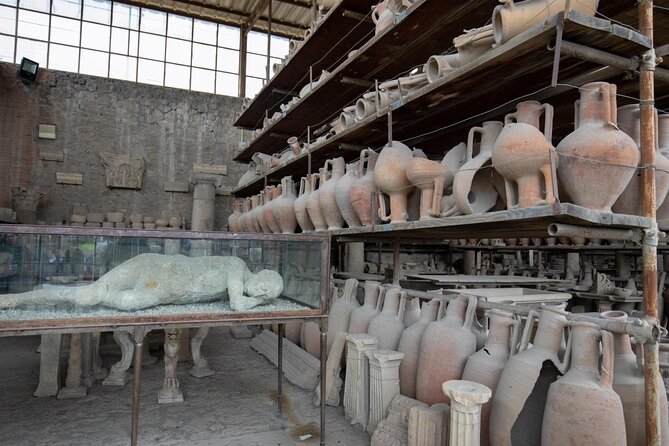
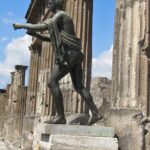
Next comes the Granai del Foro, where the focus shifts to the grain storage area and the details around entrances. You’ll see marble tables and baths for fountains that once adorned entrances. This stop also includes the emotional presence of casts of victims of the eruption, along with casts of a dog and a tree. It is not a casual photo stop. It’s a moment that grounds the whole visit.


The Forum: Pompeii’s main square
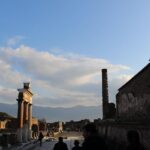
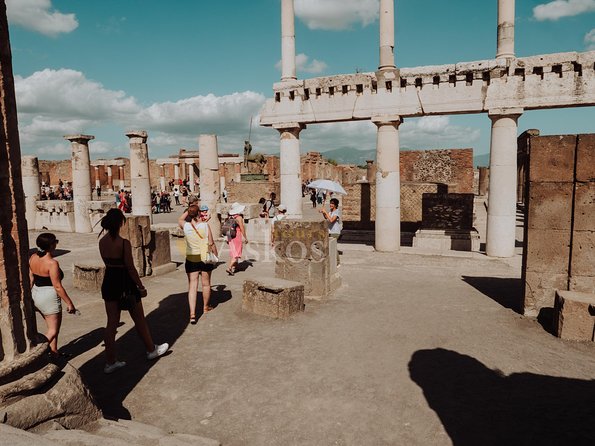
A short look at the Forum de Pompeya gives you the big-picture geography: Pompeii’s ancient main square. Even a brief visit helps you understand why so many key buildings sit nearby and how the city’s civic life centered there.
Main street walk: how the city moved
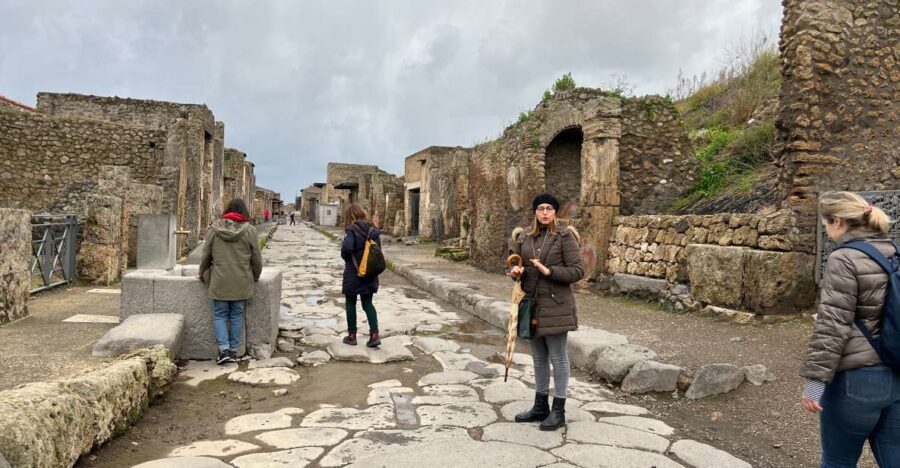
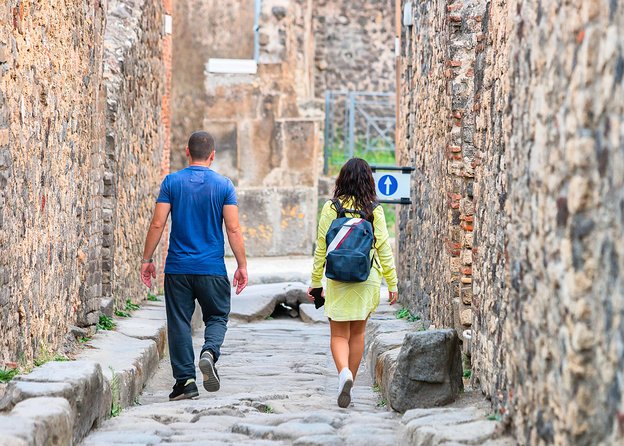
Then you walk through the main street. This is one of the best parts of a structured route because it helps you orient yourself. Streets are where the city’s scale makes sense. When you connect public spaces with what’s along the route, you stop feeling lost.
Stabian Baths: Pompeii’s oldest thermal complex
The Stabian Baths (Terme Stabiane) occupy a vast area, and they’re described as the oldest thermal complex in the city. Baths matter because they were social hubs—places for conversation, routines, and downtime. In a short time, you can still grasp the size and layout of the bathing complex, which is why it earns a place in many Pompeii highlights.
Lupanar: the most famous brothel
The Lupanar is visited as the best-known brothel in the ruined Roman city. This is one of those stops that turns abstract Rome into something human. It can feel blunt and modern in subject matter, so pace yourself. If you are bringing kids, it’s worth considering whether this stop fits your family’s comfort level.
Casa del Fauno: big private residence, bold presence
Then you see the Casa del Fauno, noted as one of the largest and most impressive private homes in Pompeii. Even without hours inside, you get the sense of wealth and ambition. It’s a reminder that Pompeii wasn’t only temples and markets—it had elite domestic life, too.
Casa del Menandro: wealth shown through architecture and decoration
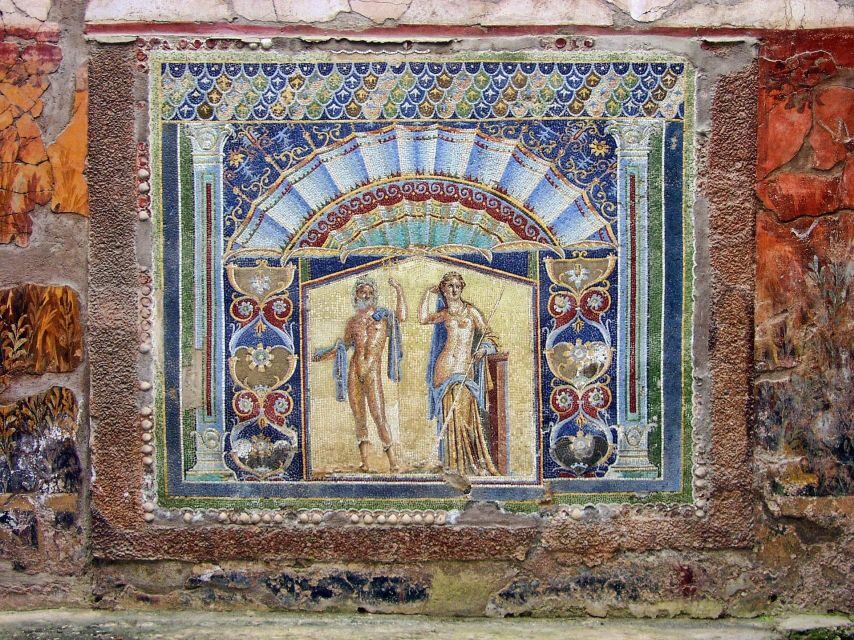
The Casa del Menandro is another high point, described as one of the richest houses in Pompeii for architecture, decoration, and contents. When a tour labels a house as rich in these specific ways, it usually means you’re going to notice details people often miss when they rush. Even in brief stops, you get an idea of how display and comfort worked in daily life.
Teatro Piccolo and Teatro Grande: public entertainment made physical
You also stop to look at the so-called Teatro Piccolo, then move on to Teatro Grande, described as the most important theater in Pompeii. The pairing makes sense: small theater for a certain scale, then the bigger stage for major gatherings. After Pompeii’s forums and baths, theaters help round out the picture of how people spent leisure time.
Naples panoramic transfer and a pizzeria lunch in the historic center
After Pompeii, you transfer back to Naples and get a panoramic tour of the monumental quarter and the seaside. This matters because Naples is steep and spread out, and it helps you understand the city’s shape before you start walking.
Lunch is included as a stop at a traditional pizzeria in the historic center, with about 1 hour for it. In the practical side of your day, this is a lifesaver. It means you’re not hunting for food with a clock ticking and everyone hungry.
One more check: the tour’s quick details list lunch under not included, which conflicts with the day’s schedule that clearly places a pizzeria lunch with time allocated. I can’t iron out the mismatch from the text alone. Do yourself a favor and confirm your booking details about lunch before you go. Even if lunch turns out to be optional, the schedule still offers a built-in break time.
Baroque Piazza del Gesù Nuovo and the Santa Chiara contrast
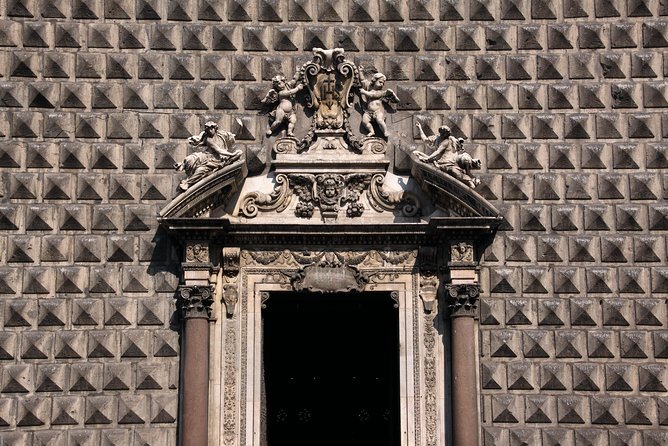
In the historic center, you move from street-level views into standout church architecture. First up is Piazza del Gesù Nuovo, where the focus is the Church of Gesu’ Nuovo. It’s presented as a Baroque example with a notable façade of diamond-shaped ashlar and impressive marble interiors. In short stops, you are not trying to absorb everything—you are learning how Naples layers styles.
Then you head to the Complesso Monumentale di Santa Chiara. This complex is described as set in a walled, citadel-like area and as a rare example of the city’s austere Gothic history, offering a calm contrast to the more ornamented Baroque era churches. I like this kind of contrast when you’re touring many religious sites in a day. It gives your eyes a reset.
Spaccanapoli and Duomo di Napoli: how neighborhoods and cathedrals connect
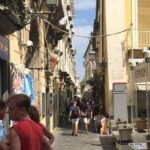
Spaccanapoli is the straight and narrow main street that splits the historic center. The name is explained as literally the Naples splitter, and it hints at how the street is used as a reference line when people talk about neighborhoods. The quick stop works because you get the feel for the city’s spine—what it looks like when you walk the center rather than just watching it from a bus.
After that, you visit Duomo di Napoli, described as a 14th-century French Gothic church built by the Angevins. The tour also points out it’s the seat of the Naples Archdiocese. More specifically, it includes the crypt and the chapel of San Gennaro, plus the festival where blood liquefaction happens three times a year. Even if you’re not there for the ceremony, knowing that this cathedral holds that tradition gives you a reason to care beyond architecture.
San Lorenzo Maggiore and Sansevero Chapel: the quieter wow moments
You then stop at Basilica di San Lorenzo Maggiore, near Via San Gregorio Armeno. It’s described as fascinating with complex history. When a church has a complex past, it can be harder to interpret quickly, but even a short visit helps you spot the layers if your guide points them out.
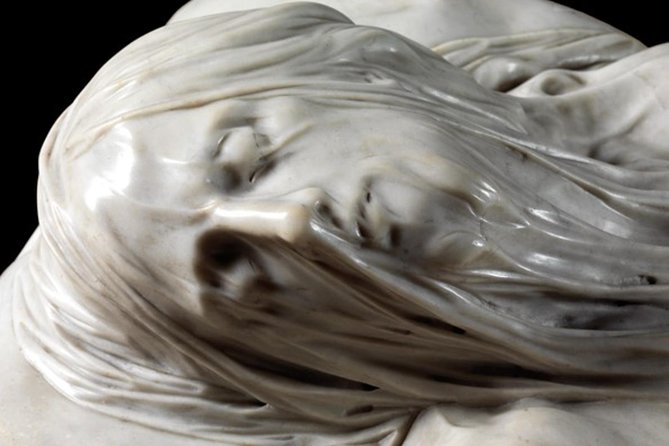
Finally, you get to Museo Cappella Sansevero. The description highlights the museum’s place in the world’s artistic heritage and mentions a masterpiece called the Veiled Christ. Even if you do not go in expecting to study art, this is one of those stops that tends to land emotionally because it looks like something impossible. In a day that otherwise hits a lot of ruins and churches, it’s a good pivot: from everyday Roman life and Neapolitan faith to a single striking work of craftsmanship.
Price and time: is $605 per person worth it?
At $605.07 per person for a 7-hour private tour, you are paying for three big things: door-to-door transport, guided pacing, and reduced wasted time (especially at Pompeii).
Is it expensive? Yes, compared to a budget group tour. But private transportation in the region is not cheap, and Pompeii entry lines can eat up a serious chunk of your day. This plan is designed so you lose less time to logistics.
You also get ongoing English guidance and assistance the entire duration, plus a driver plus parking and fuel. That overhead is part of the value. If you tried to do this yourself, you would still need tickets and a workable transit plan, plus you would be doing the interpretation work your guide provides.
The experience has a 4.6 rating from 8 reviews, which suggests the service and pacing tend to land well, especially for people who want structure.
What it feels like with the right guide (Julia’s impact)
One of the most praised parts of this tour is the guide quality. In the best examples, you get someone who truly knows Pompeii. A highlight from past groups: the guide Julia, described as an archaeologist who has worked at the Pompeii site and led tours for about a decade.
That matters because Pompeii can feel like a series of rooms unless someone connects the dots. A guide like Julia is the kind that makes residents real on the day of the eruption, and explains social norms and culture—not just what stands where. In practical terms, that is how you end up remembering details like what people did in the Basilica, why bath complexes mattered, and how homes signaled status.
If your guide is strong, the short stop lengths become a plus instead of a drawback.
Who should book this Pompeii and Naples private day?
This works best if you:
- Want private transportation and a stress-free day with pickup and drop-off
- Like guided interpretation, especially in Pompeii’s public spaces, homes, baths, and theaters
- Prefer a structured route over trying to build one yourself
- Have a moderate fitness level and can handle walking on uneven ground at Pompeii plus city steps in Naples
It may feel less ideal if you:
- Want hours inside just one museum or one house in Pompeii
- Get tired fast with frequent stops and short time windows
- Are hoping for zero walking and zero stairs (the day includes walking, especially in the historic center)
Before you go: shoes, heat, and a smart packing checklist
Wear comfortable shoes. Pompeii surfaces are not uniform, and Naples historic center streets can be uneven. In warmer months, bring a hat, sunscreen, and a bottle of water. It’s a long day, and the heat can turn a good plan into a miserable one if you show up unprepared.
You also have a mobile ticket, which usually saves time at entry. Service animals are allowed, and confirmation is received at booking time.
Finally, because the route includes multiple churches and indoor points, dress so you can move comfortably and still respect places of worship.
Should you book this tour?
If you want a smart, time-efficient day that covers Pompeii’s essentials and still gives you real Naples street and cathedral time, this is a strong pick. The big reasons to book are the skip-the-line Pompeii entry and the private minivan setup, which remove two of the most common pain points: waiting and getting there.
If you tend to rush, the short stops can be perfect. If you hate feeling rushed, you might want to add extra time in Naples afterward or choose a tour that spends more hours on Pompeii alone.
In short: book it if you want structure, expert guidance, and a day that actually connects both cities.
FAQ
How long is the tour?
It’s listed as about 7 hours.
Is pickup available?
Yes. Pickup is offered from any port in Campania, your hotel, or other accommodation, with the driver meeting you holding a sign with your name.
Is this tour private?
Yes. Only your group participates.
What language is the guide?
Guidance is offered in English.
Do I need to buy tickets for Pompeii?
Pompeii admission fees are listed under included, but the itinerary notes can also mention admission ticket details separately. Check your booking confirmation to be sure you are covered.
Is lunch included?
Lunch is described as a pizzeria stop in the historic center with about 1 hour of time allocated. The tour details also list lunch under not included, so confirm what your exact confirmation says.
What should I bring?
Wear comfortable shoes. In summer, bring a hat, sunscreen, and a bottle of water.
What is the cancellation policy?
Free cancellation is available up to 24 hours in advance for a full refund. If you cancel less than 24 hours before the start time, the amount you paid is not refunded.