REVIEW · ROME
Private Guided Day Tour to Pompeii and the Royal Palace of Caserta
Book on Viator →Operated by Enjoy your Italy tour · Bookable on Viator
Pompeii and Caserta in one day works. This private tour packs Roman city ruins and a royal palace with an expansive park into a single, organized route from Rome, with pickup so you’re not wrestling trains and transfers.
What I like most is the smooth, confidence-building logistics: Andrea’s punctual, traffic-smart driving makes the long day feel manageable, and he even steered a first-rate lunch spot near Caserta. Also, Caserta’s highlight isn’t just rooms—it’s the Parco della Reggia with its monumental fountains and the idea of water powered by waterfalls.
The main thing to plan for is time. Pompeii and Caserta are both huge, and your on-site time is necessarily focused—if you’re the type who wants to linger in every corner, you’ll likely wish you had more hours.
In This Review
- Key things to know before you go
- A 7:00 am Rome pickup that sets the pace
- Pompeii’s signature stops in a focused 2 hours
- La Casa del Fauno: start with the scale
- The Forum: the city’s nerve center
- Villa dei Misteri: frescoes that don’t feel like museum pieces
- Lupanare: the frank reality of ancient entertainment
- Temple of Apollo and the bronze statue
- Amphitheater and Stabian Baths: daily life, not just big monuments
- Cave Canem mosaic: the dog that makes it real
- Reggia di Caserta: royal rooms plus the park’s waterfall show
- Grand Staircase to Palatine Chapel
- Sala di Alessandro, Sala di Marte, Sala di Astrea
- Private rooms: Francesco and Murat
- Court Theater, then Library and Reading Rooms
- The real payoff: Parco della Reggia
- Lunch time and food logic near Caserta
- Why the audio guide in Caserta changes your pace
- Price and value: what your $506.35 really buys
- Who this tour fits best (and who might want to adjust)
- Practical tips so your day feels smooth
- Should you book this Pompeii and Caserta day tour?
- FAQ
- What time does the tour start?
- Is pickup included?
- How long are the main visits once you arrive?
- What is included with admission tickets?
- Is lunch included?
- What language is the tour offered in?
- Can I cancel for a full refund?
Key things to know before you go
- A real Rome pickup at 7:00 am so you start early and beat the worst of the city’s traffic crunch.
- Private guide in Pompeii plus timed admission, letting you hit signature sites without wandering blindly.
- Caserta palace with audio guidance that helps you move room to room efficiently.
- Parco della Reggia is part of the payoff, not an afterthought—plan time for fountains and waterfalls.
- One hour for lunch means you’ll want a simple plan for where you’ll eat and when.
- Small group by car (up to 3) or 7-seater SUV (4 to 7) keeps it flexible and comfortable.
A 7:00 am Rome pickup that sets the pace
The day starts at 7:00 am, and that matters more than it sounds. Leaving early gives you a better shot at a smoother drive out of Rome, and it keeps Pompeii from turning into a rushed checklist. You’re picked up via private transportation, and the driver meets you through the reception setup—small detail, big stress reduction.
The tour lasts about 9 hours, so you’re essentially buying a full day of “organized Rome logistics.” You get a car sized to your group: a smaller car for up to 3 people, or a 7-seater SUV for 4 to 7. That sizing is practical, especially if your group includes anyone who gets travel-worn easily.
One more practical note: this tour uses a mobile ticket, which helps on the day itself when you’re moving quickly between sites.
If you're still narrowing it down, here are other tours in Rome we've reviewed.

Pompeii’s signature stops in a focused 2 hours
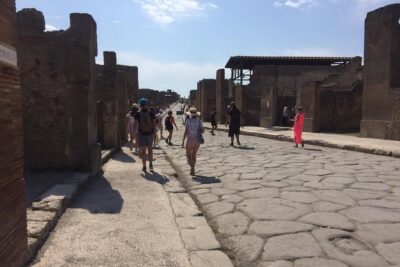
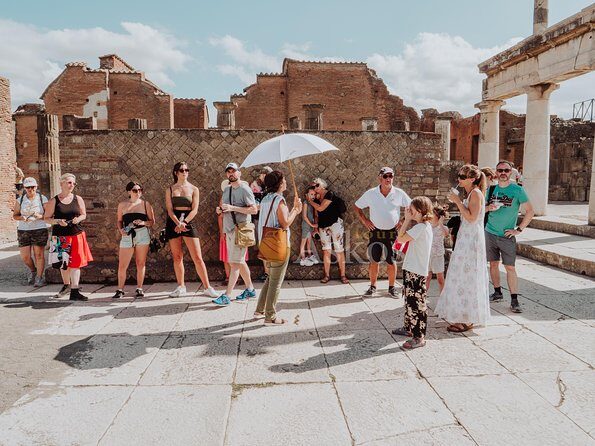
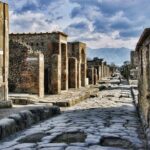
You reach Pompeii after roughly 2.5 hours of travel, then you start with your guide. Pompeii is massive, and the fastest way to get the feeling of the city is to anchor yourself in the big-picture areas first—so this plan is built around that logic.
La Casa del Fauno: start with the scale
The visit begins at La Casa del Fauno. This is one of the most important remains in the park, and the detail I’d pay attention to is the sheer size—about 3,000 square meters. It’s a good early stop because it instantly shows you Pompeii wasn’t just “ruins in a field.” It was a lived-in urban world with large, status-driven homes.
The Forum: the city’s nerve center
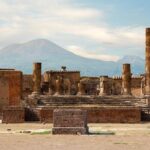
Next comes the Forum of Pompeii, the public heart where civic life would have happened. If you want to understand how people moved through the city—who met where, where decisions were made—this is the kind of stop that gives you bearings fast. It’s not about one artifact; it’s about city rhythm.
Villa dei Misteri: frescoes that don’t feel like museum pieces
Then you get to the Villa dei Misteri, famous for frescoes with life-size human figures. Frescoes can feel distant if you’re only reading captions. But in a place like Pompeii, you start seeing how the art functioned in a real home environment. It’s a strong “wow” stop that also teaches you something: art wasn’t separate from daily life.



Lupanare: the frank reality of ancient entertainment
After that, the itinerary heads to the Lupanare of Pompeii, known for erotic frescoes. This stop is not for everyone, but it’s historically useful. It shows you Pompeii’s nightlife and commerce were part of the urban fabric, not sanitized for modern expectations.
Temple of Apollo and the bronze statue
The Temple of Apollo stop brings you to a bronze statue that’s housed inside. This is where you start shifting from street-level structures to places of worship and official symbolism. It also breaks up the walk with a more “quiet attention” moment.
Amphitheater and Stabian Baths: daily life, not just big monuments
You then visit the minor amphitheater, followed by the Stabian Baths—described as the oldest complex in Pompeii. This is a smart inclusion because it brings you into practical daily routines: gyms, changing rooms, latrines, and even swimming pools. You can almost picture the schedules and routines, which is exactly what ruins can do when you’re guided properly.
Cave Canem mosaic: the dog that makes it real
The day closes Pompeii-side with the Cave Canem Mosaic, the floor mosaic of a dog from the House of the Tragic Poet. This is one of those details that lingers. You get something playful, human, and specific—an everyday kind of “remember us” moment from a home.
Reality check on Pompeii time: Two hours is enough to get the idea and see major anchors, but Pompeii can swallow whole weeks. If you’re the type who gets lost (in a good way) in corners, you’ll want to prioritize what matters most to you before the day begins.
Reggia di Caserta: royal rooms plus the park’s waterfall show
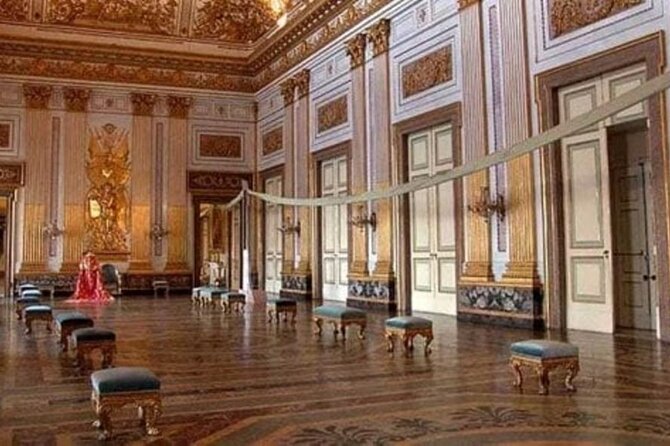
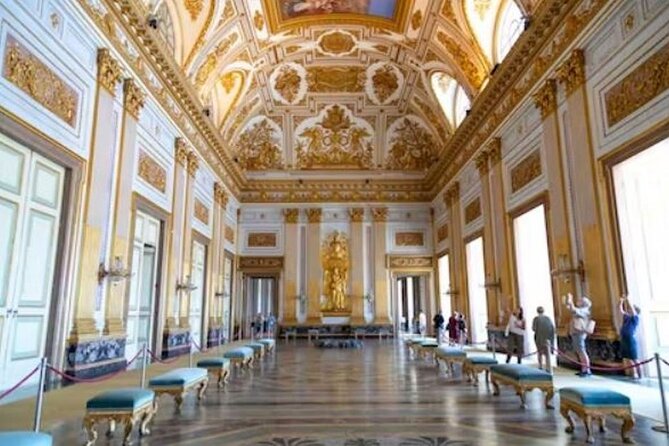
From Pompeii, it’s about 50 minutes to Caserta. Afterward, you head into the Royal Palace of Caserta, which is huge—1200 rooms spread across about 47,000 square meters. Your tour covers only a substantial slice, not everything, but that’s the right approach for a day trip.
Grand Staircase to Palatine Chapel
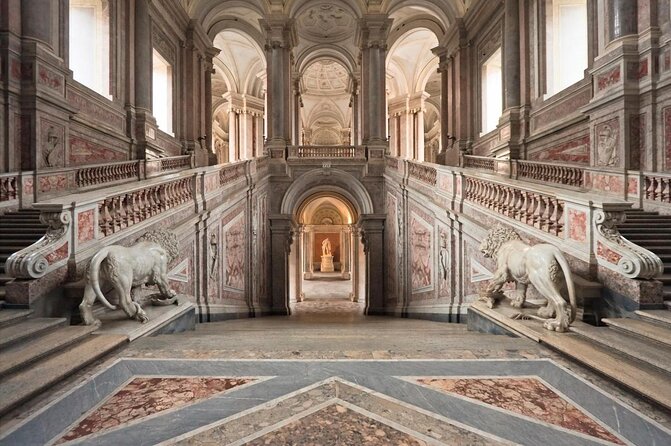
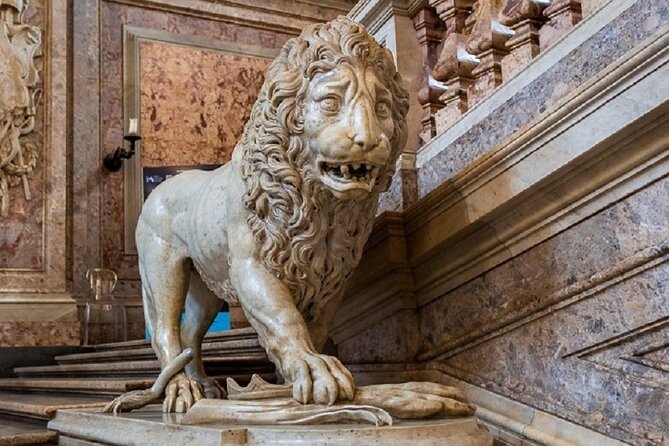
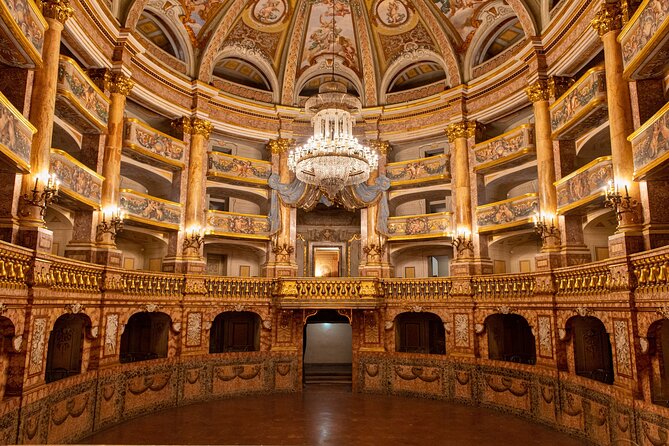
You’re welcomed by the Grand Staircase, which sets the tone right away—palace scale, straight-on elegance, and a sense of ceremony. From there, you move toward the Vestibule, the royal apartments, and the Palatine Chapel. This sequence helps you “read” the building: where power is displayed, where daily court life lived, and where religious space sits in the royal order.
Sala di Alessandro, Sala di Marte, Sala di Astrea
Next are three named rooms: Sala di Alessandro, Sala di Marte, and Sala di Astrea. Even without getting lost in every artistic detail, the value here is rhythm. You see how the palace is designed to move you from spectacle to structure to symbolism.
Private rooms: Francesco and Murat
Then you visit the private rooms of Francesco and Murat. This is a key part of what makes Caserta feel more than a tourist backdrop. Royal palaces can easily become all formality, but private spaces remind you that someone slept, planned, and lived there.
Court Theater, then Library and Reading Rooms
The tour continues with the Court Theater, then finishes with the Library and Reading Rooms. This ending choice works well because it shifts your perspective from display rooms to rooms built for thought, learning, and quiet. Even if you don’t read every label, the atmosphere changes.
The real payoff: Parco della Reggia
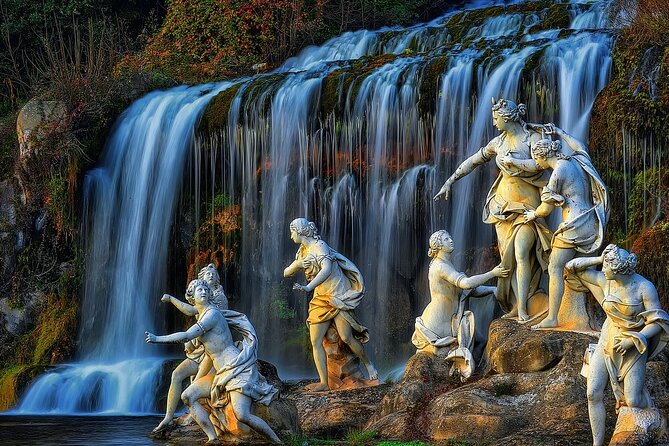
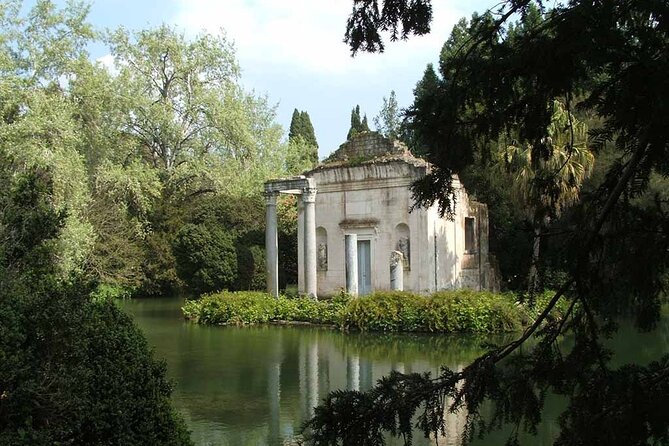
After the palace, you transition into Parco della Reggia, widely considered one of Europe’s most beautiful parks. Here you’re looking for three things: waterfalls, sculptures, and monumental fountains. The concept of fountains fed by a waterfall gets special attention for a reason: it turns the park into a living machine, not just landscaped grounds.
If Caserta is the highlight for you, don’t rush through the park. It’s the part that often leaves the strongest memory because it feels planned for walking—designed for pauses, not just passing through.
Lunch time and food logic near Caserta
Lunch is not included, but you do get one hour to eat. You can choose a restaurant or go for a typical local sandwich. The practical point: with only an hour, you’ll want food that’s quick and close rather than an ambitious plan that depends on perfect timing.
In the spirit of practical help, one approach that worked well for a previous group was eating near Caserta at PizzArt. If you’re unsure where to go, ask your driver for guidance once you’re on your way. They’re already familiar with the area and can steer you toward something efficient for the time you have.
Why the audio guide in Caserta changes your pace

Caserta uses an audio guide format. For me, that’s a good match for a palace day trip because it lets you control your pace. You can slow down in the rooms that catch your attention and move faster in the rooms you don’t care about as much.
It also helps you in a high-volume place. Caserta is massive by concept, so audio supports a “guided self-walk” style: you’re not waiting on group decisions, and you’re less likely to miss the big moments because you’re stuck in the wrong spot.
Pair that with the fact that your palace coverage is only a portion of the 1200 rooms. Audio makes those selections feel intentional rather than random.
Price and value: what your $506.35 really buys

At $506.35 per person, this isn’t a budget excursion. But it is private, long, and structured—so you’re paying for three big value blocks:
First, private transportation from Rome. That’s the main reason your day stays organized instead of turning into train-platform math.
Second, you get admission tickets included for both Pompeii and Caserta. You avoid the mental load of ticket hunting and line timing for two major sites.
Third, you’re buying guided focus. Pompeii includes a private guide, which is useful because Pompeii isn’t just ruins—you need someone to point you to the sites that shape the story quickly. Caserta then handles the rest with an audio guide, keeping your time productive.
Is it worth it if you’re flexible and can manage transit on your own? Maybe not. Is it worth it if you want one smooth plan and you value your energy? Yes, that’s the real deal here.
Who this tour fits best (and who might want to adjust)
This day trip fits best if you:
- Want two iconic sites without planning logistics for long-distance travel.
- Prefer private touring over group shuttles.
- Like having a plan but still want enough walking freedom to absorb the places.
You might want to adjust expectations if you:
- Want to spend all day in Pompeii itself. Two hours is focused, not exhaustive.
- Are a slow reader of museum labels. Palace and park rooms add up fast, and you’ll likely want to pick moments to savor.
If your group includes mixed interests, this itinerary helps. Pompeii leans into city life and public spaces. Caserta leans into palaces, artful rooms, and the outdoor water-and-fountain spectacle.
Practical tips so your day feels smooth
A few small choices can make the difference with a 9-hour route.
- Wear shoes you can walk in for several hours. Both sites involve a lot of ground and uneven surfaces.
- Bring a layer for Pompeii and the park. Weather can shift, and outdoor wandering feels it.
- Plan your lunch style early. With one hour, you’ll do best with something close and efficient.
- In Pompeii, pay attention to the “anchor” sites your guide highlights. The Forum, baths, and the mosaic stops are the kind of detail that gives the whole park meaning.
And if you care deeply about Pompeii’s scale, don’t feel like you missed everything. You came for the best route through it, not for a full week of archaeology.
Should you book this Pompeii and Caserta day tour?
I’d book it if you want a well-run day with private transport, a Pompeii-focused guide route, and Caserta’s palace-and-park experience that doesn’t rely on you figuring out transit. The strongest reason is the overall structure: you start early, you hit the key anchors, and you end with the kind of park scenery that people still talk about after the ticket is long gone.
I’d hesitate if your heart is set on deep, unhurried time in one place—Pompeii or Caserta. This is a smart “greatest hits” plan, not a slow archaeological immersion.
If you want my simple decision rule: book it if your goal is to leave Rome with two clear, memorable worlds under your belt.
FAQ
What time does the tour start?
The start time is 7:00 am.
Is pickup included?
Yes. Pickup is offered, and the driver is arranged to wait for you with a reception notice.
How long are the main visits once you arrive?
Pompeii is about 2 hours. At the Royal Palace of Caserta, the palace visit is about 2 hours, and there is also time in the park.
What is included with admission tickets?
Admission tickets are included for both Pompeii and the Royal Palace of Caserta.
Is lunch included?
No. Lunch is not included, but you’ll have one hour to eat at restaurants or choose a typical local sandwich.
What language is the tour offered in?
The tour is offered in English.
Can I cancel for a full refund?
Yes. You can cancel for a full refund if you cancel at least 24 hours before the experience’s start time.