REVIEW · ROME
Rome to Pompeii & Herculaneum Trip with Hotel Pickup & Skip-the-line Tickets
Book on Viator →Operated by Orange Umbrella Tours · Bookable on Viator
Pompeii and Herculaneum in one day. This private Rome-to–southern Italy trip is built for you to skip long lines and get straight into the ruins with a guide who keeps the day moving. You’re also picked up and dropped off at your hotel, so you’re not spending your morning wrangling buses or taxis.
What I like most is the guide format: you get a professional art historian who steers the visit with focused commentary, not just a walk and a few facts. In particular, the comparison between daily life—wealth vs. trades, plus what you see in mosaics, paintings, and even woodwork—makes the whole eruption story click.
One thing to consider is pacing. Even with a private setup, the time is tight: Pompeii gets about 2.5 hours, and Herculaneum around 2 hours, so if you want slow, stop-everywhere exploring, you may feel a bit rushed.
In This Review
- Key highlights worth caring about
- Hotel pickup and a fast start: how this day is set up
- Skip-the-line tickets: why this matters more than you think
- Pompeii Archaeological Park: 2.5 hours with a guide that picks the story
- Chiesa di Sant’Ercolano and Herculaneum: the “wow” stop
- The art historian effect: what changes when someone frames the ruins
- Comfort on the road: minivan rides, one-day rhythm, and real limits
- How much time you really get (and how to use it)
- Price and value: where the money goes
- Who this tour suits best
- Should you book this Pompeii and Herculaneum tour?
- FAQ
- What time does the tour start and where do I get picked up?
- How long is the Rome to Pompeii and Herculaneum day trip?
- Is this a private tour or a shared group?
- Are skip-the-line tickets included for both sites?
- How long are the guided visits at each location?
- What’s included in the price?
- Is lunch included?
- Do I need a passport?
- What if I need to cancel?
Key highlights worth caring about
- Guaranteed skip-the-line entry so you’re not burning your best morning waiting at gates
- Art historian-led narration that connects visuals (mosaics, paintings, woodwork) to what life looked like
- Air-conditioned minivan transport in one full-day loop, with hotel pickup and drop-off
- Two major sites in one trip—Pompeii plus Herculaneum—so you don’t have to choose
- Herculaneum’s preserved details like paintings, woodwork, and a famed 2,000-year-old boat feature
Hotel pickup and a fast start: how this day is set up
The day starts early: pickup is at 7:30 am from your hotel lobby in Rome. That matters because Pompeii and Herculaneum are famous for the crowds, and leaving early is the easiest way to protect your time once you arrive.
You travel in an air-conditioned minivan with a private vehicle, which keeps the experience comfortable even if the day runs warm. The tour runs about 11 hours total, which usually lines up with a full day that includes driving time plus your guided visits on-site.
Since it’s private, you’re not stuck in the chaos of a large bus group. Your experience is set up for only your group, so the guide can answer your questions and adjust on the fly—within the limits of the schedule.
If you're still narrowing it down, here are other tours in Rome we've reviewed.

Skip-the-line tickets: why this matters more than you think
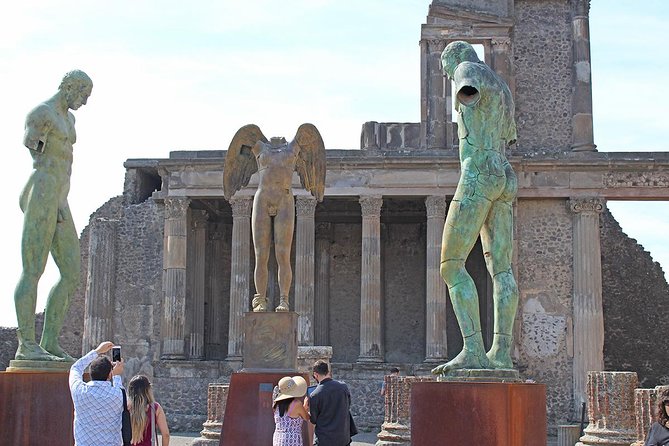
Skip-the-line tickets sound like a luxury, but here they’re really about control. Pompeii Archaeological Park is notorious for slow-moving entry, and once you lose time there, the rest of the day gets squeezed.
With this tour, you’re guaranteed to skip those long lines, which lets the guide use the morning where it counts: inside the ruins with interpretation. It’s the difference between spending your time looking at people waiting, vs. looking at surfaces and layouts that tell the eruption story.
Also, private guided time is easier to feel in your brain when you’re not constantly checking the clock. When entry goes smoothly, your 2.5 hours at Pompeii and 2 hours at Herculaneum actually feel like you got the time you paid for.
Pompeii Archaeological Park: 2.5 hours with a guide that picks the story
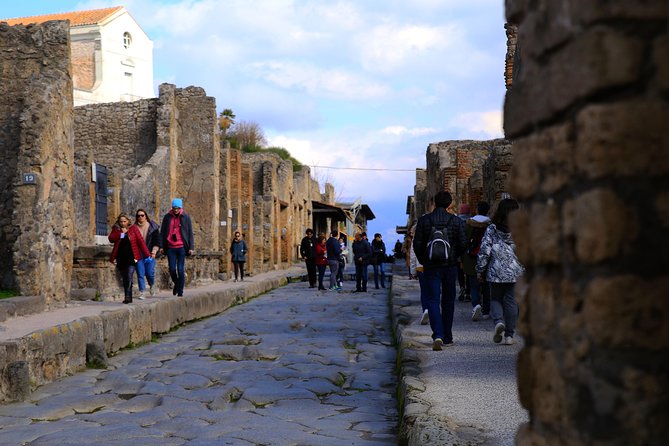
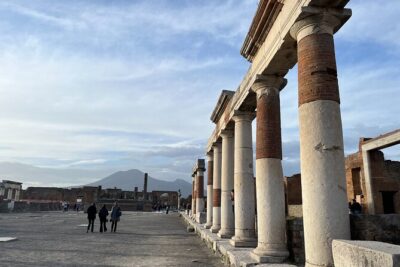
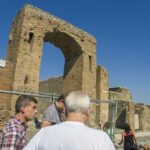
Pompeii is huge, and that’s exactly why your guide’s role matters. You’re getting a 2.5-hour private guided tour of highlights in the Pompeii ruins, with admission included. Instead of walking aimlessly, you’re steered to the key scenes and details that help you understand daily life before the disaster and what changed afterward.
From the way the commentary is described, the best part is how the guide turns ruins into social meaning. You don’t just see stone walls; you get context for contrasts like wealth vs. trades, and how that shows up in what’s preserved and what the site emphasizes.
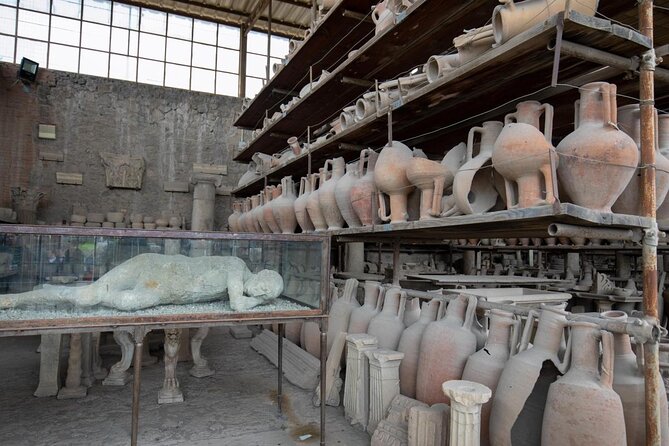
You’ll also get help noticing the kinds of visuals that are easy to miss if you’re doing it on your own. People on this type of experience mention the way mosaics and everyday details help the city feel human instead of ancient.
The main drawback: the ruins cover a lot of ground. Some people feel the tour can feel a bit rushed in Pompeii because 2.5 hours has to cover highlights, not everything. If you’re the type who likes lingering for photos and reading every label, you may want to plan for a little less wandering than you’d do independently.
Practical tip: wear comfortable walking shoes. You’ll be on uneven surfaces, and a quick pace means your feet will do the complaining first.
Chiesa di Sant’Ercolano and Herculaneum: the “wow” stop
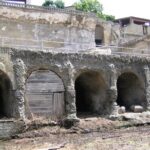
Herculaneum is the shorter guided block—about 2 hours—but it often hits harder because of what’s preserved. This stop is tied to Chiesa di Sant’Ercolano, and the guide leads you through the Herculaneum ruins with admission included.
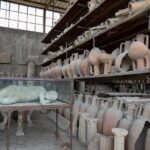
What people seem to love most is the shift from broad city layout to vivid, close-up human details. In particular, comments highlight the role of paintings and woodwork, plus a famous 2,000-year-old boat that creates instant visual impact. The boat detail isn’t just a cool fact; it helps you picture how people lived around water and trade.
The guide also uses the contrast between Pompeii and Herculaneum to build a more complete mental picture. The way Herculaneum is described, you come away feeling you understood not only the tragedy, but also how everyday life looked—down to materials that are harder to imagine when you’ve only seen Pompeii.
If you have a limited time window, this is a smart move. One of the strongest pieces of advice from this tour format is simple: don’t skip Herculaneum. Pompeii is the headline, but Herculaneum is where the visual memory often gets the strongest.
What to expect: less time than Pompeii, but a more “in-your-face” feeling because the guide can focus attention on details that tell the story in a quieter, more intimate way.
The art historian effect: what changes when someone frames the ruins
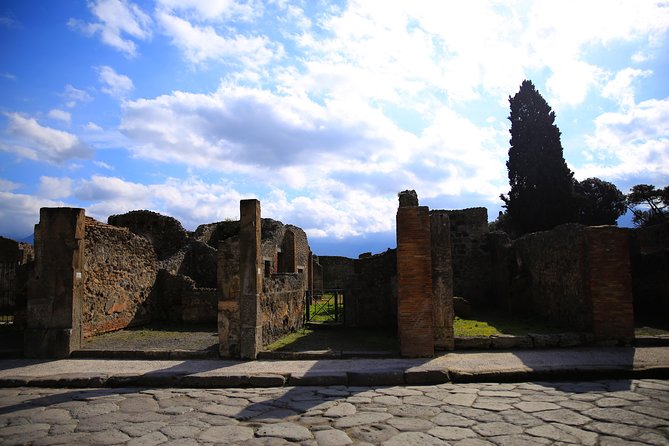
This tour’s big differentiator is the guide style: you get art-historical interpretation, not just general explanation. That framing matters because Pompeii and Herculaneum are visual worlds—mosaics, painted surfaces, and household objects can look like random decoration until someone explains what they signaled and why people cared.
In the experience accounts, the guides are praised for pointing out specifics that make the cities feel alive. People describe how the guide helped them “open their minds” to what the towns looked like before the eruption and how the tragedy altered everyday life.
You’ll also notice how this kind of explanation helps your attention. Instead of spending your time scanning for the most famous photos, you start looking for meaning: the difference between rooms and spaces, what materials suggest about status or work, and why certain preserved items are so moving.
Names that came up in real-world experience include art historian guides like Itali and Lalo, and a driver named Stefano who was noted for being punctual and friendly. Another guide mentioned is Leonardo, who handled pickup on time and even recommended a restaurant stop afterward. Those details aren’t just “nice extras”; they support a key idea—this operator seems to keep the team coordinated so your day stays smooth.


Comfort on the road: minivan rides, one-day rhythm, and real limits
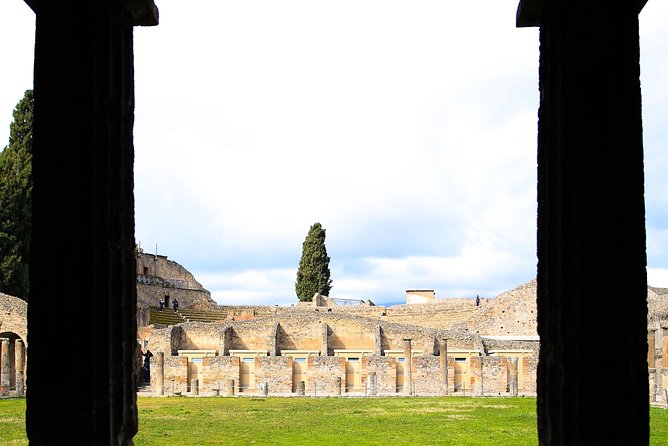
The transport setup is straightforward. You’re in an air-conditioned minivan (with a private vehicle), traveling from Rome to the ruins and back the same day. For many people, this is the easiest way to handle the distance without complicated logistics.
The whole day runs around 11 hours, so expect a full commitment. You’ll likely be out of your hotel for most of the daylight window, and you’ll move from site to site based on timing designed to fit both locations.
One practical point: there’s no lunch included. That’s not unusual for this type of day trip, but it does affect how comfortable you feel later in the day. If you’re sensitive to low energy, plan ahead—bring snacks if allowed, or decide where you’ll eat during/after the tour based on your guide’s suggestions.
Also, your passport is required on travel day. If you forget it, you could be stuck at the wrong moment. Bring it with you even if you’re just doing a day trip.
How much time you really get (and how to use it)
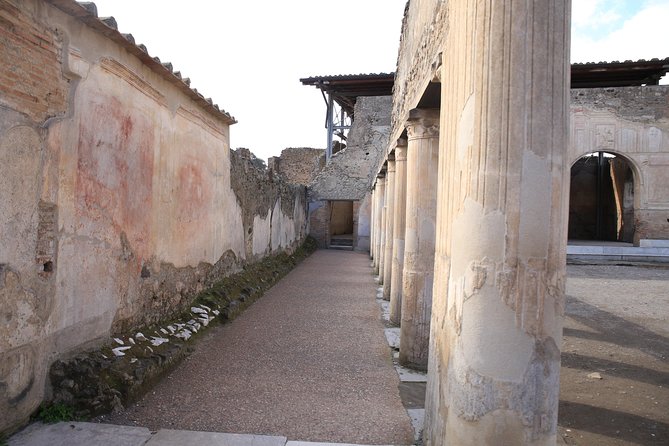
You’re purchasing a specific mix of time and expertise:
- Pompeii: about 2.5 hours private guided time
- Herculaneum: about 2 hours private guided time
- Admission tickets are included for both sites
That schedule is why the experience can be both satisfying and slightly intense. You’re not just visiting two places; you’re also absorbing interpretation in a limited timeframe. When the guide is strong—and the art historian approach seems to be—the extra context makes those 4.5-ish hours of ruins feel more meaningful.
But if your goal is “see everything,” this isn’t the best fit. Instead, think of it as a guided greatest-hits package with enough depth to help you understand the tragedy and daily life through the preserved details.
A good way to use the day is to decide what you want most:
- If you want city scale and variety, Pompeii is your big stop.
- If you want vivid preserved visuals and materials like woodwork and paintings, Herculaneum is where you’ll likely spend more mental energy.
Price and value: where the money goes
At $1,056.19 per person, this is a premium day trip. The value comes from stacking several things together that are expensive or annoying to arrange separately:
- Hotel pickup and drop-off in Rome
- Private tour format (only your group participates)
- Professional art historian guide plus a professional guide
- Air-conditioned minivan transport with a private vehicle
- Admission tickets included for both sites
- Guaranteed skip-the-line entry
If you try to DIY this, you’d need to handle transport, timed ticketing, and site interpretation. Even when you can figure out logistics, you often lose time to lines and arrive without context. Here, you’re paying to trade money for time and clarity.
The one item that’s missing is lunch. So while the tour cost includes the heavy hitters (transport, tickets, guide time), you’ll still need to budget for food. That’s the one part of your day you’ll need to manage yourself.
Who this tour suits best
This works especially well if you want:
- A one-day Pompeii + Herculaneum plan without splitting it into two trips
- Interpretation that focuses on the way people lived, not just photo stops
- Comfort and simplicity: pickup, transport, and drop-off all handled
- A guide who helps you see differences between the two sites
It’s also a good fit for families with kids who can handle a long day, since the tour notes that most people can participate and children must be accompanied by an adult. One family experience called it the highlight of the trip partly because it combines both sites in a way that doesn’t sacrifice time.
If you’re the type who wants to linger for hours with minimal structure, this may feel tight. The schedule is designed for highlights, and the day moves.
Should you book this Pompeii and Herculaneum tour?
I’d book it if your main goal is to see both sites in one go and you care about understanding what you’re looking at. The biggest win is the combo of skip-the-line entry, a private guide-led format, and an art historian approach that makes Pompeii and Herculaneum feel connected rather than like two disconnected ruins.
I’d think twice if you’re hoping for maximum free-roaming time. Pompeii’s 2.5 hours and Herculaneum’s 2 hours are enough to get a real sense of each place, but not enough to satisfy a slow, wander-everywhere style.
If you do want the experience to work for you, go in with a simple plan: prioritize Pompeii for scale, prioritize Herculaneum for preserved details, and come prepared for a long, structured day. Then you’ll get the best of what this format is built to deliver.
FAQ
What time does the tour start and where do I get picked up?
The tour start time is 7:30 am. You meet the driver at your hotel lobby in Rome at 7:30 am, and you’ll need to provide your hotel details.
How long is the Rome to Pompeii and Herculaneum day trip?
The duration is approximately 11 hours.
Is this a private tour or a shared group?
It’s a private tour/activity. Only your group will participate.
Are skip-the-line tickets included for both sites?
Yes. The tour includes guaranteed to skip the long lines, and admission tickets are included for Pompeii and Herculaneum.
How long are the guided visits at each location?
Pompeii gets about 2.5 hours of private guided time, and Herculaneum gets about 2 hours of private guided time.
What’s included in the price?
Included items are a professional art historian guide, a professional guide, hotel pickup and drop-off, transport by air-conditioned minivan, private vehicle transport, guaranteed skip-the-line entry, and admission tickets.
Is lunch included?
No. Lunch is not included.
Do I need a passport?
Yes. A current valid passport is required on the day of travel.
What if I need to cancel?
Free cancellation is available up to 24 hours in advance for a full refund. If you cancel less than 24 hours before the start time, the amount paid is not refunded.