REVIEW · NAPLES
Pompeii and Herculaneum led by an Archaeologist with private transport
Book on Viator →Operated by Askos Tours · Bookable on Viator
Two Roman cities in one long day. This private Pompeii and Herculaneum tour pairs an archaeologist guide with air-conditioned transport, so you spend your time reading buildings instead of juggling buses or tickets.
I like that you actually get expert context at both sites, with guides who bring the details into focus (I’ve seen names like Lucio, Alfredo, Daniela, Ivan, and John Carlos come up). The trade-off is pace: the stops move fast, often around 10–15 minutes, so pack for a long day and wear comfortable shoes if you don’t want to feel rushed.
In This Review
- The value of a two-site Pompeii and Herculaneum day with a real guide
- Private Mercedes transport and pickup: saving the day before you even start walking
- Herculaneum ruins: a calmer start with houses, baths, and benefactors
- Pompeii’s main sights: brothel lane, forum marble, and two theaters
- How the 7-hour pace really feels (and how to handle it)
- Price and what you get for $666.75 per person
- Smart tips: shoes, sun, and how not to waste your energy
- Should you book this Pompeii and Herculaneum archaeologist tour?
- FAQ
- How long is the Pompeii and Herculaneum tour?
- Where can I get picked up?
- Is transportation included between Herculaneum and Pompeii?
- Is this a private tour?
- Is the tour guided by an archaeologist?
- Are entrance tickets included?
- Is lunch included?
- What language is the tour offered in?
- What should I wear or bring?
- Is free cancellation available?
- Can service animals attend?
The value of a two-site Pompeii and Herculaneum day with a real guide
Doing Pompeii and Herculaneum separately can feel like two separate vacations. Doing them together is what makes this tour work: you cover two different eruption stories, two different urban layouts, and two very different preservation styles in one day.
The big win is that an archaeologist guide helps you connect the dots. It’s not just where things are. It’s why they were built that way, who used them, and what you can still read from the materials and layout. Guides in this format often explain the contrast between Pompeii’s ash fall and Herculaneum’s more chaotic preservation, so the ruins stop feeling like a sad postcard and start feeling like a place with logic.
For me, the second value is speed-with-confidence. With private pickup and a professional driver, you lose less time in transit and you’re less stressed about getting from one ticket line to the next.
Private Mercedes transport and pickup: saving the day before you even start walking
This tour is built around convenience. You get pickup from your accommodation (Naples, Salerno, Sorrento, or the Amalfi Coast) or from key arrival points like a cruise port, train station, or airport. Then a private vehicle takes you between Herculaneum and Pompeii with an air-conditioned ride.
That matters because both sites are spread out in practical terms. Even when the distance is manageable on a map, getting there in the real world—traffic, parking, and timing—can turn a good plan into a scramble. A professional driver keeps the day on track, and you don’t have to figure out how to get yourself there on limited hours.
The tour is also private, meaning it’s only your group. That usually translates to less waiting, more direct answers, and less pressure to keep up with strangers.
Other Pompeii tours with an archaeologist

Herculaneum ruins: a calmer start with houses, baths, and benefactors
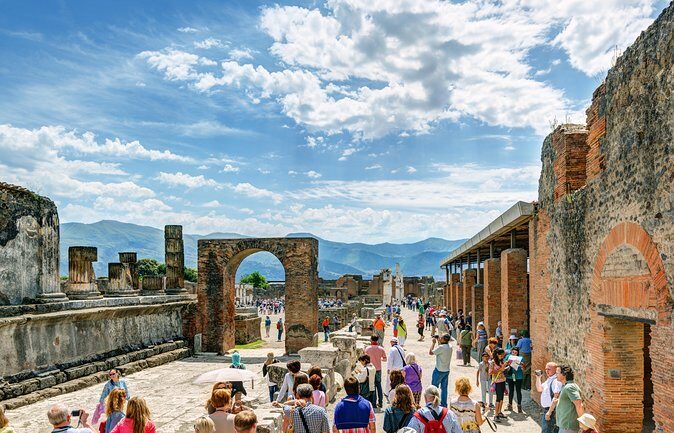
Most people hit Pompeii first. Starting with Herculaneum is smarter, because Herculaneum tends to feel less chaotic, and it gives your brain time to adjust to the scale of what you’re seeing.
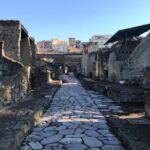
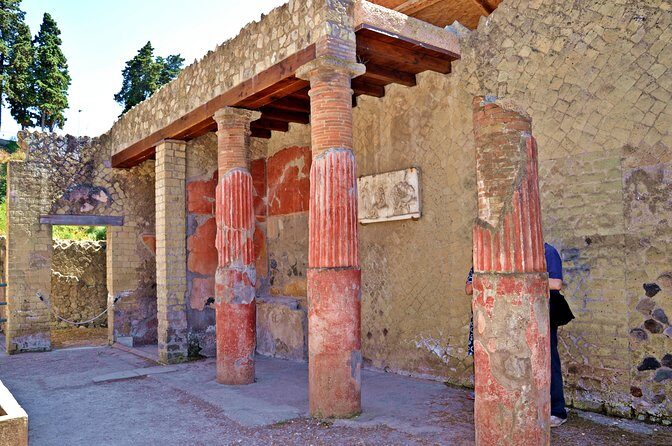
You begin at the Archaeological Park of Herculaneum, meeting your guide at the ticket office. Then the walk moves through a string of standout structures—mostly houses and civic spaces—each with its own angle on how people lived and how the city was organized.
Here’s what stands out, and why it’s worth the quick stops:
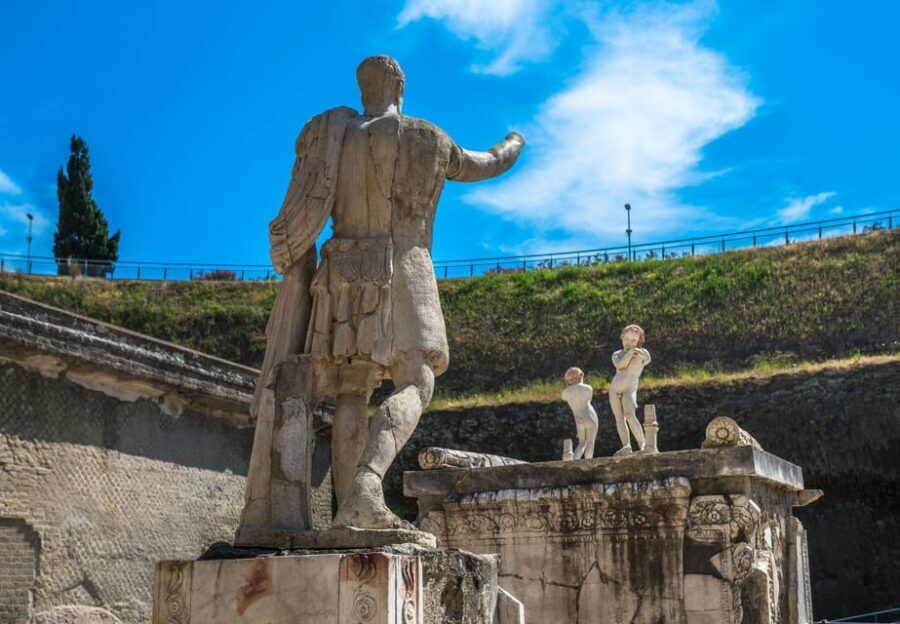
- House of the Deer: It gets its name from marble statues of stags/deer in the peristyle. It’s a nice reminder that Roman décor wasn’t only for public buildings.
- La Terrazza di M. Nonio Balbo: You get a short moment on the story of the city’s major benefactor. The long inscription on the funeral altar gives you something rare at ruins—names, status, and civic pride spelled out in text.
- College of the Augustales: This is tied to the cult and civic identity around Emperor Augustus. Even if the Latin isn’t your thing, the building’s purpose becomes clearer when your guide explains the religious-political role it played.
Then you shift into daily-life details:
- Central Thermae: These baths were built in the early 1st century AD, and they’re arranged with separate men’s and women’s entrances. It’s the kind of architectural clue that turns a bath complex into social history.
- Casa del Rilievo di Telefo: This house has unusual connections, including private access to the adjacent Suburban Thermae. You start to see how “home” and “leisure” were never fully separated.
A few stops add atmosphere and human scale:
- House of the Skeleton: It’s named for remains found in 1831. You don’t linger, but your guide can help you understand why later discoveries changed how historians interpret the site.
- House of the Black Salon: A more luxurious mansion, with a monumental entrance. The carbonised remains of doorposts and lintel help you visualize the moment of destruction.
- Partem Domus lignea – Casa del Tramezzo di Legno: Pay attention here. This area highlights an elegant wooden partition preserved in place, a rare material story in a volcanic setting.
You’ll also get a sense of variety in domestic architecture:
- Casa Sannitica: The Samnite-style layout is a good reminder that Pompeii and the surrounding region didn’t develop in a single cultural lane. The atrium and Ionic-column gallery, plus frescoes, show how status and decoration mattered.
- Casa del Bel Cortile: Original layout with a courtyard and a stone balcony instead of the more common atrium setup.
- House of the Grand Portal: A central domus with frescoes/evidence across environments and the charred remains of wooden parts.
The pacing here is tight, but that’s the point: you see the major highlights, understand what they mean, and move on before the day gets away from you.
Pompeii’s main sights: brothel lane, forum marble, and two theaters
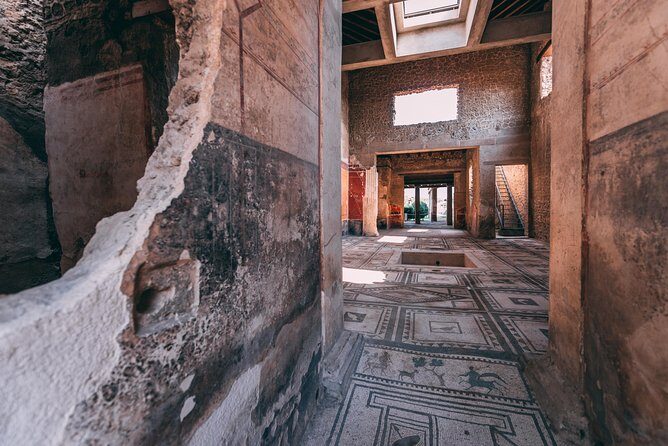
After Herculaneum, you travel to Pompeii. You’ll have a lunch break option between the two sites, and then you also get free time to have lunch on your own in Pompeii before the main walk continues. Meals aren’t included, so plan for either a quick bite or using that window to reset.
Once you’re in Pompeii, the stops are classic for a reason: they map out the city’s public life (forum and baths), private wealth (major houses), and entertainment (the theaters).
A few high-impact moments:
- Lupanar: This is Pompeii’s most famous brothel. It’s not for everyone, but it’s historically important, and your guide can put it in context rather than leaving it as shock value.
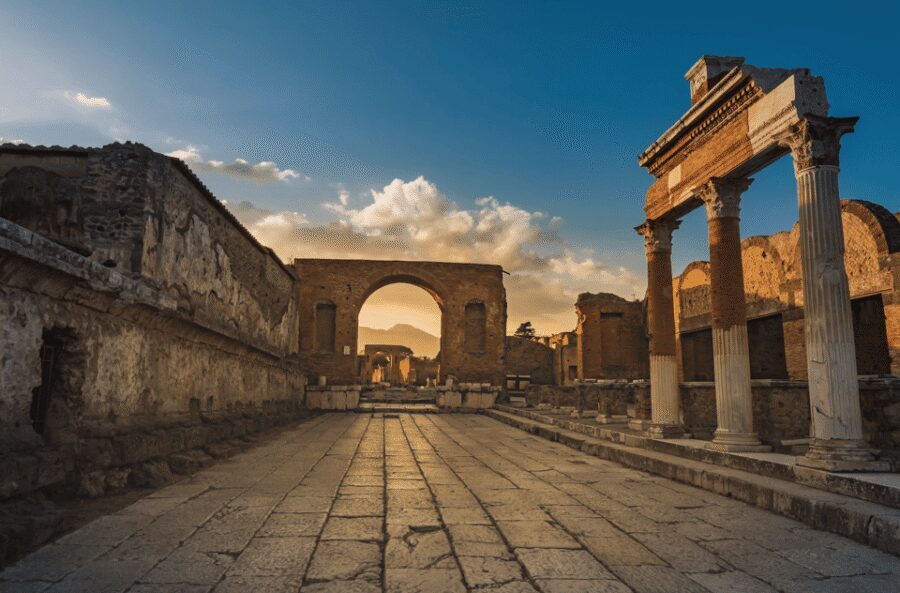
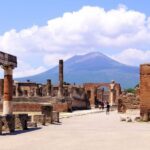
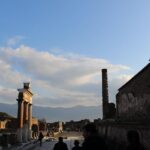
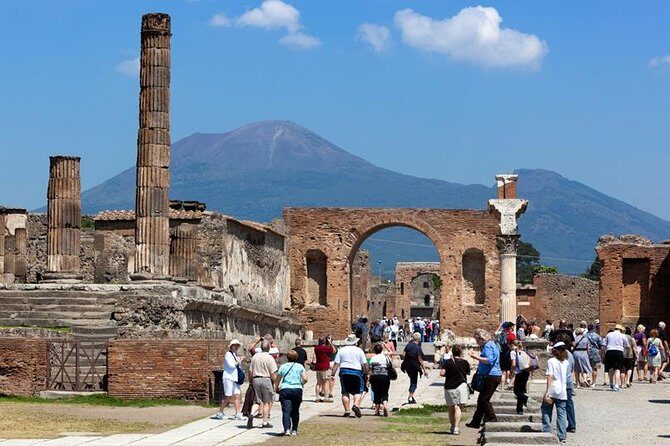
- Foro de Pompeya: The ancient main square. It’s where you get your bearings fast—how movement and social life would have clustered.
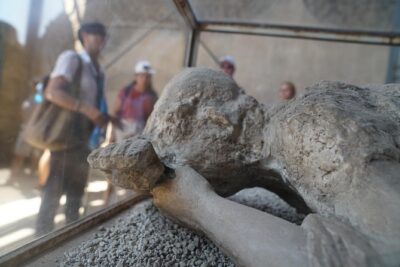
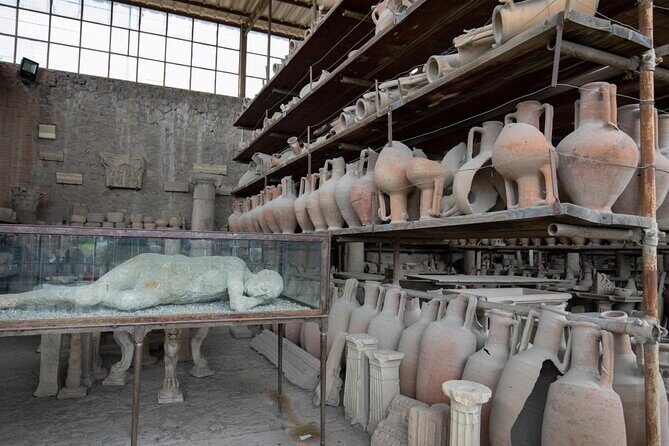
- Granaries of the Forum: Look for the marble tables and baths for fountains at house entrances. This is also where casts of victims of the eruption show up (along with a dog and a tree cast). It’s grim, but it’s also one of the clearest ways to understand the scale of the tragedy.
Then you move into civic shelter and work-and-play spaces:
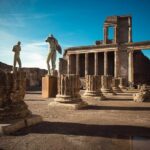
- Basilica: An open portico for merchants and activity, showing how commerce and meeting happened in public spaces.
- Stabian Baths (Terme Stabiane): A vast complex and described as the oldest thermal complex in Pompeii. Baths weren’t just hygiene. They were networking and routine.
You’ll then hit some of Pompeii’s most famous wealthy residences:
- House of Menander: Known as one of the richest and most magnificent houses for architecture, decoration, and contents.
- House of the Faun: One of the largest and most impressive private residences.
Finally, you cap with theaters:
- Teatro Grande: Pompeii’s main theater stop.
- Teatro Piccolo: A quick look at the smaller theater, enough to show you the range of entertainment spaces.
The trick with Pompeii is that it’s huge. A guided pass like this helps you prioritize without missing the core story.
How the 7-hour pace really feels (and how to handle it)
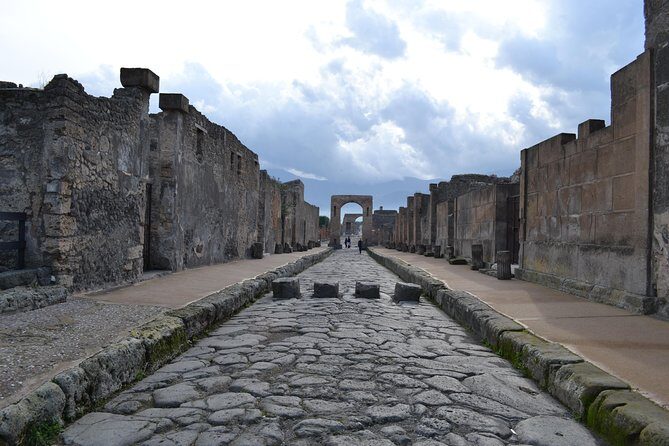
This is a full day at two major parks, so you should expect walking. Even though each individual stop is short, the day adds up.
Here’s how I’d mentally budget it:
- Herculaneum highlight sequence first, with lots of 10-minute moments.
- A break/lunch option between sites.
- Pompeii highlights after lunch, including multiple forum-and-house stops and a pair of theater moments.
If you’re the type who loves slowing down at one perfect spot, you may feel the schedule is strict. If you want a curated “see the best, understand what you’re seeing” day, this structure is exactly the point.
One small comfort: you’re not traveling between sites on your own. You’re in private transport, and that reduces fatigue. Also, in at least one instance I’ve seen mentioned with this kind of day, a guide handled mobility limitations patiently—so if you have constraints, it’s worth telling the operator in advance.
Price and what you get for $666.75 per person
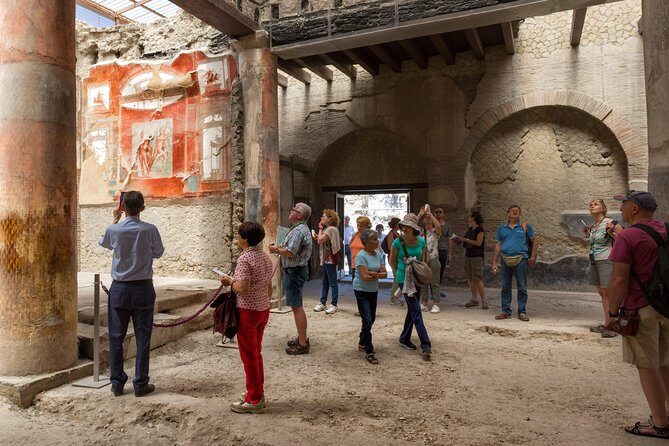
At $666.75 per person, this isn’t a budget stroll. It’s paying for three things at once:
1) private pickup and drop-off across the Campania region,
2) private vehicle transport (air-conditioned Mercedes/private minivan style),
3) a guided experience led by an archaeologist, not just a standard walk-through.
When you compare to cheaper group tours, the math usually comes down to time and hassle. Two sites plus real guide time plus private transit costs more, but it also tends to reduce wasted hours—especially if you’re arriving by cruise or train.
There’s also some value in the booking cadence. This is a popular format and is often booked around two to three months out. If you wait until the last minute, you may lose flexibility.
If you’re traveling with family or friends who want everyone to hear the same explanations, private can also be worth it because you’re not splitting attention across strangers. And if you see group discounts offered, that can shift the price from painful to simply high.
Other Pompeii + Herculaneum tours



Smart tips: shoes, sun, and how not to waste your energy
This tour is practical about what you should bring. You’ll walk a lot, so:
- Wear comfortable shoes. Suggested footwear is a must.
- In summer, skip flip-flops (especially if you’ll be on uneven stone).
- Bring sunglasses and sunscreen.
- Carry water. You’ll want it in the heat.
- Consider a light snack, since meals aren’t included (and you may only have short breaks).
Also, don’t treat the lunch windows as a big meal situation. They’re more like reset points. If you’re prone to getting hungry fast, plan ahead so you don’t spend the Pompeii portion thinking about food.
Should you book this Pompeii and Herculaneum archaeologist tour?
If you want the best of both cities in one day, with real expert guidance and private transport, I think this is a strong match. It’s especially good if:
- you’re short on time and you really want both sites,
- you dislike the stress of ticket lines and figuring out logistics,
- you enjoy architecture and engineering details (houses, baths, and civic buildings),
- you like structured stops that still cover major highlights.
I’d hesitate if:
- you need long, slow pauses in only a few rooms,
- you’re likely to struggle with a packed walking day,
- you’re looking for meals and downtime as part of the package.
If your ideal day is a guided sprint with context—and you’re okay with a tight schedule—this is the kind of tour that delivers.
FAQ
How long is the Pompeii and Herculaneum tour?
It runs about 7 hours.
Where can I get picked up?
Pickup is offered at your accommodation in Naples, Salerno, Sorrento, or the Amalfi Coast, plus cruise ports, train stations, or the airport.
Is transportation included between Herculaneum and Pompeii?
Yes. The tour includes transportation by private minivan with a professional driver, with an air-conditioned ride between stops.
Is this a private tour?
Yes. Only your group participates.
Is the tour guided by an archaeologist?
Yes. It’s led by an archaeologist with guidance and assistance throughout the tour.
Are entrance tickets included?
The tour includes Herculaneum entry tickets and Pompeii Express entry tickets. The Herculaneum entry ticket is listed as 16 euros for adults (and 2 euros for EU citizens aged 18–25).
Is lunch included?
No. Meals and personal expenses are not included. There is a lunch stop option between Herculaneum and Pompeii, and you also have free time to have lunch on your own in Pompeii.
What language is the tour offered in?
English.
What should I wear or bring?
Bring comfortable shoes, sunglasses, sunscreen, and water. In summer, avoid flip-flops.
Is free cancellation available?
Yes. You can cancel up to 24 hours in advance for a full refund.
Can service animals attend?
Yes, service animals are allowed.