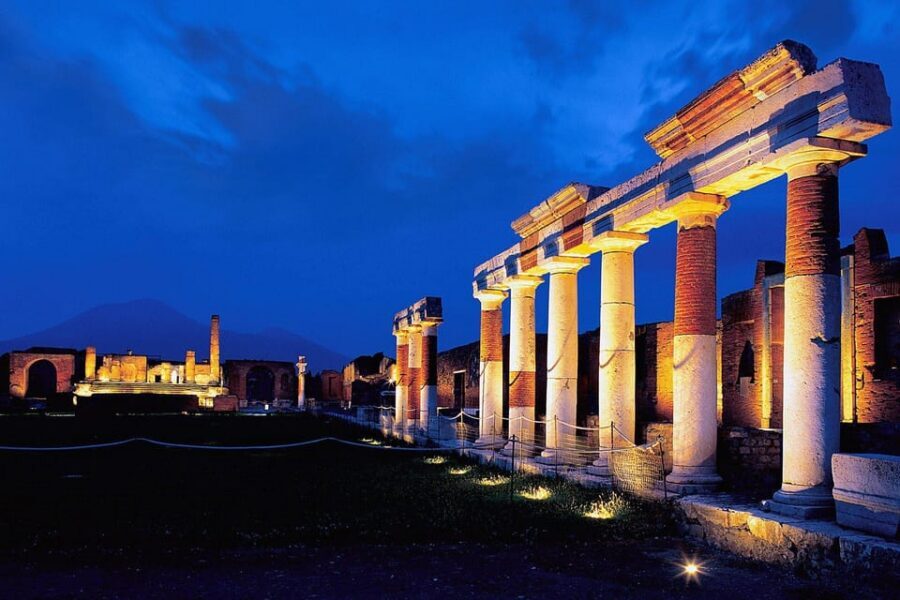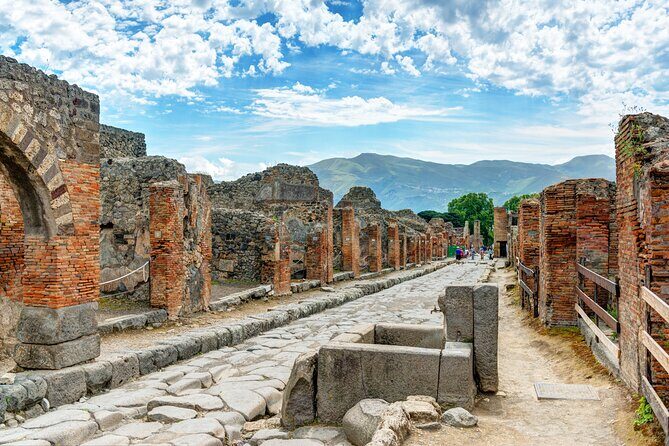
Pompeii hits fast, even from a bus window. What makes this experience special is the authorized guide approach, which turns a big archaeological park into something you can actually follow and understand. You’re also dealing with a place on an enormous scale—excavations across 440,000 m²—and that demands a smarter plan than just wandering.
I like how this tour keeps it private. You’re not stuck in a shuffle of strangers, and you can set the pace so you can zoom in on what matters to you (including skipping a crowded pocket if you’d rather not linger). I also appreciate the comfort side: air-conditioned transport and pickup help you spend more energy looking up at the walls and less energy dealing with the logistics.
One thing to think about: the time in Pompeii is about 2 hours, so you’ll want to go in with clear priorities. Also, the admission ticket isn’t automatically included in the Pompeii stop, depending on the plan you choose, so you should double-check what’s covered before you go.
In This Review
- Key Things to Know Before You Go
- Pompeii’s Scale (and Why It Matters for Your Time)
- The Private-Group Advantage in a Place That Can Feel Chaotic
- An Authorized Guide Changes What You Notice
- Your 2 Hours in Pompeii: How to Use a Short Window Well
- From Amalfi to Pompeii: Comfort and Timing That Actually Help
- Price and Value: What $389.79 Really Buys You
- Before You Book: Weather and Minimum Numbers
- Who This Tour Fits Best (and Who Might Want Another Option)
- Should You Book This Pompeii Tour?
- FAQ
- How long is the Pompeii visit?
- Is the Pompeii admission ticket included?
- Do you offer pickup from Amalfi?
- Is this a private tour?
- Are mobile tickets used?
- What happens if the weather is poor?
- Is confirmation guaranteed after booking?
Key Things to Know Before You Go
- Authorized guide on-site helps you connect the ruins to real daily life, not just facts on plaques.
- Private group format means you set the tempo instead of being herded.
- 2 hours in Pompeii is a useful, focused window—great for targeted highlights if you plan ahead.
- Mobile ticket makes check-in smoother on the day.
- Air-conditioned vehicle + pickup option reduces the strain of a long day on the coast.
- Entrance ticket may or may not be included, based on the plan you pick—verify in advance.
Pompeii’s Scale (and Why It Matters for Your Time)
Pompeii isn’t a small museum stop. The archaeological city covers an eye-popping 440,000 m², and it’s all the reason the site feels overwhelming if you’re doing it solo. Even if you’re a motivated walker, you can’t honestly see everything, not in a short window. That’s exactly where guided time becomes valuable.
The excavations began in the late 18th century, and since then, archaeologists have exposed far more than stone walls. You’ll be looking at a mix of paintings, mosaics, furnishings, and buildings that help reconstruct what life looked like in Roman times. In other words, you’re not only touring architecture—you’re studying how people ate, worked, decorated rooms, and moved through streets.
The park is also part of a bigger UNESCO story. Pompeii, together with Ercolano and Oplonti, became a UNESCO World Heritage Site in 1997. That matters because it tells you this is recognized globally for more than “old stuff.” It’s about a preserved snapshot of a whole community. When you have a guide, you can connect what you see on the ground with why it was preserved and what it teaches.
If you're still narrowing it down, here are other tours in Amalfi we've reviewed.


The Private-Group Advantage in a Place That Can Feel Chaotic
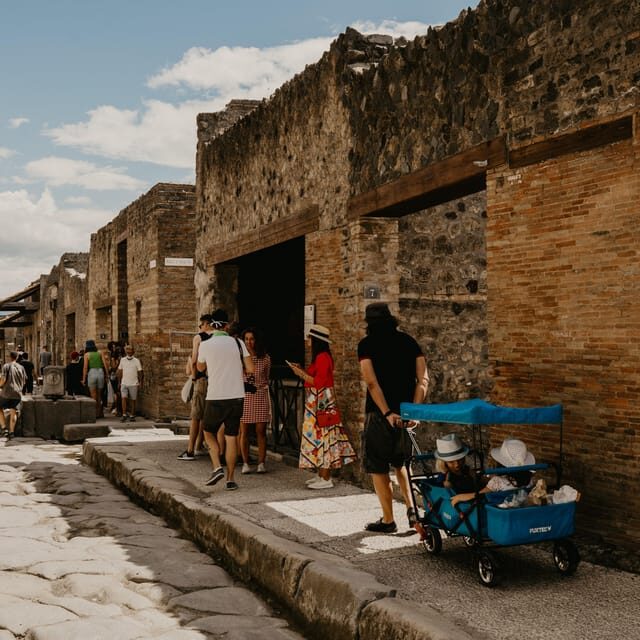
I love private touring in sites like Pompeii because the rhythm is different. You’re still in a popular attraction, but you’re not locked into a one-size-fits-all route. With only your group participating, you get room to adjust—slow down for what catches your attention, move on when something isn’t your priority, and skip an area if crowds are making it harder to enjoy.
This also matters psychologically. In big public tours, you often feel pressure to keep up, even when you’re curious about a side street, a room, or a detail. Here, you can follow your own interests while still benefiting from an authorized guide who keeps the visit coherent.
That flexibility came through in real-world feedback around choosing what to see in a way that’s comfortable. One example: when a particular area was busy, the group didn’t feel forced to wait or push through. The point isn’t to treat Pompeii like a shopping list—it’s to give yourself the freedom to spend your limited time where it resonates most.
An Authorized Guide Changes What You Notice
Pompeii is famous, yes—but the guide is what turns fame into understanding. A local, authorized professional can explain how the site lets you read the everyday world of Roman life. Without that help, you can end up staring at ruins like a photo in a textbook. With it, you start noticing patterns: how rooms functioned, what decoration signals about status or taste, and why certain spaces mattered.
The tour description also flags why guidance is central: the excavations have brought to light details that go beyond layout—paint, mosaic patterns, household furnishings. Those things become more meaningful when someone connects them to real people. You’re not just seeing decoration; you’re learning how people lived with it.
You may also get a guide who brings the experience to life with a friendly, upbeat style. In feedback about the leader, Andrea was described as helpful, informative, reliable, and fun, with a knack for suggesting what content fits the group’s interests. That kind of guide energy matters because Pompeii can get intense. A good guide helps you keep your bearings and makes the day feel like a story, not a sprint.
Your 2 Hours in Pompeii: How to Use a Short Window Well
Two hours sounds like plenty—until you’re standing inside a site that covers hundreds of thousands of square meters. The good news is that this isn’t a problem if you handle it smartly. With a guided visit, you don’t try to “see everything.” You target the experience.
Here’s how I’d approach it when you have about 2 hours on-site:
- Pick what you most want to learn: daily life, how buildings were arranged, artistic decoration, or the city’s overall structure.
- Think of the guide as your routing brain. Ask for a path that matches your priorities rather than guessing where to start.
- Be open to the fact that the route may emphasize the most instructive areas within time limits. That’s better value than covering random corners.
The tour is designed for an efficient, structured visit, and that’s a major part of the value. You’ll get context while staying realistic about time. If you’re the type who loves deep, slow exploration, you might wish you had more than two hours. But if you want to leave with real understanding instead of just photos, 2 hours with a guide can be the sweet spot.
From Amalfi to Pompeii: Comfort and Timing That Actually Help
This kind of day works only if the logistics don’t steal your focus. You’re traveling from the Amalfi area, and the tour includes an air-conditioned vehicle, which is a genuine quality-of-life improvement on a long day. Pickup is also offered, and the broader description mentions that the service is near public transportation—useful if you’re figuring out how to meet the vehicle.
Another practical touch: you’ll use a mobile ticket, which saves you from printing and re-checking paper tickets. Those small things matter when you’re balancing timed entry and a full day schedule.
The tour runs about 5 hours total. That’s long enough to make Pompeii feel like a real outing, not a quick pass-through. It’s also short enough that you’re not committing your entire day to travel and administration. For many people, that balance is why this format is attractive.


Price and Value: What $389.79 Really Buys You
At $389.79 per person, this isn’t the cheapest way to see Pompeii. The question is whether the money buys you something you can’t get on your own.
Here’s what you can count on from the tour details:
- Air-conditioned vehicle included.
- A professional guide may be included, depending on the plan you choose.
- Entrance tickets may be included, again depending on the plan.
And the Pompeii stop notes admission ticket details separately, so it’s important to check whether your plan includes entry costs. If admission isn’t included, you should budget for it. This matters because “tour price” comparisons can get confusing if one option bundles entry and another doesn’t.
Now for the value logic: you’re paying for private time plus guide interpretation plus transportation. If you’re going with a partner or a small group, private touring can feel more reasonable because the cost is shared, and you’re not wasting time dealing with crowds and decision fatigue. Even for solo travelers, the value can still make sense if you know you’ll benefit from guided route choices and context more than you’d benefit from roaming freely.
Bottom line: pay attention to what’s included in your plan. Once you confirm guide and entrance coverage, the price starts to look less like a sticker shock and more like a “buy understanding plus convenience” deal.
Before You Book: Weather and Minimum Numbers
This experience is weather-dependent. If conditions aren’t good, you’ll be offered a different date or a full refund. That’s important because Pompeii is an outdoor site, and on-the-ground conditions can change plans quickly.
There’s also a minimum traveler requirement. If that minimum isn’t met, you’ll be offered another date/experience or a full refund. If you’re booking last-minute, this is worth keeping in mind so you don’t get surprised.
Also note the tour is non-refundable and can’t be changed once booked. That’s not unusual, but it means you should only book when you’re comfortable with your plans holding steady.
Who This Tour Fits Best (and Who Might Want Another Option)
This Pompeii tour is a strong match if you want:
- A private experience rather than a large-group pace.
- A guide to help you understand what you’re seeing (paintings, mosaics, furnishings, and how Roman life worked).
- A smooth day with pickup and air-conditioned transport.
- A focused visit that lasts about 5 hours, including travel.
It’s also designed to be broadly workable: most travelers can participate, service animals are allowed, and the location is near public transportation.
If you’re the kind of traveler who wants to wander without any structure and spend half a day (or more) discovering at random, you might find 2 hours limiting. But if you care about clarity and value for time, a guided, private format tends to deliver.
Should You Book This Pompeii Tour?
Yes, I’d book it if you want a guided Pompeii visit that respects your time and avoids the chaos of trying to plan everything on the fly. The biggest strengths are the authorized guide and the private group setup, which give you room to focus on what matters to you. You’re also getting real day comfort with air-conditioned transport and a mobile ticket.
Just do two checks before you commit:
1) Confirm whether entrance tickets are included in your selected plan.
2) Make sure your schedule can handle potential weather issues, since the experience depends on good conditions.
If those points work for you, this is a practical way to experience Pompeii with more meaning per hour—and that’s a win.
FAQ
How long is the Pompeii visit?
The Pompeii Archaeological Park time is about 2 hours, and the overall tour duration is approximately 5 hours.
Is the Pompeii admission ticket included?
Admission tickets are not included in the Pompeii stop shown, but entrance tickets may be included depending on the plan you choose. Check your selected plan details.
Do you offer pickup from Amalfi?
Pickup is offered, and the tour also includes an air-conditioned vehicle.
Is this a private tour?
Yes. It’s a private tour/activity, and only your group will participate.
Are mobile tickets used?
Yes, the tour uses a mobile ticket.
What happens if the weather is poor?
This experience requires good weather. If it’s canceled due to poor weather, you’ll be offered a different date or a full refund.
Is confirmation guaranteed after booking?
You’ll receive confirmation within 48 hours of booking, subject to availability.