REVIEW · POSITANO
Transfer from Naples to Positano with 2 hours Private Tour in Herculaneum
Book on Viator →Operated by Askos Tours · Bookable on Viator
One town, two big wins. This private transfer turns your Amalfi Coast day into a door-to-door plan with a guided look at Herculaneum. I like that it’s not just logistics; you get a real archaeological walkthrough while your driver handles the driving.
My favorite part is the combination: relaxed private transport from Naples plus an archaeologist-style guide for Herculaneum. You’re not stuck juggling train schedules or losing daylight in transit.
The main thing to consider is timing: Herculaneum is covered in a tight, highlights-based route, so you won’t linger everywhere. If you want hours of free wandering, this format is more “smart tour” than “slow museum day.”
In This Review
- Key things to know before you go
- Turning a Naples-to-Positano transfer into a smart day
- The private drive: pickup flexibility and less friction
- Herculaneum with the guide: what you’ll actually see
- Parco Acheologico di Ercolano: meeting point and orientation
- Casa dei Cervi: deer-themed details in a peristyle
- La Terrazza di M. Nonio Balbo: public benefactor power
- College of the Augustales: religion and politics in one building
- Casa del Rilievo di Telefo: a benefactor’s house with a thermal connection
- Partem Domus lignea: the wooden partition you’re meant to notice
- House of the Skeleton: what the name tells you
- Central Thermae: men and women baths, separate entrances
- Casa del Salone Nero: the Black Hall and carbonized door remains
- Casa Sannitica: atrium-galleries and frescoed rooms
- Casa del Bel Cortile: a courtyard with a stair and balcony
- House of the Grand Portal: charred wooden parts in the middle of it all
- The pacing: how the two-hour tour fits into a 4-hour total
- Price and value: is $456.70 per person reasonable?
- Who this tour suits best
- Practical tips for your day on the Amalfi Coast
- Should you book this Naples-to-Positano transfer with Herculaneum?
- FAQ
- How long is the Naples to Positano transfer with the Herculaneum stop?
- Is the Herculaneum guide included, and is the tour private?
- Are Herculaneum entrance tickets included in the price?
- Where do we meet for the Herculaneum portion?
- Can I choose the pickup location in Naples, and can they help with car seats?
- What’s the cancellation policy?
Key things to know before you go
- Door-to-door pickup in Naples at a time and location you choose, then hotel drop-off in Positano
- Two-hour guided Herculaneum visit with a professional guide, while the driver stays with the vehicle
- Air-conditioned private minivan plus luggage transport, so you travel light and calm
- Admission ticket included for Herculaneum (with a €16-per-person figure)
- A route of major houses and public buildings across about a dozen notable stops
Turning a Naples-to-Positano transfer into a smart day
The Amalfi Coast is famous for its views, but the trip there can eat up your energy fast. This experience keeps the day efficient. You start in Naples, ride in an air-conditioned private vehicle, and then you get a guided detour to Herculaneum, the Roman town preserved by the eruption that buried it.
What makes this feel like real value is the way it uses your time. The trip isn’t simply transportation. You effectively buy a “two-for-one” day: the drive to the coast, plus a guided archaeology stop that many people skip because it’s a headache to arrange on your own.
I also like that the setup is simple. You meet the guide at the Herculaneum ruins ticket area, the guide takes you through the key sites, and your driver stays nearby with you and your bags. That’s the sort of calm you feel in your shoulders.
Other Herculaneum tours and tickets
The private drive: pickup flexibility and less friction
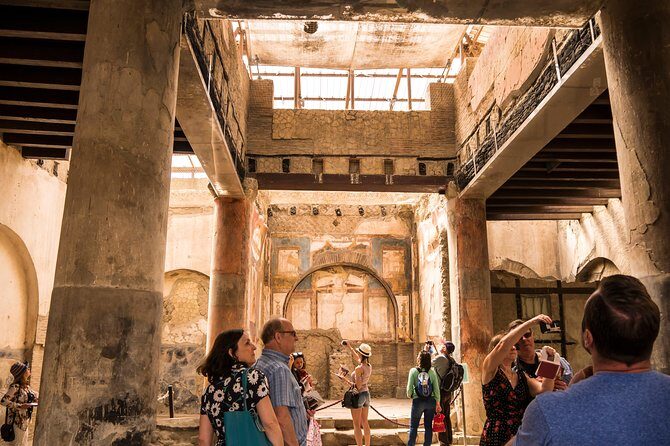
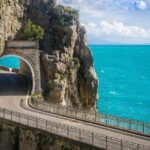
This is a one-way private transfer from Naples to Positano. The key word is private: only your group is in the vehicle. That matters on the Amalfi side, where shared transfers can come with delays, extra stops, and awkward timing.
You also get pickup at the time and place in Naples that you choose. That’s helpful if you’re staying outside the most obvious central points, or if your day needs to line up with ferry, hotel check-in, or a planned lunch.
The vehicle is an air-conditioned minivan, and it’s designed for real travel comfort, not cramped sightseeing. Luggage transport is included, so you don’t have to drag bags around while you’re trying to meet a guide.
One small planning detail: the total duration is listed at about 4 hours. That makes this best for people who want a focused day without turning it into a long, complicated itinerary.
Herculaneum with the guide: what you’ll actually see
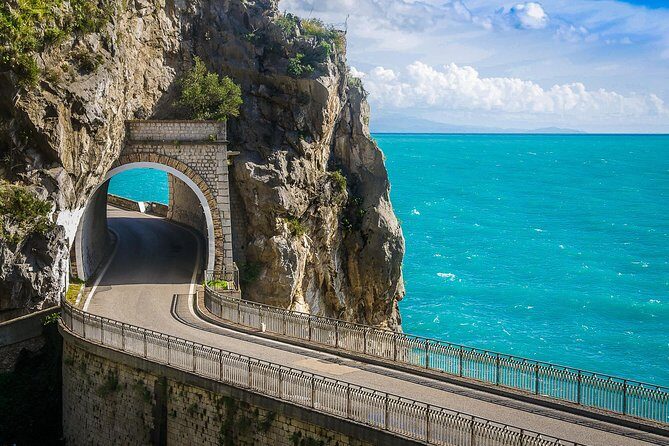
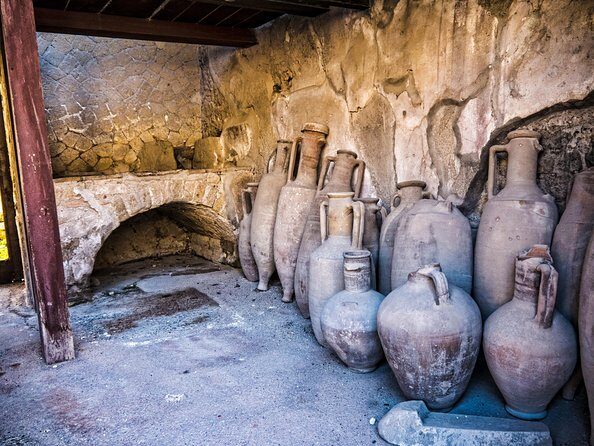
Your Herculaneum visit is built around a guided route that covers major areas in short, manageable chunks. You’ll spend about two hours with the guide, moving from house to house and public spaces. Even if each stop is brief, the stops are chosen to show you how Herculaneum worked as a town, not just as a set of ruins.
If you’re lucky with your guide, you’ll get someone like Laura, who was described as excellent and strong on Roman context. That kind of storytelling helps the carved stone and carbonized wood make sense instead of feeling like random artifacts.
Here’s what the route looks like, stop by stop, and what each one is for.
Parco Acheologico di Ercolano: meeting point and orientation
You meet the guide at the ruins ticket office. Admission is included here, and this first stop sets the tone. Think of it as your orientation checkpoint: where you are, why the town was buried, and what you’re about to look for.
Casa dei Cervi: deer-themed details in a peristyle
One of the early stops is Casa dei Cervi, named for marble statues of deer found in the peristyle area. Even in a short visit, these kinds of details help you visualize daily life. This isn’t just “walls in dirt.” It’s decor and social space.
The main benefit here is contrast: you can see how art and architecture shaped Roman domestic life, even in a town that was abruptly interrupted.
Other Pompeii + Positano day trips



La Terrazza di M. Nonio Balbo: public benefactor power
Next comes La Terrazza di M. Nonio Balbo, tied to M. Nonius Balbus. The long inscription is your clue that this person wasn’t just wealthy—he was a major civic restorer and builder. The terrace concept also reminds you that urban life included outdoor areas used for social viewing and status.
If you like connecting names on stone to big civic roles, this stop tends to click fast.
College of the Augustales: religion and politics in one building
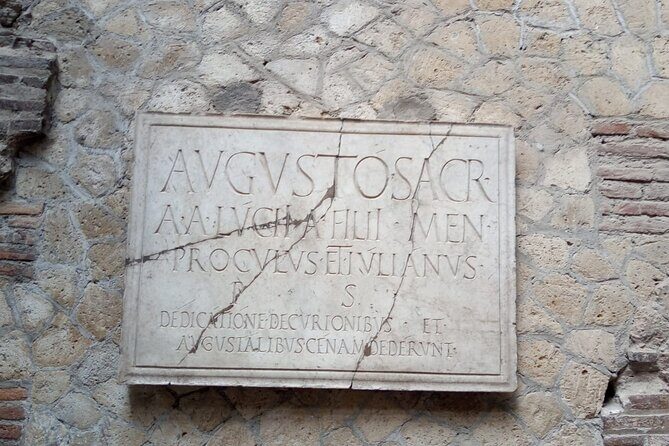
The College of the Augustales likely served as a center connected to the cult of Emperor Augustus and as headquarters for the collegium Augustalium (and possibly even the local curia). That’s the kind of intersection you want when you visit ruins: private homes show daily living, but this type of building shows authority and belief.
Even with limited time, the takeaway is clear: the town organized power through formal spaces.
Casa del Rilievo di Telefo: a benefactor’s house with a thermal connection
Casa del Rilievo di Telefo stands out partly because it may have belonged to an important benefactor, and partly because it connects in an unusual way to nearby Suburban Thermae through private access.
That detail matters because it links class and convenience. In other words, your “home” wasn’t only where you slept and ate. For the upper set, it could also include direct links to leisure infrastructure.
Partem Domus lignea: the wooden partition you’re meant to notice
Partem Domus lignea, also called Casa del Tramezzo di Legno, is important because the wooden partition remained. That survival detail is exactly the kind of thing people mean when they talk about Herculaneum being different from other Roman sites.
The drawback of brief stops is that you can miss the subtle points. This one is worth paying close attention to, because it’s physically specific.
House of the Skeleton: what the name tells you
The House of the Skeleton gets its name from human remains discovered in a second-floor room in 1831. This is one of the stops where the guide’s tone matters. You’ll likely learn how the site was interpreted and why the remains shaped the house’s name.
If you’re sensitive to heavier topics, just know this stop is part of the route.
Central Thermae: men and women baths, separate entrances
Central Thermae were built around the beginning of the 1st century AD. The big detail is the layout: men’s and women’s baths had separate entrances, which was common at the time. It’s a useful architectural reminder that Roman bathing wasn’t one-size-fits-all.
This stop often helps people grasp the town’s rhythm: daily routines included leisure and hygiene, in structured spaces.
Casa del Salone Nero: the Black Hall and carbonized door remains
Casa del Salone Nero, also known as the House of the Black Hall, is described as one of Herculaneum’s more luxurious mansions. You’ll see a monumental entrance where carbonised remains of the doorposts and lintel are still visible.
This is a strong stop for visual impact. You’re seeing survival marks in place, which makes the site feel immediate instead of distant.
Casa Sannitica: atrium-galleries and frescoed rooms
Casa Sannitica has an arrangement typical of the Samnites, including an atrium with a gallery supported by Ionic columns. Rooms are decorated with frescoes.
Even in a quick walkthrough, this stop can help you understand regional influences and how design signals identity. If you notice the columns, you’re doing it right.
Casa del Bel Cortile: a courtyard with a stair and balcony
Casa del Bel Cortile is one of the most original houses in the area. It has a courtyard with a stairway and a stone balcony instead of the more typical atrium arrangement.
This stop is a good example of how Roman domestic architecture wasn’t frozen in one style. It adapted.
House of the Grand Portal: charred wooden parts in the middle of it all
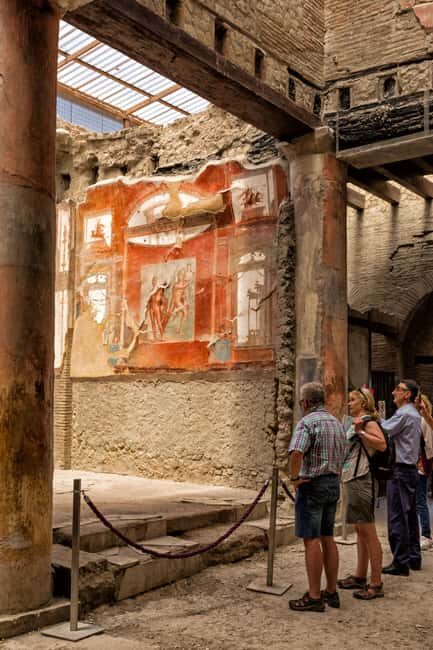
Finally, you’ll reach the House of the Grand Portal, a prominent domus in the central part of the archaeological area. The description highlights environments with colonnati and frescoes, plus charred remains of wooden parts.
This is a satisfying close to the tour because it pulls the domestic story together. You move from rooms to features, and then you end with a house that feels like a hub.
The pacing: how the two-hour tour fits into a 4-hour total
The itinerary is structured with short visits—often around 10 to 15 minutes per stop. That pacing is exactly what makes this work as a transfer day.
You’re not supposed to see everything in two hours. You’re meant to see enough key spots to build a coherent picture: homes, public life, bathing culture, civic benefactors, and the ways luxury showed up in domestic design.
If you’re the type who prefers photos and quick context over long lingering, this pace is a plus. If you’re the type who likes to read every inscription and stare at every fresco for a long time, plan to accept the “highlights only” trade-off.
Price and value: is $456.70 per person reasonable?
At $456.70 per person, this isn’t a budget option. The value comes from what you’re buying: private transportation plus guide-led time, plus included Herculaneum admission.
Here’s why it can still make sense:
- You’re paying for door-to-door convenience between Naples and Positano, not just a museum ticket plus random transfers.
- You get a guide for the archaeological portion, which is usually where time and confusion go up if you DIY it.
- The package includes entry tickets for Herculaneum (with the €16 figure), so you’re not doing extra math or last-minute ticket hunting.
If you’re traveling as a smaller group, this kind of private setup often feels fair because it replaces multiple moving parts: taxis, bus/train schedules, and time spent coordinating.
If you’re traveling solo and you’re mainly interested in reaching Positano quickly, a cheaper transfer might be tempting. But if Herculaneum is on your list, combining it with the drive is the best use of limited daylight.
Who this tour suits best
This experience is a great match if you:
- want to minimize stress on travel day from Naples to Positano
- like guided context more than self-guided wandering
- are curious about a Roman site that’s powerful but less crowded than the better-known option nearby
- want your driver and luggage handled, so your only job is to show up and walk
It may be less ideal if you:
- plan to spend most of the day exploring Positano slowly once you arrive and want more time at the ruins
- prefer long, unstructured time where you can choose just one area and linger for hours
Practical tips for your day on the Amalfi Coast
A few smart things to do before you go:
- Wear comfortable walking shoes. Even with short stops, you’ll be on foot throughout the ruins portion.
- Bring a layer. Coastal days can shift with breeze and time of day.
- If you want photos, remember the route is timed. Try to take shots quickly at each stop, then let the guide’s explanation land before you move on.
- Plan your Positano afternoon with the idea that you’ll arrive after the ruins portion. This keeps your momentum instead of forcing a late-day scramble.
Also, keep in mind that car seats are available on request, and service animals are allowed. The experience is set up so most people can participate.
Should you book this Naples-to-Positano transfer with Herculaneum?
Book it if you want a seamless day that combines coast travel with a focused Roman stop. The private van, the included Herculaneum entry, and the guided route mean you’re not spending your energy on logistics. You get real context, not just a quick look at walls.
Skip it if you’re aiming for an unhurried ruin day or if Herculaneum is your main destination and you want long independent time there. In that case, you’ll probably want a different format with more flexibility.
If you’re balancing Naples, Positano, and limited time, this strikes a practical balance: you reach the Amalfi Coast with less hassle and you leave Herculaneum with a clear sense of how the town lived.
FAQ
How long is the Naples to Positano transfer with the Herculaneum stop?
The total experience is about 4 hours, and it includes a roughly two-hour guided tour stop at the Herculaneum ruins.
Is the Herculaneum guide included, and is the tour private?
Yes. You’ll have a professional guide during the Herculaneum portion, and the overall experience is private with only your group participating.
Are Herculaneum entrance tickets included in the price?
Yes. Herculaneum entry tickets are included, with the entry ticket amount listed as €16 per person.
Where do we meet for the Herculaneum portion?
You meet the guide at the ticket office of the Parco Acheologico di Ercolano (Herculaneum ruins).
Can I choose the pickup location in Naples, and can they help with car seats?
Pickup is offered at the time and location in Naples you choose. Car seats are available on request.
What’s the cancellation policy?
You can cancel for a full refund up to 24 hours in advance of the experience start time. Cancellation less than 24 hours before start time is not refunded.