REVIEW · SALERNO
From Salerno: Vesuvius & Pompeii with audioguide
Book on GetYourGuide →Operated by Around Vesuvio · Bookable on GetYourGuide
Seeing two famous sites in one day is always a gamble. This one works because it’s built around skip-the-line entry and easy transfers from Salerno, with an audioguide to keep you moving with purpose. You get a clear split between volcano time and Pompeii time, instead of bouncing around half-informed.
I especially like the stress-free logistics: pickup, coach rides between stops, and the return back to the same meeting point are handled for you. I also like that entrance tickets are included (and marked as skip-the-line), so you’re not wasting time hunting prices and ticket counters.
One drawback to weigh: the schedule is tight. Pompeii is huge, and the given visit time can feel like a sprint unless you go in with a plan.
In This Review
- Key highlights to know before you go
- A One-Day Combo: Pompeii and Mount Vesuvius from Salerno
- Meeting Point and Transfers: How the Day Stays Low-Stress
- Stop 1 at Vesuvio National Park: Crater Time and the Uphill Reality
- Stop 2 and the Transfer Beat: Pompeii Gets the Main Stage
- Pompeii Archaeological Site: How to See More in 2 Hours
- Audioguides and Maps: Making the Tech Work for You
- Tickets and Value: What You’re Actually Buying
- Practical Tips: Shoes, Luggage Rules, and Timing Choices
- Who This Tour Fits Best (and Who Should Skip It)
- Should You Book This Salerno Vesuvius and Pompeii Tour?
- FAQ
- How long is the tour from Salerno?
- Where do I meet the tour in Salerno?
- Are entrance fees included?
- Is an audioguide included for Pompeii?
- Do I need an ID to use the audioguide?
- Is food included?
- Can I bring luggage or large bags?
- What languages are available for the audioguide and driver?
- Is this tour suitable for people with mobility impairments?
Key highlights to know before you go

- Skip-the-line tickets for both Pompeii and Vesuvius so your day starts faster
- A real crater-window with free time to reach and visit the Vesuvius crater area
- Pompeii audioguide + map to help you connect sites with what you’re seeing
- Short, structured Pompeii time that pushes you toward must-sees instead of wandering
- Uphill walking at Vesuvius that will feel steep even if it’s not super long
- Comfortable “transfer day” pacing designed for low effort from Salerno
A One-Day Combo: Pompeii and Mount Vesuvius from Salerno
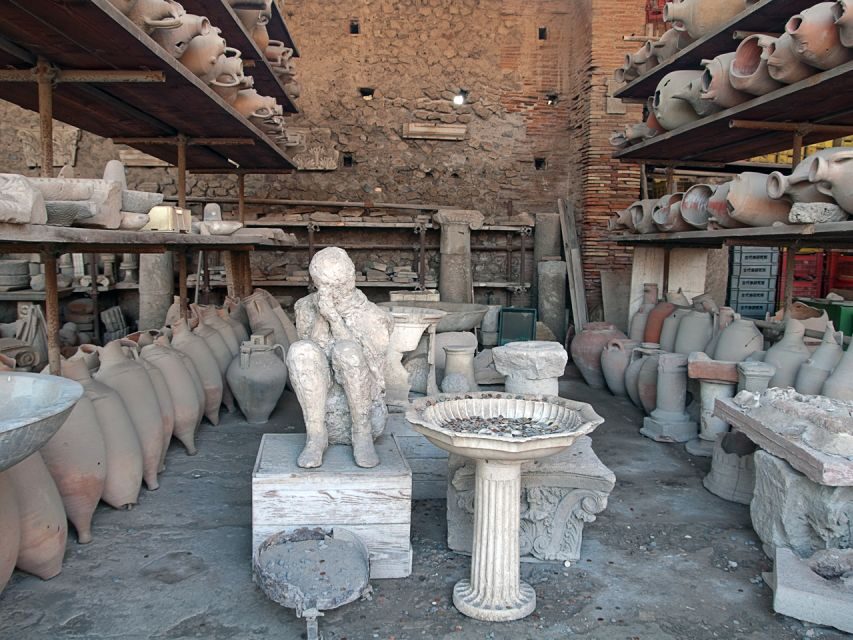
This is a classic Campania day trip: Pompeii’s ruins on one side of the timeline, and Mount Vesuvius on the other. You’ll move between the two by coach, so you’re not solving transport like a local detective all day.
The core idea is simple. You get enough time at each stop to say you really saw both. And because tickets are handled as skip-the-line, your day is less about queues and more about actual sightseeing.
If you’re basing yourself in Salerno and want a major “wow” day without turning it into a full marathon, this format makes sense.
If you're still narrowing it down, here are other tours in Salerno we've reviewed.



Meeting Point and Transfers: How the Day Stays Low-Stress
The tour starts at Piazza Vittorio Veneto, 6, right outside the Banca Generali in Salerno. That detail matters. If you arrive late, you might spend your first 10 minutes trying to find the bus.
Once you’re onboard, the day is paced with coach segments:
- a ride to Vesuvio National Park (about 1 hour),
- then onward to Pompeii (about 40 minutes),
- and finally back to Salerno (about 40 minutes from Pompeii, plus the drive back).
You also get driver support in Italian and English. That helps when you’re trying to confirm where to go for the next step.
Practical note: a few people have said the bus can be tricky to spot at the very beginning. I’d recommend arriving a few minutes early, standing where you can see the street, and double-checking the pickup spot on arrival day.
Stop 1 at Vesuvio National Park: Crater Time and the Uphill Reality

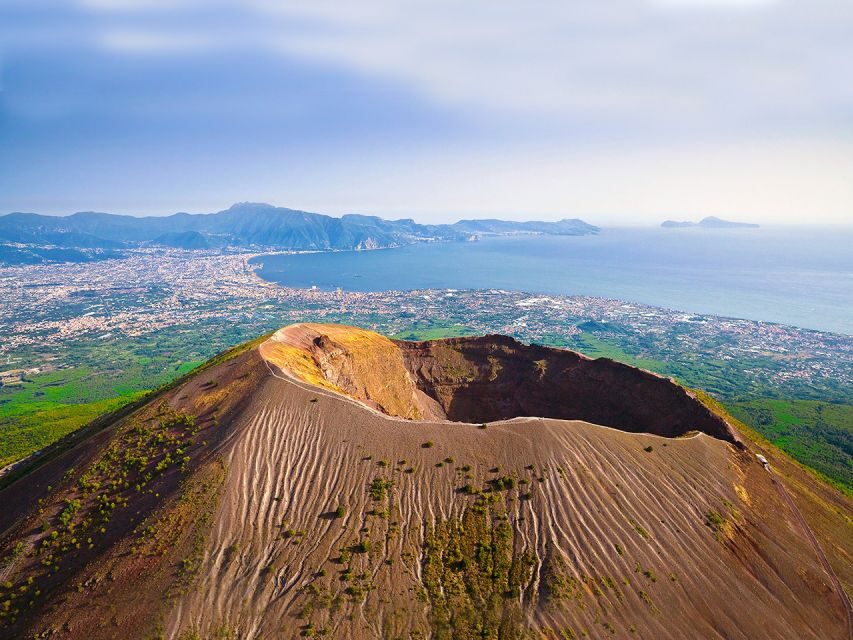
Your Vesuvius slot is about 1.5 hours for free time to reach and visit the crater area. This part is the “workout” in the itinerary, and it’s the one section you should prepare for mentally.
Even when it’s not long in distance, it can feel steep. One useful tip from the walking experience: plan for a short but uphill climb—people reported a climb taking around 25–30 minutes up, with extra time needed for photos at scenic points. If you take your time, it becomes manageable for many ages and fitness levels. If you rush, it becomes a slog.
Also bring a backup layer. Weather changes quickly on the mountain. If rain rolls in at the top, a poncho can save your day. People reported getting caught in rain and being glad they had something to stay dry.
What makes this stop special is the perspective. You’re not just looking at a volcano from afar. You’re up close enough to feel why an eruption like the one in 79 AD changed everything for the people below.
Stop 2 and the Transfer Beat: Pompeii Gets the Main Stage
Between Vesuvius and Pompeii, you have a 40-minute coach ride. It’s a breather, but also a timing checkpoint.
Use this time to reset. If you’re using the audioguide, confirm you’ve got your ID ready, since Pompeii’s audioguide process requires a valid ID document to borrow it. Also, think about footwear: the Pompeii ruins involve plenty of walking over uneven surfaces.
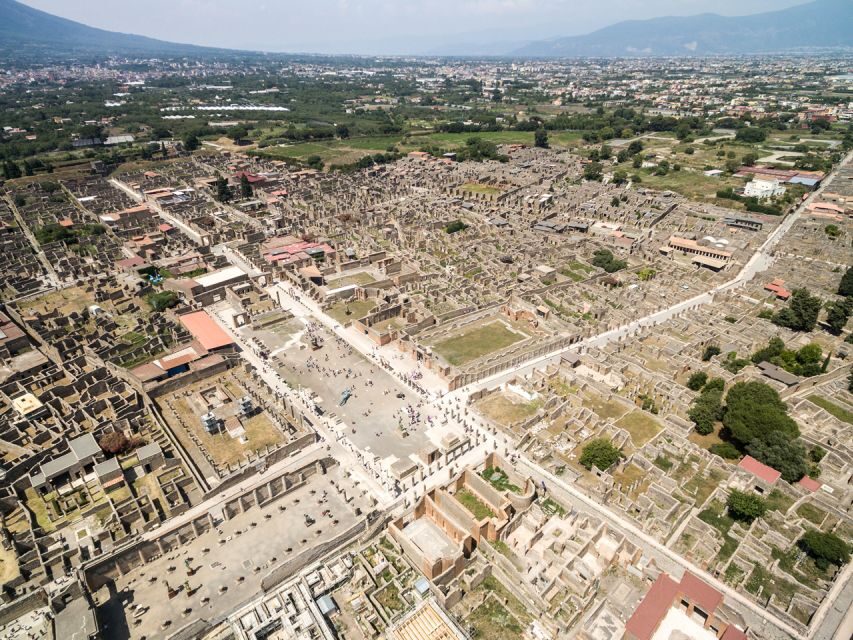
Once you arrive at Pompeii, the tour gives you about 2 hours on site. That number matters. It’s enough to hit key areas, but not enough to do everything if you try to see the entire site.
Pompeii Archaeological Site: How to See More in 2 Hours
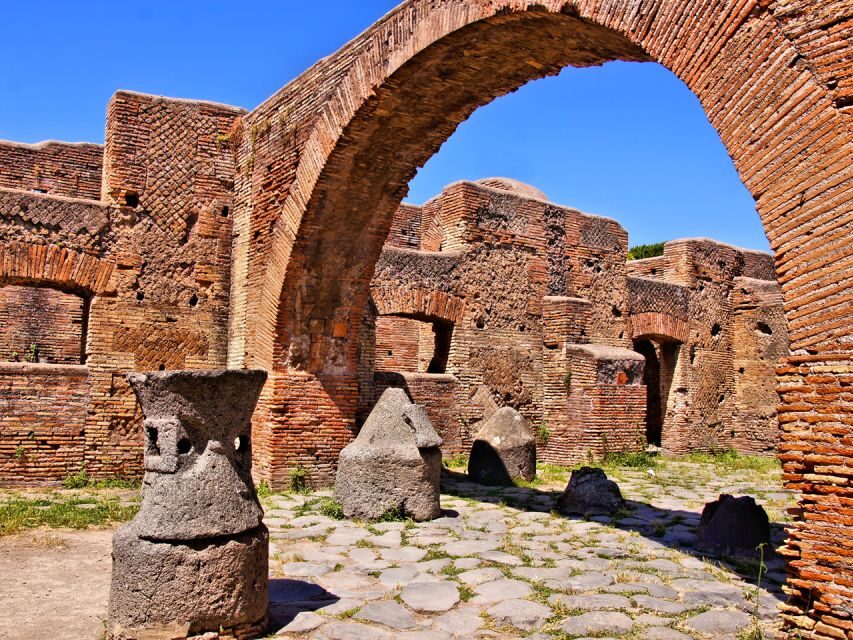
Pompeii is the kind of place where your brain keeps asking questions: What was this room for? Why is the doorway still here? How did people live in a neighborhood that’s now gone?
With only two hours, your best strategy is focus. I recommend picking a few must-sees ahead of time, because the site is huge and you’ll lose time if you try to “wander until you find something.” Many people leave wishing they had another 30–60 minutes, and that feeling usually comes from trying to do too much.
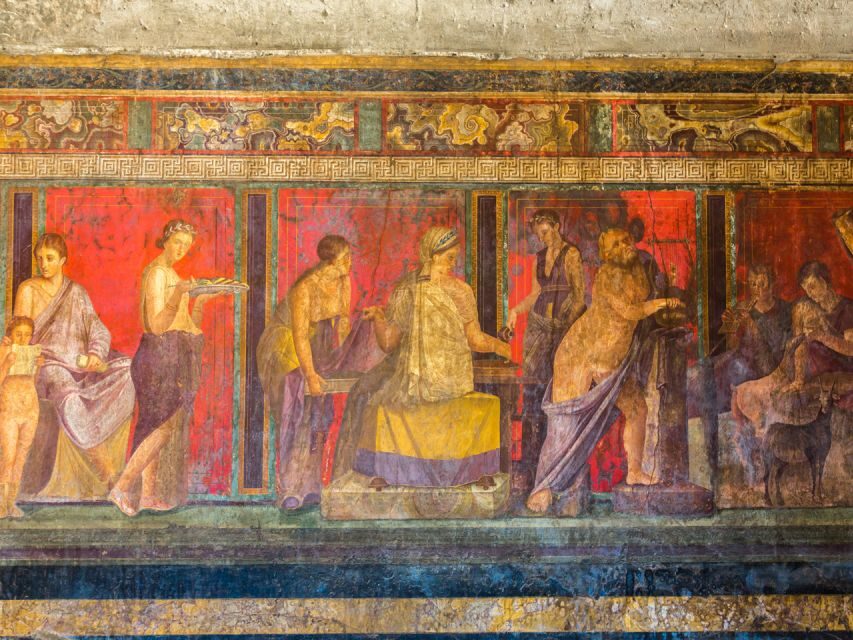
Inside the visit, you’ll have the audioguide and map to help you follow an order. The point isn’t just facts—it’s structure. In Pompeii, a little guidance can turn random ruins into a coherent story: streets, buildings, daily life, and the shock of sudden destruction.
Two practical cautions, both worth knowing before you arrive:
- The map provided may not perfectly match what’s open or the exact best route on the day you visit.
- The audio guidance is most helpful when you’re positioned near the specific features being discussed. If you’re walking fast or skipping ahead, the audio can feel less useful.
So treat the audioguide like training wheels. Use it to get oriented, then let your feet and curiosity guide the rest of your route.




Audioguides and Maps: Making the Tech Work for You
Pompeii’s audioguide is included, along with a map. Language options are wide: Chinese, English, French, German, Hebrew, Italian, Portuguese, Russian, and Spanish. You’ll also have audio availability across languages, which is great if you’re traveling with friends in mixed groups.
Here’s the key practical detail: the tour notes that you must bring a valid ID document to rent/borrow the audioguide for Pompeii. If you forget it, you can lose the whole advantage of the audio.
Also, be ready for small tech friction. Some people found the audioguide less helpful unless they were standing at the exact points referenced. If your device has a button delay or your screen/menu doesn’t catch your prompt, don’t panic—pause, reposition, and try again.
My best advice: don’t treat the audioguide like a strict script. Use it to grab meaning quickly, then spend your time where you feel the details most.
Tickets and Value: What You’re Actually Buying
At $124.61 per person for about 7.5 hours, this tour is priced for people who want two big sights handled in one organized day.
What makes the cost feel more reasonable is what’s included:
- Skip-the-line ticket to Pompeii (valued at €20)
- Skip-the-line ticket for Vesuvius (valued at €11.68)
- transfers between sites
- audioguide and map for Pompeii
- entrance booking fees
- pickup and return to Salerno
If you tried to assemble this on your own, you’d be paying for transport, ticket time, and the stress of planning. Even if the exact total varies depending on season and how you book, this package saves mental energy. You’re buying convenience, not just admissions.
The tour also promises less queue time. With famous sites, those minutes add up fast. If you’re the type who hates waiting, this is where the value shows.
Practical Tips: Shoes, Luggage Rules, and Timing Choices
A few details can make the difference between an enjoyable day and a grumpy one.
Bring
- Your passport or ID card (needed for the Pompeii audioguide)
- Comfortable shoes (both sites involve walking)
Don’t bring
- Luggage or large bags. This is explicitly not allowed.
Plan your day
- At Vesuvius, treat the climb as part of the experience. Take breaks. Don’t sprint.
- At Pompeii, do a mini game plan. Before you start walking, decide which areas matter most to you and commit.
One small “food reality” check: food and beverages are not included. Pompeii is where hunger will hit you first, so it helps to carry a snack or plan how you’ll handle meals on your own.
Finally, note that the tour is not suitable for people with mobility impairments. The itinerary includes walking at Vesuvius and uneven surfaces at Pompeii.
Who This Tour Fits Best (and Who Should Skip It)
This works best for you if:
- you want Pompeii and Vesuvius in one day without arranging transport
- you prefer a structured schedule over open-ended time
- you like using an audioguide to get more meaning from what you see
- you’d rather pay for convenience than spend your day managing tickets
It may not be the best match if:
- you hate uphill walking or steep steps
- you want a slow, wandering Pompeii day
- you’re bringing a lot of gear (since luggage/large bags aren’t allowed)
- you need mobility-friendly routing
Also, if you’re the type who can only handle one big site per day, you might feel rushed here. The schedule is efficient by design, and that efficiency is both the point and the limitation.
Should You Book This Salerno Vesuvius and Pompeii Tour?
I’d book it if your priority is a high-impact day with minimal planning. The skip-the-line tickets, included transfers, and Pompeii audioguide make it a strong value package. You’re not just paying for transport—you’re paying for time saved.
I wouldn’t book it if you’re looking for deep, unhurried exploration at Pompeii. Two hours can feel short for such a huge site, especially if you want everything rather than the highlights.
If you do book, go in with a simple plan: set your Pompeii “must-sees” before you arrive, take it steady on the Vesuvius climb, and keep your expectations aligned with a one-day combo. You’ll leave with the satisfying feeling of having seen both in a single, well-managed trip.
FAQ
How long is the tour from Salerno?
The tour lasts about 7.5 hours (starting times vary by availability).
Where do I meet the tour in Salerno?
You meet at Piazza Vittorio Veneto, 6, specifically outside the Banca Generali. The tour ends back at the same meeting point.
Are entrance fees included?
Yes. The tour includes skip-the-line entrance tickets for both Vesuvio National Park and Pompeii (with listed values for each).
Is an audioguide included for Pompeii?
Yes. An audioguide and map are included for visiting the Pompeii Archaeological site.
Do I need an ID to use the audioguide?
Yes. You must bring a valid passport or ID card, which is required to borrow the audioguide for Pompeii.
Is food included?
No. Food and beverages are not included.
Can I bring luggage or large bags?
No. Luggage or large bags are not allowed.
What languages are available for the audioguide and driver?
The driver speaks Italian and English. The Pompeii audioguide is available in Chinese, English, French, German, Hebrew, Italian, Portuguese, Russian, and Spanish.
Is this tour suitable for people with mobility impairments?
No. The tour is not suitable for people with mobility impairments.