REVIEW · TORRE ANNUNZIATA
Pompeii: Guided Walking Tour with Entrance Ticket
Book on GetYourGuide →Operated by Project Napoli Service · Bookable on GetYourGuide
Pompeii hits you fast. One guided walk turns the volcanic tragedy of 79 A.D. into real street-level history, with time-saving skip-the-line entry and a route that prioritizes major stops like the Forum and Thermal Baths.
What I like most is the practical focus: you’re not wandering with zero context, and you get headsets so the guide’s commentary actually reaches everyone. I also love that you’re seeing how Romans lived, not just big monuments—think daily-life details, public spaces, and even the Lupanare area.
One thing to consider: this is a 2-hour sprint through only a portion of the huge site, and Pompeii can be hot, uneven, and crowded around the entrances, so you’ll want comfortable shoes and a flexible mindset.
In This Review
- Key takeaways
- Pompeii on a Timer: What Makes This Tour Feel Worth It
- The 2-Hour Route That Hits the Big Themes
- Forum: Pompeii’s public heart
- Thermal Baths: more than hygiene
- Lupanare: everyday life, explained
- Streets and shop signs: Roman shopping vibes
- Archaeological progress you can feel
- Skip-The-Line Entry: Time Saved, Focus Gained
- Finding the Group: Meeting Point at Hotel Vittoria (10:50am)
- Guides, Headsets, and the Language Mix
- Price and Value: Is $50 a Good Deal?
- Who This Tour Fits Best (And Who Should Rethink It)
- The Real-World Downsides to Plan For
- Delays at the start can happen
- Group size and pacing can vary
- Headset comfort isn’t guaranteed for everyone
- You may want more time afterward
- Should You Book This Pompeii Guided Walk?
- FAQ
- How long is the Pompeii guided walking tour?
- Is the entrance ticket to Pompeii included in the price?
- What languages are available for the live guide?
- Where do I meet the guide?
- What should I bring for the tour?
- Is the tour wheelchair accessible or suitable for mobility impairments?
- Does it run in all weather, and can I cancel?
Key takeaways
- Skip-the-ticket-line access helps you start the walk sooner and spend more time in Pompeii.
- Included entrance ticket to the Pompeii Archaeological Site means no separate admission scramble.
- Forum + Thermal Baths + Lupanare cover major public and everyday-life themes.
- Live multilingual guides (English, French, Spanish, Italian) keep the stories clear for mixed groups.
- Headsets make a difference when the crowd noise rises.
- Two-thirds uncovered vibe: you’ll feel how much has been revealed so far, even with the work still ongoing.
Pompeii on a Timer: What Makes This Tour Feel Worth It
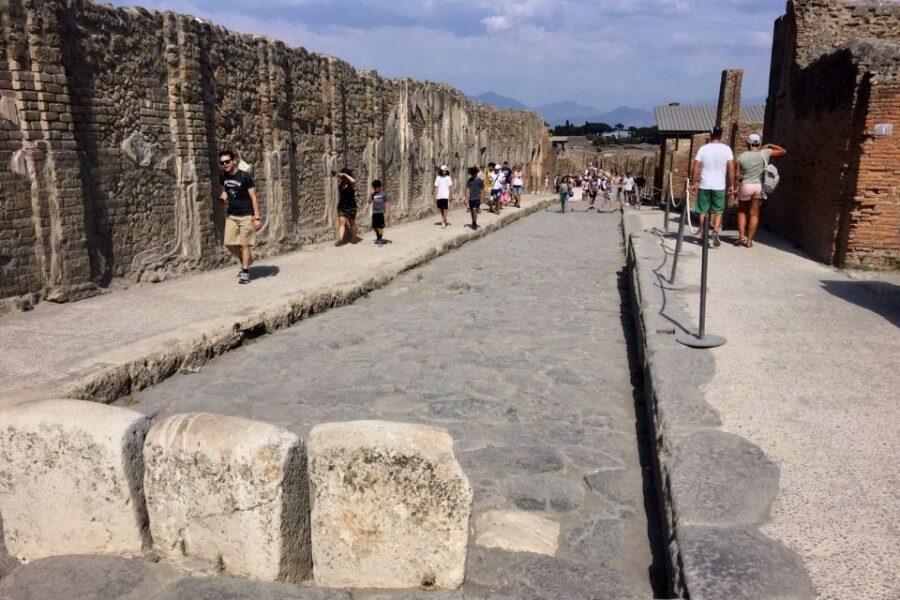
Pompeii is one of those places where you can easily lose the plot. With a self-guided visit, you might see impressive ruins and still miss the human scale: the layout, the routine, and why certain buildings mattered. This tour solves that problem with a guided walk that stays focused on the stops most travelers get the most out of in a short time.
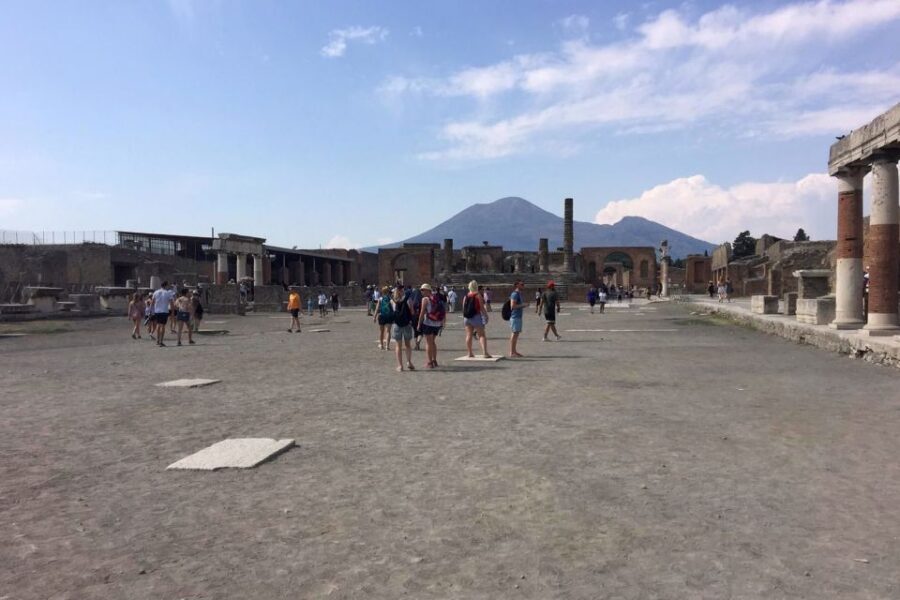
At the core is the 79 A.D. story. Vesuvius erupted, the town was buried under volcanic ash, and the centuries that followed left Pompeii remarkably intact in many areas. You’ll walk streets and building entrances that were later excavated over hundreds of years, with the site now about two-thirds uncovered. That gives you a sense of both the preservation and the limits—there’s still so much to see, but you’ll get a clear snapshot of the city as it functions as a city.
The tour’s value is how it compresses meaning into two hours: you’re not just looking at stone; you’re connecting public life (like the Forum) with daily habits (like bathing culture and storefront activity). And the included entrance ticket removes a common stress point—no last-minute ticket line math before you start walking.
If you're still narrowing it down, here are other tours in Torre Annunziata we've reviewed.

The 2-Hour Route That Hits the Big Themes
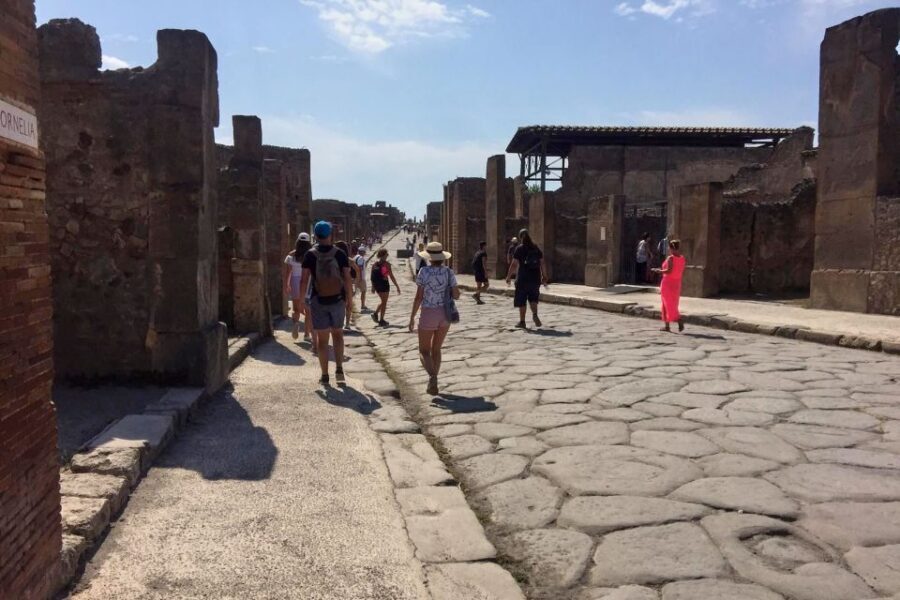
This is not a “see everything” tour. It’s designed to hit high-impact highlights and give you enough context to appreciate the rest when you wander afterward.
Here’s what you can expect to cover in that short window:
Forum: Pompeii’s public heart
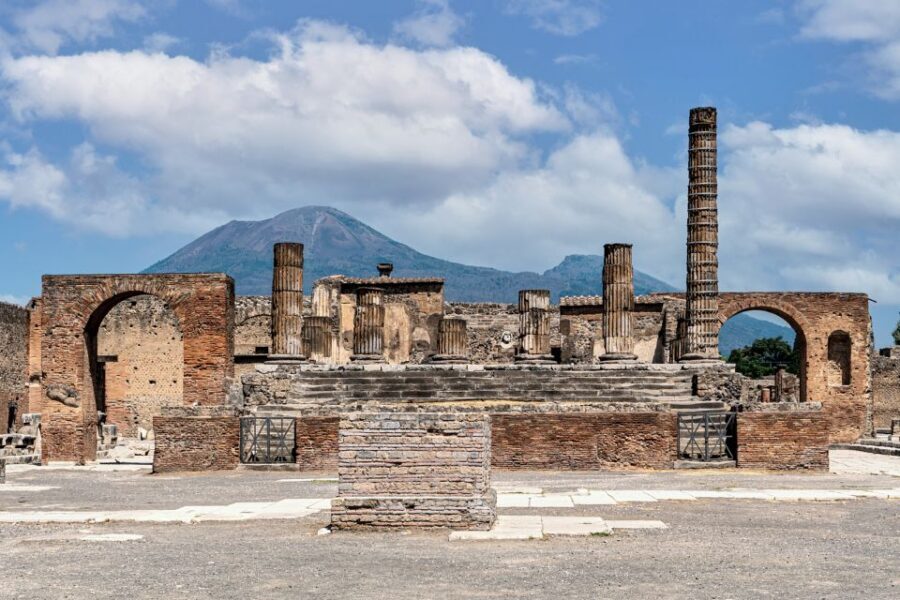
The Forum is where politics, commerce, and civic identity meet. In Pompeii, it doesn’t feel abstract. You’re walking through a space built for gatherings and decisions, so you can start to understand how a Roman town operated day-to-day. Expect the guide to connect what you see—open space, building fronts, and civic features—with what that meant for residents.
Why it matters for your visit: the Forum gives you a “map mindset.” Once you grasp the public heart of the city, the rest of the walk makes more sense.
Thermal Baths: more than hygiene
The Thermal Baths are a great stop because bathing wasn’t just about cleanliness. Baths were social hubs, with routines, spaces for different activities, and a culture around public life. You’ll see how Romans structured leisure and daily rhythm through architecture.
Practical payoff: when you later notice other buildings on your own, you’ll start spotting the patterns—where community activity happened, where people passed time, and how movement through the town was organized.
Lupanare: everyday life, explained
The Lupanare is mentioned as one of the highlights, and it’s the kind of stop that changes Pompeii from “cool ruins” into “human stories.” The guide typically frames it as part of town life rather than an awkward side quest, helping you understand how this space fit into the broader social map.
What to expect emotionally: Pompeii can feel intense. This tour doesn’t shy away from lived reality, which is part of what makes it memorable.
Streets and shop signs: Roman shopping vibes
One of the best details you’re likely to hear about is how shops advertised goods—signs showing produce, including wine. Even if you don’t catch every small mark in two hours, the guide’s pointers help you read the ruins like a living city.
Why this is valuable: when you can connect a shopfront to what people ate or sold, Pompeii stops being silent. It starts sounding like a place.
Archaeological progress you can feel
You’ll also get context on the excavation itself. Pompeii didn’t just appear in one reveal; it was uncovered gradually over the last few centuries. One reason guided commentary helps so much here is that you’ll notice how different areas feel—some more intact than others, some protected behind glass, some unfinished in the story of excavation.
Skip-The-Line Entry: Time Saved, Focus Gained
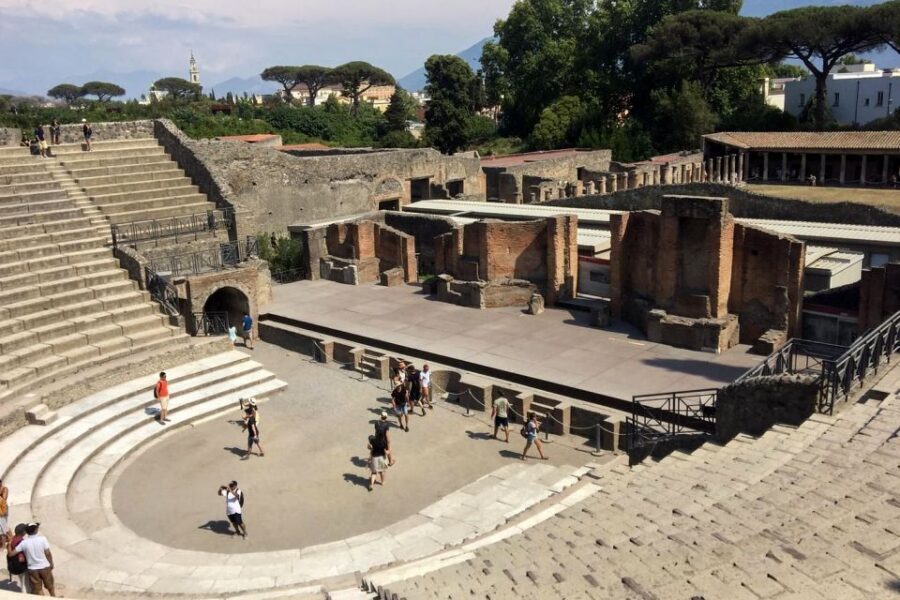
Pompeii is famous, which means the entrance area can be hectic. Even when you know where you’re going, ticket lines can chew up your day. This tour’s biggest practical advantage is guaranteed skip-the-ticket-line access, plus an entrance ticket included in the price.
That means you spend less time standing and more time inside the ruins while your energy is still good. In a place like Pompeii, that matters. The walking is uneven, the sun can be relentless, and crowds change fast. Starting with momentum makes the whole tour feel smoother.
Also, you avoid the awkward moment of trying to interpret ticket instructions while tired and hot. You show up at the meeting point, get sorted, and move into the site.
Finding the Group: Meeting Point at Hotel Vittoria (10:50am)
The meeting point is specific, and it’s worth treating it like a waypoint you can’t miss. The tour pickup point is at 10:50am in Pompeii, at the garden of Hotel Vittoria, right outside the coral shop called CELLINI on Via Mare (80045 Pompei). The guide is there with a sign showing your customers’ name.
This kind of detail sounds minor until you’re standing in the wrong spot with everyone else already moving. Several real-world moments you should plan for:
- You might arrive and find the entrance zone confusing.
- Signage and regrouping can take time if you’re even a bit off schedule.
- A half-hour late start can happen in rare cases, so give yourself buffer time getting there.
My advice: aim to arrive early enough that you’re not rushing in heat or under pressure. If you’re late, it helps to have a way to contact the operator, since staff have previously stepped in to guide people to the group.
Guides, Headsets, and the Language Mix

One of the standout features here is headsets. Pompeii can be noisy, and groups get spaced out naturally on uneven ground. Headsets help you keep the commentary even when you’re not standing in the front row.
The tours run with live guides speaking English, French, Spanish, or Italian. Reviews also mention guides such as Elisa, Salvatore, Francesca, Maria, Alex, Imma, Mattia, Rita, and Erika—and the common thread is that many guides use humor and storytelling to bring buildings to life without rushing.
Still, not every audio setup feels perfect to every ear. Some people found the headset uncomfortable or didn’t feel it fit well. If you’re sensitive about audio gear, you might still be fine, but it’s worth knowing the headset experience can vary.
Price and Value: Is $50 a Good Deal?
At $50 per person for a 2-hour guided walk, it’s not just a “tour fee.” The entrance ticket is included: €20 for the Pompeii Archaeological Site. That alone changes the math. You’re paying for a guide, headsets, and skip-the-line entry, not just for access to the ruins.
So what are you really buying?
- Time efficiency: skip the ticket line, start walking with purpose.
- Interpretation: the guide connects architecture to daily life and the 79 A.D. event.
- Hearing support: headsets help you follow the story without sprinting to catch words.
- A curated hit list: Forum, Thermal Baths, and Lupanare, plus streets and shop-life details.
The trade-off is that you’re still limited by the site’s size. You only cover a portion in two hours, which can make some people wish they had more time. But that’s exactly why this works well: you get the best “first Pompeii” experience without burning an entire day at your most energy-dependent moment.
If you’re the type who likes structure and context (and wants your photos to make sense later), this price usually feels fair.
Who This Tour Fits Best (And Who Should Rethink It)
This tour is a strong match if:
- You want major Pompeii highlights without planning every step.
- You’d rather understand the why behind buildings than just read signs.
- You’re visiting in limited time and want the best ratio of meaning to walking.
It’s also a good choice if you’re traveling with people who prefer different learning styles. The guide’s explanations, plus headsets, mean you’re not stuck repeating yourself at every stop.
It’s not a good match if:
- You have mobility impairments or use a wheelchair. The tour is not suitable for wheelchair users.
- You need a very slow pace or step-free routes. Pompeii involves uneven ground and lots of walking.
The Real-World Downsides to Plan For
No tour is perfect, and Pompeii has its own friction points. Based on the issues people ran into, here are the main considerations you should plan for:
Delays at the start can happen
Sometimes the tour may start later than the scheduled slot. Most of the time it’s handled, but in heat it can matter. Build in time so you’re not stressed by small changes.
Group size and pacing can vary
A couple of people mentioned the group feeling large. In a long site like Pompeii, a big group can slow down the flow. That said, the guide’s job is to keep everyone moving safely and on time through the chosen route.
Headset comfort isn’t guaranteed for everyone
Most people found headsets helpful. A few said they were uncomfortable or didn’t fit their ears perfectly. If you’re picky about audio gear, you may want to bring your own simple hearing comfort item if you normally use one.
You may want more time afterward
Even with a strong two-hour route, you’ll likely feel the urge to keep exploring. That’s normal. The best part of Pompeii is that the ruins reward repeat looks. Some visitors find they can stay after the guided portion to explore areas not covered.
Should You Book This Pompeii Guided Walk?
I’d book this tour if you want a fast, focused Pompeii introduction that covers the Forum, Thermal Baths, and Lupanare with clear explanations and skip-the-line entry. It’s also a solid choice when you value hearing support, especially in a crowded site.
Skip it if you:
- Want an all-day independent wander (this tour can’t cover everything).
- Need step-free accessibility (the tour isn’t suitable for wheelchair users).
- Expect a guaranteed perfect starting experience down to the minute.
If you’re trying to decide between doing Pompeii “your way” or doing it with structure, this is the structure option that still keeps things human. You’ll leave understanding not only what’s standing there, but what Pompeii felt like for the people who lived there.
FAQ
How long is the Pompeii guided walking tour?
The tour lasts 2 hours.
Is the entrance ticket to Pompeii included in the price?
Yes. The Pompeii Archaeological Site entrance ticket (€20) is included, and skip-the-ticket-line entry is guaranteed.
What languages are available for the live guide?
The live guide is available in English, French, Spanish, and Italian.
Where do I meet the guide?
The pickup meeting point is at 10:50am in Pompeii at the garden of Hotel Vittoria, right outside the coral shop called CELLINI (Via Mare, 80045 Pompei). The guide will be there with a sign showing customer names.
What should I bring for the tour?
Wear comfortable shoes and dress for the weather. If you’re booking a child fare, bring a valid passport or ID card.
Is the tour wheelchair accessible or suitable for mobility impairments?
No. It is not suitable for people with mobility impairments and wheelchair users.
Does it run in all weather, and can I cancel?
It operates in all weather conditions, so dress appropriately. There is free cancellation up to 24 hours in advance for a full refund.