REVIEW · POMPEII ARCHAEOLOGICAL SITE
Pompeii: Skip-the-Line Ticket and Virtual Museum
Book on GetYourGuide →Operated by TOURISTATION · Bookable on GetYourGuide
Pompeii can feel like time travel. This day ticket pairs skip-the-line access to the ruins with a Virtual Museum session built to help you visualize how the city looked in Roman times. You’ll move at your own pace once you’re in the archaeological area, but you won’t be staring at stones with zero context.
Two things I really like are the way the Virtual Museum sets up the major sights first (so the Forum, baths, amphitheater, and nearby buildings make sense), and the flexibility to wander Pompeii on your schedule without being dragged along. One thing to consider: the Virtual Museum quality seems to vary. One verified review called the Virtual Museum presentation outdated, even though others praised the guided experience.
In This Review
- Key points before you go
- Meeting at IBT Center/Touristation: Start Smooth
- Pompeii Ruins Plan: The Big 50 Hectares at Your Pace
- Virtual Archaeological Museum: Get Oriented Before You Walk
- Entering the Forum Area: Columns, Doorways, and the City Core
- Streets, Aqueducts, Fountains, Baths, and Homes
- Amphitheater and Theater: Picture the Crowd
- The Multimedia Video and the Eruption Moment
- Price and Value Check: Does $60 Make Sense?
- Rules That Matter: What to Bring and What to Skip
- Who This Pompeii Ticket Plus Virtual Museum Suits Best
- Should You Book This Pompeii Experience?
- FAQ
- Where is the meeting point?
- How long does the experience last?
- What’s included in the ticket price?
- Is a guided tour included?
- Is an audio guide included?
- Does the ticket include Villa dei Misteri?
- What do I need to bring?
- Are pets allowed?
- Are tickets refundable?
- Is ID required for everyone?
Key points before you go
- Skip-the-line entry saves you from wasting your energy on a queue
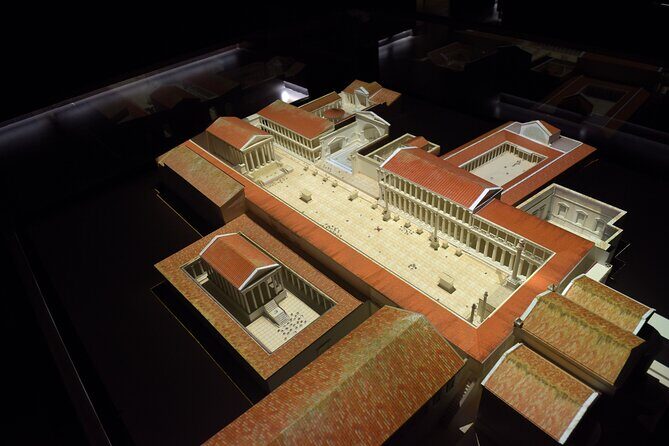
- Virtual Museum first gives you a mental map of the Forum, baths, and amphitheater
- Self-paced ruins time means you can linger where it clicks for you
- 3D animated reconstructions help you picture what’s missing in the real streets
- Wi‑Fi and a city map help you stay oriented inside the site
Meeting at IBT Center/Touristation: Start Smooth

This experience is built for a 1-day flow, and it starts with check-in at the Office named IBT Center/Touristation, next to Chalet Donna Lucia. That’s a helpful detail because Pompeii days can turn chaotic fast if you’re late or trying to find the right counter in a rush.
You’ll want to travel with the basics and keep it simple. The rules are strict about large bags not being allowed, and you’ll need an ID (passport or ID card) for all participants. Also note the no-smoking, no-alcohol/drugs rule, plus a pet policy that’s not “anything goes.” Small dogs are permitted inside the archaeological area, but they must be on a leash and carried when you’re inside buildings.
If you’re coming from Naples or another nearby city, plan for some transit time and buffer. Even with skip-the-line entry, your day depends on getting to the right starting desk on time.
Other skip-the-line Pompeii tickets and tours

Pompeii Ruins Plan: The Big 50 Hectares at Your Pace
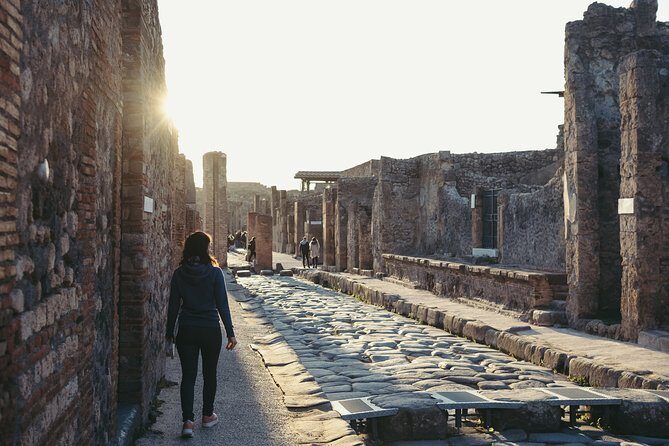
Once you’re in Pompeii, you’re walking a place that covers more than 50 hectares. That’s big enough that a guided group can feel either perfect (structure) or stressful (constant pacing). With this format, you get time at your own speed, which I think is the sweet spot for most first-timers—especially because Pompeii rewards slow attention.
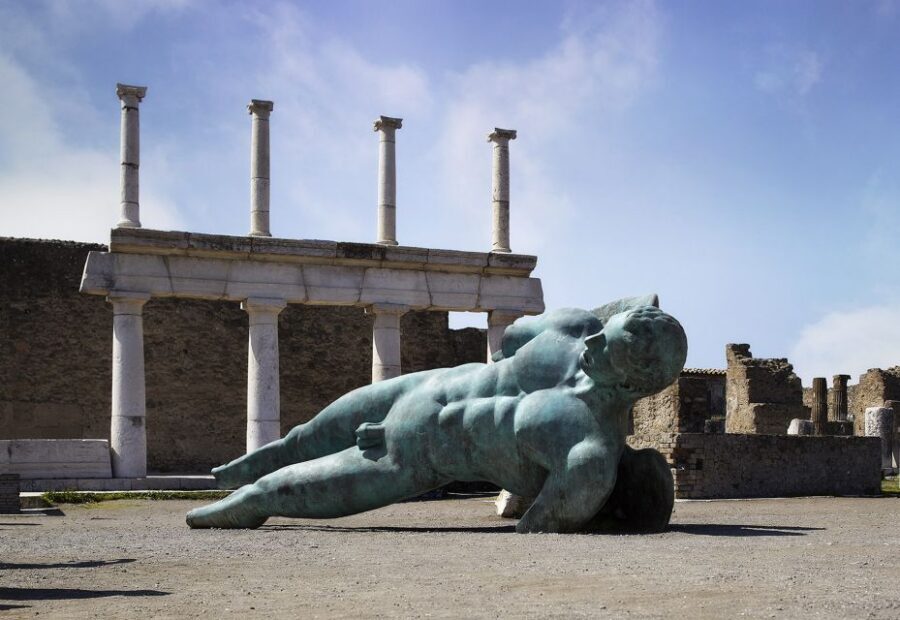
You’ll explore the city as it was before the eruption of Vesuvius in 79 AD, with streets and structures preserved enough to make you work your imagination in a good way. In the central area, the Forum is the anchor. It’s not just a plaza; it’s surrounded by remnants of columns and doorways that make the urban layout feel surprisingly readable.
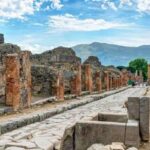
From there, you can branch into the street network and look for the everyday infrastructure. The ruins you’re pointed toward include things like aqueduct remnants and street fountains—small details that help the city feel lived-in, not like a museum of ruins.
Here’s the practical part: because you’re self-paced, your “best route” is really what you care about most—public spaces (Forum, baths), entertainment (amphitheater and theater), or domestic life (private houses) and commerce (businesses and workshops). If you like checking off categories, the Virtual Museum setup helps you do that without guessing.
Virtual Archaeological Museum: Get Oriented Before You Walk
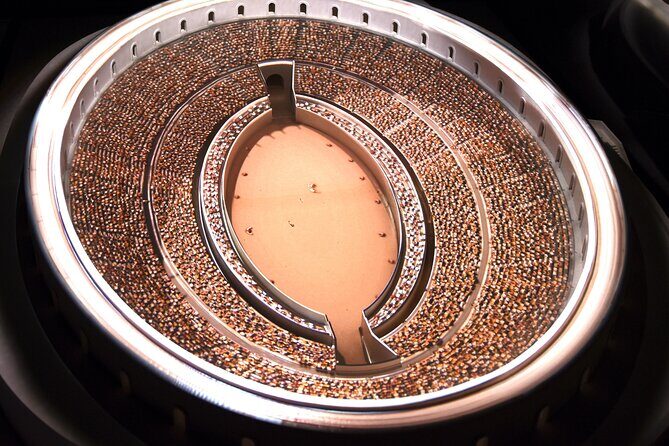
The Virtual Museum experience is reserved as part of the package, and it’s designed to put Pompeii into context before you hit the stones. In a French session described in a verified booking, a staff member gave a presentation in French right at the very beginning, which helped the visitor visualize Pompeii at the time and then understand what they were seeing afterward. Another booking credited the virtual guidance with improving comprehension during the walk through Pompeii.
This is where the value of the pairing really shows. Pompeii can look like scattered fragments until your brain has a framework. The Virtual Museum provides that framework through animated reconstructions and 3D material meant to show the city’s major public buildings.
Based on the descriptions, expect animated reconstructions of places including the Forum, the baths, and the Amphitheater. The experience also covers Pompeii’s homes and important buildings in 3D, with the idea that you’ll see the city through the eyes of a citizen. Then it ends with a multimedia video that reconstructs part of ancient Pompeii and culminates in the eruption spectacle of Vesuvius—bringing the story to the moment when the city’s end is written.
One caution from the reviews: one verified booking criticized the Virtual Museum as not good and called the presentation obsolete. That doesn’t mean it’s universally bad, but it does suggest that you should treat the Virtual Museum as an added layer, not the whole show. If your priority is raw ruins time and you love reading ruins yourself, you might still be happy even if the virtual session isn’t your favorite.
Entering the Forum Area: Columns, Doorways, and the City Core
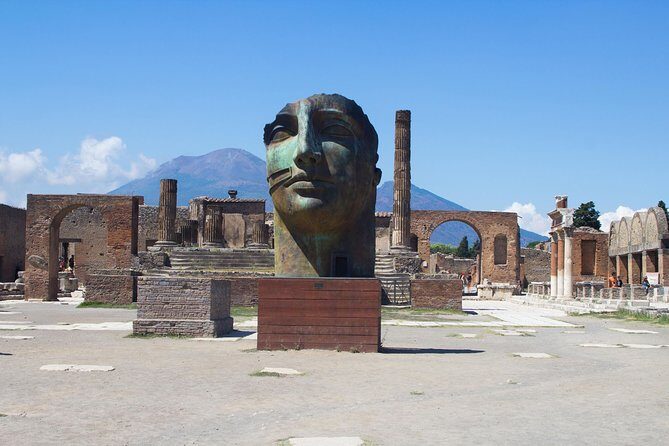
If you want the “aha” moment of Pompeii, start around the Forum area. The Forum is where you’ll see the clearest sense of civic life—political, social, and commercial—because the layout is still legible even when buildings are gone.
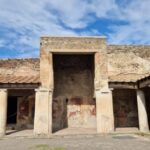
What I like about the way this experience is structured is that you’re not just walking there cold. The Virtual Museum’s reconstructions are meant to help you recognize what you’re seeing. Once you’re in the Forum area, look for remnants of columns and doorways. These aren’t just decorative fragments. They show you how space worked: entrances, boundaries, and the rhythm of urban architecture.
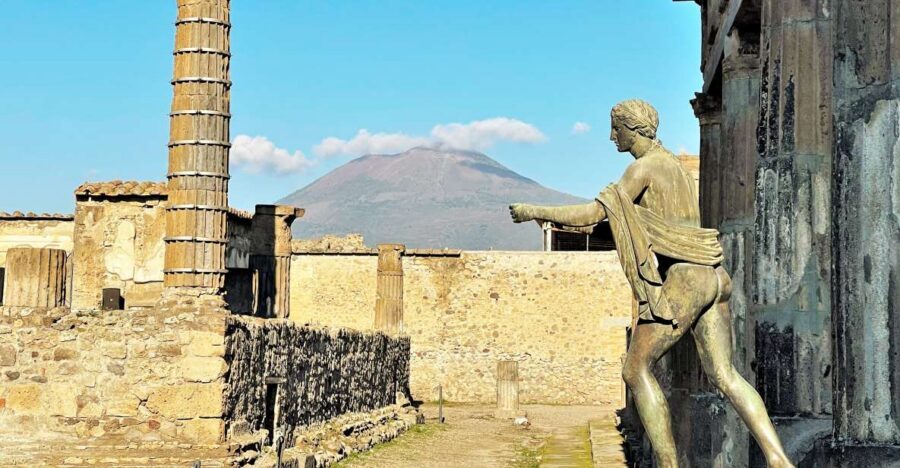
And don’t forget the setting. Mount Vesuvius is in the background, and that visual link matters more than people think. The city’s destruction is the headline, but standing with the mountain visible helps you understand why the “79 AD” part isn’t abstract. It’s geography turned into history.
A practical note: since you can go at your own pace, use the Forum area to set your tempo. If you rush through this core, Pompeii can feel like a checklist. If you give it enough time to “read,” the later streets and buildings feel more connected.
Streets, Aqueducts, Fountains, Baths, and Homes
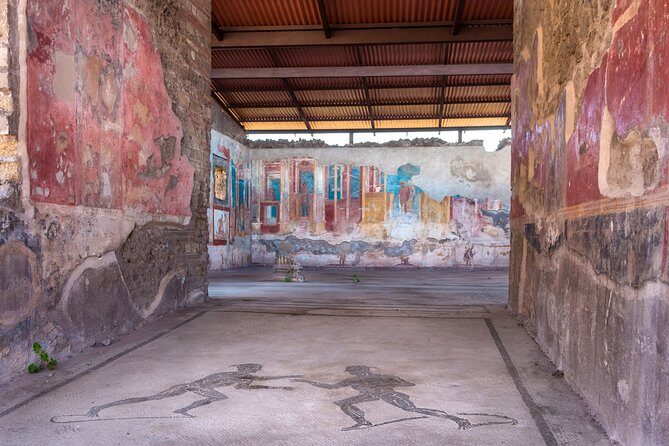
After the Forum, the fun is in the variety. Pompeii isn’t one building; it’s an entire city grid, and the best self-guided days pick a few themes and follow them.
You’ll have time to wander the streets and focus on the remnants that show daily function: aqueduct traces and street fountains, public baths, private houses, businesses, and statues. The baths especially tend to help visitors understand how Romans organized relaxation and social life—if you take a moment to look at what’s left and imagine the flows of people through the space.
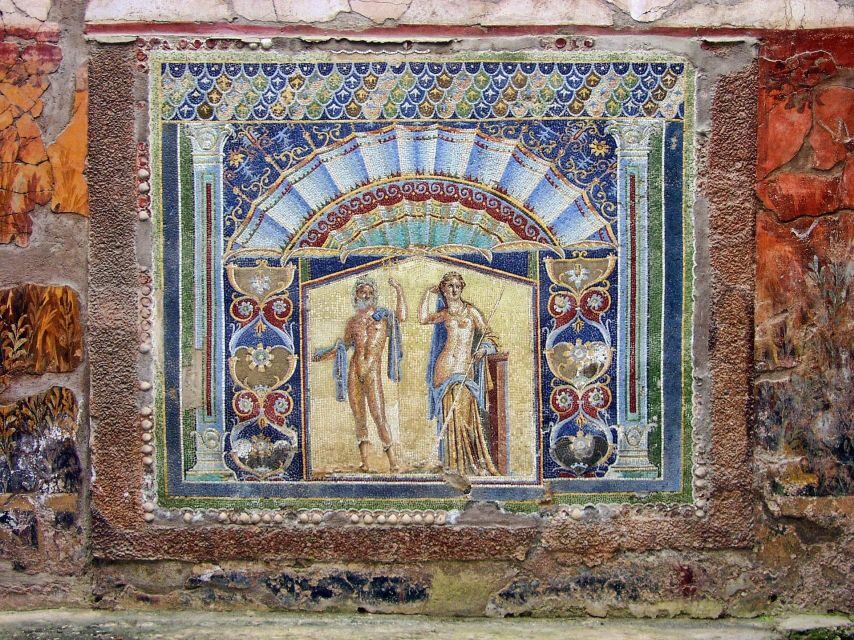
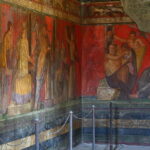
Private houses and businesses also give you a different lens. The idea is that you’re not only seeing wealth or power—you’re seeing routine life. Colorful fresco remnants are part of the viewing plan, and they’re the kind of detail that makes you stop and reorient. Even when pigment is faded, the existence of frescoes signals a city that wasn’t meant to look gray and empty.
If you’re the type who likes to connect art to architecture, this is where you’ll get your best payoff. If you’re more into big-picture history, you might still enjoy it by looking for how streets connected public and private spaces.
A few more Pompeii Archaeological Site tours and experiences worth a look



Amphitheater and Theater: Picture the Crowd
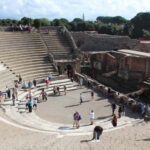
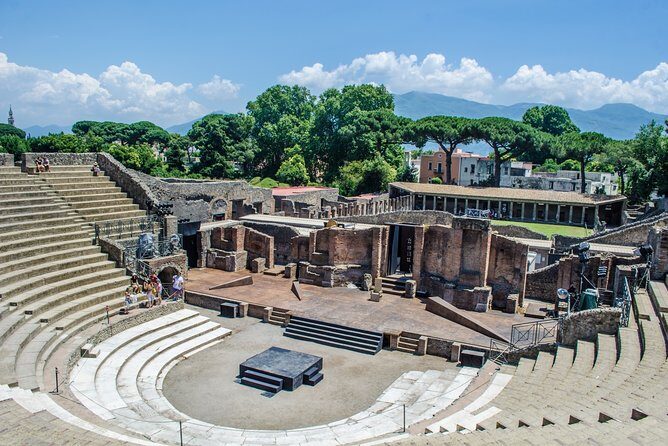
One of the most memorable experiences in Pompeii is standing near entertainment spaces. This ticket’s plan includes the amphitheater and also the dramatic theater. Those are the places where your imagination has the easiest time.
The amphitheater is especially useful because the shape makes visualization natural: you can look at remaining structures and then think about sightlines. The theater adds drama, too. Even with partial remains, the concept of performances and packed spectators comes through quickly.
This is another area where the Virtual Museum reconstructions are meant to help. Animated and 3D reconstructions aim to show the grandeur of these major buildings. Then, in the real site, you get the “ground truth” version: less perfect, more atmospheric, and better for your senses.
My practical advice: don’t treat entertainment spots as quick stops. Give them time to settle. Let your brain do the re-building work, then move on while your understanding is fresh.
The Multimedia Video and the Eruption Moment
The experience doesn’t end as just a museum walk. It includes multimedia video and a final eruption spectacle of Vesuvius, which marks the end of the city in the 79 AD story.
Why does this matter? Because Pompeii can turn into “pretty ruins” if you skip the emotional arc. When you understand the city was abruptly ended, the scale of preservation feels different. You’re not admiring leftovers; you’re seeing a moment that got frozen in time.
In the format described here, the Virtual Museum session is positioned to bring you through the splendor of houses and important buildings in 3D first, then shift into the destruction story. If you’ve ever been frustrated by tours that only show you what’s left, this sequence is the opposite: it pushes you toward how people experienced the end.
Still, because one review criticized the Virtual Museum presentation, I’d think of the eruption video as a bonus. Your real anchor should remain your time inside Pompeii, where the evidence is always the best teacher.
Price and Value Check: Does $60 Make Sense?
At $60 per person for a 1-day experience, you’re paying for two parts that often get handled separately: skip-the-line entry to Pompeii and a reserved Virtual Museum slot. In practical terms, that bundling can save you time and stress.
What you get included:
- Skip-the-line ticket for Pompeii
- Reserved Virtual Museum ticket
- City map
- Wi‑Fi
What you don’t get:
- A guided tour
- Audio guide
- Entry to Villa dei Misteri
So here’s how I’d judge value. If you want to be self-sufficient—map in hand, choosing where to linger—this fits well. If you expected a live guide walking you through Pompeii’s biggest clues, you might feel under-equipped because a guided tour and audio guide are not part of the package.
But for many people, the Virtual Museum does the “prep work” that a guide might otherwise cover. When it’s done well (as in the French and Swedish examples), it can make the ruins more readable and less random.
If the Virtual Museum presentation isn’t your style, you still have skip-the-line access and the time to explore the best-preserved archaeological site in the area. Pompeii itself is the main reason you’re paying.
Rules That Matter: What to Bring and What to Skip
This is one of those experiences where the rules affect comfort more than they affect access.
Bring:
- Passport or ID card
Avoid:
- Pets (small dogs are permitted but handled carefully: leashed and carried inside buildings)
- Smoking
- Luggage or large bags
- Alcohol and drugs
Also keep in mind:
- Free admission for disabled visitors with certified disability
- ID is required for all participants
If you’re deciding what to carry, go minimal. With restrictions on large luggage, a small day bag is the safest assumption. You’ll be walking, and you’ll want your hands free for noticing details.
Who This Pompeii Ticket Plus Virtual Museum Suits Best
I’d point you toward this experience if you want:
- A self-paced Pompeii walk with less friction at the entrance
- A planning boost from 3D reconstructions before you go in
- A short day format (it’s described as 1 day) where you still get the story arc
It’s especially good for first-timers who feel lost in big archaeological sites. The Virtual Museum is meant to be a bridge between “I know Pompeii exists” and “I can recognize the Forum, baths, and amphitheater in real space.”
It might be less ideal if you want expert narration on every stop. No guided tour and no audio guide are included here, so you’ll be doing the interpretation yourself from the setting and whatever the Virtual Museum gives you.
And if you’re very sensitive to presentation quality, take note of the negative feedback about the Virtual Museum being outdated. You might still enjoy Pompeii hugely, but don’t assume the virtual session will be the highlight.
Should You Book This Pompeii Experience?
Yes—if your goal is an efficient Pompeii day where you spend more time in the ruins and less time figuring out what you’re looking at. The skip-the-line entry is the practical win, and the Virtual Museum’s reconstructions are meant to turn key sights into recognizable places rather than scattered remains.
But book with realistic expectations. This is not a full guided tour experience. If you need constant human explanation, you may want to pair it with your own add-on guidance strategy. And since one verified review criticized the Virtual Museum presentation, consider the Virtual Museum as helpful prep, not the core guarantee.
If you want a smooth, readable Pompeii day with time freedom, this combination is a solid choice.
FAQ
Where is the meeting point?
You report to the Office IBT Center/Touristation next to Chalet Donna Lucia.
How long does the experience last?
The duration is 1 day. Start times depend on availability.
What’s included in the ticket price?
It includes a skip-the-line ticket for the Pompeii archaeological site, a reserved ticket for the Virtual Museum, plus a city map and Wi‑Fi.
Is a guided tour included?
No. A guided tour is not included.
Is an audio guide included?
No. An audio guide is not included.
Does the ticket include Villa dei Misteri?
No. Entrance to Villa dei Misteri is not included.
What do I need to bring?
Bring a passport or ID card.
Are pets allowed?
Pets are not allowed. Small dogs are permitted inside the archaeological area, but they must be kept on a leash and carried when inside buildings.
Are tickets refundable?
No. The activity is non-refundable.
Is ID required for everyone?
Yes. ID is required for all participants.