REVIEW · NAPLES
Private Pompeii Tour With Guide and Transfer Included
Book on Viator →Operated by Naples bay tour · Bookable on Viator
Pompeii hits harder when it’s private. I like that this tour ties together pickup and round-trip transfer with a 2-hour guided walk through the UNESCO site, so you spend less time figuring things out and more time looking closely. The big drawback to consider is the price: at $358.86 per person, it’s best when you value convenience and a smaller, focused experience.
I also like the way the route is built around what you actually want to see: markets, public buildings, baths, and elite homes, all connected by the eruption story of 79 AD. You get Pompeii tickets included, plus a mobile ticket, which helps when you’re trying to move efficiently on a busy day.
One more thing to keep in mind: the stops are timed (mostly about 10 minutes each), so if you want long, slow wandering in just one area, you may feel a little time pressure unless your guide can adjust on the day.
In This Review
- Quick highlights
- Starting at Molo Beverello: private pickup and easy round-trip logistics
- How a 2-hour guided walk changes what you notice
- Macellum: walking through Pompeii’s food market
- Granai del Foro: grain warehouses and the human cost of 79 AD
- Anfiteatro Romano: the oldest surviving Roman amphitheater
- Forum de Pompeya and Terme del Foro: Pompeii’s center and its daily routines
- Lupanar and Casa del Fauno: visual art, elite life, and hard edges
- Price and tickets: is $358.86 per person worth it?
- What this tour is best for (and who should choose differently)
- Practical tips to get more out of the 4 hours
- Should you book this private Pompeii tour?
- FAQ
- How long is the private Pompeii tour?
- Is round-trip transportation included?
- Where does the tour start and end?
- Are Pompeii tickets included?
- Is the tour fully private?
- What stops are included in the guided visit?
- What’s not included in the price?
- Can I cancel for a full refund?
- Are service animals allowed?
Quick highlights
- Hotel pickup + private round-trip transfer from Naples keeps the day smooth and low-stress
- A licensed guide for about 2 hours helps you understand what you’re seeing, not just what it looks like
- Macellum and Granai del Foro show Pompeii as a working city, not a museum set
- Forum + Forum Baths give you the social center and the daily-life routines in one sweep
- Lupanar and Casa del Fauno bring strong visual contrasts, from vivid fresco cycles to elite art and space
Starting at Molo Beverello: private pickup and easy round-trip logistics
This experience starts in Naples, with the meeting point at Molo Beverello. The tour ends back at the same place, which matters because it means you’re not piecing together multiple transport plans after a day walking ancient streets.
The big practical win is the private transfer. You’re not relying on schedules or cramming into a shared bus with strangers. If you’re staying in Naples and don’t want to lose vacation time to transit logistics, this format is a clear advantage. You also get pickup at your accommodation, which is one less thing to coordinate once you’re already tired and ready to sightsee.
The tour is listed at about 4 hours total, with the walking portion around 2 hours with your guide. That structure is ideal for a first trip to Pompeii, when you want to see the essentials without turning the day into a long grind.
If you're still narrowing it down, here are other tours in Naples we've reviewed.

How a 2-hour guided walk changes what you notice
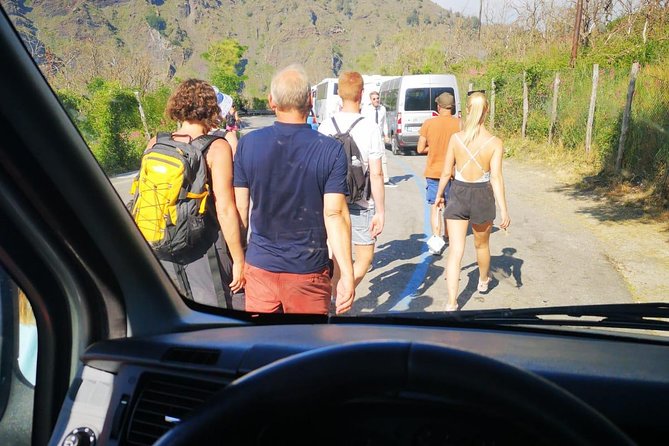
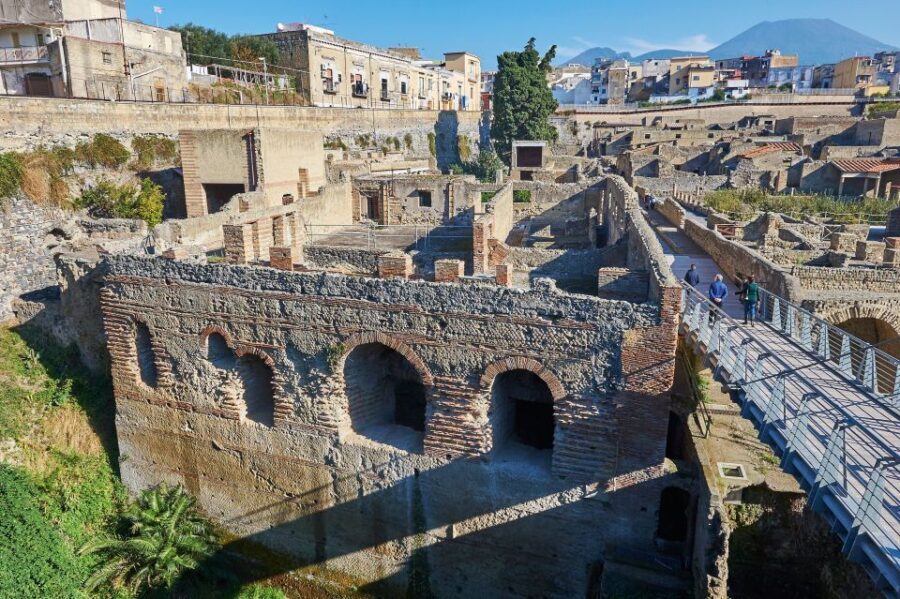
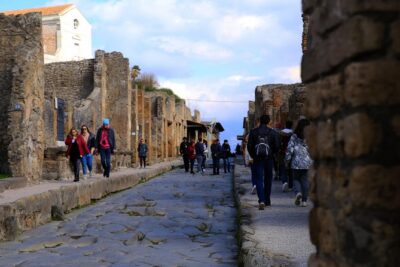
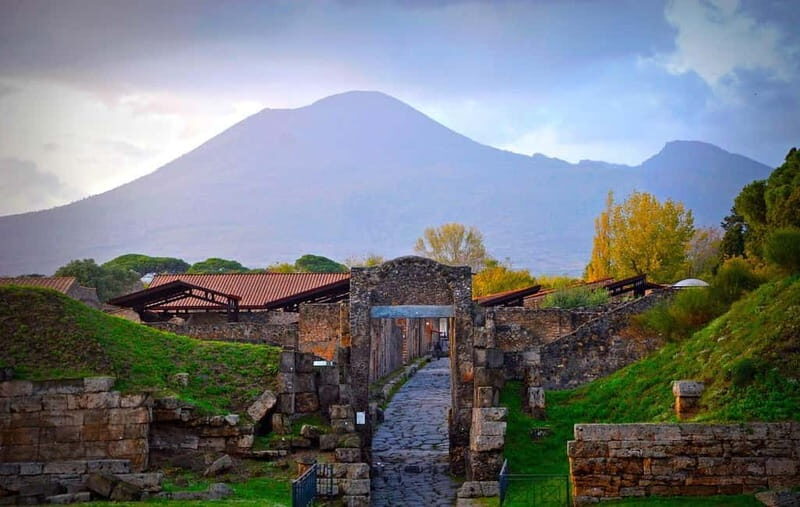
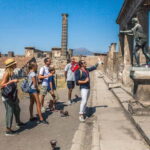
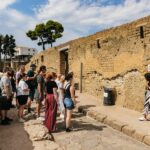
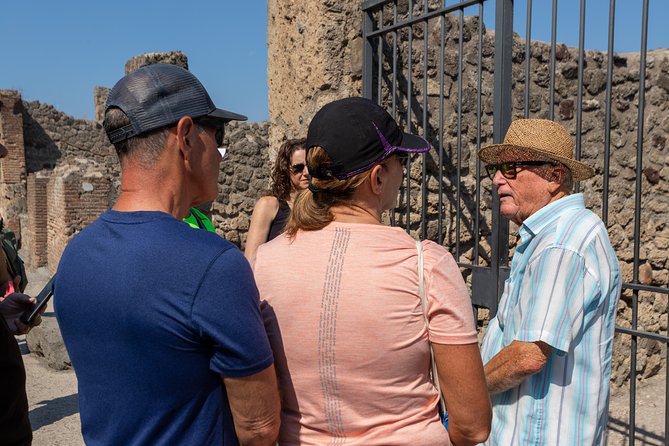
Pompeii can be overwhelming. You see stones, doorways, and shadows, but it’s hard to connect the dots on your own. That’s where the private guide earns their keep. With a licensed guide, you’re not guessing what a room was for or why a layout matters.
I like that the tour is built for questions and pacing. Since it’s private (only your group), you can ask about what you’re seeing in real time instead of saving your questions for a generic Q&A. This is especially helpful at Pompeii’s most visual stops, where the guide can point out details that would be easy to miss.
The other smart part: you’re guided through a route that moves from everyday life to public life to elite spaces. Instead of hopping randomly, you get a story arc that makes the ruins feel like a city with systems and routines.
Macellum: walking through Pompeii’s food market
The tour begins with the Macellum, Pompeii’s main food market, where meat and fish were sold. This stop is more than a quick look at old stalls. Your guide can explain the layout and what the business day probably looked like, which helps you picture real trade and daily habits.
A 10-minute stop here is short, but it works because it sets the tone. Markets are how a city eats, exchanges news, and runs on supply. If you’re the type who likes city planning and daily routines, this is a great anchor point for the rest of your visit.
What to watch for: how the market connects to nearby public areas and how the space is organized for movement. If you can, ask your guide how trade shaped the economy of Pompeii. It’s the kind of context that changes the way you interpret everything you’ll see afterward.
Granai del Foro: grain warehouses and the human cost of 79 AD
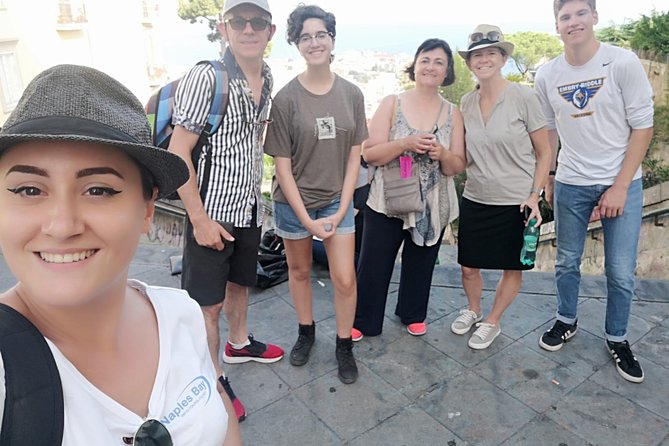
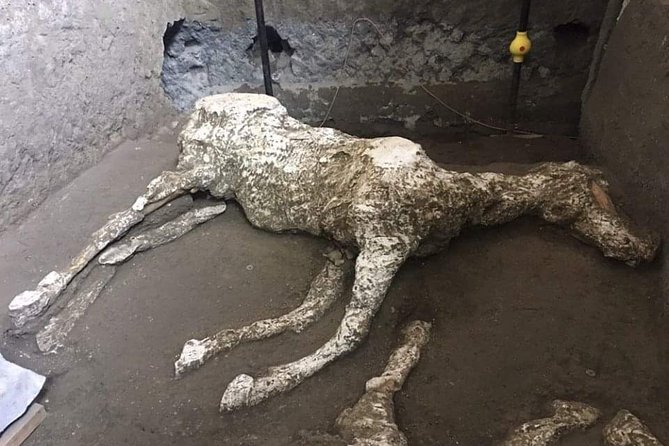
Next up is Granai del Foro, the ancient warehouses used to store grain and supplies. The tour also uses this area to show casts related to the eruption and other archaeological finds. In other words, this stop turns practical storage buildings into a stark reminder of what the disaster meant for real people.
This is a 10-minute stop, so treat it like a moment to refocus. The market showed how people lived day to day. The grain warehouses show how a city prepared and depended on food supply. And then the casts put the human impact back into the story.
Even if you’re familiar with the eruption timeline, I find stops like this help the facts stick. Ask your guide to connect the city’s systems—food and storage—to what happened when everything stopped.
Anfiteatro Romano: the oldest surviving Roman amphitheater
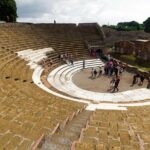
The Roman amphitheater (Anfiteatro Romano) is next, built in 70 BC. That date matters because it positions Pompeii’s entertainment culture within a larger Roman timeline. You also learn about gladiatorial games and how public entertainment fit into everyday civic life.
This stop is 10 minutes, so it’s not about long explanations. It’s about getting the big idea: this wasn’t just a venue, it was a social machine. People gathered, watched, and measured themselves against Roman norms.
If you’re a fan of crowd dynamics or performance history, you’ll likely enjoy asking how the amphitheater connected to the city’s public rhythm. Even with limited time, the guide can help you read the shape and purpose of the space instead of just walking past seating.



Forum de Pompeya and Terme del Foro: Pompeii’s center and its daily routines
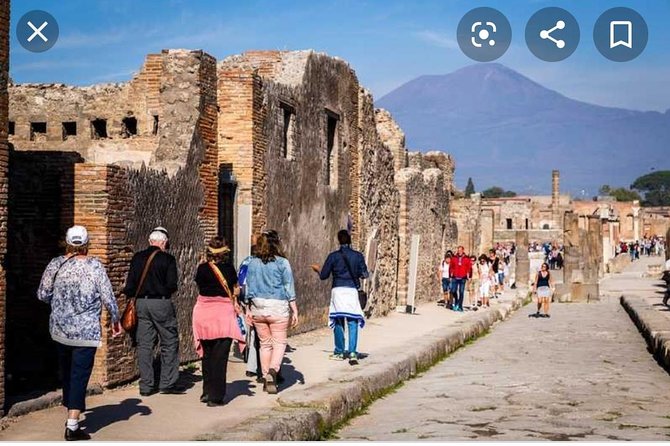
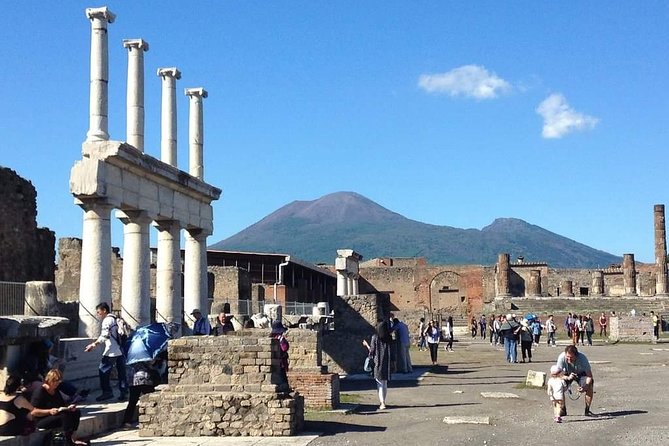
The heart of the walk is the Foro de Pompeya, the central square surrounded by temples, administrative buildings, and markets. It’s a 20-minute stop, which signals that this is one of the key areas for understanding Pompeii as a functioning city.
This is where you can get a strong sense of power and community. Temples show religion and civic identity. Administrative spaces show governance and rules. Markets show commerce and constant movement. If you like walking tours that explain how places worked, you’ll likely feel satisfied here because the guide can tie multiple functions to one central area.
Then you move to Terme del Foro, the Forum Baths. This stop is 10 minutes and focuses on changing rooms, heated pools, and decorative frescoes. That combination is important: baths weren’t only about cleanliness. They were social space, routine, and art on everyday display.
What makes this pairing (Forum + Baths) valuable is contrast. The Forum is public authority and public commerce. The baths show human scale—how people relaxed, met, and spent time. If your goal is to see Pompeii as a lived-in place, not just ruins, this is one of the best ways to get there in a short day.
Lupanar and Casa del Fauno: visual art, elite life, and hard edges
Two of Pompeii’s most talked-about stops come late in the route.
First is the Lupanar, described as one of the best-preserved buildings, famous for its vivid fresco cycle. The tour notes it may depict Dionysian rites, which is exactly the kind of detail a guide can help interpret in context. This isn’t a soft, pretty stop. It’s a reminder that Pompeii had all the layers of society—desire, commerce, and entertainment—and that the Romans didn’t avoid complexity.
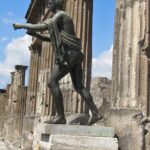
Then you reach Casa del Fauno, a luxurious home known for the statue of the dancing faun and the Alexander Mosaic. This is where the city’s wealth shows through space and art. It’s also a useful counterpoint to the Lupanar: same city, different social world.
Both stops are 10 minutes, which can feel fast if you want to study art closely. But if your guide points out what to look for, you still come away with meaning. Ask for the connections: how art communicates status, and how domestic spaces reflect lifestyle. If you care about how everyday life and power lived side by side, these two stops do that job well.
Price and tickets: is $358.86 per person worth it?
At $358.86 per person, this isn’t the cheapest way into Pompeii. But it’s also not trying to be. You’re paying for a private guide window, private round-trip transport, pickup at your accommodation, and Pompeii tickets included.
Here’s the way I’d think about value:
- If you hate transit planning and want a smooth door-to-door start, private transfer is the money-saver.
- If you want context and interpretation, the guide time matters more than another self-guided hour walking.
- If you’re going with a small group (couples and families especially), private can feel like the sensible choice.
Also, the tour is positioned as private, so you’re not sharing your schedule with other people’s pace. That makes the timed stops easier to handle because the guide can guide your attention instead of waiting on a mixed group.
One small note: food and drink aren’t included, and tips aren’t included either. That doesn’t hurt the value, but it does mean you should budget for a snack or water stop so the day stays comfortable.
What this tour is best for (and who should choose differently)
This private Pompeii tour fits well if you fall into one of these categories:
- You’re short on time in Naples and want an organized route that still feels personal
- You prefer clear guidance and like asking questions while you walk
- You’re traveling as a couple or family and want just your group on the experience
- You care about a mix of everyday life, civic space, and elite art
It may be less ideal if you’re the type who wants to wander freely without time limits. Since most stops are about 10 minutes, you won’t have unlimited time in just one building unless your guide can shift the pace on the day.
Practical tips to get more out of the 4 hours
A few smart moves can make this tour feel much longer in a good way:
- Plan to arrive ready to walk. Even with timed stops, Pompeii is an active visit.
- Bring water and simple snacks. Food and drink aren’t included, so don’t assume you’ll find an easy bite with no planning.
- Ask one question at each major stop, not five at once. It helps you get answers tied to the exact space you’re in.
- If you’re sensitive to heat or want comfort, treat this like a walking-day. Dress for sun and uneven ground.
Should you book this private Pompeii tour?
I’d book it if you want Pompeii with less stress and more interpretation. The combination of pickup, private round-trip transfer, Pompeii tickets included, and a guided route through the market, grain storage, amphitheater, Forum, baths, and standout houses makes it a strong first-run option.
Skip it if you’re chasing the lowest price or you know you want a long, free-form Pompeii day where you can linger in one spot for an hour or two. In that case, a self-guided plan might suit you better.
If you’re aiming for a well-paced, organized Pompeii visit with a guide who can keep the story moving, this one is a solid value.
FAQ
How long is the private Pompeii tour?
It’s listed at about 4 hours total.
Is round-trip transportation included?
Yes. Private transport is included, with pickup at your accommodation and transfer from Naples to Pompeii and back.
Where does the tour start and end?
The meeting point is Molo Beverello, 80133 Napoli NA, Italy, and the tour ends back at the same meeting point.
Are Pompeii tickets included?
Yes. Pompeii tickets are included, and you’ll receive a mobile ticket.
Is the tour fully private?
Yes. It’s private, and only your group participates.
What stops are included in the guided visit?
The stops include Macellum, Granai del Foro, Anfiteatro Romano, Foro de Pompeya, Terme del Foro, Lupanar, and Casa del Fauno.
What’s not included in the price?
Tips and food and drink are not included.
Can I cancel for a full refund?
Yes, you can cancel for a full refund if you cancel at least 24 hours in advance of the experience’s start time.
Are service animals allowed?
Yes, service animals are allowed.