REVIEW · POMPEII
Ancient Pompeii Private Tour: Skip the Line & Kid-Friendly Option
Book on Viator →Operated by Leisure Italy · Bookable on Viator
Pompeii is big, hot, and easy to miss. This private tour helps you see the best parts fast, with skip-the-line entry and a guide who can steer the route based on what your group wants.
I especially like the mix of headline ruins (the Forum, baths, temples) with details that make daily Roman life click into place, plus the private pace that feels less like a race. One watch-out: Pompeii can be fast-moving in summer crowds, and one past group noted the tour felt a bit rushed, so it helps to set expectations early with your guide.
In This Review
- Key highlights worth your attention
- Why Skip-the-Line Matters in Pompeii
- Where You Start: Via Villa dei Misteri and the Two-Hour Shape of the Day
- Stop-by-Stop: Forum, Via dell’Abbondanza, and the Forum Baths
- Forum of Pompeii: the city’s center of power
- Via dell’Abbondanza: Pompeii’s main social artery
- Terme del Foro: walking through the Roman bathing sequence
- Temple of Apollo and the Basilica: Religion and Government in the Same Zone
- Temple of Apollo: Greek roots plus Italian style
- Basilica: Pompeii’s big public building
- Casa dei Vettii and Teatro Grande: Art, Status, and Performance
- Casa dei Vettii: the restored showpiece
- Teatro Grande: ancient theater built into lava rock
- Antiquarium Casts: The Eruption Seen Through People
- Family Tour Mode with the Pompeii4kids Kit
- How Good Guides Make or Break Pompeii
- Price and Value: What You’re Paying For
- Who This Tour Is Best For
- Should You Book This Private Pompeii Tour?
- FAQ
- How long is the Ancient Pompeii private tour?
- What language is the tour offered in?
- Is this a private tour?
- Do I need good walking shoes?
- Is there a kid-focused option, and what ages is it for?
- Where do we meet, and does the tour end nearby?
- Are tickets included, or do we buy admission ourselves?
- Do kids need any documents?
- Is pickup or drop-off included?
Key highlights worth your attention
- Skip-the-line access built into the experience, so you lose less time at entry points
- Private guide, flexible route with the chance to tailor the stops to your interests
- Forum + Via dell’Abbondanza combo for politics, religion, and everyday street life in one flow
- Forum Baths walkthrough with the classic Roman room sequence (changing, cold, warm, hot)
- Casa dei Vettii after its recent restoration for some of Pompeii’s most impressive frescoed interiors
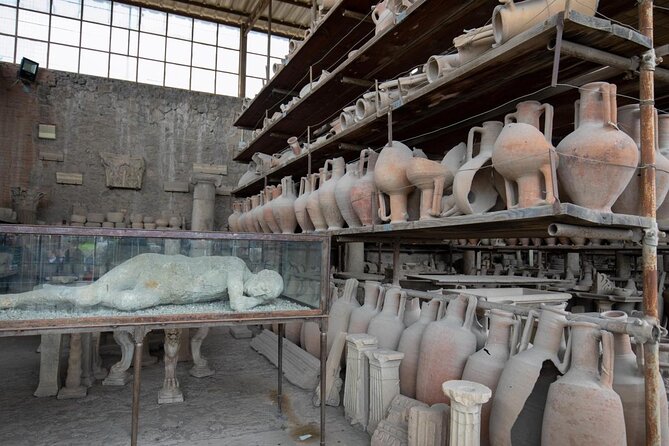
- Antiquarium victim casts for a sobering look at what the eruption did to real people
Why Skip-the-Line Matters in Pompeii
Pompeii sounds like one place, but it’s really dozens of separate “rooms” of ancient life spread across a large archaeological park. The biggest time killer is not the walking, it’s the bottleneck at entrances, especially when you’re trying to cover highlights in a short window.
That’s why I like tours that bundle fast entry with a guide. Even in a two-hour plan, you’re not burning your energy staring at ticket lines, and you can start seeing Forum architecture, baths, and major landmarks while your day is still fresh.
If you're still narrowing it down, here are other tours in Pompeii we've reviewed.


Where You Start: Via Villa dei Misteri and the Two-Hour Shape of the Day
Your tour meets at Via Villa dei Misteri, 2, 80045 Pompei NA, and it ends back at the same spot. That matters because Pompeii isn’t exactly set up for hopping between distant areas without backtracking, and starting at a central, walkable location keeps your time focused.
This experience runs about 2 hours and requires moderate walking. Good walking shoes are recommended, and if you’re traveling with kids or anyone who tires easily, tell your guide right away so the pace matches your group.
Stop-by-Stop: Forum, Via dell’Abbondanza, and the Forum Baths
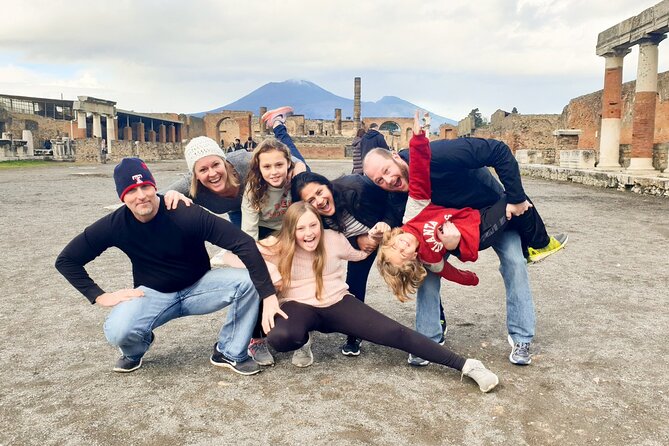
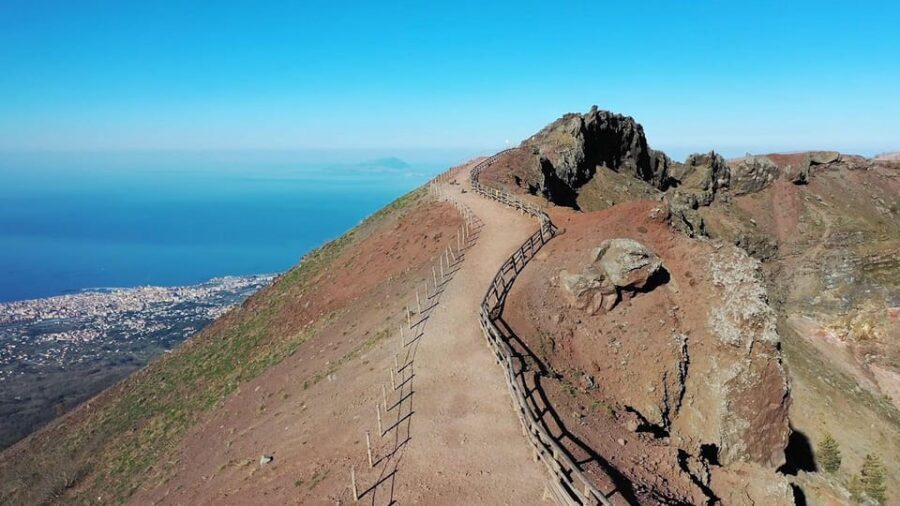
You’ll begin at the Archaeological Park of Pompeii with a personal guide who sets the context quickly. The story is the eruption: Mount Vesuvius began erupting on August 24 in AD 79, burying Pompeii in ash and molten materials that helped preserve the city.
From there, the tour leans into the places that teach you how Pompeii worked day to day.
Forum of Pompeii: the city’s center of power
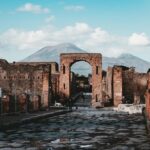
The Forum is the heart of Pompeii, used for political, religious, and commercial activity. It’s a rectangular plaza with dimensions given as roughly 157 by 38 meters, and it was off-limits to chariot traffic, which gives you a sense of how ceremonial and pedestrian-oriented this core area was.
If you like architecture with meaning, this stop works because it’s not just stones. It’s the framework that explains why people gathered where they did.
Via dell’Abbondanza: Pompeii’s main social artery
Next comes Via dell’Abbondanza, described as the longest and most important street in the city. It runs from the Forum toward Sarno Gate and gives you the best snapshot of what everyday life looked like along Pompeii’s main spine.
One practical bonus: you’ll get the feel of how streets functioned. The route also tends to give you better walking conditions because of how areas are laid out, and some guides build the route to make the walk more comfortable when weather is warm.

Terme del Foro: walking through the Roman bathing sequence
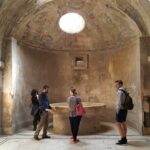
Then you step into the Forum Baths (Terme del Foro), one of the best-preserved public bath complexes. The tour breaks down the classic Roman room progression: the Apodyterium (changing room), Frigidarium (cold bath), Tepidarium (warm room), and Calidarium (hot room).
You’ll also see the kind of decorative details Pompeii is famous for, including barrel-vaulted ceilings and stucco reliefs with terracotta figures known as telamones. Even if you’re not a bathing-history person, the structure is easy to follow because it’s a physical sequence you can walk through, not just a lecture.
Temple of Apollo and the Basilica: Religion and Government in the Same Zone
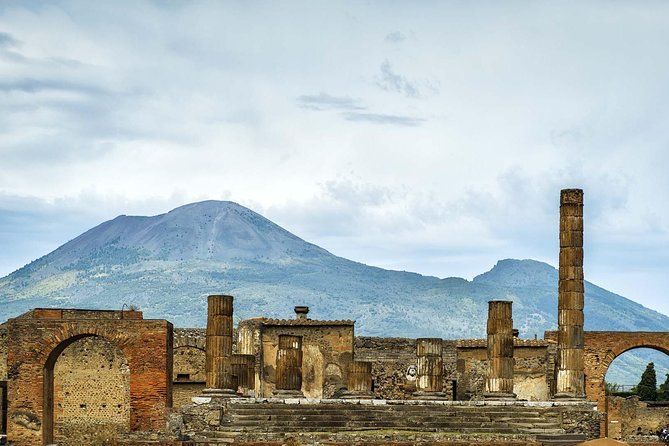
After the baths, the itinerary folds back into the Forum area with two heavy hitters.
Temple of Apollo: Greek roots plus Italian style
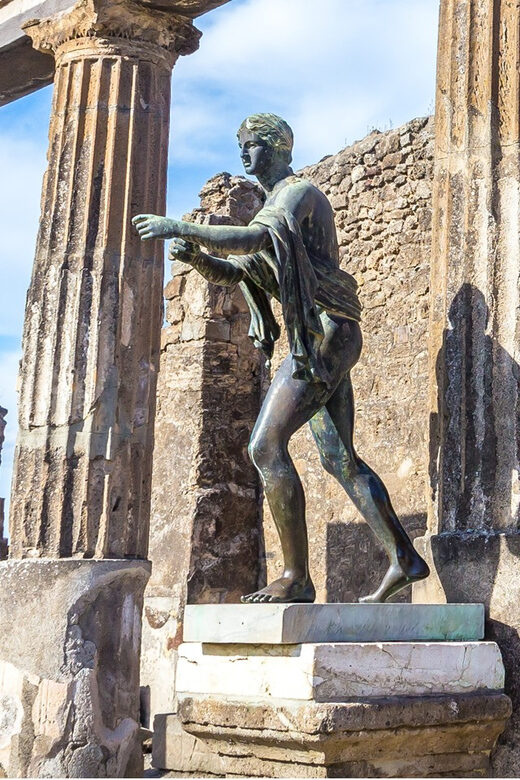
The Temple of Apollo is one of Pompeii’s oldest major religious sites, with origins dating back to the 6th century BC. It sits as a central landmark in the Forum zone and reflects a blend of Greek and Italic design, including an elevated podium and a portico with 48 columns.
The tour also points out bronze replicas of Apollo as an archer and his twin sister Diana. The original bronze masterpieces are said to be preserved in the National Archaeological Museum in Naples, which is a helpful mental breadcrumb if you want to connect what you see in Pompeii to what survives elsewhere.
Basilica: Pompeii’s big public building
The Basilica is described as the most imposing public building in Pompeii, dating to the 2nd century BC. It’s located in the southwestern corner of the Forum, and the sheer scale helps you understand how formal public life was arranged.
This stop is short, but it’s the kind of stop that makes the Forum feel more than “a big square.” It turns it into a map of governance, law, and public gathering.
Casa dei Vettii and Teatro Grande: Art, Status, and Performance
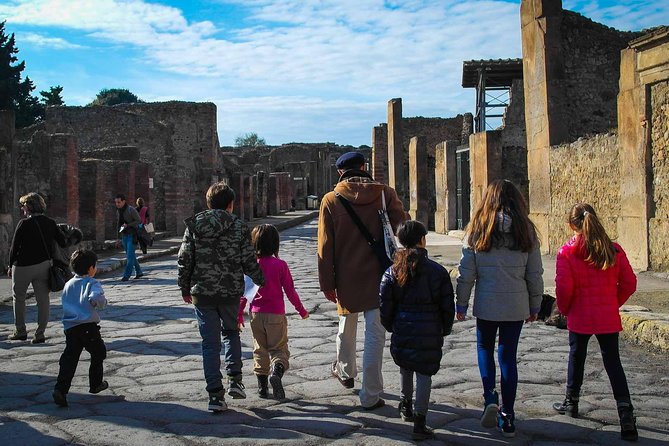
Once the Forum area sets your context, the tour shifts into places that show what Pompeii looked like beyond civic life.
Casa dei Vettii: the restored showpiece
Casa dei Vettii is often described as the Sistine Chapel of Pompeii, and it reopened in 2023 after a meticulous 20-year restoration. The house belonged to freedmen Aulus Vettius Conviva and Aulus Vettius Restitutus, who became wealthy wine merchants.
What I like about this stop is that it gives you a clear social story. You see how a family flaunted success through the design and preservation of the home, not just the murals themselves.
If you’re comparing houses in Pompeii, this is the one that helps you “read” the city through status and money, not only through politics and religion.
Teatro Grande: ancient theater built into lava rock
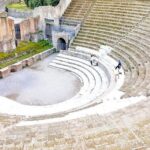
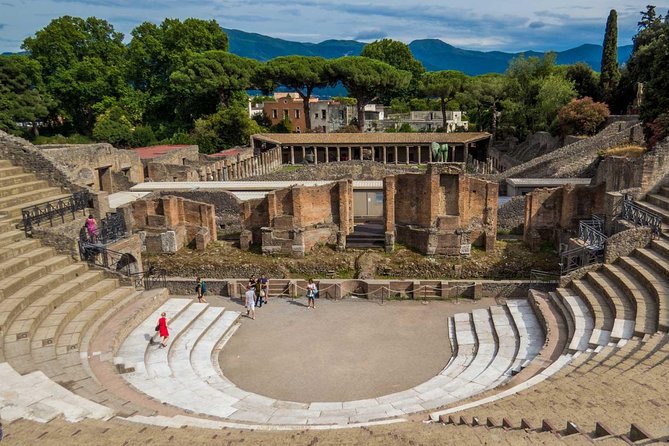
Next is the Teatro Grande, one of the world’s oldest surviving masonry theaters. It was originally built in the 2nd century BC and carved into a natural lava hillside, showing a transition from Greek to Roman architectural styles.
It’s a great add-on to the Roman-life theme because it shows how entertainment fit into the same world as temples, markets, and bathhouses. The setting also makes the theater feel physically grounded in the landscape.
Antiquarium Casts: The Eruption Seen Through People
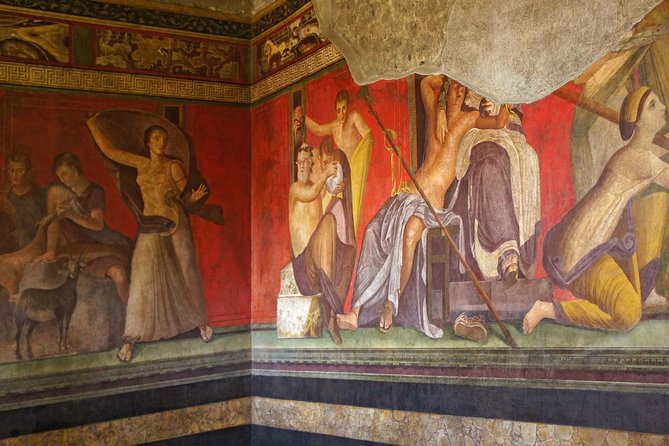
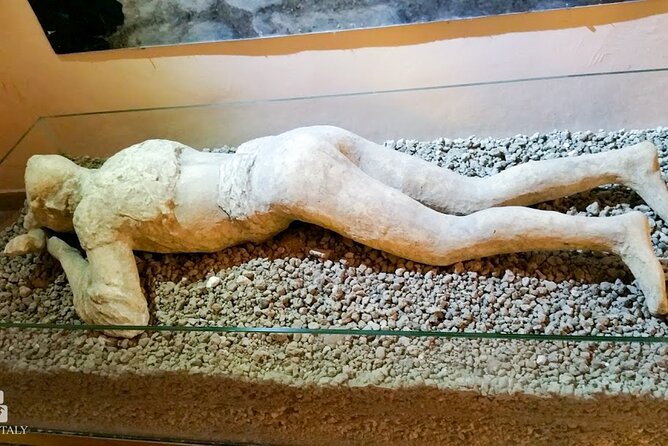
Most Pompeii visits focus on walls, streets, and buildings. This tour also includes the Antiquarium di Pompei, the onsite museum space where fragile artifacts can be viewed under modern conditions.
The big emotional stop here is the plaster casts of victims. While some casts remain in situ at the ruins, the museum displays casts of victims including children, preserved in their final moments.
This part changes the tone of your walk. It can be hard, but it’s also what turns Pompeii from a cool ruins field trip into something that feels human and real—an ancient city with consequences, not just scenery.
Family Tour Mode with the Pompeii4kids Kit
If you’re traveling with kids (the family option is recommended for ages 6 to 11), this tour is designed to keep attention from drifting.
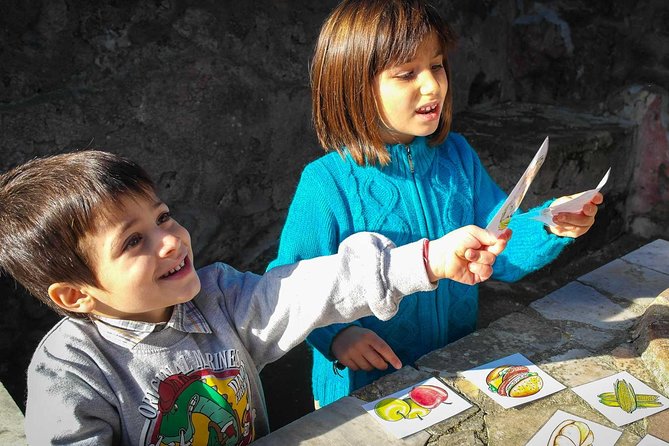
The family package includes a Pompeii4kids kit: a map with stickers, plus activities and an activity book. Your guide also has a route geared toward youngsters, and it includes games, puzzles, and clues that connect what the kids see to how people lived there.
One thing I really value here is that the guide is expected to tailor the experience to kids while still covering the core highlights. You’re not doing a “separate kid version” that sacrifices the main story. You’re getting both.
From past guides who have led family groups—Francesca, Sabrina, and Viviana are names that show up often—the common thread is patience with questions and a structured way to keep kids engaged. That’s not guaranteed with every guide, but it’s clearly a strength of the family option format.
How Good Guides Make or Break Pompeii
Pompeii is famous, but it’s still easy to leave feeling like you saw a list of famous spots. A strong guide turns each stop into a story you can remember: why the Forum matters, why the baths were central, what a house meant to its owners.
In feedback, certain guide names come up again and again: Francesca, Anna, Giuseppe, Natalia, Sabrina, Viviana, Fabrizio, Alfredo, and Nandor. I’m not saying you’ll get one of them, but it’s a useful signal that the tour model attracts guides who can juggle adults and kids while keeping the facts readable and the experience paced.
One practical tip: Pompeii can feel rushed on very busy days. If your group includes mobility issues, heat sensitivity, or you just like time to look closely, tell the guide at the start that you want slower moments to rest and take photos.
Price and Value: What You’re Paying For
At $165.05 per person for about two hours, this is not a cheap add-on. But it can be good value if you want more than a self-guided walk.
Here’s what you’re really buying:
- Private guidance instead of sharing interpretation with a big crowd
- Skip-the-line advantage that protects your limited time
- A route that hits major anchors like the Forum, Via dell’Abbondanza, baths, temple/basilica area, a showpiece house, and the Antiquarium casts
For families, the kit and kid-focused activities add another layer. You’re not just paying for access; you’re paying for a smoother experience that reduces the mental work of figuring out what to see and how to make it interesting.
One thing to confirm: the details mention admission fee coverage, but also note that admission fees may be handled on the spot using the guide’s access to a fast-track line. Either way, the key is that the guide is set up to get you moving quickly, but I’d still double-check what’s included in your booking so you’re not surprised at the park.
Who This Tour Is Best For
This tour fits best if you want the Pompeii highlights without spending half your trip planning. It’s also a strong choice for families who want structure, not just history facts.
You’ll likely enjoy it most if:
- you’re short on time and want an organized route
- you like guided explanations at each stop (especially baths, Forum, and Casa dei Vettii)
- you’re traveling with kids and want games, puzzles, and a map with stickers
It may feel less ideal if you want to roam widely across the entire archaeological site. A two-hour private tour can only cover a focused slice, even with skip-the-line entry.
Should You Book This Private Pompeii Tour?
I’d book it if you want a smart, time-efficient Pompeii visit with a guide who can shape the day and keep kids engaged. The Forum-to-baths-to-temples flow is efficient, and adding Casa dei Vettii plus the Antiquarium victim casts gives you the full emotional and architectural range in one walk.
If you’re concerned about heat or crowds, consider going earlier in the day, and communicate your pace preferences immediately. And if you want the family experience, this is one of the few Pompeii options that comes with a kid-ready tool kit and a route built for attention spans.
FAQ
How long is the Ancient Pompeii private tour?
The tour is listed as about 2 hours.
What language is the tour offered in?
The tour is offered in English.
Is this a private tour?
Yes. It’s described as a private tour/activity, meaning only your group participates.
Do I need good walking shoes?
Yes. Good walking shoes are recommended, and a moderate physical fitness level is suggested.
Is there a kid-focused option, and what ages is it for?
Yes. The family option is recommended for children ages 6 to 11 and includes a kid-friendly kit with a map, stickers, activities, and games.
Where do we meet, and does the tour end nearby?
You meet at Via Villa dei Misteri, 2, 80045 Pompei NA, Italy, and the tour ends back at the same meeting point.
Are tickets included, or do we buy admission ourselves?
The information provided notes admission fee coverage, but it also says guides can buy tickets quickly using a fast-track line. I recommend confirming how admission is handled in your booking.
Do kids need any documents?
A current valid passport is required for children under 18 years on the day of travel.
Is pickup or drop-off included?
No. Pick up and drop off are not included.