REVIEW · ARCHAEOLOGICAL SITE OF HERCULANEUM
2-Hour Private Tour of the Ruins of Herculaneum
Book on GetYourGuide →Operated by Leisure Italy · Bookable on GetYourGuide
Herculaneum feels like time travel. A private 2-hour tour takes you into a Roman town sealed under volcanic ash since 79 AD, about 75 feet down in an archaeological pit. I love the preservation here—houses, mosaics, even carbonized daily-life objects that look staged—plus the payoff of a guide who ties it all together. One thing to consider: at this price point, 2 hours can feel quick, especially if you like to linger and read every panel.
If you’ve done Pompeii, this tour gives you a smart contrast. Herculaneum is smaller, so you’ll see the key sights without racing, and it often hits harder because the town was preserved differently. I like the way the route moves from public spaces to rich villas, so you get a full picture of how people actually lived before the eruption—then got frozen in the aftermath.
In This Review
- Key highlights you’ll care about
- Why Herculaneum can feel more personal than Pompeii
- Meeting the guide and skipping the ticket line
- The first jaw-drop: the marina and the 300-skeleton moment
- Grande Palestra (Big Gym): archaeology with a pulse
- House of the Albergo garden: quince trees and carbonized clues
- Council Hall of the Augustali: frescoes with Hercules
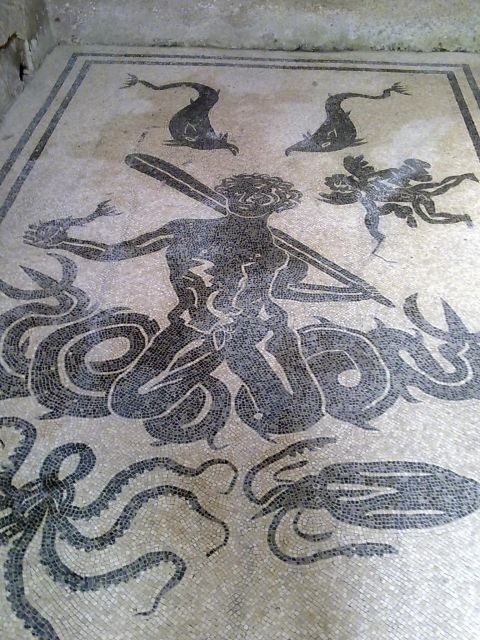
- Neptune and Amphitrite: mosaics that make the floor feel alive
- The carbonized food and wine store next door
- The spa complex: mosaics from saunas to cold tubs
- Villa dei Cervi: the luxury finale with mosaics, frescoes, statues
- Price and value: what $167.66 per person is really buying
- Who this private Herculaneum tour is best for
- Should you book this 2-hour private tour?
- FAQ
- How long is the 2-hour private tour of the Ruins of Herculaneum?
- Is this a private tour?
- What is included in the price?
- What languages are available for the live guide?
- Where do we meet the guide?
- Can I bring luggage or large bags?
- Is the tour wheelchair accessible?
- Is entry free on the first Sunday of each month?
- How strict is cancellation?
Key highlights you’ll care about
- Private guide for the whole 2 hours, with live commentary in Spanish, English, French, or Italian
- Marina area with about 300 skeletons and a boat on display on weekends
- Grande Palestra (Big Gym) where you can feel like you’re reading the volcano’s evidence in real time
- House of the Albergo gardens with quince apple trees replanted using carbonized-root evidence
- Council Hall of the Augustali frescoes featuring Hercules, plus famous mosaic homes like Neptune and Amphitrite
- Villa dei Cervi finale with luxurious mosaics, frescoes, and statues
Why Herculaneum can feel more personal than Pompeii
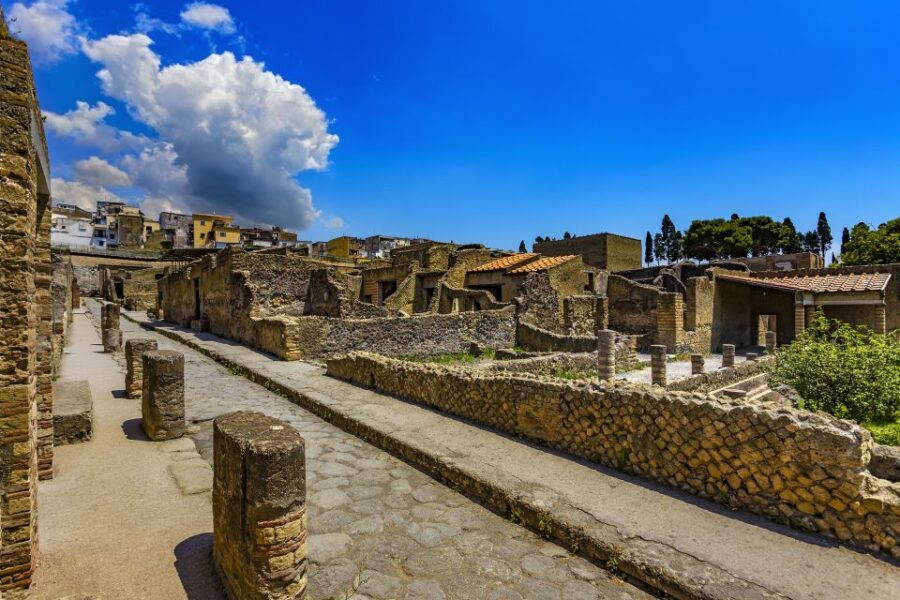
Herculaneum was a Roman town affected by the same catastrophic eruption that buried Pompeii in 79 AD. The big difference is how it’s preserved. Here, the evidence can feel shockingly close, like you’re walking through rooms that time forgot to finish.
You’ll see why this place became a global obsession after its rediscovery in the 1700s. The ruins are not just “ancient walls,” they’re an entire town-scale snapshot. Since everything sits at the bottom of a deep archaeological hole, the site has a built-in sense of drama—cool air, steep walls, and sudden reveals as you move.
Also, if you like comparing sites, Herculaneum is a great second stop. One common smart strategy is to do Pompeii first (in the morning) and Herculaneum next (afternoon), so you can notice what feels similar and what feels different fast. With a private guide, those comparisons turn into actual understanding instead of a blur of stone and crowds.
Other Herculaneum tours and tickets
Meeting the guide and skipping the ticket line
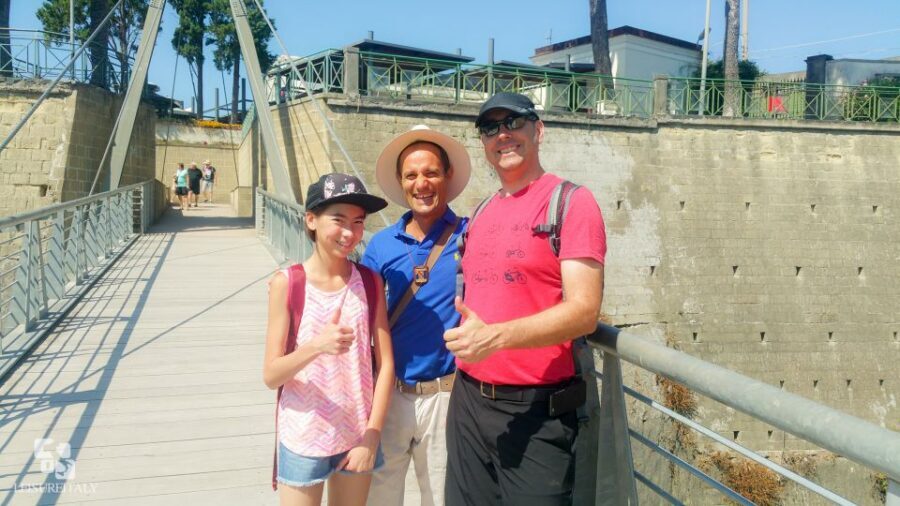
This tour is built around a simple plan: you meet your guide at the only ticket office in Herculaneum Archaeological Park. Your guide holds your name on a sign, so you’re not stuck playing guess-the-stranger for long.
One practical win: you skip the ticket line. At a major archaeological site, that small time-saver matters, because your tour time is limited. In two hours, every minute spent waiting is a minute you can’t spend inside houses, gyms, and villas.
You’ll want comfortable shoes. The park can involve uneven surfaces and stairs, and the route is paced for seeing a lot in a short window. Also, avoid bringing luggage or large bags—this activity doesn’t allow them, and you don’t want baggage friction eating into your focus.
The first jaw-drop: the marina and the 300-skeleton moment
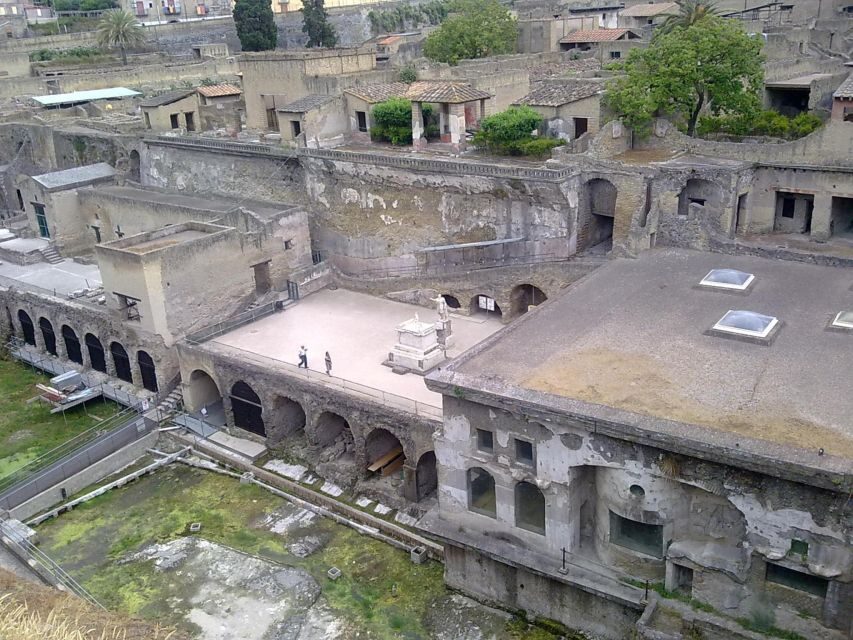
The tour gets moving quickly, and that’s good. Your early stops help you understand what kind of town Herculaneum was before you start spotting details like mosaics and household goods.
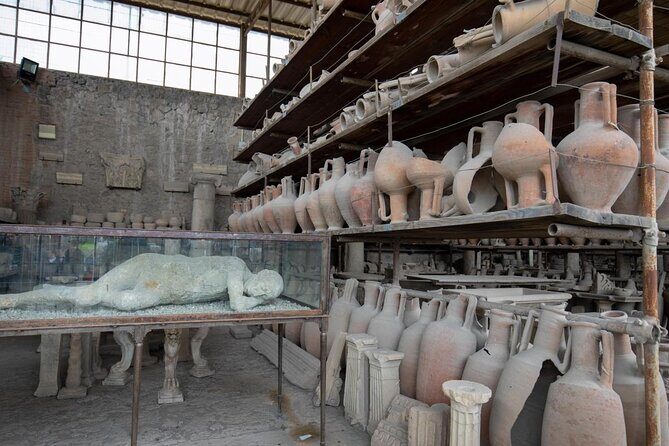
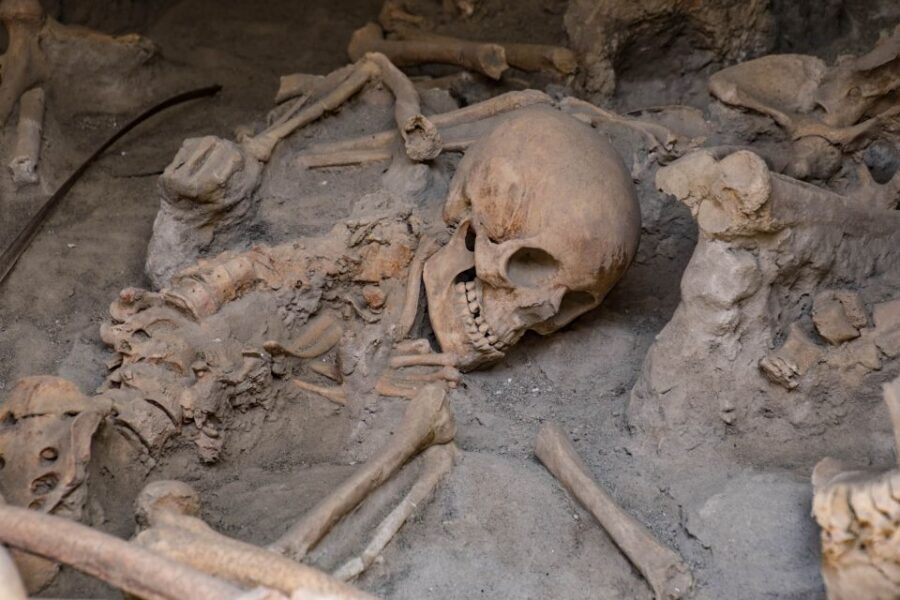
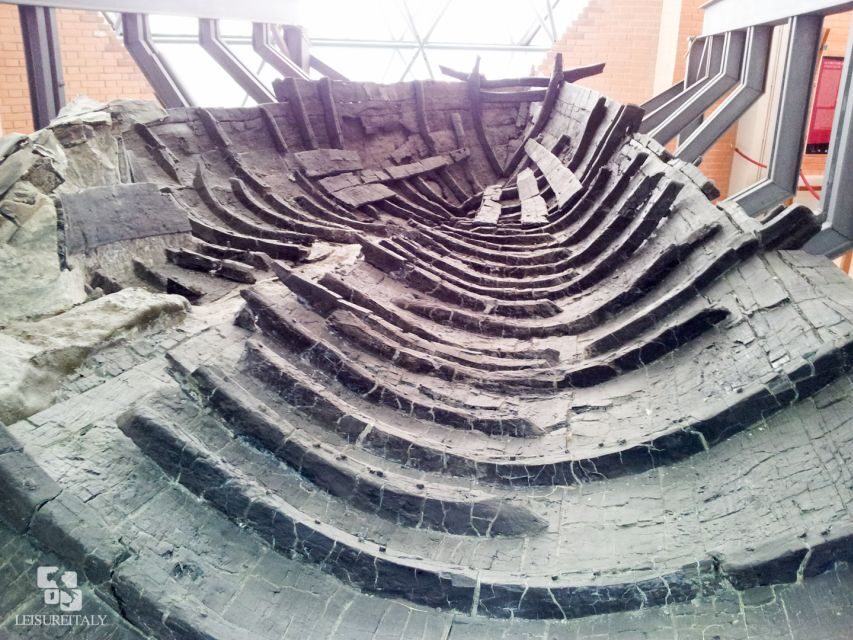
A major emotional anchor is the marina area, where around 300 human skeletons were found along with a boat that’s displayed on weekends. Even if you’ve read about the eruption before, this is the kind of evidence that makes the disaster feel specific. Not abstract. Not “some time long ago.”
This is also where your guide’s job becomes clear. Without a good explanation, you might just see remains and move on. With one, you start connecting what you’re looking at—where people were, what the coastline role likely was, and how the eruption’s fallout played out across the town.
Grande Palestra (Big Gym): archaeology with a pulse
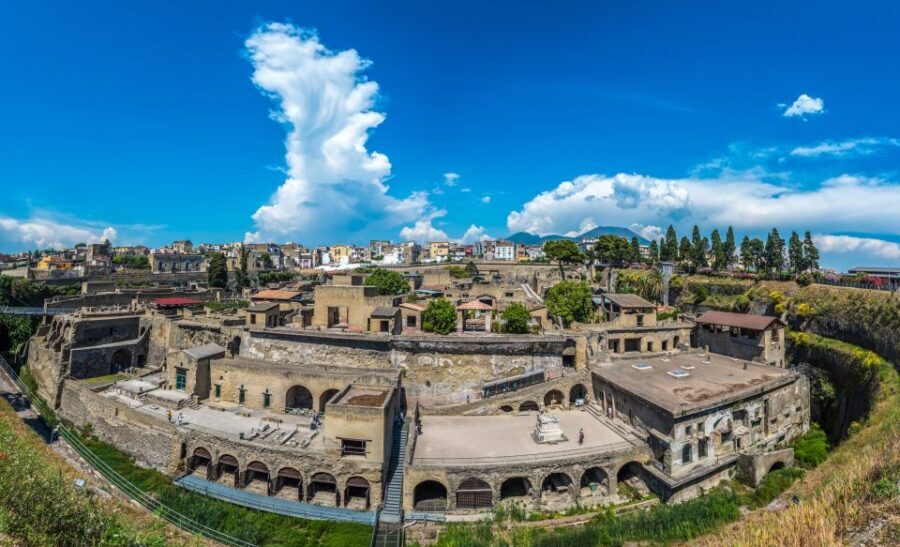
Next comes the Grande Palestra, the Big Gym—one of the best places to feel how Roman public life was built. It’s not a museum-style stop. You’re walking in a space that once worked as a training and social hub, then becoming a record of what happened when the volcano hit.
This is also a cool moment for “volcano evidence” thinking. You’ll see why the site’s unusual preservation matters: the eruption didn’t just destroy things, it helped freeze them. That makes the gym feel less like ruins and more like a Roman facility caught mid-story.
One drawback to plan around: because the tour is private and time-limited, you may not have long moments to sit and study carvings or wall details at a slow pace. If you’re a “photos are my oxygen” person, bring your best patience—this is about seeing a lot and understanding what you’re seeing.
House of the Albergo garden: quince trees and carbonized clues
The route then shifts from public space to wealth and daily ritual. The House of the Albergo is key, and the gardens are the part I’d point you to if you love the science side of archaeology.
Here’s the detail that makes this stop stick: quince apple trees have been replanted because evidence of carbonized roots survived from the ancient fruit tree. It’s not just a pretty garden concept. It’s a reconstruction built from physical traces, and it makes the whole town feel more human—people cared about fruit, seasons, and repeatable growth.
If you’re the kind of traveler who likes connecting dots, this is where your brain starts doing it automatically. You’ll look at the past and think about what people planted, harvested, and tended—then remember they lost their town so suddenly that the evidence stayed behind.
Council Hall of the Augustali: frescoes with Hercules
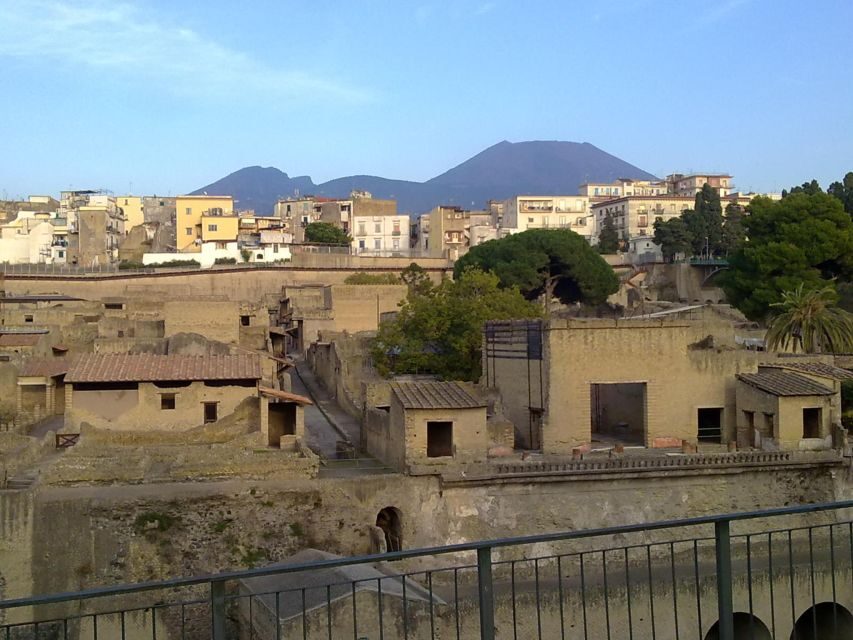
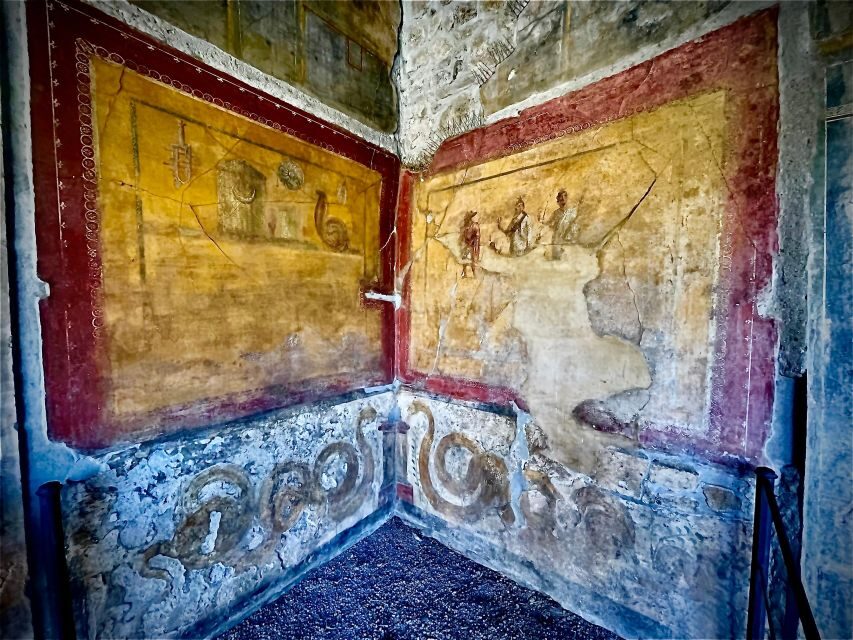
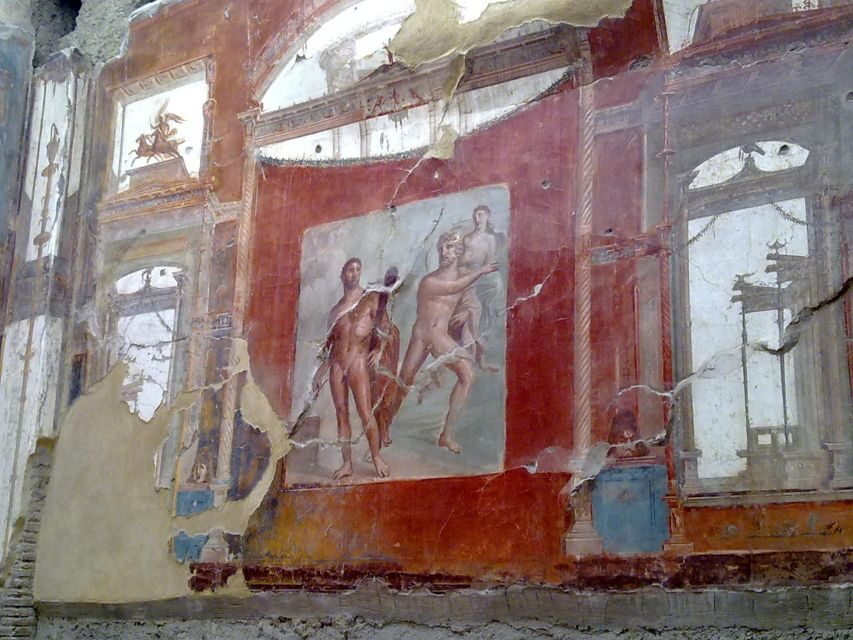
After the garden, you move into an area tied to community and worship, the Council Hall of the Augustali. This is one of those moments where the guide really helps, because frescoes only work at full strength when someone tells you what you’re looking at.
The frescoes here depict Hercules, and the scene gives context for how Roman identity and religion blended into everyday civic life. It’s not just art on a wall. It’s a visual message about authority, myth, and status—hanging out where people gathered.
A tip: give yourself permission to slow down for the frescoes. Even in a fast tour, this is a stop where you’ll benefit from a minute of careful looking, not just a quick glance for a photo.
Neptune and Amphitrite: mosaics that make the floor feel alive
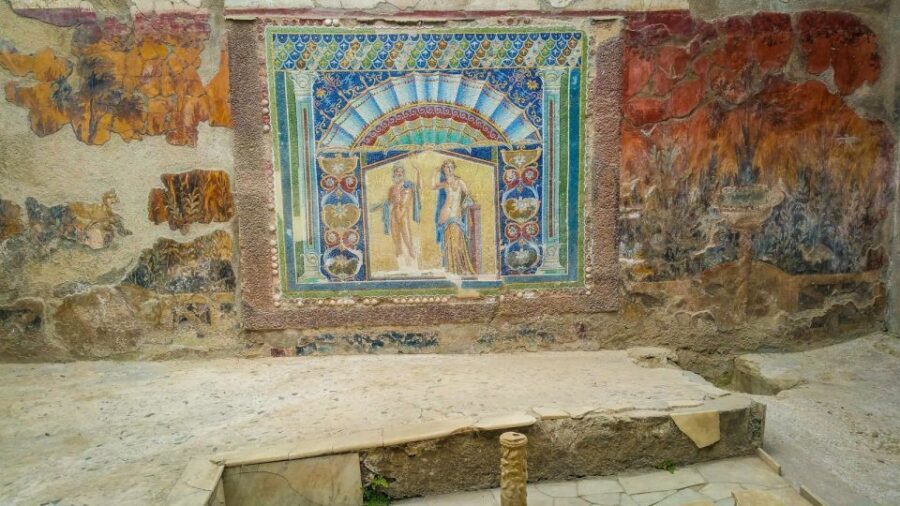
From the council hall, you’ll head to the mosaic-rich homes, including the House of Neptune and Amphitrite. These rooms are famous for the mosaic floors, and once you start seeing patterns, you’ll notice how Roman interiors were designed to impress.
This is where preservation becomes the star. You’re not guessing what the floor used to look like. You’re seeing it—intact enough to read as decoration, craftsmanship, and status all at once.
If mosaics are your thing, you’ll likely feel the time pressure more here than in a plain-walled structure. That’s the trade-off with a 2-hour private tour: you’ll get the main hits, but you won’t have unlimited time to study every panel.
The carbonized food and wine store next door
One stop that adds texture is the nearby store where food and wine containers, carbonized by the volcano, still hang on the walls. This is Roman life at its most practical—storage, supply, and the mundane objects that kept households running.
Most archaeological tours can turn daily life into a list of artifacts. Here, the layout helps. You can connect the jars and containers to rooms that likely supported cooking, serving, or storing—so the disaster doesn’t erase the ordinary.
It’s also a strong reminder that this was a working town, not a set piece for elites. Even if the villas show wealth, this shop stop shows routine.
The spa complex: mosaics from saunas to cold tubs
Then you’ll head to the ancient spa, still covered with mosaics from Roman routines—saunas, gyms, hot rooms, and cold tubs. This is the Roman approach to health and social time: bathing was not just hygiene, it was culture.
What makes this stop special is the combination of function and decoration. You’re seeing architecture built for different temperatures, and the surfaces are treated like art. That mix helps you understand why spas were a big deal in the Roman world.
If you’re the sort of visitor who likes to picture daily behavior, this is a good place to do it. Try to imagine people rotating between hot and cold, then pause and look at how the mosaics define those spaces.
Villa dei Cervi: the luxury finale with mosaics, frescoes, statues
Your last major showcase is Villa dei Cervi, often the most spectacular stop on the route. Expect luxurious mosaics, frescoes, and statues, the kind of decoration that signals money and taste.
This finale works because you’ve seen the town from multiple angles already: public life, elite home features, and everyday storage. So when you reach a villa this refined, it lands more clearly. You see not just beauty but contrast—how wealth turned spaces into theater.
In many tours, a grand ending is just a quick photo stop. In a private setup, you get a better chance to absorb what makes the villa different from the simpler houses you passed earlier.
Price and value: what $167.66 per person is really buying
Let’s talk value without pretending everything is cheap. This tour is $167.66 per person for a private, guided experience lasting about 2 hours, with admission included and ticket-line skipping built in.
So is it worth it? For me, the value hinges on three things:
First, you’re paying for a guide who helps you read the site fast. Herculaneum rewards context. Floors, frescoes, and room layouts connect into a story, and a guide turns that story into something you can actually follow.
Second, the site is compact but detailed. Two hours can cover the major attractions without turning into a sprint. That’s often better than doing it solo with guesswork, especially if you want mosaics, frescoes, and villa spaces rather than just walls.
Third, you’re paying for privacy. A private group means you can ask questions and move at a pace that matches your interests. That matters at places where the details are the main event.
One consideration: a couple of people felt the time didn’t stretch enough for the money. If you’re the type who wants to sit with frescoes or take time tracing mosaic patterns, you may feel rushed. In that case, plan a little extra time on your own before or after the tour so you can linger where you want.
Who this private Herculaneum tour is best for
This is a strong match if you want a high-impact visit in a short window and you like learning as you go. You’ll likely enjoy it most if you:
- Want an easier way to see the park’s major highlights without navigating alone
- Care about mosaics and frescoes (this tour hits them repeatedly)
- Like Roman daily life details, not just big famous ruins
- Prefer a guide who can answer questions in your group’s language
It’s not a great fit if you need accessibility accommodations, since it’s not suitable for wheelchair users or people with mobility impairments, and it doesn’t allow large bags or luggage.
Also, if you’re bouncing between Pompeii and Herculaneum, do yourself a favor: choose Herculaneum as the contrast stop. You’ll get more out of the comparison, and your brain will stay engaged.
Should you book this 2-hour private tour?
If your goal is to see Herculaneum’s key spaces—marina remains, the Big Gym, garden reconstructions with quince trees, frescoed council halls, mosaic homes, and Villa dei Cervi—then yes, I think this private format makes a lot of sense. You’re buying time well spent, with a guide who helps you understand what preservation means and what the objects and rooms were actually for.
Book it if you want maximum meaning per hour. Skip it or pair it with extra independent time if you know you’ll want to linger for long reads and slow looking. In a place this detailed, speed is useful—until you realize you want to stay longer.
FAQ
How long is the 2-hour private tour of the Ruins of Herculaneum?
The tour lasts 2 hours.
Is this a private tour?
Yes, it’s a private group tour.
What is included in the price?
The tour includes a private guide and the admission fee.
What languages are available for the live guide?
The guide can provide the tour in Spanish, English, French, or Italian.
Where do we meet the guide?
You meet the guide at the only ticket office in Herculaneum Archaeological Park, and the guide will hold a sign with your name.
Can I bring luggage or large bags?
No. Luggage or large bags are not allowed.
Is the tour wheelchair accessible?
No. It’s not suitable for wheelchair users or for people with mobility impairments.
Is entry free on the first Sunday of each month?
Yes, entrance is free on the first Sunday of each month, but tickets can’t be reserved ahead of time, so entry is not guaranteed.
How strict is cancellation?
You can cancel up to 24 hours in advance for a full refund.