Pompeii is huge, and most people feel it fast. A skip-the-line entry plus an in-the-ruins guide makes the place click instead of overwhelm. I especially like the focus on the big highlights—Roman streets, baths, homes, the main square, temples, and even the brothel—without wandering in circles. One caution: Pompeii admission tickets are not included and now require your ID/passport match because the ticket is nominative.
This tour is built for clarity and pace. Your guide’s running commentary turns “old stones” into daily life—how people lived there, what changed on the day of the eruption, and why the city’s remains look the way they do. You also get a dedicated pause for the famous plaster casts of the volcano’s victims, which is powerful but still manageable in a two-hour visit.
The possible drawback is logistics, not Pompeii. You’ll need to plan ticket details ahead of time, and the tour time is tight, so you won’t get a slow, all-day wander through every corner.
In This Review
- Key things that make this Pompeii tour work
- Skip-the-line entry: time saved at Pompeii’s busiest bottleneck
- A smart 2-hour game plan inside Pompeii
- Roman streets, baths, homes, temples, and the brothel: what you’ll actually learn
- Streets and shops
- Public baths
- Homes and everyday domestic life
- Main square and temples
- The brothel: history with context
- The plaster casts stop: where the story hits hard
- Guide style matters: what you’ll feel during the walk
- Ticket reality check: nominative entry and the ID requirement
- Price and value: what you’re paying for at $120.68 per person
- Getting there: meeting point and how the tour wraps up
- Who this guided Pompeii tour suits best
- Should you book this Pompeii guided tour?
- FAQ
- What is included in the Pompeii guided tour?
- How long is the tour?
- Is the Pompeii entrance ticket included?
- Do I need ID or a passport?
- Is the tour in English?
- Can I cancel if plans change?
Key things that make this Pompeii tour work
- Skip-the-line advantage so you waste less time at the entrance
- 2 hours with a plan to hit the top sights in a sprawling park
- English commentary focused on daily life and the destruction of the city
- A stop at the plaster casts for the human story behind Vesuvius
- Guide-led route that helps you avoid getting lost in the ruins
- Private group format so your guide can move at a pace that fits you
Skip-the-line entry: time saved at Pompeii’s busiest bottleneck
Pompeii is one of those places where the real problem isn’t the ruins—it’s getting in smoothly. Even when you arrive with good intentions, the entrance area can eat up a lot of your daylight. This tour’s skip-the-line approach is the practical win. You start seeing the site sooner and spend more of your limited time inside, not waiting outside.
That matters because your visit window here is short—about two hours. With a tight timeframe, a delayed start can turn a highlight tour into a blur. So if you’re trying to cover Pompeii efficiently from Naples or the Amalfi Coast, saving time at the gate is exactly the kind of benefit that pays off.
There’s also a second layer: the guide helps you keep momentum. When you’re not constantly “figuring it out,” you actually have time to understand what you’re looking at—streets, building uses, and the eruption’s aftermath.
If you're still narrowing it down, here are other tours in Pompeii we've reviewed.



A smart 2-hour game plan inside Pompeii
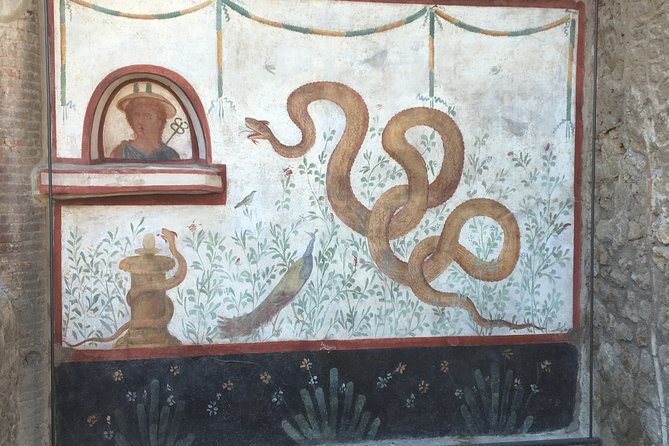
Inside Pompeii, the park layout can feel like a puzzle with too many edges. You’ve got ancient roads intersecting other roads, public buildings, residential blocks, and major landmarks spread far apart. The value of a guided route is simple: it tells you where to look first and why.
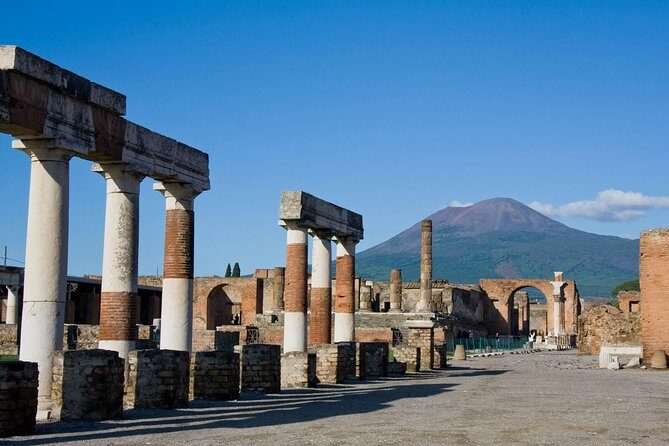
In roughly two hours, you’ll see a concentrated set of what most people come for, including ancient Roman streets and shops, public baths, ancient houses, and the main square. You’ll also cover key civic and religious spaces like temples, and you’ll pass through the area connected with the brothel—a part of Pompeii that many visitors have questions about and that’s better understood with context instead of awkward guesswork.
The “how” is just as important as the “what.” A good guide doesn’t only point—she explains. Here, the commentary connects the physical layout to real life: what daily routines looked like, how spaces were used, and what changed when Vesuvius shut everything down.
And yes, the tour is paced for seeing. In at least one personal-style experience described in feedback, the tour included buildings not typically open to the general public. You can’t treat that as guaranteed, but it’s a signal that the guide pays attention to maximizing your time.
Roman streets, baths, homes, temples, and the brothel: what you’ll actually learn
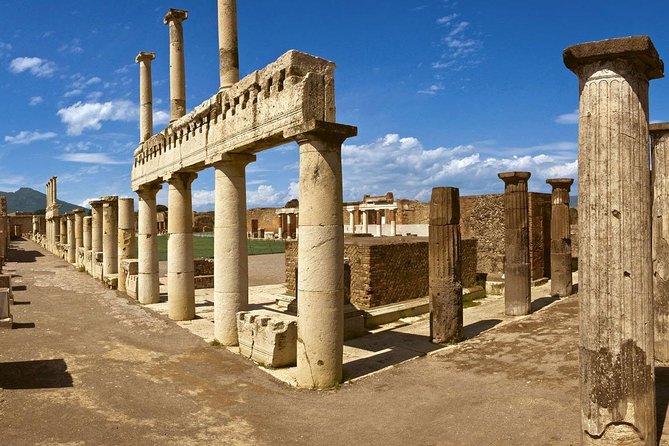
Pompeii isn’t a single monument. It’s a whole town, frozen. That’s why a guided tour helps you interpret details instead of collecting random photos.
Streets and shops
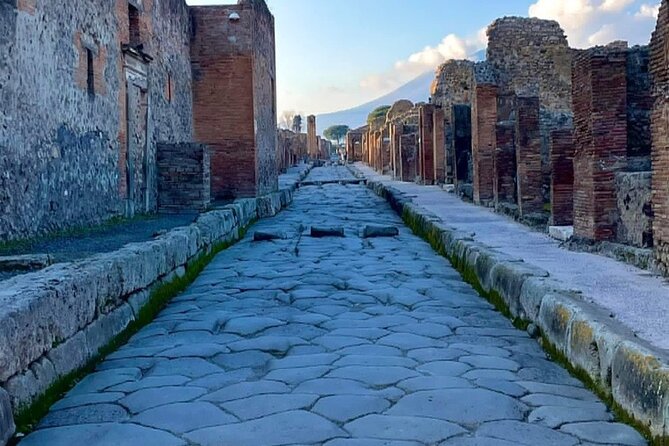
When you walk the ancient streets and shops, you’re seeing how commerce functioned in a Roman city. Without a guide, it’s easy to focus only on stone and scale. With commentary, you start noticing how businesses were arranged and how foot traffic moved through the area.
Public baths
The public baths are a highlight for a reason. They show how Romans thought about routine, hygiene, and social life. A guide’s explanation makes the spaces feel less like ruins and more like “places people used,” which is what you want when you’re short on time.


Homes and everyday domestic life
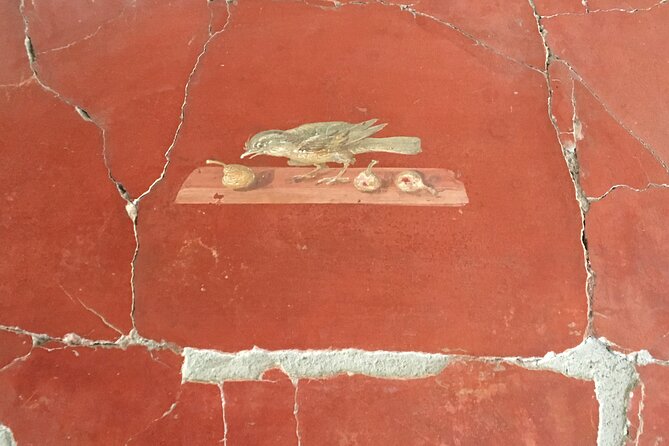
The ancient houses help you understand class and lifestyle contrasts. You can often recognize the difference between grander homes and more modest structures, but what you might miss is how families used rooms and outdoor space. A guide’s storytelling fills in that blank.
Main square and temples
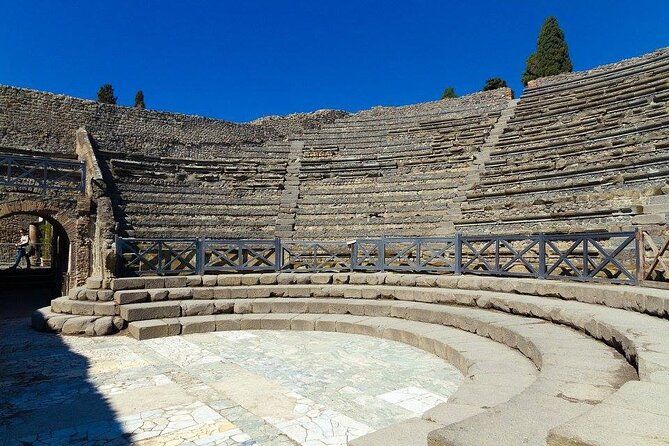
The main square and temples help you understand civic identity and religious life—what mattered, who gathered, and why certain areas held symbolic weight.
The brothel: history with context
The brothel can be uncomfortable if you treat it like a party story. In a good guided setting, it becomes a window into how Romans organized and normalized aspects of street life. You’ll get the historical framing you need so it doesn’t feel like you’re just ticking off a “shock” stop.
The plaster casts stop: where the story hits hard
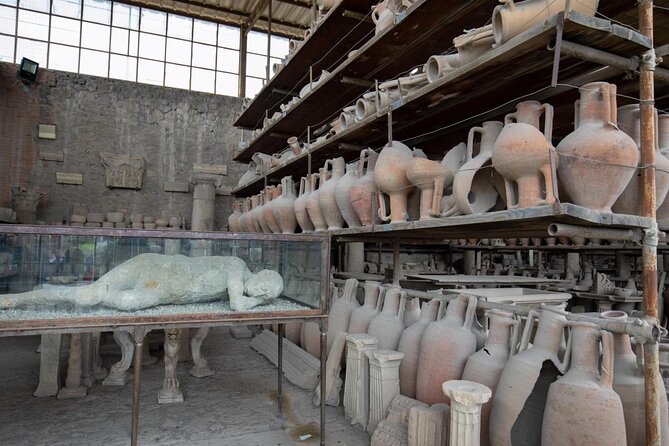
If Pompeii has a single emotional anchor, it’s the plaster casts of victims. This tour includes time to pause and take them in. That matters because the casts are easy to speed past if you’re rushing for photos or trying to “cover everything.”
With guided commentary, the stop connects the artwork-like shapes to the moment of the eruption. You’ll hear how destruction happened and how the eruption’s aftermath preserved details in an almost startling way. It’s not just a dramatic photo op. It’s one of the best places in Pompeii to understand what the city lost, not just what remains.
One practical benefit: because it’s built into a route, you don’t have to hunt for it on your own. In a self-guided visit, that kind of navigation can steal time from the rest of your priorities.
Guide style matters: what you’ll feel during the walk
The biggest difference between a “walk through ruins” and a truly worth-it tour is the guide’s tone and technique. Here, the guide—often identified in feedback as Linda—is repeatedly described as friendly, funny, and engaging, with excellent English.
What I like about this style is that it’s not just facts. It’s interaction. You’ll get prompted questions and a rhythm that keeps the experience moving. For many first-timers, Pompeii can feel overwhelming; a guide who keeps you focused makes it feel like you’re steadily learning.
Pace also comes up. Even when delays happen getting to the site, a strong guide keeps things calm and adjusts without turning it into a stress fest. There’s a real-world example of waiting patiently when a group was late due to train issues, and then still delivering the full two-hour tour at a relaxed pace.
There’s another practical detail you might find useful: if you’re arriving from the station area, you can save time by using the quieter entrance at the bottom of the road rather than the train-station entrance. That kind of local trick helps the day feel smoother.
Ticket reality check: nominative entry and the ID requirement
Here’s the part that can trip you up if you assume it works like other tourist sites.
Pompeii admission tickets are not included in the tour price. And since November 2024, the park ticket is nominative—meaning it’s tied to personal data. The system also uses a daily cap of 20,000 admissions.
So when you buy the entry ticket online (the entrance fee only), you need to enter the fields with the names and personal details that match the people entering. Then, when you reach Pompeii, you should have your ID or passport to show before entry for everyone in your group.
If you arrive without your pre-purchased ticket, you can still buy at the ticket counter. But the ID/passport check still applies for the party members. In other words: don’t treat this like a flexible “we’ll handle it there” situation.
This also explains why the tour description talks about a mobile ticket and a smooth start. It’s not just convenience—it’s how you avoid getting stuck dealing with admission friction when you’d rather be inside.
Price and value: what you’re paying for at $120.68 per person
At $120.68 per person, this isn’t a bargain-basement option, especially since park admission is extra. The value question is: what do you get for that money besides the ticket?
You’re paying for:
- A guide-led, 2-hour route through a huge site
- Skip-the-line help at the entrance so you lose less time
- Commentary that explains daily life and the eruption’s destruction
- A structured highlight mix, including the plaster casts stop
If you go in on your own, you can technically walk the same stones. But you’ll miss the “why” behind what you’re seeing. With a short time window, that matters. A guided tour is often the cheapest way to avoid turning Pompeii into a checklist you forget a week later.
Also, since this is a private tour format—only your group participates—you’re not competing with a crowd of 25 or more. That can be a real quality upgrade if you care about comfort and attention.
In plain terms: this price makes sense if you’re time-limited, want the emotional and historical story without effort, and prefer a smoother, less stressful entry.
Getting there: meeting point and how the tour wraps up
The meeting point is in 80045 Pompei, Metropolitan City of Naples, Italy, and the tour ends back at the meeting point. That round-trip structure can be helpful if you’re trying to plan the rest of your day in the area.
The experience is described as near public transportation, which is a practical advantage. Also, the tour doesn’t include private transportation, so if you’re coming from farther away, you’ll want to handle your travel separately.
Tour duration is listed as about 2 hours, which means you should think of Pompeii here as a focused stop rather than a full-day deep wander.
Who this guided Pompeii tour suits best
This is a good fit if you:
- Want a top-sights tour without getting lost in the park
- Have limited time and want your visit to feel like a guided storyline
- Prefer a private group experience rather than a large, fast-moving pack
- Like explanations that connect ruins to real daily life
- Want help with the parts that can be annoying, like entrance flow and ticket requirements
You might feel the time limit if you like to linger over every wall carving or every inscription. This tour is designed for highlights, and two hours goes quickly once you’re standing in place and absorbing details.
Should you book this Pompeii guided tour?
I’d book it if your goal is: see the best of Pompeii, understand what you’re seeing, and keep the day from turning into a logistics headache. The skip-the-line part and the guided structure are the biggest reasons to choose this format—especially for a two-hour visit.
I’d think twice if you’re the kind of visitor who wants to roam freely for half a day and build your own route. For that style, you could spend less money on admission and map it yourself. But if you’re worried about wasting time, missing major areas, or not understanding the site’s meaning, this tour gives you a clear path and a strong guide-led experience.
FAQ
What is included in the Pompeii guided tour?
You get a two-hour guided tour inside the ruins. Admission to the archaeological park itself is not included.
How long is the tour?
The guided portion is listed at about 2 hours.
Is the Pompeii entrance ticket included?
No. The Pompeii Archaeological Park ticket is not included, and it has its own rules, including being nominative with an ID or passport check.
Do I need ID or a passport?
Yes. Because the park ticket is nominative, you should bring your ID or passport for yourself (and for everyone in your party) to show before entering.
Is the tour in English?
Yes, it’s offered in English.
Can I cancel if plans change?
Yes. There’s free cancellation up to 24 hours in advance for a full refund, based on local time.