REVIEW · SORRENTO
From Naples: Pompeii Skip-the-Line Guided Tour
Book on GetYourGuide →Operated by IAMME IA! - Gray Line Amalfi Coast · Bookable on GetYourGuide
Pompeii hits harder with a guide. This skip-the-line tour gets you into the ruins early and sets you on a route that makes the city’s layout click fast. You’ll also get transport from Naples, so the logistics don’t eat your day.
I like two things most: the early departure that helps you beat the worst crowds, and the live, licensed local guiding that turns scattered stones into a real street-by-street town. One consideration: you’re walking a lot in a short window, and Pompeii is huge, so you’ll focus on major stops rather than seeing every corner.
In This Review
- Key highlights worth your attention
- Skip-the-Line in Practice: Getting Into Pompeii Fast
- Porta Marina to the Civic Heart: The Forum Stops That Make Sense
- Via dell’Abbondanza and the Theater District: Streets, Grooves, and Public Drama
- Baths and Daily Rituals at Terme Stabiane
- The Lupanare: Art, Shock, and What the City Was Willing to Sell
- Street Food Rooms: Thermopolium and a Pistrinum Moment
- House of the Faun and the Alexander Mosaic: Wealth You Can See
- Macellum: The Market Where Life Would Have Rolled On
- The Plaster Casts: The Moment Pompeii Turns Personal
- Walking Time, Heat, and What to Pack for a 4-Hour Day
- Language and Audio Headsets: Hearing the Guide in Real Time
- Guide Style Matters: Licensed Local Expertise You’ll Feel in the Story
- Price and Value: Is $71 for Pompeii a Good Deal?
- Who This Pompeii Tour Fits Best (and Who Might Reconsider)
- Should You Book This Pompeii Skip-the-Line Tour?
- FAQ
- What’s the duration of the tour?
- Where do I meet the guide in Naples?
- How does the skip-the-line access work?
- Will I have a live guide during the ruins?
- Are there audio headsets for the group?
- What languages are available?
- What should I bring?
- Is this tour suitable for everyone?
Key highlights worth your attention
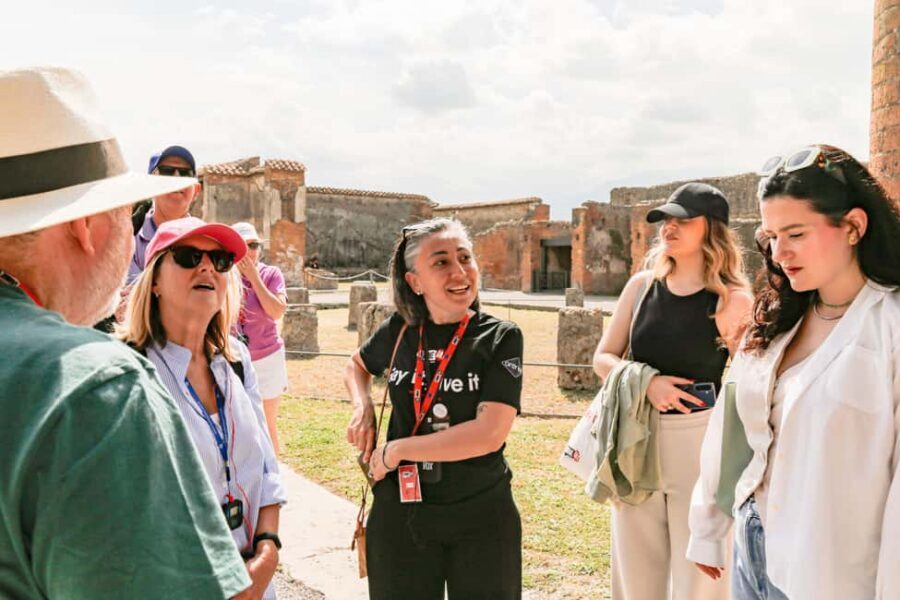
- Priority entry via a separate entrance helps you start seeing Pompeii sooner
- Early Naples departure means a calmer start at Porta Marina
- Live licensed guide keeps the story straight and grounded in place
- Audio headsets for groups of 8+ help you hear directions and commentary
- A focused 2.5-hour walk covers Civil Forum, theater district, baths, and elite houses
- Comfortable round-trip bus in air-conditioning saves time and energy
Skip-the-Line in Practice: Getting Into Pompeii Fast
This is the kind of Pompeii day trip that starts working for you before you even step onto the site. You leave Naples early by air-conditioned bus, with about 30 minutes of coach time each way. The meeting point is outside the main entrance of the Starhotel Terminus at Piazza Giuseppe Garibaldi 91, Naples—easy to find and practical if you’re already staying in the city.
The big win is priority access. Instead of spending the first chunk of your morning standing in line, you’re routed through a separate entrance. That matters because Pompeii’s best light and calmer footpaths don’t last. You want to be inside when the crowd pressure is lower, and this format is built for that.
At the end, you’re dropped back in Naples (the return point is again P.za Giuseppe Garibaldi 91). That makes it feel like a single, tidy plan rather than a half-day juggling act.
Other skip-the-line Pompeii tickets and tours
Porta Marina to the Civic Heart: The Forum Stops That Make Sense
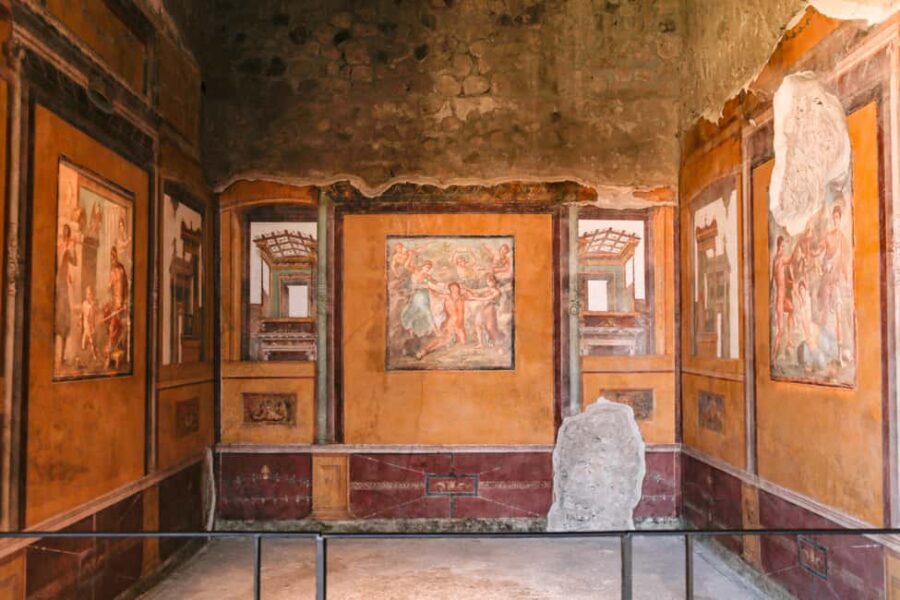
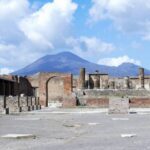
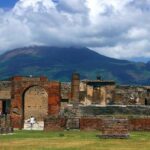
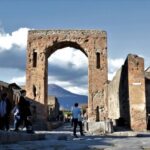
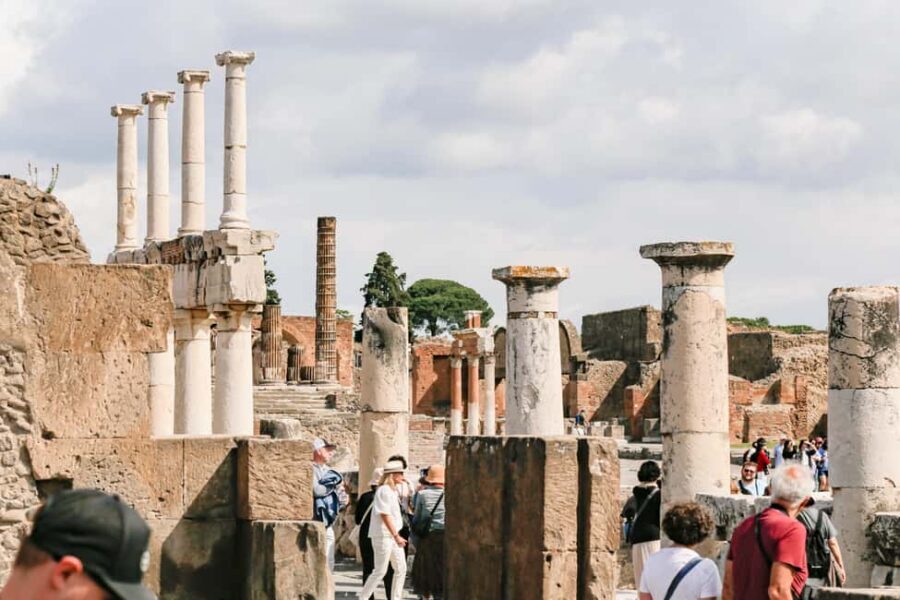
You start your guided walk at Porta Marina, one of Pompeii’s original gates. It’s a good place to begin because it immediately frames Pompeii as a functioning port city with public space from day one. From there, you move toward the political, religious, and business center of town—the Civil Forum.
In the Forum area, you’ll pass some of the most important public buildings, including the Basilica, once used for legal affairs and business dealings. I like this stop because it’s not just scenic. It gives you a mental map of who met where, what decisions happened there, and why the streets around it mattered.
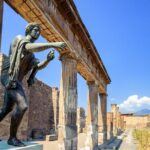
You’ll also hit the Temple of Jupiter area. Even when the visit time feels brief, the photos and guided explanations help you understand why the area was such a focal point. Pompeii often feels like “cool ruins,” but the Forum sequence pushes it into context: civic life, authority, commerce, and religion all stacked close together.
A practical note: some parts are listed with photo stops, which usually means you’ll have short pauses for photos while the guide talks you through what you’re seeing. If you love photography, I’d still plan to keep your hands free and your eyes up—this tour moves.
Via dell’Abbondanza and the Theater District: Streets, Grooves, and Public Drama
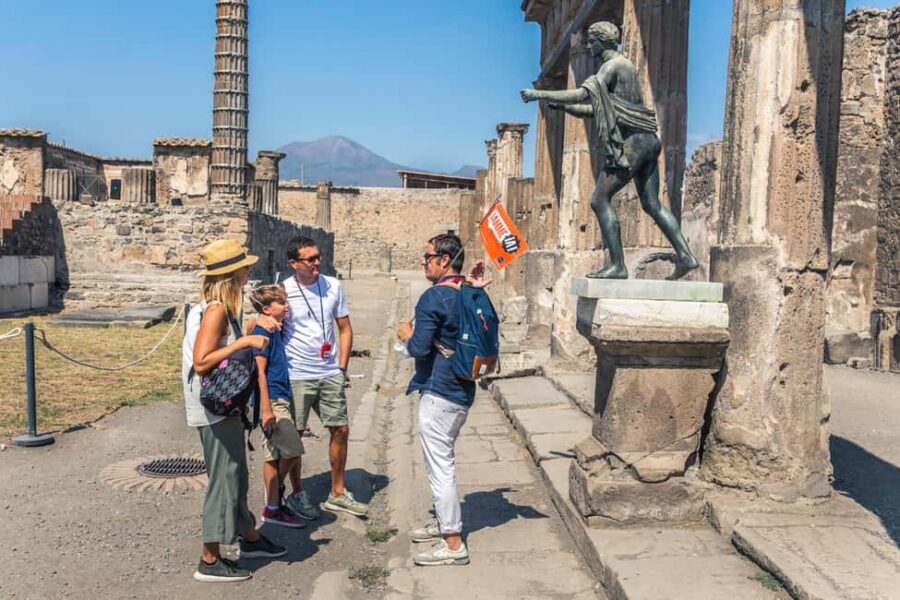
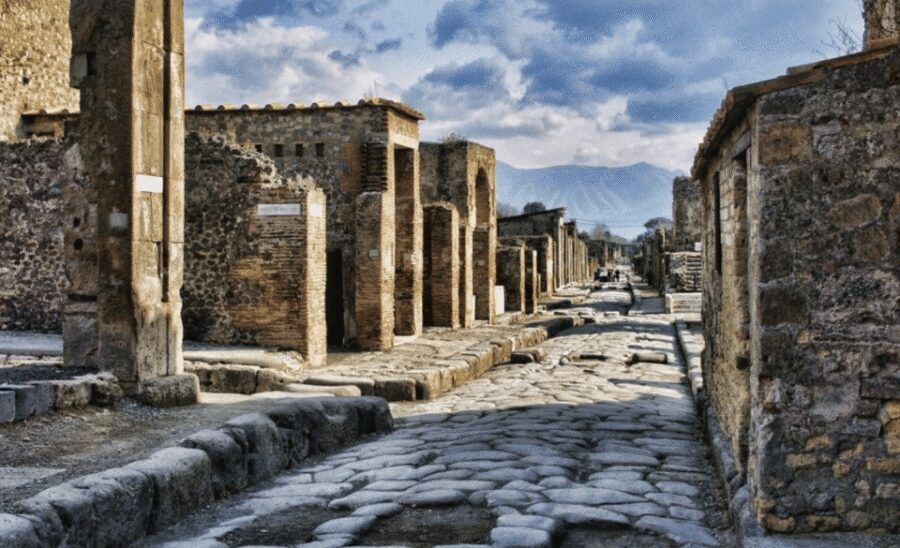
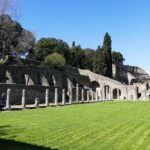
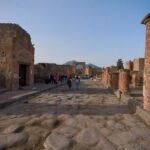
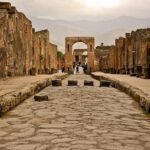
One of Pompeii’s most charming details is how everyday movement shows up in stone. Your route includes Via dell’Abbondanza, the main street lined with houses and shops. You’ll also see deep chariot grooves etched into the roadway. Those marks are the kind of evidence that turns an idea—traffic and transport—into something physical you can almost feel underfoot.
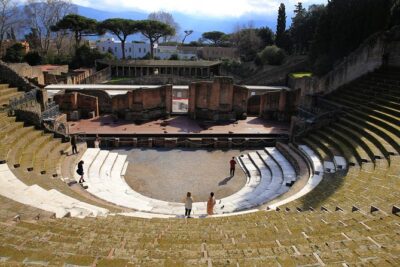
From the main street, you shift toward the Theater District, a cultural hub where public life and entertainment blended. The centerpiece here is the Large Theater, an open-air venue where crowds once gathered for performances. Even if you’re not a theater person, this stop works because it shows how Romans organized leisure in public space.
This district is where Pompeii can start to feel like a city that was alive seconds before it stopped. The guide’s job is to keep you from getting lost in scale, and the best versions of this tour do just that—linking the architecture to the social rhythm of the place.
Baths and Daily Rituals at Terme Stabiane
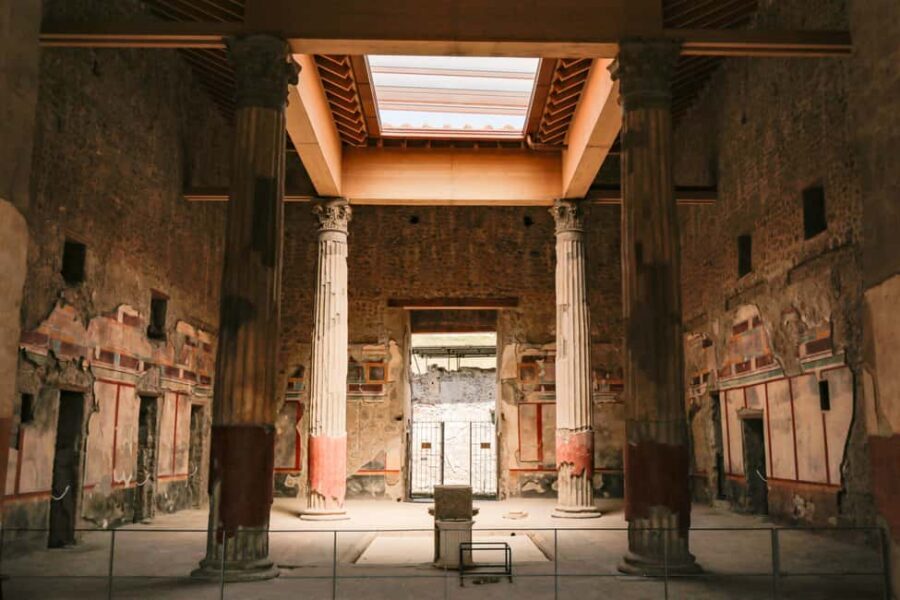
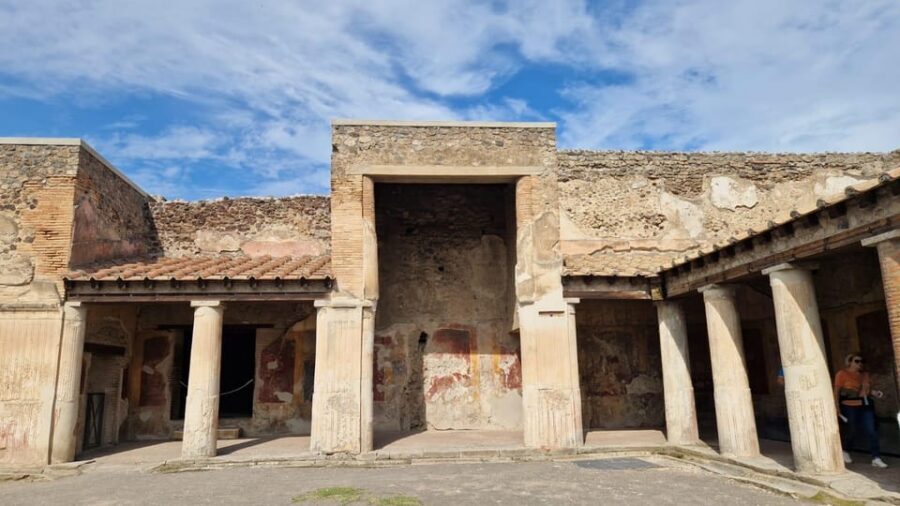
Then you shift from the public show of the theater district into something more human: routine, cleaning, and relaxation. The tour includes Terme Stabiane, the bath complex. Pompeii’s baths are often a highlight because they’re not just pretty ruins; they show daily habits—where people gathered, what they did, and how space was organized for hygiene and downtime.
You’ll have photo opportunities and guided time here, so you’re not just walking past structures. The guide’s commentary is what helps you understand the flow of the baths, not only the rooms themselves.
Also, keep an eye on the pace. Baths can make you slow down naturally because you want to look at the details. In a 4-hour plan, timing matters, so I’d treat this as your moment to slow slightly—but not to wander away from the group.
The Lupanare: Art, Shock, and What the City Was Willing to Sell
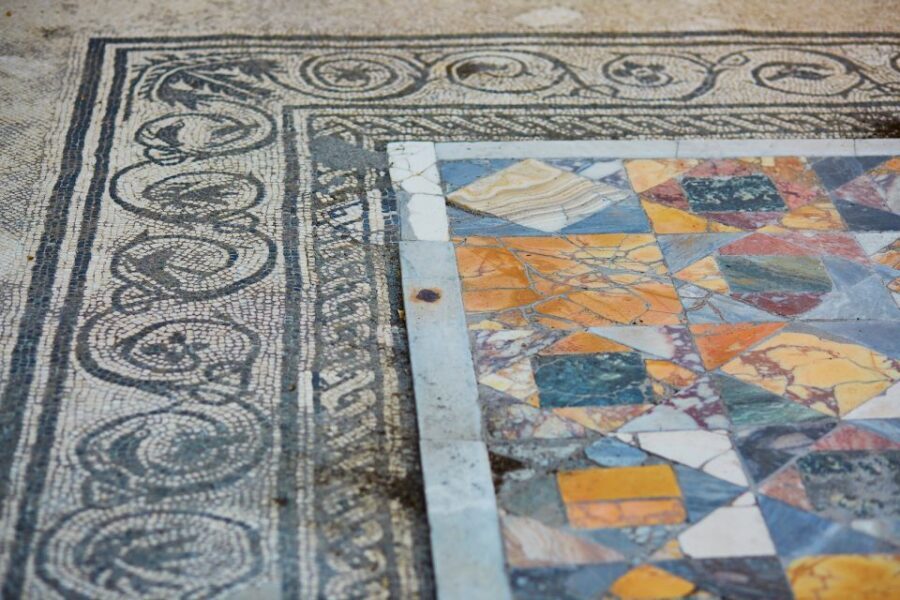
One of the most talked-about stops is the Lupanare, Pompeii’s ancient brothel. It’s included as a guided visit, and it’s described as vivid and compact—small stone rooms decorated with frescoes.
For many people, this is the moment Pompeii becomes uncomfortable in the best way. It refuses the idea that ancient life was all gods and grand architecture. It shows commerce, sexuality, and everyday transactions—real aspects of urban life, not abstract “past culture.”
If that subject matter makes you uneasy, go in with open eyes rather than trying to skip around inside the site. A guide can place it in context without sensationalizing it, which is the difference between feeling respectful and feeling lost.
Other tours departing from Naples


Street Food Rooms: Thermopolium and a Pistrinum Moment
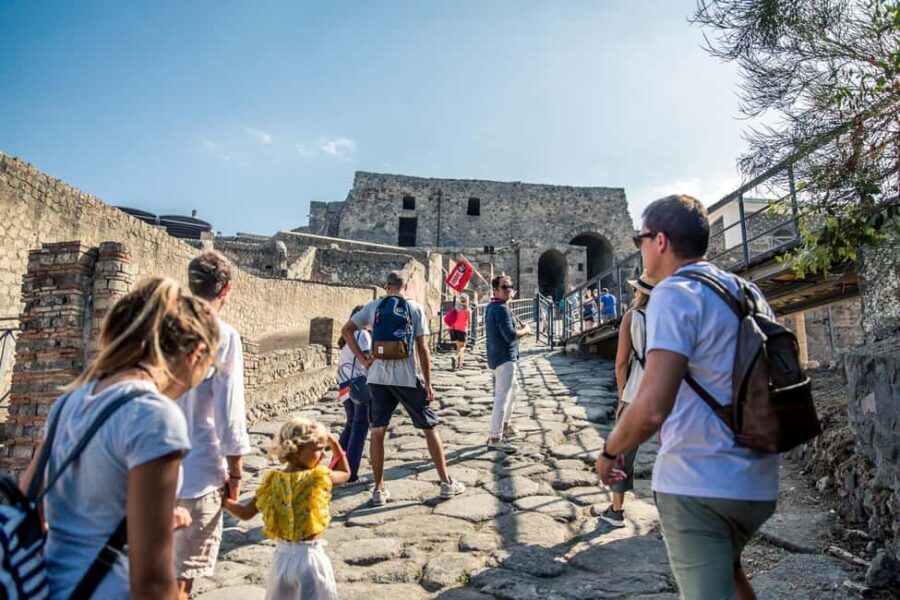
A smart part of the Pompeii route is that it doesn’t stop at temples and villas. The tour also includes a Thermopolium (ancient street food shop) and a Pistrinum, or bakery.
You’ll see millstones, ovens, and counters used to serve hot food to people on the go. I like this because it changes how you picture Pompeii’s economy. It’s not only big-ticket goods and formal trade. It’s lunch. It’s speed. It’s a snack culture.
This is also one of those segments where a live guide helps most. Without narration, it’s easy to look at stone counters and think, “Cool,” then move on. With explanations, you understand what a working kitchen setup actually looked like.
House of the Faun and the Alexander Mosaic: Wealth You Can See
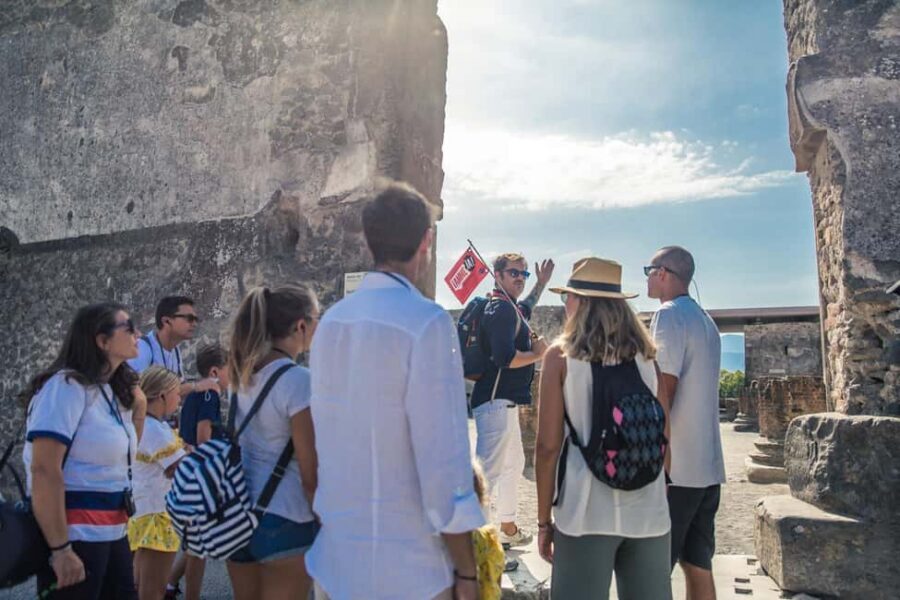
Next comes a switch from street-level life to elite lifestyle. You’ll step inside the House of the Faun, a grand Roman villa known for its mosaics. The highlight here is the Alexander Mosaic, a standout piece of ancient art and storytelling.
This visit is valuable because it shows how Pompeii wasn’t just a “city of ruins.” It was a place where some people lived with serious wealth and taste. You’ll get a guided explanation tying the villa to the broader idea of status—how architecture and art communicated rank.
One practical thing: houses inside Pompeii can feel crowded, and you may spend part of your time waiting for the group to move between viewpoints. Still, this is one of the stops that makes your whole tour feel worth it.
Macellum: The Market Where Life Would Have Rolled On
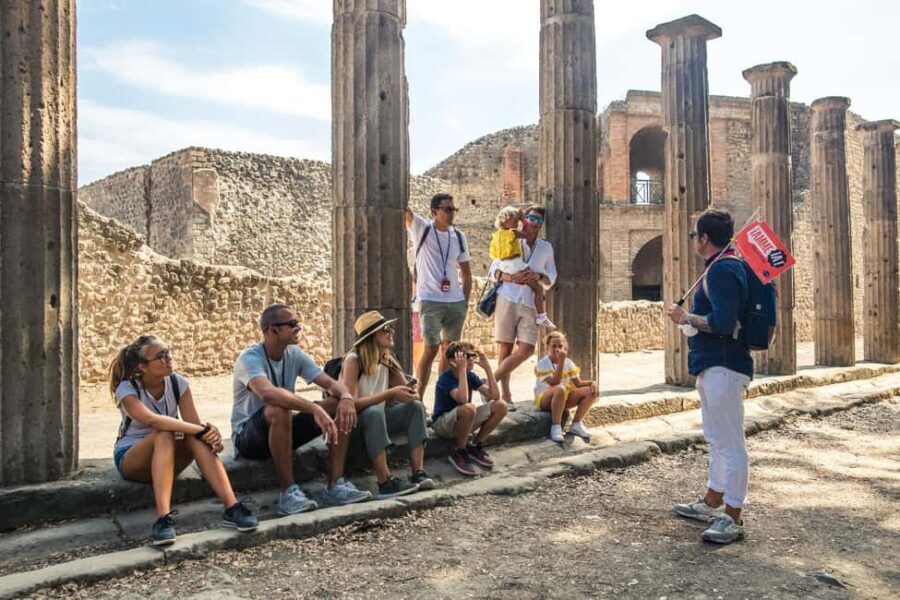
You’ll also visit the Macellum, Pompeii’s food market. This is where you get sounds and smells in your imagination. Even though you’re walking through ruins, the market layout helps you picture daily trade—people moving for food, bargaining, and getting supplies fast.
In a short guided format, this stop works as a “life check.” It’s not just public ceremony and private luxury. It’s the heartbeat of the city’s everyday needs.
The Plaster Casts: The Moment Pompeii Turns Personal
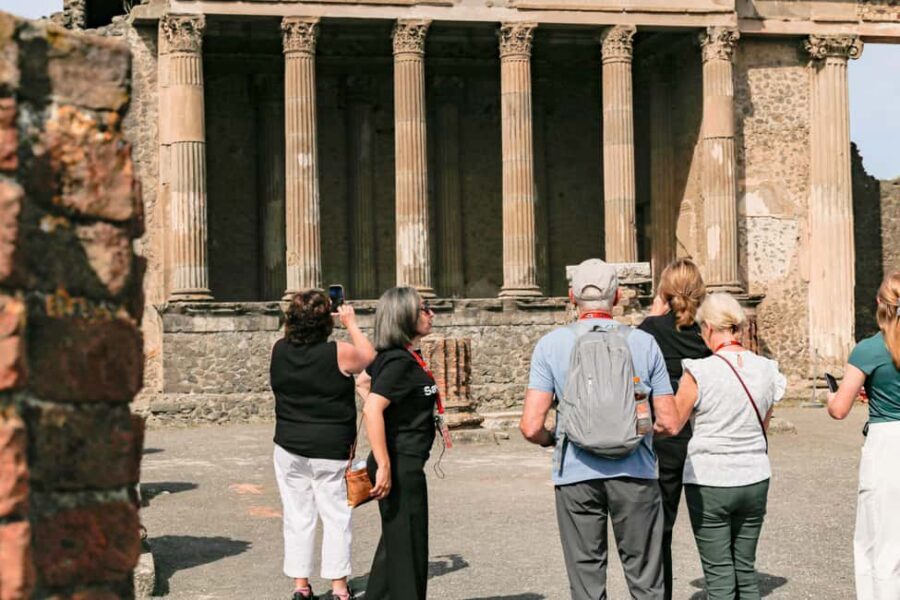
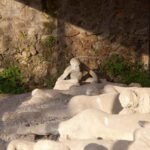
A truly unforgettable part of the route is the plaster casts of Pompeii’s victims—men, women, and children preserved in their final moments. It’s part of the guided experience, and the impact is immediate.
This is the part where Pompeii stops being a “tour stop” and becomes an emotional reminder. I’d recommend you slow down here and take it in without rushing for photos. You don’t need long to understand the weight of the moment.
Walking Time, Heat, and What to Pack for a 4-Hour Day
A Pompeii day is mostly shoes and sun. The tour recommends comfortable shoes, sunglasses, and a sun hat—and I agree. Even in shoulder seasons, Pompeii can feel bright and exposed depending on your pace and where the route lines up.
Also plan for hydration. The tour itself doesn’t include food or beverages, and Pompeii can make you want water sooner than you expect. One review tip that’s smart in practice: bring a water bottle and refill when possible using fountains inside the site.
If you’re taking photos, remember you’ll likely be stopping often for explanation and movement. I’d keep your camera strap short enough that you’re not fiddling with it every time the guide wants you to reposition.
Language and Audio Headsets: Hearing the Guide in Real Time
This tour runs with live narration in English, French, Spanish, and German. For groups of 8+, you get audio headsets, which helps you hear the guide while moving through busy areas.
There’s also a language nuance. If the minimum number of French- or Spanish-speaking participants isn’t met, the tour can run in English, with French or Spanish commentary provided only during the guided visit of the Pompeii archaeological site. So if language accuracy is a top priority for you, double-check your confirmation details.
Audio is useful, but it’s not magic. One practical concern that shows up in real-world conditions is that headsets can lose signal when crowd density is high, which means a few parts of the narration might be harder to catch. If you’re relying on audio closely, it’s worth staying a comfortable distance from the guide rather than hovering far away.
Guide Style Matters: Licensed Local Expertise You’ll Feel in the Story
The quality of this experience depends heavily on the guide. This tour uses licensed local guides with live commentary, and the difference shows up quickly: you’re not just reading signs. You’re getting a guided story tied to the street grid, public spaces, and daily routines.
Some names that came through in past bookings include Luigi, Lucia, Francesco, Vincenzo, Sasa, Rafi, Emanuela, Annalisa, and Ornella. The consistent pattern: guides bring personality, humor, and clarity, so Pompeii stops feeling like random ruins in a wide field.
A balanced expectation: occasionally, a guide’s humor may land a bit differently from what you expect, and some storytelling styles can feel more serious or more professor-like. That said, the best version of this tour uses humor lightly and still keeps you moving with purpose.
Price and Value: Is $71 for Pompeii a Good Deal?
At $71 per person for about 4 hours, you’re paying for three things: priority access, guided interpretation, and round-trip transport from Naples.
If you were doing this on your own, you’d still have to sort out transportation, ticket timing, and where to go first inside a massive site. Priority entry helps you avoid the most frustrating part: losing time before you even start.
Some past travelers noted that ticket costs can add up quickly when you’re stacking sites (for example, one review mentioned Pompeii entrance being around €15 and Vesuvius €10 at the time). Even if those exact prices shift, the point is stable: guided entry plus a structured route can reduce both costs and decision fatigue.
Food is not included, so plan accordingly. One review mentioned an optional lunch stop at a fixed-price restaurant, and another highlighted that skipping lunch works fine if you bring your own. Either way, the tour’s value comes from the Pompeii portion, which is the core of the experience.
Who This Pompeii Tour Fits Best (and Who Might Reconsider)
This tour is a solid fit for people who want a high-impact Pompeii overview without spending hours planning or getting stuck in lines. It’s also good for travelers who like structure: Porta Marina, Forum, theater district, baths, brothel, mosaics, market, and casts in one clean arc.
It’s not suitable for people with mobility impairments or heart problems, based on site regulations and the physical demands of the route.
If you’re the type who wants to linger in one room for an hour, this might feel too time-compressed. But if you want to see the major highlights and walk away understanding Pompeii as a real city, it’s a strong match.
Should You Book This Pompeii Skip-the-Line Tour?
I’d book it if you value timing and clarity. Priority entry plus a licensed local guide is the fastest way to turn Pompeii from a list of buildings into a place with logic. The route covers the big emotional and visual anchors: Porta Marina, the Forum/Basilica area, the theater district, Terme Stabiane, the Lupanare, the House of the Faun with the Alexander Mosaic, the Macellum, and the plaster casts.
I’d think twice if you hate group pacing or you need a very slow, pick-your-own-route style. Pompeii is big, and this tour is designed for highlights, not total coverage. Also, pack for heat and plan for walking.
If you want a smart, efficient Pompeii morning with less stress and more understanding, this is a very reasonable way to do it from Naples.
FAQ
What’s the duration of the tour?
The tour lasts about 4 hours, including round-trip transportation time and a guided walking tour inside Pompeii.
Where do I meet the guide in Naples?
Meet your guide outside the main entrance of the Starhotel Terminus at Piazza Giuseppe Garibaldi 91, Naples.
How does the skip-the-line access work?
You get priority access to the Pompeii Archaeological Site, using a separate entrance to reduce waiting.
Will I have a live guide during the ruins?
Yes. The tour includes an expert local guide with live commentary during the Pompeii visit.
Are there audio headsets for the group?
Audio headsets are provided for groups of 8+.
What languages are available?
The tour runs in English, French, Spanish, and German. If French or Spanish participant minimums aren’t met, it may run in English with limited language commentary during the guided Pompeii visit.
What should I bring?
Bring comfortable shoes, sunglasses, and a sun hat. A water bottle can also help since the tour does not include beverages.
Is this tour suitable for everyone?
No. It’s not suitable for people with mobility impairments or heart problems, due to site regulations and the physical demands of the walking route.