REVIEW · ERCOLANO
Herculaneum: Private Walking Tour with Archeologist Guide
Book on GetYourGuide →Operated by Askos Tours · Bookable on GetYourGuide
Burned and buried, yet still vivid.
This private Herculaneum tour pairs you with a licensed archaeologist guide, turning the eruption of Vesuvius and the town’s shockingly good preservation into a route you can follow without feeling lost.
I like that you’re not just looking at stone walls. You’ll learn why this site stayed intact, with the ash-and-mud story behind the wooden objects, paintings, and mosaics you’ll encounter. I also like the pacing: the highlights thread together daily life, from the Forum to major houses and the memorial areas tied to the victims.
One thing to consider: it’s a packed 2-hour visit of the big moments, so if you’re the type who likes to linger, you may feel a bit rushed. And since transportation isn’t included, you’ll want to plan how you get to the entrance.
In This Review
- Key things I’d plan around
- Why Herculaneum Feels Different From Pompeii
- The Start Point: Parco Archeologico di Ercolano Gets You Oriented Fast
- The 2-Hour Route: How the Highlights Build a Story
- Forum and the Town’s Core: Seeing the City’s Layout
- Casa del Salone Nero and the Big-Impact Interiors
- Thermopolium and Other Everyday Stops You Can Actually Picture
- Houses With Character: Wooden Partitions, Terrace Views, and Home Life
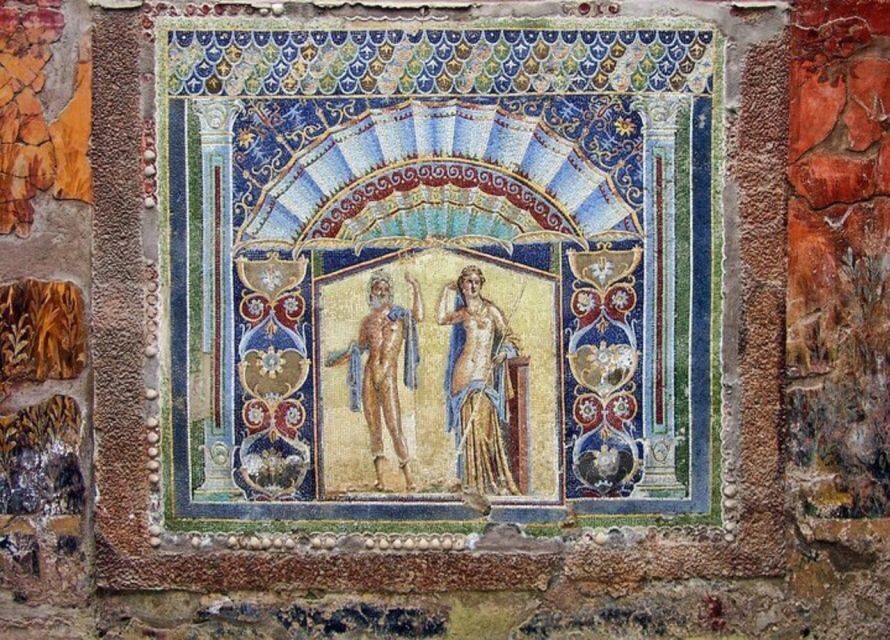
- Casa di Nettuno ed Anfitrite and the Places People Lived, Not Just Looked At
- The House of Skeletons and the Beach Tragedy: What You’re Really Seeing
- Sacellum of The Augustales: A Different Side of Town Life
- Guides Make It Work: Antonio, Luciano, and Paola’s Style
- Price and Value for a Private 2-Hour Herculaneum Tour
- Practicalities That Affect Your Comfort
- Should You Book This Private Walk?
- FAQ
- Where does the tour start?
- How long is the tour?
- Is this a private tour?
- What’s included in the price?
- What’s not included?
- What languages are available for the guide?
- What should I bring?
- Is there anything I can’t bring?
- Is the site accessible for wheelchair users?
- What happens on the first Sunday of the month?
- What’s the cancellation policy?
Key things I’d plan around
- Why Herculaneum preserves wood and art better than neighboring Pompeii, thanks to mud depth and burial conditions
- A licensed archaeologist guide who explains what you’re seeing in plain language (and keeps it fun)
- A hit list of major stops like the Forum, Casa del Salone Nero, and the House of Skeletons
- Built-in context for 79 A.D. so the ruins don’t feel random
- 2 hours of focused viewing that’s best for people who want the highlights without a full-day commitment
Why Herculaneum Feels Different From Pompeii
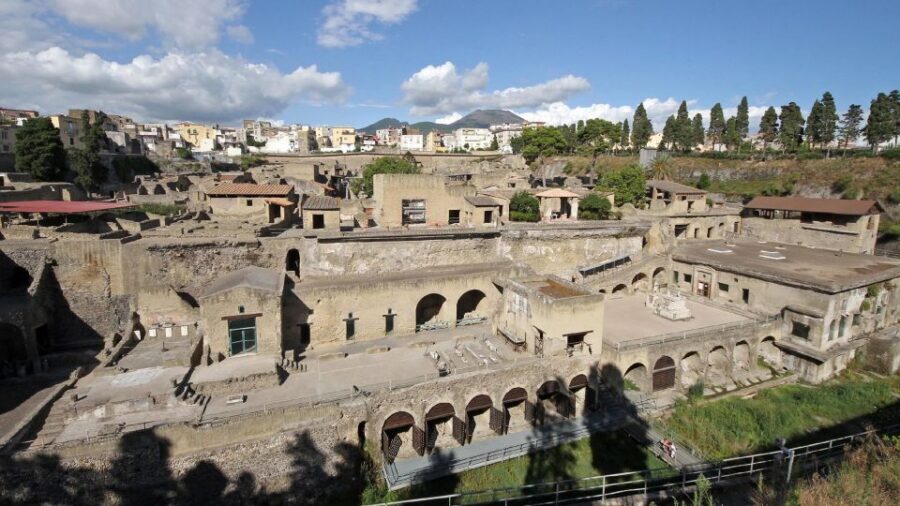
Herculaneum is often described as Pompeii’s sister city, but the experience isn’t the same. The big reason is what happened after Vesuvius erupted in 79 A.D. Pompeii was covered by roughly 4–5 meters of ash. Herculaneum, on the other hand, was buried by an avalanche of mud about 20 meters deep.
That difference matters because it changes what the site kept. Here, you get a stronger sense of Roman private life, not just architecture. In practice, that means the tour route leans into the things people care about: how spaces looked, what people left behind, and which materials held up unusually well—wood, paintings, and mosaics.
If you’ve visited other ruins before and felt like everything was reduced to outlines, Herculaneum is built for a different kind of attention. You’ll be guided to notice details that help you picture the town as a real place.
If you're still narrowing it down, here are other tours in Ercolano we've reviewed.



The Start Point: Parco Archeologico di Ercolano Gets You Oriented Fast
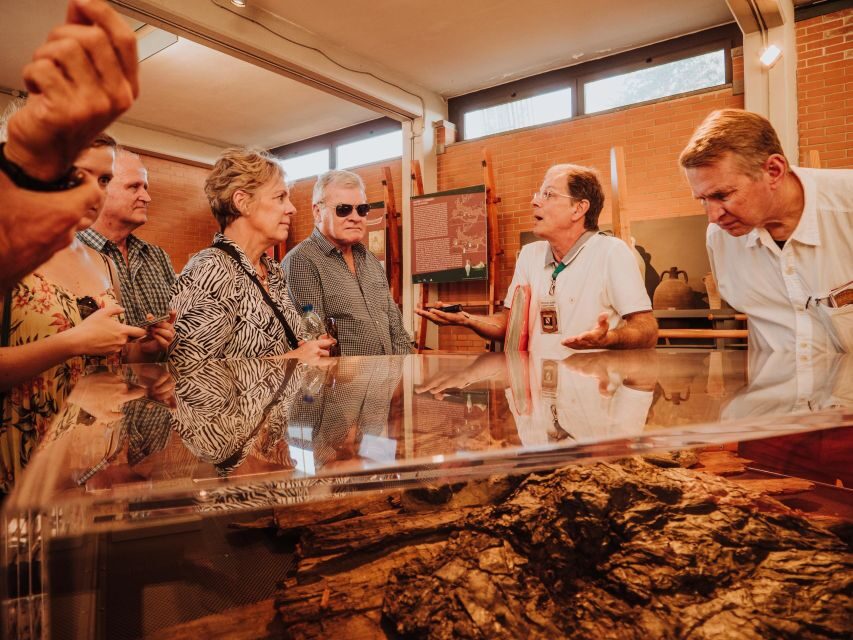
Most of the timing hinges on where you begin, and this tour keeps it simple. You’ll meet at Parco Archeologico di Ercolano, Via dei Papiri Ercolanesi, 21, and your walk ends back at the same general area.
Because it’s a private group, you’re not stuck waiting for a crowd to assemble before anything interesting begins. The guide’s job is to help you get oriented quickly, so you can spend your time on the site instead of scanning a map.
Practical note: you’ll want comfortable shoes. The tour is only two hours, so there’s less time than you’d think to “catch your breath,” especially if you’re visiting during warm weather.
The 2-Hour Route: How the Highlights Build a Story
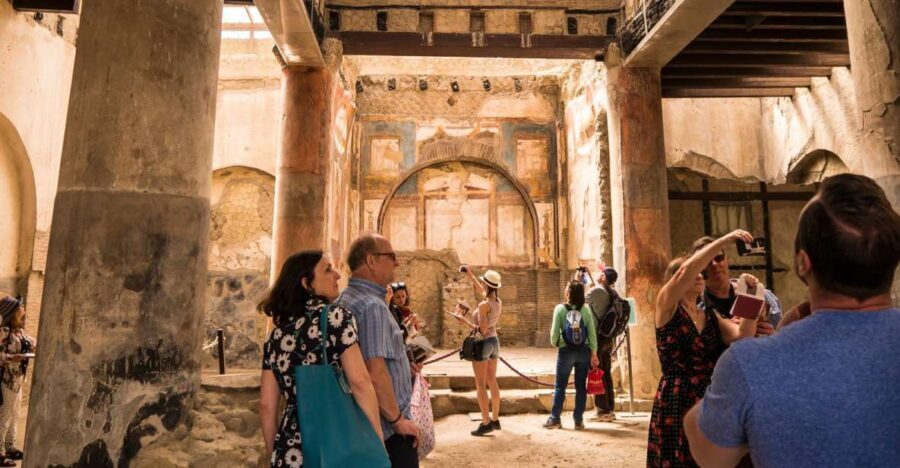
This is not a slow museum stroll. It’s a guided sweep through major parts of Herculaneum, with visits at several key locations. The shape of the tour is meant to create a story: disaster, burial, and then what everyday Roman life looked like in the middle of it.
You’ll move from the central civic area into high-interest houses and then toward the places tied to the tragedy. Along the way, the guide explains what you’re seeing and why it matters, so the ruins stay connected rather than turning into a checklist.
For many people, the sweet spot here is that you leave with a clear sense of the city’s layout and the emotional weight of the eruption—without needing a full day.
Forum and the Town’s Core: Seeing the City’s Layout
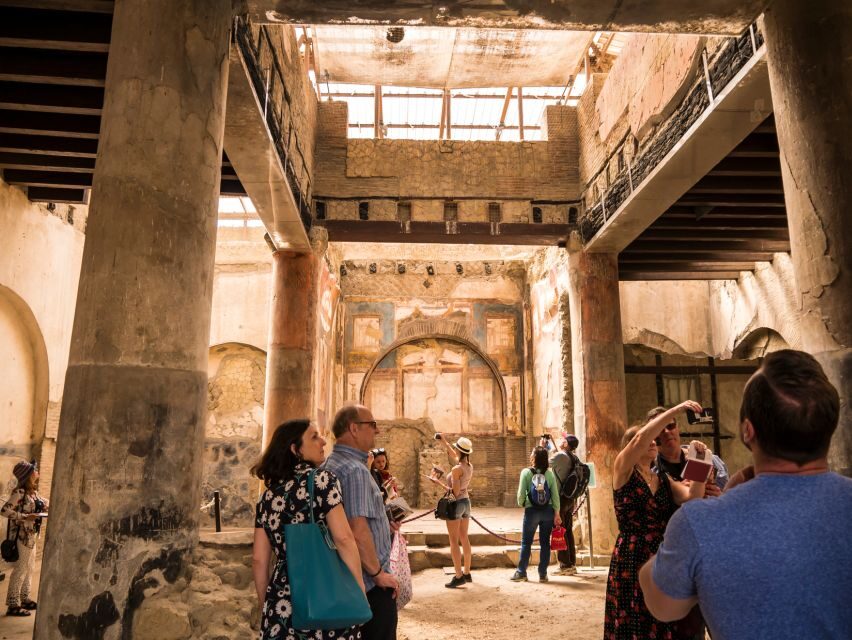
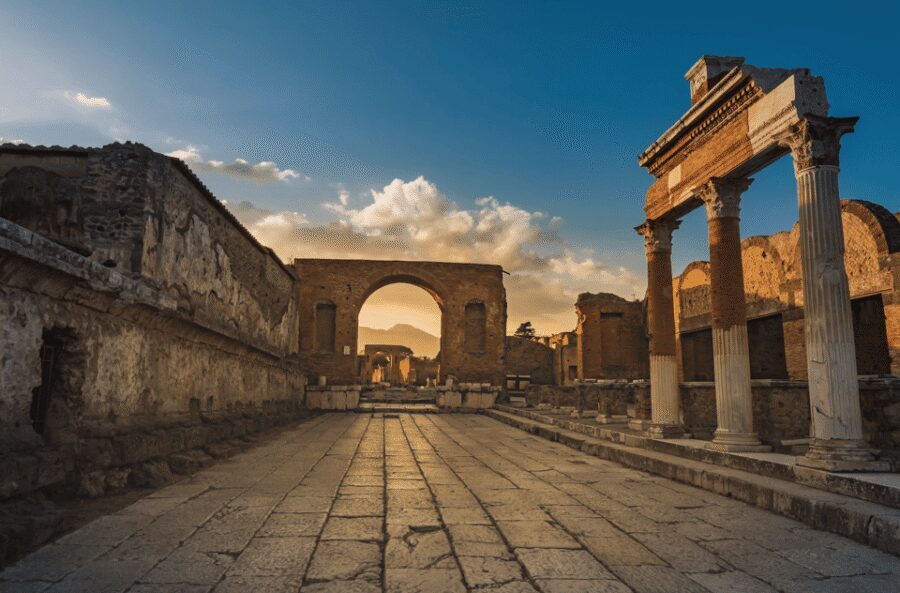
One of the first major stops is the Forum area. This kind of location is where you start to understand a city’s rhythm. Even if you don’t speak Italian, the guide helps you read the space so it doesn’t feel like random stone blocks.
Why the Forum is worth the time on a short tour: it gives you a reference point. After that, houses and neighborhood spaces feel like chapters rather than separate attractions.
This is also where an archaeologist guide adds real value. You don’t just get told what something is—you get helped to connect it to how people would have moved and gathered. That connection is what makes the rest of your two hours click.
Casa del Salone Nero and the Big-Impact Interiors
The route includes Casa del Salone Nero, often highlighted for how striking the interior experience can be. Herculaneum is famous for preservation, and these houses are where that reputation becomes tangible.
Your guide will point you toward the kinds of materials that survived in unusual condition—especially the well-preserved wooden objects, paintings, and mosaics mentioned as tour highlights. Even when you’re standing in a ruin, those details make it feel less like a demolition site and more like a snapshot frozen in time.
This is one of the reasons people love Herculaneum with a guide. Left on your own, it’s easy to focus on big views and miss the smaller art details that explain how Romans lived and decorated their homes.
Other Herculaneum tours and tickets


Thermopolium and Other Everyday Stops You Can Actually Picture
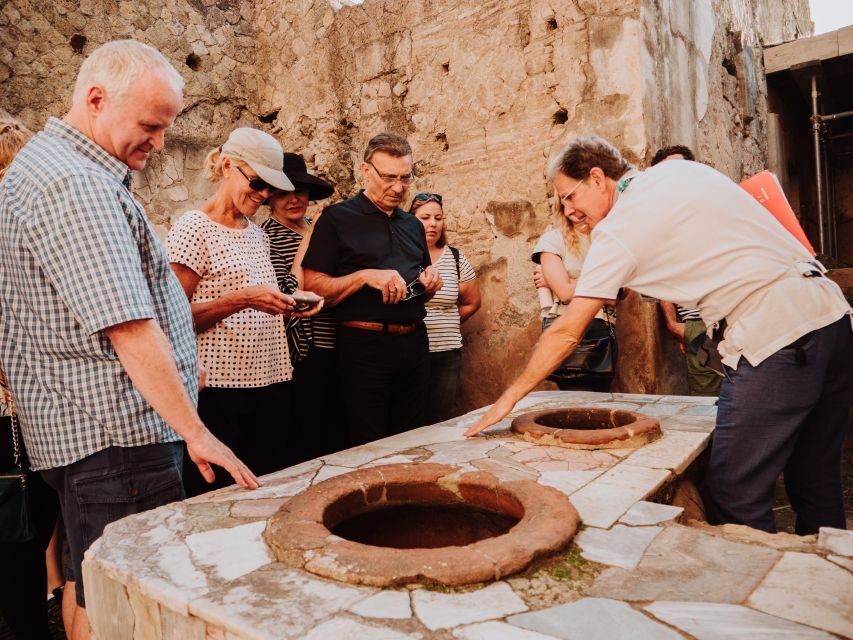
The tour also includes a stop at the Herculaneum Thermopolium. This is exactly the kind of place that benefits from having someone interpret what you’re looking at. Instead of treating the building as an abstract ruin, the guide helps you understand its role in day-to-day life.
You also get additional household visits that add variety. The route includes Casa dell’Albergo and other notable residences, which means you’re not locked into one house style for the entire visit.
This matters because it changes the emotional tone. Houses show private life. Commercial and street-level areas help you imagine movement through the town—who went where, how people used spaces, and how the city worked on an ordinary day before everything changed.
Houses With Character: Wooden Partitions, Terrace Views, and Home Life
The highlights list includes the House of the Wooden Partition and the Terrace of Marcus Nonius Balbus, and the tour route includes multiple additional residences as well. Put simply, you’re getting a range of home experiences, not just one type of “Roman house.”
Why this is a strong use of your two hours: Herculaneum’s preservation makes household layout and decoration easier to grasp. When the guide ties these houses to what you’re seeing—rather than rushing—you start building a mental model of the town.
This is also a good stop sequence for people traveling with teens or older kids. In the tour feedback, guides like Luciano and Antonio are repeatedly praised for making the ruins relatable instead of dry. If you’re hoping for a tour that can keep younger attention, this format tends to work.
Casa di Nettuno ed Anfitrite and the Places People Lived, Not Just Looked At
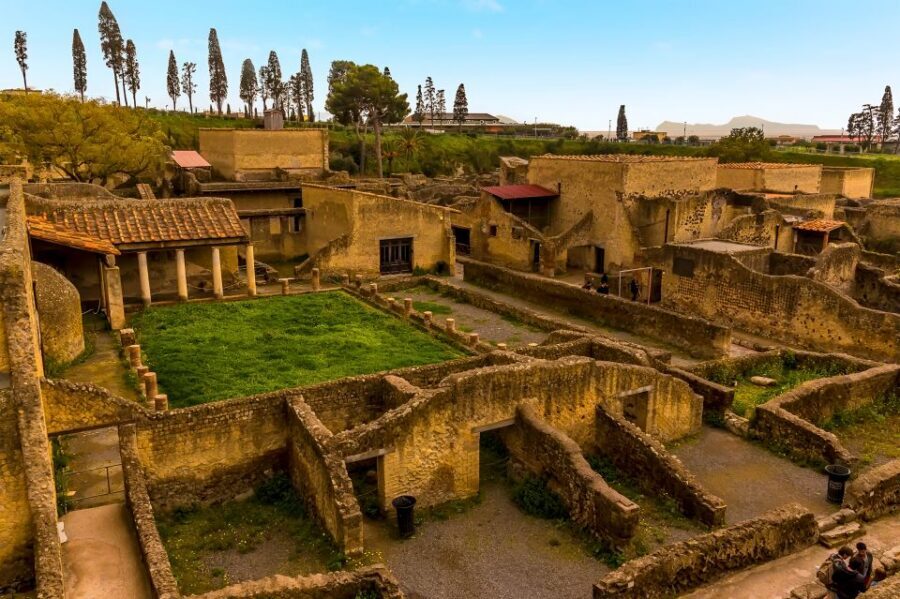
The itinerary includes Casa di Nettuno ed Anfitrite, plus another set of residences that round out the walk. These home stops are where you’ll likely feel the advantage of private guidance the most.
On a short tour, it’s easy to miss what makes one house different from another. A guide helps you compare. You’ll learn what to watch for and how to connect those details to daily life—how rooms might have functioned and what kinds of decoration or furnishings made the space feel personal.
This is where preservation becomes more than a trivia point. When wood and painted surfaces are involved, the experience can shift from sightseeing to “oh wow, someone lived here.”
The House of Skeletons and the Beach Tragedy: What You’re Really Seeing
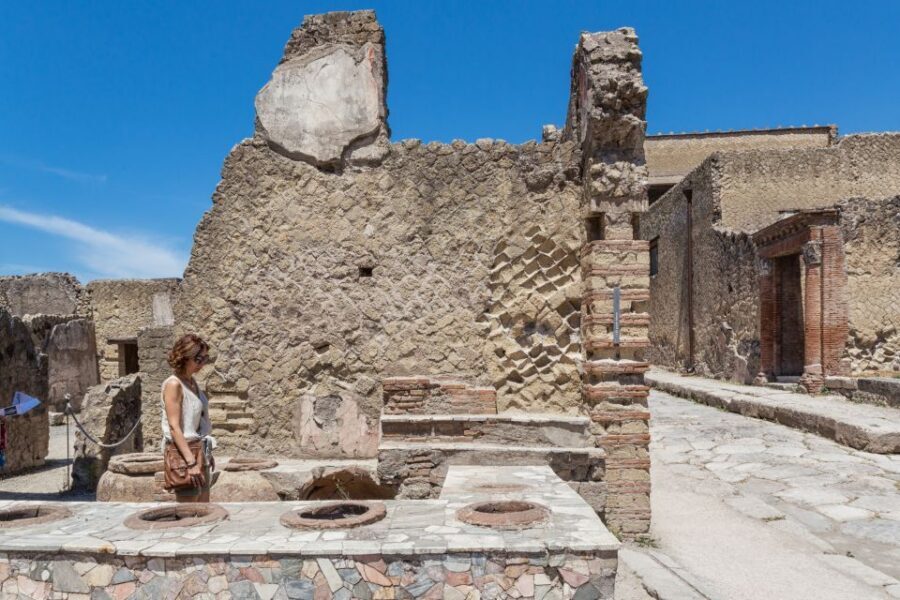
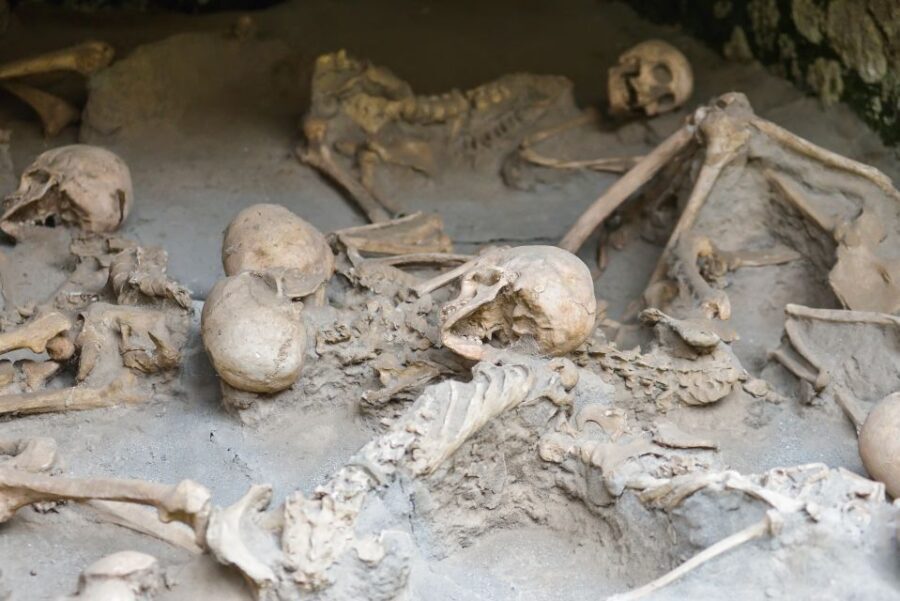
The tour includes the House of Skeletons, and the highlights also point to the beach area where hundreds of victims were discovered. Those stops are where the story becomes unforgettable and heavy.
If you’re worried about the emotional weight, you should know this: the guide’s role here is crucial. You’ll hear what happened when Vesuvius erupted and what the burial conditions meant for the town. The interpretation matters because it turns the grim visuals into a clearer picture of the disaster rather than just shock.
This is also where timing matters. Because you only have two hours, you’ll want to stay present in these sections instead of mentally checking out. The best tours guide you through this with respect and context, so you finish feeling informed—not just overwhelmed.
Sacellum of The Augustales: A Different Side of Town Life
Your route also includes the Sacellum of The Augustales. This stop is helpful because it changes the angle from purely domestic spaces to something more communal and ceremonial.
On a highlight tour, these shifts matter. If every stop is a home, you can end up with the sense that the entire city was only private rooms. This kind of site helps you round out the picture: a town had worship and public identity alongside daily routines.
Even if you’re not a “religion in ruins” person, a short guided visit like this helps you understand the broader structure of how Romans organized themselves.
Guides Make It Work: Antonio, Luciano, and Paola’s Style
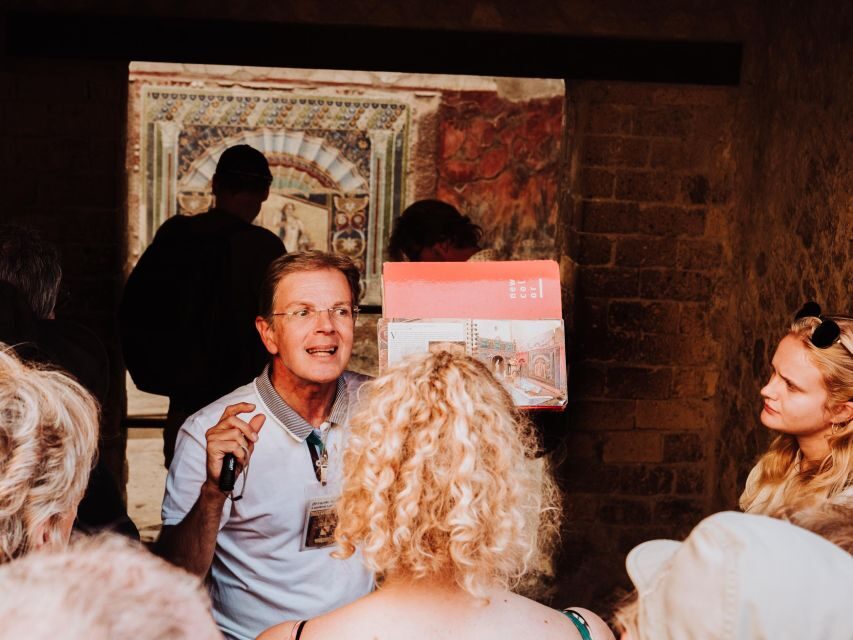
What gets the highest praise isn’t just the access. It’s the human delivery. Guides are described as engaging and fun, with the ability to bring the city to life as you move from stop to stop.
Specific names show up often. Antonio is noted for being thoroughly engaging, and for turning a walk through exhausted feet and big sights into something with humor and energy. Luciano is praised for being amazing and for making the group feel like a little family, plus for being relatable even for teenage kids. Paola is singled out for bringing the site to life while also trying to keep the group out of direct sun.
That last detail is practical, not sentimental. Herculaneum can feel exposed depending on the day, and a guide who actively manages shade helps your comfort without changing the itinerary.
Price and Value for a Private 2-Hour Herculaneum Tour
The price is $317.76 per group (up to 1), for a 2-hour private walk with a licensed archaeologist guide. Entrance is included, listed as 16 euros each, and the tour also includes admission fees and a skip-the-ticket-line experience.
Here’s how I’d think about value, realistically. If you’re booking solo (as the up-to-1 pricing suggests), you’re paying for two things you can’t easily replicate by yourself: expert interpretation and a guided route that keeps the story coherent in limited time. If you tried to DIY Herculaneum, you could still see the major spots, but you’d likely miss the why behind the preservation and why each room matters.
Is it cheap? No. But you’re paying for time efficiency and for guide-led context—especially valuable in a site where materials like wood and painted surfaces are part of the excitement. Two hours can feel short, and that’s exactly why a guided plan can be worth the money.
One more practical value point: since transportation isn’t included, you’ll want to factor in how you’ll get there. The tour itself doesn’t handle that part, so your total day planning needs to be solid.
Practicalities That Affect Your Comfort
A few details can make or break a short tour.
Wear comfortable shoes. You’ll cover several stops. Bring nothing big: oversize luggage isn’t allowed, so keep it light. If you’re traveling with bags, you’ll want a simple carry-on plan.
Language coverage is broad. The live guide can operate in Italian, Spanish, English, Japanese, Russian, French, Portuguese, Chinese, German. If your group has mixed language needs, this matters because it reduces the risk of you being left behind.
Also, there’s one scheduling quirk to remember: on the first Sunday of each month, entrance is free. Tickets can’t be reserved ahead of time, so entry isn’t guaranteed. If your dates land on that day and you want certainty, you’ll be better off planning around it.
Finally, wheelchair information is inconsistent in the provided details. It lists wheelchair accessible, but it also says it’s not suitable for wheelchair users. If that applies to you, confirm directly with the provider before booking so you don’t get surprised on arrival.
Should You Book This Private Walk?
Book this tour if you want a focused, high-impact Herculaneum visit where the guide connects the eruption, the preservation, and the major rooms into one clear story. It’s especially worth it for you if you care about interpretation more than slow wandering, or if you’re traveling with teens who need the ruins explained in a way that stays interesting.
Skip it only if you have a strong preference for long, quiet solo time in ruins or if your schedule demands more flexibility than a tight 2-hour highlight loop. Also, consider whether the private price fits your budget, since the pricing here is per group up to 1 and you may not have the option to share cost with others.
If your goal is to leave Herculaneum with your questions answered—why it looks so intact, what life looked like, and what happened in 79 A.D.—this is a strong way to do it.
FAQ
Where does the tour start?
It starts at a meeting point that may vary by option booked, with one common option being Parco Archeologico di Ercolano, Via dei Papiri Ercolanesi, 21.
How long is the tour?
The tour lasts 2 hours. Starting times depend on availability.
Is this a private tour?
Yes. It’s a private group experience.
What’s included in the price?
You get a licensed archaeologist guide, admission fees to Herculaneum (16.00 euros each), and the ability to skip the ticket line.
What’s not included?
Transportation is not included.
What languages are available for the guide?
The guide can work in Italian, Spanish, English, Japanese, Russian, French, Portuguese, Chinese, and German.
What should I bring?
Wear comfortable shoes.
Is there anything I can’t bring?
Oversize luggage isn’t allowed.
Is the site accessible for wheelchair users?
The details provided list wheelchair accessible, but they also state it is not suitable for wheelchair users. If this matters for you, confirm with the provider before booking.
What happens on the first Sunday of the month?
Entrance is free on the first Sunday of each month, but because tickets can’t be reserved ahead of time, entry is not guaranteed.
What’s the cancellation policy?
You can cancel up to 24 hours in advance for a full refund.