REVIEW · SORRENTO
Pompeii, Herculaneum and Winery on Vesuvius with an Archaeologist
Book on Viator →Operated by Fabrizio Belleni - Leisure Italy Private Guide · Bookable on Viator
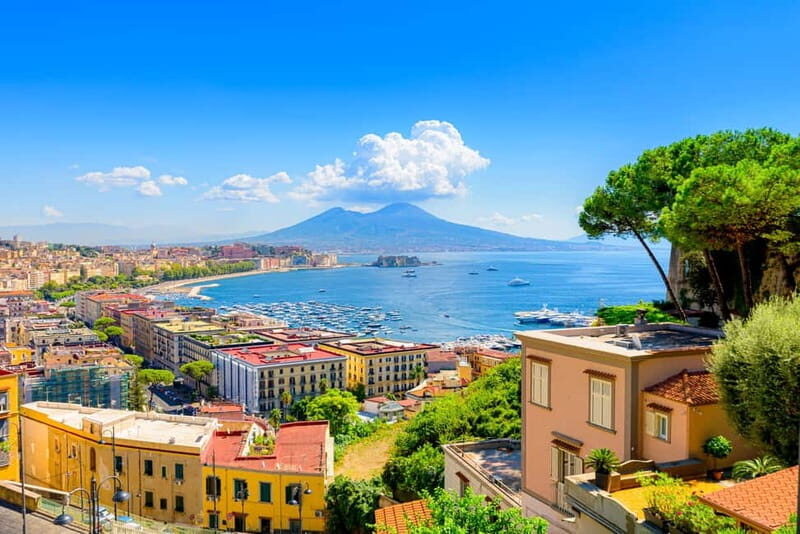
Two Roman cities and Vesuvius wine in one day. This private trip from Naples or Sorrento pairs an archaeologist guide, Fabrizio Bellini, with a winery lunch inside Vesuvius National Park, so you get both the ruins and the real-world setting they came from. I like that the route stays flexible and he can steer you around crushes when possible, and I also like that it’s designed for different ages and walking levels.
The big win is the way the day feels personalized: you’re not stuck with a rigid script, and your group can move at a pace that makes sense. One consideration: admission fees for Pompeii and Herculaneum (and lunch/wine at the winery) are separate, and the tour does not go up to the top of Mount Vesuvius.
In This Review
- Key moments to look for
- Pompeii and Herculaneum, with a Winery in Vesuvius Park
- Setting Out Through Piazza Porta Marina
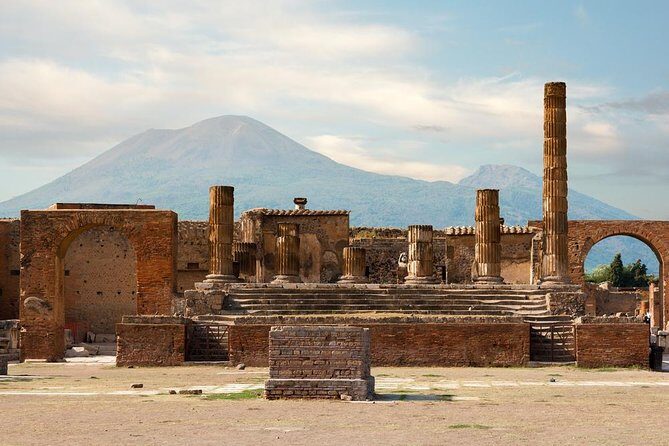
- Temple of Apollo and the Forum at Human Scale
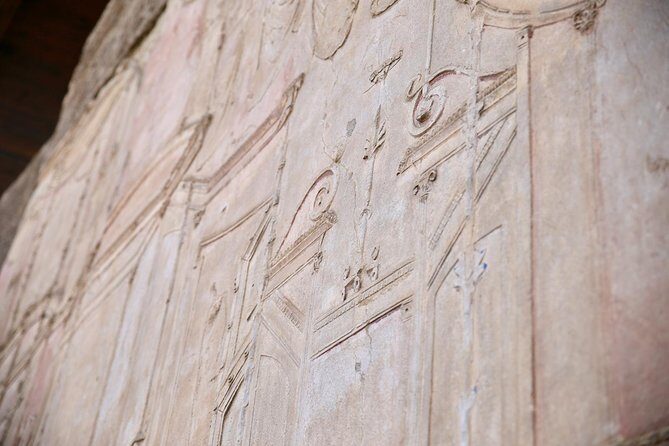
- Casa dei Vettii: Fourth-Style Frescoes After the Restoration
- A Modern View Over Pompeii: Insula dei Casti Amanti
- Teatro Grande: Ancient Theater with Real Acoustics
- Antiquarium di Pompei: Plaster Casts That Hit Hard
- Getting to Herculaneum: Why the Morning Matters
- Antiquarium di Ercolano: Organic Finds You Won’t Forget
- Boat Pavilion and the Ancient Shoreline Story
- Houses in Herculaneum: Neptune, Amphitrite, and Stags
- Casa dei Cervi (House of the Stags)
- Casa di Nettuno e Anfitrite (House of Neptune and Amphitrite)
- Women’s Baths, the Gym, and a Roman Day Off (Sort Of)
- A Roman Wine Sign, Because Yes, People Promoted Stuff
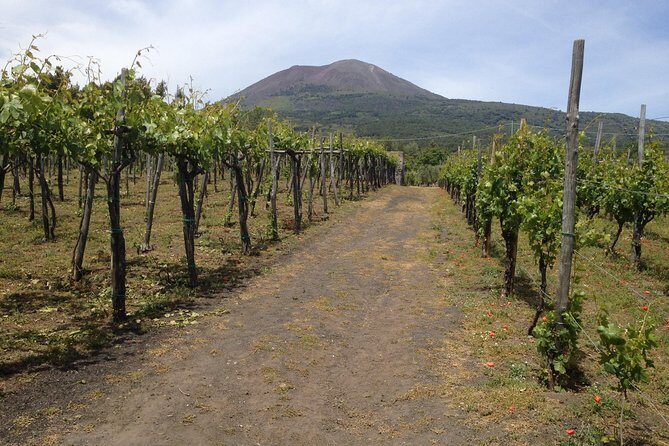
- Cantina del Vesuvio: Lunch and Wine Tasting with Volcano Views
- Price and Value: What You’re Really Paying For
- Who This Tour Fits Best (And Who Might Want a Different Plan)
- Should You Book This Pompeii, Herculaneum, and Winery Day?
- FAQ
- Where does pickup happen for this tour?
- How long is the experience?
- Is this a private tour?
- What’s included in the tour price?
- Are Pompeii and Herculaneum admission tickets included?
- What about lunch and wine on Vesuvius?
- Does the tour reach the top of Mount Vesuvius?
- What language is the tour in?
- Can I cancel and get a full refund?
Key moments to look for
- Pompeii guided from the Forum to the fresco houses with a pace that avoids the worst crowds
- Herculaneum’s organic finds at the Antiquarium di Ercolano, including carbonized wood and textiles
- Shoreline tragedy at the ancient beach and the Boat Pavilion display tied to the 79 AD eruption
- A Vesuvius National Park winery lunch with a vineyard walk and wine tasting
- Family-friendly attention in both cities, including kid Q and A during key stops
Pompeii and Herculaneum, with a Winery in Vesuvius Park
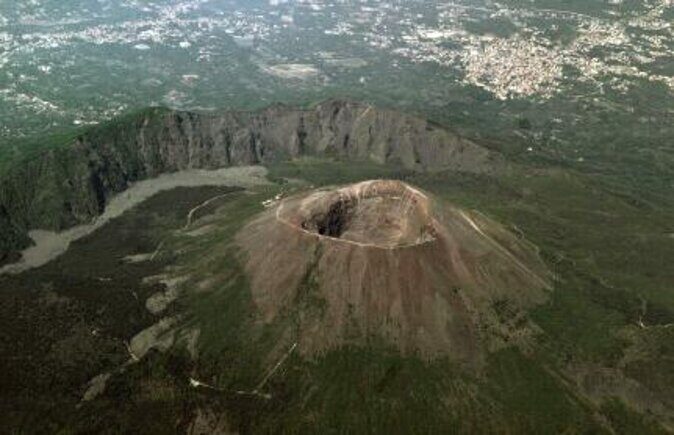
This is a full day that uses your time well. You start with Pompeii’s grand public heart, shift to Herculaneum’s tight, well-preserved streets and houses, then end with lunch and wine near the volcano.
I like that the tour is private for up to 7 people. You get an air-conditioned vehicle, plus water and Wi-Fi onboard, which matters in southern Italy heat. And because you’re with Fabrizio—an archaeologist who’s guided Pompeii for decades—you’re not just reading signs. You’re getting the why behind what you see.
One more practical plus: you can often adjust the order of the day. If you want Herculaneum first for quieter walking, that can work well, then Pompeii in the afternoon when crowds rise.
If you're still narrowing it down, here are other tours in Sorrento we've reviewed.
Setting Out Through Piazza Porta Marina
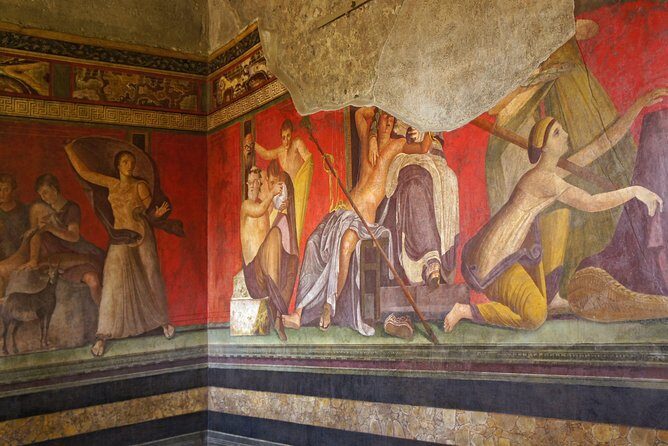
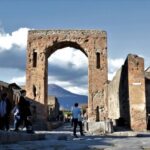
Pompeii starts before you even reach the ruins. The tour begins at Piazza Porta Marina, which works like a bridge between modern street level and ancient city walls.
Here you pass the Porta Marina gate area and get an immediate sense of where visitors enter the archaeological park today and where Romans entered 2,000 years ago. It’s a good warm-up stop because it gives you bearings fast, then you start up Via Marina toward the Forum zone.
It’s also a smart choice for families. With little legs, you want short, clear points of interest early, before the longer walking begins.
Temple of Apollo and the Forum at Human Scale
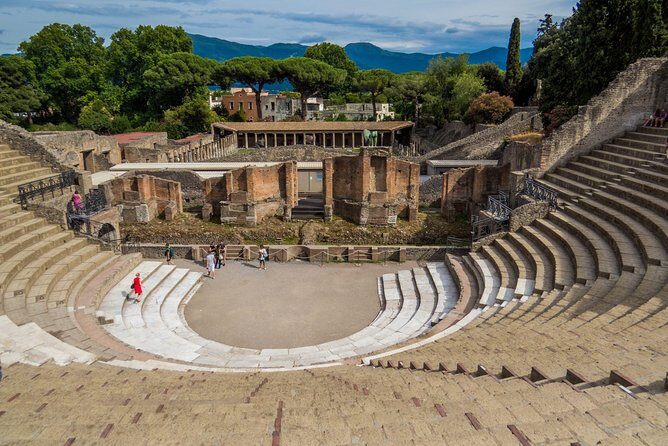
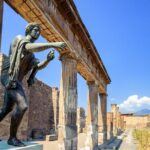
The Temple of Apollo sits right at the edge of the Forum. Even if you only know the basics of Roman religion, this is where it gets concrete: you can trace how worship changed from earlier Greek roots into Roman practice.
This stop includes open-air viewing of major temple remains, plus bronze replicas you can look at without needing a museum pass. You’ll also see an original sundial column—small, yes, but it tells a big story about daily timekeeping and ritual space.
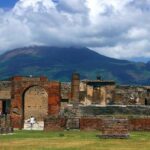
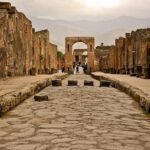
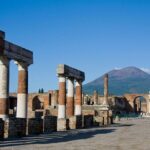
Then you step into the Forum of Pompeii. This is the city’s political, religious, and commercial hub, and it’s huge. You walk across the original travertine paving stones and look toward big anchors like the Temple of Jupiter and the Basilica, with Mount Vesuvius in the background.
Tip: if you’re visiting in peak season, you’ll appreciate the guide’s crowd-management. The goal is not just to cover stops. It’s to make each stop readable, even when the site is busy.
Casa dei Vettii: Fourth-Style Frescoes After the Restoration
One of Pompeii’s top house visits is the Casa dei Vettii. This home belonged to two wealthy former slaves, and that fact alone adds spice to the story. You’re not seeing a palace for royalty. You’re seeing elite status built by people who made it.
The big draw is the fresco program—often described as Pompeii’s version of a ceiling-worthy showpiece. The tour highlights the vivid Fourth Style paintings and the entrance painting connected to Priapus.
You’ll also spend time in the peristyle garden, which helps you understand how Romans used outdoor space as part of daily life. For many people, this is the moment when Pompeii stops feeling like a list of ruins and starts feeling like home design.
A Modern View Over Pompeii: Insula dei Casti Amanti
If you like archaeology that still feels alive, Insula dei Casti Amanti is a standout. This area is tied to a reopening that made it much easier to see an entire excavation block.
The key difference is the elevated walkways. From up above, you can look down into a full city block—homes, street activity, and even a bakery area—while the site continues to be studied.
This stop also gives you details you won’t get from photos. You’ll see the fresco linked to the house name, plus charcoal sketches of gladiators drawn by children nearly 2,000 years ago. That last point is the one that sticks for most families: it’s kids leaving marks on history.
Other Pompeii + Herculaneum tours
Teatro Grande: Ancient Theater with Real Acoustics
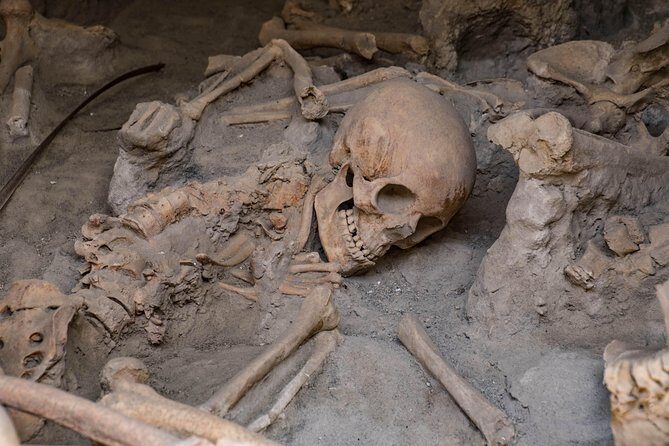
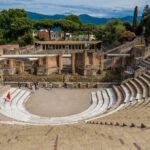
Next comes Teatro Grande. This is an early stone theater, dating to the 2nd century BC, and it’s built around Roman social life—who sat where, and how rules showed up in seating.
The horseshoe shape and the tiered arrangement help you picture how performances worked. You also get the famous acoustics. People often imagine that ruins can’t feel special, but acoustics is one of the ways this site proves them wrong.
If you like atmosphere, try to take a moment just to listen and look out toward the hills and Vesuvius silhouette.
Antiquarium di Pompei: Plaster Casts That Hit Hard
Pompeii’s open-air ruins are dramatic, but the Antiquarium di Pompei gives the day its emotional gear shift.
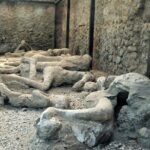
This museum focuses on fragile treasures and includes a gallery of plaster casts. You’ll see the final moments of victims preserved through casting, including details like a faithful guard dog. It’s not fun like a theme park. It’s human, and it helps your brain connect the eruption story to real bodies, not just “the event.”
If you visit with kids, it can feel heavy. A good guide can choose the pacing so it doesn’t overwhelm you. Having Fabrizio means you get context in smaller bites, not dumped on all at once.
Getting to Herculaneum: Why the Morning Matters
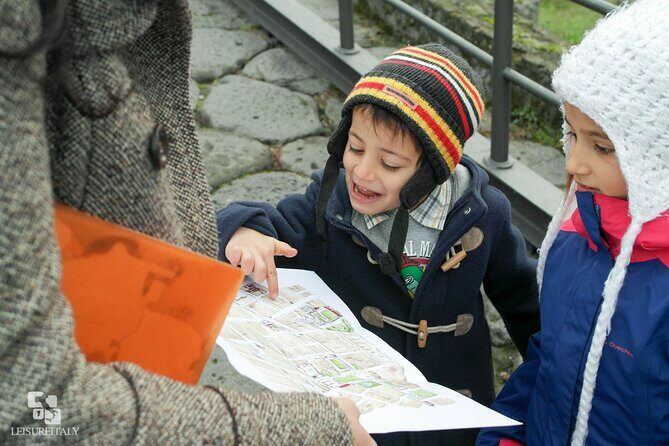
After Pompeii, you shift to Herculaneum. Many tours try to do both cities, but not all of them respect what Herculaneum is: a tighter, more layered experience where preservation is the whole point.
The morning timing often feels better. When you start earlier, you’re more likely to walk with fewer people around, so the houses and mosaics stay visually calm.
Fabrizio also designs the Herculaneum route around what you care about, keeping your group from repeating bits you just saw in Pompeii.
Antiquarium di Ercolano: Organic Finds You Won’t Forget
The Antiquarium di Herculaneum is small compared with Pompeii’s museum experience, but it’s powerful. It houses delicate items that include organic materials—things that usually don’t survive.
Here you can see carbonized wooden furniture and textiles, plus statues and frescoes rescued from volcanic mud. There’s also the Herculaneum Treasure, found at the ancient shoreline, which helps you understand the wealth and the panic all at once.
This stop is more than a warm-up. It’s the key that turns the ruins from pretty into meaningful.
Boat Pavilion and the Ancient Shoreline Story
Herculaneum is famous for what the eruption preserved. The Boat Pavilion takes that idea and makes it specific.
You’ll see the carbonized keel of a 9-meter-long boat. That matters because it gives a physical sense of transport and possible evacuation attempts. You can also look at smaller items like fishing weights, nets, and a carbonized rope—evidence of how people lived, worked, and moved through the water.
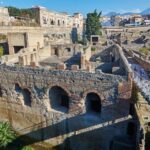
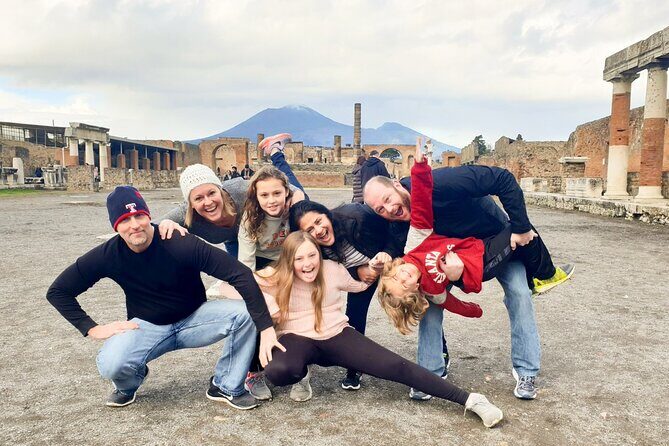
Then you walk to the ancient beach area. This reopened after restoration in 2024, and it’s one of the most haunting parts of the whole day. You stand on the original volcanic sand and look up at the arches of fornici—boat sheds—where skeletal remains of over 300 residents were found together.
Practical note: it’s emotionally intense. If your group has kids or anyone sensitive to heavy topics, you can ask your guide to keep that part paced.
Houses in Herculaneum: Neptune, Amphitrite, and Stags
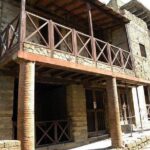
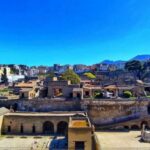
Herculaneum’s villas feel like a different kind of city compared with Pompeii. The buildings are more “intimate,” and the preservation makes details crisp.
Casa dei Cervi (House of the Stags)
This villa centers on its garden and views. The layout is described as inverted, with a panoramic terrace meant to catch sea breezes. The house name comes from world-famous marble statues of stags attacked by hounds found in the garden.
Casa di Nettuno e Anfitrite (House of Neptune and Amphitrite)
This is the mosaic lover’s stop. It includes a vivid mural-like wall mosaic featuring gods in shimmering gold and blue glass paste.
It also connects you to everyday life through an attached shop that’s often cited as one of the best-preserved grocery stores from antiquity. You can see original wooden shelves and carbonized storage bins, which makes the story of commerce feel immediate rather than abstract.
Women’s Baths, the Gym, and a Roman Day Off (Sort Of)
The Women’s Baths in Herculaneum, or Terme Femminili, are a standout because the structure and details feel unusually complete. You’ll notice the black-and-white floor mosaic in the changing room area, plus surviving stucco decorations and even wooden shelving tied to storage.
Then you step into social time, not just private home life. Moving to the Palestra (gymnasium) shows Roman civic pride and physical culture.
The Palestra includes a big natatio swimming pool and an impressive fountain shaped like a five-headed hydra. It’s the kind of visual detail you don’t fully appreciate from photos because it has weight in person. You’ll also get examples like a carbonized wooden statue tied to a local benefactor, which again underlines how unique the preservation conditions are here.
A Roman Wine Sign, Because Yes, People Promoted Stuff
One of the smaller stops is the Ad Cucumas ancient wine advertisement. It’s brief, but it adds a nice realism: Roman businesses advertised too.
When you’ve spent hours in houses and public buildings, it helps to see that marketing existed in daily life, not just politics and temples.
Cantina del Vesuvio: Lunch and Wine Tasting with Volcano Views
Now the day shifts from ruins to real food and wine. The winery stop is at Cantina del Vesuvio, a Russo family operation since 1930, located inside Mt. Vesuvius National Park.
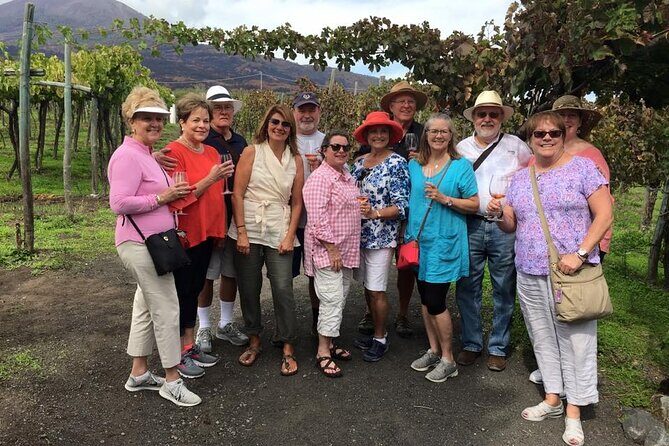
You start with a guided stroll through vineyards—about 15 minutes—so you understand what you’re drinking before tasting. Then you get lunch plus wine tasting with 5 local wines.
This is an all-inclusive-style meal package. Expect appetizers like bruschetta, cheeses, and cured meats, plus spaghetti with Vesuvius cherry tomatoes and meatballs. Dessert is traditional Neapolitan Pastiera, with vegetarian and gluten-free options available.
Wine focus: you’ll hear about Lacryma Christi, which is tied to the region’s famous Vesuvius wines. If you want a practical souvenir, the winery visit includes the option to ship wines and olive oil home.
One key note: this tour includes the winery time, but it does not take you to the top of Mount Vesuvius crater. You get volcano views from the park setting, not a summit hike.
Price and Value: What You’re Really Paying For
The tour price is $861.07 per group (up to 7) for about 8 to 9 hours. That’s the private-vehicle + archaeologist-guided structure you’re paying for.
If you fill the group, the base cost can work out well for a family or mixed-age crew compared with booking separate tickets and separate guides for Pompeii and Herculaneum. You’re also not losing time to navigation or long lines because the flow is managed for your group.
Two costs to plan for on top:
- Admission fees for both archaeological sites are about €40 per adult (kids under 18 with valid ID are free)
- The winery wine experience including lunch is about €50 per person, with a superior wine upgrade option for about €60
Also remember: admission and winery lunch are not included in the base tour price. The upside is you can decide what matters most—some people prefer the winery package, others may shorten that part to protect time for Pompeii.
Who This Tour Fits Best (And Who Might Want a Different Plan)
This is a great fit for:
- Families with kids who need structure and fun questions, not just long walks
- Adults who want more than a brochure explanation and like human details
- Anyone who values comfort, since you get an air-conditioned vehicle plus water onboard
It’s also good if you hate crowds. The plan is built to keep away from them as much as possible, and Fabrizio can adjust the order and pace so the day doesn’t feel like a race.
Consider it less ideal if:
- You’re expecting the classic Vesuvius crater-top viewpoint
- You want only light, low-walking sightseeing with zero museum time
Physical note: you should have moderate fitness. Pompeii’s stones are uneven, and there’s a lot of walking. The guide can help with pacing, but it’s still real sightseeing.
Should You Book This Pompeii, Herculaneum, and Winery Day?
If you want one guide to connect Pompeii’s Forum life to Herculaneum’s preserved villas, then reward the effort with a winery lunch that actually tastes like the region, I’d say yes. The biggest reason is the combination: strong archaeology storytelling plus a real break for food and wine.
I’d book this especially if your group includes kids, mixed interests, or anyone who appreciates flexibility. The day is designed to shift with your energy level, not trap you in a fixed schedule.
On the other hand, if you’re on a tight budget for extras, or you’re chasing a crater summit, you may want a different plan. For most people visiting from Naples or Sorrento, this is one of the cleaner, value-forward ways to do both cities in a single day.
FAQ
Where does pickup happen for this tour?
Pickup is offered anywhere in the Naples or Sorrento area. If you’re staying on the Amalfi Coast, you’ll need to contact the provider.
How long is the experience?
The day runs about 8 to 9 hours.
Is this a private tour?
Yes. It’s private, and only your group participates.
What’s included in the tour price?
The price includes an air-conditioned vehicle, water and Wi-Fi onboard, and private guided tours in both Pompeii and Herculaneum, plus private transportation.
Are Pompeii and Herculaneum admission tickets included?
No. Admission fees are not included and are approximately €40 per adult for both sites. Under 18 can be free with valid ID.
What about lunch and wine on Vesuvius?
Lunch and the winery wine tasting experience are not included in the base price. It’s approximately €50 per person all inclusive, or €60 for a superior wine upgrade.
Does the tour reach the top of Mount Vesuvius?
No. The tour does not reach the top of Mount Vesuvius.
What language is the tour in?
The tour is offered in English.
Can I cancel and get a full refund?
Yes. Free cancellation is available up to 24 hours in advance for a full refund. If you cancel less than 24 hours before the start time, you won’t get a refund.