REVIEW · NAPLES
Herculaneum – Small Group Tour
Book on Viator →Operated by Pompeiify · Bookable on Viator
Herculaneum hits fast and hard. This small-group tour in Ercolano is designed to show you the most important ruins in about two hours, with a licensed guide explaining what you’re actually looking at.
What I like most is the chance for real questions with a guide, not just a quick walk-through, and the route stays focused on the places that make Herculaneum feel like a lived-in city.
One consideration: the site has long stretches with little to no shade, so plan for heat and sun.
I also appreciate that the tour is built around understanding, not just sightseeing. Guides such as Francesco (often mentioned by name), Marco, Roberta, Marzia, and Antonella are praised for making the eruption and daily life click into place for people of different ages and interests.
Finally, you need to be ready for the practical side: the admission ticket isn’t included, and you’ll still be walking outdoors for the full 2-hour experience.
In This Review
- Key highlights you’ll care about
- Why Herculaneum feels different from Pompeii
- The 2-hour route that still feels like a full city
- Private houses worth the focus (and what to look for)
- Roman shops, baths, and the rhythm of daily life
- The main street and public buildings stop you from missing the big picture
- The beach and the wooden boat story
- What the guide adds (and why the best ones get mentioned)
- Small-group size and timing: why 15 people makes a difference
- Price and value: what $50.81 gets you
- Practical tips so the sun and heat don’t steal your experience
- Should you book this tour? A clear decision guide
- FAQ
- How long is the Herculaneum small-group tour?
- Is the admission ticket included in the price?
- What’s the group size for this tour?
- Does the tour offer an English guide?
- What will we see during the visit?
- Are there morning and afternoon tour times?
- Do I need to bring a paper ticket?
- Is the meeting point easy to reach with public transportation?
- What happens if the minimum number of travelers isn’t met?
- Is free cancellation available?
Key highlights you’ll care about
- Small group size (up to 15) for questions and easier pacing
- Licensed guide from Regione Campania leading the visit in English
- Private houses + public spaces in one tight 2-hour circuit
- Seafront details including the beach area and a preserved wooden boat
- No signage dependence if you want to understand buildings and street life
- Morning or afternoon timing so you can fit it into a Naples day
Why Herculaneum feels different from Pompeii
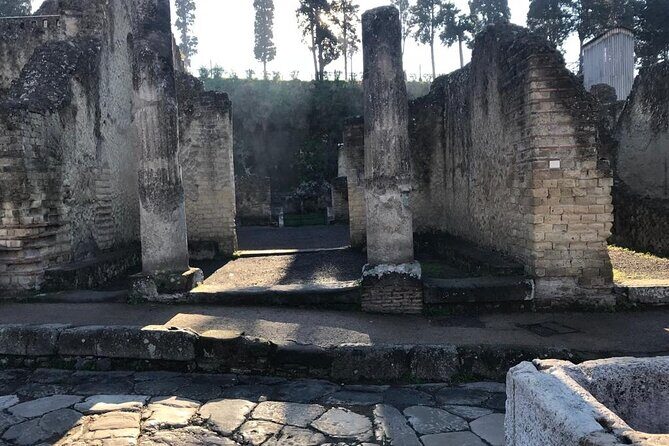
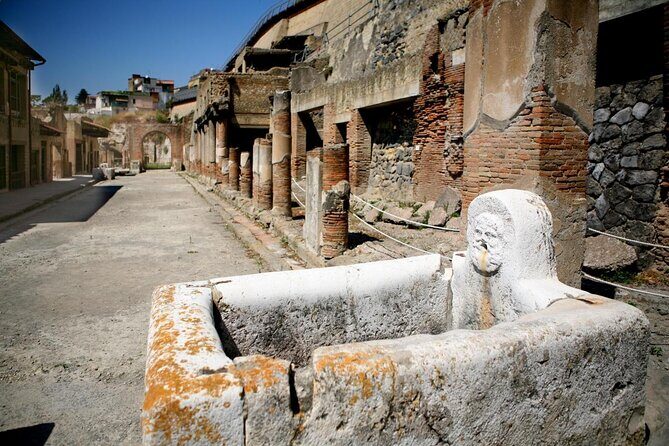
Herculaneum is smaller than Pompeii, which is exactly why a short guided tour works so well here. You see the town as a complete place, not a blur of buildings. The ruins are also famously well preserved, so details you’d normally miss in a ruin become part of the story.
What I find especially useful is how the guide frames the eruption’s impact, then connects it to what you’re seeing on the ground. That turns a pile of stone into a timeline: life before 79 AD, then the sudden change that shaped everything that followed.
If you already plan to visit Pompeii, this tour helps you compare the two places fast. Herculaneum makes the everyday feel closer—more human scale, fewer crowds, and clearer contrasts in how the disaster played out.
Other Herculaneum tours and tickets

The 2-hour route that still feels like a full city
This tour is timed to cover the site’s most important highlights without dragging you into a half-day. In practice, that means you’re moving through major private houses, then into public baths and civic buildings, then finishing with the seafront story. It’s the kind of structure that helps your brain build a map.
Many guests note that the tour stays close to the scheduled length—about two hours—and starts on time. That matters because Herculaneum is one of those sites where good pacing keeps you from getting tired too fast, especially in warmer months.
The other big benefit of the short format: once the guided portion ends, you can wander the remaining areas at your own speed. A few people specifically mention coming back for extra time after the tour.
Private houses worth the focus (and what to look for)
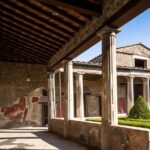
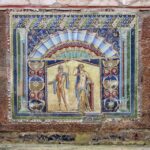
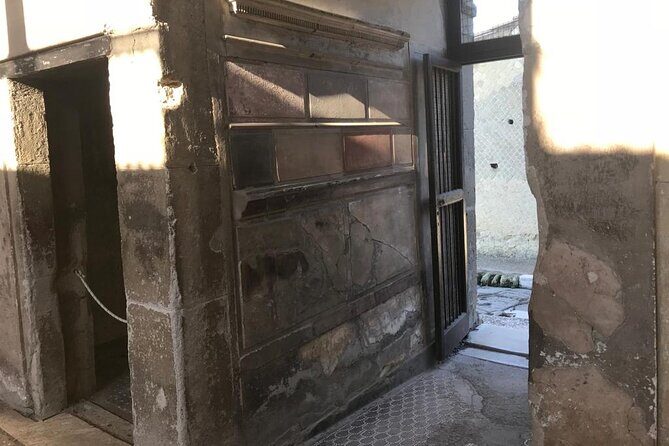
The centerpiece of the visit is the set of prominent residences. You’ll see private homes such as the House of the Deer, the House of the Wooden Partition, House of Neptune and Amphitrite, and the House of the Bicentenary.
These names aren’t just trivia. They point you toward what the houses show: how rooms were organized, how daily life worked, and how wealth and routine mixed in the same space. If you’ve ever walked past Roman ruins and thought, I don’t know what I’m looking at, this part fixes that.
One practical point: a reviewer noted that there aren’t lots of building explanations on-site. So the guide becomes your translation device. When your guide is strong, you’ll walk away understanding the difference between a decorative element and a clue about how people lived.
Roman shops, baths, and the rhythm of daily life
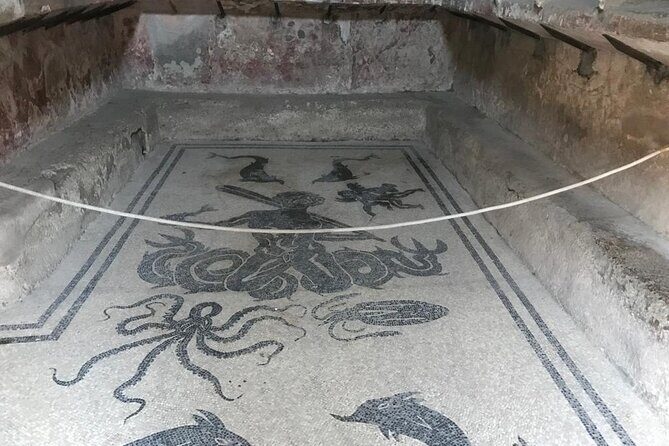
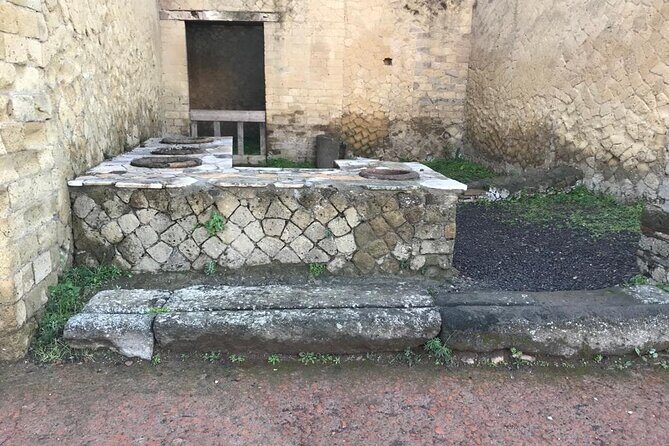
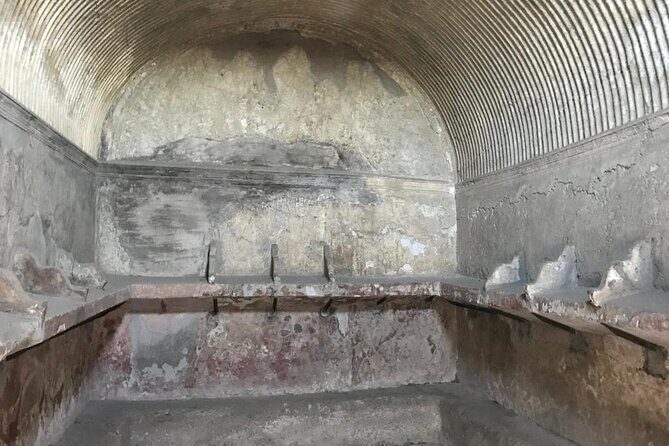
After the houses, the tour shifts to the commercial and public-life side of town. You’ll pass typical Roman shops, then move through the public baths and the main street area.
This is where the “city feel” kicks in. Houses show status and domestic life, but shops and baths show routine—where people spent time, how they moved through town, and what public spaces meant. Even if you don’t read Latin or history texts, you’ll start recognizing the patterns behind Roman urban life.
And because the tour is small-group, you can ask questions like: Why would this space be here? What does this layout suggest? Can you explain what the eruption did to this part of town? People have singled out guides such as Francesco for answering questions clearly and without turning the tour into a lecture.
The main street and public buildings stop you from missing the big picture
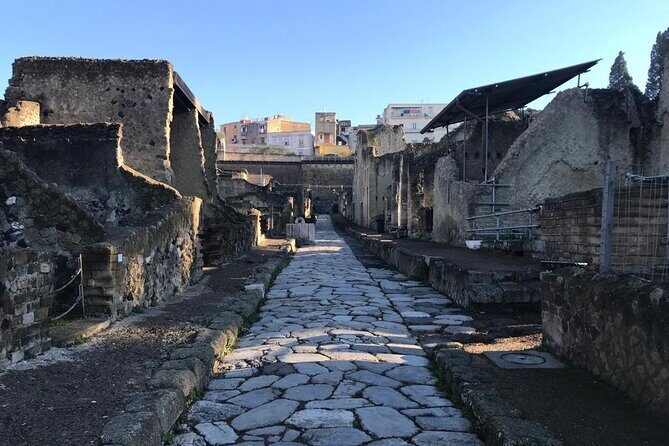
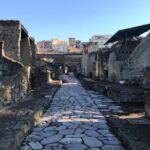
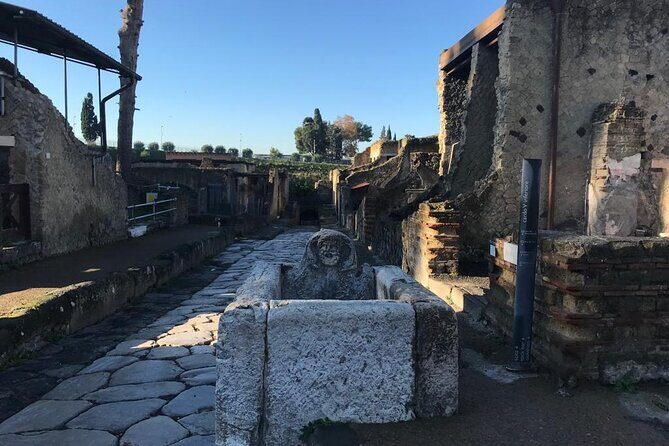
The tour doesn’t just skim the pretty parts. You’ll also see the most significant public buildings and the main street—the roads and civic spaces that organize how a Roman town actually functions.
That matters because visitors sometimes get stuck in a house-by-house mindset. But towns run on streets, services, and public gathering. Seeing those civic pieces in sequence helps your mental map click into place by the time you reach the seafront.
If you like architecture and layout more than artifacts, this portion is a sweet spot. You get the structure of the city, not just the highlights.
Other small-group Pompeii tours

The beach and the wooden boat story
The stop that people remember is the ancient beach area: the seafront buildings with skeletons, plus a wooden boat found on the beach and still described as well preserved.
This part isn’t just dramatic for photos. It changes how you think about the eruption’s impact because you’re standing where the disaster’s aftermath played out in a coastal setting. The guide’s explanation helps you connect buildings, the shore environment, and the tragedy into one coherent story.
It’s also an emotional moment, and it’s one reason many visitors say Herculaneum can feel more intense than Pompeii despite the smaller scale.
What the guide adds (and why the best ones get mentioned)
This tour lives or dies on the guide. And across the feedback, the recurring theme is guides who can explain complex ruins without drowning you in facts. Names that come up again and again include Francesco and Marco, along with guides like Roberta, Marzia, and Antonella.
A few details matter for your comfort and understanding:
- Some guides appear to tour without a microphone, so you’ll want to stay where you can hear clearly.
- Guides are praised for keeping the pace steady and answering questions well.
- Many explanations focus on how Herculaneum worked day to day, not just what survived.
If you prefer a conversation-style visit, this fits. Small-group format plus a well-trained guide means you can ask follow-ups when something catches your eye.
Small-group size and timing: why 15 people makes a difference
A max group size of 15 is a big deal at Herculaneum. It’s not just about comfort. Smaller groups move more smoothly, and it’s easier to stop at a specific building or detail without losing the line of sight on the guide.
People also mention that their tours ran exactly or very close to the expected two hours. That’s helpful if you’ve got a train connection or you’re planning a tight Naples day.
You can choose morning or afternoon, which is great if you’re pairing this with Pompeii, a cruise day, or another Naples activity. Just remember: the heat is real, especially later in the day.
Price and value: what $50.81 gets you
At about $50.81 per person for roughly two hours, the value is mainly in the guide and the efficiency of the route. You’re paying for someone licensed by Regione Campania to translate a complex site into something you can actually understand in a short visit.
Admission is not included, so your total day cost will be a bit higher once you add the site ticket. But compared to doing Herculaneum without a guide, you’re paying to avoid the frustration of standing in front of ruins with no clear way to interpret them.
For me, the best value signals are:
- the tour covers a lot of major areas in limited time
- you can ask questions
- the guide explains both daily life and the eruption’s effects
That combination makes the ticket feel like part of a bigger plan—especially if you want your Pompeii visit to make more sense, too.
Practical tips so the sun and heat don’t steal your experience
Since the ruins are mostly outdoors, you should treat this like a daytime walking visit. Several people specifically mention heat and limited shade, especially in summer.
Here’s what I’d do to stay comfortable:
- Bring a hat and use sunscreen.
- Wear breathable clothes and sturdy walking shoes.
- Bring water, because you can’t count on indoor breaks.
- If you’re sensitive to heat, consider a morning slot when possible.
Also, expect that some areas will be brighter and more exposed than you think from a quick glance at maps. Your guide can help point out the best stops, but you still need to dress for sun.
Should you book this tour? A clear decision guide
Book it if:
- you want to see the top highlights in about two hours
- you’re visiting around Pompeii and want a clear comparison
- you like understanding buildings and city layout, not just taking pictures
- you value a small group and the chance to ask questions
Skip or consider another option if:
- you’re hoping for a long, slow wander with lots of independent exploration time during the guided portion
- you can’t handle outdoor walking in strong sun (this tour is short, but it’s still outdoors)
If you’re doing Herculaneum for the first time, a guided small-group visit is one of the best ways to make sure the ruins actually mean something.
FAQ
How long is the Herculaneum small-group tour?
It runs for about 2 hours.
Is the admission ticket included in the price?
No. Admission tickets are not included.
What’s the group size for this tour?
The maximum group size is 15 travelers.
Does the tour offer an English guide?
Yes, the tour is offered in English, with a licensed guide.
What will we see during the visit?
You’ll cover prominent private houses (including the House of the Deer and others), Roman shops, public baths, the main street, key public buildings, and the ancient beach area with the preserved wooden boat.
Are there morning and afternoon tour times?
Yes. You can choose either a morning or an afternoon tour to fit your schedule.
Do I need to bring a paper ticket?
No. The tour uses a mobile ticket.
Is the meeting point easy to reach with public transportation?
Yes. The tour is near public transportation.
What happens if the minimum number of travelers isn’t met?
If the tour is canceled because the minimum isn’t met, you’ll be offered a different date/experience or a full refund.
Is free cancellation available?
Yes. You can cancel up to 24 hours in advance for a full refund.