REVIEW · NAPLES
Pompeii the Ancient City (Tour+Transfer)
Book on Viator →Operated by Sesto Continente Tours · Bookable on Viator
Pompeii, minus the hassle. This tour pairs a guided walk with round-trip shuttle from the wider Naples area, so you spend more time in the ruins and less time figuring out transport. I especially liked the simple structure: a licensed guide keeps you moving through the big sights, from the Forum outward, with enough stops to feel like a real tour instead of a quick drive-by.
Two things I really appreciate: the vintage classic van transfer (comfortable and easy to organize) and the way the itinerary groups major Pompeii landmarks into one smooth 4-hour block. One consideration: the Pompeii entrance ticket is not included (you’ll pay separately), so you’ll want to budget for the total cost up front.
In This Review
- Key Things to Know Before You Go
- Pompeii in 4 Hours: How This Tour Makes the Ruins Feel Real
- Pickup by Vintage Classic Van: The Logistics That Actually Matter
- Your Stop-by-Stop Guide: What You’ll See at Pompeii
- Pompeii Archaeological Park: Start with Context
- The Forum of Pompeii: The City’s Heart
- Macellum: Pompeii’s Provision Market
- Casa del Fauno (House of the Faun): Big-Time Private Life
- Teatro Grande: Theatre, Comedy, and Daily Performance
- Via dell’Abbondanza: The Main Street That Tells the Story
- What You’ll Like Most: Guide Style and an Efficient Route
- Cost and Value: What You Pay (and What You Still Need to Budget)
- Timing, Tickets, and What to Bring So the Day Stays Pleasant
- Language Fit: English/Italian Guide and a Simple Way to Confirm
- Who This Tour Best Fits (And Who Might Want Something Else)
- Should You Book Pompeii the Ancient City (Tour+Transfer)?
- FAQ
- Do I need to buy a separate Pompeii entrance ticket?
- How long is the Pompeii tour?
- What pickup areas are included?
- Is there pickup from Naples?
- Are tickets included for the stop locations inside Pompeii?
- What languages is the guide available in?
- Is lunch included?
- Is the transportation a shuttle or a private car?
- What time does the tour start?
- Do I get a mobile ticket?
- What should I bring for the visit?
Key Things to Know Before You Go
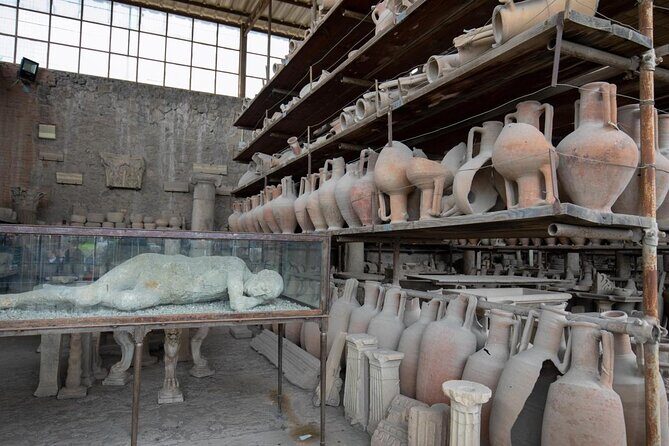
- Guided, licensed walkthrough at the park so you don’t just wander with a map
- Pickup across multiple towns (including Pompei and Castellammare di Stabia), not just one city
- Max 25 people for a group size that still feels manageable
- Forum-to-theatre route that covers Pompeii’s civic, residential, and entertainment highlights
- Some stops are ticket-free to enter once you’re inside (guided park access still requires the Pompeii ticket)
- Mobile ticket provided for a faster start once you reach the site
Pompeii in 4 Hours: How This Tour Makes the Ruins Feel Real

Pompeii can be overwhelming. It’s huge, it’s spread out, and it’s not the kind of place where you want to guess what matters most. This tour helps because it gives you a focused arc through the city: civic center first, then the marketplace, then impressive houses, then entertainment, then the main street that ties much of it together.
The timing is also smart. About 4 hours is long enough to understand what you’re looking at, without turning the day into a full-on ordeal. You get multiple “wow” moments—houses and a theatre—while still having enough explanation to connect them to how people lived.
And you do get a real sense of place. Stops like the Forum and Via dell’Abbondanza aren’t just landmarks. They’re the spine of daily life in Pompeii: politics and religion in the center, commerce nearby, and then the routes people walked every day.
Other city tours we've reviewed in Naples

Pickup by Vintage Classic Van: The Logistics That Actually Matter
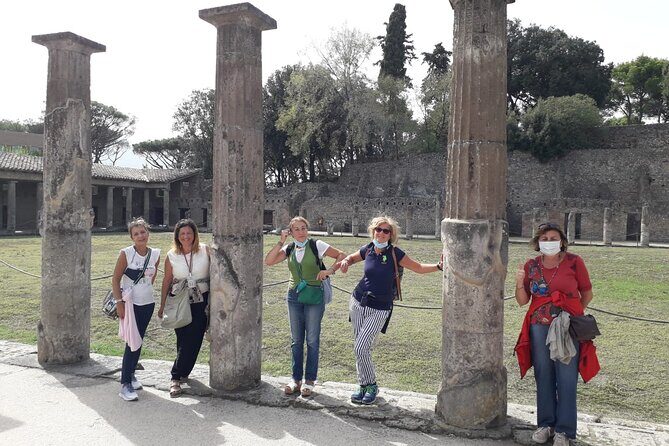
This is where the tour earns its keep. You’re not hauling yourself from Naples to Pompeii on your own. Instead, you’ll be transported in a vintage classic van with private transportation included, and the tour offers free shuttle pickup from a long list of areas.
Pickup is available from accommodations in places like Castellammare di Stabia, Torre Annunziata, Pompei, Scafati, Sant’Antonio Abate, Angri, S. Maria la Carità, Gragnano, Lettere, Pimonte, Agerola, Vico Equense, Seiano, and Meta/Sorrento-area coverage checks. If you’re staying outside the shuttle zone, there’s also guidance to use the Circumvesuviana train to Castellammare di Stabia and reach the operator’s office.
Important detail: no pickup from Naples is offered. If you’re based in Naples itself, you’ll need a different plan.
One more thing you should know: the shuttle runs in sharing mode, and pickup time is given as a starting point with a 30-minute window. That’s not unusual for shared services, but it does mean you should set expectations and be ready when the window opens—no waiting around with half your breakfast in your hand.
Your Stop-by-Stop Guide: What You’ll See at Pompeii

The tour visits Pompeii Archaeological Park with an accompanied licensed multilingual tourist guide (listed as English/Italian). Entrance into the park is not included in the tour price, but once you’re inside, several stops are described as admission ticket free in the itinerary.
Here’s how the route plays out and why each stop is worth your time.
Pompeii Archaeological Park: Start with Context
You begin with entry to the Pompeii Archaeological Park with your guide. This is a key moment. If you’ve ever visited ruins without context, you know how easy it is to end up with a pile of photos and zero understanding.
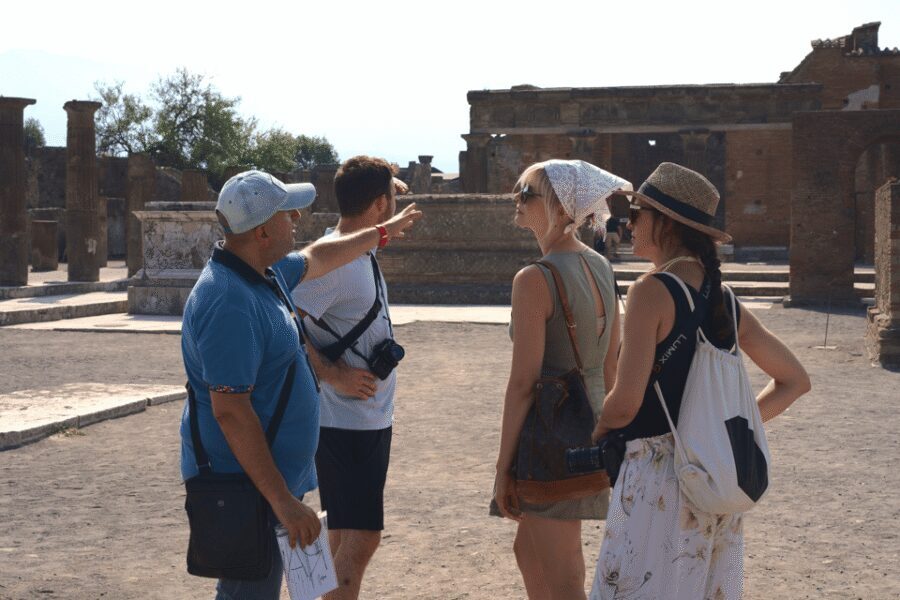
Your guide’s job here is to frame what you’re about to see—how the city was laid out and what you should notice (materials, layout, and what different areas were used for). Even if you’ve read about Pompeii before, having someone point out the practical details saves you a lot of head-scratching later.
The Forum of Pompeii: The City’s Heart
Next comes the Forum of Pompeii, the main square and the political, economic, and religious center of the city. This is where Pompeians would gather for demonstrations, business negotiations, and debates.
What makes the Forum special is that it helps you understand Pompeii as a functioning city, not just a set of dramatic ruins. You’re seeing the space where public life happened—meaning you can better picture the crowd energy, decisions, and ceremonies that once took place there.
A few more Naples tours and experiences worth a look





Macellum: Pompeii’s Provision Market
Then you’ll step into the Macellum, Pompeii’s provision market. It’s located on the Forum area, which matters: food and commerce sat close to power and public gathering.
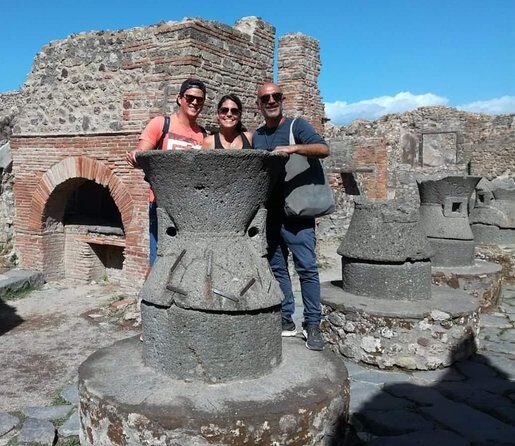
The itinerary notes that the market was damaged in the earthquake of 62 AD and hadn’t been fully repaired by the time of the 79 AD eruption. That kind of detail is more than trivia. It shows Pompeii didn’t freeze in time all at once—it was a real city dealing with disruptions long before the final catastrophe.
Casa del Fauno (House of the Faun): Big-Time Private Life
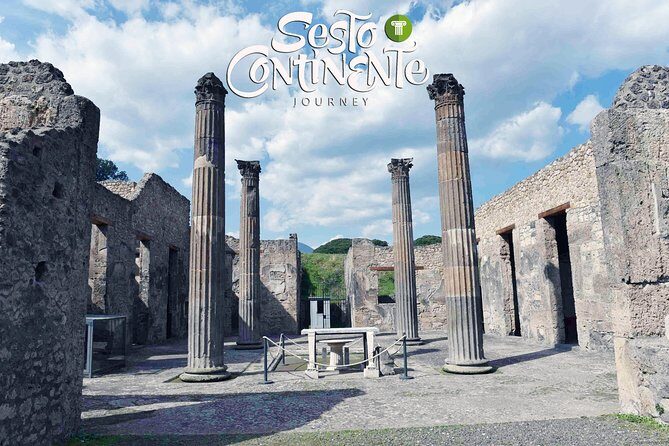
The House of the Faun is one of Pompeii’s major private residences. It’s described as one of the largest and most impressive aristocratic houses, built during the 2nd century BC, and known for major artworks.
This stop is your “architecture and class” moment. While the Forum and Macellum reflect public systems, this house is about private wealth—what affluent Roman-era families invested in, how they designed living spaces, and what kinds of art were displayed.
It’s also one of those stops where you’ll either feel wow-fast or wow-after-thinking, depending on how you approach it. Give it a little time and look at layout and scale, not just decorations.
Teatro Grande: Theatre, Comedy, and Daily Performance
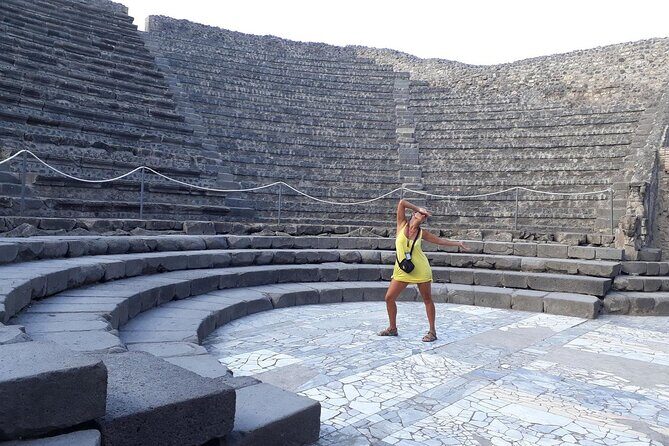
Next up: Teatro Grande, a Roman theatre buried by Vesuvius and later discovered during excavations.
What you’ll find described here is how the theatre was used for comedies, mimes, pantomimes, and atellane. That’s useful because it connects the building to entertainment routines, not just stone and seating.
If you like culture—acting, performance, public gatherings—this stop hits. And if you don’t, it still works because theatres are easy to understand. You can picture an audience, a stage, and the energy of people meeting in a shared space.
Via dell’Abbondanza: The Main Street That Tells the Story
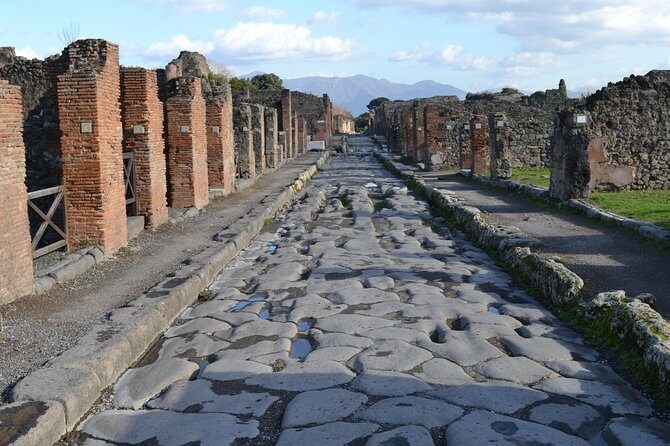
Finally, the tour follows Via dell’Abbondanza, the Lower Decumanus (a major east-west street in Roman city planning) connecting key areas between the Forum and Porta Sarno.
The name is tied to a bas-relief on a fountain early on in the route. But the real reason you’ll enjoy this walk is that the street is described as the liveliest route through the excavations, with decorations and a concentration of major homes.
This is also one of your best chances to see Pompeii as a lived-in city street. Instead of jumping from “one big site” to another, Via dell’Abbondanza gives you continuity: you keep moving, seeing residences of wealthier citizens, and understanding how daily movement linked key neighborhoods.
What You’ll Like Most: Guide Style and an Efficient Route
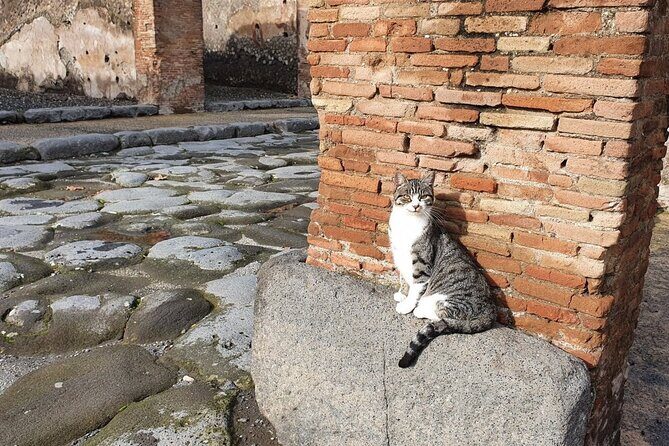
If you want Pompeii with momentum, this plan is built for you.
The guide-led structure matters. The best part of guided tours at Pompeii isn’t long speeches. It’s pointing out what to notice quickly—then letting you look with better eyes after the explanation.
This tour’s stops also feel intentionally balanced. You get:
- public life (Forum),
- daily needs and commerce (Macellum),
- wealthy domestic spaces (House of the Faun),
- public entertainment (Teatro Grande),
- and a major thoroughfare linking it all (Via dell’Abbondanza).
That mix is a big reason people tend to rate this kind of route highly: it gives you variety without sending you to the far ends of the site where you lose time.
Cost and Value: What You Pay (and What You Still Need to Budget)
The tour price is $70.89 per person, and the big headline is that it covers the shuttle transfer and the guided components. It does not include the Pompeii entrance ticket, listed as €22.00 per person.
So your total planning cost is basically:
- tour price, plus
- Pompeii admission at the current listed rate,
- and lunch (not included).
Is it good value? For most people, yes—because the entrance ticket only buys access. This tour pays for someone to organize your time and lead your visit through the biggest “meaningful” areas. If you’re visiting independently, you’d still have to solve the transport puzzle and decide where to go. Here, that work is done for you.
If you’re traveling with someone who wants freedom to roam, keep in mind this is a set itinerary with guided time blocks. You’ll get a strong overview, not an unlimited wander plan.
Timing, Tickets, and What to Bring So the Day Stays Pleasant

The itinerary is designed to take about 4 hours, with several stops around 15 minutes each (plus a shorter initial park entry). Your start time is listed as 9:00 am, and the tour notes that there are several start times available.
Because this is outdoors and you’ll spend time walking on site, pack for comfort. The operator explicitly suggests bringing:
- hat
- water
- sunscreen
- camera
- wind protective clothing
Also, plan on moving between points. Pompeii isn’t a “sit down and wait for history” kind of day.
Finally, you’ll receive a mobile ticket, which can make check-in smoother than printed vouchers.
Language Fit: English/Italian Guide and a Simple Way to Confirm
The tour is offered in English, and the guide is listed as multilingual English/Italian. One review signal suggests that French may not be offered by default, even if support is sometimes possible—so if French is essential, I’d treat that as a “confirm before you go” item.
If you’re fine with English, you should be in great shape. The key is that you’ll want to understand directions and explanations at each stop, and English (or Italian) coverage is the backbone of that.
Who This Tour Best Fits (And Who Might Want Something Else)
This Pompeii tour is a strong match if you:
- want a guided overview without spending hours planning,
- prefer pickup and drop-off in the Pompeii/Castellammare di Stabia zone and nearby towns,
- like a structured route that covers the Forum, major houses, a theatre, and a main street,
- and want the convenience of a max 25 group size.
It may be less ideal if:
- you want to spend extra time deep in one specific area,
- you’re staying in Naples and hoped for pickup directly from there,
- or you don’t want any scheduled flow at all.
Should You Book Pompeii the Ancient City (Tour+Transfer)?
I’d book it if you want Pompeii to feel organized and meaningful, with transport handled and a guide pointing out what to notice. The value is strongest for people who don’t want to coordinate buses, trains, and tickets on their own.
Before you click confirm, do two quick checks:
- Budget for the €22 entrance ticket on top of the tour price.
- Make sure the pickup area fits your lodging, since Naples pickup isn’t offered and sharing shuttles use a pickup time window.
If those two points work for you, this is an efficient, high-impact way to see Pompeii without turning your day into a logistics puzzle.
FAQ
Do I need to buy a separate Pompeii entrance ticket?
Yes. The tour price does not include the Pompeii entrance fee. The listing shows €22.00 per person for admission.
How long is the Pompeii tour?
It runs for about 4 hours.
What pickup areas are included?
Pickup is offered from many accommodations, including Castellammare di Stabia, Torre Annunziata, Pompei, Scafati, Sant’Antonio Abate, Angri, S. Maria la Carità, Gragnano, Lettere, Pimonte, Agerola, Vico Equense, Seiano, and Meta (with coverage checks for some Sorrento-area locations).
Is there pickup from Naples?
No. The meeting-point details specify NO PICK UP FROM NAPLES.
Are tickets included for the stop locations inside Pompeii?
Once you enter Pompeii, several stops are listed as admission ticket free. However, the Pompeii entrance ticket is still required to access the park.
What languages is the guide available in?
The guide is described as multilingual (English/Italian).
Is lunch included?
No. Lunch is not included.
Is the transportation a shuttle or a private car?
The tour includes a ride on a vintage classic van and private transportation, but the pickup/shuttle is described as sharing mode for pickups.
What time does the tour start?
A listed start time is 9:00 am, and the tour notes several start times may be available.
Do I get a mobile ticket?
Yes. The tour includes a mobile ticket.
What should I bring for the visit?
The listing recommends bringing a hat, water, sunscreen, camera, and wind protective clothing.