REVIEW · NAPLES
Pompeii and Herculaneum Private Walking Tour with an Archaeologist
Book on Viator →Operated by Askos Tours · Bookable on Viator
Two Vesuvius victims, one smart private tour. An archaeologist guide turns the stones into stories fast, with enough detail to satisfy history nerds and still keep it fun. You’ll cover both Herculaneum and Pompeii in one half-day, focused on what everyday Roman life looked like when disaster hit.
I really like the private format (up to 15), because you don’t get stuck listening from the back. You get a steady rhythm across major houses, baths, and public spaces, plus you can ask questions as you go. The route also mixes “big-name” stops with smaller moments that most people skip.
One thing to weigh: entry tickets are not included for Herculaneum and Pompeii (and the tour can lose time if you show up without the right passes). If you’re trying to optimize every minute, plan for tickets first and expect some walking.
In This Review
- Key things I’d note before you go
- Pompeii and Herculaneum in 5.5 hours: the big picture
- Price and what you’re actually buying (private group size matters)
- Herculaneum first: where Roman life feels close up
- Meeting and orientation tip
- Herculaneum stops you’ll want to notice (and why)
- House of the Deer
- La Terrazza di M. Nonio Balbo
- College of the Augustales
- Casa del Rilievo di Telefo
- Partem Domus lignea – Casa del Tramezzo di Legno
- House of the Skeleton
- Central Thermae
- House of the Black Salon
- Casa Sannitica
- Casa del Bel Cortile
- House of the Grand Portal
- Transfer time and lunch reality check
- Pompeii: from Lupanar to theaters in one tight arc
- Lupanar
- Walk through Pompeii’s main street
- Forum (Foro de Pompeya)
- Granaries of the Forum
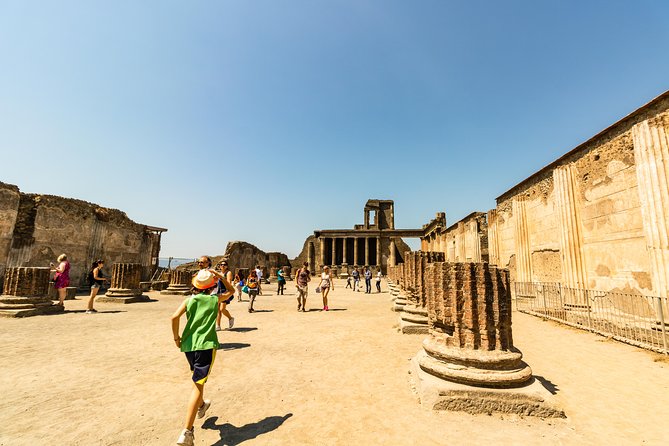
- Basilica
- Stabian Baths (Terme Stabiane)
- House of the Faun
- House of Menander
- Teatro Grande and look at Teatro Piccolo
- Why the archaeologist guide changes everything
- Crowds, pacing, and the private benefit
- Tickets and what you must plan for
- What to wear and bring for a smooth day
- Should you book this private Pompeii and Herculaneum archaeologist tour?
- FAQ
- Are the Herculaneum and Pompeii entry tickets included?
- How much are the Herculaneum tickets?
- How long is the tour?
- Is this a private tour?
- Where do we meet the guide for Herculaneum?
- Where do we meet the guide for Pompeii?
- What’s the cancellation policy?
Key things I’d note before you go
- Archaeologist-led private tour: a guide who can answer real questions, not just point and read plaques
- Two UNESCO-style sites, one afternoon: Herculaneum first, then Pompeii, with a smooth on-foot plan
- Herculaneum houses + therms: you’ll see villas, luxurious doorways, wooden partition remains, and the Central Thermae
- Pompeii classics without the full-day commitment: Lupanar, Forum area, Baths, and major theaters
- Time-saver vibe: designed to keep you moving at a pace where you can still understand what you’re seeing
- What you pay for vs. what you don’t: guidance is included, but site entry is your responsibility
Pompeii and Herculaneum in 5.5 hours: the big picture
This is a half-day sprint through two Roman towns that vanished under volcanic fallout from Mount Vesuvius. The magic of the pairing is that they feel different. Herculaneum often reads like a tighter snapshot of daily life—homes, doorways, and bath spaces still giving you a sense of layout and luxury. Pompeii is broader and grander, with major public spaces and monuments that make it easy to see how the city worked.
The tour is built for understanding, not just checking boxes. You’re not hovering near one “highlight” and hoping you’ll get the rest later. Instead, you’re walking a curated line that covers a mix of private homes (domus), public/religious buildings, baths, and street life.
And yes, it’s still a walking tour. You’ll want to treat it like a workout: comfortable shoes, sunscreen, and sunglasses. No flip-flops—your feet will revolt. The route also lists moderate physical fitness as a requirement, which makes sense given the number of stops and the walking between areas.
If you're still narrowing it down, here are other tours in Naples we've reviewed.
Price and what you’re actually buying (private group size matters)
At $597.36 per group (up to 15 people) for about 5 hours 30 minutes, the pricing is really about buying time with an archaeologist and reducing friction. You’re not paying for “more stuff.” You’re paying for someone to help you interpret what you’re seeing across two sites without the usual guesswork.
Here’s how I think about value:
- If you’re a small group (couple, family, friends), the cost can feel steep until you remember you’re getting a private archaeologist guide for the whole block of time.
- If you’re a bigger group, the per-person cost drops fast, and you’re also getting the advantage of one guide steering everyone.
One practical note: transportation isn’t included in the price. The schedule includes a train transfer between Naples and Herculaneum (about 30 minutes plus a short walk), but you’re still responsible for getting yourself there and handling local transit. The tour does give you a plan and timing, which helps, but you should budget time (and your own ticketing) for movement.
Herculaneum first: where Roman life feels close up
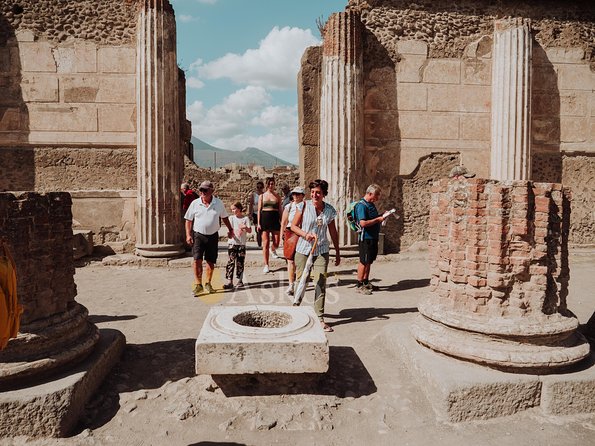
Herculaneum is where you start, with your guide meeting you at the Herculaneum ruins ticket office. From there, you’ll work through a sequence of houses and key buildings. The point of starting here is simple: Herculaneum can feel more legible when you’re fresh. Later in the day, Pompeii gets bigger and louder in scale.
Also, you’ll get a short train transfer to Herculaneum and a quick walk to the ruins. If you’re planning lunch, the schedule allows for a quick lunch break if required—but food and drinks are not included, so treat that as a chance to grab something nearby on your own.
Meeting and orientation tip
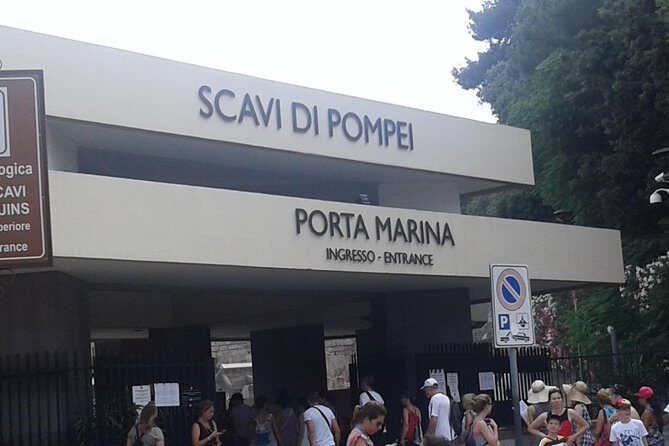
Before you leave Naples, make sure you’ve saved the meeting point in your maps app. The Herculaneum side is specific (ticket office). Pompeii is different: you meet your guide at the main entrance called Porta Marina Superiore, with a sign held up by the company name Askos Tours. When guides are coordinating groups across sites, that kind of clarity matters.
Herculaneum stops you’ll want to notice (and why)
Herculaneum is full of “small details” that make big sense once a guide connects them. Here are the stops that stand out, and what to look for at each one.
House of the Deer
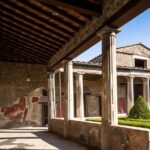
This house gets its nickname from marble statues of stags/deer found in the peristyle. The takeaway isn’t just the animal imagery—it’s how decoration signals status. When you see luxury displayed in a domestic setting, you start to understand what a household wanted guests to feel.
La Terrazza di M. Nonio Balbo
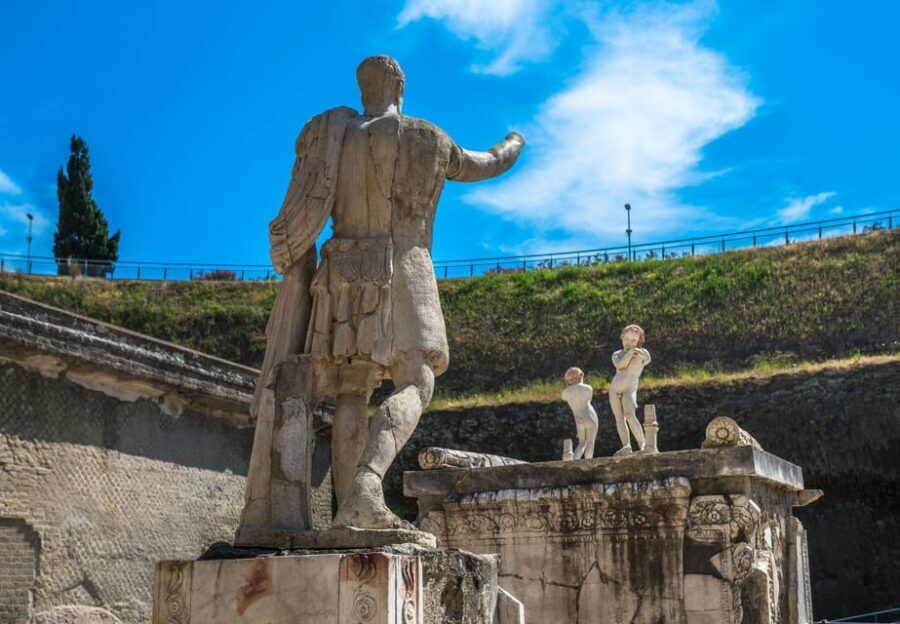
A lot of Herculaneum’s public-facing importance is tied to benefactors—people funding repairs and buildings. Here, the long inscription on the funeral altar tells the story of M. Nonius Balbus and his honors. Look for how text and monuments work like public branding.
College of the Augustales
This building is connected to the cult of Emperor Augustus and likely served as a headquarters for the Augustal collegium (and possibly the local civic body). It’s a useful stop because it shifts the conversation from private homes to how official religion and local organization overlapped.
Casa del Rilievo di Telefo
This is one of those “you’re lucky to see this” interiors/contexts where a relief is a clue to identity. The house is linked to a leading benefactor figure (the route mentions Marcus Nonius Balbus) and includes the unusual feature of access to adjoining Suburban Thermae to the south. That connection matters: it hints at how elite convenience and city infrastructure met.
Partem Domus lignea – Casa del Tramezzo di Legno
This is a standout for anyone who likes material culture. The tour highlights the importance of an elegant wooden partition remain. Even without going deep into technicalities, you’ll feel the difference between “stone ruins” and surviving wood evidence—the site becomes more human.
House of the Skeleton
The name comes from discovery of human remains in a second-floor room in 1831. It’s heavy material, but in a guided context it helps you remember that these weren’t “cool artifacts.” They were people.
Central Thermae
Built around the beginning of the 1st century AD, these baths were divided into men’s and women’s bathing areas, with separate entrances. Baths were social and functional, not just hygiene. This stop is where you start mapping how gender, routine, and architecture shaped daily life.
House of the Black Salon
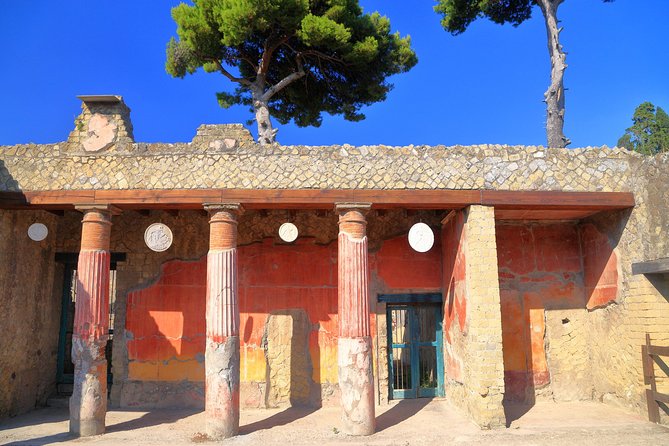
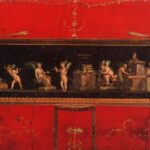
This one is about luxury and entrances. The tour notes a monumental entrance where carbonised doorpost and lintel remains are preserved. When you see preservation like that, you get a rare glimpse of impact—what was damaged, and where the architecture still reads.
Casa Sannitica
The route points out that the house arrangement is typical of the Samnites, with an atrium framed by a gallery and Ionic columns plus fresco decoration. It’s a good moment to notice how different regional traditions could appear inside Roman-period life.
Casa del Bel Cortile
This house is described as one of Herculaneum’s most original. Instead of a classic atrium, you see a courtyard with a stairway and a stone balcony. It’s a reminder that domus layouts weren’t all clones—people built for their own needs and tastes.
House of the Grand Portal
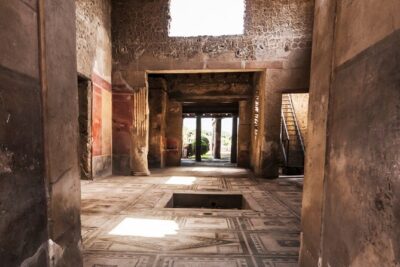
A domus in the center of the archaeological area with multiple environments, columns, frescoes, and charred remains of wooden parts. This stop sums up Herculaneum’s power: you don’t just see “a building.” You see the evidence of daily texture, including where wood once was.
Transfer time and lunch reality check
The schedule includes a quick lunch break if required. That’s helpful, but don’t plan your day around it. Food and drinks aren’t included, and you’ll still be moving between stops. If you bring snacks, you’ll probably feel more comfortable. If you depend on a restaurant nearby, you’ll want to keep expectations realistic—half-day tours move.
Also, note that you’ll switch environments between a train ride and walking. Even if the distances aren’t huge, your time gets eaten by transitions. A strong guide helps you lose less time while still explaining what you’re looking at.
Pompeii: from Lupanar to theaters in one tight arc
After Herculaneum, you head into Pompeii Archaeological Park. Meet your guide at Porta Marina Superiore (look for the Askos Tours sign). Your tour ends inside the ruins near Via Villa dei Misteri—so you’ll be finishing in the thick of things rather than back at the gate.
Pompeii is arranged so you can “get your bearings” quickly, but the scale is bigger than Herculaneum. This tour handles that with a sequence that moves through the city’s public heartbeat: street life, a main square, markets/baths-adjacent architecture, then entertainment and civic space.
Lupanar
You’ll visit the most famous brothel in Pompeii, the Lupanar. The value here is context—why the building is placed where it is, and how signs, entrances, and street access reflect how commerce and services worked in a Roman city. It’s not for everyone emotionally, but it’s one of the most revealing stops for understanding urban life.
Walk through Pompeii’s main street
This walking segment matters because it connects the “rooms” to “streets.” You start seeing how movement through the city shaped experience—where people would pass, stop, buy, and glance.
Forum (Foro de Pompeya)
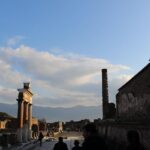
The ancient main square gets you into civic space. Even if you’re not a political history buff, the Forum is where you understand the city’s rhythm: public decisions, gatherings, and commerce.
Granaries of the Forum
This stop highlights marble tables and fountain basins at entrances of houses, plus casts of eruption victims including a dog and a tree. The immediate value is how it makes the disaster feel less abstract. The scale of loss and the suddenness of it become harder to ignore.
Basilica
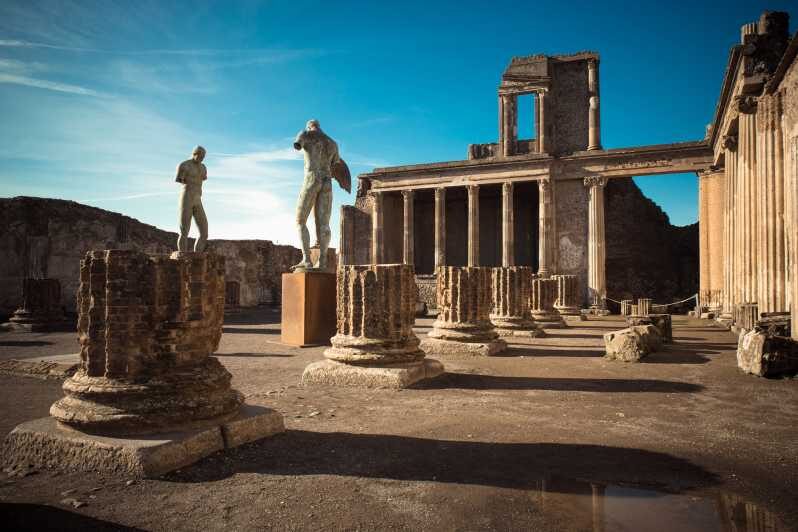
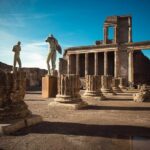
A basilica here means an open portico area sheltering merchants and other activities. It’s a reminder that “religious Rome” and “business Rome” shared space. In practice, people came here to conduct life, not just ceremonies.
Stabian Baths (Terme Stabiane)
These baths occupy a vast area and are described as the oldest thermal complex in the city. It’s where you compare Pompeii’s public-bath culture with Herculaneum’s therms you already saw. You’ll notice how shared bathing spaces were part of how the city functioned.
House of the Faun
One of the largest and most impressive private residences in Pompeii. This is where you see what “big money” looked like in architecture and layout—how a home could become a statement.
House of Menander
Described as one of the richest and most magnificent houses in Pompeii in terms of architecture, decoration, and contents. It’s a strong “grand finale” style home visit because it pushes your understanding from streets and public spaces into elite domestic display.
Teatro Grande and look at Teatro Piccolo
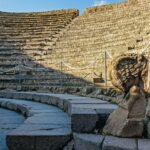
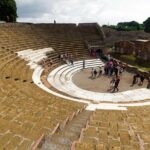
Pompeii’s theaters close out the story of how people spent free time and how architecture supported spectacle. You’ll visit the Teatro Grande and then get a look at the Teatro Piccolo.
The practical reason these are included: they’re easy anchors for memory. When you leave, you’ll still remember the dramatic scale of theater spaces even if you forget a few house-room labels.
Why the archaeologist guide changes everything
The single biggest praised factor is the guide. You’ll see it in the way people mention guides like Mena, Vincenzo, Ivan, Sylvia, Raffaele Romano, Paola, Giovanni, and Giancarlo by name—people who blend deep archaeology with clear explanations and patience with questions.
What you want to look for isn’t just facts. It’s interpretation: why a house is shaped the way it is, what a bath layout suggests about daily routine, and how inscriptions and benefactors tie private households to public identity.
Some guides also answer questions with serious depth. One highlight from real experiences is how an advanced background in classical studies helps the guide connect dots across the region and not just recite what’s on a sign. That makes a difference when you’re the type who asks why something is positioned a certain way.
And since this is private, you won’t be stuck with a one-size lecture. You can ask, pause, and move at the pace your group needs.
Crowds, pacing, and the private benefit
Even with private touring, these places have crowds. Pompeii and Herculaneum are major attractions, and you’ll still encounter busy moments. The advantage here is control. A private plan tends to keep you from being herded exactly like a cattle line, and your guide can adjust timing between stops so you spend more time understanding and less time staring at the same wall while waiting.
Still, take note of a possible friction point: one experience called out that the guide delivery can feel more formulaic, and another mentioned uncertainty around guaranteed queue-skipping and wasted time. I’d treat that as a reminder to handle tickets in advance and arrive ready so you don’t start the day playing catch-up.
Tickets and what you must plan for
Not included:
- Herculaneum entry tickets (listed at 16 euros adult; 2 euros for EU citizens aged 18–25)
- Pompeii entry tickets, referenced as Pompei express
- Food and drinks
What to do with that:
- Buy the right entry passes before you go so you don’t lose minutes at the gate.
- Bring your ID if you might qualify for the discounted Herculaneum ticket.
- Keep a small buffer in your day for any ticket/entry line friction.
This matters because your total time is about 5.5 hours. If you waste even 30–45 minutes early, the later stops (like the theaters) get rushed. The tour works best when you treat tickets as part of your planning, not an afterthought.
What to wear and bring for a smooth day
You’re moving through ruins, outdoor spaces, and uneven walking. The tour’s own guidance is straight: comfortable shoes only—no flip-flops. Add:
- sunglasses
- sunscreen
- a water plan (even though drinks aren’t included, having water matters)
- a light layer if the weather turns
If you’re traveling with kids or older family members, private touring helps because you can pause for questions. But the physical requirement still applies, so choose shoes and pacing thoughtfully.
Should you book this private Pompeii and Herculaneum archaeologist tour?
I’d book it if:
- you want real explanations about Roman daily life, not just a photo walk
- you value a private guide and a group-sized experience (up to 15)
- you want both sites in one go without dedicating a full day to just one
I’d hesitate if:
- you dislike managing logistics like site entry tickets and you’re hoping everything is handled for you
- you’re extremely queue-sensitive and want rock-solid guarantees about skipping lines
- your group struggles with sustained walking (this is a full route with many stops)
My bottom line: for most people, this is excellent value because you’re paying for a top translator of the ruins—someone who can take places like the wooden partition remains and the Augustales building and make them understandable in plain language. If you show up ready with the right tickets and wear good shoes, this is the kind of day you’ll keep talking about long after you leave the stones behind.
FAQ
Are the Herculaneum and Pompeii entry tickets included?
No. Herculaneum entry tickets are not included, and Pompeii entry tickets referenced as Pompei express are also not included.
How much are the Herculaneum tickets?
The tour lists Herculaneum ruins entry at 16 euros for adults, and 2 euros for EU citizens aged 18–25.
How long is the tour?
The duration is about 5 hours 30 minutes.
Is this a private tour?
Yes. It is a private tour/activity, and only your group will participate. The group size is up to 15.
Where do we meet the guide for Herculaneum?
You meet at the Ticket Office of the Herculaneum ruins.
Where do we meet the guide for Pompeii?
You meet at the main entrance of Pompeii Archaeological Park called Porta Marina Superiore. The guide holds a sign with Askos Tours.
What’s the cancellation policy?
Free cancellation is available if you cancel up to 24 hours in advance for a full refund.