REVIEW · NAPLES
Private Tour: Pompeii Half-Day Trip from Naples
Book on Viator →Operated by Project Napoli Service · Bookable on Viator
Pompeii hits fast, and this tour is built for that. You get private round-trip transport from Naples plus guided time at one of Europe’s most jaw-dropping UNESCO sites. The walking route focuses on the places that explain how the city worked, not just where to take photos.
I especially like the private transport + pickup options. You can be picked up from your Naples hotel, Naples Central Station, or the cruise terminals, and you get dropped back at the end. Second, I like that the guide time is structured around the key Pompeii neighborhoods and monuments, including the House of Vetti, the thermal baths, and the Lupanare brothel—so your 2 hours at the site feels like an actual tour, not a free-for-all.
One thing to consider: the Pompeii entrance ticket is not included (it’s €20 per person), and the half-day format can feel a bit tight if your group wants extra stops for water, souvenirs, or bathroom breaks.
In This Review
- Key points to know before you go
- Naples pickup to Pompeii: the part that makes or breaks the day
- The 4-hour half-day plan: what 2 hours at Pompeii can realistically cover
- Volcanic time capsule: city walls, Porta Marina, and the first big visuals
- The Forum and basilica-like public spaces: how the city ran
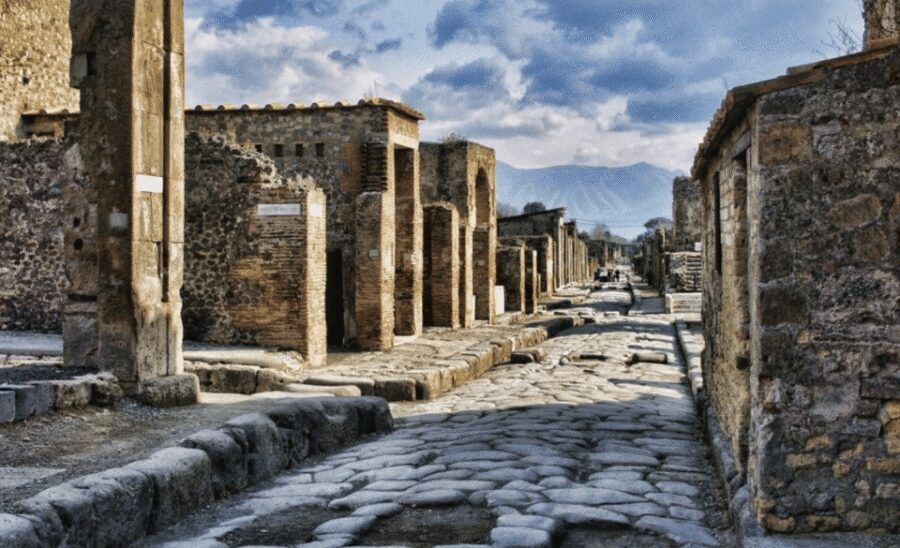
- Stumbling stones and black basalt streets: walking Pompeii like locals
- House of Vetti and the private-life contrast that makes Pompeii unforgettable
- Thermal baths and the Lupanare brothel: not just stops, but Roman context
- Tickets and the €20 entrance fee: manage expectations before you arrive
- Transport-only option: when it’s the smarter choice
- How the guide experience tends to feel in real life
- Is it good value at about $129.76 per person?
- Who should book this Pompeii half-day from Naples?
- Should you book this private Pompeii half-day trip?
- FAQ
- How long is the Pompeii half-day trip from Naples?
- Is the Pompeii entrance fee included in the tour price?
- What pickup locations are available in Naples?
- Can I choose morning or afternoon?
- Does the tour include a private guide?
- Are the tours in English?
- Is this a private tour?
- How does the transport-only option work?
- What is the cancellation policy?
Key points to know before you go
- Private guide option vs transport-only option: choose a guided walkthrough or just a driver who waits while you explore.
- 2 hours inside Pompeii: enough for the top highlights, but not enough to wander every street.
- Entrance fee is extra: €20 per person for the Pompeii Archaeological Park.
- Pickup works for hotels, trains, and cruise ports: clear meeting-point notes for cruise stops.
- Guide and pacing vary: most reviews praise engagement and clarity, but some mention the timing felt rushed.
- Roman life details included: forum, markets, theater, thermal baths, Lupanare, and victim casts.
Naples pickup to Pompeii: the part that makes or breaks the day
This is one of those trips where the best experience often comes down to logistics. You have a few pickup starting points: your Naples accommodation, Naples Central Station, or the Naples cruise terminal. If you’re cruising, you’ll want to use the specific meeting points listed for your dock—Stazione Marittima uses a pickup outside the terminal building near security under the blue sign, and Pier 21 (Molo Carlo Pisacane) uses pickup right outside the exit gate next to the ship.
From there, you’re looking at roughly a 30–minute ride to Pompeii for a half-day visit. That matters because Pompeii can feel overwhelming once you’re inside: entrances, crowds, uneven walking surfaces, and signs in multiple languages. Having a driver handle the transfer helps you get your bearings fast.
The private setup also means your driver and guide are meant to work together. Some reviews specifically called out smooth coordination—like drivers meeting the guide at the car so you’re not left hunting around. That is a real quality-of-life thing when you’re on a tight schedule.
If you're still narrowing it down, here are other tours in Naples we've reviewed.



The 4-hour half-day plan: what 2 hours at Pompeii can realistically cover
The tour is about 4 hours total, with an on-site visit of around 2 hours. That’s a good length for a first Pompeii experience if you’re trying to see the most important buildings and understand what happened during the eruption.
Here’s what the route is designed to do in that time:
- Start with the city perimeter and entrance area, then move inward.
- Hit the forum and public spaces that explain how Pompeii functioned day-to-day.
- Include a mix of houses, commercial areas, and entertainment spaces.
- Finish with a few of the most talked-about “everyday Roman” stops: thermal baths and the Lupanare.
The trade-off is simple: you won’t cover every corner. Even if your guide is fast and efficient, there’s only so much you can do in 2 hours once you factor in entrance procedures and walking time between key zones. If your dream is to linger over frescoes or stroll side streets for longer than the standard route, the transport-only option can fit better.
Volcanic time capsule: city walls, Porta Marina, and the first big visuals
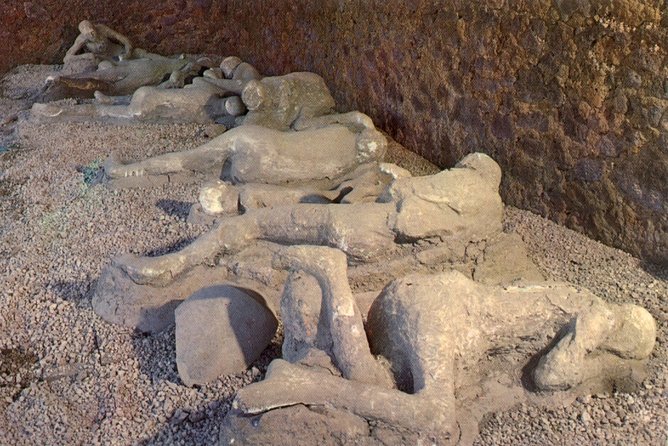
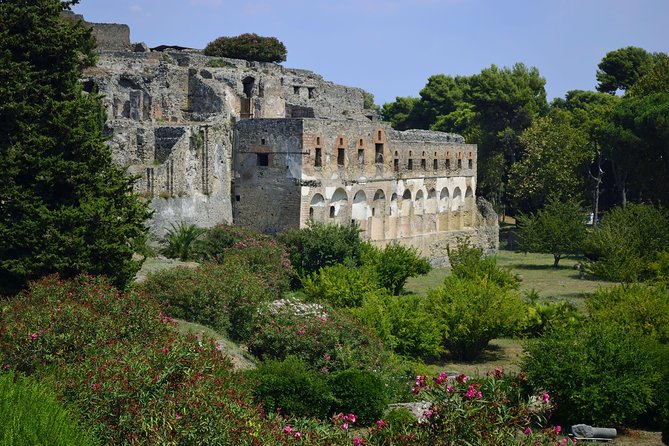
Pompeii’s best trick is that you feel like you’re walking through a preserved moment. The tour starts you off with the city walls and Porta Marina, described as the harbor entry. That’s a smart first move because it anchors you in geography: where people came in, how movement worked, and how close daily life was to the sea.
From there, you transition into the public landscape—the kind of spaces where people gathered and the city showed off. The itinerary includes the ancient theater, where performances were regularly held. This matters because it helps you picture Pompeii as a lived-in Roman city, not only as an archaeological site.
You’ll also hear the eruption story in a way that connects details to what you’re seeing. The background context is clear: the eruption of Mt. Vesuvius in 79 AD buried Pompeii under ash and pumice, preserving around 20,000 residents. That explanation becomes more real once you start seeing victim casts and the layout of the streets and buildings.
The Forum and basilica-like public spaces: how the city ran
In Pompeii, the forum is where you learn the city’s “system.” The tour route includes the Forum and uses it to explain the political and social function of the space—what it was used for and why it mattered.
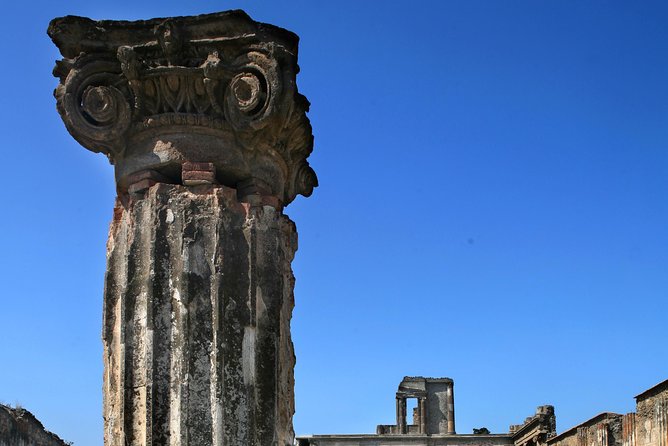
If you’re the kind of person who likes understanding how places worked, this is one of the most valuable segments. You’re not just seeing columns; you’re being shown what the city was built to do: gather, debate, trade, and conduct public life.
The tour also highlights the Forum area alongside other essentials like the theater and market zones, so the day doesn’t become a random walk through single buildings. Instead, it creates a logic chain: public entertainment, civic center, and then daily commerce and housing.
Stumbling stones and black basalt streets: walking Pompeii like locals
One of the reasons Pompeii feels so tangible is the street-level reality. The tour mentions basalt-laden streets and squares, plus stepping-stone blocks across streets that were often flooded or sewage-filled. That type of detail is exactly what turns Pompeii from a postcard into a place you can imagine living in.
You’ll also see must-sees such as the Temple of Apollo, the Macellum market, and public weighing scales. These stops help you connect the dots between religion, food supply, and commerce. And while it’s easy to treat these as checkboxes, a good guide can make them feel like a snapshot of how people organized their days.
One practical note: these are walking-heavy moments on uneven surfaces. If you’re prone to foot fatigue, plan your shoes accordingly. And if you have mobility needs, keep in mind that some guides have been described as patient and accommodating—so bring your needs into the conversation early.




House of Vetti and the private-life contrast that makes Pompeii unforgettable
The guided portion includes residential highlights—especially the House of Vetti and other houses/villas. This is where Pompeii becomes personal.
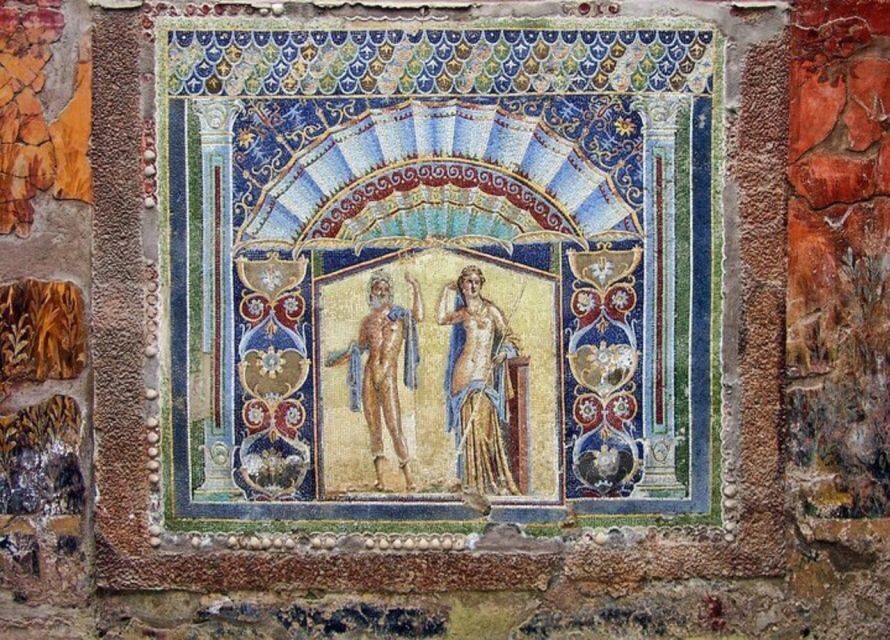
The House of Vetti is singled out for its beautiful frescoes. Fresco detail can be hit-or-miss depending on lighting and time, but with a guide, you’re more likely to get the “what you’re looking at” explanation that makes the art feel meaningful rather than decorative.
A key contrast is that you move from public areas (forum, theater, market) into domestic spaces where daily routine would have played out. The tour also includes the Lupanare brothel, framed as a well-known Roman pastime for men, which adds a layer of social context that many quick visits skip.
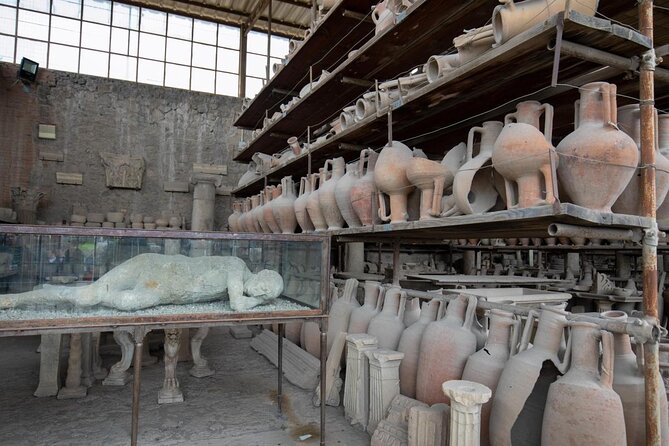
You’ll also see what’s described as casts of victims who were frozen by the eruption. That part can be heavy. It’s also one of the most unforgettable ways to understand that this was not a slow event—people were trapped in the instant the volcano changed everything.
Thermal baths and the Lupanare brothel: not just stops, but Roman context
Roman baths show up on this route because they explain lifestyle. The itinerary includes the thermal baths, described as a popular pastime in ancient Roman times. That’s helpful because you start to recognize Pompeii’s routine: how people relaxed, refreshed, and socialized.
Then comes the Lupanare brothel. Whether you’re curious or not, it’s a conversation starter. In Roman culture, prostitution existed openly, and the Lupanare was a known site. With a guide, this stop tends to land best when it’s placed in context—what the space was, how it fit into daily life, and how the eruption turned ordinary behavior into history.
Because this is a half-day, the emphasis is on clarity and the big picture. If you want a deeper dive into either the baths or the Lupanare, you may prefer a longer tour or a transport-only day where you can linger.
Tickets and the €20 entrance fee: manage expectations before you arrive
Here’s the practical part that can cause stress if you miss it: the Pompeii Archaeological Park entrance ticket is not included. The cost given is €20.00 per person.
This is why I think of this tour as “transport + guide time” as the core value, not as a full all-in Pompeii admission package. Most of the time, you’ll still have a smooth entry experience—especially because you receive a mobile ticket—but you should still plan for that extra payment at the site.
One review noted that a skip-the-line style ticket setup worked and reduced waiting time. That doesn’t mean it will always be identical for every departure, but it’s a good sign that your guide may be able to steer you through the entry process efficiently.
Bottom line: budget for the entrance fee and arrive with the mindset that your guided route is the main feature.
Transport-only option: when it’s the smarter choice
If you prefer to explore on your own, the transport-only option can be a good fit. You still get private round-trip transportation from Naples, and your driver waits for you while you explore for a couple of hours.
That “driver waiting” model is useful if:
- you want to move at your own speed,
- you have kids who need breaks,
- you’re the type who stops for photos and reads everything at street level,
- or you already know which zones you want most.
An audio guide is offered as an additional cost. If you choose transport-only, consider bringing a game plan for your 2-hour window, so you don’t end up crisscrossing when you could have stayed focused.
How the guide experience tends to feel in real life
A private guide can make Pompeii either inspiring or exhausting—depending on personality and pacing. The positive reviews repeat a few themes: guides who are friendly, patient, and able to explain details clearly, plus drivers who communicate well and help you meet the guide on time.
Names that come up include Erica, Sofia, Francesca, Paula, Margherita, and Lily (plus others). The strongest compliment pattern is this: guides manage the route well and answer questions without making you feel rushed.
The less great reviews are also instructive. A few mentioned the day felt rushed, with time ending earlier than expected, and some reported timing problems like a pickup meeting-point mismatch that cut into on-site time. One also said the experience felt like mostly transport rather than a full guided tour. Those cases don’t erase Pompeii’s value, but they do suggest you should set your own expectations: you’re buying a tight half-day route with a guide, not an open-ended wandering day.
Is it good value at about $129.76 per person?
Price is where this tour can feel either like a steal or like a splurge, depending on what you’d otherwise do.
What you’re paying for:
- Private round-trip transport from Naples (not a shared group bus).
- Pickup and drop-off from a chosen location.
- A private guide if you select the guide option.
- A scheduled half-day plan that targets top Pompeii highlights.
What’s extra:
- Pompeii entrance (€20 per person).
- Food and drinks.
If your alternative is taking a taxi and trying to line up a guide on the spot, the private booking can save time and hassle. If you’re traveling with a group size where private transport makes sense, the value tends to improve. If you’re cost-sensitive or you’re happy hiring locally, you might decide the transport-only option is the sweet spot.
One thing I’d keep in mind: you’re visiting Pompeii for about 2 hours. That is the point where “private” helps you thread the most important sights together fast.
Who should book this Pompeii half-day from Naples?
This works best if you want:
- a first-time Pompeii experience with a guide,
- a straightforward schedule that fits a limited day,
- and the convenience of pickup from Naples hotels or cruise terminals.
It can also fit families and mixed-age groups. Reviews mention that some guides adjusted to mobility needs and that kids enjoyed the route when explained in a friendly way.
Choose transport-only if:
- you’re comfortable navigating the site,
- you want more control over pacing,
- or you don’t want to pay for guided commentary you might not use.
Should you book this private Pompeii half-day trip?
Book it if you want a focused Pompeii introduction, with private Naples pickup and 2 hours on-site guided around the big monuments. The route is built for understanding Pompeii quickly: forum, major market/public spaces, residential highlights like the House of Vetti, plus thermal baths, the Lupanare, and victim casts.
Consider the transport-only option if your group prefers freedom and you’re confident you can plan your own route within the couple of hours you’ll have.
One final call-out: confirm that you’re ready for the €20 entrance ticket and plan for a tight schedule. If your group needs extra time for water, souvenirs, or longer stops to read every panel, a half-day can feel fast. If that sounds okay, this is a very practical way to see Pompeii without turning your day into logistics.
FAQ
How long is the Pompeii half-day trip from Naples?
It runs for about 4 hours total, with roughly 2 hours spent inside Pompeii.
Is the Pompeii entrance fee included in the tour price?
No. Admission to the Pompeii Archaeological Park costs €20.00 per person and is not included.
What pickup locations are available in Naples?
You can be picked up from your Naples hotel, Naples Central Station, or the Naples cruise terminal. You choose your preferred pickup at booking.
Can I choose morning or afternoon?
Yes, you can choose a morning or afternoon tour.
Does the tour include a private guide?
It depends on the option you select. There’s a driver and guide option (private guide included) and a transport-only option (driver only).
Are the tours in English?
Yes, the tour is offered in English.
Is this a private tour?
Yes. It’s a private tour/activity, meaning only your group participates.
How does the transport-only option work?
You get private round-trip transportation from Naples, and your driver waits while you explore Pompeii on your own for a couple of hours.
What is the cancellation policy?
You can cancel up to 24 hours in advance for a full refund. If you cancel less than 24 hours before the start time, the amount paid isn’t refunded.