REVIEW · NAPLES
Pompeii Guided Walking Tour – Skip-the-Line Priority Access
Book on GetYourGuide →Operated by Napoli Official Tour · Bookable on GetYourGuide
Pompeii is a time machine you can walk. This 2-hour guided Pompeii tour focuses on the central highlights, with priority access to the entrance so you waste less time in queues. I especially like the way an authorized guide helps you connect what you’re seeing to how the Roman world actually worked, and the route is packed with the big anchor stops like the Forum and the House of the Faun. One thing to consider: Pompeii is huge, so even with the best highlights, you’ll only cover a fraction in two hours.
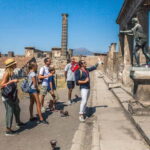
You meet in Pompeii and head straight to the ancient city through the Porta Marina Inferiore area. From there, you follow original Roman streets to the Forum, then move through public life spaces like the baths and lively shopping streets like Via dell’Abbondanza. The tour also takes you into a few “wow” stops—elite residences and even the Lupanar—so you get more than just temples and stones.
Because the itinerary is designed for a comfortable 2-hour experience, pace can feel a bit brisk if you want to linger for photos. Also, if you’re expecting every famous sight under the sun, manage expectations: the tour is selective, not all-inclusive.
In This Review
- Key things to know before you go
- Skip-the-line priority at Pompeii: what it really buys you
- Meeting at Porta Marina Inferiore and Piazza Esedra: find the board, not the stress
- Entering Pompeii through Porta Marina: more than a dramatic entrance
- The Forum: Basilica, Jupiter, and Apollo in a 2-hour focus
- Baths and Via dell’Abbondanza: where you see daily Roman life
- House of the Faun and elite mosaics: status made visible
- The Lupanar: Roman leisure and a reality check
- Recently excavated areas: fresh perspective without the waiting game
- Price and value: is $47 a good deal for this Pompeii walk?
- Group pace and what to expect from the storytelling style
- Who should book this Pompeii guided walking tour?
- Should you book? My straight answer
- FAQ
- FAQ
- Where do I meet the guide?
- How long is the Pompeii guided walking tour?
- Does the tour include the entrance fee?
- What does skip-the-line priority access mean here?
- What’s included in the tour price?
- What isn’t included?
- What languages is the tour offered in?
- Is it free on the first Sunday of the month?
- Do I need to bring ID?
Key things to know before you go
- Porta Marina Inferiore is your gateway into the city, linking Pompeii to its harbor life
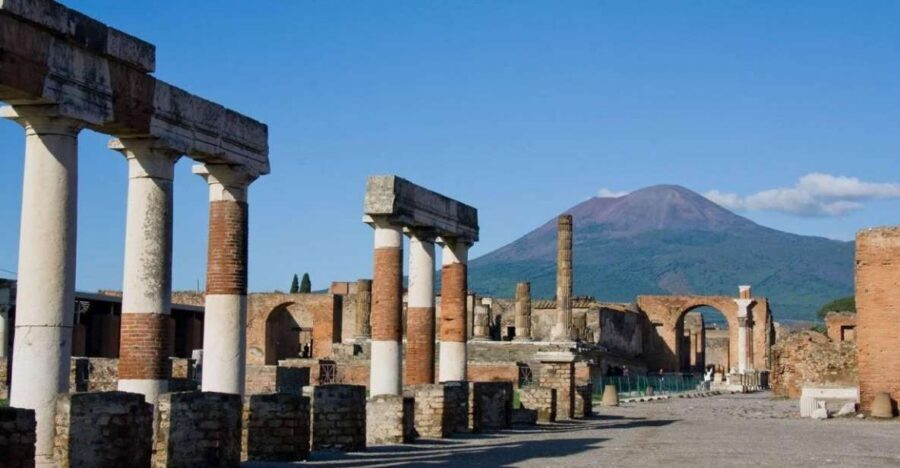
- The tour hits the Forum area with major public buildings like the Basilica, Temple of Jupiter, and Temple of Apollo
- Expect a mix of public and everyday spots, including Forum Baths/Stabian Baths and Via dell’Abbondanza
- You’ll see elite domestic life at the House of the Faun, one of Pompeii’s largest and most luxurious homes
- The itinerary includes the Lupanar, helping explain leisure and social customs
- You’ll get a look at recently excavated areas and fresh archaeological findings (within the time limit)
Skip-the-line priority at Pompeii: what it really buys you
Pompeii’s crowds can turn your visit into a waiting game. This tour tackles that with skip-the-line priority access to buy your entrance ticket, plus it includes the entrance fee. In plain terms: you’re spending your time walking the site instead of standing still and trying to figure out where the line actually ends.
Is it worth paying $47 per person for that? For most people, yes—because two hours is tight. Even a modest delay at the ticket stage eats into your only guided window. And once you’re inside, you’ll appreciate having a plan rather than bouncing from building to building on your own.
The tour also gives you an authorized, professional guide, which matters at Pompeii. The site is easy to get lost in visually; the guide’s job is to help you read the layout and understand what spaces were for—politics, religion, shopping, bathing, or elite status.
Other guided Pompeii tours we've reviewed
Meeting at Porta Marina Inferiore and Piazza Esedra: find the board, not the stress
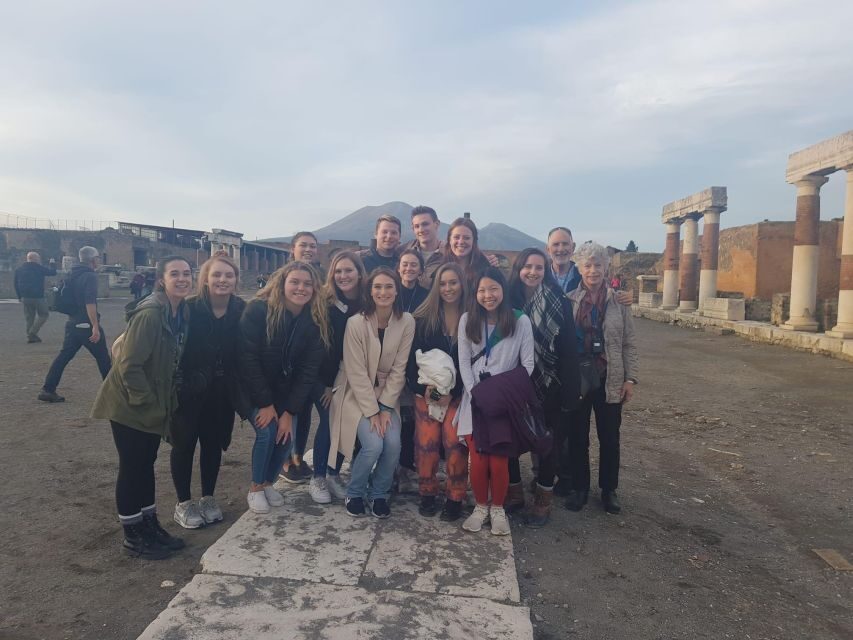
Your starting point is Porta Marina Inferiore, in Piazza Esedra. Your guide will have a board with the local tour operator logo, so you’re not guessing in a crowd for long—if you arrive ready.
This is one of those tours where being early can save your mood. One past booking had trouble finding the guide and described it as chaotic before the group was assembled. That’s not a reason to skip the tour; it just means you should give yourself buffer time and keep your eyes on the board with the operator logo.
Also note the tour runs in English and Italian. If you’re comfortable with English, you’ll still get value even when you can’t translate every stone detail—because the guide’s explanations carry the context.
Entering Pompeii through Porta Marina: more than a dramatic entrance
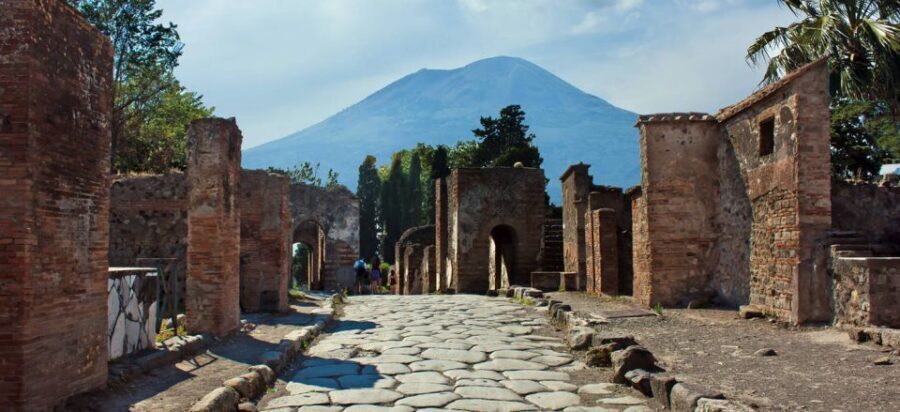
The tour begins as you step back into the ancient city through Porta Marina Inferiore, once a key gateway connecting Pompeii to its harbor. This matters because it frames Pompeii as a living city tied to movement—goods, people, and daily traffic—not just a frozen disaster scene.
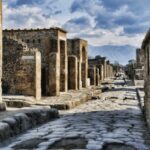
From the entrance, you walk along original Roman streets, then gradually work toward the city’s most important center: the Forum. The route is designed to feel logical, like you’re moving through layers of civic life rather than hopping randomly to a few famous buildings.
If you like architecture, pay attention to how streets, crossings, and building placements guide your experience. Even without technical archaeology training, you’ll start noticing how Pompeians organized public space.
The Forum: Basilica, Jupiter, and Apollo in a 2-hour focus
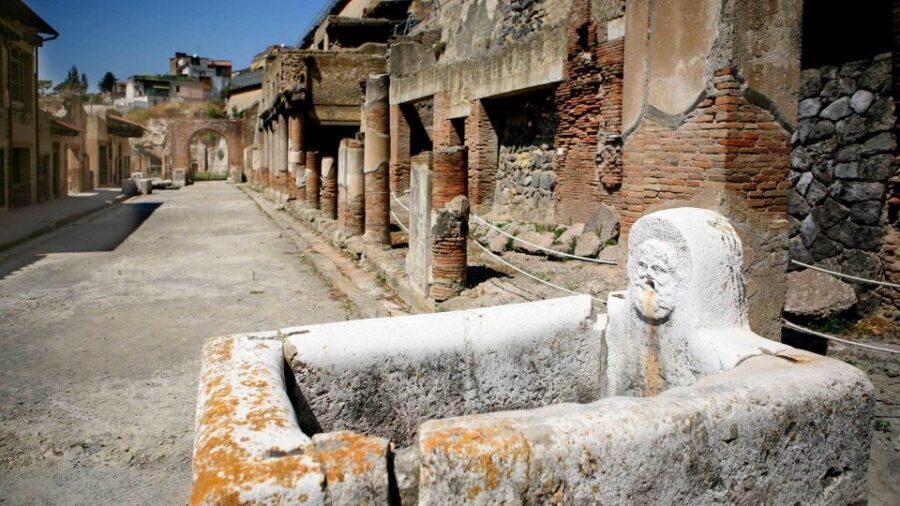
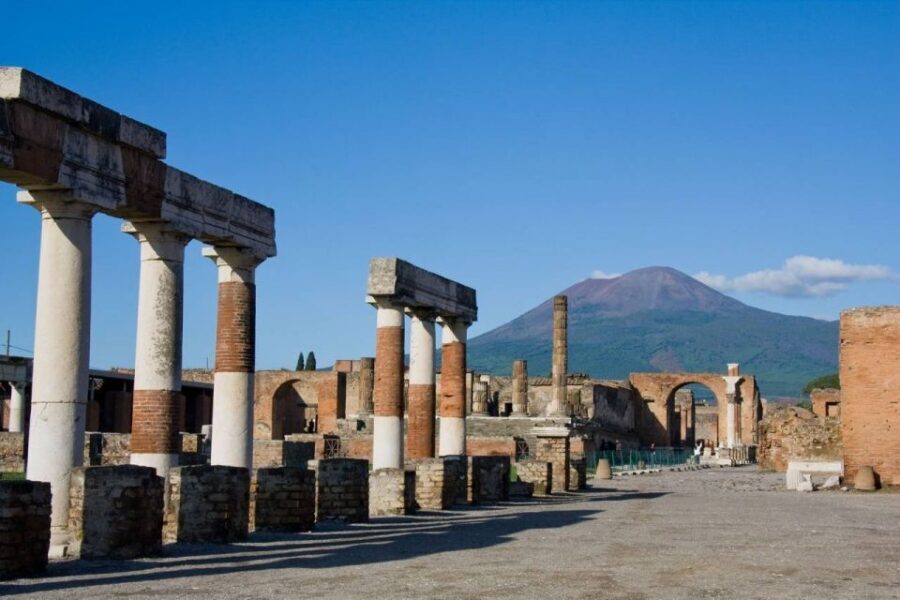
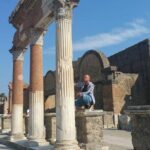
The Forum is the political, religious, and commercial heart of Pompeii, and it’s where this tour spends serious time. You’ll see monumental structures including the Basilica, the Temple of Jupiter, and the Temple of Apollo.
Here’s what makes this stop valuable: these aren’t just separate landmarks. They’re the framework for how Romans met, decided things, worshipped, and did business. A good guide helps you connect the dots—what the Forum meant in everyday terms, not just what it’s called today.
A common Pompeii mistake is rushing through temples like you’re speed-reading a museum placard. This guide-led pace helps you slow down just enough to understand what the buildings were for. Even if you consider yourself a casual history fan, you’ll likely leave the Forum with a clearer sense of who had power and how public life worked.
Drawback to keep in mind: the tour’s scope is central Pompeii. So even if you want more time in the Forum area, you’ll still move on. Two hours isn’t built for “linger and worship” time. It’s built for “get the story fast.”
Baths and Via dell’Abbondanza: where you see daily Roman life
After the Forum, the itinerary shifts into social spaces. You’ll pass through the Forum Baths or Stabian Baths (the exact bath choice can depend on the day and planning). Public baths were more than hygiene. They were a place to relax, socialize, and talk—basically a social hub that put people in the same rooms.
That contrast is one reason I like this tour’s balance. Many Pompeii walks lean heavily on temples and elite residences. Here, you get space that reflects routine behavior and community gathering.
Then you head to Via dell’Abbondanza, described as a lively street lined with ancient shops, bakeries, and taverns. This is where the “how people lived” part clicks. You’re not just looking at ruins—you’re looking at a street that once supported commerce and meals.
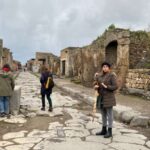
A practical note: if your goal is photography, remember the pace. One booking described having to move quickly to catch up and get pictures, because the tour wasn’t designed around photo stops. If you like photos, bring a plan: step aside quickly for shots, and keep moving—don’t assume the group will wait.
Other skip-the-line Pompeii tickets and tours

House of the Faun and elite mosaics: status made visible
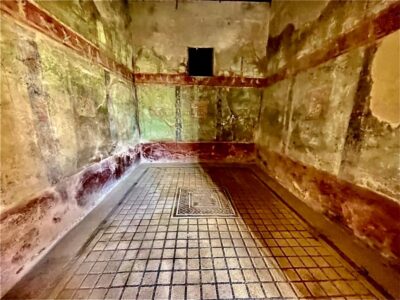
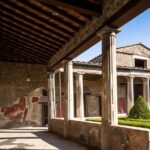
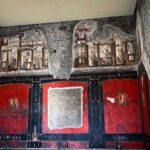
Next comes the refined side of Pompeii: elite domestic life, including the House of the Faun, one of the largest and most luxurious private homes. This stop is about social customs and status—how wealth showed itself through space, decoration, and location.
Even if you’re not an art historian, you’ll notice the difference between civic buildings and home life. In a big home, details matter: layout, privacy, and how different rooms served different functions. Elite homes also help explain why Pompeii is so valuable to archaeology—people didn’t just live there; they decorated and organized life in ways that leave strong clues.
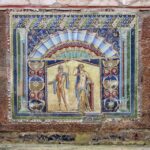
The tour also includes elite-residence architecture and mosaics. That’s a big reason Pompeii still feels vivid even after the centuries—because the homes show personal taste and everyday choices, not only official power.
The Lupanar: Roman leisure and a reality check
One of the tour’s standout inclusions is a visit to a brothel (Lupanar). It’s a direct look at leisure and social customs, and it changes how you think about ancient cities. Pompeii wasn’t only temples and politics; it was also entertainments, services, and the messy side of human life.
This stop can be confronting if you’re sensitive to sexual themes, but it’s also historically relevant. It helps you understand that Roman society included commercialized vice the way many cities do—just in a different context and layout.
A balanced way to approach it: treat it as part of a broader slice of life. The guide’s explanations are important here because without context, it’s easy to turn a site into shock value rather than understanding.
Recently excavated areas: fresh perspective without the waiting game
This itinerary also includes recently excavated areas and new archaeological findings. That’s a smart choice because it keeps the tour from feeling like a greatest-hits replay only.
Pompeii has been studied and uncovered in stages for generations, so “new” finds can change how archaeologists understand the city’s final days. In a short tour, you don’t get hours of lab-style detail—but you do get a sense that Pompeii isn’t finished being discovered.
This also helps explain why different guides can make the experience feel different. The site is still evolving through research, and the guide’s ability to tie new discoveries to what you’re seeing is part of the value.
Price and value: is $47 a good deal for this Pompeii walk?
$47 for a 2-hour guided tour with priority ticket access and the entrance fee included is in the “you’re paying for time and context” category.
Here’s how that value usually plays out for you:
- You save time at the ticket stage via priority access, which protects your only guided window.
- You get an authorized guide who explains what you’re looking at, including how everyday life worked.
- You cover the central highlights in a tight radius rather than wandering aimlessly.
Could you do Pompeii cheaper on your own? Yes. But if you’re spending most of your energy reading signs and figuring out routes, the “cheap” option can turn into expensive time. In that sense, paying for the guide is often the best use of your limited hours in Campania.
One small reality check: the tour covers less than the full site—roughly a fraction of Pompeii’s total footprint—so your value depends on what you want. If you want an overview and a launchpad for more exploring afterward, this fits well. If you want to see everything, you’ll need more time in the park.
Group pace and what to expect from the storytelling style
From the range of feedback, the guide experience is the heart of this tour. Many people highlighted that the guide explained a lot of Pompeii history and the past in a professional, educated way. Others appreciated the tour length as the right scale for first-time orientation, then used free time to investigate further on their own.
That said, one booking felt the tour was a bit too name-and-place focused at certain spots, and they wanted more detail on everyday life rather than more general historical info. Another described running a bit to catch up for photos.
So here’s my practical advice: use this tour as your foundation. Afterward, go back with fresh questions. If you care about everyday life, keep an eye out for the tour’s everyday-life stops like the baths, Via dell’Abbondanza, and the Lupanar—those are the best places to anchor that interest.
Who should book this Pompeii guided walking tour?
This is a strong fit if:
- You want a guided overview of central Pompeii without getting bogged down in routes
- You’d rather pay for priority access than risk losing time in lines
- You want a mix of civic monuments, social spaces, elite homes, and cultural context
- You like the idea of seeing the Forum and major public buildings, then branching into daily life
It may be less ideal if:
- You need long photo pauses and lots of independent wandering during the guided segment
- You expect the full Pompeii must-see list in two hours
- You’re hoping for a heavy focus on very specific everyday-life themes only (the tour includes it, but it’s still a structured guided blend)
Should you book? My straight answer
If you’re visiting Pompeii for the first time and you only have about two hours for a guided experience, I’d book this. The priority access is practical, the itinerary hits the major city center, and the mix of public buildings, baths, street life, and elite homes gives you a rounded picture of Roman life.
Just go in with the right mindset: this tour is a smart orientation, not the entire site. Plan to explore a bit on your own afterward so you can slow down where you personally connect—whether that’s more mosaics at a residence, more street textures along Via dell’Abbondanza, or more time reflecting in the Forum.
FAQ
FAQ
Where do I meet the guide?
You meet at Porta Marina Inferiore, in Piazza Esedra. The guide will have a board with the local tour operator logo.
How long is the Pompeii guided walking tour?
The tour duration is 2 hours.
Does the tour include the entrance fee?
Yes. The entrance fee is included.
What does skip-the-line priority access mean here?
It means you have priority access to buy the entrance ticket so you can spend less time in line.
What’s included in the tour price?
Included are the 2-hour guided tour with an authorized professional guide, priority access to buy the entrance ticket, and the entrance fee.
What isn’t included?
Transport is not included.
What languages is the tour offered in?
The tour is offered in English and Italian.
Is it free on the first Sunday of the month?
Yes, the first Sunday of each month has free entry, but tickets can’t be reserved ahead of time, so entry is not guaranteed.
Do I need to bring ID?
You should bring passport or ID card for children.