REVIEW · NAPLES
Herculaneum: Skip-the-Line Entry Ticket with Audio Guide
Book on GetYourGuide →Operated by Tempio Travel Sorrento · Bookable on GetYourGuide
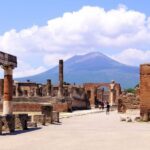
Herculaneum feels like a time capsule. You get skip-the-line entry to an ancient Roman town frozen by Vesuvius, then the audio guide helps you make sense of what’s in front of you without needing a live escort.
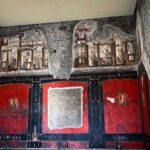
I especially like the way the ruins are still so readable—wooden doors, wall paintings, and household spaces are shockingly well preserved.
The main drawback: the audio cues and on-site numbering can be a little confusing, so you’ll want to use the map and pay attention to what you’re actually standing in front of.
In This Review
- Key highlights to know before you go
- Herculaneum’s “smaller but smarter” feel
- Tickets, audio collection, and finding the right office
- The audio guide map: how to use it without getting tangled
- A self-guided route through villas buried by ash
- The market, fountains, and theatre: where everyday life shows up
- Tempered by tragedy: skeleton exhibits and the “sea rescue” area
- Temples, gods, and the preserved details that make it feel real
- On-site museum moments and what to do at the end
- Timing and pacing: how long you actually need
- Value for money: why this ticket often beats a “quick look”
- Who should book this audio ticket?
- Should you book this skip-the-line audio ticket?
- FAQ
- What is included with the Herculaneum skip-the-line entry ticket?
- Where do I show my ticket?
- How long does the visit take?
- What languages is the audio guide available in?
- Do I need to bring anything?
- Is cancellation free if plans change?
Key highlights to know before you go
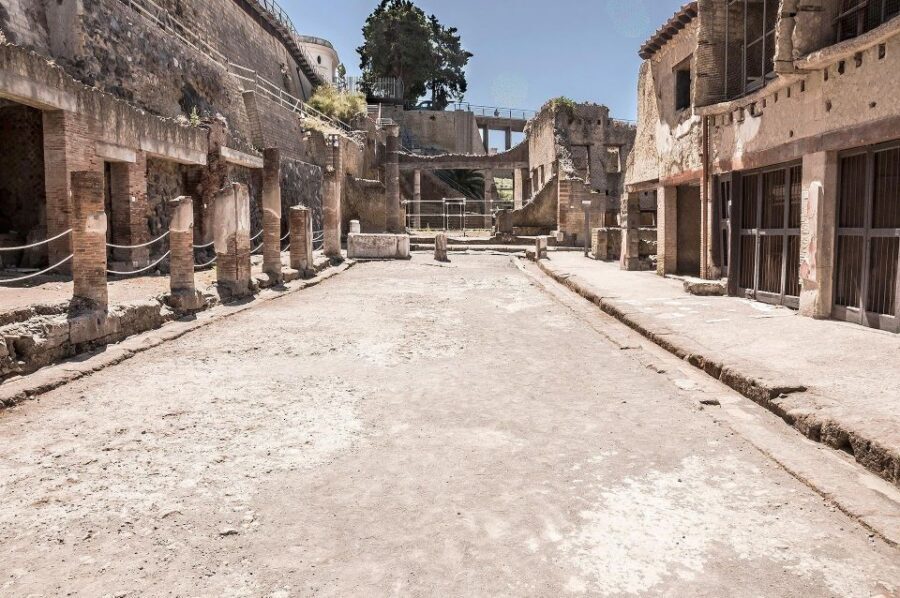
- Ash-preserved villas and street-level ruins that feel intimate, not monumental
- Audio guide + map included, designed for self-guided wandering
- Well-preserved paintings, statues, and wooden elements that you can keep looking at longer than you expect
- An everyday-life route: market, fountains, theatre, temples, and housing types
- A quieter visit than Pompeii, with fewer crowds when you arrive earlier
- Some logistics quirks (ticket/audio collection and numbering matching) that you can plan around
Herculaneum’s “smaller but smarter” feel
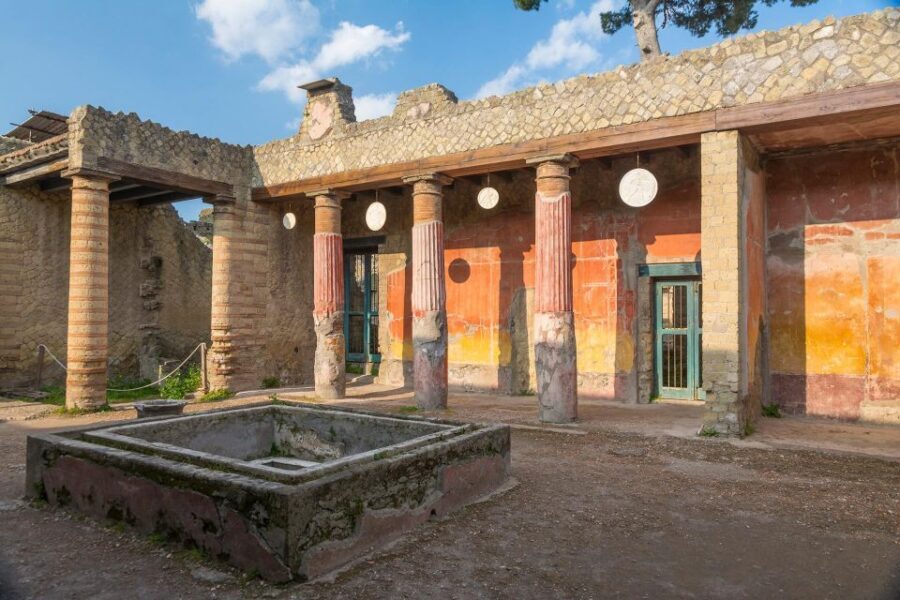
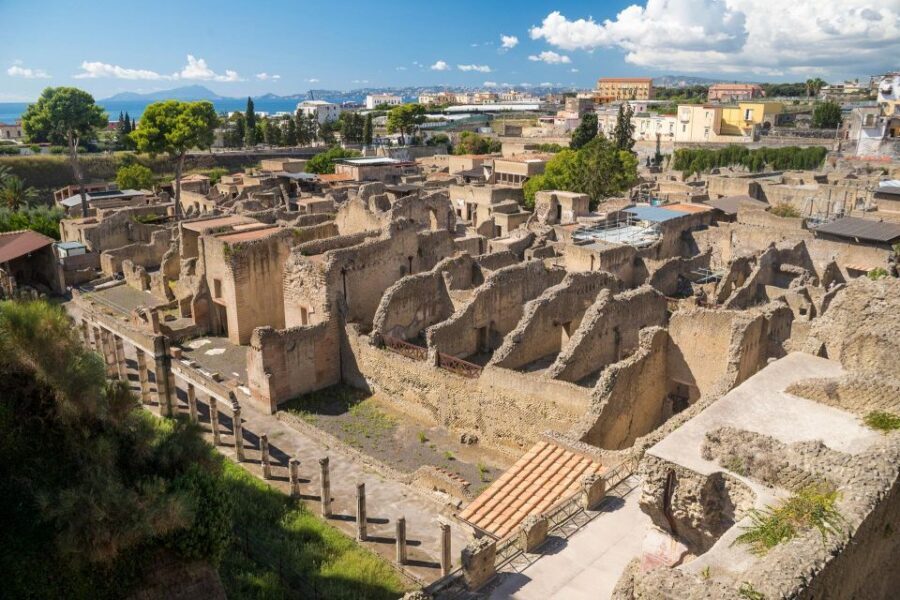
Herculaneum is the kind of place where you stop more often than you walk. It’s compact compared with Pompeii, but that’s not a disadvantage. You get a close-up view of daily Roman life—rooms, thresholds, and streets—without feeling like you’re sprinting between huge sites.
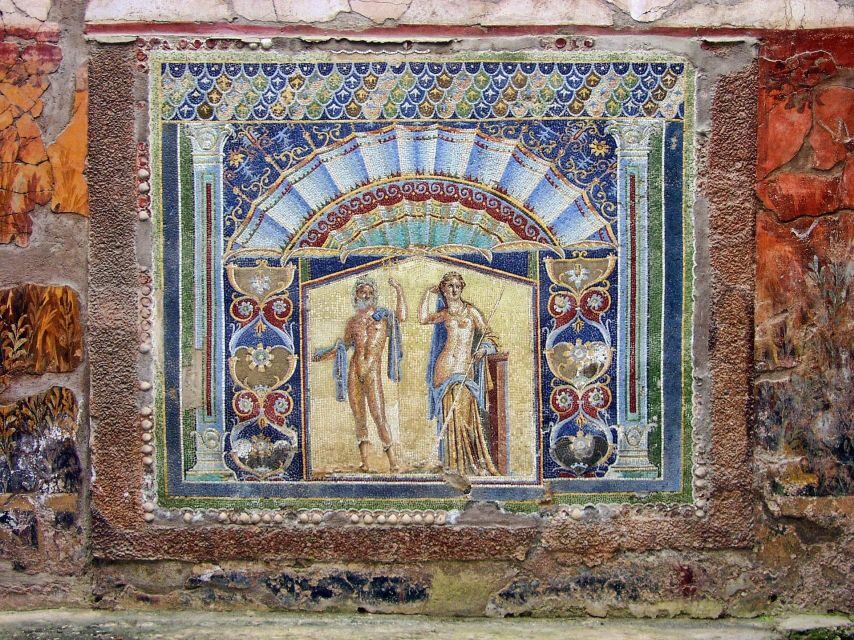
The preservation is the real headline. You’re not just looking at piles of stone. You’re seeing rooms and decorative surfaces that survived the volcanic burial far better than you’d expect, including colorful wall paintings and even surviving wooden details in some areas. That’s why the audio guide matters: it turns what you might otherwise skim into something you can actually understand.
One more thing: Herculaneum’s mood is gentler. People often describe it as quieter and more poignant than Pompeii, which makes it easier to slow down and take in the human side of the story—especially when you reach the more heartbreaking exhibits.
Other skip-the-line Pompeii tickets and tours
Tickets, audio collection, and finding the right office
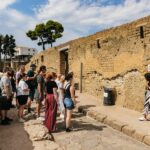
Your meeting point is simple: show your ticket at the Herculaneum ticket office. From there, the key practical move is to collect the audio device and map properly before you start walking.
A few details are worth planning for:
- You may need to leave identification as security to pick up the audio guide.
- Some visitors report waiting for audio in one area and then entry in another, even when they expected a single smooth line.
- The site can be a bit confusing at the start because the “skip-the-line” setup doesn’t always feel visually obvious in the moment.
So here’s my no-stress approach. Arrive early enough that you’re not annoyed by lines or back-and-forth. Keep your passport or ID card ready, and if someone directs you to a different desk, follow it without arguing—you’ll get it sorted fast as long as you’re flexible.
Also note the device format: the audio guide experience can involve a handheld unit you hold to your ear, or a smartphone/app style device with the map included. In either case, the goal is the same—use the guide while you walk so you’re not just reading signs at a distance.
The audio guide map: how to use it without getting tangled
The audio guide is the heart of this ticket. It’s offered in English, French, German, Italian, and Spanish, and it’s built around points of interest you select as you go. For many people, that makes Herculaneum feel easy to navigate.
But there’s a recurring practical issue: the numbering system used by the guide and the numbering you see on-site might not line up perfectly. Sometimes the audio descriptions feel like they’re pointing you slightly off, until you get your bearings and then it clicks.
Here’s how to handle that like a pro:
- Use the map inside the audio guide/app as your main compass, not just the numbers.
- When the audio starts, glance around for the structure type the guide is describing (market stalls, public fountains, a doorway, a courtyard).
- If you realize you’re in the wrong spot, don’t panic. Just pause, re-check the map, then jump to the next point.
You’ll also want comfortable hearing habits. Some people asked for Bluetooth so they could use their own earbuds hands-free, which suggests the setup can be more “wired” or “device-speaker dependent” than modern headset users expect. Bring earbuds if you like quiet, and test them before you start the main route.
A self-guided route through villas buried by ash
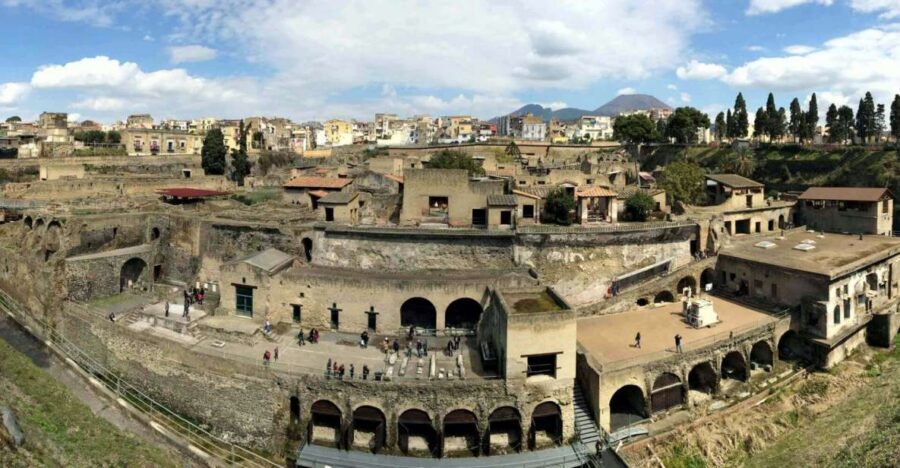
Start thinking of Herculaneum as a set of neighborhoods rather than one long museum room. The ruins are grouped into households and public spaces, and the best way to enjoy them is to follow the audio guide’s sequence—or simply use it as a menu.
The big visual payoff early on is the ash-buried villas from the day Vesuvius erupted in 79 AD. What hits you is the sense that you’re looking at homes that were mid-life, not dead artifacts. Rooms and details feel like they were paused, then trapped by volcanic material.
As you move through the houses, you’ll get context on:
- how people used different rooms in daily routines
- what decorative elements mattered
- and how status showed up inside the built environment
One of the guide themes people highlight is the contrast between rich Roman living spaces and how enslaved workers were housed. That perspective gives the ruins more weight than sightseeing alone. You start seeing architecture as a social map.
The market, fountains, and theatre: where everyday life shows up
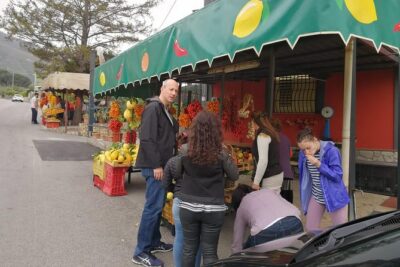
Herculaneum doesn’t just show grand houses. You also walk through a market area, with the kind of street-level layout that helps you imagine busy foot traffic and normal commerce.
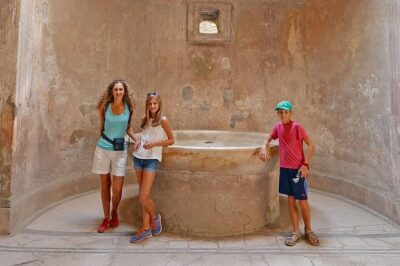
The audio guide ties these public spaces to what you’d want to picture if you lived here: where you’d meet, where you’d buy things, and how public infrastructure shaped the day. The public fountains and surrounding areas make it feel less like a set and more like a working town.
Then there’s the theatre, which changes the vibe. Even if you don’t spend hours in one stop, the theatre gives you a “community scale” moment. You go from household intimacy to public life—one of the reasons the self-guided approach works so well. You can linger where you care most.
A practical tip: keep your pace flexible. A lot of visitors end up staying around 4 hours when they take their time. If you’re a slower walker, build in extra margin for rest points and for re-looking at paintings or decorative surfaces.
Other Pompeii entry tickets and audio guides



Tempered by tragedy: skeleton exhibits and the “sea rescue” area
This is the part that makes Herculaneum more than history cosplay. The site includes areas tied to the eruption’s human cost, including the area where about 300 people perished while hoping for rescue from the sea.
If you’re the kind of person who gets quiet at memorial-like exhibits, plan your timing. You can either see these parts earlier so the rest of the visit feels lighter afterward, or save them for later if you want the day to end on a reflective note.
Some people recommend adjusting your direction to manage crowds, then letting the route end at the most moving moments. In practice, that means you might start in the opposite direction from the first flow of visitors so you’re not pushed by bottlenecks.
Temples, gods, and the preserved details that make it feel real
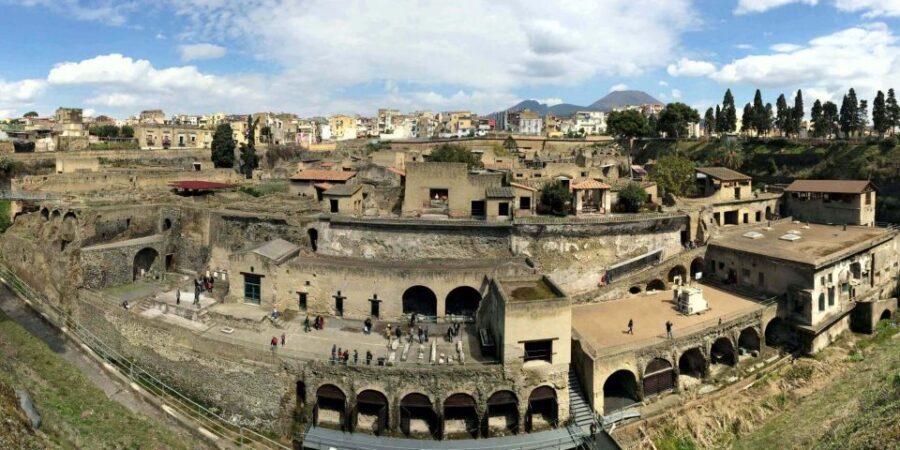
The guide’s stop list includes temples and areas with depicitions of ancient gods. That matters because it doesn’t treat the site like a single “Roman home” exhibit. Religion, daily ritual, and status are woven into how space is used.
The other reason this place sticks with you is the preserved detail:
- paintings that still read as paintings
- door and wood elements where you can almost imagine touch
- statues and decorative features that give scale
When the audio guide points out what you’re looking at, the ruins stop being vague. Suddenly you know what to pay attention to, and you’re not relying on a museum placard to translate everything.
One extra bonus: some audio/app versions reportedly include 3D or 360-style views so you can see how objects might have appeared before the eruption. If your device offers that, it’s worth using at least once, because it bridges the gap between today’s ruins and what existed before the catastrophe.
On-site museum moments and what to do at the end
Near the exit/entrance area, there’s also a small museum that adds context with recovered artifacts and display pieces. People often describe it as a strong closer because it helps connect what you’ve seen outside to the broader story of the finds.
Depending on timing and what’s open that day, you might see some areas temporarily closed. That doesn’t ruin the visit, but it does mean you should expect a little variation.
If you’ve got time after you finish the main walk, factor in:
- the museum stop
- time to cool down (Herculaneum can get hot)
- a snack or meal before you head back
Facilities can be basic. One note from a visitor was that the toilets weren’t great, so plan accordingly and don’t treat this as a “comfort first” outing.
Timing and pacing: how long you actually need
Even though the ticket is set for a 1-day duration, that just means you’ve got a day to use it. In real life, most people find the sweet spot at 2–4 hours, depending on how much you pause.
If you want a smoother experience:
- Go earlier if you can. Many people liked the quieter feel and faster entry when they arrived at the start of the day.
- Wear comfortable shoes. The terrain includes cobblestones and some steep steps, so sneakers with grip are a real upgrade over flexible sandals.
- Bring a small plan for breaks. There are places to sit and catch views, and the cobblestones will remind you that your feet are part of the itinerary.
Also consider this simple sequencing trick. If you like to end on emotional exhibits, you might intentionally finish with the most moving sections. If you prefer to start strong, begin with the main highlights tied to villas and public spaces, then work toward tragedy later.
Value for money: why this ticket often beats a “quick look”
At around $15 per person, you’re paying for three key things: entry, an audio guide, and a map. For many visitors, that’s strong value because Herculaneum is small enough that you’ll feel the payoff quickly, but complex enough that you benefit from guided context.
It’s also a good pick if you’re visiting Pompeii too. People often say Herculaneum can feel more interesting because it’s more intact and less exhausting than spending a whole day pushing through a huge site. With this ticket, you’re not just checking a name off a list—you’re getting a guided reading of the ruins.
If you want more structure, there’s sometimes an upgrade offer mentioned on-site. People have credited guides such as Tony and Fabio when they switched from audio-only to a guided format, calling it worth the extra cost. If you’re offered an upgrade and you’re the type who loves stories delivered in a tight sequence, it may be a good use of money.
Who should book this audio ticket?
This ticket is a great fit if you:
- want self-paced sightseeing
- like learning from an audio guide instead of following a group
- value preservation and everyday-life details more than huge spectacle
- are trying to avoid the stress of long queues
If you need very clear, perfectly matched numbering and signage at every stop, be aware that the audio cues and on-site numbering can be imperfect. In that case, you’ll do best by focusing on the map and the physical landmarks described in the audio.
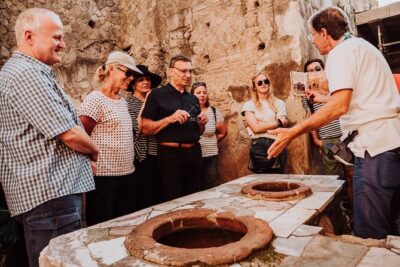
It’s also ideal for couples and small groups, since you can pause whenever something catches your eye—like a painted surface or a doorway detail—without negotiating with a group schedule.
Should you book this skip-the-line audio ticket?
Yes, I’d book it for most people—especially if you’re choosing between Herculaneum and a more rushed, sign-only visit. The audio guide turns the site into an understandable walk, and the included map helps you keep moving with confidence.
Book it if you’re prepared for a little start-up friction (audio collection, possible confusion at the first desks, and occasional numbering mismatch). Go earlier, wear sturdy shoes, and use the map as your anchor. If you do that, you’ll get a far richer Herculaneum than a quick walk-through.
FAQ
What is included with the Herculaneum skip-the-line entry ticket?
It includes an entry ticket to Herculaneum, an audio guide, and a map.
Where do I show my ticket?
Show your ticket at the Herculaneum ticket office.
How long does the visit take?
The duration is listed as 1 day. Many people spend about a few hours exploring at a relaxed pace.
What languages is the audio guide available in?
The audio guide is available in English, French, German, Italian, and Spanish.
Do I need to bring anything?
Bring a passport or ID card and wear comfortable shoes.
Is cancellation free if plans change?
Yes, free cancellation is available up to 24 hours in advance for a full refund.