REVIEW · ERCOLANO
Herculaneum Guided Walking Tour with Entry Ticket
Book on GetYourGuide →Operated by WORLDTOURS S.r.l. · Bookable on GetYourGuide
Herculaneum hits different on foot. With skip-the-line tickets and a guide waiting at the entrance, you start walking right away and get a clear sense of how Romans lived in a town preserved by Vesuvius. This isn’t a giant site to “figure out” on your own—it’s a guided route through streets, homes, and public spaces that survived in unusually good condition.
I especially like two things. First, the Roman-into-real-life context: the guide connects the eruption and burial of the town (79 AD) to what you’re actually seeing—villas, shops, wooden structures, and frescoes that stayed readable. Second, I like the small-group format, which usually makes it easier to hear the story and ask questions without feeling rushed.
One possible drawback: language may shift depending on group size. If your chosen language doesn’t meet the minimum of 6 participants, you may be offered audio guidance instead of a live guide in that language.
In This Review
- Key highlights worth planning around
- Entering Herculaneum at Biglietteria Ercolano (and finding your guide)
- Skip-the-line tickets: why that $41 feels more reasonable than it looks
- The 1.5-hour guided walk inside Herculaneum: what you’ll see
- What’s special about Herculaneum’s preservation
- A realistic pacing note
- Villas, shops, baths, frescoes: turning ruins into daily Roman life
- The Vesuvius connection: why it matters to the way you look at the site
- Language, group size, and audio guides: your best way to avoid surprises
- Who this tour suits best (and who should think twice)
- Is it good value at about $41 for two hours?
- Booking checklist: small steps that make the day easier
- Should you book this Herculaneum guided walking tour?
- FAQ
- Where do I meet the tour guide?
- How long is the guided tour?
- Are skip-the-line tickets included?
- What languages are available?
- Will I always have a live guide in my language?
- Is there a free admission day?
- Is the tour suitable for wheelchair users, and what can’t I bring?
Key highlights worth planning around
- Meet at Biglietteria Ercolano with the Worldtours banner so you can find your group fast
- Skip-the-line entry to start the walk without hanging around ticket counters
- A 1.5-hour guided route inside the archaeological site built around Herculaneum’s best-preserved remains
- See everyday details such as villas, shops, thermal baths, and frescoes tied to the Vesuvius story
- English, Italian, and Spanish options, with a live guide only if the group reaches the minimum for that language
Entering Herculaneum at Biglietteria Ercolano (and finding your guide)
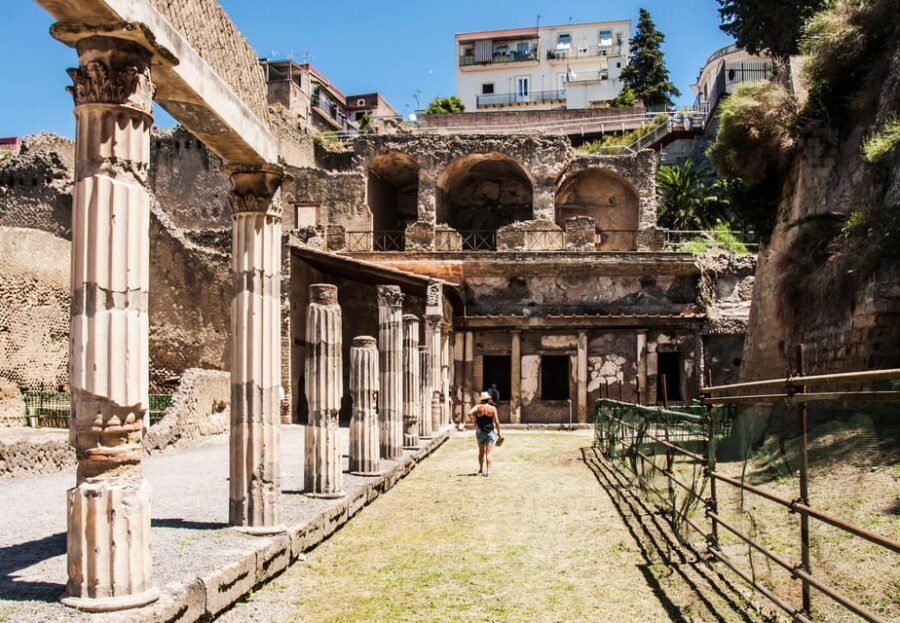
Your tour starts at the ticket office at the Herculaneum site, listed as Biglietteria Ercolano. The guide will carry a Worldtours banner, which is a small detail that saves time when you’re staring at a crowd and trying to guess which group is yours.
This matters because the site experience is time-dependent. Once you’re inside, the best use of your limited two hours is to let the guide set the pace and connect what you’re looking at to what it means—rather than spending your energy orienting yourself.
Practical note: the tour runs in all weather conditions, so dress for the conditions you’ll actually face. And if you’re planning to take photos, wear shoes that work on uneven ground.
Other Pompeii entry tickets and audio guides



Skip-the-line tickets: why that $41 feels more reasonable than it looks
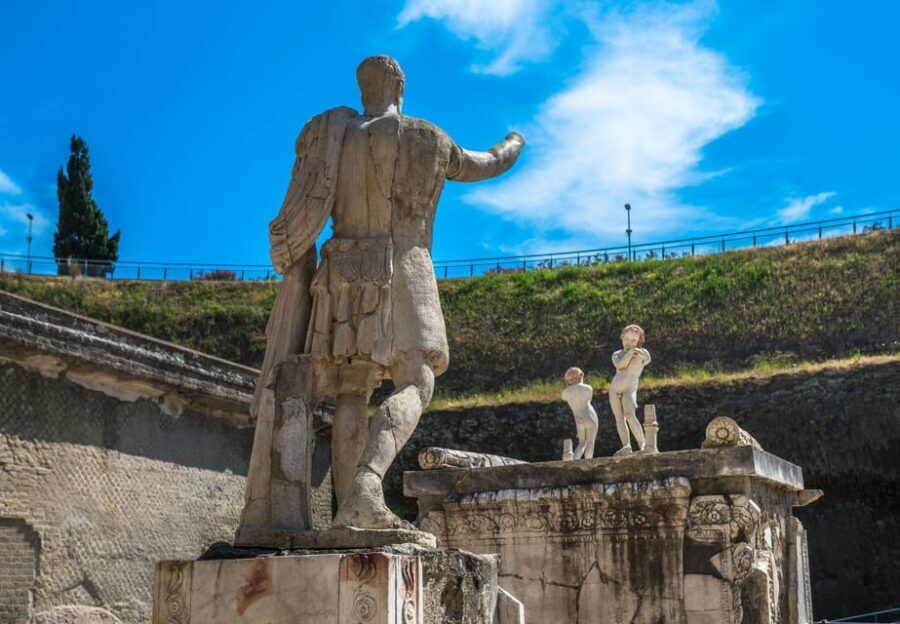
The tour price is about $41 per person for a two-hour outing, and it includes skip-the-line entrance tickets plus an expert licensed guide. In many places, the “skip the line” part is marketing fluff. Here, it helps you get rolling sooner so you can spend more time where your money goes: inside the site with guidance.
You should still treat the experience as a guided highlight walk, not a full self-paced museum session. One review pointed out the site may take longer than you expect, and if you’re the type who loves lingering on details, you might want extra time before or after your tour.
Also remember the fine print that affects value: transportation isn’t included. You’ll need to get yourself to the site, and then the tour handles the time inside.
The 1.5-hour guided walk inside Herculaneum: what you’ll see
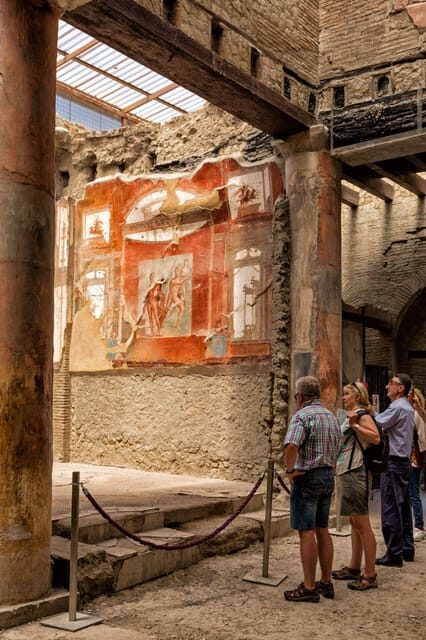
Once you’re through the entrance, your guided portion is about 1.5 hours inside the archaeological area. The goal is to help you move through the site with a story in your head, not just a map under your arm.
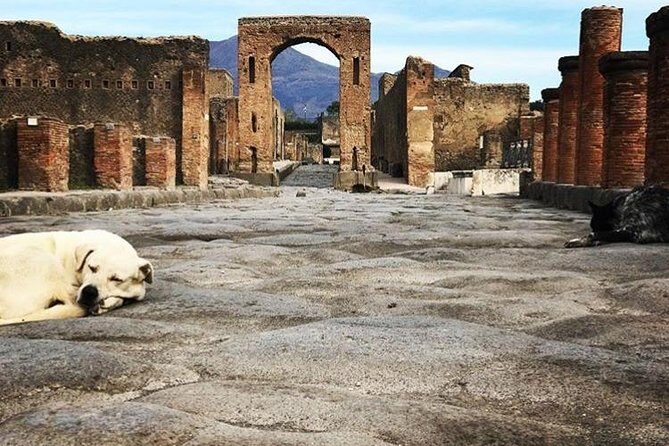
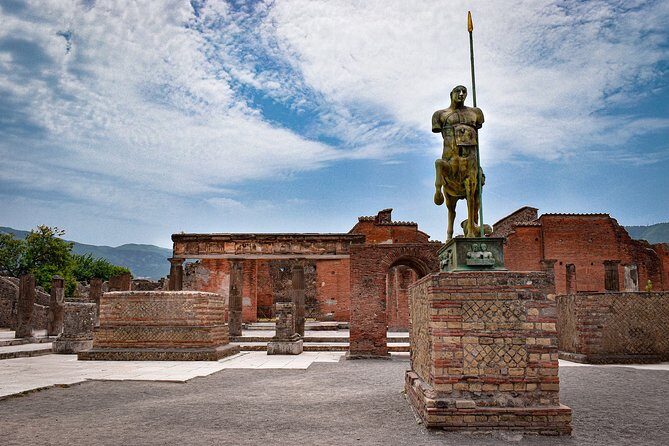
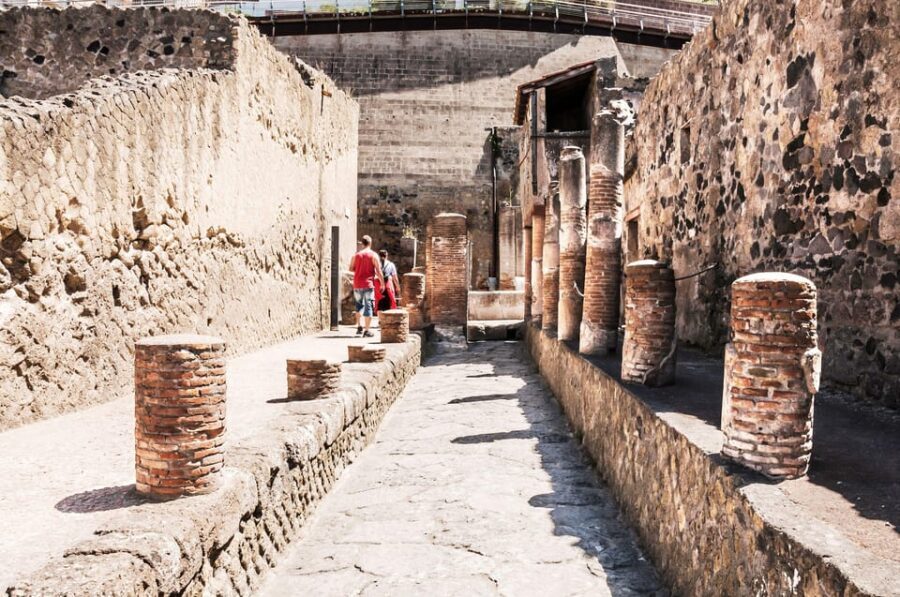
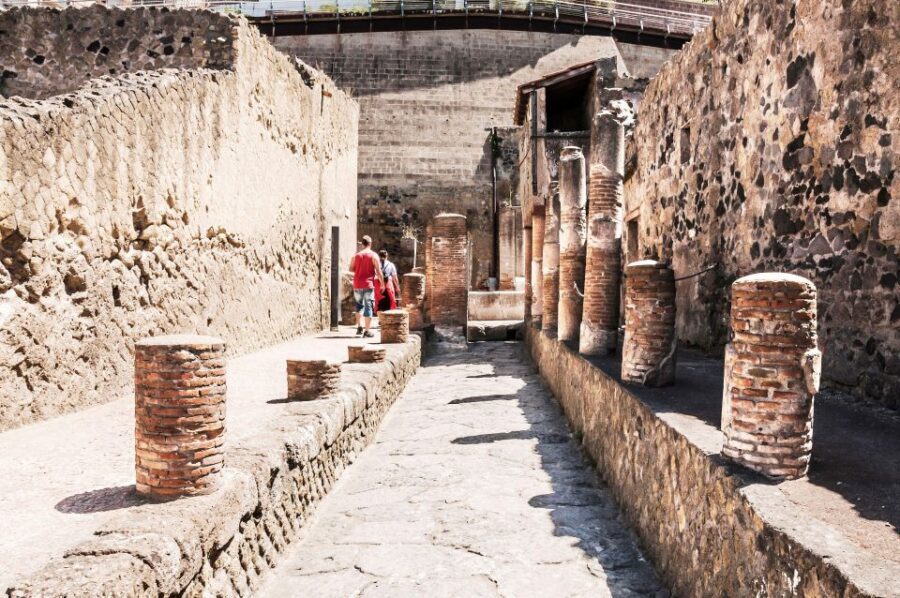
Here’s what you can expect the guide to cover based on the tour description: ancient streets, villas and luxurious residences, shops, thermal baths, and public spaces. The standout is how much you can still make out. Herculaneum is smaller than Pompeii, but the preservation is part of why guides can create such vivid “this is what daily life looked like” explanations.
What’s special about Herculaneum’s preservation
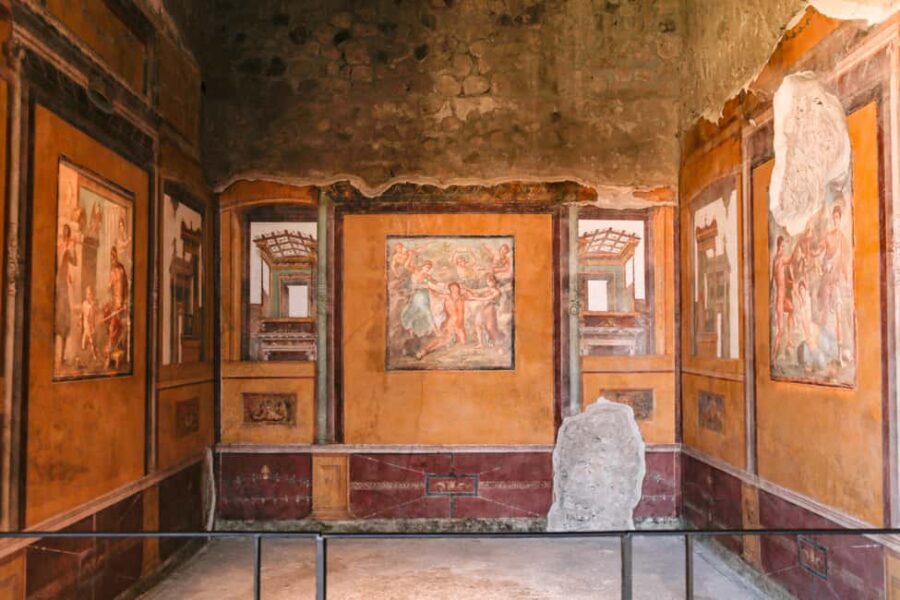
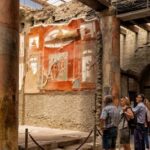
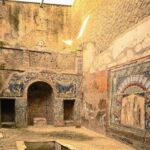
Herculaneum was buried under volcanic material after the eruption of Mount Vesuvius in 79 AD. That burial is what allowed many parts of the town—wooden structures and frescoes, in particular—to survive in remarkable condition. So instead of imagining everything from broken stones, you often get a clearer picture of how the buildings and interiors worked.
A realistic pacing note
The tour is not listed as “sit and talk.” It’s a walk. That means you’ll want comfortable clothes and good foot support. The experience can also feel more intense if you’re taking lots of photos, because the urge to stop for images is strong in a site like this.
Other Herculaneum tours and tickets


Villas, shops, baths, frescoes: turning ruins into daily Roman life
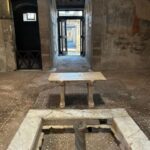
The magic of this tour is that it connects “wow, the ruins are old” to “oh, these were used by real people.” You’ll see the building types that shaped a Roman day: private spaces (villas and residences), work and commerce (shops), social and practical routines (thermal baths), and the shared areas where neighbors encountered each other.
What I like is that the guide isn’t just naming things. The description emphasizes history brought to life with well-researched insights. In other words, you’re not only looking at what survived—you’re learning what it likely meant.
One review highlighted a guide who explained clearly and didn’t drag the pacing. Another mentioned Gelsomina, describing her competence and passion. That kind of delivery matters at Herculaneum, because the site’s power is in details. If the guide talks in a flat way, it’s harder to turn those details into a story you remember.
The Vesuvius connection: why it matters to the way you look at the site
Herculaneum doesn’t work like a typical archaeology stop where you only study artifacts. Here, the eruption story is the structure behind everything you see.
When you understand the town was buried by volcanic material, it changes how you interpret the site. You start noticing the survival of materials that otherwise wouldn’t last: wooden elements and frescoes that can feel surprisingly close to what a visitor might have experienced before 79 AD. That makes the town’s layout feel less abstract.
If you’re someone who likes context—why the town looks the way it does—this tour fits well. If you already know all the basics of Pompeii/Vesuvius, you’ll still get value by learning how Herculaneum’s preservation leads to different kinds of observations.
Language, group size, and audio guides: your best way to avoid surprises
Tours run in English, Italian, and Spanish. A key rule: a live tour guide is provided if there are at least 6 participants in the same language. If the minimum isn’t met, each participant receives an audio guide.
This is a big deal for planning. In practice, it means you can’t assume that a specific language request will be locked in. One painful example described a situation where the intended Italian live tour didn’t match group reality. The outcome was either switch to English or use audio guidance—plus a guide who handled communication in more than one language.
So here’s my practical advice: book with your language preference in mind, but also be ready with Plan B (audio guidance or switching languages). And keep an eye on your emails for any meeting-time updates.
Who this tour suits best (and who should think twice)
This is a strong fit for:
- You want a guided walk that makes Herculaneum easier to understand
- You like Roman everyday life stories: homes, shops, baths, public spaces
- You prefer a smaller-group feel so you’re not lost in a crowd
It’s not suitable for:
- People with mobility impairments and wheelchair users, based on the tour’s suitability note
- Anyone planning to bring items that aren’t allowed, since the tour disallows pets, baby strollers, and luggage or large bags
- Unaccompanied minors (not allowed)
If you’re traveling with kids, think about this as a site visit with walking involved. You’ll want to manage stamina and attention span, since the experience is a guided route rather than a playground-style activity.
Is it good value at about $41 for two hours?
For $41 per person, you’re paying for three things: a licensed guide, skip-the-line tickets, and a guided walking route inside the site. That can feel like a lot if you compare it to a private option elsewhere, especially if you’re used to bargaining your way into lower-cost add-ons. But here, the skip-the-line part and the guide-led interpretation are what justify the price.
It’s also a fair price for a time-efficient format. You get a route in about two hours total, with 1.5 hours of guided time inside the archaeological area. If your goal is “see the best-preserved pieces and understand what they mean,” it’s money well spent.
Where value may drop slightly: if you’re the type who wants hours of slow wandering and you don’t like being guided. One comment suggested the site may be better with more time (around three hours). If that’s you, plan to add extra time on your own outside the tour window.
Booking checklist: small steps that make the day easier
Before you go, pack the essentials:
- Bring passport or ID
- Wear comfortable shoes for walking
- Bring a camera if that’s your style
- Dress for weather, since the tour runs in all conditions
In your head, set these expectations:
- Meet at the ticket office and look for the Worldtours banner
- Watch for email updates on meeting time
- Understand that group size affects guide language, with audio guidance as the fallback
Should you book this Herculaneum guided walking tour?
If you want a guided experience that helps you understand what you’re seeing—especially the way Herculaneum’s preservation reveals Roman daily life—this tour is a solid choice. The combination of skip-the-line entry, a licensed guide, and a focused two-hour format is practical, and the site benefits a lot from having context as you walk.
I’d skip it if you’re wheelchair-dependent or mobility-limited, or if you want a long, fully self-paced visit where you can wander without group pacing. And if language is crucial for your enjoyment, book with a Plan B mindset due to the live-guide minimum of 6 participants.
FAQ
Where do I meet the tour guide?
Meet at the Ticket office of the Herculaneum site (Biglietteria Ercolano). The guide will have a Worldtours banner.
How long is the guided tour?
The total experience is 2 hours, including about 1.5 hours of guided time inside the archaeological site.
Are skip-the-line tickets included?
Yes. Skip-the-line entrance tickets are included.
What languages are available?
The tour offers live guidance in English, Italian, and Spanish.
Will I always have a live guide in my language?
A live tour guide is provided only if there are at least 6 participants in the same language. Otherwise, participants receive an audio guide.
Is there a free admission day?
According to regional regulations, admission is free on the first Sunday of each month.
Is the tour suitable for wheelchair users, and what can’t I bring?
It is not suitable for people with mobility impairments or wheelchair users. Pets, baby strollers, and luggage or large bags are not allowed.