REVIEW · POMPEII ARCHAEOLOGICAL SITE
Pompeii: Entry Ticket with Optional Audio Guide
Book on GetYourGuide →Operated by GetYourGuide Tours & Tickets GmbH · Bookable on GetYourGuide
Pompeii rewards the unhurried. This ticket is a smart way to visit a UNESCO site without playing ticket-line roulette, and I like that you get a reserved entry ticket plus an optional audio guide so you can move through the ruins on your schedule. It’s the kind of self-guided setup that makes Pompeii feel less like a checklist and more like walking through a real city that happened to be frozen in time.
One thing to plan for: the first steps can feel slightly tangled. The audio guide pick-up happens at the official desk near Porta Marina Superiore, and a few issues like confusing meeting-point details, signposting, or an audio track not lining up with what’s visible (because some areas/buildings may be closed) can slow you down before you’re in your groove.
Key points I’d plan around
- Pompei Express vs Pompei+: decide early because the extra suburban villas are a big portion of the payoff
- Audio guide pick-up location matters: you collect it at the official desk near Porta Marina Superiore
- Headphone rules are strict: Bluetooth headphones don’t work with the device, and headphones aren’t included
- Pompeii is huge: build your day around walking time, not just ticket time
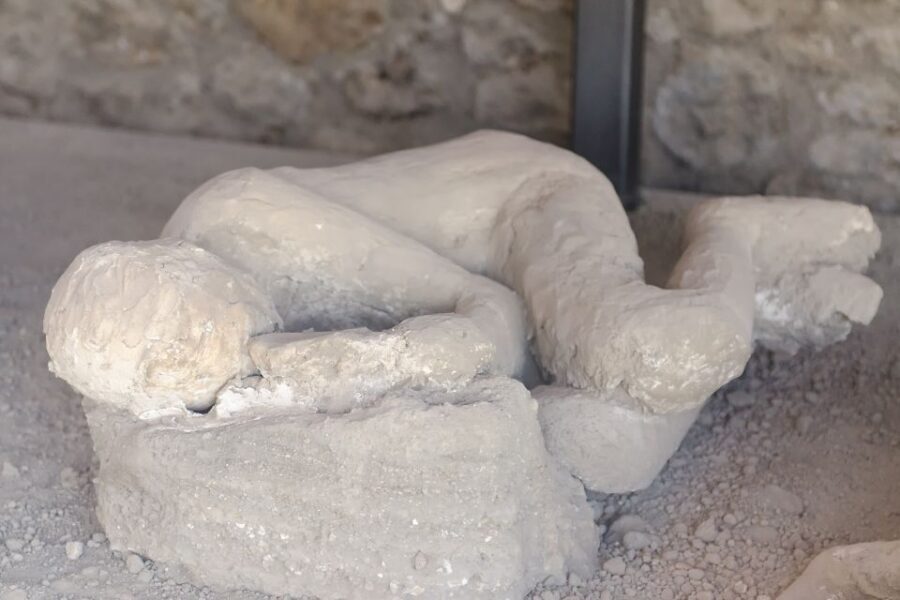
- Plan for the farthest stops: key displays like the petrified bodies can be at the far end of the site
- Accessibility is addressed: the site is wheelchair accessible
In This Review
- Pompei Express vs Pompei+: what changes in what you see
- Getting in without stress: vouchers, entrances, and quick orientation
- Audio guide pick-up at Porta Marina Superiore and the headphone reality
- Your walk through Pompeii: how to pace the Roman city grid
- The city’s daily rhythm: markets and lunch corners
- Public baths and mosaics
- Hellenistic influences: the House of the Faun
- Temples and the big-name gods: Venus, Apollo, Jupiter
- The amphitheater: imagine the crowd
- Villa Mysteries and the suburban villas: why Pompei+ feels like a bonus trip
- Practicalities that make or break your day: walking, luggage, and toilets
- What the audio guide does best (and where it can frustrate you)
- Price and value: is $26 a fair deal for Pompeii?
- Who this is best for: self-guided explorers, art lovers, and time-crunch planners
- Should you book this Pompeii ticket with optional audio guide?
- FAQ
- What is included with Pompei Express versus Pompei+?
- Where do I collect the audio guide?
- Do I need headphones for the audio guide?
- What do I need to bring to visit Pompeii?
- Are there last entry times for the Pompei+ option?
- Is this activity wheelchair accessible?
Pompei Express vs Pompei+: what changes in what you see
The biggest decision here is which ticket level fits your day: Pompei Express or Pompei+.
With Pompei Express, you’ll visit the ancient city of Pompeii itself. That means the core urban grid—streets, temples, theaters, villas inside the main archaeological area. It’s the best choice if you want the essentials and you’re short on time.
With Pompei+, you add suburban villas outside the main area. The ticket includes:
- Villa of the Mysteries
- Villa of Diomedes
- Villa Regina in Boscoreale with Antiquarium
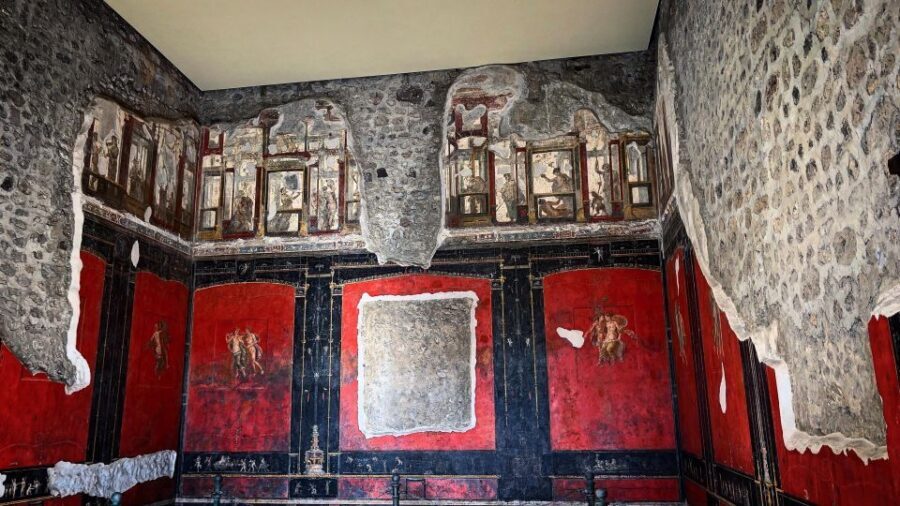
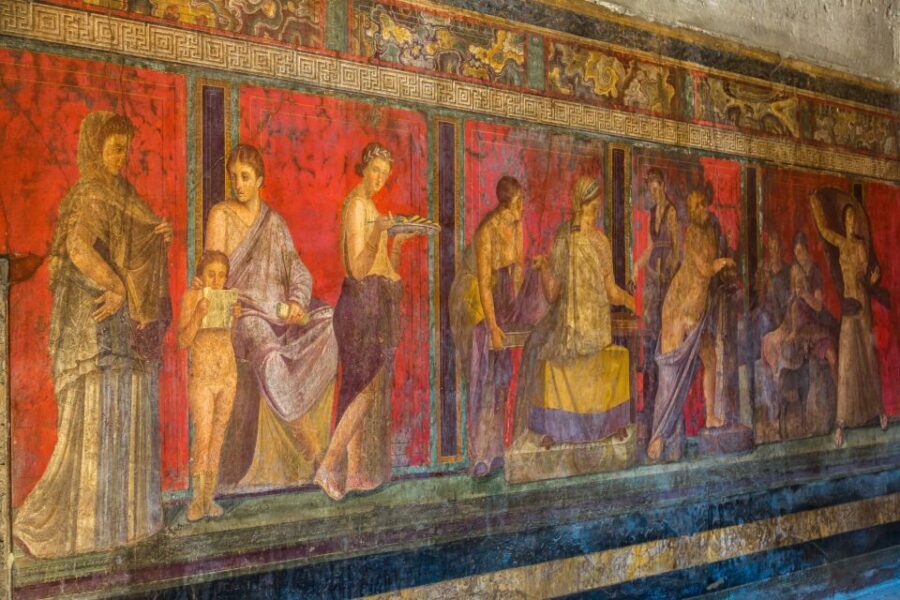
If you’ve been dreaming about Pompeii’s fresco-covered rooms, you’ll feel the difference with Pompei+. The villas are the part that often turns a “yes, I saw Pompeii” trip into a “that’s why Pompeii is famous” trip.
One practical point: last entry times are different for Pompei+. Winter (Nov 1 to Mar 31) is 3:30 p.m., while summer (Apr 1 to Oct 31) is 5:30 p.m. So if you like slow mornings and late starts, Pompei+ can get tighter.
Getting in without stress: vouchers, entrances, and quick orientation
Pompeii can be a magnet for lines. This ticket helps you dodge some of that by giving you a reserved entry and a voucher you can keep on your phone. In practice, the main advantage isn’t magic—it’s that you can get sorted quickly and start walking.
That said, the early minutes can make you feel like you’re wandering in circles. A few people report unclear meeting points and signposting, and one tip that comes up often is to use the right entrance route for easier entry. When things are busy, the wrong turn can add a frustrating queue to your morning.
My advice: give yourself margin. Don’t schedule a tight connection immediately after your Pompeii entry. Even if you book online, you may still need a little time to find the audio guide desk, confirm you’re using the correct entry path, and settle into the layout.
Other Pompeii entry tickets and audio guides
Audio guide pick-up at Porta Marina Superiore and the headphone reality

If you choose the audio guide option, you need to understand the system, because it affects how smoothly your day goes.
Audio guides can only be picked up and returned at the park’s official audio guide desk near the Porta Marina Superiore area. That means you can’t casually grab it elsewhere or forget to return it at the end and call it a day. You’ll want to budget time for one quick stop early.
Also note these audio guide rules:
- The audio guide desk requires a valid ID as a deposit to rent the device
- Headphones are not included
- Bluetooth headphones don’t work with the audio guide device
This last point matters more than it sounds. If you show up with wireless earbuds, you might end up stuck. I’d pack a wired backup just in case, or plan to buy compatible headphones on-site.
Language coverage is listed as available in multiple options (including English, German, French, Italian, and Spanish for the digital guide; and additional listed languages such as Chinese, Japanese, Portuguese, and Russian). If language choice is important to you, double-check you’re selecting the version you want when you book.
Finally, the good news: many people find the audio guide helpful for orientation, like a built-in map approach. A few reports also say the device can be confusing at first or may not always track location perfectly. That’s normal tech-life with ancient-city GPS. When it happens, don’t panic—use the signs and the printed site layout cues if you can, then re-sync your bearings.
Your walk through Pompeii: how to pace the Roman city grid

Pompeii isn’t one single thing. It’s a whole city with layers of public life, private life, and ritual spaces. The best way to experience it with this ticket is to treat it like a choose-your-own route day.
Here’s what you can realistically build your walk around, in a way that matches what’s emphasized most often:
The city’s daily rhythm: markets and lunch corners
You’ll see places where Romans would have shopped and eaten. Think market life rather than “museum life.” If you want the city to feel human, spend time imagining trades, snack stops, and the flow of people through the street network.
Public baths and mosaics
Pompeii does bathrooms and beauty with seriousness. The public bath areas and their mosaics are a major highlight. Don’t rush past the decorative details. Even if you don’t care about Roman tiles, the mosaics help you understand that this wasn’t a “rough and ready” culture—people invested in comfort and aesthetics.
A few more Pompeii Archaeological Site tours and experiences worth a look




Hellenistic influences: the House of the Faun
The House of the Faun is a commonly referenced stop, and it’s worth it if you want a sense of how different Mediterranean styles blended. This is where grand domestic space helps you grasp the social gap between wealthy families and everyone else.
Temples and the big-name gods: Venus, Apollo, Jupiter
You can also stroll between temple spaces tied to major deities. This gives you a feel for how religion shaped public space—street corners weren’t just for commerce, they were also for ritual meaning.
The amphitheater: imagine the crowd
The amphitheater is another standout. Even if you don’t know Roman show schedules, the shape and scale help you picture how thousands of people could gather to watch drama and spectacle.
Villa Mysteries and the suburban villas: why Pompei+ feels like a bonus trip

If you go with Pompei+, you’re extending beyond the core ancient city. That matters because Pompeii’s “wow factor” often comes from places that show private wealth and everyday luxury up close.
The big three suburban stops are:
- Villa of the Mysteries
- Villa of Diomedes
- Villa Regina in Boscoreale with Antiquarium
The Villa of the Mysteries is repeatedly singled out for its preserved frescoed rooms. If you love art and interior detail, this is where your brain will stop treating Pompeii like outdoor ruins and start thinking about painted walls, daily routines, and how people lived when the city was still alive.
One heads-up: the audio guide track may describe buildings even when you can’t actually see everything. Some buildings can be closed or not accessible at the moment you visit. That doesn’t ruin Pompeii—it just changes how much you get from the audio. If this happens, keep moving. The physical place still tells its own story.
Practicalities that make or break your day: walking, luggage, and toilets

A ticket like this only works well if you manage your body and time. Pompeii rewards shoe choice.
A few practical points that help:
- Free luggage storage is available, which matters because you’ll walk a lot and you don’t want to haul bags
- The site is large, so plan for a true walking day, not a quick stroll
- There are plenty of toilets around, which is one of those unglamorous things that can save your afternoon
- Comfortable shoes are non-negotiable
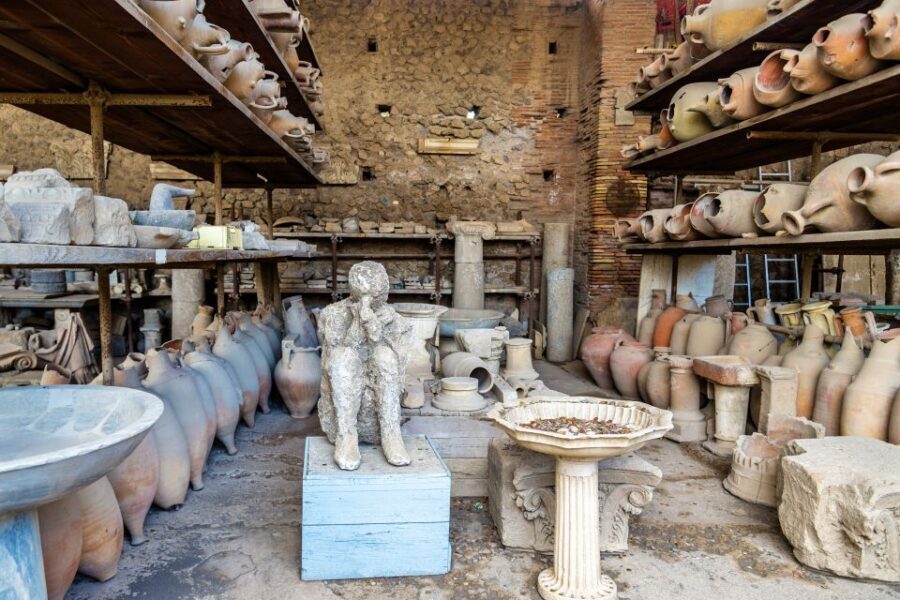
Also, build your route around the fact that some of the most referenced displays can be at the far end of the site. One commonly mentioned example is the petrified bodies area. If you save that for the end when you’re tired, you might hit it late. If you hit it too early, you might miss the emotional pacing. I’d pick based on your energy: either go there when you’re fresh, or schedule it for mid-afternoon after you’ve enjoyed the core city.
And yes, Pompeii can feel like a hike. That’s not a criticism—it’s part of how the ancient city layout works on foot.
What the audio guide does best (and where it can frustrate you)

The audio guide is the reason many people feel like the ruins have context instead of feeling like random stone blocks.
Where it tends to shine:
- It helps you understand what you’re looking at—streets, public buildings, temples, and domestic spaces
- It can function like a built-in orientation tool, helping you avoid wandering aimlessly
- It adds a narrative layer to major stops like amphitheater spaces and villa interiors
Where it can frustrate you:
- Some reports say the audio guide setup can be confusing at first
- A few mention the device not recognizing location properly
- If certain buildings on the route aren’t accessible, you might hear explanations without the exact view you expected
My advice is simple: treat the audio guide like a guide, not like GPS destiny. When you spot a major landmark and the audio begins, good. If it doesn’t match perfectly, keep moving and let the site do the teaching.
Price and value: is $26 a fair deal for Pompeii?

At $26 per person, this ticket sits in the “serious value” zone compared with the cost of doing Pompeii piecemeal.
Why it can feel like good value:
- You get reserved entry, which helps cut down stress at the gates
- The audio guide option (and the digital guide availability) adds interpretation so you’re not paying only for access
- The Pompei+ upgrade can be worth it if you genuinely want the suburban villas, not just the ancient street grid
Is it ever not the best value? Possibly. One review notes you can purchase a ticket at the entrance for a few dollars less. So if you’re price-only focused and you don’t need the smoother process, you might save a little. But if you value time and structure—especially on a high-demand day—the extra cost can buy you a calmer start.
Also consider EU citizens under 18, and disabled visitors and their relatives, can have free Pompeii entry. If that applies to your group, your best value isn’t this add-on—it’s eligibility.
Bottom line: for most people, $26 plus the audio guide option is a practical way to spend a day where the stories actually stick.
Two planning notes if you are coming from further afield. Day-trippers from Rome usually book the packaged version instead, and this Pompeii and Vesuvius day trip with a pizza lunch is the one with transport handled. If you want the crater as well as the ruins, cross-check conditions on the Pompeii archaeological park site and the Vesuvius National Park site, which posts trail closures in bad weather.
Who this is best for: self-guided explorers, art lovers, and time-crunch planners

This ticket fits best if you like moving at your own tempo.
You’ll likely enjoy it if:
- You want to see a lot without being stuck in a group pace
- You enjoy history when it comes with context, not just signage
- You want the option to prioritize highlights like temples, baths, the amphitheater, and villa stops
- You’re okay with walking as the main activity
It might be less ideal if:
- You hate tech setups and troubleshooting at ticket desks
- You plan to do Pompeii in a quick sprint with zero buffer time
- You don’t want to deal with rules like needing compatible headphones
For families, it can work well too since the self-guided format lets adults and kids adapt. For older visitors or wheelchair users, it’s explicitly listed as wheelchair accessible, and the site’s layout and facilities help make the experience manageable.
Should you book this Pompeii ticket with optional audio guide?
I’d book it if your goal is a full Pompeii day with a lower-stress entry and better understanding than basic wandering. The reserved entry matters. The audio guide matters more than you’d think once you’re standing in front of ruins that need context to land.
Choose Pompei Express if you want the core ancient city and you’d rather keep the day simple. Choose Pompei+ if you care about frescoed villa interiors and want the suburbs too—because that’s where the trip can feel like it went beyond the obvious.
Just don’t underestimate the setup basics: pick up the audio guide at the official desk near Porta Marina Superiore, bring an ID for the deposit, and plan for wired headphones. Do those things, and Pompeii becomes one of those rare places where every turn feels like a real street you could almost step back into.
FAQ
What is included with Pompei Express versus Pompei+?
Pompei Express includes the ancient city of Pompeii only. Pompei+ includes the ancient city plus suburban villas: Villa of the Mysteries, Villa of Diomedes, and Villa Regina in Boscoreale with Antiquarium.
Where do I collect the audio guide?
You collect the audio guides inside the Pompeii Archaeological site at the audio guide desk near the ticket office, in the Porta Marina Superiore area.
Do I need headphones for the audio guide?
Yes. Headphones are not included, and Bluetooth headphones do not work with the audio guide device.
What do I need to bring to visit Pompeii?
Bring a passport or ID card.
Are there last entry times for the Pompei+ option?
Yes. Last entry time for Pompei+ is 3:30 p.m. in winter (Nov 1 to Mar 31) and 5:30 p.m. in summer (Apr 1 to Oct 31).
Is this activity wheelchair accessible?
Yes. The tour is listed as wheelchair accessible.