REVIEW · NAPLES
Herculaneum Small Group Tour and Ticket With an Archaeologist
Book on Viator →Operated by Askos Tours · Bookable on Viator
Herculaneum feels like a city paused mid-sentence. This small-group walk brings an archaeologist onto the same path you’ll take, with skip-the-line entry so you spend your time looking at houses and baths instead of queuing. The ruins are compact enough for a tight visit, but the explanations make it feel much bigger than the stone footpaths.
I especially like how the tour zooms in on specific features you’d miss alone, from the deer statues at the House of the Deer to the carbonised wooden traces at richer homes. The main drawback to plan for is that this is a standing-heavy route with some brisk pacing, so if you need frequent sitting breaks, you’ll want to manage expectations.
In This Review
- Key things to know before you go
- Herculaneum in 2 hours: why it clicks for first-timers
- Price and value: what $53.81 really covers
- Meeting at Corso Resina: get there without stress
- The walking route: what you’ll see at each stop
- House of the Deer
- La Terrazza di M. Nonio Balbo
- College of the Augustales
- Casa del Rilievo di Telefo
- Partem Domus lignea – Casa del Tramezzo di Legno
- House of the Skeleton
- Central Thermae
- House of the Black Salon
- Casa Sannitica
- Casa del Bel Cortile
- House of the Grand Portal
- Headsets, pace, and comfort on rain-soaked stone
- Tickets, museum areas, and how to use your time after the tour
- Who should book this Herculaneum archaeologist tour?
- Quick decision: should you book?
- FAQ
- How long is the Herculaneum small group tour with an archaeologist?
- What group size is this tour?
- Where do we meet for the tour?
- Is the tour in English?
- What’s included in the ticket price?
- Are dogs allowed?
Key things to know before you go
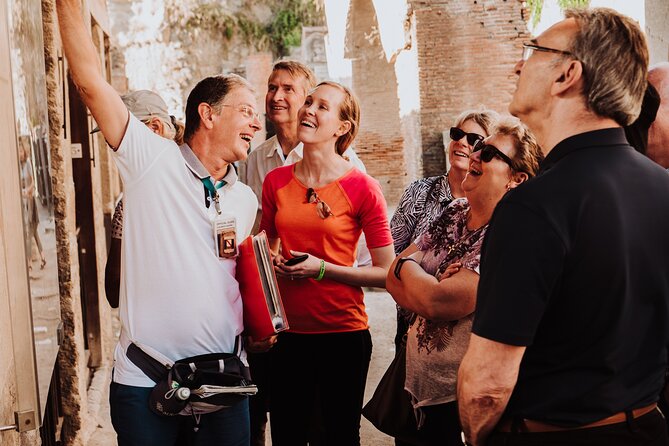
- Max 20 people with an archaeologist-trained guide, so questions don’t get lost.
- Skip-the-line tickets included, which can save real time at the entrance.
- Headsets provided, helpful when you’re close to other groups or in rain.
- A focused 2-hour route through major houses and bath complexes.
- Small details matter here: wooden partitions, frescoed rooms, and sculptural finds.
- Weather-proof scheduling: the tour operates in all weather, so pack for it.
Herculaneum in 2 hours: why it clicks for first-timers
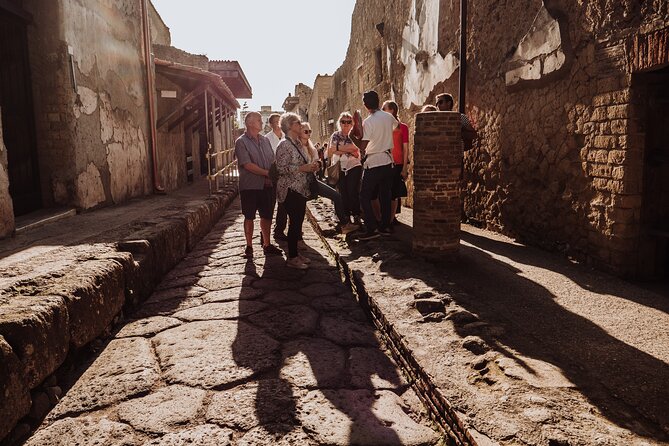
If you only have a short window near Naples, Herculaneum is a smart pick. The site is smaller than Pompeii, and the layout is easier to follow on foot. That matters because the tour is designed as a walking circuit: you get a sequence of stops that builds a picture of daily life—homes, public baths, and elite spaces—without turning the day into an all-day marathon.
The archaeologist angle is what makes the time feel worthwhile. Instead of generic narration, you’re guided through recognizable “signals” in the architecture: where people gathered, how the bath system was organized, why certain rooms were set up the way they were, and what survived under volcanic material. It’s not just what you see; it’s how the guide interprets it.
The fact that the group stays small (up to 20) also helps your brain. In bigger tours, you’re often stuck with a sea of people and no room to ask. Here, you tend to get closer, and the headsets do their job.
If you're still narrowing it down, here are other tours in Naples we've reviewed.
Price and value: what $53.81 really covers
At $53.81 per person, you’re paying for more than a stroll. The price includes:
- Entrance tickets to Herculaneum
- Licensed guidance with an archaeological background
- Headsets
- A small group limit
That last part sounds like a technical detail until you experience the difference. When you’re moving through rooms and corridors where sightlines are limited, having a guide who can keep the group together without rushing everyone becomes part of the value.
It also helps that Herculaneum admission tickets are separate if you buy them on your own (16 euros for adults is listed). With this tour, you’re bundling entry plus interpretation, and the skip-the-line setup reduces the time you might otherwise spend waiting to get inside.
If you’re the type who likes to understand what you’re looking at—fresco themes, room functions, why a house name exists—you’ll feel the cost makes sense. If you mostly want a casual wander with photos, you might prefer a lighter self-guided approach. But for most people visiting Herculaneum for the first time, a guided archaeological walk is the sweet spot.
Meeting at Corso Resina: get there without stress
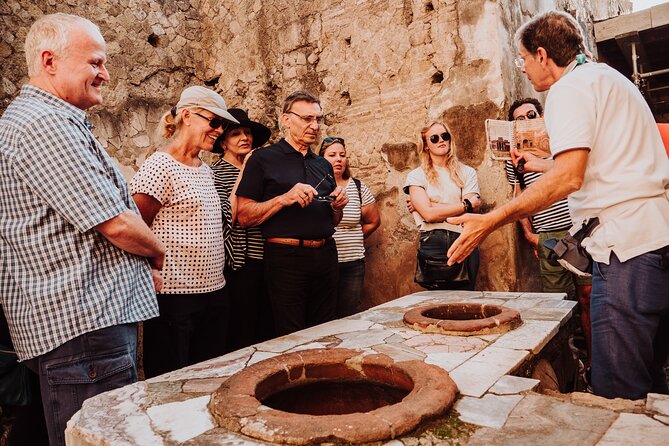
The meeting point is at the ticket office of the Herculaneum ruins, near Corso Resina 187, 80056 Ercolano (Ercolano NA), Italy. The tour ends inside the ruins.
Getting there is straightforward:
- By train: take the Circumvesuviana to Corso Resina 1. It’s about a 10-minute walk.
- By car: you can park nearby on via Pignalver (there’s unguarded parking close to the meeting area).
Two practical tips:
- Arrive a bit early so you can locate the office and settle in before the group starts.
- Bring layers. Even when the forecast looks fine, rain and wind can change how comfortable you feel on stone paths.
The walking route: what you’ll see at each stop
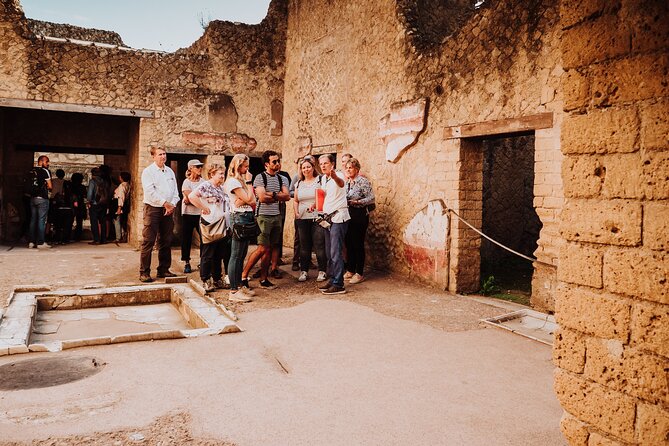
This tour is built around named houses and public buildings, each with a specific detail that anchors what life might have looked like.
House of the Deer
This one is a crowd-pleaser for a reason: the house is named for marble statues of stags/deer found in the peristyle. When you’re standing there, ask yourself what that kind of decorative setup suggests about status and taste. Even if you don’t know the names of every architectural element, you can read the intention behind the display.

La Terrazza di M. Nonio Balbo
Here, the focus shifts from art to civic identity. M. Nonius Balbus was a major benefactor tied to restoration and building efforts. After his death, honors were recorded in a long inscription on a funeral altar. This stop is a good reminder that elite life wasn’t only about private luxury; it also connected to public rebuilding.
College of the Augustales
This building is tied to the cult connected to Emperor Augustus and the Collegium Augustalium. Even when you’re looking at stones that don’t look dramatic at first glance, the guide’s interpretation helps you picture what meetings, ritual behavior, and local governance may have involved.
Casa del Rilievo di Telefo
This house has a name that points to a sculptural element, and it’s also noted for something practical: it may have belonged to a leading benefactor, and it had private access to the adjoining Suburban Thermae to the south. That kind of connection tells you elite households weren’t always separate from public life; they sometimes had convenient routes that blurred the line.
Partem Domus lignea – Casa del Tramezzo di Legno
This is one of the stops you’ll remember for the survival story. It highlights the wooden partition—still preserved in a way that normally wouldn’t survive. When you hear why this matters, you start noticing the contrast between what you can see clearly and what you have to imagine from the layout.
House of the Skeleton
The name sounds heavy, but it reflects a real discovery: it was named after human remains found in 1831 in a second-floor room. The guide’s role here is important. You want to understand what the find suggests about the site’s later history and the way the ruins were uncovered, not just the shock factor.
Central Thermae
Now you get public life. The Central Thermae date to the beginning of the 1st century AD and were divided, in typical Roman fashion, into men’s and women’s baths, with separate entrances. This is a great stop for architecture-minded travelers because you can see how a single “institution” functioned like two different spaces.
House of the Black Salon
This is one of the more luxurious homes on the route. The monumental entrance still retains carbonised remains of doorposts and the lintel. The contrast here is striking: you’re looking at charred traces, yet the structure communicates wealth and ceremony. It’s also a good stop for photographers, as long as you keep an eye on footing and crowd flow.
Casa Sannitica
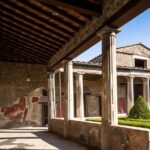
This house is associated with an arrangement typical of the Samnites, an ancient people in mountainous central Italy. You’ll see a splendid atrium and a gallery with Ionic columns, plus frescoes. This stop helps you understand that Herculaneum wasn’t one single cultural recipe; it absorbed styles and influences over time.
Casa del Bel Cortile
This one is original in design: instead of a classic atrium, it has a courtyard with a stairway and a stone balcony. If you like reading how families moved through space—what was visible from where, what created light and airflow—you’ll enjoy this stop, because it’s less about decoration and more about layout.
House of the Grand Portal
You’ll finish with a domus in the central area, noted for various environments and colonnati, plus frescoes and charred traces of wooden parts. This final stop works well as a wrap-up: after seeing both public and private spaces, the “grand portal” concept lands with more meaning.
Headsets, pace, and comfort on rain-soaked stone
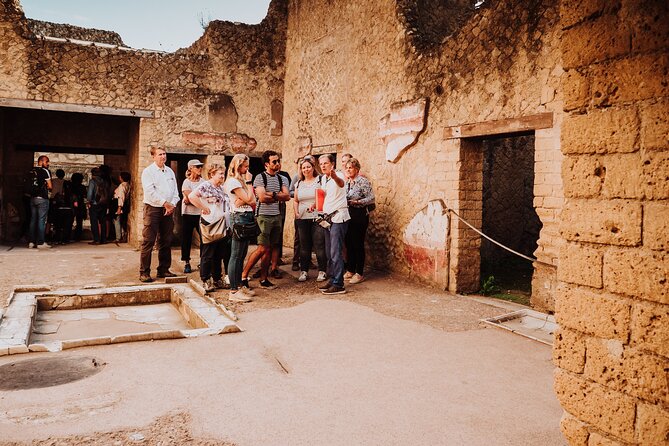
The tour includes headsets, and that’s a big deal at archaeological sites where groups bunch up. You’re not stuck craning your neck for a whisper, and you can keep pace without constantly asking where to look next.
That said, plan for the physical reality of this route. It’s a 2-hour walk that involves a lot of standing and walking, with limited time to sit down. In the rain, the pace can feel more intense simply because everyone moves carefully and tries to keep warm. Wear grippy shoes.
One more comfort note: the guide’s job is to keep you hearing clearly and moving as a group. Guides like Luciano Leone and Michaele are specifically described as engaging and attentive in how they explain details and keep people included. That matters if you need to manage hearing or attention through a site visit.
Tickets, museum areas, and how to use your time after the tour
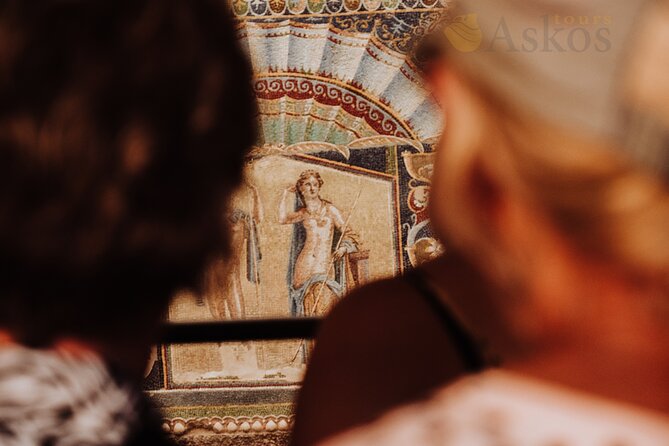
Your entry is handled with the tour, so once you’re inside, you can build your follow-up at your own speed. The ticket coverage typically pairs the guided walk with access to the onsite museum/areas tied to the visit.
When you get to that part, shift gears. The ruins give you the shape of life; the museum areas help fill in what those rooms held—things like recovered items and details that are harder to see in situ. If you’re the type who likes to confirm a detail the guide mentioned, this is where it clicks.
If you’re short on time, even a quick museum pass can feel like it doubles the tour value because you’re moving from interpretation to artifacts.
Who should book this Herculaneum archaeologist tour?
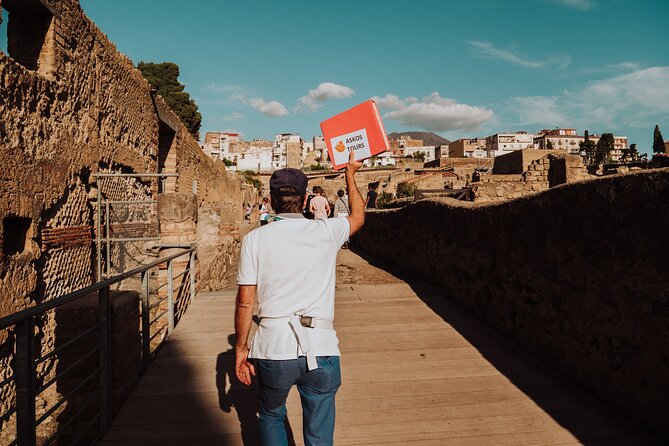
This tour is a great match if:
- you like context (how archaeologists read clues in buildings and objects)
- you want a tight route without planning each stop
- you’re traveling with a family group that can handle a guided walk of about 2 hours
- you appreciate small-group dynamics and clear audio through headsets
It may be less ideal if:
- you need frequent seated breaks
- you prefer total silence and no guidance
- you want a long, slow browse with lots of independent wandering
On the flip side, if you’re debating Herculaneum versus another big site, this one gives you a strong, organized overview without feeling like you’re rushing through a maze.
Quick decision: should you book?
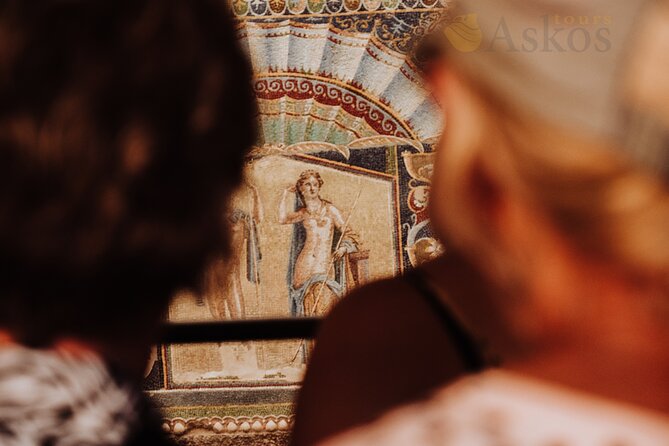
I’d book it if you want your money to buy understanding, not just access. For $53.81, the combination of archaeologist-led context, skip-the-line entry, and headsets is what turns Herculaneum from pretty ruins into a place you can actually explain to others later.
I’d think twice if standing for a couple hours is a problem for you, or if you prefer to set your own pace with no group structure. In that case, you could still visit independently, but you’d be giving up the guide’s ability to point out the “why” behind what’s right in front of you.
FAQ
FAQ
How long is the Herculaneum small group tour with an archaeologist?
It runs for about 2 hours.
What group size is this tour?
The group is limited to a maximum of 20 people per guide.
Where do we meet for the tour?
You meet at the ticket office of the Herculaneum ruins, with the listed start location being Corso Resina, 187, 80056 Ercolano NA, Italy. The tour ends inside the ruins.
Is the tour in English?
Yes. The tour is offered in English.
What’s included in the ticket price?
The price includes guidance and assistance, the Herculaneum entrance fee, a small group (max 20), a licensed guide with archaeological background, and headsets. Meals and drinks are not included, and private transportation is not included.
Are dogs allowed?
Dogs are allowed at the Herculaneum Archaeological Park with no breed or size restrictions, but they must be leashed or muzzled, and you need bags for droppings. Access rules are stricter inside certain areas like the Antiquarium, the Boat Pavilion, and domus featuring mosaic floors; there, dogs are only allowed if carried in arms or transported in an appropriate carrier.