REVIEW · POMPEII
Pompeii Private Tour with an Archaeologist and Skip The Line
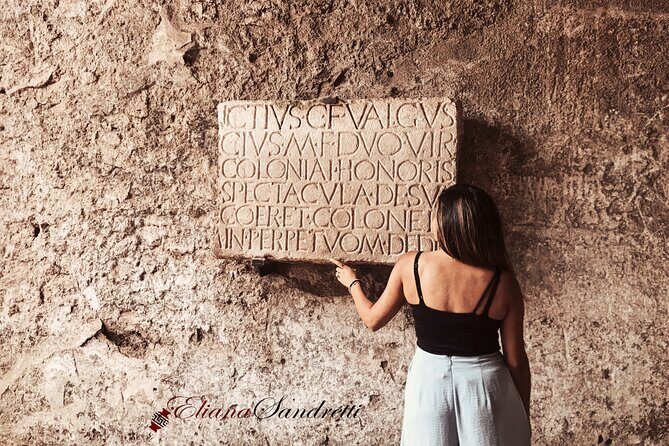
Book on Viator →Operated by ELIANA SANDRETTI · Bookable on Viator
Pompeii feels less chaotic with a real plan. In this private archaeologist-led tour, you hit the big, high-meaning areas of the site fast, with skip-the-line entry once your ticket is sorted. I also like the way the route is built around story, not just sightseeing.
One thing to clock early: the Pompeii site entrance ticket is not included in the tour price. That means you’ll add the on-site admission cost (listed as 19 euros per person), then the skip-the-line benefit kicks in for getting you through faster.
In This Review
- Key things I’d watch for
- Private Pompeii in 2 hours: what you actually get
- Price and logistics: the entrance ticket you must budget
- Meeting at Piazza Esedra: start here, not late
- Pompeii Archaeological Park circuit: theaters, homes, baths, streets, and casts
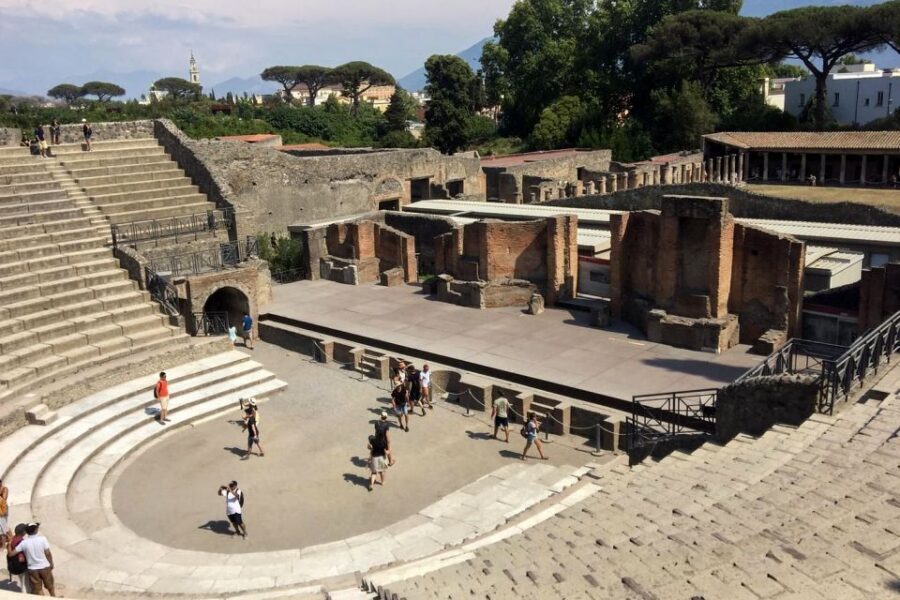
- Small Theater (Odeion) and Roman acoustics
- Teatro Grande: the big stage of the city
- Via dell’Abbondanza: the main street moment
- Granaries of the Forum: amphora deposits and the casts
- Stabian Baths: the Roman spa you can still picture
- Forum di Pompei, Basilica, and Temple of Jupiter: where power lived
- Quadriporticus of the theaters and gladiator barracks
- Vicolo del Lupanare and the Temple of Venus
- Casa del Fauno: luxury in one stop
- The guides: what makes this tour feel worth it
- Who should book this Pompeii private tour
- Should you book this Pompeii private tour?
- FAQ
- Are the Pompeii entrance tickets included in this tour price?
- Does the skip-the-line feature require buying tickets in advance?
- How long is the Pompeii private tour?
- Where does the tour start and end?
- Is this tour private?
- What language is the tour offered in?
- What about children and under-18 tickets?
- What happens if the weather is bad?
- Is food or drinks included?
Key things I’d watch for
- Private pacing for up to 10: you stay with just your group for about 2 hours, so you can ask questions without waiting your turn.
- Skip-the-line only works after ticketing: the tour includes support and a link to buy in advance, but the entrance ticket is still an extra step.
- Roman life in one circuit: theaters, baths, the forum, street markets, the brothel district, gladiator area, and famous casts.
- Handpicked highlights: you don’t just walk anywhere—you stop at the places that explain how Pompeii worked day to day.
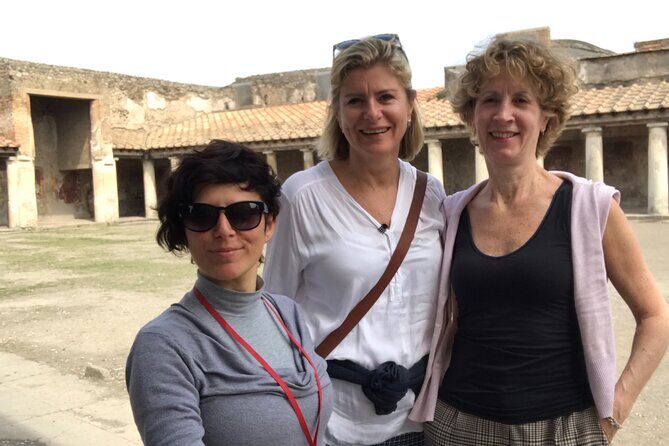
- Guides with serious passion: names that come up in the guide feedback include Luisa, Eliana Sandretti, Antonio, Luciana, and Danilo, with people praising clarity and energy.
Private Pompeii in 2 hours: what you actually get
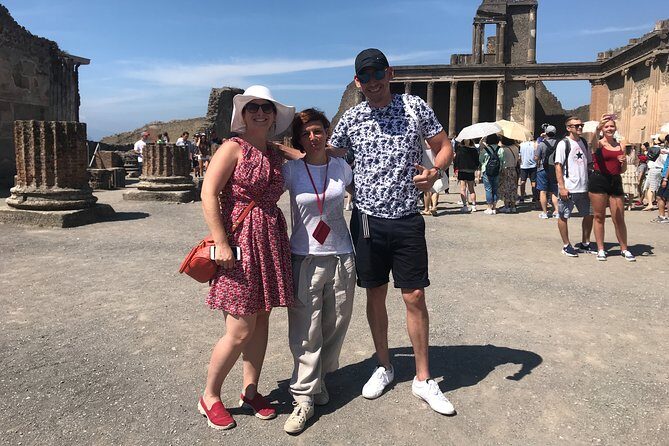
Pompeii is massive. Even if you like ruins, you can burn a whole morning just trying to decide what matters. This tour is designed as a tight, guided route that covers the key spaces you’d otherwise miss or misread.
You’ll move through the Pompeii Archaeological Park for about 2 hours (approx.). It’s not meant to be a slow browse. Think more like a guided sprint with frequent “wait, look at this” moments—especially around everyday Roman spots like shops and public bathing.
Because it’s private for your group (up to 10), you also get a practical advantage: your guide can adjust the pace and angle based on what you want to see—whether that’s the big public buildings, the darker corners like the brothel area, or the quieter details like acoustics and room layouts.
Other Pompeii tours with an archaeologist


Price and logistics: the entrance ticket you must budget
Here’s the part that can trip people up: the tour price is per group, up to 10 people, but the Pompeii entrance ticket is extra. The on-site ticket cost is listed as 19 euros per person (and under-18 visitors get free tickets with ID/passport).
You’ll likely hear the phrase skip the line in the marketing, and the practical truth is this:
- You’re skipping faster once your ticket situation is handled.
- The operator sends you a link one day before your tour to buy the online ticket in advance and avoid the ticket office line.
Also note the tour wording around admission can look confusing because some stops specify admission status. The safe move is to treat the 19-euro Pompeii site entry as the thing you need to purchase so your visit runs smoothly.
Bottom line on value: yes, 375.05 USD per group isn’t cheap. But for families, small groups, or anyone who hates wasting time in queues, paying for guidance plus private time can be the difference between seeing a handful of ruins and understanding what you’re looking at.
Meeting at Piazza Esedra: start here, not late
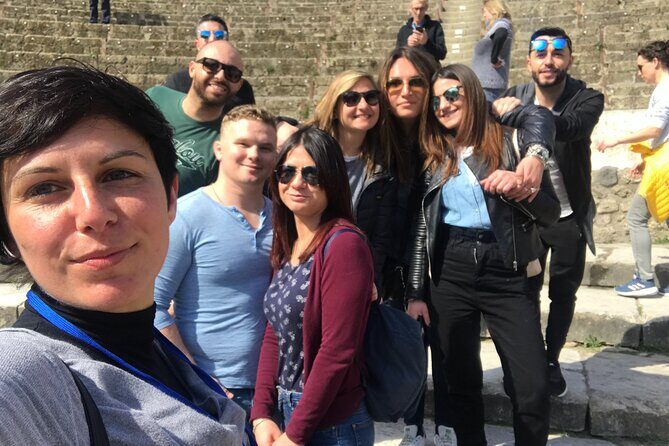
The tour starts at Piazza Esedra, 10, 80045 Pompei (NA), Italy and ends back at the same meeting point.
That matters because Pompeii is easiest when you’re already oriented. Aim to arrive a little early so you’re not rushing at the start—especially if you’re picking up anything in the lead-up to entry.
The good news: it’s marked as near public transportation, so you’re not locked into hiring taxis just to get to the meeting area.
Pompeii Archaeological Park circuit: theaters, homes, baths, streets, and casts
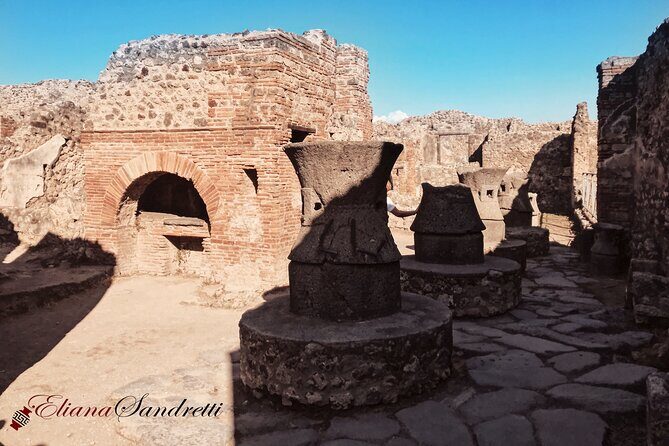
The heart of the tour is the Pompeii Archaeological Park visit, where you’ll cover a lot of the site’s most meaningful zones.
You’ll stop at:
- The Theaters: not only for the architecture, but for what public performances meant in Roman city life.
- Temples and major civic spaces: so you can connect religious buildings with everyday politics and markets.
- A rich house: a snapshot of how wealth lived inside the ruins.
- Stabian baths (spa): Roman bathing as a social routine, not a luxury fantasy.
- Shops and fast food: yes, Pompeii had street-eating culture. You see it through the built spaces.
- Lupanar area: the red-light district setting—useful for understanding how the city worked, even if it’s not for everyone.
- Forum (main square): Pompeii’s public center.
- Area of the Gladiators: training and spectacle culture.
- Casts: the famous casts of people who died during the eruption.
What I like about this stop list is that it mixes “big monuments” with daily life. Instead of only showing you grand structures, the route gives you a sense of routine: where people ate, socialized, worshipped, shopped, and gathered.
Possible drawback: because you’re covering so much ground in 2 hours, each stop is a quick orientation rather than a long, deep visit. If you want to linger and sketch every mosaic, this won’t feel like enough time on its own.
Small Theater (Odeion) and Roman acoustics
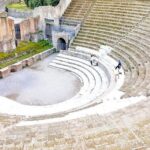
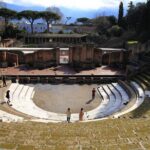
Next up is the Small Theater (Odeion). This is a smart pause in the circuit because it explains something you’d otherwise miss: how the Romans engineered performance spaces.
You’ll hear how they recreated perfect acoustics—the kind of detail that turns a theatre stop from “cool rocks” into “oh, that’s the point.”
Other skip-the-line Pompeii tickets and tours

Teatro Grande: the big stage of the city
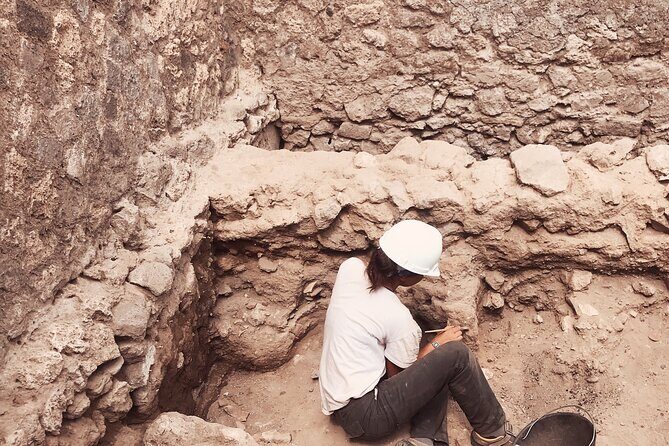
Then you’ll head to Teatro Grande, Pompeii’s Great Theater—listed as the most important theater in the archaeological site.
This stop is about scale and civic importance. A big theater wasn’t just entertainment. It was a way to gather people, display Roman culture, and reinforce the city’s identity through spectacle.
In a 2-hour tour, Teatro Grande is one of the stops that does a lot of storytelling work for you. Even if you’re not a theatre person, it’s an architecture lesson with context.
Via dell’Abbondanza: the main street moment
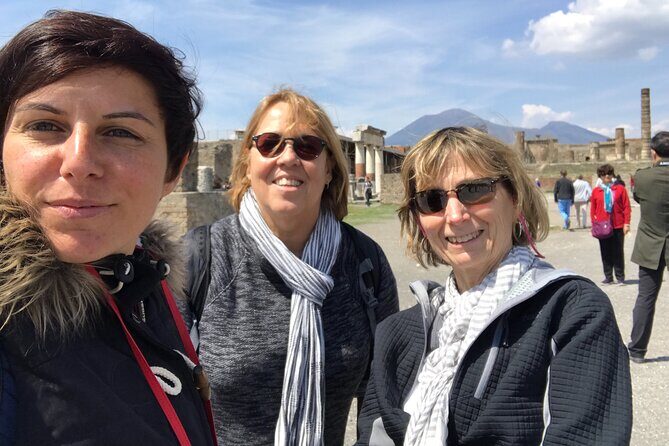
You’ll also cross via dell’Abbondanza, Pompeii’s main street.
This kind of street segment matters because it lets you connect the buildings you’re seeing to how people actually moved through the city. Ruins look different when you’re thinking about routes and flow instead of isolated structures.
Granaries of the Forum: amphora deposits and the casts
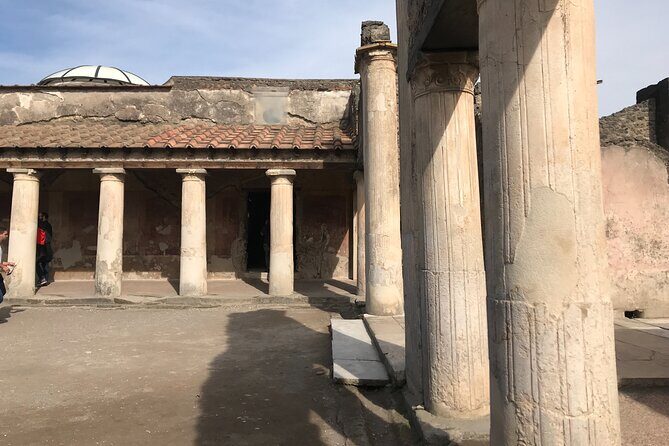
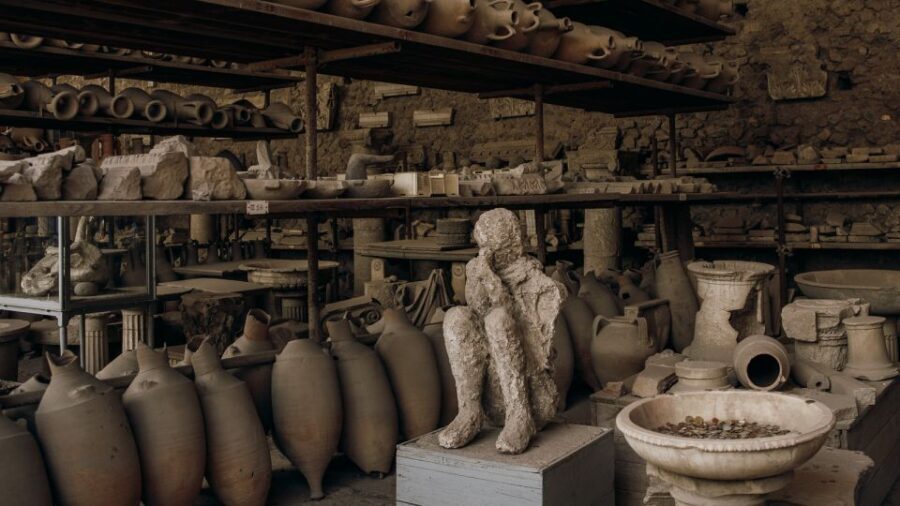
At Granai del Foro, you visit the granaries and also see casts tied to the eruption.
This stop adds two valuable layers:
- The archaeology around storage and work (including the deposit full of amphorae and work tools).
- The human side through the casts—still uncomfortable, but important for understanding what the city became after 79 AD.
There’s no way around it: this part can feel heavy. But it also keeps Pompeii grounded. It’s not only about aesthetics. It’s about how a functioning city ended.
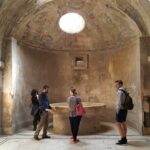
Stabian Baths: the Roman spa you can still picture
Then comes Stabian Baths (Terme Stabiane), described as the best SPA of the Roman Empire in Pompeii.
You’ll spend around 15 minutes here. In that short window, the goal is to help you picture the routine: bathing as a social habit, public space as part of health and conversation, and architecture as daily life.
If you’ve ever toured ancient sites and thought, I wish someone explained what people actually did—this stop is one of the best chances you’ll get.
Forum di Pompei, Basilica, and Temple of Jupiter: where power lived
Your next stretch focuses on the civic core:
- Foro di Pompei (the Forum main square)
- Pompei La Basilica (the court where justice was administered)
- Temple of Jupiter (present in the main square)
This is the political and legal spine of the city. The Forum tells you how public identity was displayed through temples and markets. The Basilica tells you how order and decisions were handled.
What I like here is the structure: you’re not just looking at ruins. You’re learning the layout of authority.
Quadriporticus of the theaters and gladiator barracks
You’ll visit the Quadriporticus of the theatres area and then the Gladiator Barracks, including apartments and where they trained.
This stop is a great reminder that spectacle took work. Gladiators weren’t only fighters; they were part of a training system with living quarters and routines.
In a fast tour, this is one of the stops that makes the city feel functional, not frozen.
Vicolo del Lupanare and the Temple of Venus
The tour then takes you to Vicolo del Lupanare, the ancient red district light area, and then to the Temple of Venus.
The practical value of stopping here is interpretation. The brothel area teaches you how the city offered services and how different districts shaped daily movement. Temple of Venus is the balance: devotion and identity tied to the city’s values and beliefs.
One possible consideration: not everyone wants a guided walk through the red-light district setting. If this topic is uncomfortable for you, it helps to tell your guide so they can pace or frame it in a way that works for your group.
Casa del Fauno: luxury in one stop
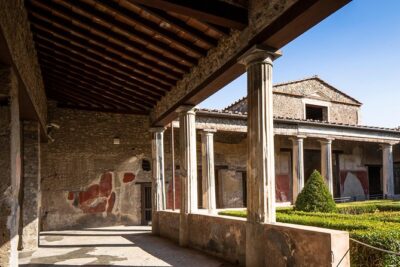
Finally, you’ll visit Casa del Fauno, one of Pompeii’s richest and most luxurious residences.
This is the payoff stop for many people because it shifts the perspective from public life to private wealth. You get the sense of what a top-tier home looked like—and why Pompeii’s residential architecture is so compelling even after 2,000 years.
Even if you only get a short time here, it’s often enough to make you rethink what “a Roman house” actually meant.
The guides: what makes this tour feel worth it
A private Pompeii tour lives or dies by the person holding the thread. In the feedback for this experience, names like Luisa, Eliana Sandretti, Antonio, Luciana, Danilo, and Marina come up with praise tied to energy, clear explanations, and the ability to keep people moving without feeling rushed.
I also like that the tour is described as tailor made. In practice, that means your guide can help you focus on high-yield stops while still letting you ask questions—handy if you’re traveling with mixed interests or kids.
If you’re the type who gets annoyed when you ask something and the guide can’t answer, this is where choosing a private, archaeologist-led format helps a lot.
Who should book this Pompeii private tour
This tour is a strong match if:
- you have limited time and want the highlights with meaning
- you want fewer crowds and a private pace
- you like understanding Roman daily life, not just taking photos
- you’re traveling as a family and want kids kept engaged (some guides are specifically praised for kid-friendly explanations)
If you want hours to wander mosaics slowly, read every panel, and go at your own rhythm, you might prefer a longer self-guided plan or a longer guided experience. Pompeii rewards time.
Should you book this Pompeii private tour?
Yes—if you’re willing to add the 19-euro per person entrance ticket and you value a guided, efficient route. The tour’s structure is built around the moments that explain Pompeii: public life (Forum and Basilica), entertainment (theatres), daily routine (baths and streets), and the human reality (casts).
I’d book it especially if you’re going in a busy season or you simply don’t want to spend your precious time wrestling with lines. Sort your entrance ticket in advance using the link provided, show up at Piazza Esedra on time, and then let your guide do the hard work of turning ruins into a city you can picture.
FAQ
Are the Pompeii entrance tickets included in this tour price?
No. The Pompeii Archaeological Park entrance ticket is not included. The entrance cost is listed as 19 euros per person, with free tickets for visitors under 18 who have ID or passport.
Does the skip-the-line feature require buying tickets in advance?
The experience is set up so you can buy online in advance. You’ll receive a link one day before your tour to help you purchase tickets and avoid the ticket office line. To benefit from skipping, you’ll need the entrance ticket arranged.
How long is the Pompeii private tour?
The duration is about 2 hours.
Where does the tour start and end?
It starts at Piazza Esedra, 10, 80045 Pompei NA, Italy and ends back at the same meeting point.
Is this tour private?
Yes. It’s a private tour/activity, and only your group participates. The group size is up to 10.
What language is the tour offered in?
The tour is offered in English. Multiple languages are available only on request.
What about children and under-18 tickets?
Visitors under 18 have free tickets, but they must come with ID or passport because a date of birth check can be done.
What happens if the weather is bad?
This experience requires good weather. If it’s canceled due to poor weather, you can choose another date or receive a full refund.
Is food or drinks included?
No. Food and drinks are not included.