REVIEW · NAPLES
Pompeii & Herculaneum Day Trip from Naples with Lunch
Book on Viator →Operated by Napoli City Vision · Bookable on Viator
Two buried cities, one carefully paced day. Pompeii and Herculaneum sit just beyond Naples, and this trip strings them together with coach transport, an expert guide at Pompeii, and audio guidance at Herculaneum—plus lunch so you don’t have to hunt for food between ruins.
I especially like the two-site combo because it gives you a quick before-and-after view of the same volcanic disaster. I also like that you’re not left to solve lunch logistics on the fly; you get a set included lunch and then you’re back on the path to the next stop.
One thing to think about: the sites are big, and the day is timed. You’ll do a lot of walking, and Pompeii’s focus is on the big highlights while Herculaneum is more self-guided with an audio setup, which can feel limiting if you want slower, hands-on exploration.
In This Review
- Key Highlights You’ll Actually Feel During This Tour
- Coach Pickup in Naples: How the Day Starts Smoothly
- Pompeii Archaeological Park: Forum, Teatro Grande, and the 79 AD Story
- What “Guided Pompeii” Really Means in a Time-Limited Day
- Lunch Included: The Smart Break Between Two Ruins Visits
- Herculaneum at Parco Acheologico di Ercolano: Better Preserved, Different Feels
- Optional Coral & Cameos Workshop: A Small Cultural Stop That Can Help
- Price and Ticket Math for Pompeii and Herculaneum
- Walking, Audio, and Heat: The Practical Stuff That Makes the Day Better
- Who This Day Trip Is Best For (and Who Should Consider Another Plan)
- The Bottom Line: Should You Book This Pompeii and Herculaneum Day Trip?
- FAQ
- How long is the Pompeii and Herculaneum day trip from Naples?
- Is lunch included, and is there a place to eat during the day?
- Do I need to pay entrance fees for Pompeii and Herculaneum?
- Is the tour guided at both archaeological sites?
- What’s the walking level like?
- What language options are offered?
Key Highlights You’ll Actually Feel During This Tour
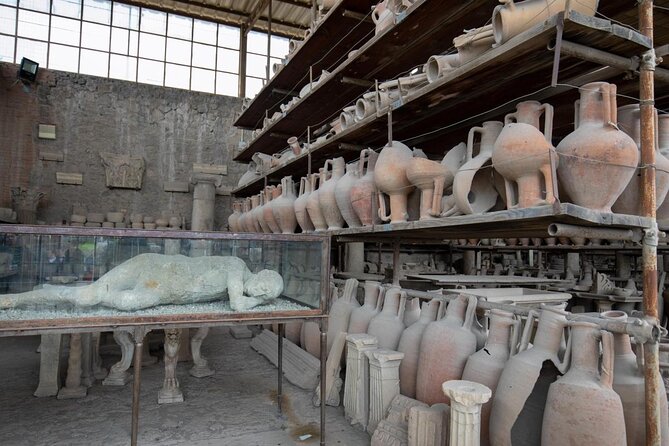
- Two ancient towns, two different vibes: Pompeii shows a massive urban grid, while Herculaneum is smaller but often more intimate because of how well it was preserved.
- A real guide at Pompeii: you’ll walk with a local explainer through key areas like the Forum and Teatro Grande (once holding up to 5,000 spectators).
- Audio guidance at Herculaneum: you get an audioguide there, and it works best if you’re comfortable listening hands-free (or with your own earbuds if allowed).
- Lunch included, with no scramble: it’s built into the flow so you can refuel before the second ruins visit.
- Optional coral & cameo workshop stop (if time allows): a family-run shop where you can see how jewelry is made and maybe pick up something small and memorable.
Coach Pickup in Naples: How the Day Starts Smoothly
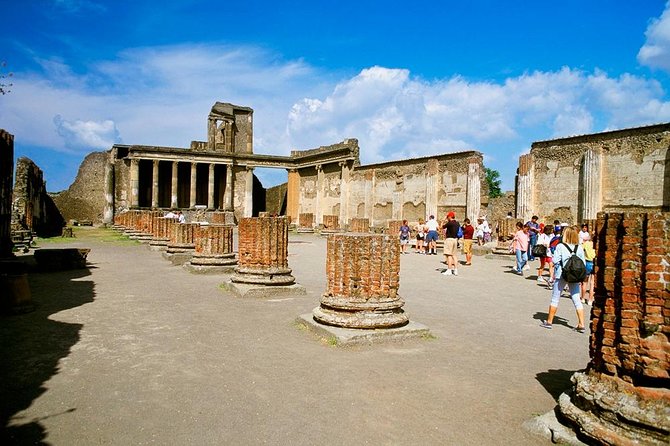
The day begins with pickup from select hotels in Naples. From there, you ride by modern coach toward Pompeii, which keeps the hardest logistics out of your hands—especially useful if you’re staying in the city center and don’t want to plan train schedules or parking.
The ride itself isn’t the star of the show, but it sets the tone. You arrive ready to go, and the tour’s structure helps you avoid the common beginner problem: showing up at Pompeii, then spending your best hour just trying to figure out where you are.
Keep expectations practical. This is a moderate-walking day. The ruins are outdoors, the pavement can be uneven, and you’ll be moving from stop to stop with limited time for detours.
If you're still narrowing it down, here are other tours in Naples we've reviewed.
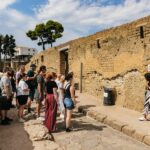
Pompeii Archaeological Park: Forum, Teatro Grande, and the 79 AD Story
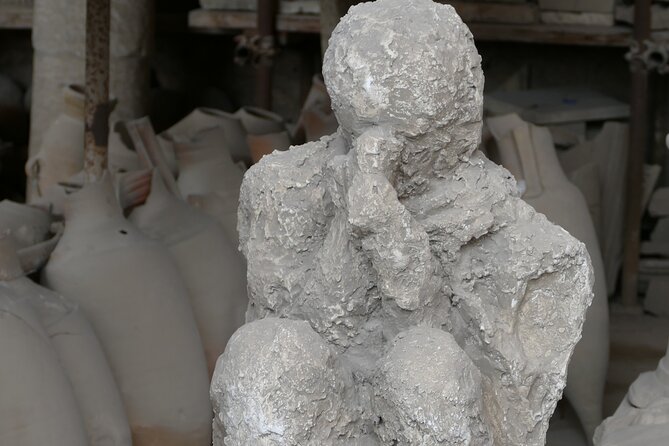
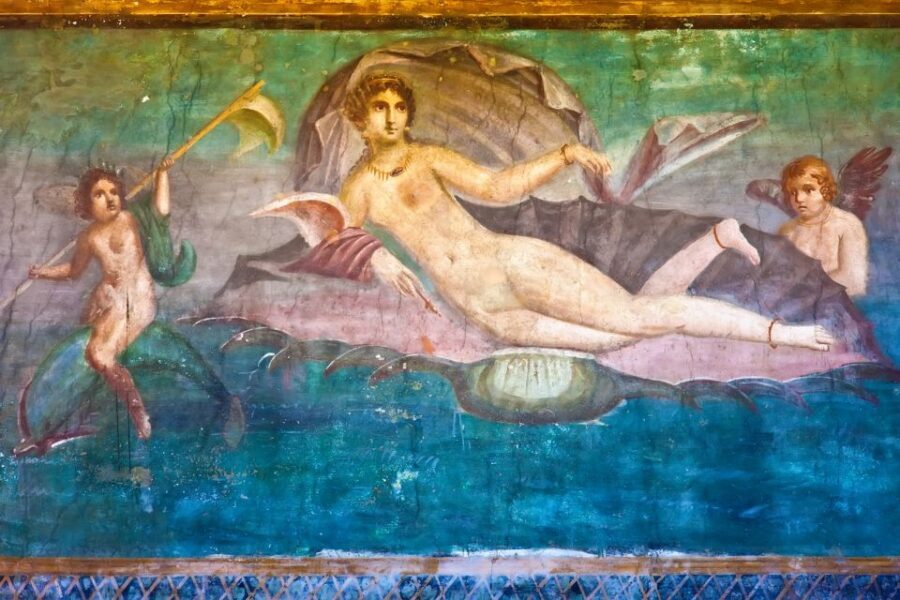
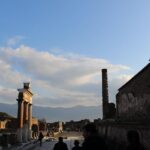
Pompeii is the famous one, but it’s famous for a reason: it was a full city, not a few stones on a hill. During the eruption in 79 AD, Pompeii had around 11,000 residents, and it was buried under meters of ash in a matter of hours.
A strong guide matters here because Pompeii is huge. On this tour, the Pompeii portion is structured around the most meaningful areas—so you get oriented fast instead of wandering and missing the big connections.
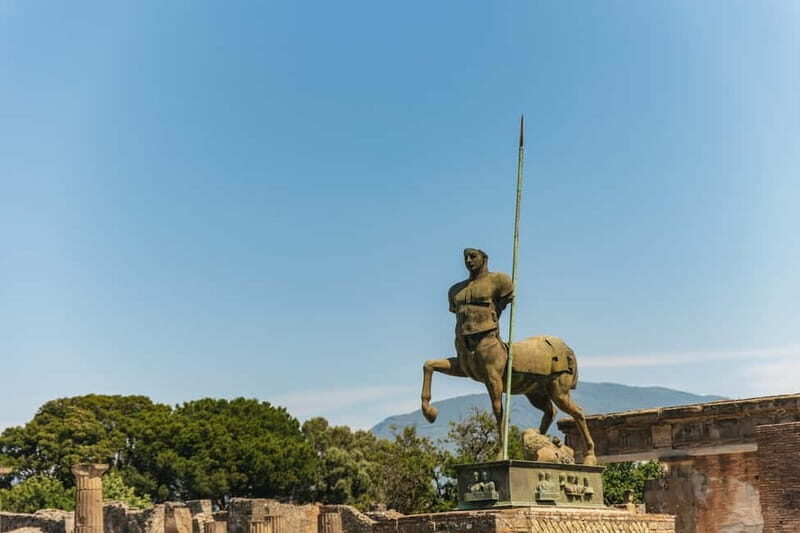
You’ll pass key zones like:
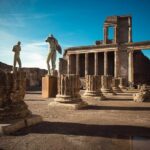
- the Forum, the civic heart where public life played out
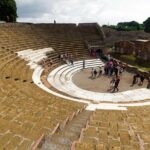
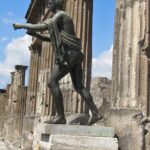
- the Teatro Grande, a major theater complex that once hosted up to 5,000 spectators
- the overall street-and-building layout that shows how Roman daily life functioned
And your guide doesn’t just point at ruins. You’ll get the eruption narrative and the much later discovery story too—excavations kicked off in 1748 under the Bourbons, and the finds sparked real excitement and helped fuel the neoclassicism movement across Europe. That historical arc helps the site feel less like a museum and more like a lived discovery.
What “Guided Pompeii” Really Means in a Time-Limited Day
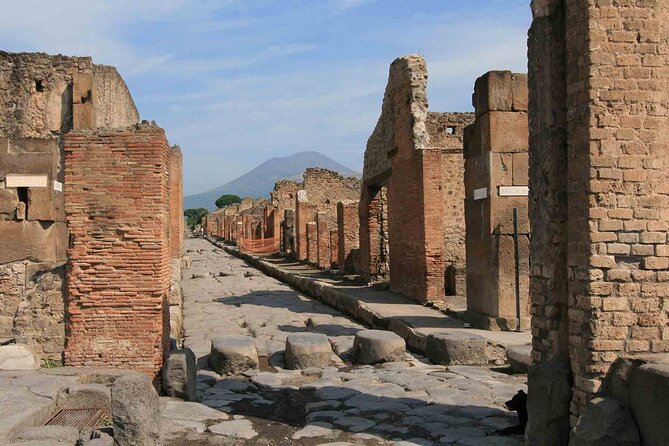
Pompeii is so large that any one-day plan is, by nature, a selection. On this tour, you’ll have about 2 hours at the archaeological park with a guided route covering the most important excavated areas.
Here’s what that’s good for: you leave with a mental map. You understand the relationship between streets, public buildings, and neighborhoods—and you’re less likely to feel like you saw random spots.
Here’s what it can’t do: it can’t replace a full-day, unhurried Pompeii visit. If you love architecture details, want to linger at every mosaic, or want to match every street corner to a textbook diagram, you’ll likely want more time later.
Heat matters too. Many people underestimate how exposed Pompeii can be when it’s sunny. Bring water and consider shade tools (a hat, small umbrella, or lightweight fan). A calm plan beats a stressed one.
Lunch Included: The Smart Break Between Two Ruins Visits
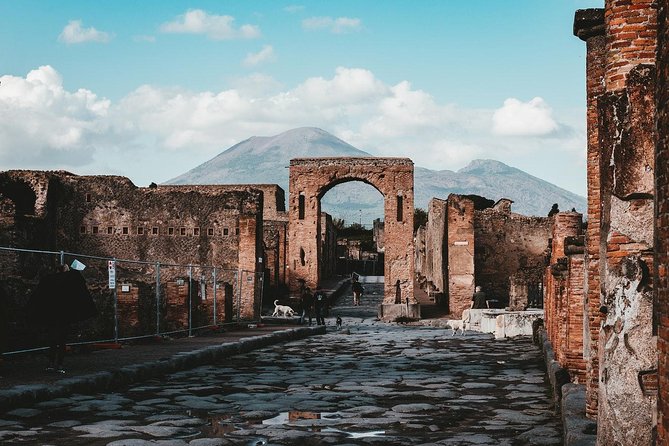
You’ll get lunch after the Pompeii portion. It’s included, and that’s not a small detail—it protects your day from the most common failure point on self-guided trips: eating late, eating poorly, or losing time searching for a place that’s open.
The lunch window is about 1 hour, so it’s long enough to eat without feeling rushed—but not long enough to treat it like a café hangout. Keep your pace in mind. After lunch, you’re heading to Herculaneum.
If you have dietary needs, use practical judgment. The tour provides an included meal, so you may not control every menu item. Still, this is the part of the day where you can reset and get your energy back before more walking.
Herculaneum at Parco Acheologico di Ercolano: Better Preserved, Different Feels
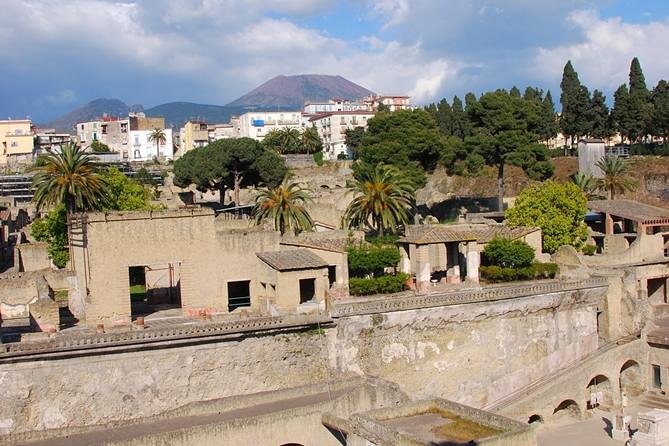
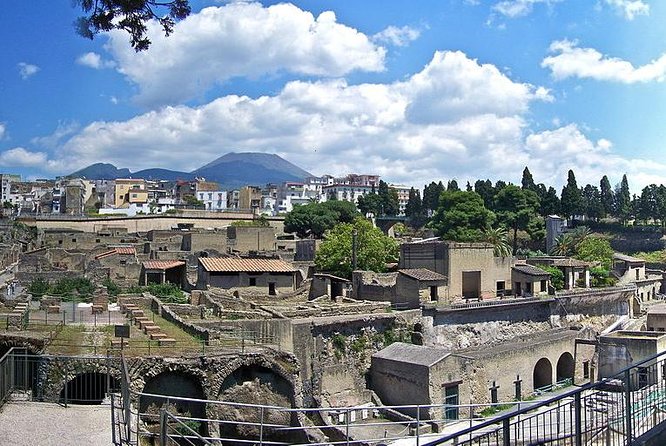
After lunch, you drive to Herculaneum. This town was hit by the same infamous eruption, but the story and the preservation feel different.
Herculaneum had about 5,000 people, so the scale is smaller than Pompeii. That can be a win on a day trip because you can experience a fuller “feel” of the place without spending all afternoon crossing the site.
Herculaneum is especially known for the Villa dei Papiri, linked to a library of over 1,800 papyruses. Even if you don’t memorize that number the moment you hear it, the point lands: this wasn’t only a commercial city. It also had elite cultural spaces.
What you’ll notice while exploring:
- preserved monuments and structures that feel closer to intact life
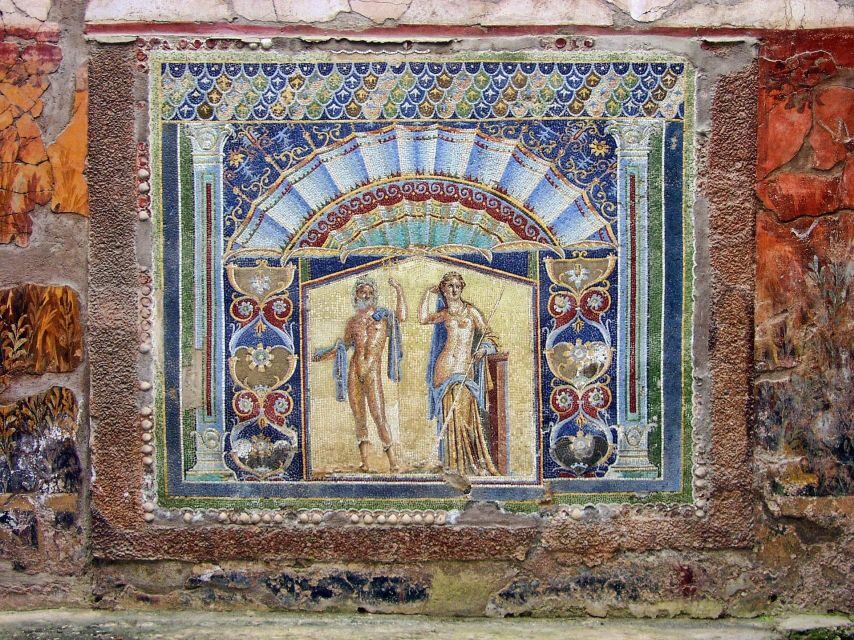
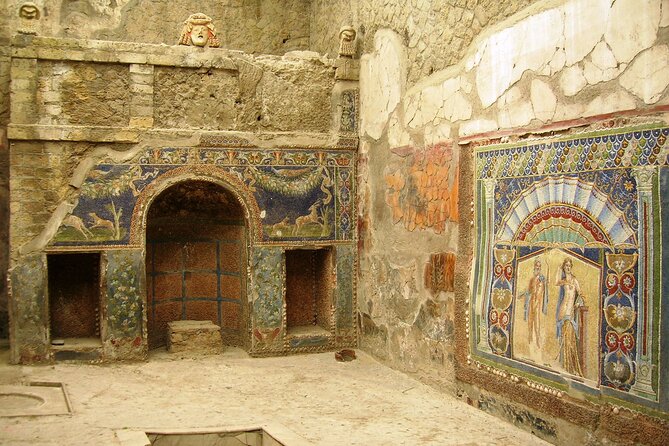
- mosaics you can actually look at without racing the clock
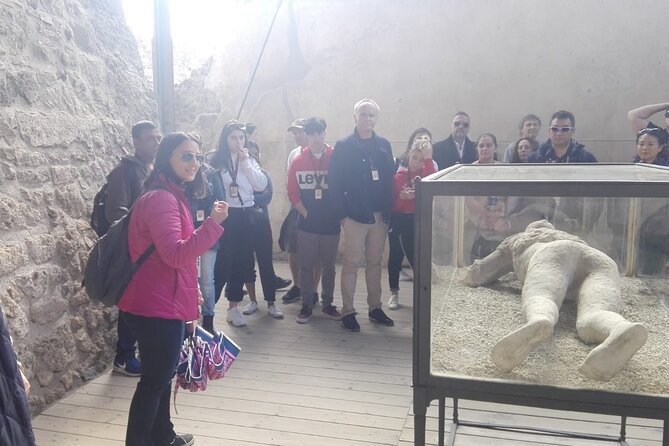
- organic materials and fossils that make the eruption feel brutally physical—almost 2,000 years later
The tour uses audioguides for the Herculaneum portion. That’s useful because you can move at your own pace while still hearing interpretive explanations. The main thing to watch is the audio experience. If you want hands-free listening, plan to bring your own earbuds, if allowed by the guide/device setup.

Optional Coral & Cameos Workshop: A Small Cultural Stop That Can Help
If there’s time, you may stop at a family-run coral and cameo factory. This is one of those side stops that can either be perfect or pointless—depending on your mood.
It’s a good match if you like everyday craft and you want to connect Naples-region traditions to what you’re seeing in Roman life. Coral and cameo jewelry are part of local material culture, and watching how artisans work gives you a real-world contrast to the ancient objects you’re standing near.
But don’t count on it. The stop is conditional and time-based. If the day runs hot (literally), you may find the tour prioritizes getting you inside and out of the sites.
Price and Ticket Math for Pompeii and Herculaneum
The tour price is $120.68 per person, and it includes transportation, a guide on the day, an included lunch, and audioguides in the ruins of Herculaneum. That’s the value part: the coach handles the long-distance logistics and the tour format compresses your planning time.
The big catch is that entrance tickets are not included. Pompeii has a listed entrance ticket fee of €19 per person. Herculaneum has listed fees as well (the details show €16 and also a separate €14.00 fee), so I strongly suggest you confirm the exact breakdown at checkout so you don’t get surprised.
Let’s translate the cost into a decision:
- If you want a guided shortcut and you’re short on time in Naples, this packaged approach can be worth it.
- If you’re comfortable navigating on your own and you’d rather spend extra time in Pompeii, you might save money by building a DIY plan (but you’ll trade that for planning headaches and less guided orientation).
Also note the group reality. The tour has a maximum of 52 travelers, which is pretty large, even if it’s managed with a schedule. The day works best when you don’t expect a private, slow museum experience.
Walking, Audio, and Heat: The Practical Stuff That Makes the Day Better
If you do one thing to improve your experience, do this: pack like it’s going to be hot and you’ll be walking longer than you expect.
From the tour details:
- you should have moderate physical fitness
- it’s not suitable for walking difficulties
- the day includes time outdoors at both sites
From the kinds of issues that can pop up on these formats, plan for audio comfort too. Herculaneum is guided via audioguide, and some visitors find phone/audio setups work better with earbuds than without. Bring yours if you’re allowed.
Shade helps more than you think. A hat or small umbrella can make Pompeii feel less punishing, and water keeps you from turning your day into a dehydration math problem.
And pack light in the coach. The program also indicates that luggage on seats isn’t a great idea—so keep your bag minimal and stow it as instructed.
Who This Day Trip Is Best For (and Who Should Consider Another Plan)
This works especially well for:
- first-timers who want a fast orientation to both sites
- people who want guided Pompeii and don’t mind audio guidance for Herculaneum
- visitors who value round-trip transportation from Naples and an included lunch
It may be less ideal if:
- you want a deep, slow, read-every-sign kind of experience
- you have mobility limits that make walking ruins difficult
- you get easily frustrated with audio devices and prefer a fully live guide the whole time
One more note: group-size effects matter. The tour says a live local guide is used when there are at least six participants per language. If the group is smaller, you may get an audio guide instead of a real local guide. If Pompeii is your priority, you might want to choose dates when your departure is likely to have enough people for the guided option.
The Bottom Line: Should You Book This Pompeii and Herculaneum Day Trip?
If you want the classic Naples pairing—Pompeii plus Herculaneum—in one efficient day with lunch and coach transport handled, I’d book this. It’s a strong way to get your bearings fast and walk away with a clear sense of how the eruption changed two very different towns.
I’d think twice only if you’re a hardcore Pompeii planner who wants to spend half a day on one forum corner reading every inscription, or if audio-only ruins support doesn’t work for your style.
FAQ
How long is the Pompeii and Herculaneum day trip from Naples?
It runs about 6 to 7 hours total.
Is lunch included, and is there a place to eat during the day?
Yes. Lunch is included, and there is a break after the Pompeii portion.
Do I need to pay entrance fees for Pompeii and Herculaneum?
Yes. Pompeii entrance tickets are not included, and Herculaneum entrance tickets/fees are also not included.
Is the tour guided at both archaeological sites?
Pompeii is guided with a local guide. Herculaneum uses audioguides. If the group is smaller than the minimum, the tour may operate with an audio guide instead of a live guide.
What’s the walking level like?
The tour requires moderate physical fitness and is not suitable for passengers with walking difficulties.
What language options are offered?
The tour is offered in English.