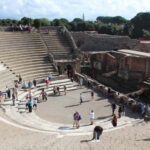
REVIEW · POMPEII ARCHAEOLOGICAL SITE
Pompei: Pompeii Private Tour
Book on GetYourGuide →Operated by Tempio Travel Pompei Tickets · Bookable on GetYourGuide
Pompeii is better with a smart guide.
This private Pompeii experience pairs skip-the-line entry with a real archaeologist-led walk through a UNESCO World Heritage site, so you spend your time seeing rooms, streets, and stories—not shuffling in a queue. I like that the tour starts with the city’s bigger timeline (founded in the 7th century BC, destroyed in 79 AD), then connects daily Roman life to what you’re standing in.
Two things I really like: first, you get an archaeologist guide who focuses on how buildings were used and what the discoveries mean. Second, the tour is private, so you can ask questions without fighting for attention in a packed group—something that matters a lot at Pompeii. A possible drawback: 3 hours can only cover so much in a site that sprawls across dozens of acres, so you’ll want to be thoughtful about what you most want to see.
In This Review
- Key Highlights You’ll Care About
- Where You Meet and How the Skip-the-Line Works
- Pompeii in 3 Hours: The Timeline Your Guide Builds
- Inside the City: What You Learn by Walking the Ruins
- Two Big Decisions: Amphitheatre or Villa of Mysteries
- Guides Who Make Pompeii Feel Real (Not Just Old)
- Price: Is $407.83 Worth It?
- Timing and What 3 Hours Really Feels Like
- Things to Watch For: Comfort, Restrictions, and Pacing
- Who This Tour Fits Best
- Should You Book This Pompeii Private Tour?
- FAQ
- How long is the Pompeii Private Tour?
- Does this tour include skip-the-line access?
- Where do I meet the guide?
- What languages are available?
- What should I bring?
- Are luggage or large bags allowed?
- Is there a free entry option?
Key Highlights You’ll Care About
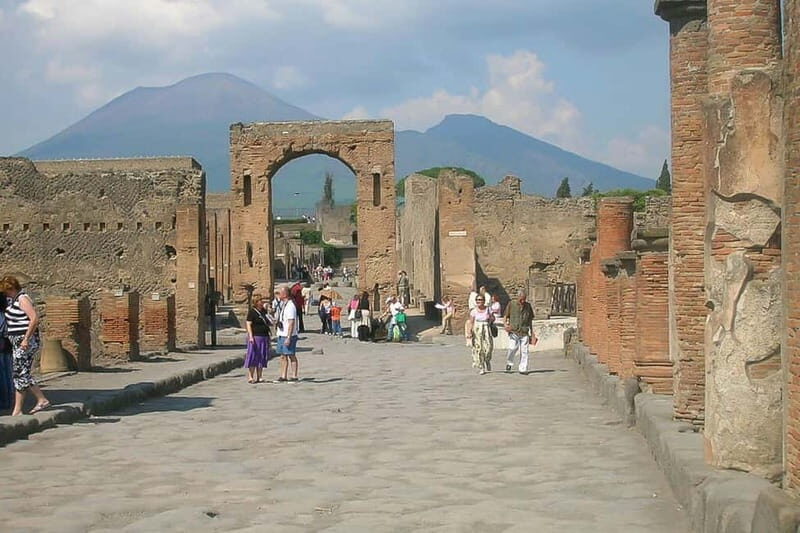
- Skip-the-line entry with an express ticket option, saving time at the gate
- Archaeological guide who explains Roman art, trades, customs, and everyday life
- Private 3-hour visit that balances must-sees with deeper meaning
- Founded in the 7th century BC to 79 AD story—built right into the walk
- Pick two major stops if available, like the Amphitheatre or the Villa of Mysteries
Where You Meet and How the Skip-the-Line Works
You’ll meet at the Tempio Travel agency at the Pompeii ruins Circumvesuviana train station. That meeting point is convenient if you’re arriving by train, and it keeps the whole start simple: you find the agency, meet your guide, then head toward entry.
The big practical win is skip-the-line access via Pompeii entrance ticket express. Pompeii gets crowded, and you don’t need the extra stress of waiting while everyone else filters through. With this setup, your time inside is more likely to be time spent looking closely, not time spent watching other people’s backpacks.
Two logistics notes you should plan for:
- Bring a passport or ID card (it’s listed as required).
- No large bags or luggage are allowed, so travel light.
Also, if you’re driving, there’s a helpful extra: you may be able to use free parking at Osteria Nonna Cherubina (Via Diomede 16), about 500 meters from the main entrance. It’s not guaranteed, but it’s a nice option if it’s open when you arrive.
Other private and VIP Pompeii tours

Pompeii in 3 Hours: The Timeline Your Guide Builds
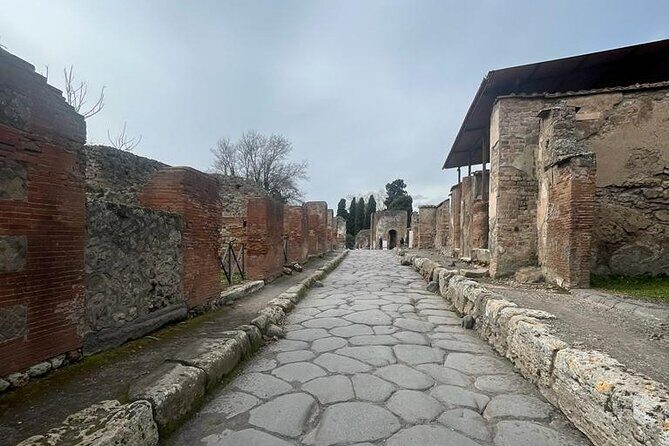
The tour is designed to give you a clear storyline rather than a checklist. You start in the heart of the city—the area once spanning about 66 acres—and your guide places what you see into context.
Here’s the core arc you’ll hear:
- The city’s beginnings go back to the 7th century BC.
- Then comes the Roman world: art, daily routines, trades, and customs.
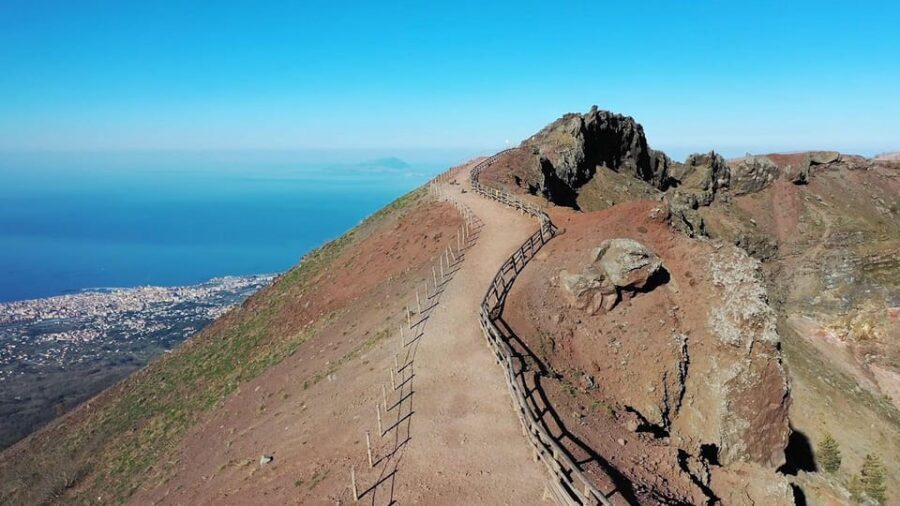
- Finally, you get the event that made Pompeii famous—its destruction by the eruption of Mount Vesuvius in 79 AD.
That order matters. If you jump straight to the most dramatic ruins, it can feel like a series of disconnected stone shells. This tour tries to keep everything tied together: what the building was for, how people lived there, and why the excavations matter.
A nice thing about a private tour is pacing. If you’re slower, your guide can adjust. If you’re eager, you’ll likely get more context while still keeping the flow moving.
Inside the City: What You Learn by Walking the Ruins
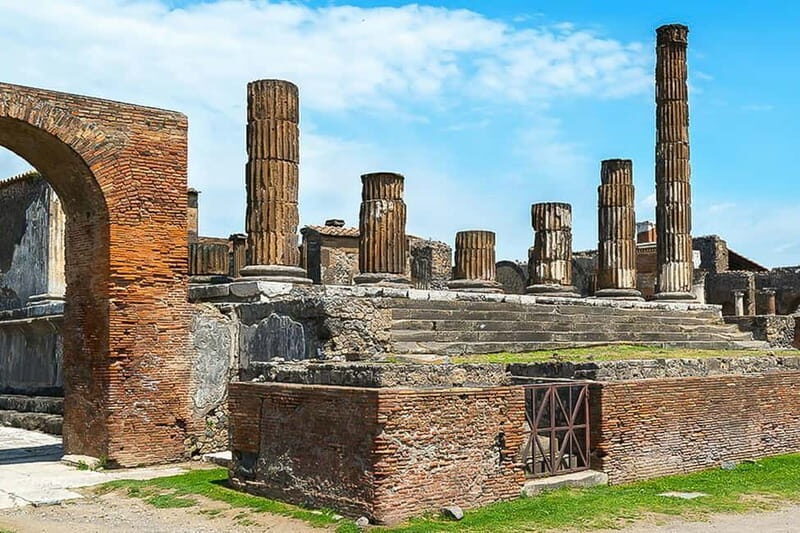
Pompeii isn’t just famous because it survived. It’s important because excavation has revealed how the city actually worked. With an archaeologist guide, you’re not only looking at walls. You’re being guided toward the meaning behind them.
Expect your guide to connect the everyday life you can imagine with the physical clues you’re seeing. The tour is meant to help you look beyond walls and ruins and understand what each building likely represented—how it fit into neighborhood life, commerce, or home routines.
You’ll also get an orientation that helps you interpret the site. Pompeii can feel overwhelming at first because it’s huge and open to the elements. A guide’s job here is to make the space legible so you can stop saying things like which way is the forum? (even if you don’t say it out loud).
Two Big Decisions: Amphitheatre or Villa of Mysteries
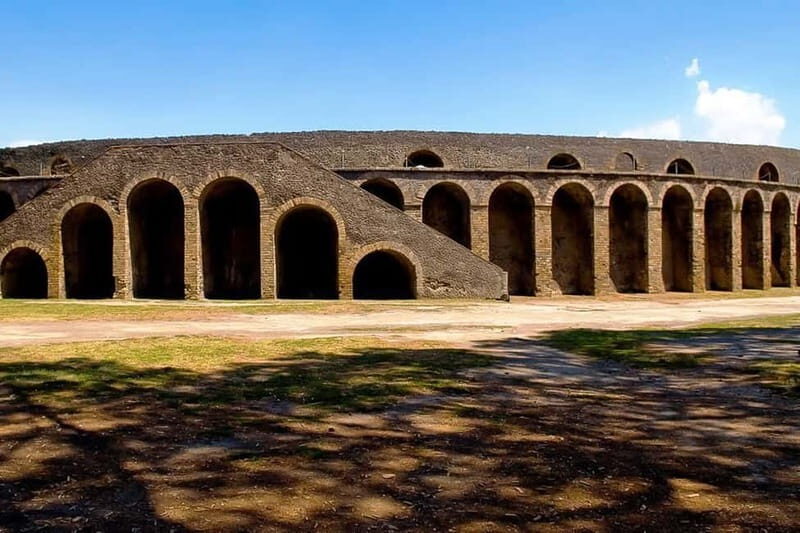
One of the most useful parts of this tour is the chance to visit in detail two of the site’s most important places: either the Amphitheatre or the Villa of Mysteries (if available).
That matters because these aren’t interchangeable photo stops. They represent different kinds of Roman life:
- The Amphitheatre helps you grasp public entertainment and crowd energy—how Romans gathered for spectacles.
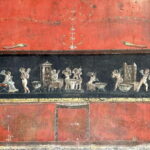
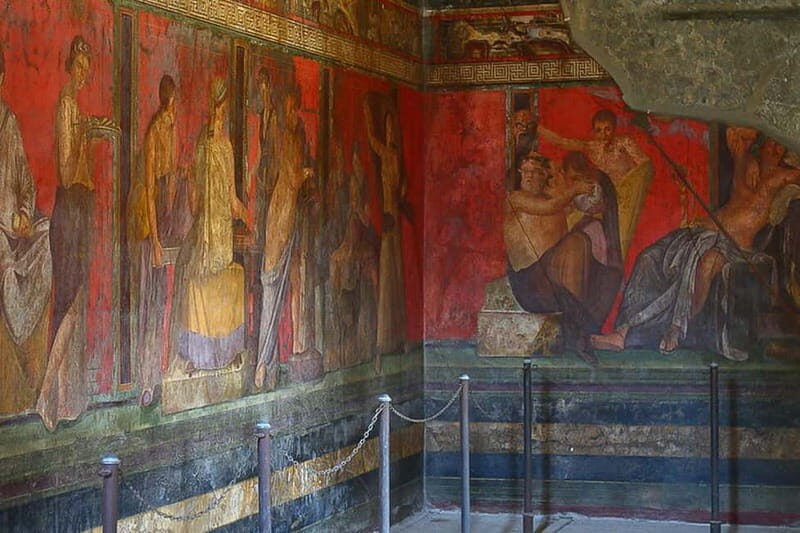
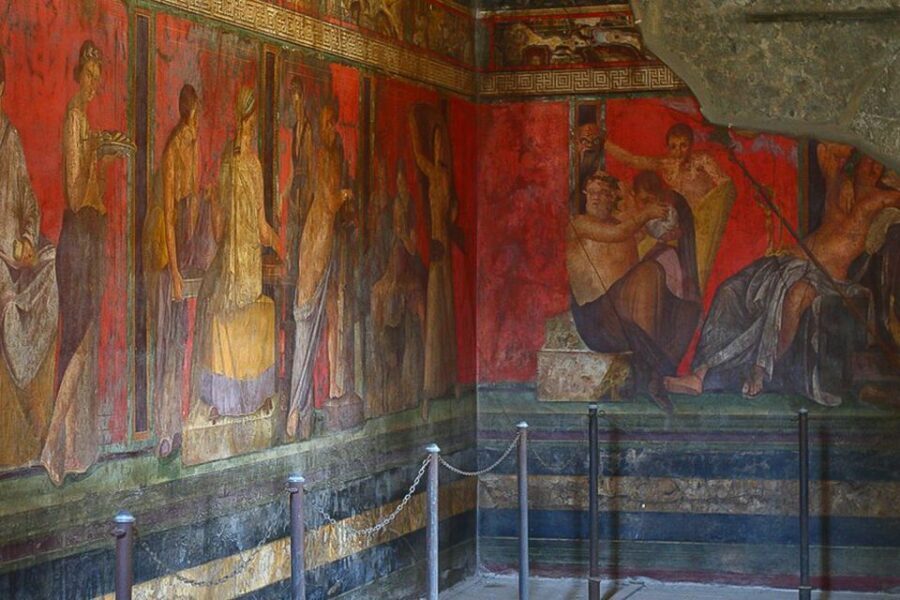
- The Villa of Mysteries is where the focus shifts toward art and symbolism, giving you a window into how people used decoration, imagery, and meaning inside domestic spaces.
Which one should you prioritize? If you want spectacle and public life, lean toward the Amphitheatre. If you’re more drawn to art and storytelling, the Villa of Mysteries is a strong choice. If your guide can include both, that’s the best outcome for most people: you get public Rome and private Rome in one run.
Guides Who Make Pompeii Feel Real (Not Just Old)
This tour stands or falls on the guide, and the guide lineup here seems to be a highlight. I especially like that multiple named guides have been described as engaging, flexible, and able to answer questions rather than rushing through a script.
Some examples of guide styles you may encounter:
- Marina is praised for tying early Pompeii life to modern parallels, which helps your brain understand everyday routines instead of treating them as museum facts.
- Giada is noted for going beyond famous highlights, with a visit that can feel more like an explanation than a tour route.
- Daniela (and also Dr Daniella, in another case) is highlighted for bringing the site to life through storytelling and attention to pacing—helpful if your group wants questions answered in real time.
- Mariachiara is described with an art history background, which is exactly the right fit for places like the Villa of Mysteries where imagery matters.
- Alessandra is mentioned as passionate and engaging with families, which can be a big deal if you want the tour to work for a mixed group.
There’s also a practical advantage: a good guide helps you handle crowds. Pompeii gets busy, and navigating the flow can make the difference between a tour that feels relaxed and one that feels like a race. Some guides are described as helping with crowds and choosing areas strategically.
If you’re traveling with kids or multi-generational family members, private formats can be a lifesaver. One guide is even referenced as specializing in children and staying patient with high-energy kids while still covering the key ideas.




Price: Is $407.83 Worth It?
The price listed is $407.83 per group, up to 1. That means this is priced like a true private tour (and you should double-check what your exact group size would be when you book). If it’s truly only you in the private group, you’re paying for access, time, and a guide dedicated to your pace.
So is it worth it? For me, this kind of Pompeii tour is good value when at least one of these is true:
- You care about understanding meaning, not just collecting viewpoints.
- You want to prioritize specific sights (like the Villa of Mysteries or Amphitheatre).
- Your group benefits from private pacing—mixed ages, different interests, or anyone who gets worn down by crowds.
If your goal is only to tick off a handful of major stops quickly, a private archaeologist may cost more than you need. But if you want a guided explanation that makes the whole place click, you’re buying something you can’t replicate with a self-guided audio app: a real-time conversation with someone trained to read the site.
Timing and What 3 Hours Really Feels Like
This tour runs for 3 hours. Starting times depend on availability, so plan around your travel rhythm.
Three hours at Pompeii can be:
- Enough to get the big story and several major areas.
- Not enough to wander endlessly through every street and minor building.
The best way to think about the time limit is as a trade: you’ll see the core ideas clearly, and you’ll have a guide to help you choose what to spend attention on. The risk is that if you try to see everything without prioritizing, you’ll finish feeling rushed.
If you’re the type who likes to linger, tell your guide what you care about most. With private tours, that matters more than you’d think.
Things to Watch For: Comfort, Restrictions, and Pacing
Pompeii is outdoors, and you’ll be walking. The tour doesn’t mention specific footwear rules, but I’d treat it like a proper walking day: wear comfortable shoes and plan to move.
Also remember the luggage restriction. No luggage or large bags are allowed, so pack like you’re going for a day outside rather than a multi-day trip.
Finally, bring your ID or passport. It’s small, but it can prevent a headache at the start.
Who This Tour Fits Best
This private Pompeii tour is a strong match if you:
- Want an archaeologist guide who can connect ruins to Roman art, customs, trades, and daily life.
- Prefer a private format to ask questions and set the pace.
- Are interested in at least one major site like the Amphitheatre or the Villa of Mysteries and would like a guided visit to understand it.
It’s also a good fit for mixed groups—adults, teens, and kids—because the private setup makes it easier for a guide to adapt.
Should You Book This Pompeii Private Tour?
I’d book it if you want Pompeii to feel understandable, not just impressive. The combination of skip-the-line entry, an archaeologist guide, and a focused 3-hour plan is exactly what helps first-timers stop feeling lost.
Book it especially if:
- You care about the why behind what you see.
- You want a guide who can tailor attention to your interests (public spectacle vs art and symbolism).
- You’d rather pay for one smart guide than spend the day struggling to map meaning on your own.
Skip it only if your main goal is a quick hit of famous ruins and you’re happy doing most of the interpretation yourself.
If you’re going to Pompeii once, make it count. This tour is built for that.
FAQ
How long is the Pompeii Private Tour?
The tour lasts 3 hours.
Does this tour include skip-the-line access?
Yes. It includes Pompeii entrance ticket express for skip-the-line entry.
Where do I meet the guide?
Meet at the Tempio Travel agency at the Pompeii ruins Circumvesuviana train station.
What languages are available?
Tours are offered in Spanish, English, French, German, and Italian.
What should I bring?
Bring your passport or ID card.
Are luggage or large bags allowed?
No. Luggage or large bags are not allowed.
Is there a free entry option?
On the first Sunday of each month, entrance is free of charge, but tickets can’t be reserved ahead of time, so entry isn’t guaranteed.