REVIEW · POMPEII
Private Pompeii Tour with 3D Virtual Reality Headset
Book on Viator →Operated by Flashback Journey to Pompeii · Bookable on Viator
A VR headset in Pompeii changes your pace fast. I like the way the 3D, 360-degree view helps you picture streets and buildings as they likely looked before Vesuvius, and I also like the licensed local guide who keeps the story grounded. One possible downside: the VR visuals can feel a bit cartoon-like, so if you want pure realism, set your expectations.
What really sells this for me is the combination of audio commentary and walking the real ruins right after. You get a sense of where things were and how they related, instead of just looking at stones with no map in your head. The other big consideration is health and comfort: the headset isn’t recommended for everyone, especially kids under 13 and anyone who should avoid VR.
In This Review
- Key highlights at a glance
- Pompeii in 3D: what the VR part actually does for you
- The licensed local guide and audio: why this isn’t just tech
- Where the tour takes you: Pompeii Archaeological Park, in order
- Start at the park with the time-travel setup
- Then the guide leads you through the real ruins
- Why this order helps
- A possible drawback to keep in mind
- Timing matters: morning vs afternoon and how long you’ll really be out
- Price and value: what you’re paying for at $217.49 per person
- Getting there and meeting point: the practical side
- VR safety and comfort: who should think twice before booking
- Who this private Pompeii VR tour fits best
- Should you book this private Pompeii tour with VR?
- FAQ
- How long is the private Pompeii VR tour?
- Where do we meet for the tour, and where does it end?
- Is admission or skip-the-line entry included?
- What language is the tour offered in?
- Are children allowed to use the 3D VR headset?
- What should I wear or bring?
- Does the tour include transportation to and from Pompeii?
- Is there a cancellation option if plans change?
Key highlights at a glance
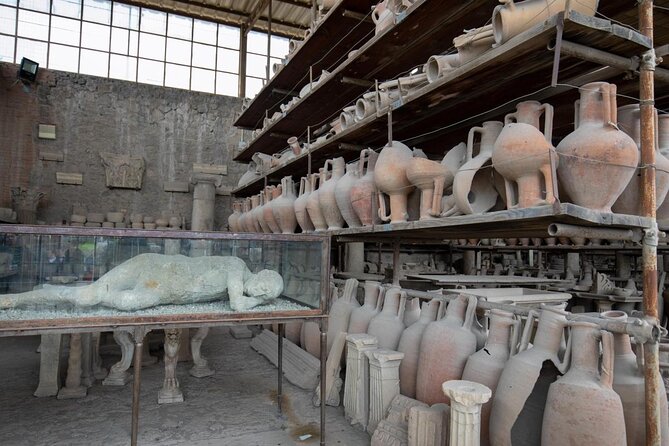
- 3D 360-degree Gear VR experience: You’re surrounded by an ancient Pompeii reconstruction.
- Licensed local guide: Real Pompeii context plus live Q&A as you explore.
- Audio commentary built into the flow: Helps you follow what you’re seeing.
- Skip-the-line entry included: Less waiting at the gate.
- Private group format: Only your party participates.
- Morning or afternoon start: Choose the timing that fits your day.
Pompeii in 3D: what the VR part actually does for you
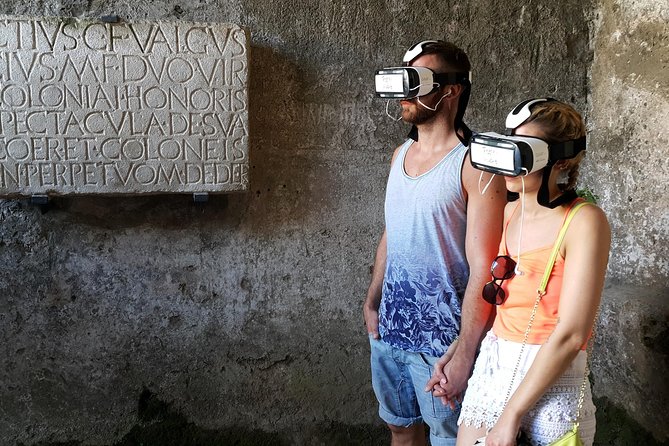
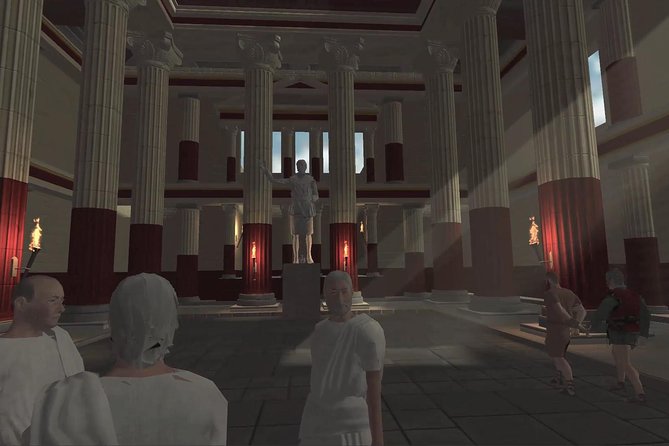
The core idea here is simple: you start with a guided time-travel view, using 3D virtual reality headsets (Gear VR). Instead of trying to mentally rebuild Pompeii from ruins that don’t always show their original scale, you get a surround-style experience that places you in a Pompeii that’s still whole. The headset is designed for 360-degree viewing, so you’re not stuck looking forward at one screen.
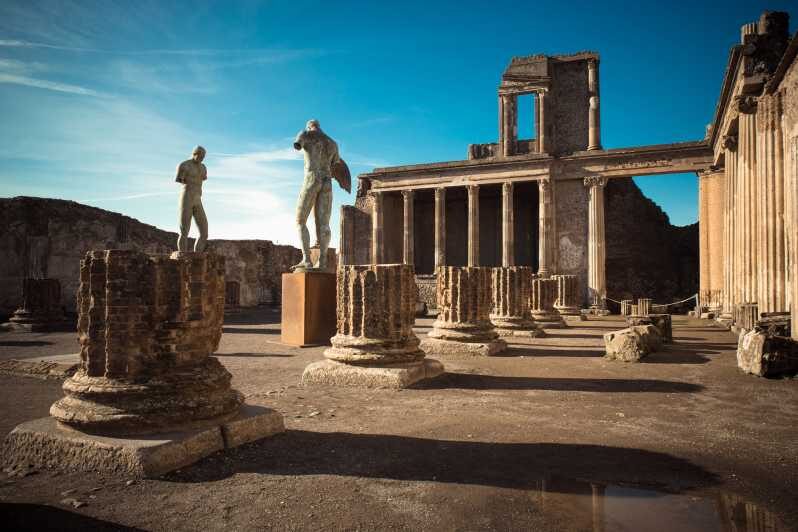
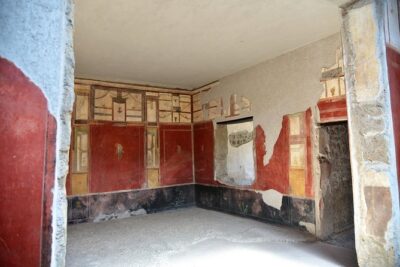
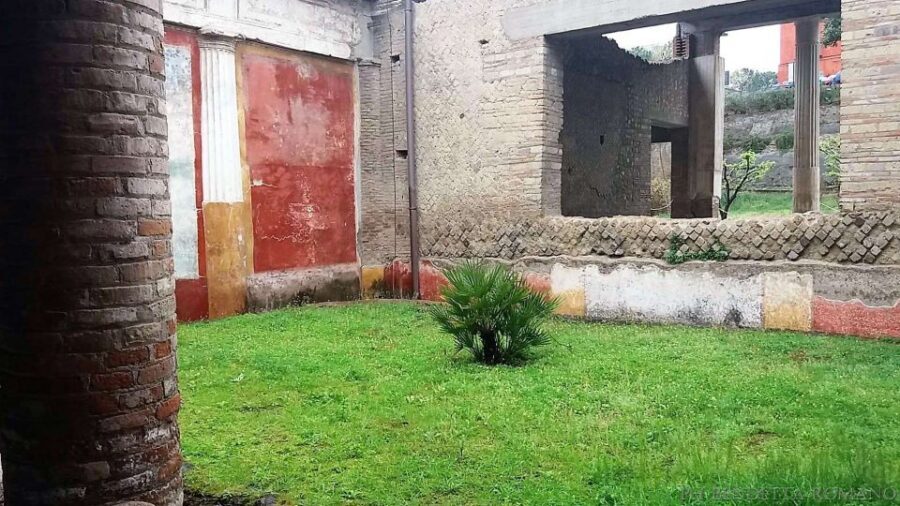
For you, that matters because Pompeii can feel confusing at first. Streets, arches, room layouts, and building fronts are partly collapsed, and a standard tour can become a list of locations. With this approach, I think the reconstructions help you get oriented faster. You can glance around and start to understand what a market area, a theater zone, or a temple approach likely felt like in daily life.
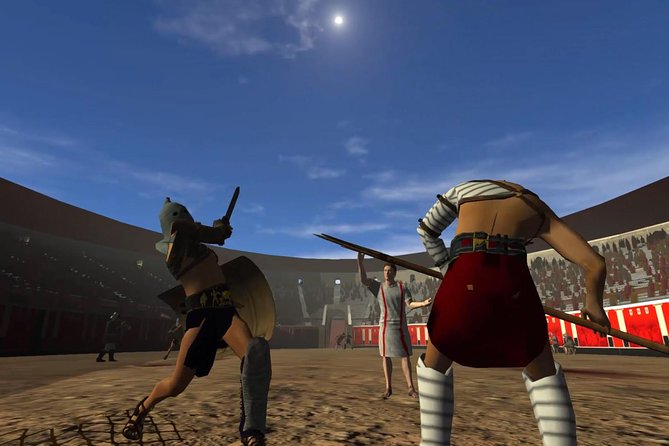
Just keep expectations realistic about what VR can and can’t do. One review mentioned the animation could be upgraded and felt more like a cartoon than a true-life reconstruction. That doesn’t automatically ruin the tour, but it does mean the VR portion may be more instructional than photographic. If your top priority is hyper-real visuals, you may want to pair this with your own slow walk afterward through the parts of Pompeii that still look richly “real.”
If you're still narrowing it down, here are other tours in Pompeii we've reviewed.



The licensed local guide and audio: why this isn’t just tech
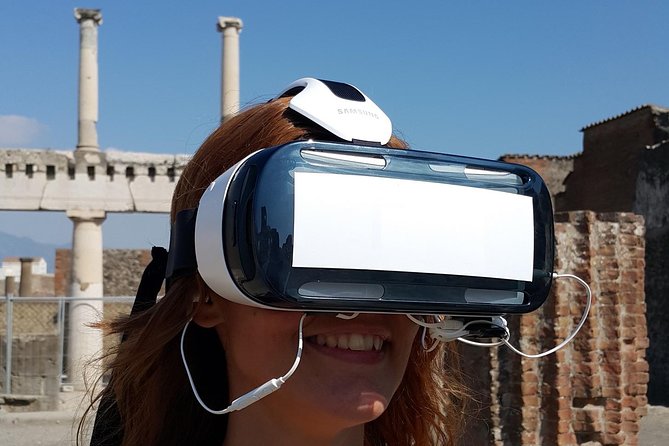
VR can become a gimmick if it’s not anchored to real explanation. Here, you’re not flying solo in the headset. You have a licensed local guide who leads you through Pompeii with context, and you also get audio commentary that supports the story.
This pairing is where the experience becomes more useful. A headset can show you what Pompeii might have looked like 2,000 years ago, but your guide is the one who connects that look to details you can notice outside the headset: how spaces connect, what certain structures were likely used for, and why the layout matters. The tour format also includes time for questions, so you can ask about specific places as they come up.
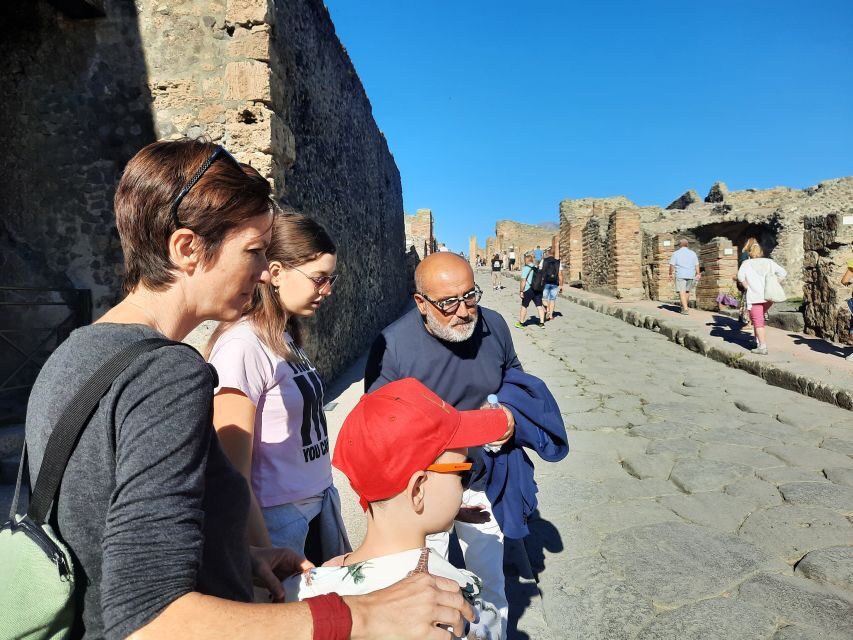
I also like the “guided plus walking” rhythm. You do not only sit and watch. You step through the archaeological park and see temples, homes, shops, theaters, and markets, then connect that to what you experienced in VR. That structure helps you learn rather than just react.
Where the tour takes you: Pompeii Archaeological Park, in order
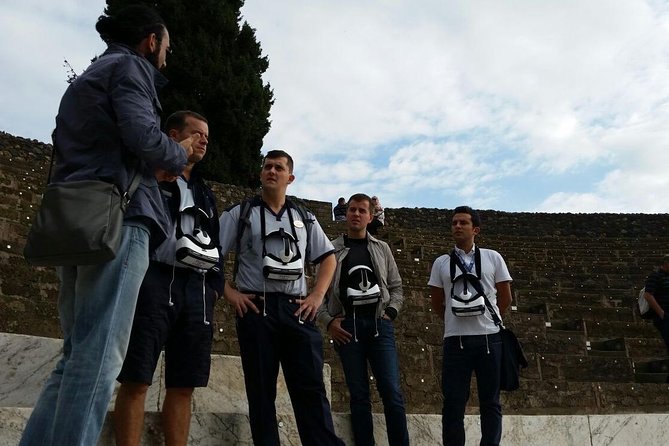
You’ll spend the main time at Pompeii Archaeological Park. The experience is designed as one focused visit rather than a rushed hop across multiple stops. The VR part and the guided walk work together to bring the city’s layout to life.
Here’s what to expect from the flow:
Start at the park with the time-travel setup
You begin at the archaeological park, where the VR headset experience is used. The goal is to show Pompeii as it may have looked before the eruption destroyed it, with a 360-degree, surrounded view. You can think of this as your visual primer.
Then the guide leads you through the real ruins
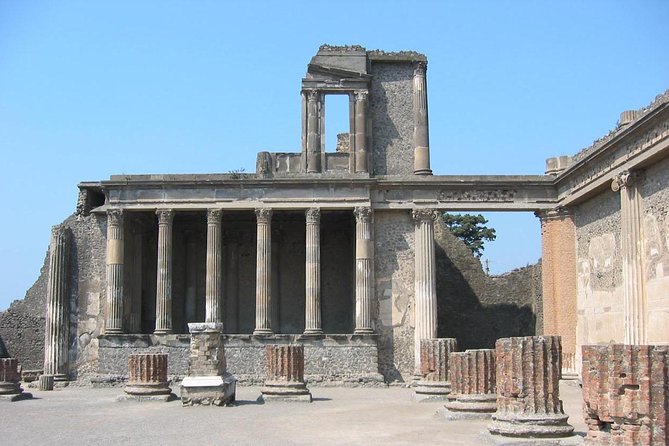
After the VR section, you stroll the site with your guide and audio support. The tour highlights include areas tied to daily life and public gatherings. You’ll be nudged to look for traces that match the scenes you saw in VR—especially around structures linked to civic life and commerce, like theaters and market spaces, and everyday locations like homes and shops.



Why this order helps
I like the fact that you’re not trying to learn Pompeii solely through fragmented remains. Seeing a reconstruction first can reduce that “I have no idea what I’m looking at” feeling. And when you do hit the real stones, you’ve already built a mental map.
A possible drawback to keep in mind
If you found the VR visuals cartoonish, you might wonder if you should have just done a standard guided walk. If animation quality is your main metric, that’s the main risk. But even then, the VR can still function as a navigation tool—helping you recognize the idea of what you’re standing near.
Timing matters: morning vs afternoon and how long you’ll really be out
The tour offers a choice of morning or afternoon. Duration is about 2 to 3 hours (with admission included). In practice, it’s a half-day plan, not an all-day commitment.
This timing choice matters because Pompeii weather and crowds can be real factors. Morning tends to feel calmer for many visitors, while afternoon can be more convenient if you’re pairing Pompeii with other stops nearby. Since this tour operates in all weather, you don’t have to gamble on sunshine to enjoy it, but you should still dress for walking on uneven terrain.
Also, note the demand signal: this experience is often booked well in advance (on average, 249 days). That doesn’t mean you can’t find openings, but it does suggest you’ll feel better booking early if you want a specific time window.
Price and value: what you’re paying for at $217.49 per person
At $217.49 per person, this is not a budget Pompeii day. So the real question is what you’re getting that offsets the higher price.
Here’s the value case:
- You’re paying for a private format, meaning only your group participates.
- You’re paying for skip-the-line entrance, which can save time and reduce stress.
- You’re paying for a licensed local guide, which is the part that turns “seeing” into understanding.
- You’re paying for the VR headset experience itself, including the 3D 360-degree content.
If you normally skip guided tours because you think you can just wander, this is a good check on that assumption. Pompeii rewards people who can connect locations and functions. The headset plus guide aims to do that connection for you, faster than a “stand and read” approach.
If you already love self-guided museums and don’t care about explanations, you might question the price. But if you want to walk away with clearer mental images of what buildings were used for, the guide and VR combo can make the ticket feel more reasonable.
Getting there and meeting point: the practical side
You meet at Piazza Esedra, 80045 Pompei NA, Italy. The activity ends back at the meeting point, which makes planning your next step easier.
Transport is not included, so you’ll want to handle that on your own. The good news: it’s described as near public transportation, so you’re not stuck arranging a private transfer just to get to the start.
Two small practical tips that make a difference at Pompeii:
- Wear comfortable shoes because you’ll be walking over uneven terrain.
- Travel light. You may need to carry a lightweight bag across your shoulder during the tour. Less to manage also means less time adjusting straps while you’re trying to keep your footing.
VR safety and comfort: who should think twice before booking
This experience uses 3D virtual reality headsets (Gear VR). That comes with a serious note: use of the headsets is not recommended for children under 13, and children under 9 are not permitted to use the headsets. Parents may decide about kids age 9 to 12, but that’s at the parent’s discretion and responsibility.
There’s also a medical-warning list you should take seriously. You should consult a doctor before taking this tour if you have histories of seizures, dizziness, epilepsy, preexisting binocular vision abnormalities, psychiatric disorders, heart conditions, or other serious medical conditions. The guidance also notes pregnant people, the elderly, and anyone with a pacemaker or implanted medical device should consult a doctor, because the Gear VR can emit radio waves that may affect pacemakers.
Even if you’re generally healthy, stop and discontinue headset use if you feel symptoms like dizziness, disorientation, eye strain, nausea, blurred or double vision, or anything that feels like motion sickness.
My practical advice: if you know you get carsick or migraines, or if flashing lights bother you, don’t treat the safety notes as fine print. This is the one part of the experience that can’t be “ignored and hoped for.”
Who this private Pompeii VR tour fits best
This tour is best when you want a smarter, guided connection between reconstruction and ruins.
You’ll likely enjoy it if:
- You like being guided and answering questions in real time.
- You want a faster way to understand Pompeii’s layout (rather than guessing).
- You’re traveling with teens and adults who can handle VR safely.
- You want a unique approach that goes beyond standard photo stops.
You might want to reconsider if:
- You strongly prefer ultra-real VR visuals and feel frustrated by more stylized animation.
- You or your group has health factors that make VR risky.
- Your goal is mostly wide-angle wandering with no structured explanations.
Should you book this private Pompeii tour with VR?
I’d book it if you want a guided Pompeii experience that uses VR as a learning tool, not just a novelty. The combination of a licensed local guide, audio commentary, skip-the-line entry, and a 360-degree reconstruction is built for people who want to understand what they’re seeing.
I’d think twice if VR discomfort is a concern for you or your group, or if you’re sensitive to motion sickness-like symptoms. And if you’re the type who cares most about photoreal graphics, be aware that the VR visuals may not feel like high-end cinema.
If you’re looking for a practical way to turn Pompeii from confusing ruins into a city with recognizable spaces, this is a solid pick. Just make sure the VR safety notes work for your situation, and bring comfortable shoes for the real-walking part.
FAQ
How long is the private Pompeii VR tour?
The tour is about 2 to 3 hours (approximately), with admission included.
Where do we meet for the tour, and where does it end?
You start at Piazza Esedra, 80045 Pompei NA, Italy, and the tour ends back at the same meeting point.
Is admission or skip-the-line entry included?
Yes. The tour includes admission with a skip-the-line entrance fee included.
What language is the tour offered in?
It’s offered in English.
Are children allowed to use the 3D VR headset?
Use of the headsets is not recommended for children under 13 for health and safety reasons. Children aged 9 to 12 may use them at a parent’s discretion. Children under 9 are not permitted to use the headsets.
What should I wear or bring?
Wear comfortable shoes since you may walk over uneven terrain. Travel light, and be prepared that you may need to wear a lightweight bag across your shoulder during the tour.
Does the tour include transportation to and from Pompeii?
No. Transport to and from Pompeii is not included.
Is there a cancellation option if plans change?
Yes. You can cancel for a full refund if you cancel at least 24 hours before the experience’s start time. Free cancellation is available up to 24 hours in advance.