REVIEW · POMPEII
Pompeii Private Tour with an Archaeologist and Skip The Line – 3 hours
Book on Viator →Operated by ELIANA SANDRETTI · Bookable on Viator
Pompeii reads differently with an archaeologist. This private, 3-hour Pompeii tour helps you see the city as it worked day to day, with an archaeologist guide and a focused route from Porta Marina to Porta Marina. I especially like the way it connects big sights to everyday life, and the quick, timed stops keep you from wandering in circles. One key consideration: Pompeii admission tickets are not included, so you’ll still need to plan for the entrance fee (and skip-the-line support works only if you request it in advance).
The tour is designed for people who want structure, not a long bus ride or a generic checklist. It starts at Hortus Pompei (Restaurant & Garden Bar) and ends back at the same meeting point, with a mobile ticket provided. There’s a lot of walking over steps and uneven ground, so plan your shoes and expect some slip-prone spots.
In This Review
- Key Things That Make This Pompeii Tour Worth It
- Pompeii in 3 Hours: The Real Value of a Private Guide
- Before You Go: Tickets, Time, and What You Must Plan
- Getting Oriented at Porta Marina: The Start That Makes Everything Easier
- Odeon and Teatro Piccolo: Small Theater, Big Social Life
- Teatro Grande: Where Performances Met Public Power
- Main Street Flow and Granai del Foro: Food, Storage, and the City Engine
- Stabian Baths (Terme Stabiane): The “SPA” Stop With Real Context
- The Forum and Court of Justice: Where Decisions Happened
- Temple of Jupiter and the Quadriporticus: Religion and the Gladiator Connection
- Lupanar and Temple of Venus: The Side of Pompeii You Can’t Ignore
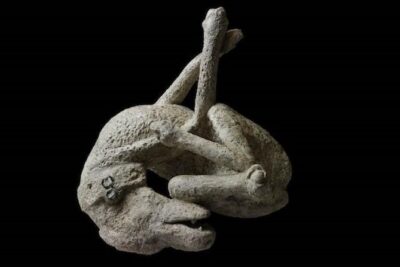
- Casa del Poeta Tragico: The Cave Canem Mosaic Moment
- Markets and Workshops: Macellum, Wool Trade, Takeaway Food, and Laundry
- Casa del Menandro: Frescoes, Mosaics, and the Home Details
- What the Guides Do That You’ll Feel During the Walk
- Walking Reality Check: Shoes, Steps, and Heat
- Price and Tickets: Is It Good Value?
- Should You Book This Pompeii Private Tour?
- FAQ
- How long is the Pompeii Private Tour with an Archaeologist?
- Where does the tour start and where does it end?
- Is this tour private?
- What language is the tour offered in?
- Are Pompeii entrance tickets included?
- Does the tour include skip-the-line access?
- Do I get a mobile ticket?
- What stops are included during the tour?
- Is food or drink included?
- What if the weather is bad?
- Can I get a refund if I cancel?
Key Things That Make This Pompeii Tour Worth It
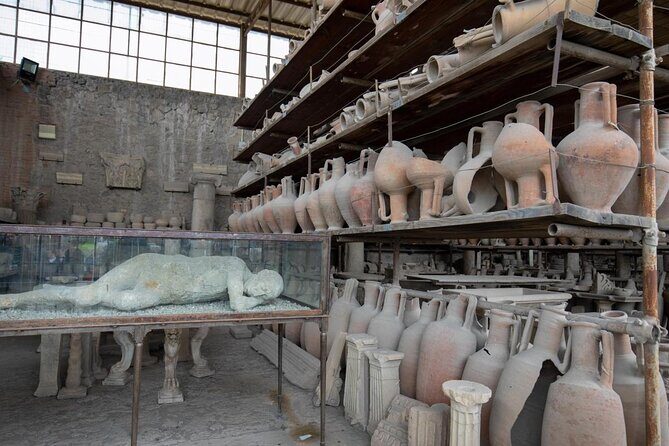
- Private, archaeologist-led walking tour with you only in your group
- Skip-the-line support at the ticket office, on request in advance
- 3 hours, tightly routed: Porta Marina Superiore to Porta Marina Inferiore
- Tickets for each stop included inside the park (admission to Pompeii is separate)
- A guide who adjusts the pace for real-world needs, including mobility concerns
- Full Pompeii mix: theaters, forum, baths, markets, homes, and even the brothel area
Pompeii in 3 Hours: The Real Value of a Private Guide
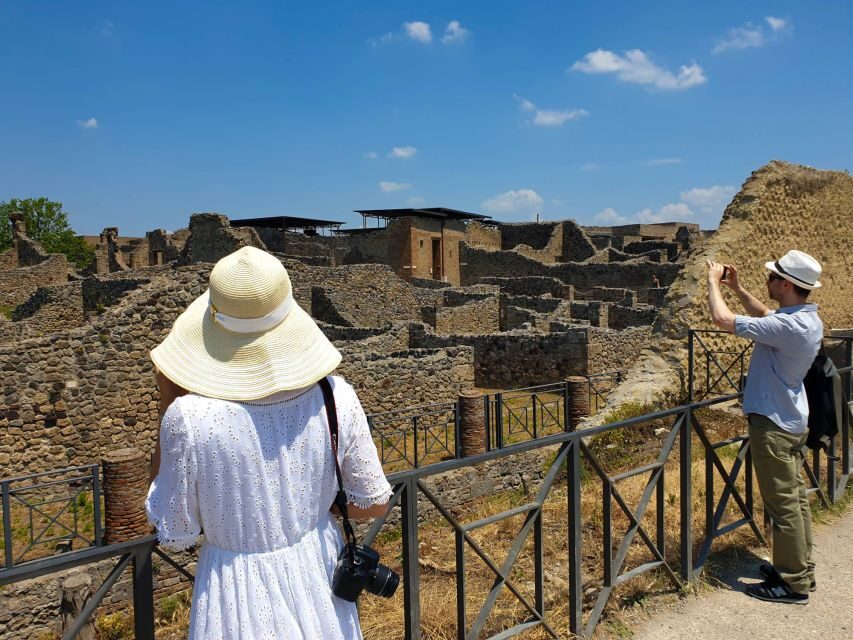
Pompeii is huge, and it’s also easy to get lost in “wow moments” that don’t add up. A private guide is worth it here because Pompeii isn’t just ruins—it’s a working city frozen in 79 AD. When you have an archaeologist-style storyteller, the stones start making sense: what people did there, how spaces connected, and what you’re looking at (not just where you’re standing).
This tour runs about 3 hours. That time window is a sweet spot. You still get a broad hit of major neighborhoods and monuments, but you avoid the problem of trying to cram everything into a single day with no plan. And because it’s private, you can ask questions without waiting for a group.
Now, the money piece. The price is $302.32 per group (listed for up to 1). If you’re traveling solo, you’re paying for real expertise without splitting it with others. If you’re a small group, double-check whether the pricing is still set per single traveler or per booking group size—your best value depends on how many people you can fit into one booking. Also, Pompeii’s admission fee is not included. The listing states adult entry is €19 per person and under-18 is free, so budget for tickets on top of the tour cost.
Other Pompeii tours with an archaeologist


Before You Go: Tickets, Time, and What You Must Plan
Two separate ticket realities matter:
- Tour supports skip-the-line at the ticket office only if you request it in advance.
- Pompeii site admission tickets are not included in the tour price.
The tour does include a link to buy entrance tickets in advance and a mobile ticket. That’s helpful, because Pompeii’s entry lines can eat your morning. But don’t assume the tour price covers the entrance gate. The safest move is to buy your Pompeii admission ahead of time and message your provider to confirm the skip-the-line request.
Timing-wise, you’re meeting at Hortus Pompei (Restaurant & Garden Bar) near Porta Marina Superiore, and you’re walking back to the same area afterward. The start/end pairing is simple and practical: you don’t have to fight transport afterward just to end your day.
One more practical note: the experience is marked as requiring good weather. If weather turns, you should expect a different date or a full refund, not a “figure-it-out on your own” kind of situation.
Getting Oriented at Porta Marina: The Start That Makes Everything Easier
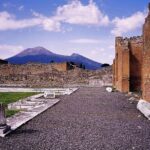
Your tour begins at Porta Marina Superiore and works its way toward Porta Marina Inferiore. Starting at the right gates matters more than you’d think. Pompeii’s layout can feel like a maze once you’re inside, and the guide’s route gives your brain something to hold onto.
This is also the first place where you benefit from a private format. Instead of joining a crowd and following a leader who speaks over heads, you get an introduction that turns the city into a map. That helps later when you’re seeing theaters, the forum, baths, and markets in the same connected walk.
A good guide here also sets expectations—how long it’ll take to reach each zone, where the steps are, and what surfaces can be slippery. Some visitors mention steeper steps and slippery areas, so I’d come ready for a real walking tour, not a casual stroll.
Odeon and Teatro Piccolo: Small Theater, Big Social Life
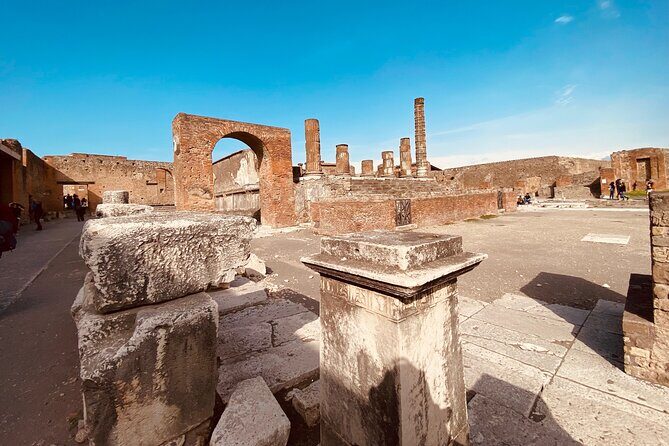
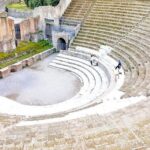
One of the early stops is the Odeon / Teatro Piccolo area. These smaller spaces are a great entry point because they show Pompeii’s entertainment culture without overwhelming you with scale right away.
What you’ll want to pay attention to is how theater settings weren’t just about performances. They were part of social life—places where people gathered, talked, and watched. A good guide connects the architecture to the human behavior: who used spaces like this and what the city’s rhythm might have looked like.
Time on site: about 5 minutes.
Consideration: quick stops can feel like “speed runs” if you’re expecting to linger. But the tour is designed that way—so you can hit more major areas in the full 3 hours.
Teatro Grande: Where Performances Met Public Power
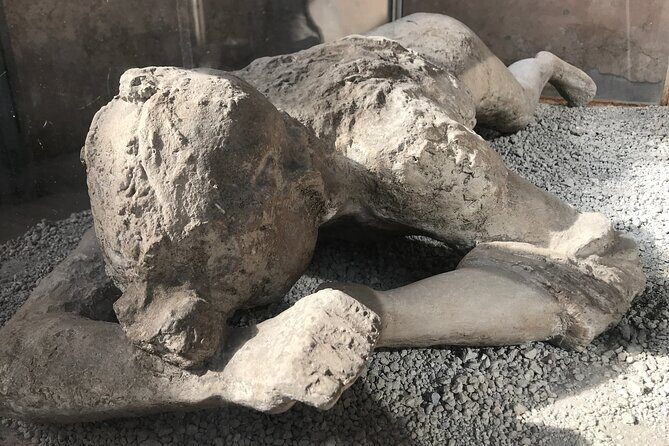
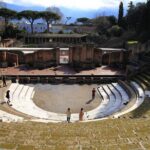
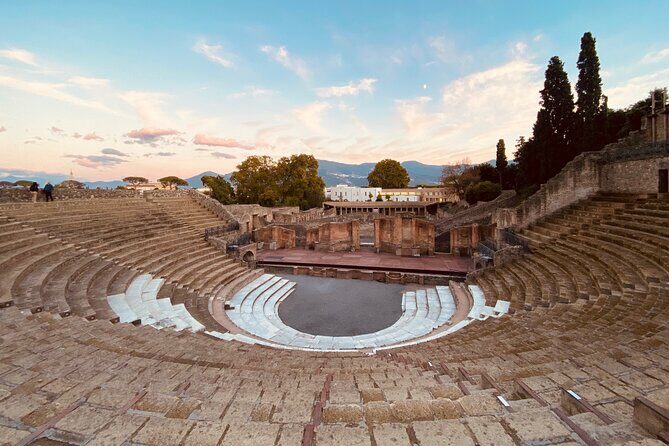
Next up is Teatro Grande, the large theater stop with about 15 minutes here. This is where Pompeii’s scale hits you. Even if you’ve seen theater ruins elsewhere, Teatro Grande tends to feel more “alive” because you’re learning what the space meant for real gatherings.
This is also a key spot for good storytelling. The guide can explain how these theaters fit into civic identity—Pompeii wasn’t just shops and homes; it had spaces that reflected status and community events.
Time on site: about 15 minutes.
Practical tip: wear shoes with grip. You’ll likely be stepping around uneven stone and negotiating crowds at viewpoints.
Other skip-the-line Pompeii tickets and tours

Main Street Flow and Granai del Foro: Food, Storage, and the City Engine
Pompeii’s “main street” feel is part of what makes the city work as a story. You’ll pass through major thoroughfare space and then hit Granai del Foro, described as an archaeological deposit related to the forum area, with about 15 minutes.
Why this matters: storage and provisioning are the boring topics until you stand in front of the evidence. Once you see granary-related structures in context, you get a clearer picture of how a city feeds itself and how economic life ties into civic life.
This is the kind of stop where an archaeologist style guide helps most. You’ll get more than labels; you’ll get the logic of why the storage is where it is and how it supports daily routines.
Time on site: about 15 minutes.
Stabian Baths (Terme Stabiane): The “SPA” Stop With Real Context
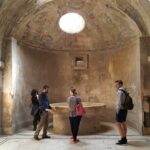
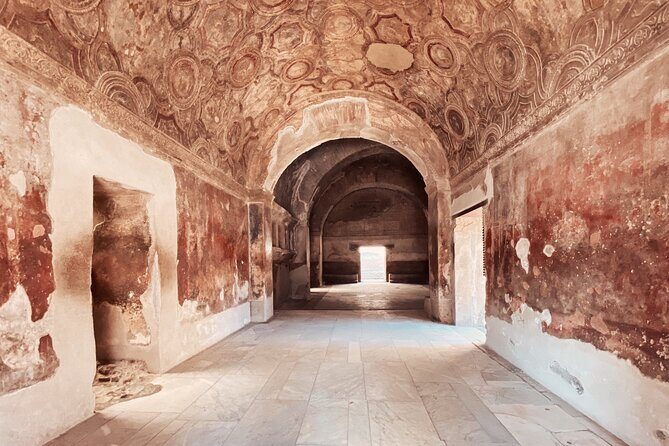
Then you reach Stabian Baths, about 15 minutes. It’s often called the first baths of Pompeii, and visitors tend to enjoy this stop because it’s visual and human. Baths weren’t only about cleaning. They were social spaces, part of the city’s public routine.
The best value here is that you’re not just looking at columns and walls. You’re learning how bath areas functioned—what roles different parts might have served, and how bathing fit into broader daily schedules.
Time on site: about 15 minutes.
Practical consideration: because bathrooms and bath-adjacent areas can be slick or uneven, take your time on footing.
The Forum and Court of Justice: Where Decisions Happened
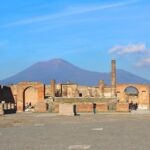
You then move into the civic core: Forum (1_Foro di Pompei) and Pompei la Basilica (Court of the Justice), each about 15 minutes.
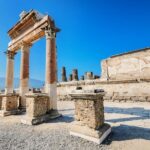
This is one of the most important parts of the tour for understanding Pompeii’s structure. The forum and basilica areas aren’t just “big rocks.” They’re where authority, announcements, and social ordering lived in public view. When your guide connects what you’re seeing to how people likely interacted, Pompeii shifts from scenery to a system.
If you’ve ever visited ruins and felt like you were missing the point, this part is where the point tends to appear. You see the city’s “center of gravity.”
Time on site: about 15 minutes each.
Temple of Jupiter and the Quadriporticus: Religion and the Gladiator Connection
Two stops that pair nicely are:
- Temple: Jupiter (time not clearly listed beyond being one of the stops)
- Quadriporticus of the theatres, described as a gladiators’ barrack area, about 15 minutes
These are strong examples of why an expert guide is useful. Religion and spectacle weren’t separate worlds. The tour’s structure links the civic and entertainment zones, then brings you to the service and training side of gladiatorial life.
The quadriporticus/barrack description helps you imagine the behind-the-scenes work that made spectacle possible. That’s a different kind of “wow”—less about scale, more about function.
Time on site: about 15 minutes for the quadriporticus/barracks area.
Lupanar and Temple of Venus: The Side of Pompeii You Can’t Ignore
The tour includes the Lupanar—described as the brothel/prostitution area—with about 15 minutes, and also a Temple of Venus stop.
This is where Pompeii stops being polite. You’re seeing parts of the city that are uncomfortable, but historically important. If you want a balanced view of what daily life included—joy, religion, entertainment, commerce, and also exploitation—these stops deliver it.
I’d treat this section like a “listen carefully, ask questions if you want” zone. If you’re sensitive to the subject matter, you’ll want to mentally prep yourself.
Time on site: about 15 minutes for Lupanar.
Consideration: the tone can feel heavier than the theaters or baths.
Casa del Poeta Tragico: The Cave Canem Mosaic Moment
You then visit Casa del Poeta Tragico with a quick stop of about 5 minutes, focused on the Cave Canem mosaic.
This is one of those “small stop, big impact” locations. A mosaic like this does more than decorate a wall. It tells you about household identity, humor, caution, and how visitors entered someone’s home world. Guides tend to bring out the human angle fast, which makes the ruins feel less distant.
Time on site: about 5 minutes.
Practical tip: if you’re into art, take extra care with photos and keep an eye on where the ground is uneven.
Markets and Workshops: Macellum, Wool Trade, Takeaway Food, and Laundry
A big strength of this tour is that you don’t end with temples and theaters. You also get the everyday economy stops:
- Macellum (meat and fish market) about 10 minutes
- Edificio di Eumachia (wool market) about 5 minutes
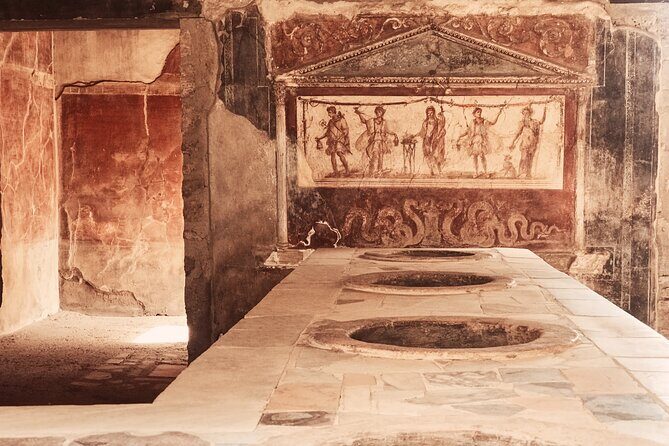
- Termopolio di Vetuzio Placido (takeaway shop & fast food) about 15 minutes
- Fullonica di Stephanus (laundry) about 15 minutes
If you want to understand Pompeii as a city, this is where it clicks. Markets and workshops are where people earned money, ate, met neighbors, and produced goods. When your guide connects these areas to daily routines, it becomes easier to see the city’s economy as something real—not just ruins with a nameplate.
Time on site: mixed, from 5 to 15 minutes depending on the stop.
Consideration: you’ll likely move quickly through some smaller workshop sites. That’s normal for a 3-hour format.
Casa del Menandro: Frescoes, Mosaics, and the Home Details
Later, you reach Casa del Menandro, described as houses with frescoes and mosaics, with about 20 minutes.
This is one of the longer stays. It’s also the part where you can slow down mentally and focus on decoration and domestic space. A home like this helps you feel what “luxury” might have meant in Pompeii—how art and layout communicated identity.
If you like details in walls and floors, this is a great stop to be fully present.
Time on site: about 20 minutes.
What the Guides Do That You’ll Feel During the Walk
The tour is led by Eliana Sandretti, and the guide lineup in real experiences includes names like Luisa, Amadeo/Amedeo, Maria, Roberto, and Mariagrazia. Across those different guides, the consistent theme is storytelling that connects architecture to people.
You can also expect real-time adjustment. Some visitors specifically mention the guide being helpful with mobility limits and steering people toward shade in hot conditions. That kind of practical care matters in Pompeii because the weather and the ground can change the whole experience.
Also, since this is a private tour, you can ask follow-ups on whatever catches your interest—eruption context, everyday Roman life, how excavation is progressing, or how specific buildings functioned. That’s hard to do on a larger group tour.
Walking Reality Check: Shoes, Steps, and Heat
Pompeii is outdoors, and it involves a lot of walking. You should be ready for:
- Steps and uneven ground
- Possible slippery surfaces
- Heat, depending on the season and your time of day
- Crowd density at popular viewing areas (your guide may help you avoid some of the worst spots)
My practical advice: choose grippy shoes, pack a water plan, and go with the mindset that this is an active morning. The guide can help with pacing, but you’re still moving through an ancient site that doesn’t care about your itinerary.
Price and Tickets: Is It Good Value?
For $302.32 per group for about 3 hours, you’re paying for several things at once:
- A private archaeologist-led format
- Skip-the-line support at the ticket office (request needed)
- Guidance that helps you understand what you’re seeing—especially in the forum, theaters, baths, and domestic sites
The catch is clear: Pompeii admission is separate at about €19 per adult (under 18 free). That’s not a dealbreaker, but it changes the true cost.
So here’s my value take:
- If you want a guided structure and you care about understanding Pompeii beyond “cool ruins,” this is a solid spend.
- If you’d rather roam freely and you’re happy to read on your phone, you might feel the tour cost is extra.
Should You Book This Pompeii Private Tour?
Book it if you want Pompeii to make sense fast. This route hits theaters, the forum and court area, baths, markets, homes with famous mosaics, and even places many people skip. The private format plus archaeological storytelling is what turns Pompeii from scattered sights into a readable city.
Skip it (or rethink it) if you’re on a tight budget, hate walking, or prefer total freedom. Also double-check ticket timing. The tour helps with skip-the-line support, but the Pompeii entrance fee isn’t included, and skip-the-line requires advanced request.
If you choose to go, do the boring part well: buy your Pompeii admission in advance, message your provider about the skip-the-line request, and wear shoes ready for steps.
FAQ
How long is the Pompeii Private Tour with an Archaeologist?
It’s listed as about 3 hours.
Where does the tour start and where does it end?
It starts at Hortus Pompei, Restaurant & Garden Bar near Porta Marina Superiore, and it ends back at the same meeting point.
Is this tour private?
Yes. It’s a private tour/activity, and only your group participates.
What language is the tour offered in?
The tour is offered in English.
Are Pompeii entrance tickets included?
No. Entrance fees to Pompeii are not included. Adult admission is listed as €19 per person, and under-18s have free entrance.
Does the tour include skip-the-line access?
Skip-the-line at the ticket office is included only if requested in advance. The tour also provides a link to buy entrance tickets in advance.
Do I get a mobile ticket?
Yes. A mobile ticket is included.
What stops are included during the tour?
The tour includes major areas such as the Pompeii Archaeological Park, Odeon/Teatro Piccolo, Teatro Grande, Granai del Foro, Stabian Baths, the Forum and Basilica (court area), Temple of Jupiter, quadriporticus/gladiators barrack area, Lupanar, Temple of Venus, Casa del Poeta Tragico (Cave Canem mosaic), Macellum, Edificio di Eumachia (wool market), Casa del Menandro, Termopolio, Fullonica di Stephanus (laundry), and a final temple stop.
Is food or drink included?
No. Meals and food & drinks are not included.
What if the weather is bad?
The experience requires good weather. If it’s canceled due to poor weather, you’ll be offered a different date or a full refund.
Can I get a refund if I cancel?
Free cancellation is available, and you can cancel up to 24 hours in advance for a full refund.