REVIEW · POMPEII
Pompeii Skip-the-line Tour with Archaeologist Guide
Book on Viator →Operated by Raphael Tours & Events · Bookable on Viator
Skip-the-line in Pompeii is a real gift. This archaeologist-led walking tour hits the big emotional and practical stuff fast: the buried city of AD 79, the main monuments, and the little details you’d miss wandering on your own. I especially like the skip-the-line feel—your guide helps you get moving without wasting precious daylight.
I also like the way the tour stays human-sized, with a maximum of 16 people. You get the kind of pace where questions actually fit, and you’re not just shuffled along. One drawback to plan for: you’re walking—on original streets and lava rock—and it’s the kind of two hours where good shoes and sun protection matter.
Key things I’d watch for
- Max 16 people means a quieter, question-friendly visit.
- Archaeologist-style guiding helps you read the ruins instead of just staring at them.
- You walk real ancient surfaces (cobblestones/lava rock), so wear real walking shoes.
- Core Pompeii highlights are covered: Forum, theater, baths, gymnasium areas, and the Lupanare (brothel).
- AD 79 context is built in, so the site makes more sense as you go.
In This Review
- Why This 2-Hour Pompeii Tour Feels Like the Smartest First Stop
- Meeting Point at Hotel Vittoria and Getting There Without a Headache
- Skip-the-Line Isn’t Just a Buzzword Here
- What the Walking Route Feels Like (and Why It’s Worth It)
- The Big Story You’ll Learn as You Walk: Vesuvius and AD 79
- Key Stops You Should Not Miss: Forum, Theater, Baths, Gladiators, and the Brothel
- The Forum: Where Civic Life and Religion Overlapped
- The Theater: Performances for Tragedy and Comedy
- Thermal Baths: Gossip, Exercise, and Relaxation
- Local Businesses: Shops, Bars, and Food Stops
- Gladiator Barracks: Training and Living
- The Lupanare (Brothel): A Rebuilt Pompeii Icon
- Pace, Small-Group Dynamics, and How to Build a Great Day
- Price and Value: Is $71.35 Worth It?
- Who Should Book This Pompeii Skip-the-Line Tour?
- Should You Book This Pompeii Skip-the-Line Tour?
- FAQ
- How long is the Pompeii Skip-the-line tour?
- Is admission included?
- Do I need to buy a separate ticket to enter Pompeii ruins?
- What language is the tour offered in?
- How many people are in the group?
- Where do I meet the guide?
- What should I wear or bring?
- What if I cancel or if weather is bad?
Why This 2-Hour Pompeii Tour Feels Like the Smartest First Stop
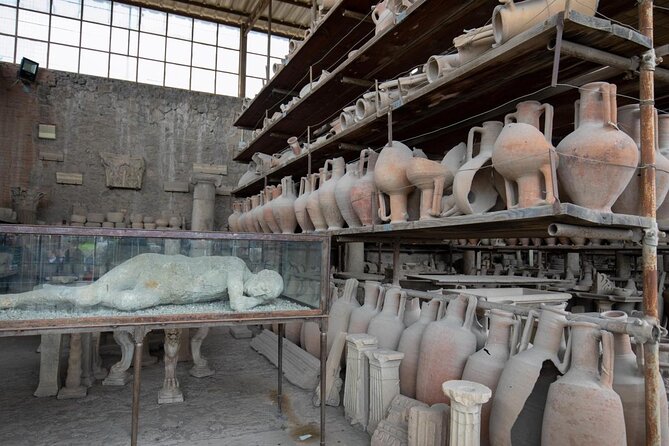
Pompeii can overwhelm you fast. You arrive, you stare, and then you realize you’ve got no easy way to connect what you’re seeing to how people actually lived there. That’s where this tour shines.
You meet your guide near the entrance and walk into the ancient city with an expert voice that keeps things organized. You’re not stuck with a generic “here’s a wall, here’s a column” tour. Instead, you get stories that match the buildings—how public life worked in the Forum, what daily routines looked like in the thermal bath area, and how the city’s layout tied into the eruption that buried it in AD 79.
I like that it’s short enough to do even if you’re not planning a full-day Pompeii marathon. Two hours is a good “first contact” window: you get the essentials and a roadmap for what to explore next.
Meeting Point at Hotel Vittoria and Getting There Without a Headache
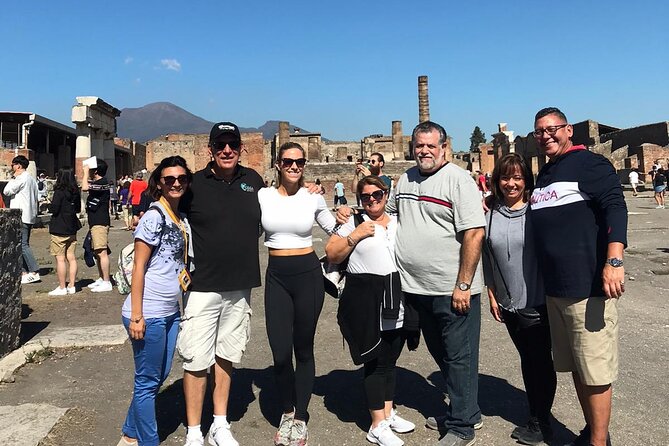
This tour starts and ends at Hotel Vittoria, Piazza Esedra, 80045 Pompei. You handle getting there yourself—there’s no hotel pickup/drop-off—so the best move is to plan your own timing and show up a bit early.
If you’re coming from Naples or Sorrento, it’s straightforward: take the Circumvesuviana train to Pompei Scavi station, then walk to the site area. It’s an easy rail connection compared to juggling taxis all day.
A couple of practical tips:
- The tour expects you to arrive on time. If you’re late or miss the tour, there’s no refund.
- Bring the basics for sun and heat. You’ll be outside, and you’re walking on uneven surfaces.
If you're still narrowing it down, here are other tours in Pompeii we've reviewed.


Skip-the-Line Isn’t Just a Buzzword Here
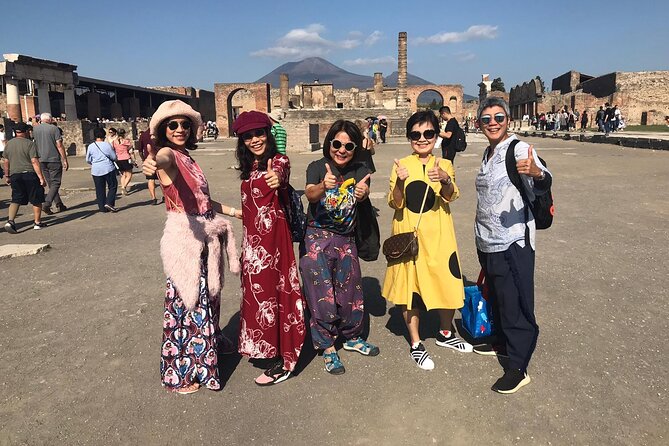
This experience is marketed as a skip-the-line guided entry, and the point is simple: you lose less time waiting at checkpoints and more time inside Pompeii. With a group cap of 16 travelers, you’re also less likely to get swallowed by a giant crowd.
Important clarification: this is not just a standalone ticket you use by yourself. Your confirmation works only with the guide. Even though admission tickets are included, you’re still joining the guided program, not wandering in independently at the same time.
What you should expect at the start:
- Your guide meets you near the entrance area.
- You’re guided into Pompeii and quickly put on the “what matters most” path.
What the Walking Route Feels Like (and Why It’s Worth It)
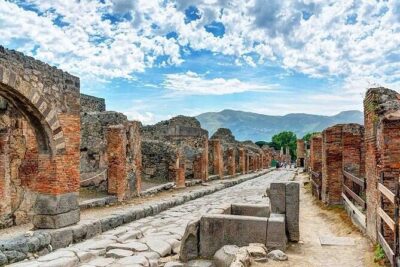
You’ll walk on original streets and lava rock. That changes the whole experience. It’s still sightseeing, but it’s also physical: your feet feel the place in a way photos can’t.
You’ll also notice street-level clues as you go, like wagon-wheel ruts in the road. That’s the kind of detail that makes Pompeii feel real—not staged, not reconstructed for visitors, but anchored in the daily movement of a working city.
Bring:
- Comfortable shoes (non-negotiable)
- A hat for summer sun
- Water if you have it available before you start (the tour doesn’t include food, so plan snacks separately)
You’ll cover multiple zones in a compact two-hour format, so you’re moving steadily. This is not a “sit down and watch” tour.
The Big Story You’ll Learn as You Walk: Vesuvius and AD 79
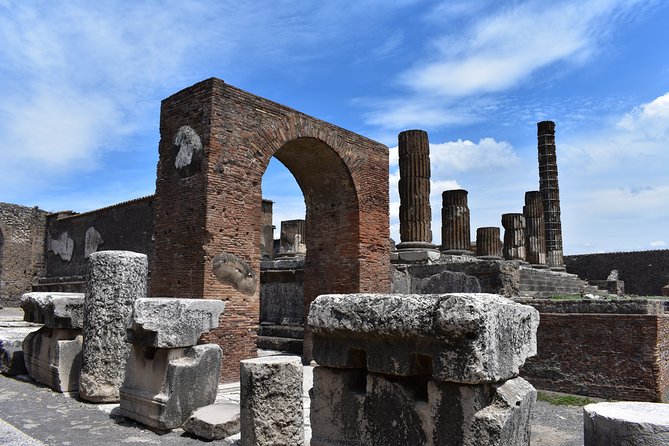
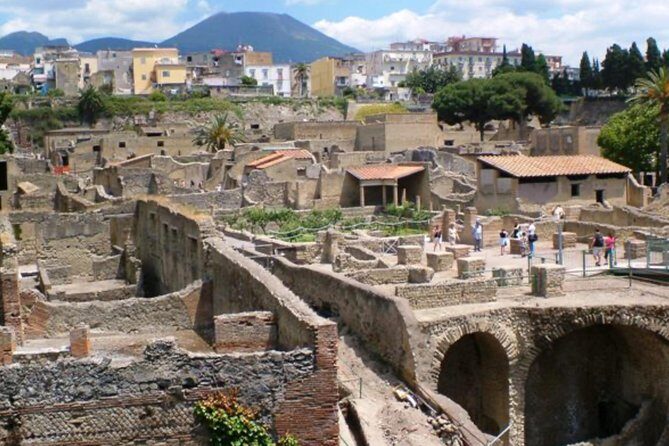
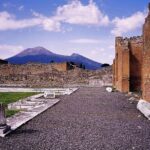
A good Pompeii visit isn’t only about Roman architecture—it’s about why Pompeii froze in time. Your guide ties the ruins back to the eruption of Mt. Vesuvius in AD 79, which buried Pompeii and the surrounding area.
The practical payoff: once you understand the event, it’s easier to interpret what you’re seeing:
- why certain spaces feel “caught” mid-life
- why damage and preservation look the way they do
- why the city’s layout matters in the story of what happened
Also, the way guides explain this can vary, and that’s part of what makes the experience work. Some guides for this tour, like Lello and Italo, have backgrounds working on the site and bring a sharper sense of how excavation and preservation intersect with what you’re seeing today.
Key Stops You Should Not Miss: Forum, Theater, Baths, Gladiators, and the Brothel
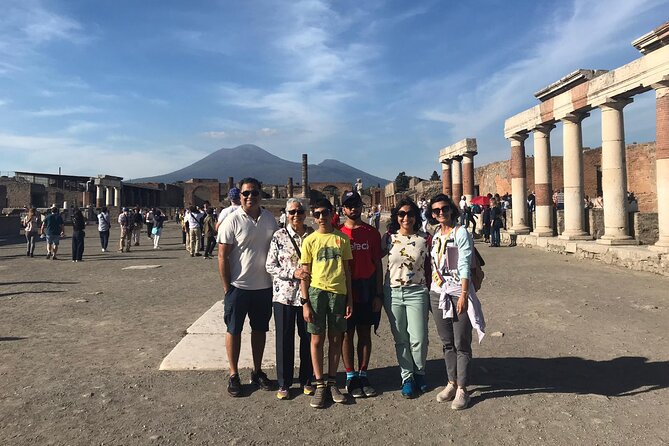
This tour hits Pompeii’s most recognizable “must-sees,” but it doesn’t treat them like checkboxes. Each stop is explained in terms of function—what people did there and how the space worked day to day.

The Forum: Where Civic Life and Religion Overlapped
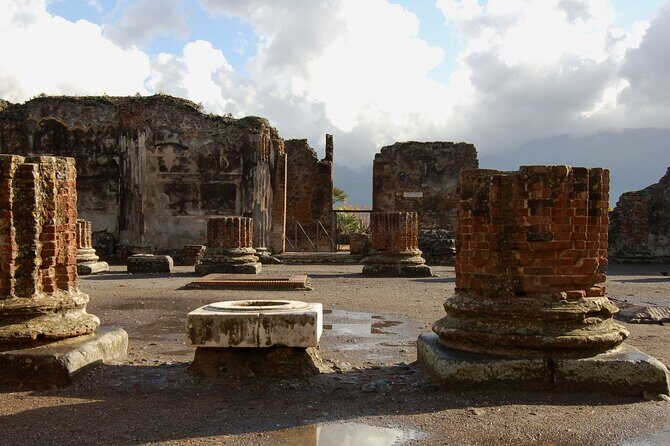
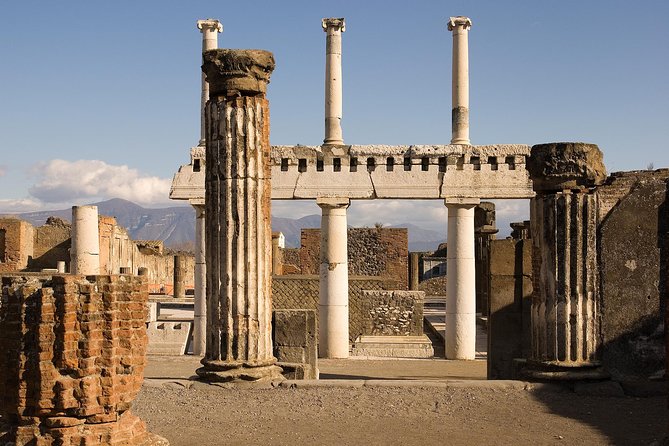
The Forum is the heart of Roman city life. You’ll walk through ruins of temples and civic buildings, and your guide will connect the dots between religion and government—priests and politicians weren’t separate worlds.
If you’ve ever wondered why Roman cities feel so political and ceremonial at the same time, this is the place to get your answer. The scale and layout help you understand how public life moved through space.
The Theater: Performances for Tragedy and Comedy
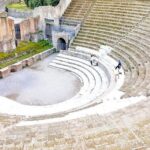
You’ll see the theater, tied to lively performances—tragedy and comedy—in a setting that still feels built for an audience experience.
Even without modern lighting or sound, you can picture how the space would amplify voices and attention. This stop works well because it’s not only “what remains,” but “what happened here.”
Thermal Baths: Gossip, Exercise, and Relaxation
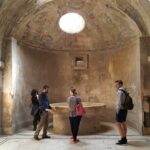
The thermal bathhouse is a favorite for a reason. You’ll learn that residents came regularly to bathe, exercise, and gossip. This is a different side of Roman life than what you see in the Forum.
What I like about this stop is the everyday angle. It makes the eruption story feel less like a disaster documentary and more like a glimpse of routine that happened right up until it didn’t.
Local Businesses: Shops, Bars, and Food Stops
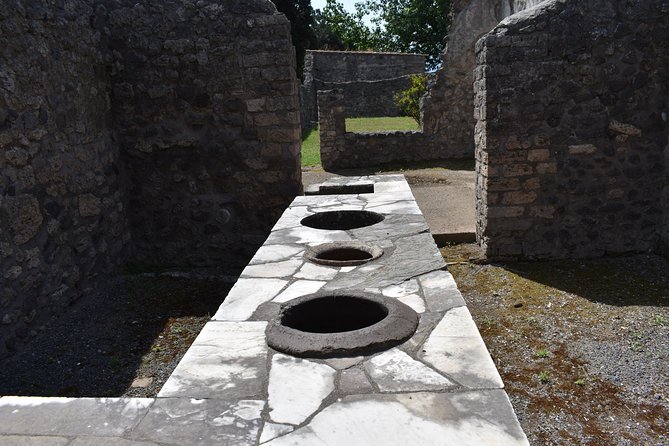
You’ll also peek into the remains of local businesses, including spaces that would have served as restaurants, bars, and shops selling food and clothing.
These moments matter because they remind you Pompeii was a lived-in city with commerce and neighborhoods—not just monuments lined up for sightseeing.
Gladiator Barracks: Training and Living
Look for the barracks where gladiators once trained and lived. This is one of those areas where the “why this is here” clicks if your guide explains the lifestyle behind the scenes.
It’s also a reminder that Roman entertainment wasn’t just on stage—it required people preparing offstage, day after day.
The Lupanare (Brothel): A Rebuilt Pompeii Icon
Don’t skip this. The tour includes the rebuilt brothel, called the Lupanare. It’s one of Pompeii’s most popular attractions for obvious reasons: it’s vivid, it’s specific, and it’s tied to the daily realities of the city.
If you feel a little uncomfortable, that’s normal. Just remember this stop is also useful for understanding how Romans managed privacy, public life, and business in the same urban framework.
Pace, Small-Group Dynamics, and How to Build a Great Day
With a maximum of 16 travelers, you get a better rhythm than the big buses and long lines. You’re also more likely to move in the “right places at the right times” flow—so you’re not constantly fighting for space at every stop.
Guides on this tour—people like Lello, Italo, and Cela show up in prior group experiences—tend to bring energy and humor, but the real value is how they point out details. You’ll hear explanations that help you notice things like ruts, architectural changes, and how different public spaces worked together.
A smart way to use the tour:
- Treat it as your orientation layer.
- After the two hours, you’ll know what to return to on your own—whether you want more time in the baths, linger around the Forum, or explore other structures that stand out once you understand their roles.
Also, this is a good choice if you’re short on time. If you’re doing Pompeii as a side trip on a tight itinerary, the structure saves you from the “I saw a lot but I understood little” problem.
Price and Value: Is $71.35 Worth It?
At $71.35 per person for about two hours, the price feels reasonable if you compare what you actually get:
- A local guide with expert interpretation
- Admission tickets included
- A small group capped at 16
- A guided plan through Pompeii’s most important highlights
Where you feel the value is in the thinking. Without a guide, Pompeii can turn into a blur of stones and sections labeled on signs you don’t fully trust yet. With an expert, each stop becomes a clue: you learn how to read the place.
If you’re traveling with kids or you just don’t want a 6-hour deep dive, this is also a great “sweet spot” length. It’s long enough to learn meaningful context, short enough to keep energy up.
Who Should Book This Pompeii Skip-the-Line Tour?
This tour is a strong fit if:
- you want a high-impact first visit to Pompeii
- you care more about how to interpret ruins than just taking photos
- you prefer a smaller group environment
- you want English guiding and a structured walk
It’s not ideal if:
- you want a slow, resting-heavy experience
- you’re uncomfortable walking on uneven surfaces
In the right mood, this is exactly the kind of tour that makes the site click fast.
Should You Book This Pompeii Skip-the-Line Tour?
Yes—if your goal is understanding, not just sightseeing. Two hours is the right length to get oriented, learn the AD 79/Vesuvius story in context, and cover Pompeii’s big anchors like the Forum, theater, thermal baths, and the Lupanare.
I’d book it especially if you’re visiting for the first time, you don’t want to waste time at the entrance, and you like the idea of an archaeologist-style guide pointing out details you’d otherwise miss.
FAQ
How long is the Pompeii Skip-the-line tour?
It’s approximately 2 hours.
Is admission included?
Yes. Admission tickets are included with the guided experience.
Do I need to buy a separate ticket to enter Pompeii ruins?
You’re not just receiving a standalone ruin ticket. This is a guided tour confirmation that you use with the guide.
What language is the tour offered in?
The tour is offered in English.
How many people are in the group?
The experience has a maximum of 16 travelers.
Where do I meet the guide?
You meet at Hotel Vittoria, Piazza Esedra, 80045 Pompei NA, Italy. The tour ends back at the meeting point.
What should I wear or bring?
Wear comfortable shoes because you’ll walk on the original streets, including lava rock. Packing a hat for summer sun is also recommended.
What if I cancel or if weather is bad?
You can cancel for a full refund up to 24 hours in advance. The experience requires good weather, and if it’s canceled due to poor weather, you’ll be offered a different date or a full refund. If you’re late or miss the tour, there’s no refund.