REVIEW · POMPEII
Pompeii Small Group Tour with an Archaeologist
Book on Viator →Operated by Askos Tours · Bookable on Viator
Two hours can change how you read Pompeii. I love the way an archaeologist guide turns the stones into real people, with stories that often start around the Porta Marina Superiore entrance and move straight into the ruins. On tours led by guides like Alessandra and Paolo, you’re not just looking at sites—you’re learning what you’re seeing and why it mattered.
I also like that the route hits the big, memorable landmarks without feeling like a frantic sprint. You get a small group (max 20), and when the group is larger you’ll use headsets so the guide’s voice stays clear as you walk.
One consideration: this is still Pompeii—uneven ground, steps, and ramps. Mobility scooters aren’t allowed, and the climbs can be tough, so comfortable shoes and a realistic pace matter.
In This Review
- Key highlights to know before you go
- Pompeii in 2 Hours: what you’ll see and why it works
- Where the tour starts: Porta Marina Superiore and the Askos Tours meet-up
- Basilica and Forum: the first landmarks that make Pompeii make sense
- Granaries of the Forum: plaster casts, marble features, and the eruption’s human cost
- Houses and art: House of Menander, mosaics, and how homes were meant to impress
- Stabian Baths and the logic of public life
- The Lupanar and the smaller moments that make the city feel real
- House of the Faun and Teatro Grande: closing with Pompeii’s scale
- Small group size, headsets, and how pacing feels on the ground
- Price and value: $35.67 for an archaeologist-led route
- Practical tips that matter in Pompeii: shoes, sun, water, and your pace
- Should you book this Pompeii Express archaeologist tour?
- FAQ
- FAQ
- How long is the Pompeii small group tour?
- Where do I meet my guide?
- Is there skip-the-line entry?
- How big is the group?
- Is the tour in English?
- Does the price include anything besides the guide?
- Are food and drinks included?
- Is the tour suitable for people using mobility scooters?
- Can I bring a small dog?
Key highlights to know before you go
- Archaeologist-led storytelling that links buildings to everyday life and the eruption’s aftermath
- Pompeii Express skip-the-line entry to help you start inside faster
- A tight, logical 2-hour route across the Basilica, Forum area, major houses, baths, the famous brothel, and theaters
- Small group size (max 20) with headsets for groups of 16+
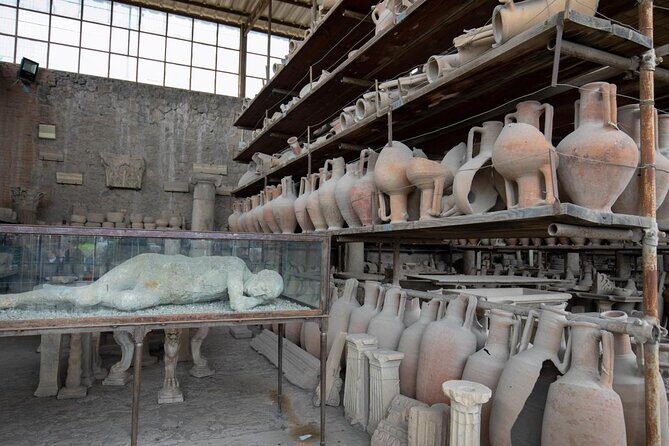
- Victim plaster casts in the Granaries of the Forum area, plus a few surprising casts like a dog and a tree
- Ends inside the park, so you can keep exploring on your own afterward if you want
Pompeii in 2 Hours: what you’ll see and why it works

Pompeii is huge, and trying to wing it with only a map usually means you miss the point of what you’re looking at. This tour is built to give you a usable framework fast: you’ll see the Forum core, key elite homes, public spaces, and entertainment venues in a route that feels like walking through a curated page of an ancient city.
The timing is short by design (about 2 hours), which is a plus if your days are packed or you’re traveling with kids or teens. It also means you won’t linger at every corner for long. If you want slow, museum-style reading time, you’ll still need to plan some extra unstructured time after the guided portion.
The good news: you don’t end the tour outside the ruins and then have to re-enter. The guide finishes inside Pompeii, which makes it easier to keep wandering at your own pace once you’ve learned how to “read” what’s around you.
Other Pompeii tours with an archaeologist


Where the tour starts: Porta Marina Superiore and the Askos Tours meet-up
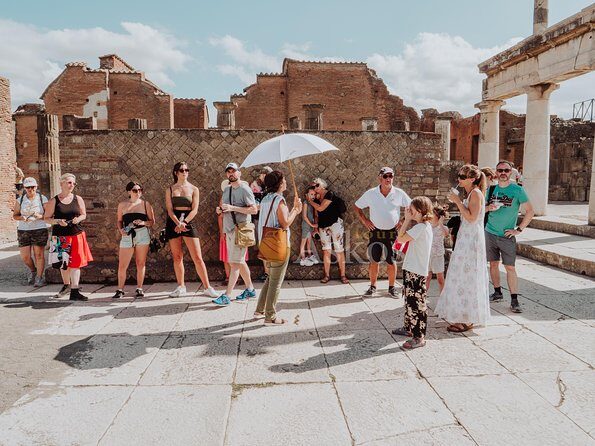
You meet your archaeologist guide at the Pompeii entrance called Porta Marina Superiore. The guide holds an Askos Tours sign, so you can spot your group without playing detective in the crowd.
There’s also a practical address listed for the overall meeting point: Via Villa dei Misteri, 2, 80045 Pompei NA, Italy. That matters because Pompeii visits can involve confusing footpaths and multiple entry points. With this tour, the key is that you’re not trying to coordinate everything alone right when you arrive.
You’ll head directly into the ruins using the included skip-the-line ticket (the Pompeii Express entrance). That’s a real time-saver in peak seasons, and it keeps the first part of your visit from feeling like a queue simulator.
Finally, the tour wraps up inside the site, so it’s smart to plan ahead for how you’ll exit and where you’ll go next after your guided time ends.
Basilica and Forum: the first landmarks that make Pompeii make sense
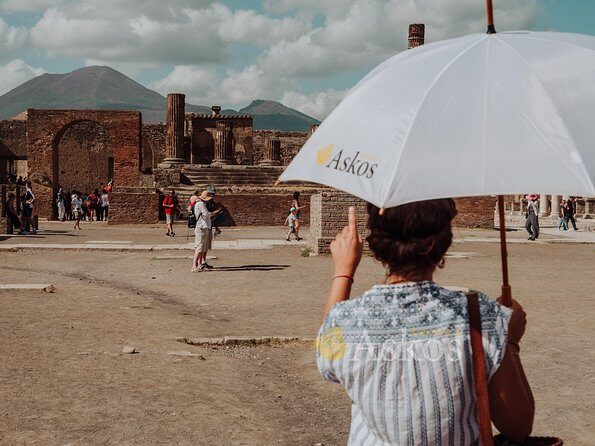
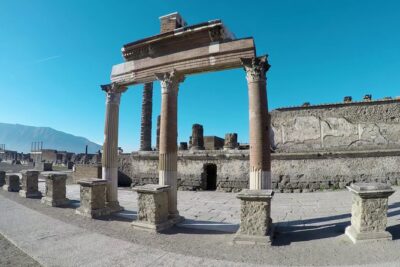
The early stops are chosen for a reason. You begin with the Basilica, which was an open portico area used for commerce and everyday public activity. Seeing the Basilica first gives you a mental anchor: this wasn’t a dead city. People worked, traded, argued, and waited there.
Next comes the Forum de Pompeya, Pompeii’s main square. This is where you start connecting streets, buildings, and movement patterns. Standing in the Forum area, you can understand how a city organizes power and public life—who gathers where, and what kinds of buildings get the most visibility.
These two stops also set up the tour’s emotional and historical arc. You’ll move from civic space into the eruption aftermath zone soon after, so the city’s layout stays in your mind as the story turns heavier.
Granaries of the Forum: plaster casts, marble features, and the eruption’s human cost
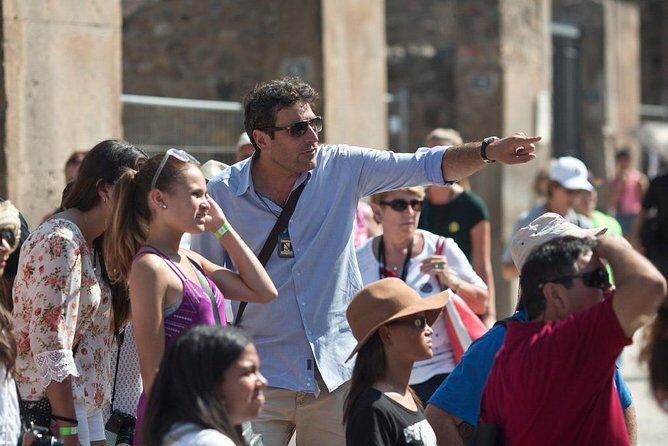
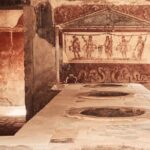
One of the most memorable parts is the pause at the Granaries of the Forum. The space includes marble tables and features associated with fountains at house entrances—small details that remind you Pompeii had style and everyday comfort, not just spectacle.
Then the tone shifts in a way you’ll feel instantly: you’ll be able to ponder the plaster casts of victims from the eruption that destroyed the city. The inclusion of casts beyond humans—like a dog and a tree—can hit you hard because it widens the story from tragedy as a statistic into tragedy as lived environment.
This stop is not about quick photos. The tour format gives you time to stop, look, and process. If you’re the type who likes understanding the meaning behind what you see, this is where the guide’s storytelling matters most.
A consideration: it’s emotionally intense. If you prefer lighter pacing, you may want to take a breath and remember you can always step back from the group for a moment.
Houses and art: House of Menander, mosaics, and how homes were meant to impress

After the Forum core, you walk into the world of private wealth. The tour includes the House of Menander, described as one of Pompeii’s richest and most magnificent houses in terms of architecture, decoration, and contents.
Why that matters for you: houses like this weren’t just where people slept. They were stages for status. When you see how the rooms are organized and how decorative elements fit together, you start to understand what the household wanted visitors to notice.
As you move along the route, you’ll also stop to admire frescoes and mosaics inside houses. Even if you can’t read every detail, you can learn what kind of design choices were common and what they were trying to signal—taste, education, and prosperity.
A possible drawback is the time pressure. The tour gives about 15 minutes per major stop, so you’ll get a strong overview, but you won’t get the slow, room-by-room “art historian” experience unless you plan extra time afterward.
Other small-group Pompeii tours





Stabian Baths and the logic of public life
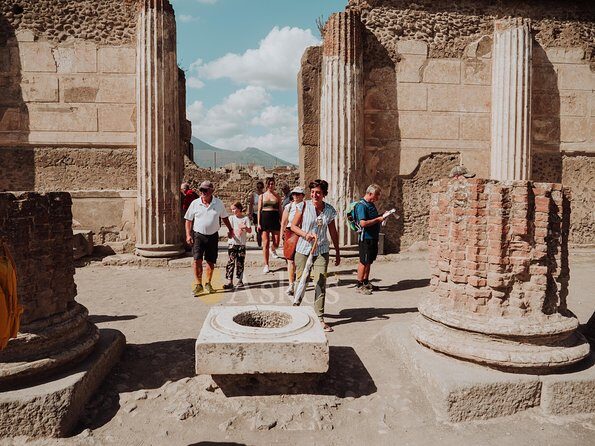
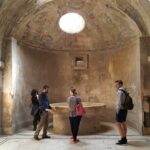
Next up: the Stabian Baths (Terme Stabiane). These occupy a large area and are described as the oldest thermal complex in the city. That alone makes the baths a valuable stop because it ties Pompeii’s public routines to a long-running tradition.
Baths in Roman life were more than washing. They were social space, part of daily schedule, and a place where you’d run into neighbors or trade gossip. Seeing a large, multi-area bath complex helps you understand why the city’s public design mattered.
Your guide also helps you connect what you’re seeing to the bigger story of Pompeii as a functioning place. Instead of treating the baths like ruins in a travel photo, you’ll understand them as infrastructure for community rhythm.
The Lupanar and the smaller moments that make the city feel real

Then the tour goes to the Lupanar, the most famous brothel ruins in Pompeii. This stop is brief but memorable because it brings a side of Pompeii that’s easy to underestimate until you see the site.
I think the key here is the guide’s tone. A good archaeologist approach keeps it grounded in context rather than shock value, helping you interpret what the ruins suggest about behavior, signage, and the built environment of commerce and entertainment.
Between big-name sights, you’ll also have short pauses—like a brief look at the Odeon and a look at the Teatro Piccolo—which help fill in the cultural map. Pompeii wasn’t only markets and homes. It had places for performance and gathering too.
House of the Faun and Teatro Grande: closing with Pompeii’s scale
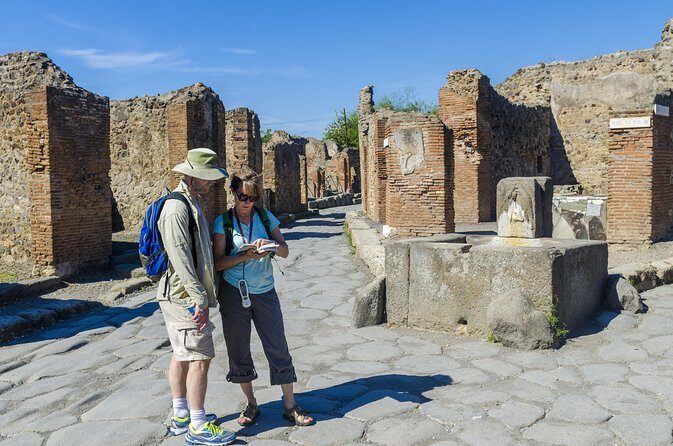
The House of the Faun is next. It’s one of the city’s largest and most impressive private residences. This stop is a good counterpoint to Menander’s house: you see more scale, more ambition, and a sense that elite life in Pompeii had architectural reach.
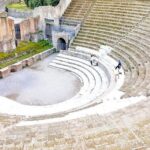
Finally, you end at Teatro Grande, described as Pompeii’s most important theater. This ending spot works because it gives you the biggest public stage view. By the time you reach the theater, the city you started at no longer feels random. You’ve seen civic space, entertainment spaces, and elite residences, so the theater lands with meaning.
It also helps that the route ends inside the ruins. You can stay nearby and keep walking if you want more time for the sights that grabbed you.
Small group size, headsets, and how pacing feels on the ground
The tour runs with a maximum of 20 travelers per guide. That’s the sweet spot where you don’t feel swallowed by a mass crowd, but you still get the energy of being in a shared experience.
If the group size reaches 16 or more, you get headsets. In a site like Pompeii—where you’ll stand, walk, and reposition often—that audio clarity is a big quality-of-life upgrade. It also keeps the experience from turning into repeating everything every time someone falls behind.
What I like about this setup is that it supports a confident pace. You’re not stuck waiting forever, but you also aren’t rushed through every stop like a conveyor belt.
One practical note: Pompeii’s terrain is uneven and can include steep little climbs. Even with good pacing, you’ll still need to manage your footing and slow down where needed.
Price and value: $35.67 for an archaeologist-led route
At $35.67 per person, this tour is priced as a high-value way to get expert context for a short visit. What makes the cost feel reasonable isn’t just the guide—it’s the included Pompeii Express skip-the-line ticket and the fact that guidance covers the whole time window (about 2 hours).
You’re also getting a small group cap and potential headset support, which reduces the odds you’ll hear nothing or miss half the story. The tour isn’t just a ticket scan plus wandering.
What’s not included is also clear: food and drinks and transportation. So I’d plan for water and simple snacks before or after, especially in the summer.
If you’re comparing options, the big question is whether you’ll spend time figuring out what you’re looking at. This tour reduces that guesswork. In Pompeii, that guesswork is often the difference between seeing ruins and understanding them.
Practical tips that matter in Pompeii: shoes, sun, water, and your pace
Even on a well-run tour, you’ll walk on old stone and uneven ground. Wear comfortable shoes with grip. In summer, bring sunglasses and sunscreen, and plan for a small bottle of water.
Shade is limited, so a light hat can help if you’re sensitive to sun. The tour runs rain or shine, so expect slippery patches after rain and adjust your step.
If you’re traveling with children, they must be accompanied by an adult. For travelers under 18, the guidance specifically notes bringing an ID card or passport.
Accessibility needs special care here. Mobility scooters are not allowed, and the tour isn’t recommended for travelers with mobility issues due to steps, ramps, and small steep climbs. If that’s your situation, you’ll want to ask about a private alternative that can match your pace and routes.
Pets are allowed with limits: service animals are permitted, and small dogs may be allowed if they meet the size rules (under 10 kg and max height 40 cm). The small-dog rule also requires a leash and specific handling inside buildings.
Should you book this Pompeii Express archaeologist tour?
Book it if you want a smart, timed introduction to Pompeii with real archaeological context and a route that covers the big signature sites in about two hours. It’s also a good choice when you want your questions answered—guides with an archaeology background can turn a confusing maze into a coherent city.
Skip it or consider a different option if you need a slow pace, have mobility constraints that make stairs and uneven ground hard, or you hate emotional stops. The cast area can be heavy, and the time limit means you’ll have to choose where to focus on returning later.
If you can walk comfortably and you want Pompeii to click—this is one of the more efficient ways to make it happen without spending your whole day trying to self-interpret ruins.
FAQ
FAQ
How long is the Pompeii small group tour?
It lasts about 2 hours.
Where do I meet my guide?
You meet at the entrance Porta Marina Superiore, where the guide is holding an Askos Tours sign.
Is there skip-the-line entry?
Yes. You get the included Pompeii Express entrance ticket.
How big is the group?
The group is small, with a maximum of 20 people per guide.
Is the tour in English?
Yes, it’s offered in English.
Does the price include anything besides the guide?
Yes. Guidance is included for the full duration, along with the Pompeii Express entrance ticket. Headsets are provided for groups of 16 or more.
Are food and drinks included?
No. Food and drinks are not included.
Is the tour suitable for people using mobility scooters?
No. Mobility scooters are not allowed, and the tour isn’t recommended for travelers with mobility issues due to steps, ramps, and steep spots.
Can I bring a small dog?
Service animals are allowed. Small dogs may be permitted if they meet the size limits (under 10 kg and max height 40 cm) and follow the rules about leashing and handling inside buildings.