REVIEW · POMPEII
Explore Pompeii with an Archaeologist
Book on Viator →Operated by Askos Tours · Bookable on Viator
Pompeii hits fast, even before the first steps. This tour mixes skip-the-line entry with an archaeologist’s explanations, so you don’t wander through the ruins like a lost tourist. You’ll move between major sights in a tight 2-hour walk, guided in English by a trained expert.
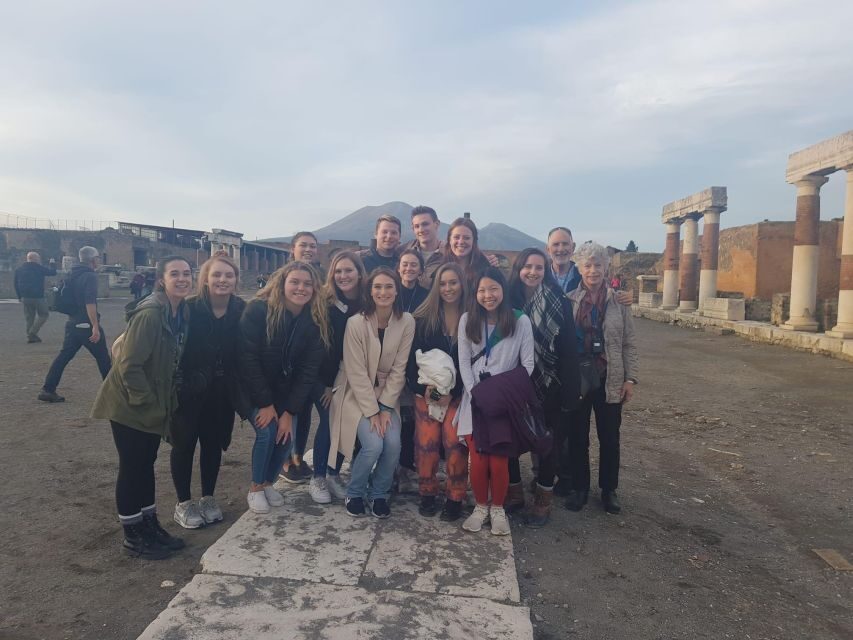
What I really like is the focus. You get a clear route through the Forum, baths, homes, and the big public spaces, which is perfect when you only have a short window. I also love the small-group setup (max 20), which shows up in the way guides work—names like Mario Celentano, Alexandra, Rosanna, and Teresa come up for patient answers, clear pacing, and good English.
The main catch is simple: Pompeii still demands stamina. Expect lots of walking over uneven ground, and in busier times you can run into crowd noise that makes it harder to hear, even with headsets when your group is large.
In This Review
- Quick hits before you go
- Why this Pompeii tour works better than going solo
- Price and what you’re really paying for (and why it feels fair)
- Meeting point, timing, and how to reduce stress in Pompeii
- The 2-hour walk: Porta Marina Superiore to Piazza Esedra
- Stop-by-stop: what you’ll see and why each part matters
- 1) Porta Marina Superiore entry: your orientation kick-off
- 2) Foro de Pompeya: the city’s main square
- 3) Basilica: the court house
- 4) Lupanar: the brothel
- 5) Granaries of the Forum: where food was stored
- 6) House of Menander: daily life in a residence
- 7) House of the Faun: another key residence
- 8) Stabian Baths (Terme Stabiane): social space
- 9) Via dell’Abbondanza: a walk through the street
- 10) Thermopolium VI: street-level activity
- 11) Teatro Grande: entertainment and gatherings
- 12) Casa dei Vettii: ending with a standout home
- Headsets, crowd noise, and how to make the audio work
- The archaeologist experience: what changes when someone explains it
- What to pack and how to plan your day
- Who this Pompeii tour fits best (and who might want another option)
- Should you book Askos Tours’ Pompeii with an Archaeologist?
Quick hits before you go
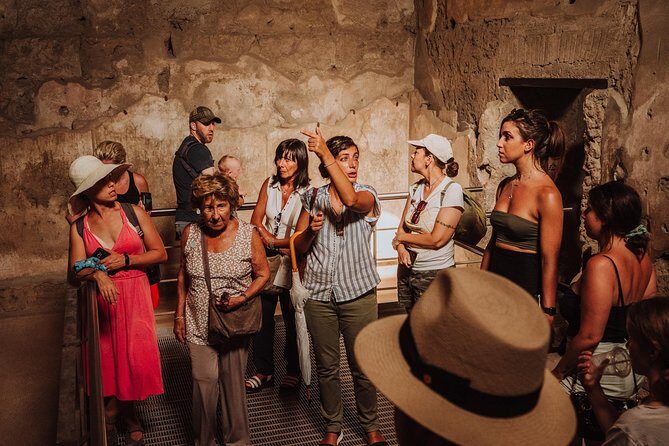
- Skip-the-line entry so you spend time seeing, not waiting
- Expert archaeologist guide with English commentary throughout
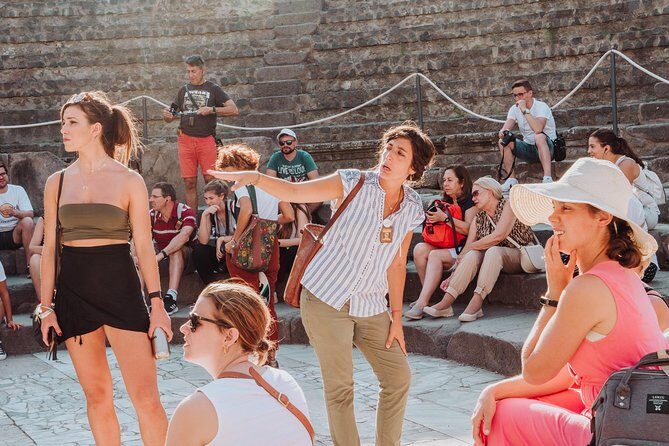
- Max 20 people for real Q&A instead of one-way lecturing
- Headsets for groups of 16+ (helpful in crowded spots)
- 12 major highlights covered in about 2 hours
- Ends near Piazza Esedra so you can keep exploring after the tour
Why this Pompeii tour works better than going solo
Pompeii is one of those places where the stones look dramatic, but the meaning can be fuzzy fast. The best part of this tour is that you’re not just looking—you’re getting context while you walk. That matters because Pompeii isn’t one attraction. It’s a whole city, with different areas that used to do different jobs.
You’ll get a guided circuit that hits both public and private life: the square and civic buildings, everyday streets, baths, a theatre, plus several houses. That mix is great for first-timers because it helps you form a mental map quickly. And for repeat visitors, it’s still useful to hear the story behind the sections you already know.
Other Pompeii tours with an archaeologist


Price and what you’re really paying for (and why it feels fair)
At $35.67 per person for about 2 hours, you’re paying for more than a guide. Your ticket includes Pompeii admission fees, and the tour is set up with skip-the-line entry support. Add in the small-group format and dedicated archaeologist guidance, and the value clicks for people who want a guided experience without paying big-private-tour prices.
Two practical details make the cost feel more justified:
- Headsets for groups of 16+, which helps you actually follow the commentary during the stops.
- Time efficiency, because you’re guided from one highlight to the next instead of spending your day hunting for what matters.
Food and drinks aren’t included, so budget for water and snacks on your own. But the core museum-side cost is handled, which keeps your planning simple.
Meeting point, timing, and how to reduce stress in Pompeii
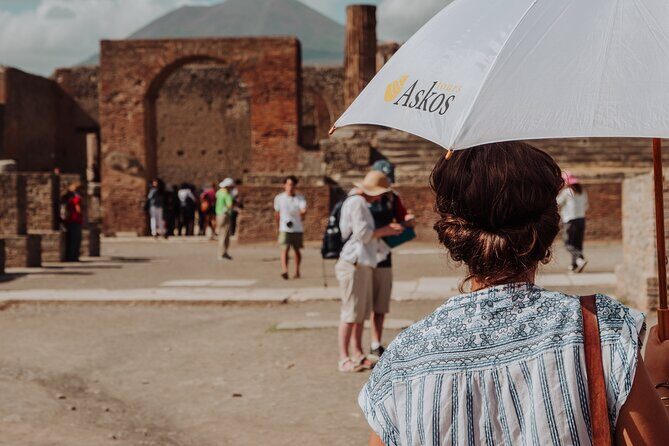
Your tour starts at Via Villa dei Misteri, 2, 80045 Pompei NA, Italy, and the guide will meet you at the main entrance of the archaeological site at Porta Marina Superiore. The guide holds a sign with the company name Askos Tours on top, which makes it easier to spot your group.
You’ll spend the morning in one main area of Pompeii, and the flow is designed to keep the walk moving. That said, Pompeii is famous for crowds. Even with good pacing, it’s smart to plan for slower moments and arrive with a little buffer.
If you’re visiting during busy season, bring what keeps you comfortable:
- Sun protection and a hat or umbrella can be a lifesaver.
- Wear shoes made for uneven surfaces.
The tour reviews that stand out all mention that walking is real. This is not a gentle stroll through flat sidewalks.
The 2-hour walk: Porta Marina Superiore to Piazza Esedra
You’ll cover a packed loop with multiple stops, each around 10 minutes, plus one segment that’s listed as admission ticket free (the street section). The tour ends at Piazza Esedra, which is convenient because it puts you near places to continue on your own without having to backtrack.
Think of this as a guided highlights circuit. You’ll see a lot, but you won’t see everything. After the tour, plan for additional independent time if you want deeper exploration in any one area—especially if houses or baths are your focus.
Stop-by-stop: what you’ll see and why each part matters



1) Porta Marina Superiore entry: your orientation kick-off
The first stop is the Archaeological Park of Pompeii, where you meet at Porta Marina Superiore. This is the moment the guide helps you get oriented, so the rest of the walk makes more sense.
Why it matters: Pompeii can feel like random ruins until someone connects the layout to how the city worked. Starting at the main entrance is a smart way to set the mental map early.
2) Foro de Pompeya: the city’s main square
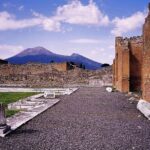
Next up is Foro de Pompeya, the main square. Even if you’ve seen photos, seeing it as a lived-in space is different because you can understand how people moved through the center.
Why it matters: the Forum gives you the civic backbone. Once you see the square, the rest of Pompeii’s buildings start to feel like they have a job.
3) Basilica: the court house
Then you’ll visit the Basilica, described as the court house. This stop helps you understand how public life was organized—who gathered, and why.
Why it matters: the Basilica is one of those spots where a guided explanation makes it easier to visualize administration and daily order in the city.
4) Lupanar: the brothel
The Lupanar, the brothel, is one of the stops that gives Pompeii a darker, more human edge. It’s also one of the places where an archaeologist’s framing helps you avoid turning the visit into a pure shock-value stop.
Why it matters: seeing this type of building reminds you that Pompeii wasn’t only temples and politics. It was a functioning city with all kinds of commerce.
5) Granaries of the Forum: where food was stored
At the Granaries of the Forum, you’ll get a look at storage—exactly the kind of detail that makes a city feel real. It’s not glamorous, but it’s crucial.
Why it matters: when you connect squares and civic buildings with how the city fed people, Pompeii stops being just a set of dramatic ruins.
6) House of Menander: daily life in a residence
The tour then moves into the House of Menander. This is where Pompeii becomes more personal because you’re stepping into domestic architecture.
Why it matters: you get a sense of how private spaces differed from public ones.
7) House of the Faun: another key residence
After Menander, you’ll see the House of the Faun. Comparing houses back-to-back in a short walk is helpful because you start noticing patterns faster.
Why it matters: two residence stops in one tour gives you a quicker feel for Pompeii’s social differences than a single house visit.
8) Stabian Baths (Terme Stabiane): social space
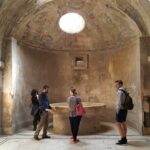
Next is Stabian Baths (Terme Stabiane), the ancient baths. This is a strong stop for people who like learning how everyday routines worked.
Why it matters: baths weren’t just hygiene. They were also social time, and seeing the layout helps you imagine how the city spent hours.
9) Via dell’Abbondanza: a walk through the street
Then comes Via dell’Abbondanza, the street called that name. This section is listed as admission ticket free while still taking about 10 minutes.
Why it matters: you get the feel of moving through Pompeii as a city, not just hopping between buildings. Streets help connect everything.
10) Thermopolium VI: street-level activity
You’ll also visit Thermopolium VI. Even from the name alone, it signals a place tied to everyday needs—perfect for balancing the big public buildings and formal houses.
Why it matters: this kind of stop fills in the gaps. Pompeii becomes a city, not a museum collection.
11) Teatro Grande: entertainment and gatherings
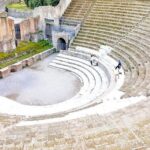
At Teatro Grande, the theatre, you’ll see the entertainment side of Pompeii’s public life.
Why it matters: a guided stop here helps you connect the theatre to the same city center you saw earlier, so the whole area feels more integrated.
12) Casa dei Vettii: ending with a standout home
Finally, you’ll reach Casa dei Vettii (the House of the Vettii). This is a strong way to end because the tour finishes with another domestic space, bringing you back to how people lived.
Why it matters: by the end, you’ve seen public spaces, daily street life, and multiple homes. That combination helps the whole visit “stick.”
Headsets, crowd noise, and how to make the audio work
This tour provides headsets for groups of 16 or more, which is smart in Pompeii. The ruins are open, but sound still gets messy when crowds surge at the same time.
Here’s how to make it easier:
- Keep your headset volume at a level where you can hear without straining.
- If the group bunches up, step a half pace to the side so you can still see the guide.
A downside you should know: in crowded moments, it can be harder to hear clearly even with headsets. If you’re sensitive to noise, you might prefer quieter timing, or consider a smaller private option.
The archaeologist experience: what changes when someone explains it
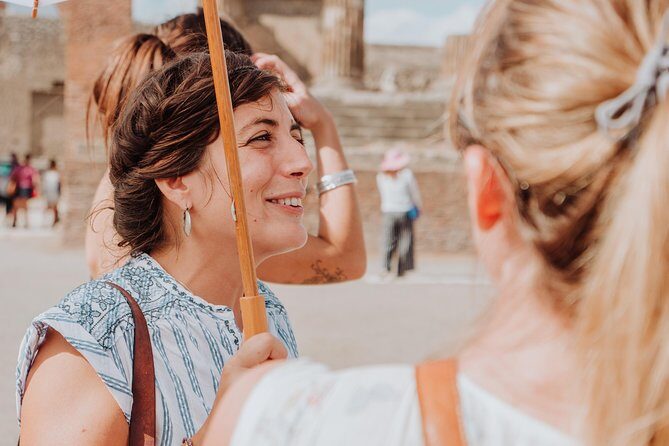
This tour’s biggest promise is simple: you get explanations from an archaeologist, not just a route pass. The most praised guides in this experience show up for things like:
- clear English explanations
- patience while answering questions
- good timing and pacing
- flexibility when plans shift
Names that show up with strong feedback include Mario Celentano, Julia, Alexandra, Ilaria, Diego, Antonio, Rosanna, Rafaela, Teresa, and Sergio. What they have in common is that the tour feels like a conversation with the city, not a script read at you.
That matters for two reasons:
1) You’ll understand what you’re looking at faster.
2) You’ll know which areas are worth slowing down after the tour ends.
What to pack and how to plan your day
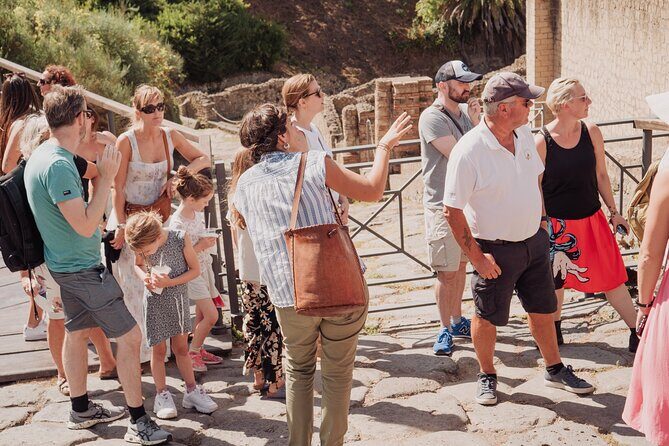
Because this is a short tour with lots of stops, your prep should focus on comfort. From the practical tips that keep coming up, I’d plan for heat and sun and bring:
- water you can drink during the walk
- sun protection like a hat or umbrella
- shoes for uneven surfaces
One review tip also mentions fountains for water availability, but don’t count on it for your whole day. Treat water like a must-have, not an afterthought.
After the tour, you’ll want time on your own. Even with a strong guide and a tight circuit, 2 hours is still not enough to soak in Pompeii at a slower pace. If houses or baths are your priority, plan an extra block of time so you can return to the spots you liked most.
Who this Pompeii tour fits best (and who might want another option)
This tour is a great fit if you want:
- a high-impact Pompeii overview without spending hours mapping it yourself
- English guidance with time for questions in a max 20 group
- a route that balances civic life, streets, baths, theatre, and multiple houses
It’s also family-friendly in the sense that guides are described as good at keeping things fun and understandable for kids of different ages.
Consider a different format if:
- you need a faster, more interactive pace
- you get frustrated by crowd noise and prefer more space
- you want to spend extra time in the areas you find most interesting (this tour is designed to cover a lot in a short window)
Should you book Askos Tours’ Pompeii with an Archaeologist?
If you want a smart way to see Pompeii when time is limited, I think this tour is an easy yes. The value is strong because it bundles skip-the-line admission, archaeologist-led explanations, and a well-chosen highlights circuit into a small-group format.
Book it if:
- you’re visiting Pompeii for the first time
- you’d rather learn the city while walking than pick it apart later
- you like the idea of ending near Piazza Esedra so you can keep exploring
Skip it (or consider an upgrade) if:
- you know you want long, slow stops in just one or two areas
- you struggle with crowds and audio in noisy environments
Bottom line: for a well-paced 2-hour Pompeii primer with real guidance, this is one of the better ways to turn ticket time into understanding.