REVIEW · POMPEII
Skip the Line Private Pompeii Guided Tour
Book on Viator →Operated by CIAO TOURS · Bookable on Viator
Pompeii can feel chaotic—until you get in fast. This skip-the-line private tour is built for saving time, then spending it on what matters: a guided walk through key ruins with personal attention and time to ask questions. I like that you see the big highlights in a tight window, not just a random loop of streets. The only real drawback to plan for is that the tour time is about 2 hours, so you may not linger long in every corner—and Pompeii admission fees are not included.
You meet at Pompei-Porta Marina (Scavi 80045) and you end back there, which makes the day easier to schedule. You’ll also get a mobile ticket and can pick a morning or afternoon start time depending on your itinerary. Most people can participate, and service animals are allowed, which helps if you’re traveling with a companion animal.
What I find most useful here is the structure: a guide connects the sights—forums, temples, houses, a theatre, even a couple of unusual stops—so you get bearings fast without needing to study a map for hours.
In This Review
- Key things that make this tour worth your time
- Skip-the-line at Porta Marina: where your Pompeii day actually starts
- Pompeii in 2 hours: how a guide keeps the highlights from turning into chaos
- Temple of Apollo: the sacred landmark that sets the tone
- Foro de Pompeya: the main square where city life shows up
- Igor Mitoraj’s Sculture Monumentali: modern art in an ancient setting
- Granai del Foro: food storage as a key piece of power
- Terme del Foro: baths that show luxury and daily routine
- Casa del Poeta Tragico: mosaics that make the house feel alive
- Casa del Cinghiale: more mosaic richness in another domestic setting
- Teatro Grande: the emotional power of public performance
- Lupanar: the ancient house with erotic frescoes
- Tempio di Venere: a compact stop with a clear spiritual role
- Tempio di Giove Capitolino: finishing the forum feeling with a top-tier temple
- The guide factor: why a private tour can feel less like sightseeing
- Price and value: what you’re really paying for at $82.65
- Who this Pompeii tour fits best
- Should you book the Skip the Line Private Pompeii Guided Tour?
- FAQ
- How long is the Pompeii guided tour?
- Is this tour private?
- Does the tour include skip-the-line admission?
- Are Pompeii admission fees included in the price?
- Where do we meet for the tour?
- Does the tour offer different start times?
- Is a tour guide included?
- Do I get a mobile ticket?
- Are service animals allowed?
- What is the cancellation policy?
Key things that make this tour worth your time
- Priority admission helps you move past long lines and start exploring sooner
- Private group format means your guide can tailor pacing and answer questions
- Forum core route packs big civic sites, storerooms and baths into one focused loop
- Mosaic-focused house stops highlight everyday luxury you can actually see clearly
- Theatre and Lupanar add public performance and private life in the same sweep
- A modern-art stop by Igor Mitoraj gives you a surprising contrast mid-walk
Skip-the-line at Porta Marina: where your Pompeii day actually starts
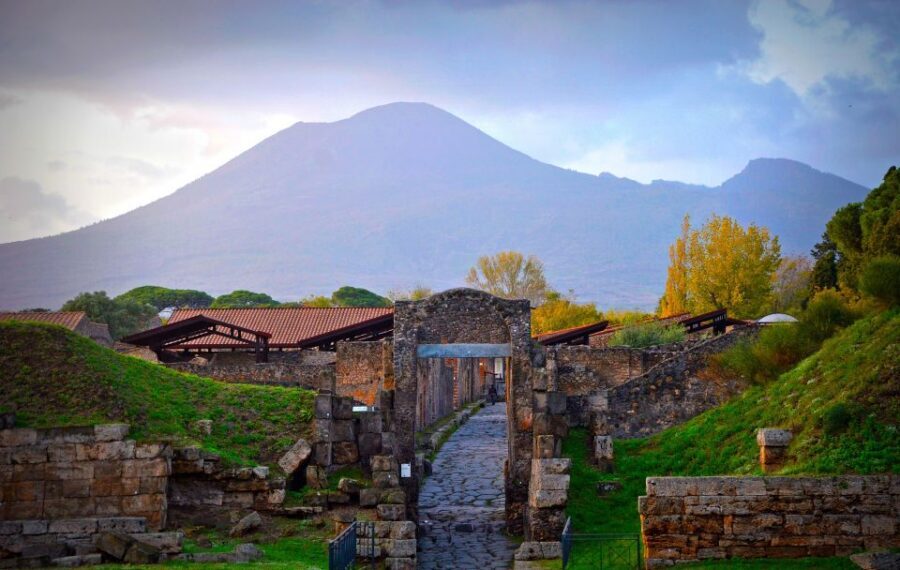
The meeting point is Pompei-Porta Marina (Scavi 80045 Pompei), and the tour ends right back there. That “back to the start” setup is more than convenience—it reduces stress. With Pompeii, plans can drift fast once you’re inside. Here, you’re steering toward a route with an end point, so you’re less likely to lose time searching for the right entrance or trying to backtrack.
The big win is the skip-the-line access. In practice, that means your tour is designed around time efficiency. Instead of watching a queue eat your morning or afternoon, you’re using that time for ruins and stories. The tour is also described as private, so you’re not stuck being herded with strangers at every stop.
One other detail I like: this tour includes a tour guide service, so you’re not just looking at stone and wondering what you’re seeing. Pompeii’s layout is dramatic, but it’s also easy to feel overwhelmed. A guide helps you read it—what’s where and what it meant.
If you're still narrowing it down, here are other tours in Pompeii we've reviewed.
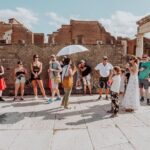


Pompeii in 2 hours: how a guide keeps the highlights from turning into chaos
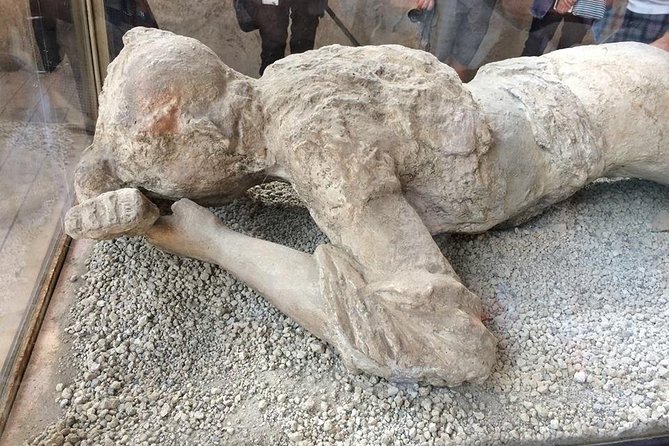
Pompeii is huge. Even if you have the energy to walk far, the “what did I just see?” effect is real. This tour avoids that by sticking to recognizable highlights that cover major parts of Roman life: religion, civic space, baths, theatre culture, and domestic interiors decorated with art.
The route is paced into short, readable blocks. You’ll spend roughly 5 to 20 minutes at most stops, which keeps momentum. It’s ideal if you want a first pass that’s heavy on meaning, not just heavy on walking.
The guide’s job is especially valuable here because you’ll be moving between very different types of structures—temples, plaza space, public entertainment, and houses—so the explanations help you connect the dots instead of treating each stop as a stand-alone postcard.
Temple of Apollo: the sacred landmark that sets the tone
Stop 2 is the Temple of Apollo, a quick 10-minute stop. Even in a short visit, it’s a helpful start point because it signals that this town wasn’t only streets and houses—it had major religious spaces too.
If you care about architecture, this is a great kind of stop. Temples in Pompeii help you see how public space and worship were built into daily life. If you’re visiting for the first time, it gives you a frame for what comes next in the civic center.
A small consideration: because it’s an efficient stop, you’ll likely only get the essentials. If you’re the type who wants a long, slow look at one structure, you’ll have to save deep exploring for another day.
Foro de Pompeya: the main square where city life shows up
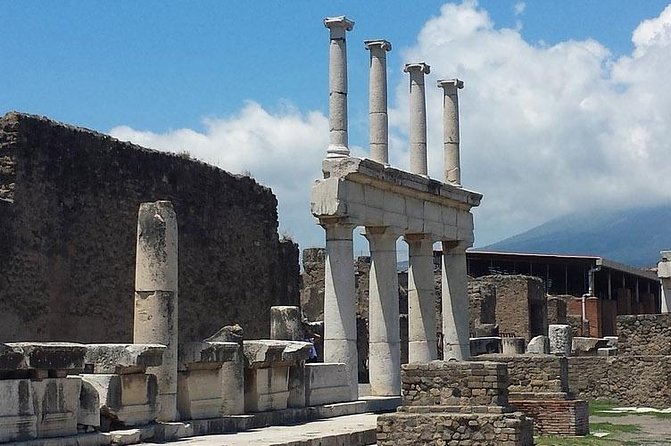
Stop 3 is the Foro de Pompeya (the main plaza) for about 20 minutes. This is one of the best places to start understanding Pompeii as a functioning town. The forum area is where politics, religion, commerce, and public activity overlap.
This stop works well because it’s not purely about ruins. The guide can explain how these spaces shaped movement through the city—where people gathered, where attention was focused, and why certain buildings sat where they did.
If you dislike crowded viewpoints, you might feel the busiest feeling in the forum area. Pompeii’s core tends to draw attention for a reason, and it can be more active than the residential edges.
Igor Mitoraj’s Sculture Monumentali: modern art in an ancient setting
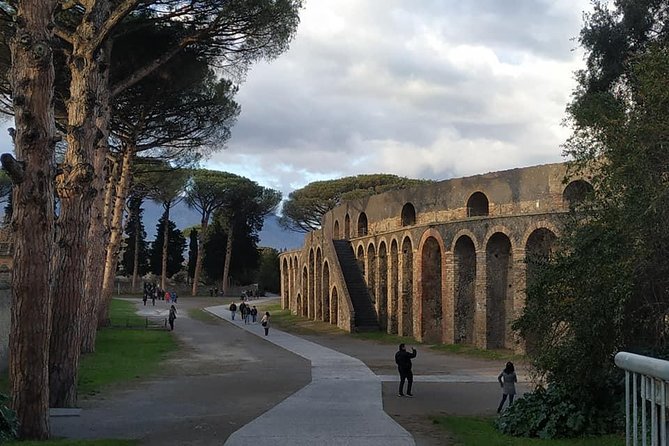
Stop 4 is Sculture Monumentali di Igor Mitoraj for about 10 minutes. This is the kind of stop that adds contrast: you go from ancient civic and religious spaces to contemporary interpretation.
I like this break because it changes the way you look at the site. Instead of only thinking about what was here centuries ago, you also get prompted to think about how we frame meaning today. It’s not required to enjoy Pompeii, but it keeps the tour from feeling like a checklist of stones.
Because it’s short, it’s best for visitors who like quick, unexpected moments rather than slow art appreciation.
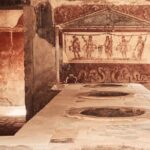

Granai del Foro: food storage as a key piece of power
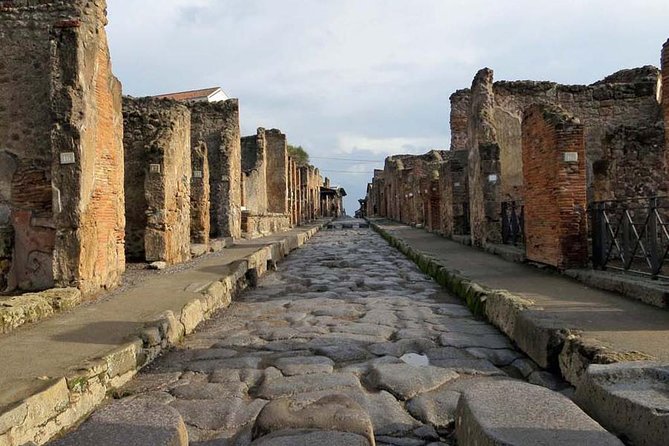
Stop 5 is the Granai del Foro for about 20 minutes. “Grain storehouses” might not sound as exciting as mosaics or temples, but this is exactly why it’s valuable. Storage tells you something practical: a city’s stability depends on supply and planning.
In a guided format, you’re likely to get the point behind the bricks—why this kind of building mattered to civic order. It adds depth to your understanding of the forum as more than a stage for ceremonies.
A drawback to note: if you’re mainly there for the most famous dramatic visuals, this may feel more functional than flashy. Still, it’s one of the smarter stops for understanding how Pompeii worked.
Terme del Foro: baths that show luxury and daily routine
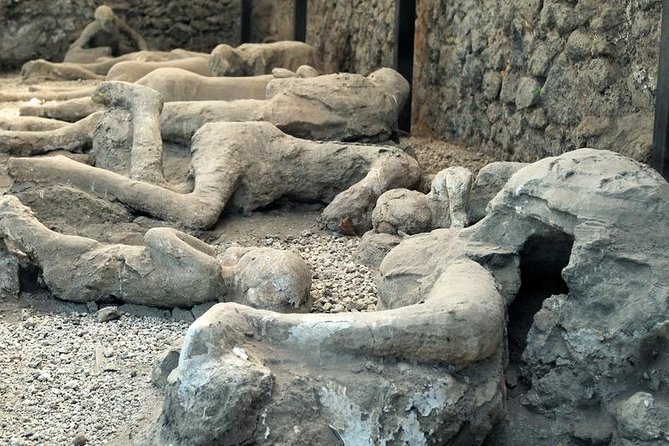
Stop 6 is the Terme del Foro for about 20 minutes, and it’s described as among the most beautiful and best preserved baths in Pompeii. This matters. When a site is well preserved, you can see details more clearly—so the explanations have something solid to stand on.
This stop is one of the best “Roman life” pieces on the route. Baths weren’t just about washing; they were social, and they were part of the routine. In a short visit, you’re still able to connect the spaces to how people spent time.
If you’re sensitive to crowds or tight walking spaces, this is one place where pace matters. Luckily, the private format helps your guide manage movement for your group.
Casa del Poeta Tragico: mosaics that make the house feel alive
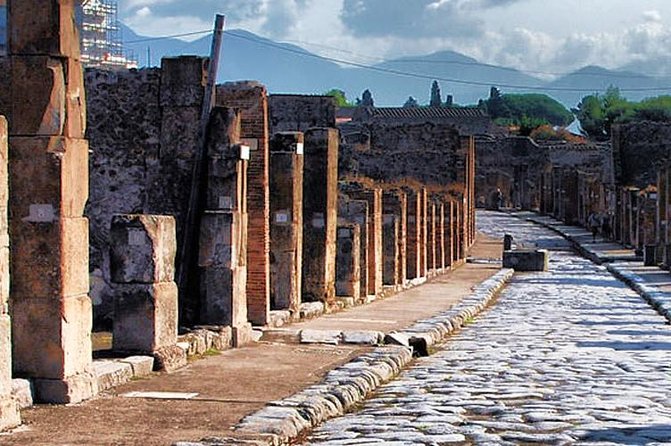
Stop 7 is the Casa del Poeta Tragico for about 10 minutes. This is a quick hit, but the reason it’s on the route is clear: it’s known for its mosaics, and a mosaic stop is often where Pompeii “clicks” for first-timers.
What I like about house visits on a short tour is that they shift Pompeii away from grand public buildings and toward personality. The home shows taste—how people wanted visitors to feel when they walked through.
A consideration: 10 minutes means you’ll probably see the signature features, not everything. For mosaic lovers, it can be a strong sampler that motivates a longer return visit later.
Casa del Cinghiale: more mosaic richness in another domestic setting
Stop 8 is the Casa del Cinghiale for about 10 minutes. This house is also noted for having mosaics—so together, stops 7 and 8 create a focused “domestic art” segment.
Why this pairing works: you don’t just see one style of home decoration. You get a second viewpoint quickly, so you can compare what you notice—like how decoration changes across spaces even within the same general category of wealthy homes.
Again, the short timing is a trade-off. You’ll leave wanting more detail unless you’re on a tight schedule.
Teatro Grande: the emotional power of public performance
Stop 9 is Teatro Grande for about 20 minutes. This is your theatre stop, and it’s set up for a reason: it connects Pompeii’s public life to entertainment, spectacle, and social gathering.
A guide is especially helpful here. In an outdoor theatre, it’s easy to admire the structure while missing how it functioned. With the right explanations, you can understand how performances shaped the rhythm of the city.
If you’re visiting in hot weather, theatre stops can feel longer just because you may be in open areas. The good news is that the tour keeps your time allocations predictable.
Lupanar: the ancient house with erotic frescoes
Stop 10 is the Lupanar for about 20 minutes, described as an ancient house with erotic frescoes. This is one of the most talked-about stops in Pompeii for obvious reasons, and it’s also one of the stops where you’ll want to go with the right mindset.
From a visitor perspective, I’d treat this as a cultural and historical look rather than something to rush. The private guided format is actually useful here: you can ask questions about what you’re seeing and get context instead of only reading headlines in your head.
A possible drawback: if you’d rather avoid explicit imagery, you might find this stop uncomfortable. The tour includes it, so make sure it fits your personal comfort level before you book.
Tempio di Venere: a compact stop with a clear spiritual role
Stop 11 is Tempio di Venere for about 5 minutes. This is very short, but that’s the point. It’s a quick way to hit another temple without using up your limited tour time.
Venus is a major figure in Roman culture, and seeing this temple helps reinforce the idea that Pompeii’s civic center wasn’t only about government and commerce. It included spiritual symbolism too.
Because the stop is brief, expect it to be more about orientation than deep study.
Tempio di Giove Capitolino: finishing the forum feeling with a top-tier temple
Stop 12 is the Tempio di Giove Capitolino for about 5 minutes. This is the forum temple finish—another quick stop to close the loop on Pompeii’s sacred and public architecture.
At this stage of the tour, the guide’s value jumps again. You’re walking near structures you’ve already been discussing, and the explanations can help you keep the map in your head: where the civic center sits, how the temples reinforce that space, and why this area felt like the town’s “center of gravity.”
Short stops like this can be a little abrupt. But for a 2-hour highlight format, they work.
The guide factor: why a private tour can feel less like sightseeing
The tour is private, meaning only your group participates. That changes the vibe. You’re not trying to squeeze in your questions between other people’s photo moments. It also makes pacing easier. Some stops are short by design, but your guide can still clarify what you’re looking at so you don’t leave confused.
There’s also a hint of real-person expertise from the experience feedback: a guide named Paolo has been specifically praised for making the tour complete and enriching, and for answering questions. That kind of responsiveness is what you should look for when you read this as a value proposition, not just a ticket.
For you, the payoff is simple: the guide helps you turn a “see it” outing into a “understand it” outing.
Price and value: what you’re really paying for at $82.65
The price is $82.65 per person for an about 2-hour private guided experience. The included items are tour guide service and skip the line access. Pompeii admission fees are listed as not included.
So the value question becomes: do you want to pay to save time and buy clarity? If you’ve ever stood in a long queue and lost the best part of your day, you already know the answer. Here, you’re paying to protect your schedule and get explanations as you walk.
Two practical budgeting notes:
- Since Pompeii ruins admission is not included, plan on paying that separately in addition to the tour price.
- The tour mentions mobile ticket and group discounts, which can help if you’re booking more than one person.
For short on time visitors, this type of structure can be a good deal because it compresses key sights into a guided sprint. If you have the whole day and prefer to wander slowly on your own, you might feel boxed in. But if you want the highlights with meaning and minimal waiting, it’s a strong value move.
Who this Pompeii tour fits best
This tour makes the most sense if:
- you want to see Pompeii’s top sights without losing time to lines
- you like learning as you walk, with chances to ask questions
- you’re doing Pompeii as a key stop and need it handled efficiently
- you appreciate a mix of public spaces, houses, and even a modern-art moment
It’s less ideal if you want long, quiet time in just one place. The route is a highlight loop, not an all-day deep exploration.
Should you book the Skip the Line Private Pompeii Guided Tour?
If you’re planning a limited time stop and you care about understanding what you’re seeing, I think this is a smart booking. The skip-the-line feature protects your schedule, and the private guide format helps you get answers instead of just pictures. The route hits temples, the forum area, baths, two mosaic-focused houses, the large theatre, and the Lupanar—so you get a broad picture of Pompeii’s public and private sides in just a couple hours.
I’d only hesitate if the idea of the Lupanar might be uncomfortable for you, or if you know you’ll want more than short visits at the houses and temples. In that case, you might prefer a longer guide time or a different itinerary style.
FAQ
How long is the Pompeii guided tour?
The tour is listed as about 2 hours.
Is this tour private?
Yes. It’s described as private, so only your group participates.
Does the tour include skip-the-line admission?
Yes. Skip the line is included, and you also have priority admission for Pompeii.
Are Pompeii admission fees included in the price?
No. Admissions fees for Pompeii Ruins are listed as not included.
Where do we meet for the tour?
The meeting point is Pompei-Porta Marina – scavi 80045 Pompei, Metropolitan City of Naples, Italy.
Does the tour offer different start times?
Yes. You can choose morning or afternoon tour times.
Is a tour guide included?
Yes. Tour guide service is included.
Do I get a mobile ticket?
Yes. The tour includes a mobile ticket.
Are service animals allowed?
Yes, service animals are allowed.
What is the cancellation policy?
Free cancellation is offered up to 24 hours in advance for a full refund.