REVIEW · NAPLES
Private Walking Tour through the Historical City of Herculaneum
Book on Viator →Operated by Guide Centre Sorrento · Bookable on Viator
Herculaneum hits different because it’s still partly underground. On this private walk, I love the tight focus on the site’s top rooms and the way an expert guide turns walls, floors, and tiny details into real daily life. The one catch: the archaeological park entrance fee (16€ per person) isn’t included, so you’ll want to budget for that in advance.
You also get the kind of pacing that big-group tours rarely offer. I like that it’s designed so you don’t feel rushed, and guides can slow down when you have questions, need a breather, or travel with family members who move slower (I’ve heard this handled well by guides like Martina and Francesca). The main consideration is simple: this is still a walking tour at an outdoor archaeological site, so comfortable shoes matter.
In This Review
- Key takeaways before you go
- Why Herculaneum Feels So Personal (It’s Not a Full City)
- Meeting at Ercolano and the 2-Hour Reality Check
- Terme del Foro: Roman Baths You Can Still “Understand”
- Partem Domus lignea: The Charred Wood House Element
- Casa di Nettuno e Anfitrite: Neptune and Amphitrite in Mosaic Form
- Casa dei Cervi: The Deer House and a View Worth Pausing For
- Casa Sannitica: First-Pompeian Style Pictorial Decoration
- Salone della Barca di Ercolano: The Charred Boat Room
- College of the Augustales: A Public Temple With Myth Frescoes
- Casa del Salone Nero: The Black Hall and Frescoes in Street View
- Antiquarium di Ercolano: Finds for the People Who Like Evidence
- Why a Private Guide Makes Herculaneum Better (Not Just Longer)
- Price and Value: What You’re Really Paying For
- What to Bring to Enjoy This Walk
- Should You Book This Private Herculaneum Walking Tour?
- FAQ
- How long is the private walking tour?
- Where does the tour start and end?
- What language is the tour offered in?
- Is the archaeological park entrance ticket included?
- What’s included in the tour price?
- Is the tour really private?
- Do I need to bring anything for the visit?
- Are service animals allowed?
- Cancellation
Key takeaways before you go
- Private guide, private attention: Your group stays together, so questions don’t get swallowed by the crowd.
- A “best-of” route in 2 hours: You hit key houses and public spaces without feeling like you’re sprinting.
- Charred remains are the star: Expect preserved wood objects and a boat room that brings the disaster into focus.
- Roman baths, mosaics, and frescoes: Each stop highlights a different aspect of Roman life and art.
- Antiquarium time is optional: You can add museum exhibits for more finds if your group wants it.
Why Herculaneum Feels So Personal (It’s Not a Full City)
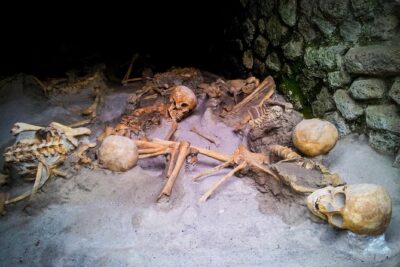
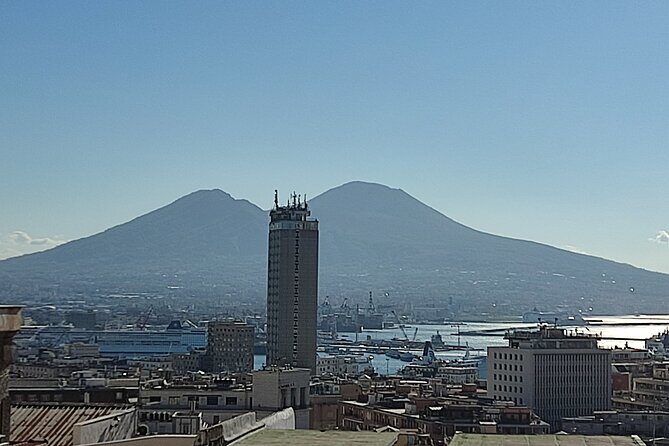
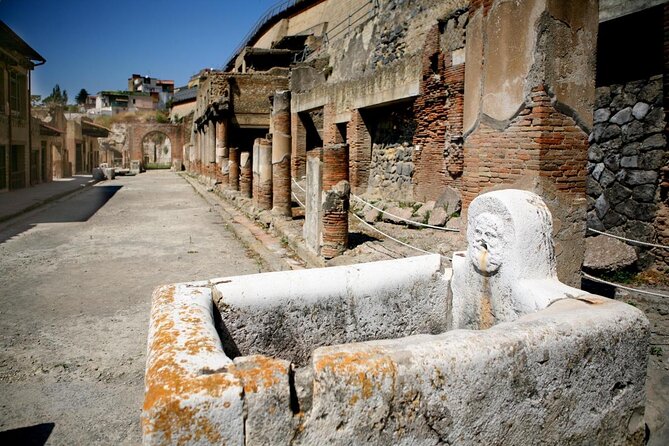
Herculaneum is famous for what survived, and it’s also famous for what’s still waiting under the ground. Only part of the ancient city has been uncovered. A lot of what you’ll see today is made up of imperial-era homes—Roman households of different styles rather than a complete “street-by-street” city map.
That matters for your experience. In places like Pompeii, you can spend hours wandering and still feel like you’re seeing fragments of a whole urban plan. Here, you get a more intimate feeling because the visit is concentrated on the areas that are accessible—and the best-preserved rooms. It’s the difference between walking through a whole book and studying a few pages really closely.
Also, having a guide helps you read the site. Herculaneum rewards attention: wall paintings, mosaic subjects, and building function aren’t obvious unless someone explains what you’re looking at. That’s where this tour’s value shows.
If you're still narrowing it down, here are other tours in Naples we've reviewed.
Meeting at Ercolano and the 2-Hour Reality Check
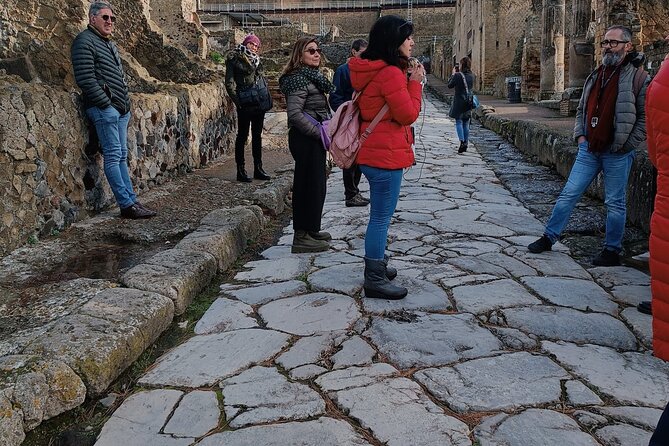
The tour meets at the Archaeological Park of Herculaneum, Corso Resina, 187, in Ercolano. It ends back at the same meeting point. Plan on about 2 hours on site.
Here’s the practical budget math: the tour price is $102.12 per person, and it includes the licensed guide, taxes, and the private format. The entrance fee to the archaeological park is 16€ per person, and it’s free for visitors under 18 with documentation. Because that fee is separate, I strongly suggest you don’t wait until the last minute to handle it.
Another practical point: this is listed in English, and you’ll get a mobile ticket. If you’re traveling with kids or just hate paperwork, that’s a real comfort upgrade.
Terme del Foro: Roman Baths You Can Still “Understand”
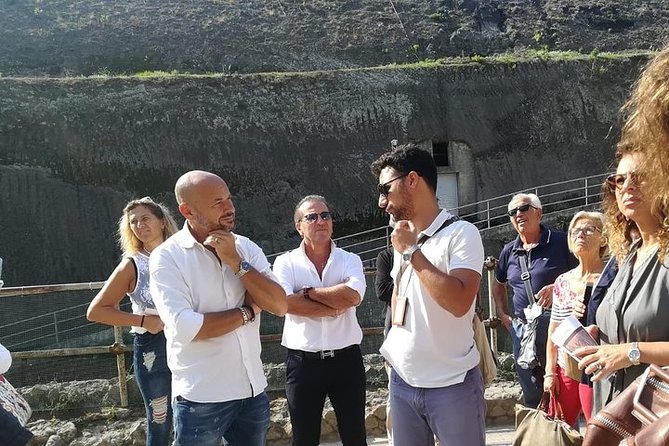
The first major stop is Terme del Foro, one of the best-preserved thermal complexes at Herculaneum. Roman bath systems were more than a rinse-and-go. They were social spaces and a whole routine, built around different temperature zones.
At Terme del Foro, you’ll be able to see the gym area, changing rooms, and the rooms intended for warm and warm baths. You’re not just looking at walls—you’re looking at how someone would have moved through the building step by step.
A good guide will also connect the bath layout to Roman habits: who used these spaces, how the system worked, and why the preservation is so important here. With the private format, you can linger on the parts that click for you instead of being herded along.
Partem Domus lignea: The Charred Wood House Element
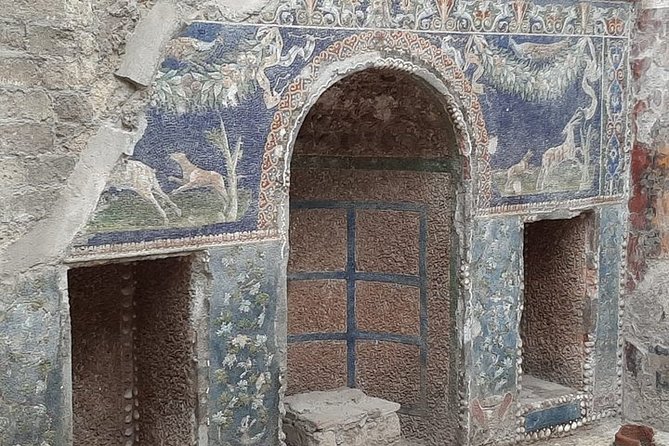
One of Herculaneum’s unforgettable traits is that not only stone and paint survive—sometimes wood does too, even when it’s charred. Partem Domus lignea (Casa del Tramezzo di Legno) focuses on one of the best-preserved house sections known for its charred wood furniture.
This is the kind of stop where I think a guide makes all the difference. Charred objects can look like damaged debris until someone tells you what the original furniture likely was, how it was used, and why the preservation is rare. Then it becomes personal: you start imagining the household moments that happened here.
Because the tour is paced to avoid feeling rushed, you don’t have to skim. You can stare at the wood details long enough for your brain to catch up.
Casa di Nettuno e Anfitrite: Neptune and Amphitrite in Mosaic Form
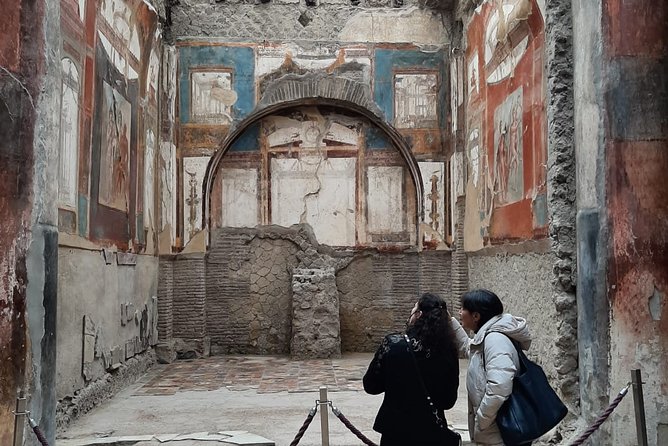
Next comes Casa di Nettuno e Anfitrite, one of Herculaneum’s symbolic houses and the home of a particularly beautiful mosaic at this site. Neptune and Amphitrite are Roman myth figures tied to the sea, so the imagery helps explain how mythology and status showed up inside homes.
If you’ve ever seen a mosaic and wondered how anyone bothered to make it that carefully, this is a stop that answers the question. You can connect the subject matter to a Roman worldview: household decoration wasn’t just “pretty.” It signaled taste, education, and identity.
The time here is short (about 15 minutes), but in a private tour, short doesn’t mean rushed. You can focus on the mosaic panel, ask one or two targeted questions, and move on with confidence.

Casa dei Cervi: The Deer House and a View Worth Pausing For
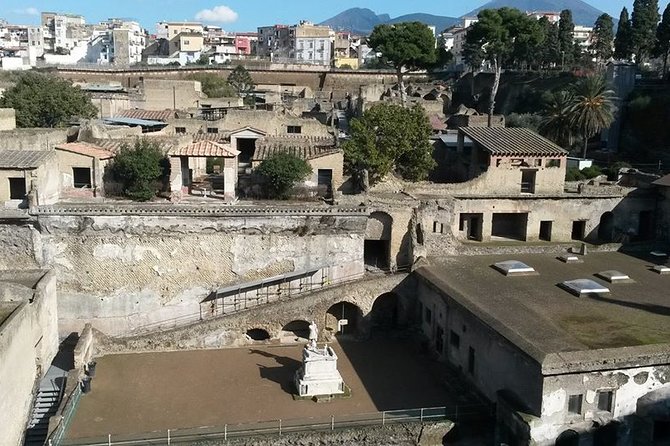
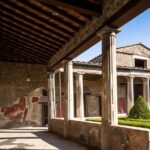
Casa dei Cervi is a famous home often called the deer house. It’s also known for its panoramic position between the Gulf of Naples and Capri. That location is part of the story: wealthy Romans didn’t just live inside buildings. They also curated what they could see.
Inside (and especially in how the rooms are preserved), you’ll find striking polychrome marble. The key is that you’re not only looking at a decorative style. You’re seeing how expensive materials were used to create a sense of luxury.
A possible drawback to note: if you’re the type who wants lots of time for photos, you may need to manage your expectations. This stop is timed, so plan on quick shots and one slower look—rather than trying to do everything at once.
Casa Sannitica: First-Pompeian Style Pictorial Decoration
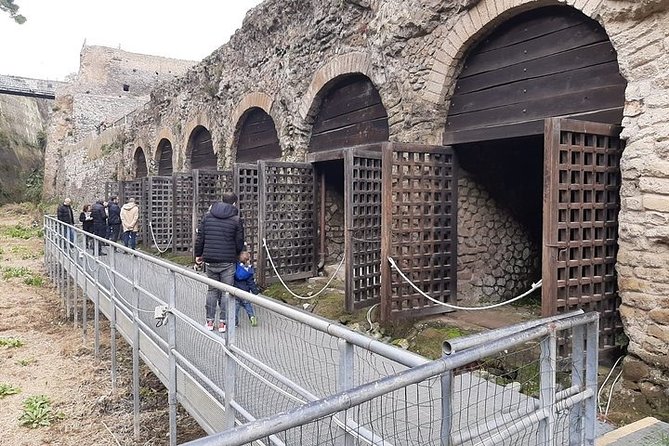
Casa Sannitica is among the older houses at Herculaneum, and it’s famous for pictorial decoration in the first Pompeian style. If you’ve seen Pompeii’s painted walls and thought they were all the same, a guide can help you separate the styles and the message behind them.
This is one of the spots where paint becomes evidence. Your guide can explain what the decoration was meant to create—depth, illusion, room boundaries—plus how these styles evolved.
Because this segment is only about 10 minutes, I suggest you go in with one question in mind. For example: What does this style try to make the room feel like? A good guide will turn that into a clear answer quickly.
Salone della Barca di Ercolano: The Charred Boat Room
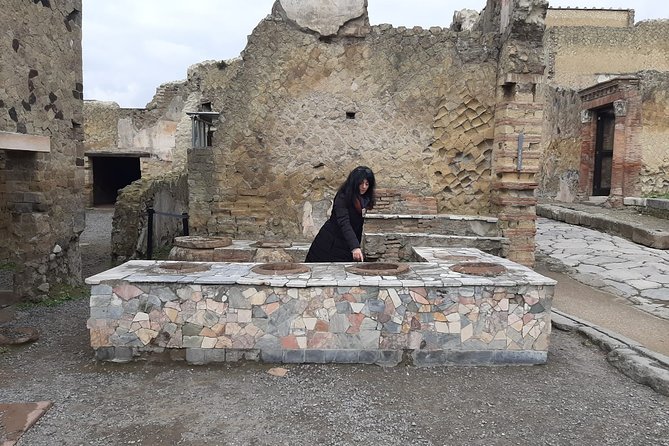
If you want a stop that feels both eerie and moving, this is it. Salone della Barca di Ercolano is a small museum area where you can admire the ancient charred Roman boat and other finds.
This is outside the main archaeological area, which actually helps you mentally. You shift from ruins you can walk around to a museum-like context where the objects are presented for closer viewing.
The boat is the headline, but the value is the contrast: you’re watching the story of a coastal Roman life—from maritime activity to domestic space—unfold in sequence.
College of the Augustales: A Public Temple With Myth Frescoes
Next is the College of the Augustales, one of the few public temples excavated that you can visit, and it’s known for mythological frescoes. Public spaces in Roman cities matter because they show civic life and shared religious themes.
A private guide can help you “read” frescoes even if you’re not an art expert. You learn which figures are represented, what myths might connect to the community, and how frescoes were designed to be seen in a specific space.
This stop works especially well if you’re traveling with mixed interests in the group. Someone who likes architecture gets the temple setting, while someone who likes art gets the fresco details.
Casa del Salone Nero: The Black Hall and Frescoes in Street View
Casa del Salone Nero is sometimes described through its standout room—the black hall—and it looks onto the main street of Herculaneum. The house is interesting not just because of the view, but because the design reflects a Vitruvian model.
Here’s why I think this stop is worth your attention: it connects building design to Roman rules and ideals. Instead of treating the site like random rooms uncovered by chance, you start to see how architecture had principles.
The tour time is about 10 minutes here, but the conservation of the frescoes means you can still get meaningful visual detail without sprinting.
Antiquarium di Ercolano: Finds for the People Who Like Evidence
The final main museum stop is the Antiquarium di Ercolano. At your discretion, you can visit permanent and temporary exhibitions featuring finds such as jewelry, everyday objects, and charred wood furnishings.
This is where the site becomes less abstract. When you see jewelry and household items in a museum context, you can connect the painted walls and mosaics to actual people and actual habits. I also like that guides often use this area to show things like small objects and practical household evidence, which can be harder to spot on your own.
If your group wants more, this is where you can slow down. If you’re tired in the heat or just want the highlights, you can keep it brief and still walk away feeling you saw more than ruins.
A practical note from real-world visits: some bathroom situations at or near archaeological sites may be basic. If you use the restroom, consider bringing your own toilet paper, just in case.
Why a Private Guide Makes Herculaneum Better (Not Just Longer)
A walking tour is only as good as the reading skills of the person holding the thread. This tour is built around that. The guide is licensed and focuses on the artifacts that matter, not the “everything a person could say” approach.
In real experiences with this kind of tour, guides like Martina and Carmine have been praised for being patient and clear with families, including older parents and teenagers. That’s not just kindness—it’s a real planning advantage. Herculaneum is detailed, and if your group needs a bit more time per room, a private format prevents you from feeling stressed.
Some guides also tailor what you see. With a group that includes someone with limited walking ability (or multiple strollers), the pacing becomes part of the experience. You can ask questions, stop when you need to, and keep the visit relaxed rather than clock-driven.
And yes, in hot weather, having a guide who can keep things comfortable can matter. Some guides have even used ways to cool people down along the route, which makes a big difference on a summer day.
Price and Value: What You’re Really Paying For
At $102.12 per person, this isn’t a “cheap and cheerful” add-on. It is, however, priced like a true service: a private tour, with a licensed archaeology guide, plus taxes included.
The extra cost is the entrance ticket (16€ per person). So your real per-person spend is tour price plus entrance fee. For me, it’s worth it when:
- you care about understanding what you’re seeing, not just taking photos
- you’re visiting in a limited time window (two hours is a great focused hit)
- your group benefits from quieter pacing and more questions
If you’re traveling solo and love wandering, you might choose self-guided. But if you want interpretation—why each room matters, what each decoration says—this private structure pays you back quickly.
What to Bring to Enjoy This Walk
Even though the tour is timed, you’ll still be outside and walking between rooms. I’d pack the usual Herculaneum basics:
- comfortable shoes
- sunglasses and a hat
- light layers for sun and shade
- a water plan (especially in warmer months)
If you know your group has restroom needs, treat it as a “bring what you need” situation. A small roll of toilet paper can save you stress.
Should You Book This Private Herculaneum Walking Tour?
I’d book it if you want a high-signal visit. This tour is designed to get you to the site highlights in a relaxed, private way, with stops that cover baths, houses, mosaics, frescoes, and a small museum with major objects like the charred boat.
I’d also book it if you have a mixed group—history fans, art fans, families with kids—because the route includes different types of interest and a guide can help everyone “see the same things” with different levels of detail.
Skip it only if you’re the type who wants long free time to wander without structure, or if you don’t like paying for a guide. Herculaneum’s value comes from interpretation. Without it, you still see beautiful remains, but you may miss the story connecting them.
If you’re short on time in Naples and deciding between Herculaneum and Pompeii, Herculaneum can be the smarter choice because it’s easier to cover well in a couple of hours—and because it feels more intact and more intimate.
FAQ
How long is the private walking tour?
It runs about 2 hours.
Where does the tour start and end?
It starts at the Archaeological Park of Herculaneum (Corso Resina, 187, 80056 Ercolano NA, Italy) and ends back at the same meeting point.
What language is the tour offered in?
The tour is offered in English.
Is the archaeological park entrance ticket included?
No. The entrance fee to the Archaeological Park of Herculaneum is 16€ per person (free under 18 with documentation). The tour price does not include this fee.
What’s included in the tour price?
A licensed tour guide expert in archaeology, the private tour format, and taxes are included.
Is the tour really private?
Yes. It’s a private tour/activity, and only your group participates.
Do I need to bring anything for the visit?
The tour recommends sunglasses, a hat, shoes, and comfortable clothing.
Are service animals allowed?
Yes, service animals are allowed. The tour is near public transportation and most travelers can participate.
Cancellation
You can cancel for a full refund up to 24 hours in advance of the experience start time.