REVIEW · NAPLES
Naples: Herculaneum Entry Ticket with Digital Audio Guide
Book on GetYourGuide →Operated by Vox City International · Bookable on GetYourGuide
A stop at Herculaneum hits hard because time stayed still. I like that this ticket gets you into the Archaeological Park with skip-the-line entry, and I also like that the digital audio guide helps you read what you’re seeing without a group schedule. One heads-up: the audio guide download can be fiddly, so you’ll want your phone charged and ready before you arrive.
Herculaneum is smaller and calmer than Pompeii, so it’s easier to take your time and actually notice details like preserved rooms, doors, and wall paint. You’ll explore at your own pace across villas and streets, shaped by a catastrophe from Vesuvius in 79 AD, when the eruption froze everyday life into a haunting snapshot. The big consideration is simple: this is self-guided, so if you want deep context from a live guide, you’ll need to plan for that expectation.
In This Review
- Key points at a glance
- Why Herculaneum’s ruined streets feel more personal than Pompeii
- Skip-the-line entry at Corso Resina 187: what to expect when you arrive
- A self-guided route through villas, streets, and the Vesuvius 79 AD shock
- The digital audio guide: the best part, if your tech behaves
- What to look for: frescoes, doors, and the class contrast of everyday Rome
- Price and value: $28 for a self-paced, audio-supported day
- Who this fits best (and who should pick another format)
- Should you book this Naples Herculaneum ticket?
- FAQ
- What is included with the Herculaneum entry ticket and digital audio guide?
- How long is the experience?
- Where is the entry located?
- Which languages are available for the digital audio guide?
- How do I get the e-ticket and audio guide on my phone?
- What do I need to bring?
- FAQ
- What is the cancellation policy?
Key points at a glance
- Skip-the-line entry into the Herculaneum Archaeological Park at Corso Resina 187
- Digital audio guide in English, French, Italian to make the ruins click
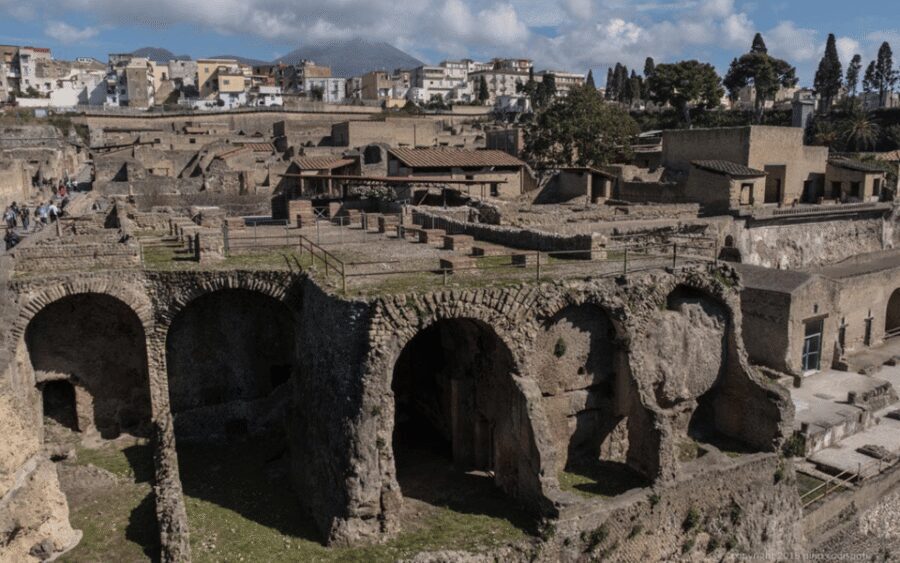
- A rare, up-close view of Roman domestic life with preserved villas and streets
- Colorful frescoes and intact objects help you picture daily routines
- Clear contrast between wealthy homes and more basic living areas
- A compact site that works well if you want history without feeling herded
Why Herculaneum’s ruined streets feel more personal than Pompeii

If Pompeii is the movie, Herculaneum is the close-up. Both were hit by Vesuvius in 79 AD, but Herculaneum’s layout and preservation give you a different kind of experience: more scale of “home life” and less “big public spectacle.” You’re walking through a town where the buildings, surfaces, and interior elements survived in a way that makes daily Roman routines feel immediate.
I like how the site naturally focuses you. Many areas are close enough that you can keep your bearings and stay in the story. You’ll move from preserved spaces that suggest comfort and ownership—think intact household elements like mosaics and frescoes—to areas that reflect harsher living conditions, including contrasts between more modest quarters and better-appointed homes. That “difference” is one of the most meaningful parts of visiting: you’re not just looking at ruins; you’re noticing class, privacy, and household function in physical form.
And the emotional weight lands quickly. You’ll be reminded that people didn’t have time to adapt. A moment like the one tied to 300 souls awaiting rescue gives the whole walk a tragic urgency, not just an archaeology vibe. It makes the preserved details feel earned rather than decorative.
Other Pompeii entry tickets and audio guides

Skip-the-line entry at Corso Resina 187: what to expect when you arrive
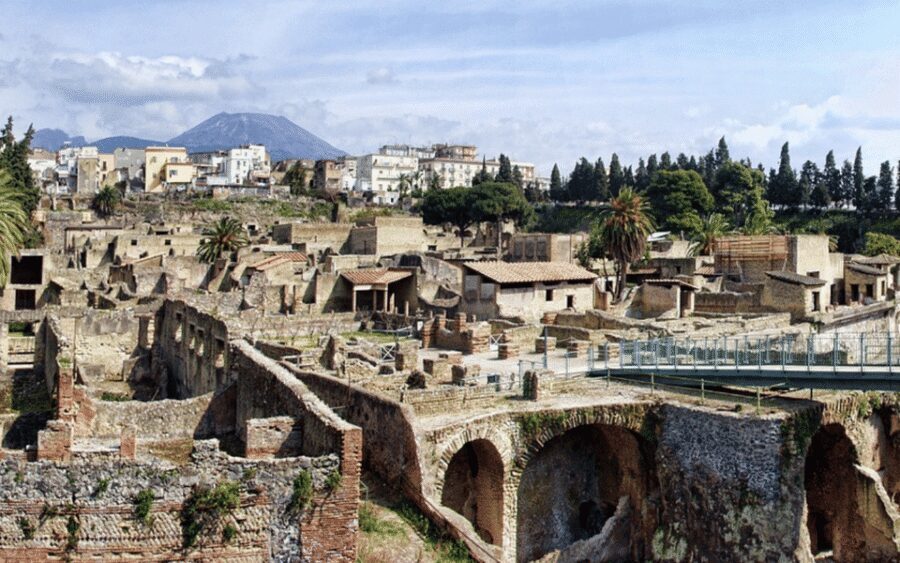
This ticket is designed for a straightforward goal: get you into the Herculaneum Archaeological Park fast enough to start your visit sooner. The meeting point is at the park entry: Corso Resina, 187. You can head there directly and gain entry by showing your e-ticket on your mobile device.
A small but important detail: e-tickets become available for download within 24 hours before your travel date, and they’re also sent via WhatsApp within that same window from Vox City. That means you’re not meant to scramble the day of. If your phone battery is low or you wait too long to open WhatsApp, you’ll feel it.
What you’re really buying is time and comfort. Skip-the-line doesn’t mean you’ll be the first person through the gate, but it should help you avoid the longest queue stretches. Once inside, you’ll have the freedom to move through the park without joining a formal group tour, because a guided tour is not included. In practice, that’s why this ticket is a great fit for independent travelers who like to pause, re-read the audio guide, and step back when something catches their eye.
A self-guided route through villas, streets, and the Vesuvius 79 AD shock
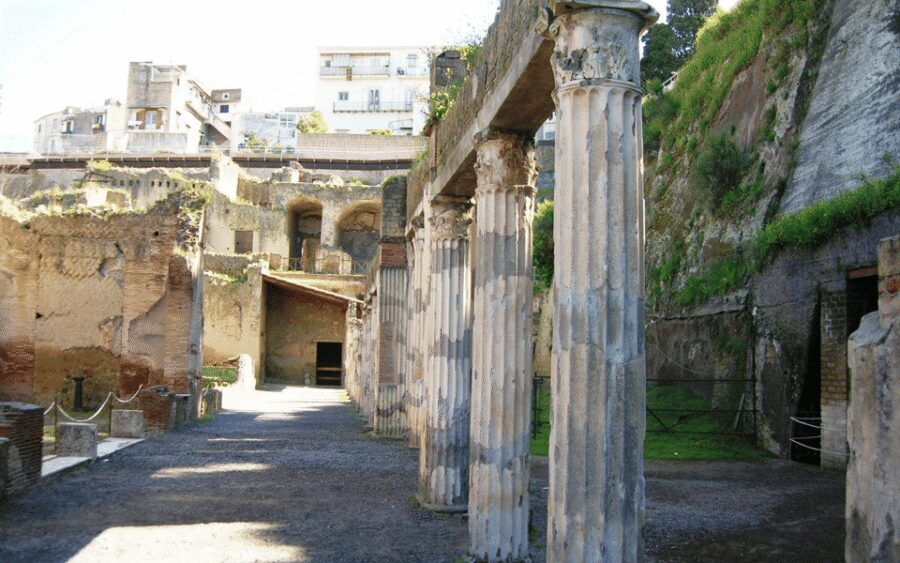
With this experience, you’re basically getting a ticket plus a story tool. Once you’re in, you’ll use the digital audio guide as your companion while you explore the park’s preserved areas: villas, streets, and the spaces where Roman life unfolded. The park is described as a world frozen by Vesuvius, and that phrasing matters. You’ll keep encountering evidence that many parts of daily routine didn’t have time to “continue”—they stop where catastrophe interrupted.
Here’s how the day tends to unfold when you go self-guided and let the audio do the heavy lifting:
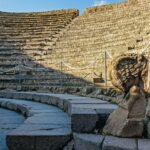
First, you’ll get oriented inside the park. You’ll likely use a map approach to move between zones, with references to markets, fountains, and theaters. The value of that is practical: it turns a pile of stones into a town plan. Instead of wandering randomly, you can follow the “how life worked here” logic.
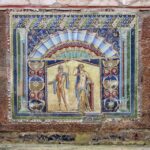
Next, you’ll spend time around preserved villas and interior spaces. This is where Herculaneum earns its reputation. Expect to see details that can feel almost too intact—things like intricate mosaics, frescoes, and even wooden doors. The audio guide helps you connect these details to real rooms and real uses, so you’re not just staring at surfaces. You’ll be asked (through the narration) to notice the contrast between luxury and practicality, including how different areas reflect different lives.
Finally, you’ll reach the emotional center of the story. The mention of 300 souls awaiting rescue adds a human timeline to what otherwise can feel like a static exhibit. Standing in the areas linked to that tragedy, your attention shifts. You start thinking about movement, choices, and the terrible speed of what happened—rather than treating the eruption as a distant event.
The digital audio guide: the best part, if your tech behaves
The audio guide is included, and it’s what makes this ticket feel more complete. You get English, French, and Italian, which is handy if you’re traveling with friends or family who prefer different languages. Instead of a one-size-fits-all lecture, you can listen to the explanation that matches what you’re looking at, when you’re ready.
But this is also the part that can make or break your day. Based on real-world experience with this kind of setup, I strongly recommend you don’t treat the audio guide as something you can always fix on the spot. One issue that can happen is a failure or delay with the download. If that occurs, you may end up needing to solve it with staff help and possibly additional options on site. The lesson is simple: protect your time.
Here’s your best move:
- Bring headphones
- Bring a charged smartphone
- Plan to scan the QR code to download the audio guide prior to arrival
If you’re traveling with someone, coordinate before you enter. You don’t want half the group waiting while one phone re-downloads. Also, check that you can read the QR code clearly before you commit. This park can be busy at certain times, and you’ll want to start listening immediately once inside.
When the audio works smoothly, it’s excellent at turning Herculaneum from “ruins you recognize” into “a place you understand.” You’ll hear guidance that spotlights hidden context—like why the frescoes and preserved textures matter, and why the contrasts between household spaces are so revealing.
What to look for: frescoes, doors, and the class contrast of everyday Rome
Herculaneum’s big selling point isn’t just that it survived. It’s that it preserves details that let you infer daily living. You’ll notice visual evidence that would be hard to imagine elsewhere: wall decoration, doorways, household surfaces, and objects that help you understand what people did inside these spaces.
Color matters here, even though the city is gone. The audio guide is described as highlighting details like vibrant frescoes (often experienced as colorful wall paintings rather than abstract decoration). When you see frescoes in place, you start to understand rooms as living spaces, not museum dioramas.
Doors and entry points are another reason Herculaneum feels more real than many archaeological sites. Wooden doors are mentioned as part of what you can encounter, and once you notice entryways and thresholds, you’ll start mapping how people moved through a home. That turns the “tour” into an architecture lesson you don’t have to force.
Then comes the contrast that gives the visit its bite. The audio guide specifically points out the difference between slaves’ quarters and opulent Roman homes. You don’t need to be a Roman history expert to feel the gap. It’s visible in how space is arranged and how “comfort” shows up in physical remnants. That contrast makes the emotional story stronger too, because you realize the eruption froze not just wealth, but inequality.
If you want one personal tip: slow down at the points where the audio changes your interpretation. A lot of your learning won’t come from reading signs. It’ll come from noticing a preserved feature and then hearing what it meant in daily life. That’s the difference between collecting facts and actually understanding what this town was.
Other Herculaneum tours and tickets



Price and value: $28 for a self-paced, audio-supported day

At $28 per person, the value depends on how you travel. If you’re the type who likes to walk, pause, and explore without a guide steering you, this ticket makes a lot of sense. You’re paying for two things: skip-the-line access and a digital audio guide included. Those are the practical “time-savers” that matter most at a major site.
If you were going to buy just entry and then rely on random reading, the audio guide would become the main reason to pick this format. It provides structured context as you move through villas, streets, markets, fountains, and theaters. In other words, the price buys you a smoother path from seeing to understanding.
Where value drops a bit: if your priority is a live historian-led explanation. This experience does not include a guided tour. You’ll get narration, but it’s still self-paced. If you want Q&A, deep archaeology debate, or a human voice connecting the dots with richer storytelling, you’d need to add something else or choose a different format.
Also, keep your expectations realistic about logistics. One disappointment that can happen with timed-entry systems and digital passes is a short wait even with skip-the-line. Another is frustration if the audio guide doesn’t download on your phone. Neither is the fault of the site itself, but it affects satisfaction. Your best defense is preparation: headphones, charged phone, and QR download before you arrive.
Who this fits best (and who should pick another format)
This ticket fits best if you:
- Prefer exploring at your own rhythm
- Want an audio layer in English, French, or Italian
- Like seeing how ordinary rooms and streets reflect real life in 79 AD
- Would rather spend your time noticing details than listening to a long group speech
It may be less ideal if you:
- Really want a live guide and interactive explanation
- Have trouble with phone-based downloads and need things to be simple from minute one
- Are the kind of visitor who hates any tech dependency during travel
If you’re visiting Naples area and want one strong stop that’s more compact than Pompeii, Herculaneum works especially well with a self-guided audio setup. You get a meaningful story without feeling trapped in a large group flow.
Should you book this Naples Herculaneum ticket?
Yes, if you’re comfortable being mostly self-guided and you want the experience to run on your phone. The combo of skip-the-line entry plus a digital audio guide is a strong value for a one-day visit. You’ll get what you need to interpret preserved villas, streets, frescoes, mosaics, and the hard emotional weight tied to the eruption.
I’d book with extra caution if you know your phone often struggles with downloads or QR scans on the go. Your fix is simple: arrive ready with a charged device, bring headphones, and download the audio guide via QR before you step in. If you do that, you’ll likely feel the site’s power much more than if you’re stuck troubleshooting.
If your ideal travel day includes zero tech friction and a live expert at your side, then consider adding a guided option instead of relying solely on digital audio.
FAQ
What is included with the Herculaneum entry ticket and digital audio guide?
The ticket includes Herculaneum skip-the-line entry and a digital audioguide.
How long is the experience?
It’s listed as valid for 1 day.
Where is the entry located?
You can go directly to the Herculaneum Archaeological Park entry at Corso Resina, 187.
Which languages are available for the digital audio guide?
The digital audio guide is available in English, French, and Italian.
How do I get the e-ticket and audio guide on my phone?
E-tickets are available to download within 24 hours before your travel date and are also delivered via WhatsApp by Vox City. To get the audio guide, scan the QR code to download it prior to arrival.
What do I need to bring?
Bring headphones and a charged smartphone.
FAQ
What is the cancellation policy?
There is free cancellation up to 24 hours in advance for a full refund.