REVIEW · POMPEII
Visit Pompeii with a local expert guide
Book on Viator →Operated by Guide Turistiche Campania di Febronia Amato · Bookable on Viator
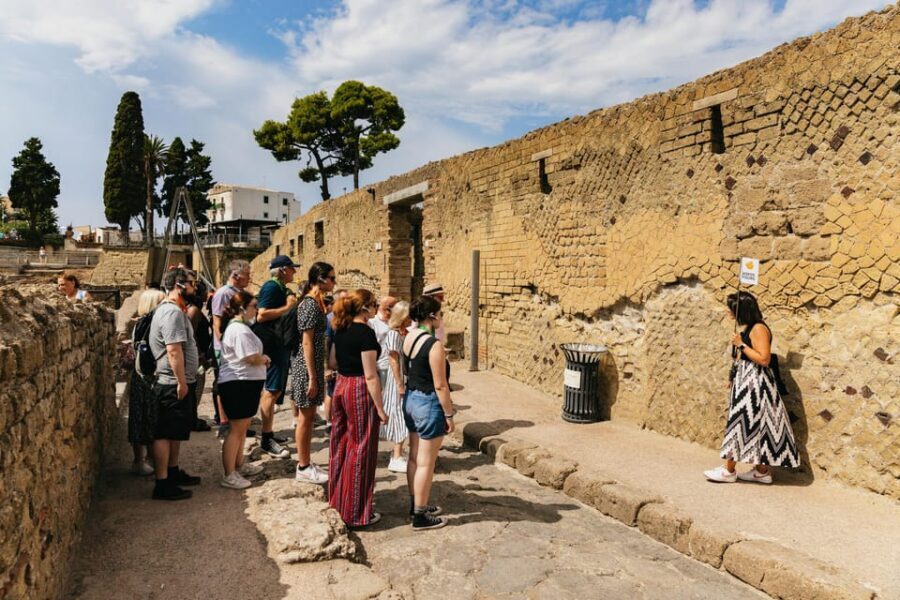
Pompeii makes sense with the right guide. What I like most is the certified local guide approach: it turns the ruins into a clear story you can follow in about three hours. I also love that admission tickets are included for the main stops, so you spend less time figuring things out and more time looking. You’ll center the visit on the Foro de Pompeya and the Teatro Grande, two of the best places to understand daily Roman public life.
One possible drawback: this is not an everything-Pompeii tour. It’s designed around a focused route through major public areas, so if you’re trying to cover the entire archaeological site, you’ll likely want more time (or a longer tour) than this 3-hour window.
In This Review
- Key highlights at a glance
- Meeting at Piazza Esedra and Getting Oriented Fast
- The Value of a Local, Certified Guide in Pompeii
- Foro de Pompeya: The Roman Center of Public Life
- Teatro Grande: Social Life on a Roman Stage
- How the Tour Keeps You From Feeling Lost
- Language Choice That Actually Helps
- Price and Value for a Private Group Up to 10
- Who This Pompeii Tour Suits Best
- What to Expect on the Ground: Timing, Weather, and Comfort
- Should You Book This Pompeii Guided Tour?
- FAQ
- How long is the Pompeii guided tour?
- Where does the tour start?
- What time does the tour begin?
- Is admission included?
- Is this tour private?
- How many people can be in the group?
- Do I need private transportation?
- Is the meeting point near public transportation?
- Does the tour require good weather?
- What is the cancellation policy?
Key highlights at a glance
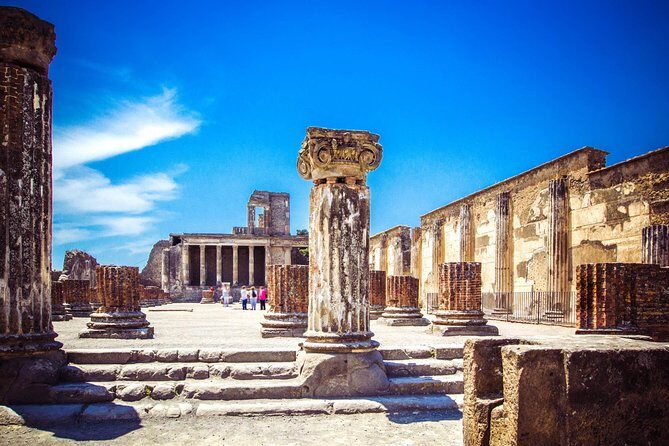
- A focused route through Roman public life with stops at the Foro de Pompeya and Teatro Grande
- Admission tickets included for the listed stops, which cuts down on hassle
- Private tour format with only your group (up to 10)
- A guide who connects the dots between buildings, routines, and behavior
- Language choice so the explanations match how you want to learn
Meeting at Piazza Esedra and Getting Oriented Fast
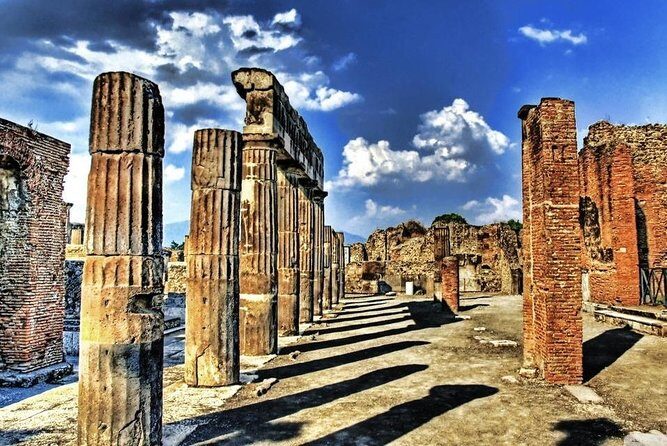
This Pompeii tour starts at 9:00 am at Piazza Esedra, Pompei (80045). You’ll also end back at that same meeting point. That sounds simple, but it matters. Pompeii can feel like a maze once you’re inside the ruins, so having a set start and a guaranteed return keeps your stress low.
You’re not paying for private transportation, which means you’re doing this as an on-site walking experience. That’s usually a good trade-off. You’ll spend the time where it counts, inside the archaeological area, instead of burning minutes on logistics.
Because it’s private (only your group), the guide can set the pace for you. Some tours move fast because they’re juggling multiple groups. Here, you can ask a question when something clicks, or when it doesn’t. And with up to 10 people per group, it still feels personal rather than like you’re part of a stadium crowd.
Other guided tours in Pompeii

The Value of a Local, Certified Guide in Pompeii
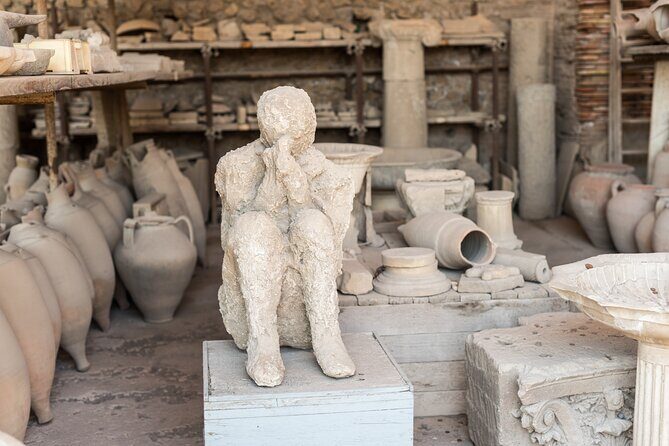
Pompeii is famous for its shock factor, but the real magic is how fast you can understand everyday life. A certified local guide is the difference between seeing ruins and reading the city. The best guides do two things well: they explain what you’re looking at in plain language, and they add small human details that make the stones feel less silent.
This tour’s guide-led style comes through clearly in the way people describe the experience: they talk about guides being attentive, professional, and able to keep things fun while staying accurate. Names like Alessia and Soraya come up often in accounts of great guiding, with people praising the mix of clear explanations and a light touch.
You also get a pacing advantage. Pompeii can trigger historical overload if you’ve already visited museums or other guided tours that day. A tight, structured route like this one helps you absorb more without the blur.
If you like learning with questions, you’ll probably appreciate the format. Most of your time is guided walking between key locations, not standing around listening for long stretches.
Foro de Pompeya: The Roman Center of Public Life
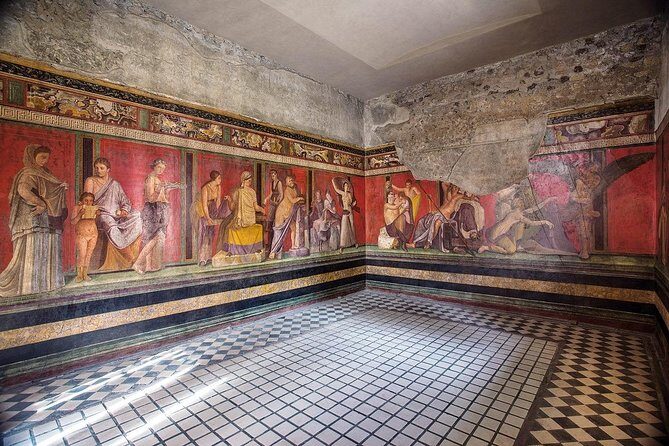
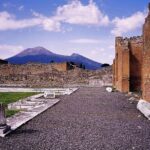
The first stop is the Foro de Pompeya, timed at about 30 minutes, with the admission ticket included. The Foro is where Roman civic life played out in public. Even if you only know Pompeii from photos, the forum is one of the places that helps you understand the city’s rhythm: decisions, commerce, ceremonies, and social interactions all tied to one shared space.
What’s special here is how a good guide can translate stone layout into behavior. You’re not just seeing columns and walls. You’re learning how people likely moved through the space, how public gatherings worked, and why this kind of civic center mattered. It’s the kind of stop where, after the guide’s explanation, you start noticing details you’d otherwise walk right past.
Potential drawback for the Foro specifically: 30 minutes is enough to get oriented, but not enough for deep, slow wandering if you’re the type who wants to linger on every single carving. If you’re the “one building, one hour” person, you might feel a small urge to stay longer. But the guide focus is meant to give you the right framework quickly.
Teatro Grande: Social Life on a Roman Stage
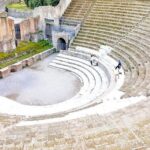
Next comes Teatro Grande, scheduled for about 50 minutes, again with admission included. This is where Pompeii shifts from civic routines to public entertainment and social habits.
A theatre in ancient Roman life wasn’t just about performances. It was a gathering point. People showed up, sat together, reacted together, and used the event as a chance to be seen. A guide can help you connect the architectural design to how audiences would actually behave—where people would have looked, how the crowd would have felt, and why the theatre mattered beyond the show itself.
You’ll also likely appreciate that this is one of the biggest “aha” stops for understanding culture. In accounts of great guiding, people talk about leaving with a stronger sense of how residents lived before the city’s tragic end—this theatre stop is a natural place for that kind of explanation to land.
In terms of pacing, 50 minutes gives you more time to absorb meaning than a quick photo stop. Still, it’s not a full-day theatre tour. If you want extensive lecture-style history, you’ll want to consider a longer format. For most visitors, though, this stop hits the sweet spot: enough time to understand, without turning the day into a marathon.
How the Tour Keeps You From Feeling Lost
Pompeii is overwhelming for two reasons: scale and detail. Even when you’re excited, it’s easy to forget what you’re seeing or why it matters. This tour’s structure is designed to prevent that.
First, the itinerary stays centered on two big public spaces—Forum and theatre—so you’re building knowledge in a logical loop rather than bouncing randomly across the site. Second, you get guided context for what you can’t easily “read” yourself from a distance.
That combination is why people consistently describe this kind of experience as a way to feel what Pompeii was like, not just walk through it. If you’ve ever done a self-guided site visit and felt like you were guessing, a tour like this is a fix.
A small practical tip: Pompeii ruins mean uneven ground and constant foot traffic patterns. Even on a guided tour, you’ll want comfortable shoes and the ability to walk steadily. The good news is the tour length is set—about three hours—so you’re not committing to an all-day grind.



Language Choice That Actually Helps
The tour lets you choose your language, which matters more than you might think. Pompeii is full of ideas that are easier to grasp when the guide can explain them the way you normally think. If you’ve struggled with museum labels in a second language, this makes the experience more “usable,” not just informative.
In practice, language choice helps you do two things: ask questions in real time, and follow explanations about public routines (like what people did in the forum and how theatre culture worked). That turns the visit into a conversation instead of a listening test.
If you’re traveling with someone who prefers a specific language, this is also a comfort win. It keeps the whole group aligned, and it reduces the awkward pauses where one person is translating.
Price and Value for a Private Group Up to 10
The price is $210.52 per group, for groups of up to 10 people. On its face, that can look like “budget” or “expensive,” depending on how many people are going with you. But the value really depends on group size.
Here’s a simple way to think about it:
- With 2 people, the effective cost is roughly $105 each
- With 4 people, roughly $52.50 each
- With 10 people, roughly $21 each
That’s a big spread, and it’s exactly why private guides can be such good value for small groups. You’re paying for guided time and included admission for key stops, not for a large bus tour with a packed schedule.
Also, you’re getting a tour designed for learning, not just entry. If you hate wasting time at ticket counters or walking circles trying to decode layouts, this format can save energy and keep your brain engaged. And if you’re traveling as a couple or with friends, splitting the group cost makes the guide fee feel far more reasonable than typical per-person guided experiences.
One more point: the guide service is included, but private transportation is not. That’s fine—just plan to reach the meeting point on your own.
Who This Pompeii Tour Suits Best
This is a great fit if you want Pompeii to feel organized and human. It’s especially good for:
- Couples who want expert help without a giant group
- Families with teens who still want a story, not just facts
- Friends who are already on tour mode and don’t want to feel swamped
It’s also ideal if Pompeii is your main stop and you’d rather spend the limited hours you have on the most important public spaces, explained in a way you can actually remember.
Where it may not fit: if you’re the type who wants to cover huge parts of the site in one outing, you may feel the time is short. This tour targets public life through the Foro and Teatro Grande, so it’s a strong “key places” approach, not a total-site checklist.
What to Expect on the Ground: Timing, Weather, and Comfort
The tour runs about 3 hours, starting at 9:00 am. That timing is helpful because it gives you enough duration to learn, not just sprint from landmark to landmark. But Pompeii is still Pompeii: you’ll be outdoors, and it can get tiring.
It’s also listed as requiring good weather. If weather is poor, the experience can be canceled, and you’ll be offered a different date or a full refund. That’s an important note because your plan shouldn’t rely on perfect conditions forever. Bring a light layer, plan for sun or shade, and keep water in mind.
Finally, because it’s a walking tour on an archaeological site, most people can participate, but mobility limitations could make it more challenging. If that’s a concern, it’s worth checking ahead with your provider about what a “most travelers can participate” setup means for your specific needs.
Should You Book This Pompeii Guided Tour?
Book it if you want Pompeii to make sense fast. This tour’s biggest strength is that it focuses on public life through the Foro de Pompeya and Teatro Grande, then uses a certified guide to connect architecture with how people actually lived and acted. The admission tickets included piece is also a real value perk, because it keeps the flow smooth.
Skip it or consider adding time elsewhere if you want to see every corner of Pompeii in one shot. This is a smart, compact guided plan. It’s not the full archaeological circuit, and that’s by design.
If you’re choosing between a self-guided visit and a guide, this one is a strong pick—especially for first-timers, couples, and groups up to 10 who want expert context without turning Pompeii into a full-day endurance event.
FAQ
How long is the Pompeii guided tour?
It lasts about 3 hours.
Where does the tour start?
It starts at Piazza Esedra, 80045 Pompei NA, Italy.
What time does the tour begin?
The start time is 9:00 am.
Is admission included?
Admission tickets are included for the listed stops.
Is this tour private?
Yes. It is private, and only your group participates (up to 10).
How many people can be in the group?
The group size is up to 10 people.
Do I need private transportation?
No. Private transportation is not included.
Is the meeting point near public transportation?
Yes, the meeting point is near public transportation.
Does the tour require good weather?
Yes. It requires good weather. If it’s canceled due to poor weather, you’ll be offered a different date or a full refund.
What is the cancellation policy?
You can cancel for a full refund up to 24 hours in advance. If you cancel less than 24 hours before the start time, the amount you paid is not refunded.