REVIEW · POMPEI CAMPANIA
Pompeii: Small Group Guided Tour and Skip-the-Line Ticket
Book on GetYourGuide →Operated by Visit Rome · Bookable on GetYourGuide
Pompeii is a shock of history made walkable. I like the skip-the-line ticket and the max-12 small group format because it keeps the day moving and your guide’s voice easy to follow. You’ll cover the forum, big public buildings, and key streets while learning why volcanic ash preserved so much.
The main trade-off is simple: the tour is only 2 hours, so you’ll see the highlights fast rather than linger deep in every corner. And one note worth taking seriously is to confirm the included water and orange juice at the start, especially if you have a tight schedule and want everything that’s listed.
In This Review
- Key Things That Make This Tour Worth Your Time
- Where This Tour Starts, and Why That Matters
- Getting In Fast: Skip-the-Line at the Archaeological Area
- Porta Marina Inferiore to the Town Streets
- The Forum: Pompeii’s Social Center in Plain View
- Baths, Temples, and Theatres: Public Life After the Ash
- The Practical Bonus: Water, Orange Juice, and Heat Control
- Time Plan: What You Can Realistically Fit in 2 Hours
- Languages and Group Style: What to Expect From Your Guide
- Price and Value: Is $80.43 Worth It?
- Who This Tour Fits Best
- A Quick Note on What’s Not Included (So You Don’t Get Surprised)
- Should You Book This Pompeii Small Group Tour?
- FAQ
- What’s the duration of the Pompeii guided tour?
- Is skip-the-line entry included?
- How big is the group?
- Where does the tour start?
- What’s included besides the guide?
- Is Villa dei Misteri included?
- What languages are available for the guide?
- Is the tour suitable for people with mobility impairments?
Key Things That Make This Tour Worth Your Time
- Semi-private group (max 12) keeps you from getting lost in a crowd
- Reserved entry with skip-the-line helps you start seeing things sooner
- Headsets make the guide’s explanations clear even when you’re walking
- Porta Marina Inferiore entry sets you up inside the archaeological town
- Forum-focused route centers the story of daily life and power
- Orange juice finish + water is a practical heat-break for an outdoor site
Where This Tour Starts, and Why That Matters
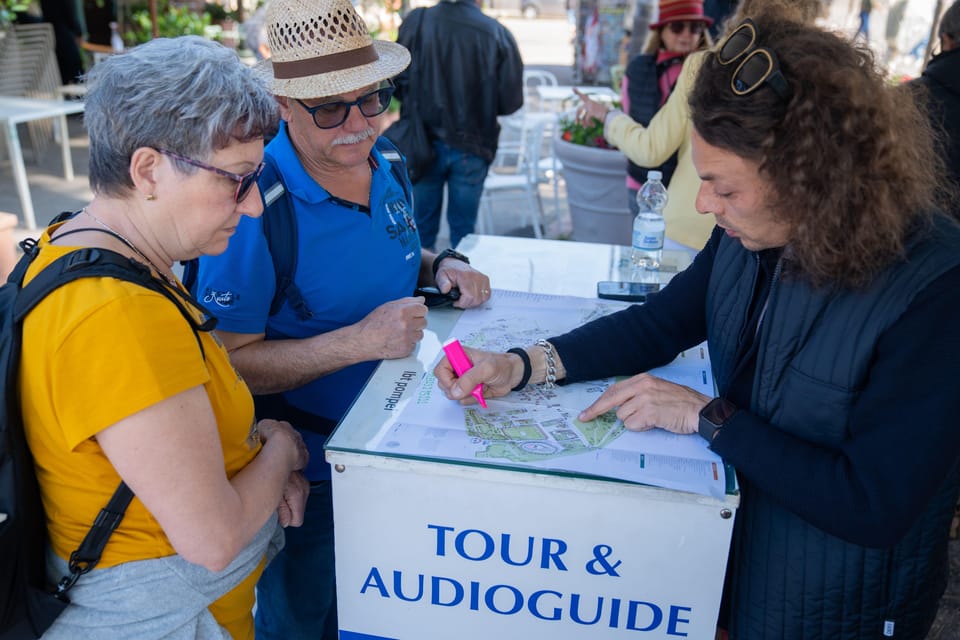
The meet-up point is Piazza Esedra, 11 at the office next to Chalet Donna Lucia (the sign you’re looking for is IBT Center/Touristation). This matters because Pompeii can feel like a maze before you’re inside. A planned start point reduces the usual early-day stress of hunting for your group while buses and day-trippers spill in.
The tour then moves to the Pompeii Archaeological Site for a 2-hour guided walk. You’ll return to the meeting point afterward, so you’re not stuck figuring out how to get yourself back through the area.
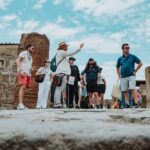
If you like guided structure—without the crush of a giant bus tour—this format is built for you. With a maximum of 12 people, you get enough flexibility to ask questions, but the route stays efficient.
If you're still narrowing it down, here are other tours in Pompei Campania we've reviewed.

Getting In Fast: Skip-the-Line at the Archaeological Area
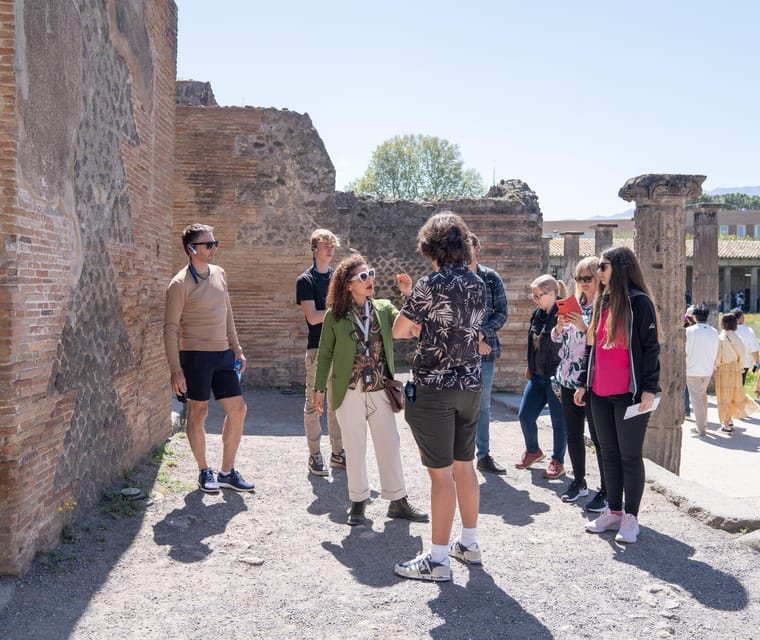
Skip-the-line is more than a convenience word here. Pompeii is popular, and waiting can eat your best daylight. This tour includes a reserved skip-the-line entrance ticket, so you can enter the excavations without waiting.
You’ll feel the benefit quickly: once you’re inside, you’re not standing around with other groups trying to figure out where your guide will pull you in. Instead, you start walking through the city streets and public spaces with momentum.
One more small but helpful detail: you get headsets. In an archaeological site, sound can bounce and drift as groups spread out. Headsets help you keep up with the guide while still moving naturally through the route.
Porta Marina Inferiore to the Town Streets
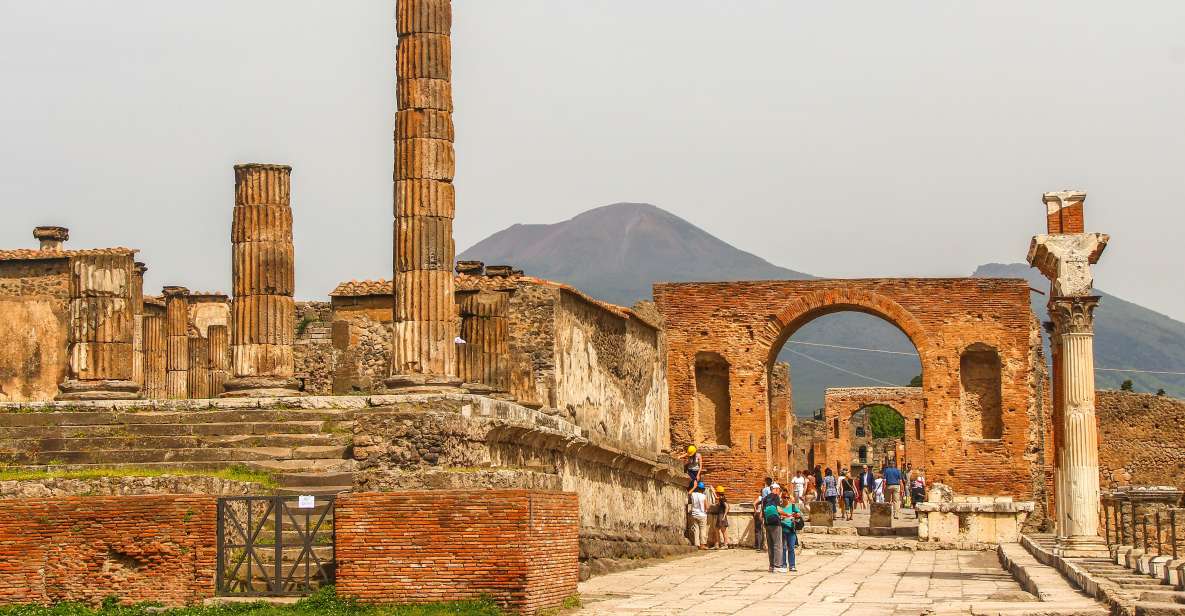
Rather than starting with random buildings, the tour enters Pompeii through Porta Marina Inferiore. That’s a smart way to begin because you’re entering the city as a person might have—moving from the outside approach into the urban layout.
From there, you walk the main streets and settle into the rhythm of Pompeii. You’ll see how the streets connect major civic and religious spaces, how the forum relates to surrounding neighborhoods, and how the city’s layout still makes sense when you can stand inside it.
For me, the biggest value of this part of the tour is orientation. Pompeii can look like scattered ruins until someone links the pieces into a coherent plan. A good guide does that fast.
The Forum: Pompeii’s Social Center in Plain View
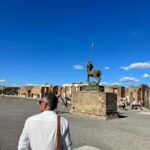
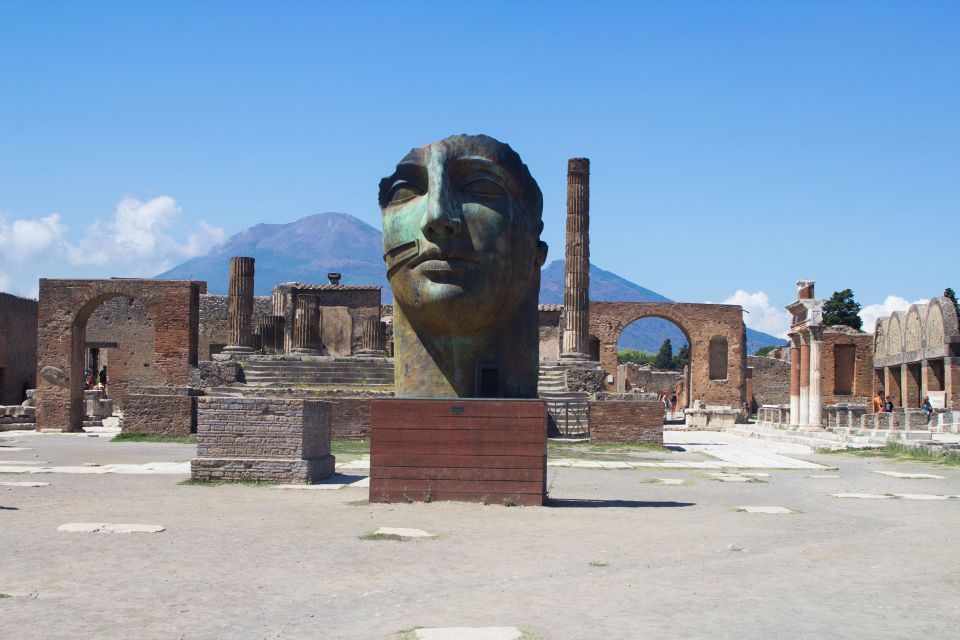
A core stop is the forum, the heart of Pompeii. This is where daily life, politics, and public identity all met. Expect to spend time wandering around it with explanations that turn stone rooms into lived experience.
What I like about a forum-focused route is that it helps you read the site. Once you understand where the forum sits in the city’s story, other buildings start to make more sense. You begin to notice sightlines, entry points, and the way public architecture shaped movement.
Also, you’ll likely get that classic Pompeii view moment with Mount Vesuvius overlooking the city. Even if you’ve seen photos before, seeing the volcano while you walk through the streets changes the scale. It stops being a distant event and becomes the reality that shaped the city’s fate.
Baths, Temples, and Theatres: Public Life After the Ash
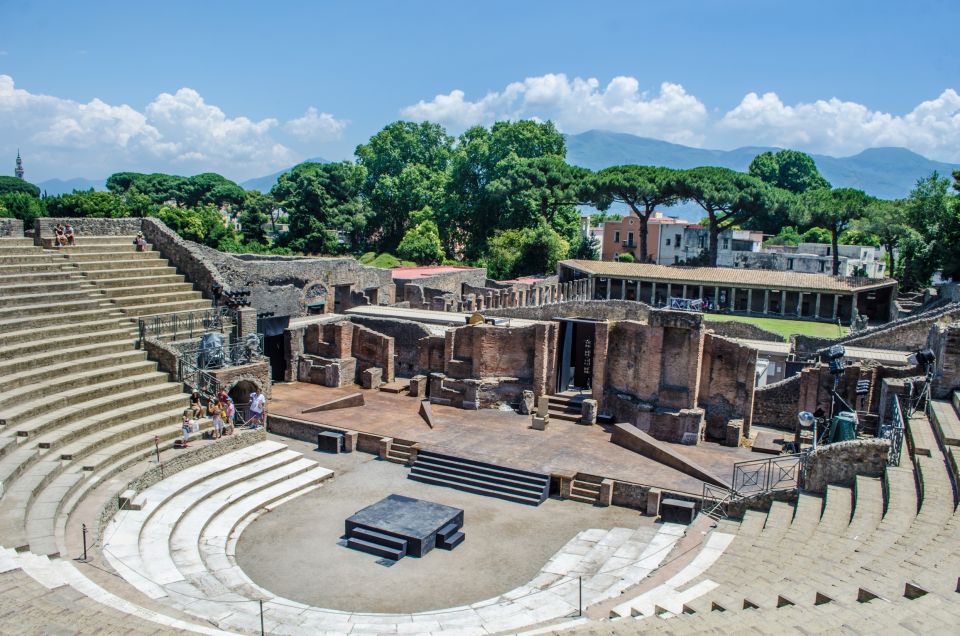
The tour highlights baths, temples, and theatres. This is where Pompeii feels least like a museum and most like a functioning town from another era—because these buildings were made for people to gather, work, worship, perform, and relax.
You’ll also see:
- a bakery
- the great theatre
- The Lupanare, a well-known brothel site
This mix is useful. Pompeii isn’t only temples and big civic structures. You want a guide who can connect the serious spaces with the everyday ones—food production, entertainment, and even the parts of city life that people tend to skip. The lupanare stop is especially good for getting a clear picture of what commerce and services looked like.
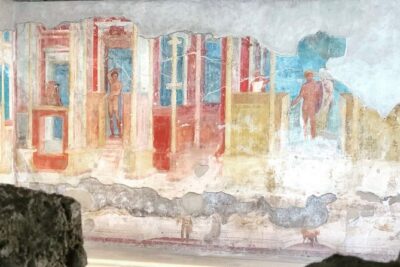
And throughout the walk, you’ll be pointed toward well-preserved artworks, mosaics, and frescoes. The preservation is the point. Volcanic ash acted like a temporary cover, freezing details that normally would have disappeared. When you see the colors and the decorative surfaces, it’s easier to imagine the life that once sat on top of these floors.

The Practical Bonus: Water, Orange Juice, and Heat Control
Pompeii is outdoors for long stretches, and your brain gets tired along with your legs. This tour includes a small bottle of water plus a glass of orange juice at the end. That finish does two things well:
1) It helps you refuel without hunting for a shop right after the tour.
2) It gives you a tidy stopping point so the day doesn’t feel like you just keep walking until you collapse.
One caution: since one account noted missing water/orange juice (and even a map) compared to what was described, I’d handle this like a smart consumer. When you check in, ask your guide or the staff to confirm you’ll receive the listed refreshments before you start your walk. That’s the easiest way to avoid a sour feeling later.
Time Plan: What You Can Realistically Fit in 2 Hours
Two hours sounds short until you’re actually in Pompeii and the site starts to pull you in different directions. In practice, you’ll get a focused highlights route rather than a slow stroll.
Here’s the trade you’re making:
- You’ll see lots of major buildings and key streets.
- You won’t have time to wander off-script for extended self-guided exploration.
If you like “see the essentials, learn the story, then maybe return later,” this length works. If you prefer long photo breaks, quiet corners, and long explanations at every stop, you may want a longer independent visit afterward.
The good news is that the semi-private group and headsets help you keep moving without losing the plot.
Languages and Group Style: What to Expect From Your Guide
This tour is run with live guides in multiple languages: German, English, Italian, Spanish, French, Japanese, and Portuguese. If you’re traveling as a couple or solo, the multi-language setup also makes it easier to pick a tour that matches your comfort level.
The guide style is part of the value. The tour leans into storytelling and site interpretation: why people built certain spaces, what the public buildings were for, and how the ancient residents lived in a city eventually covered and protected by ash.
The group dynamic is another strength. With a max of 12, you’re usually close enough to hear explanations and still feel like you’re with a human-sized group rather than a roaming school trip.
Price and Value: Is $80.43 Worth It?
At about $80.43 per person for a 2-hour guided tour with skip-the-line entry, headsets, water, and orange juice, you’re paying for three things:
1) Time saved (reserved entry matters in Pompeii)
2) Guidance (turning ruins into a city you can understand)
3) Comfort extras (headsets + bottled water + drink)
If you were to buy separate tickets and then figure out your own route, your total time cost could be higher, and you might miss the connections a good guide makes. On the other hand, if you’re the type who wants to park yourself for hours and read every inscription slowly, you might feel the price is steep for the time you’re in the site.
That’s why I’d treat this as an efficiency purchase: you’re buying a well-paced route and a competent guide in a setting that can otherwise feel overwhelming.
Who This Tour Fits Best
This is a smart choice for:
- first-timers to Pompeii who want the main storyline fast
- travelers who hate lines and want smooth entry
- people who enjoy explanations while walking, not just looking at ruins
- small groups or couples who like a semi-private feel
It’s less ideal for:
- anyone who needs special support for mobility (it’s not suitable for people with mobility impairments)
- people who want to explore Villa dei Misteri as part of their Pompeii day (that entrance is not included)
A Quick Note on What’s Not Included (So You Don’t Get Surprised)
Two things to keep straight:
- Villa dei Misteri isn’t included.
- Food isn’t included, so if you’re hungry afterward, plan your next stop accordingly.
If Villa dei Misteri matters to you, you’ll need to add it separately. Otherwise, you’ll focus on Pompeii’s core public spaces and streets—the parts most visitors want to understand first.
Should You Book This Pompeii Small Group Tour?
Yes, I’d book it if your goal is to see Pompeii with a clear path, minimal waiting, and a guide who helps you connect what you’re seeing. The skip-the-line ticket and max-12 group size are the big reasons this feels “worth it” instead of just expensive.
I would not book it if you’re planning to spend half the day wandering on your own or if you already know Pompeii well and mostly want time to roam without guidance. In that case, an independent ticket might fit better.
FAQ
What’s the duration of the Pompeii guided tour?
It lasts 2 hours.
Is skip-the-line entry included?
Yes. You get a skip-the-line entrance ticket to the archaeological area.
How big is the group?
The group is small, with a maximum of 12 people.
Where does the tour start?
Meet at the office IBT Center/Touristation next to Chalet Donna Lucia in Piazza Esedra, 11.
What’s included besides the guide?
Included items are headsets, a small bottle of water, and a glass of orange juice, plus assistance and Wi-Fi at the meeting point.
Is Villa dei Misteri included?
No. Entrance to Villa dei Misteri is not included.
What languages are available for the guide?
The tour guide is available in German, English, Italian, Spanish, French, Japanese, and Portuguese.
Is the tour suitable for people with mobility impairments?
No. It is not suitable for people with mobility impairments.