REVIEW · ERCOLANO
Herculaneum – Small Group Tour (admission included)
Book on GetYourGuide →Operated by Pompeiify di Parlato Gabriella · Bookable on GetYourGuide
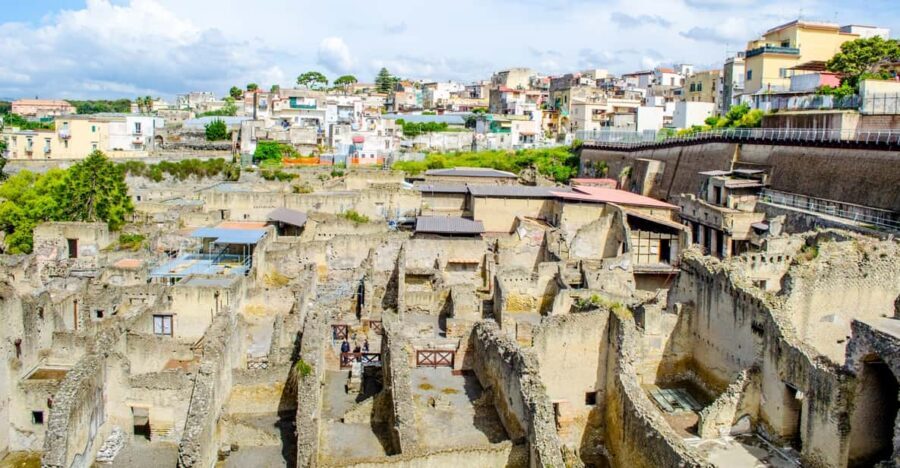
Cinder saved their lives, and our curiosity. Herculaneum is smaller than Pompeii, yet it feels more detailed because the remains were preserved under a literal 60 feet of ash. You get a focused, small group walking tour that turns the eruption story into something you can picture block by block.
I love the way the guide frames the day around the disaster itself, then connects it directly to what you’re standing on. Another big win is the emphasis on everyday Roman life, from the layout and elegance of wealthy residences to the visual evidence you can still see in the ruins—plus time at the boat museum. Guides such as Roberta and Marzia are repeatedly praised for balancing explanations with room for questions, which makes the whole site feel less like a checklist and more like a living story.
One possible drawback: at just 2 hours, you’ll cover the highlights rather than every corner of the archaeological site. If you’re the type who wants to wander freely and linger for ages, you may crave a longer visit after the tour ends.
In This Review
- Key Points You’ll Care About
- Herculaneum Feels Closer Than Pompeii, and That’s the Point
- Where You Meet and How the 2-Hour Tour Flows
- The Eruption Explanation That Makes the Ruins Make Sense
- Why the Preservation Looks Different Here
- Wandering the Streets of Wealthy Roman Life
- The Boat Museum: A Coastal Detail You’ll Feel
- Finishing the Walk: Ruins, Stories, and Those Wow Moments
- Price and Value: Is $75 Worth It?
- Language Options and Guide Style
- Who This Tour Suits Best
- Should You Book This Herculaneum Small-Group Tour?
- FAQ
- How long is the Herculaneum small-group tour?
- Is the admission ticket included?
- Do I need to buy a ticket on-site?
- Where do I meet the tour?
- What languages are the tours offered in?
- Is it really a small group?
- Are the guides licensed?
- What’s the cancellation policy?
- Is there a reserve now and pay later option?
- What will we focus on during the tour?
Key Points You’ll Care About
- Skip-the-line admission so you start seeing things faster
- Regione Campania–licensed guide running the tour
- Eruption-focused intro that explains why Herculaneum looks different from Pompeii
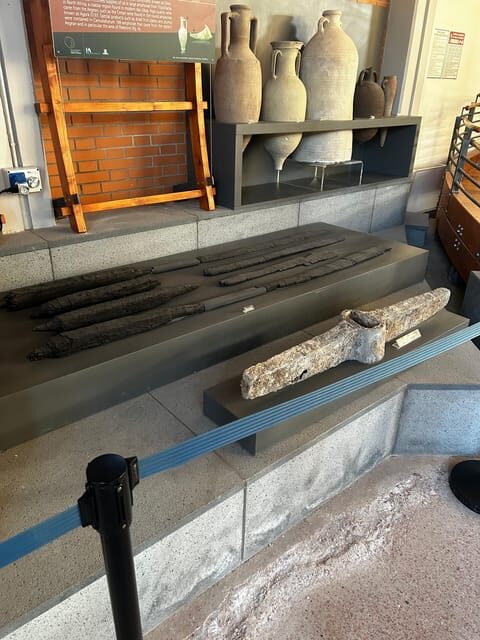
- Boat museum stop that adds a coastal layer to the story
- Small group feel that leaves space for questions (and real back-and-forth)
Herculaneum Feels Closer Than Pompeii, and That’s the Point
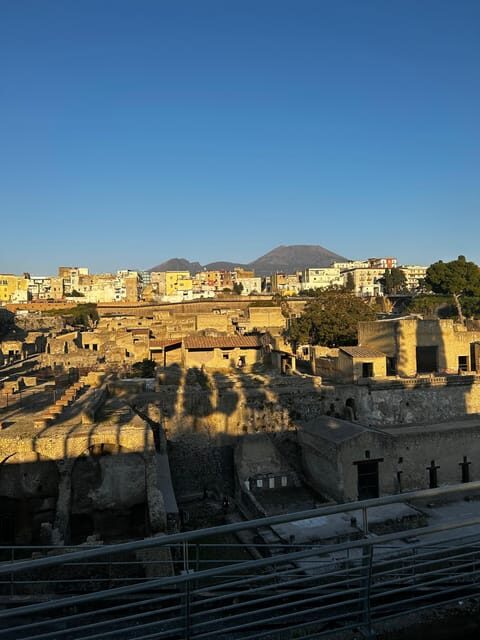
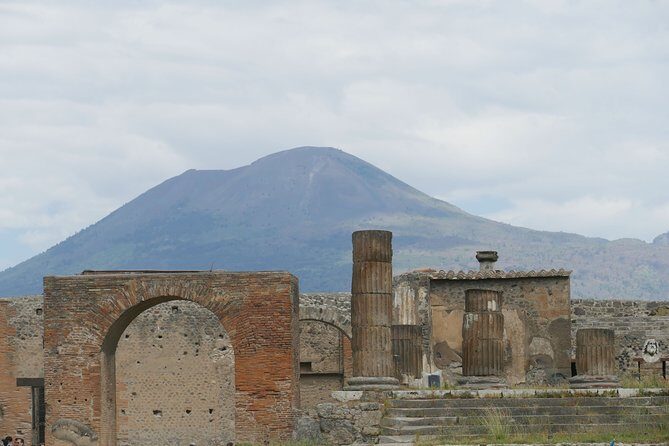
Pompeii is famous, but Herculaneum gives you a different angle. You’re still dealing with the same 79 A.D. eruption of Mount Vesuvius, yet the outcome wasn’t the same. Herculaneum was buried by pyroclastic flows that smothered the town under a mountain of scalding ash—about 60 feet deep—so many features survived in a way that’s unusually readable.
What you’ll appreciate on this tour is the intimacy. The town was primarily a residential area for wealthier Romans, and that shows in the way the houses and decoration styles come across. You get a sense of daily routines and private comfort, not just public spectacle. In short: it’s not only about death and destruction. It’s also about how people lived, decorated, cooked, and moved through their own neighborhood before it all stopped.
Other Pompeii entry tickets and audio guides



Where You Meet and How the 2-Hour Tour Flows
You start at Corso Resina, 187. The meeting point is just outside the Herculaneum ticket office, which helps you avoid wandering around trying to find the exact entrance.
This is a 2-hour guided walk with a set rhythm:
1) guided tour at the archaeological site
2) introduction and context upfront
3) core stops that explain preservation, daily life, and key structures
4) a boat museum visit as a bonus perspective
Because the timing is tight, you’ll want to arrive ready to move. Wear shoes you trust on uneven ground. Bring a bottle of water if it’s warm; you’ll be outdoors with limited chances to pause.
The Eruption Explanation That Makes the Ruins Make Sense
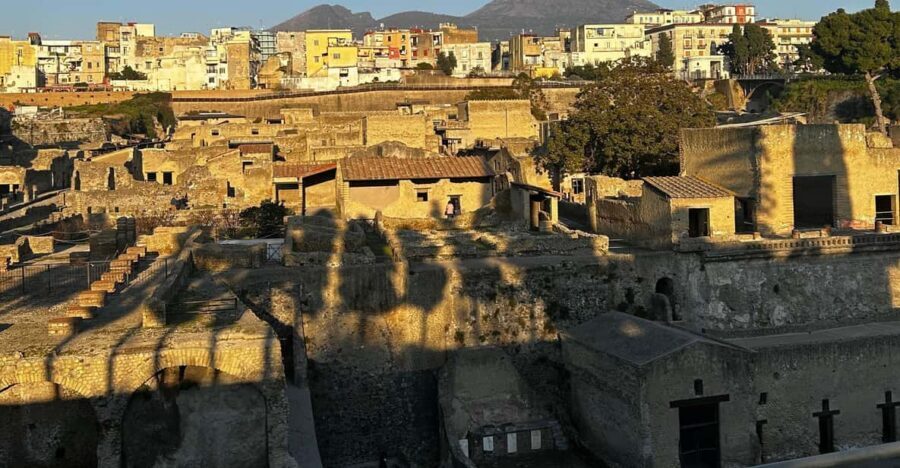
The best part of many Herculaneum tours is also the hardest: getting you to understand what you’re looking at without turning it into a lecture. This tour’s approach starts with the eruption and the nature of the city, then uses those facts to guide your eyes.
You learn how Herculaneum and Pompeii were hit by the same disaster, but experienced different physical effects. That matters because it changes what survives. Instead of only thinking about destruction, you start noticing the specific kind of preservation—why the remains look the way they do, and how the ash and flows protected certain elements. Once you get that framework, the ruins stop feeling random. They become evidence.
A useful detail here: the tour is designed to cover both the big story and the city-specific story. You’re not just hearing about Vesuvius; you’re learning what the town looked like, what kind of place it was, and why its recovered form feels intimate.
Why the Preservation Looks Different Here
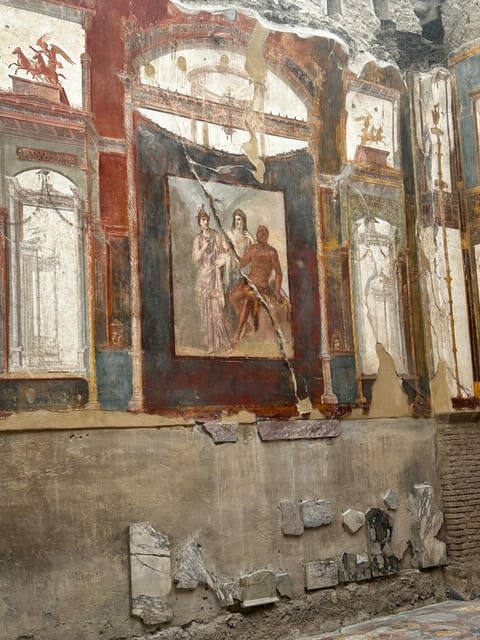
Herculaneum’s survival comes with a particular kind of visual drama: it’s not only that you can see ruins, it’s that you can often still read aspects of daily life. The tour focuses on why the preservation here is peculiar compared with Pompeii.
You’ll be guided through the logic of that difference—essentially, how the eruption’s forces interacted with the town. That’s what turns Herculaneum into the more intimate alternative to Pompeii. When you understand the preservation mechanism, you can better appreciate the surviving details in the structures and decorations.
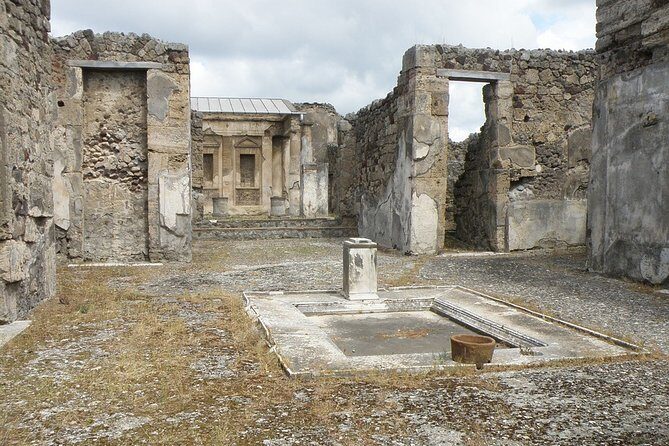
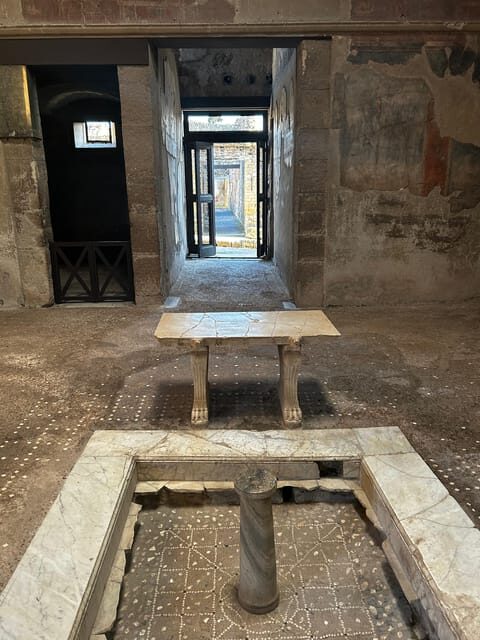
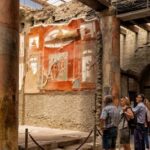
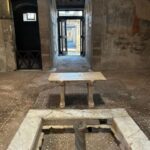
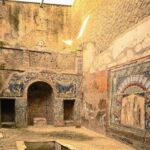
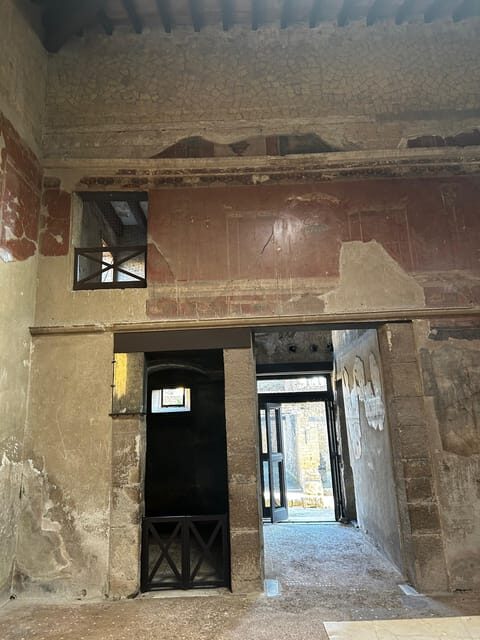
In the houses of wealthy residents, you’ll get a feel for elegant design choices. The tour highlights the original style and decorations in private homes, and you’re pointed toward what those choices tell you about status and taste in Roman society. Even if you don’t know Latin, the place teaches you through its layout and ornamentation.
Wandering the Streets of Wealthy Roman Life
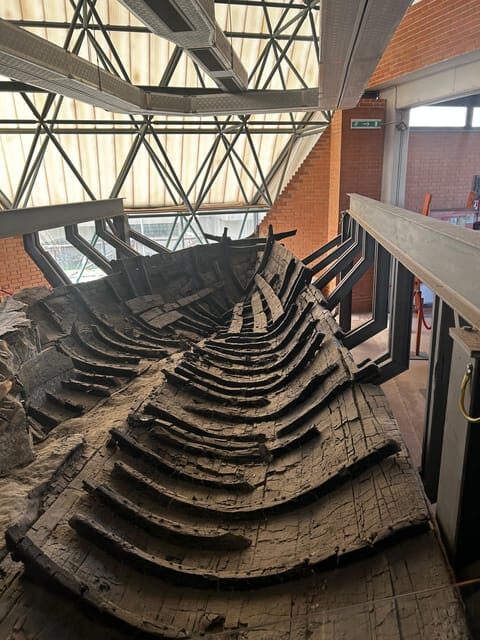
After the eruption setup, the tour shifts into what most people come for: the living city. This isn’t presented as a set of isolated ruins. It’s explained as a typical ancient Roman center where you can connect buildings to how people actually used them.
What you can expect as you walk:
- an orientation to the town’s overall feel and structure
- interpretation of everyday functions tied to the ruins
- emphasis on the contrasts that come with being a wealthy residential area
One of the strongest elements from the tour experience is the way guides handle questions. In particular, guides such as Marzia have been noted for answering groups questions thoughtfully and taking time to match explanations to what the group wanted to understand. That matters here, because the more you ask, the more you’ll get from the surviving details—especially if you’re trying to connect your own modern intuition with ancient spaces.
This is also where the tour can work surprisingly well for families. One guide, Gabriella, is mentioned as adapting explanations for children, tuning the story to their curiosity. So if you’re traveling with kids, don’t assume the tour will be too formal. You may find it more flexible than you expected.
Other Herculaneum tours and tickets

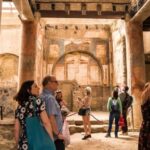

The Boat Museum: A Coastal Detail You’ll Feel
Herculaneum sat close to the coastline, and the tour includes a stop connected to that maritime side through the boat museum. It’s a smaller detour, but it adds a major missing piece: the city wasn’t only inland living. People were part of a wider coastal world.
Even without getting lost in specifics, you’ll likely walk away with a clearer sense of:
- what resources and movement would have mattered in daily life
- how the eruption story connects with the coastline
- why the preserved remains feel grounded in real routines, not just dramatic disaster
This stop also helps balance the tour. After the heavy emotional weight of the eruption context and preservation, the boat museum gives you another angle—one that feels more practical and human.
Finishing the Walk: Ruins, Stories, and Those Wow Moments
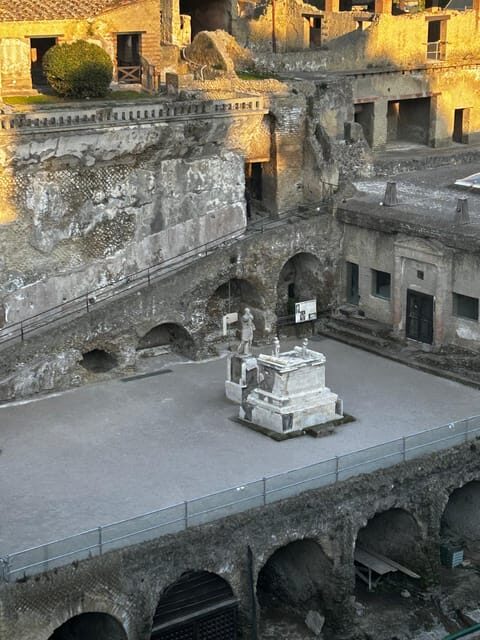
The final stretch of the tour is where the pieces start clicking together. You’ve built a mental map of why Herculaneum survived so differently, and you’ve seen how wealth shaped residential spaces. By the time you move through the ruins emphasized on the tour, you’re not just looking—you’re interpreting.
Many people describe the feeling as “wow” moments arriving at multiple points, not only at the biggest structures. That’s the advantage of a guide-led route: you’re encouraged to notice things you might otherwise miss, like decorative features or the logic of how spaces relate.
On some guided experiences, your guide may also take you to nearby exhibits in the Antiquarium area to show objects associated with the town. One specific example mentioned is a guide making a personal connection between an exhibit and a detail someone had brought (in that case, jewelry). Even if your experience doesn’t include that exact anecdote, it’s a good reminder: these tours often aim to connect ruins with tangible everyday items.
Price and Value: Is $75 Worth It?
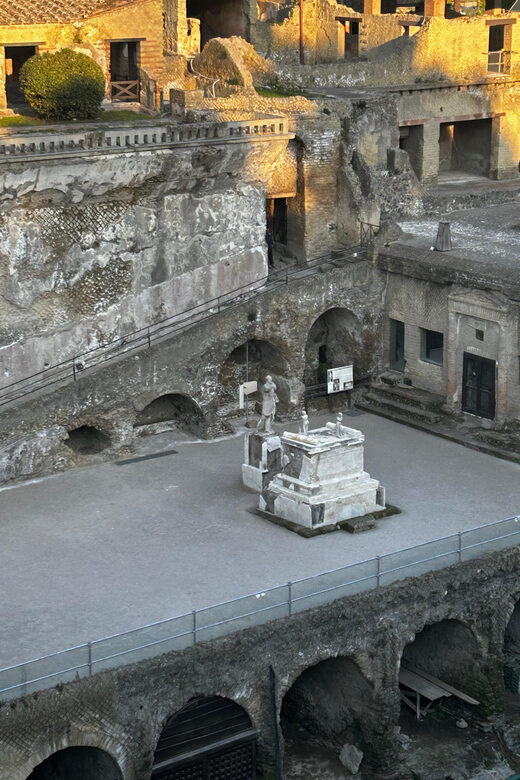
At $75 per person for a 2-hour small-group tour with admission included and skip-the-line entry, the value is pretty straightforward. You’re paying for three things that are harder to assemble on your own:
- a licensed guide (licensed by the Regione Campania)
- time-saving skip-the-line admission
- a guided route that’s structured to explain the why behind the site
If you’ve ever tried to visit an archaeological site like this without interpretation, you know how quickly you can end up “seeing stuff” without fully understanding what matters. Here, the guide’s job is to translate the site into a coherent story: why it was buried, why it’s preserved differently, and what kind of place it was for wealthy Romans.
The group size also matters for value. A smaller group often makes it easier to get questions answered, and at Herculaneum—where small details carry meaning—those questions can genuinely change what you notice next.
Language Options and Guide Style
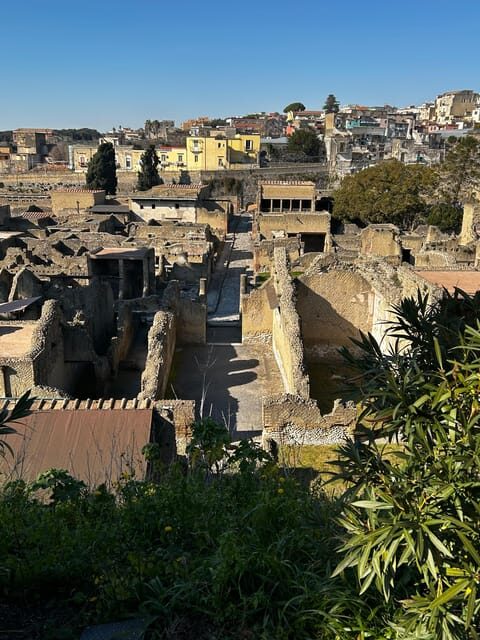
The tour runs with live guides in German, Italian, and English. That’s not a trivial detail. On a site where the guide explains preservation and eruption effects, your comfort with the language affects how much you’ll pull from each stop.
Guide quality is repeatedly emphasized in the experience. Names like Roberta, Marzia, and Gabriella show up in standout feedback for being strong explainers and for managing explanations in a way that fits the group. If you like a tour that answers questions without rushing, this is the kind of tour that tends to work well.
Who This Tour Suits Best
This tour is a great match if you want:
- a structured introduction to Herculaneum without spending your entire day planning
- an eruption-focused explanation that helps you understand the preservation differences vs Pompeii
- a guided walk that emphasizes Roman daily life and the look of wealthy residences
It also fits well if you’ve already seen Pompeii and want a sharper contrast. Herculaneum becomes less of a “backup destination” and more of a complementary one.
If you’re someone who prefers self-paced strolling and doesn’t want to follow a route, you might feel limited by the fixed 2-hour window. In that case, consider pairing this with a longer independent visit if your schedule allows.
Should You Book This Herculaneum Small-Group Tour?
I’d book this tour if you want the best chance of understanding Herculaneum in a short window—especially the preservation logic and the daily-life interpretation. The combination of a licensed guide, admission included, skip-the-line entry, and the small group format makes it efficient and easy to justify at $75.
If your top priority is wandering slowly and covering every corner, you may outgrow the 2-hour pace. But if your goal is to walk out with a clear picture of what happened in 79 A.D. and what survived because of it, this is a smart, focused choice.
FAQ
How long is the Herculaneum small-group tour?
It lasts 2 hours.
Is the admission ticket included?
Yes. Admission is included, and you also get skip-the-line entry.
Do I need to buy a ticket on-site?
No. The tour includes skip-the-line admission, and the guide handles the ticket process as part of the experience.
Where do I meet the tour?
You meet just outside the Herculaneum ticket office at Corso Resina, 187.
What languages are the tours offered in?
The live guide offers tours in German, Italian, and English.
Is it really a small group?
Yes. This activity is offered as a small group tour.
Are the guides licensed?
Yes. The tour includes a guided visit with a guide licensed by the Regione Campania.
What’s the cancellation policy?
You can cancel up to 24 hours in advance for a full refund.
Is there a reserve now and pay later option?
Yes. You can reserve now and pay later, keeping your travel plans flexible.
What will we focus on during the tour?
The highlights include the eruption and nature of the city, why the preservation is peculiar, time visiting the boat museum, and a look at typical life in an ancient Roman center through the ruins.