REVIEW · POMPEII
Pompeii Unveiled: 3-Hour Private Tour In-Depth Discovery
Book on Viator →Operated by Visita Con Me · Bookable on Viator
Pompeii feels huge—this tour makes it manageable. In just 3 hours, you get a private guide pacing you through standout sights, so the ruins start to feel like a living place. I especially love the in-depth storytelling that helps you spot what matters in each section, and how smoothly the route flows from public life to private homes. One thing to plan for: Pompeii site entry tickets aren’t included in the price, even though the itinerary lists admission at stops—so confirm what’s covered when you book.
This is a true private experience for up to 8 people, offered in English. You’ll begin at the amphitheater area and end near the Forum, which is handy because the last stop is also where you get that big Vesuvius view everyone remembers.
In This Review
- Key highlights you’ll actually feel in Pompeii
- Pompeii in 3 hours: why this route feels smarter
- Where you start: the amphitheater area sets the tone
- Stop 1: Anfiteatro Romano (Roman amphitheater) and the scale lesson
- Stop 2: Palestra Grande and those charred remains behind glass
- Stop 3: Casa di Ottavio Quartione—the garden that makes the ruins breathe
- Stop 4: Casa dei Ceii—the colorful domus and a top hunting scene
- Stop 5: Stabian Baths (Terme Stabiane)—where to feel the human rhythm
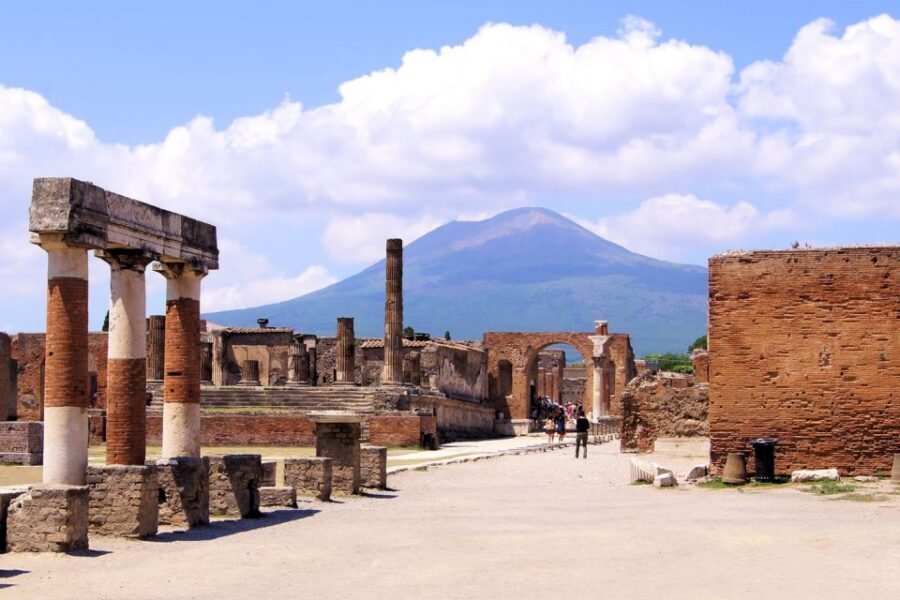
- Stop 6: Foro di Pompeya—the beating heart and the Vesuvius view
- Price and tickets: what $361.23 per group really means
- How the guide makes the ruins click (and why it shows in reviews)
- Who should book Pompeii Unveiled (and who might want a longer visit)
- Should you book? My straight answer
- FAQ
- How long is the Pompeii Unveiled private tour?
- What’s the group size for this private tour?
- Is the Pompeii site entrance ticket included in the price?
- What language is the tour offered in?
- Where do we meet, and where does the tour end?
- Is free cancellation available?
Key highlights you’ll actually feel in Pompeii
- A 3-hour “greatest hits” route that still feels detailed, not rushed
- Private guiding (up to 8), so you can ask questions as you walk
- Roman amphitheater to Forum in one arc: entertainment, training, homes, then city life
- Real Pompeian rooms and artwork, including garden settings and a hunting scene in a domus
- Stabian Baths included on the walk, so you see daily relaxation space, not just public buildings
- Guides known for adaptation, with Annarosa and Mariarosa names showing up in guide feedback
Pompeii in 3 hours: why this route feels smarter
Pompeii’s a big site. Even if you love ancient Rome, walking aimlessly can turn into: lots of stones, not enough meaning. This private tour takes away the “what do I look at?” stress. The schedule is built like a story: public spectacle, athletic life, household life, bathing, then the Forum.
That structure is what makes the time work. You’re not trying to cover everything. You’re seeing the kinds of places real Pompeians used—first for mass gatherings, then for training, then in their homes, and finally in the civic center. It’s a short window, but it’s organized in a way that helps the ruins make sense fast.
And because it’s private, your pace is adjustable. People in feedback often praised how the guide matched the group’s questions and rhythm—whether that meant slowing down for explanations or cutting through crowds efficiently.
If you're still narrowing it down, here are other tours in Pompeii we've reviewed.



Where you start: the amphitheater area sets the tone
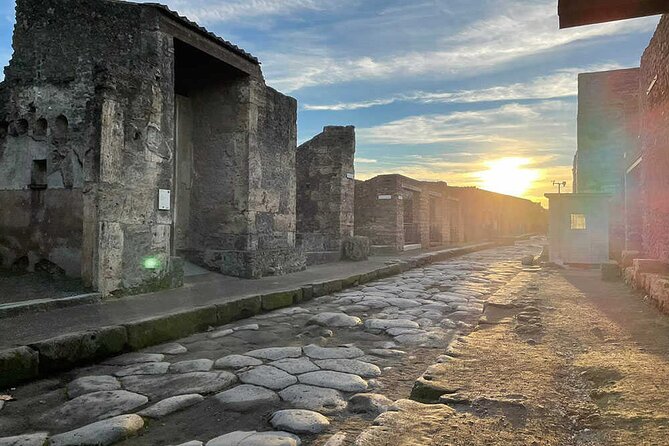
Your tour begins at Pompei – P.zza Anfiteatro CL80045 Pompei. That’s a good choice because it puts you in the Pompeii mindset from minute one. You’re starting with a place built for large crowds, not a quiet corner.
Also note the end point: the tour finishes at the Foro di Pompei area (near Porta Marina Inferiore is the nearest exit). If you plan to return to the original meeting entrance, build in about 15 minutes of extra walking. In practice, that matters because Pompeii can involve uneven ground, stairs, and directional confusion when you’re tired.
Stop 1: Anfiteatro Romano (Roman amphitheater) and the scale lesson
The tour’s first major stop is the Anfiteatro Romano, described as the oldest Roman amphitheater known from Roman times. This isn’t just an architectural detail; it’s a clue to how early and how serious Pompeii’s entertainment culture was.
You’ll spend about 30 minutes here, with admission mentioned for the stop. Expect to absorb the sheer spectator scale—up to 20,000 people. Standing in the amphitheater zone, you quickly realize why this kind of building mattered. This wasn’t a small local event. It was a big communal moment where social life, politics-by-proxy, and spectacle all mixed together.
What I like about starting here is simple: it gives you a mental reference point. Once you understand what crowd life looked like, the rest of Pompeii feels more human. You can start imagining where people went afterward—into training spaces, into homes, and eventually toward the Forum.
Stop 2: Palestra Grande and those charred remains behind glass
Next up is the Palestra Grande, Pompeii’s large training gym. This stop is about daily routine—where athletic training and social interaction overlapped.
You’ll spend about 30 minutes, and the standout detail here is that there are three showcases with charred organic remains found in Pompeian domus. That line matters. It’s not just a “cool fact.” It’s a reminder that Pompeii wasn’t only buildings and murals. There were living bodies, routines, and materials that were preserved in the disaster’s aftermath.
You’ll get the context you need to make sense of what you’re seeing. In guide feedback, people praised explanations that make you notice details you’d miss alone—especially when a guide connects fragments (like these remains) to what households and daily life actually involved.
One practical note: this section is indoors/partly covered in many ways, but Pompeii can still feel hot and bright overall. If you’re sensitive to sun, this is one of the stops where a guide can help you keep your viewing comfortable while you learn.
Stop 3: Casa di Ottavio Quartione—the garden that makes the ruins breathe
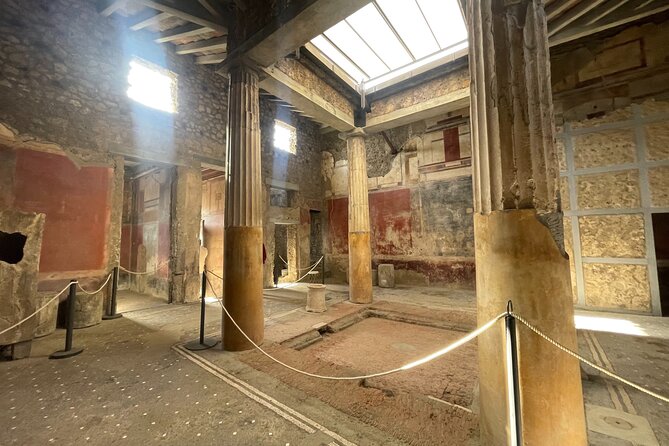
Then you move into domestic space with the Casa di Ottavio Quartione, one of Pompeii’s more scenic houses thanks to its breathtaking garden.
This is a different type of 30 minutes. Less crowd energy, more “look closer.” A garden in Pompeii is not just scenery—it’s a functional part of the household world. It’s where light, air, and everyday movement meet. In a short tour, a garden like this gives you a rare emotional shift: from public life to the private spaces people likely felt comfortable in.
In feedback, this kind of house stop gets singled out because it changes your perspective. You stop thinking about ruins as a museum display and start thinking about how people actually lived around spaces like this: walking paths, shaded areas, and rooms that connect back to the outdoor center.
If you’re the type who loves photo stops, this one usually delivers. Just keep your expectations realistic: you’ll see a garden setting, but you’ll still be looking at ancient stonework, not a restored villa you can wander freely like a modern home.

Stop 4: Casa dei Ceii—the colorful domus and a top hunting scene
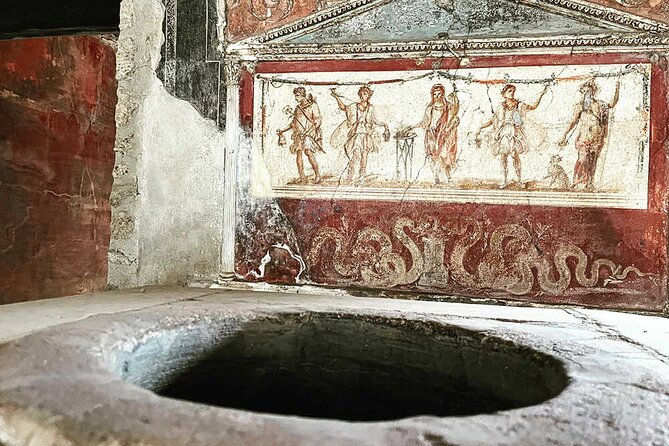
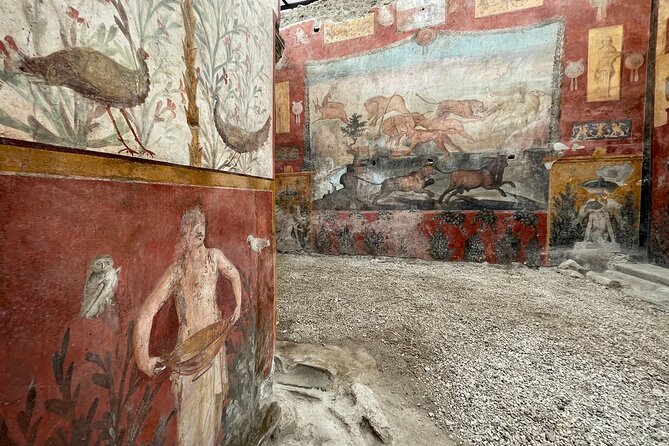
Another home follows: Pompei Casa Dei Ceii. This one is described as a small but colorful Pompeian domus, and what you’ll want to pay attention to is the artwork.
On the back wall of the garden is one of Pompeii’s finest hunting scenes. That’s a big deal for two reasons. First, it shows you the storytelling Pompeians put on walls. Second, it helps you understand taste—what kind of themes people enjoyed in their private spaces.
This stop is only about 30 minutes, so don’t expect a slow art-history lecture. Instead, use the time the guide gives you to connect the painting to the setting: Why would a hunting scene sit where light, movement, and daily domestic routine would frame it?
Feedback praising guides often points to this exact skill: they point out the visual “hooks” that make the art feel purposeful rather than random decoration.
Stop 5: Stabian Baths (Terme Stabiane)—where to feel the human rhythm
Now for a different kind of Pompeii experience: the Stabian Baths (Terme Stabiane). The tour frames it as a kind of regeneration stop—an ancient place for bathing and recovery—and it’s included at about 30 minutes.
This part of Pompeii is valuable because it rounds out the picture. Amphitheaters and gyms tell you what people watched and practiced. Baths tell you what they did to relax, socialize, and take care of their body.
You’ll get guidance on the beauty and structure of the baths. In practical terms, it’s also a smart break. Pompeii is outdoors in many sections. Baths give you a chance to step into a space designed for daily bodily routines—cooler, heavier with atmosphere, and often easier to understand because the room functions are clearer.
The main thing to watch for is your energy. At this stage, you’ll be halfway through the tour’s arc. Pace your walking, drink water when you can, and let the guide show you what to look at rather than forcing yourself to memorize every wall.
Stop 6: Foro di Pompeya—the beating heart and the Vesuvius view
The final stop is the Foro di Pompeya, the civic center. The tour highlights it as the beating heart of the city, with both beauty and the reality that the Forum area can be crowded.
This stop is again around 30 minutes. You’ll see the Forum as a place where public life condensed: commerce, community, and civic identity. What makes it extra memorable is the view of Vesuvius from here. That perspective helps you understand the whole Pompeii story, not just the buildings.
In feedback, people often praised guides for managing crowd flow and route timing. Even with a private tour, Pompeii can be busy. The advantage of having a guide is that you’re not stuck fighting the herd at every moment. You can focus on key vantage points and leave quickly enough to keep the emotional punch.
If you want the last stop to land hardest, treat it like a final scene in a movie. Step back, take in the Forum area with Vesuvius in view, then let your guide connect it to everything you saw earlier: the entertainment venues, training spaces, homes, and baths all pointing back to one city life.
Price and tickets: what $361.23 per group really means
The price is $361.23 per group, for up to 8 people, with a duration of about 3 hours. That pricing structure matters more than the number because private tours get more cost-effective as your group size grows.
For couples or solo travelers, it’s definitely a premium versus joining a larger group tour. But you’re buying control: a guide who can tailor explanations, answer questions, and adapt the route to the group’s pace. In feedback, Annarosa and Mariarosa came up repeatedly for being prepared and kind, and for staying up to date with recent excavations and theories.
What about tickets? Here’s the practical twist: the itinerary notes admission ticket inclusion for multiple stops, but the overall listing says Pompeii site entry is not included. I can’t iron that contradiction out from the details you provided—so I strongly recommend confirming what you’re paying for before you go.
Think of the cost like this:
- You’re paying for a private expert guide and time-efficient route planning.
- You may still need to pay separately for general site entry, depending on how tickets are handled for your booking.
If you’re traveling with family, that math often flips in your favor. Two adults + kids can turn this into a “one guide for our whole group” situation, which is a big quality-of-life upgrade in a place as visually overwhelming as Pompeii.
How the guide makes the ruins click (and why it shows in reviews)
One of the most consistent things in guide feedback is that the guides don’t just recite facts. They explain in a way that helps you see what you’re standing in.
Names that showed up include Annarosa and Mariarosa. People praised them for:
- being prepared and using up-to-date information, including recent work on excavations and interpretation
- answering lots of questions without rushing kids or adults
- adjusting the story based on group interests and pacing
- managing the walk so you’re not trapped in the worst crowd bottlenecks
If you’re the kind of person who hates tours where you’re herded forward and told to keep moving, this is the opposite. You get to ask why something mattered, then you get to look again with a better framework.
That’s also why this tour works well as a gift. For example, families booked Pompeii for milestone birthdays because the guide experience makes the difference between reading about Pompeii and actually feeling it.
Who should book Pompeii Unveiled (and who might want a longer visit)
This tour fits best if you want:
- a private guide rather than a large group experience
- a route that covers the key Pompeii “types” of places in one go
- a pace that’s paced enough to be enjoyable, not exhausting
It’s also a strong choice for families with kids, since guide explanations can adapt to different ages and question styles.
If you’re the type who wants every street, every side chapel, and every mural in full depth, you’ll probably want a longer tour or a separate day to explore on your own. Pompeii rewards that approach. This particular experience is focused, meaning it trades breadth for clarity.
Should you book? My straight answer
Book it if you want Pompeii to feel organized and meaningful in a tight time window. The itinerary hits major emotional beats—amphitheater spectacle, training space, gardens and painted walls in domus, baths for everyday life, then the Forum with the Vesuvius view.
Skip or reconsider only if you’re planning to show up without checking how entry tickets are handled, or if you feel strongly that Pompeii should take an entire day (because this is a 3-hour highlight route).
If you get the ticket question sorted, this is the kind of private Pompeii tour that makes you leave with more than photos. You’ll walk away with a mental map—and a clearer sense of what Roman life looked like, right here in the ash.
FAQ
How long is the Pompeii Unveiled private tour?
It runs for about 3 hours.
What’s the group size for this private tour?
It’s private, and the group can be up to 8 people.
Is the Pompeii site entrance ticket included in the price?
The tour information says ticket entrance to Pompeii site is not included, even though the stop details mention admission ticket included. Check your booking confirmation to confirm what you’re covered for.
What language is the tour offered in?
The tour is offered in English.
Where do we meet, and where does the tour end?
You start at Pompei – P.zza Anfiteatro CL80045, and the tour ends at the Foro di Pompei area (near Porta Marina Inferiore is the nearest exit). If you want to return to the same meeting entrance, plan for about 15 minutes of extra walking.
Is free cancellation available?
Yes. You can cancel up to 24 hours in advance for a full refund.