REVIEW · NAPLES
Pompeii and Herculaneum day trip
Book on Viator →Operated by A DRIVE INTO THE BLUE · Bookable on Viator
Two buried cities, one stress-free day. This Pompeii and Herculaneum day trip from Naples pairs a private driver with an organized walk through the ruins, so you spend less time figuring out transit and more time looking closely.
I love the option for a professional guide at the ruins, with guides like Antonino/Tony and Anna praised for making the day clear, organized, and adaptable to different needs. I also like the pacing logic: you start in Pompeii for the big-picture layout, then head to Herculaneum where the smaller scale makes details easier to spot.
One possible drawback: your budget needs a reality check. Access fees and the Porta Marina ticket are not included, so you’ll pay separately on top of the tour price. Plan on a long day too, about 6 to 7 hours from pickup to return.
In This Review
- Key highlights
- Pompeii and Herculaneum in one day: why private transport helps
- Price and what you actually pay for: a realistic budget
- Getting picked up in Naples (and how the meeting point works)
- Pompeii route: from Porta Marina to the civic heart
- Stop 1: Porta Marina
- Stop 2: Foro di Pompei (10 minutes)
- Stop 3: Via dell’Abbondanza (20 minutes)
- Stop 4: Teatro Grande (10 minutes)
- Pompeii houses, baths, and the Lupanar: where the details live
- Stop 5: Casa del Menandro (10 minutes)
- Stop 6: Stabian Baths / Terme Stabiane (10 minutes)
- Stop 7: Lupanar (10 minutes)
- Stop 8: Antiquarium of Pompeii (10 minutes)
- Herculaneum at Parco Acheologico di Ercolano: smaller, better preserved
- Stop 9: Parco Acheologico di Ercolano
- Herculaneum houses, main street, and the Augustals
- Stop 10: House of the Hotel (5 minutes)
- Stop 11: House of the Wooden Sacellum (10 minutes)
- Stop 12: Decumano Massimo (5 minutes)
- Stop 13: College of the Augustales (5 minutes)
- Bathhouses and the Antiquarium di Ercolano
- Stop 14: Suburban Baths (5 minutes)
- Stop 15: Antiquarium di Ercolano (10 minutes)
- Guides, pacing, and crowd strategy that actually works
- What to expect for walking, timing, and comfort
- Who this Pompeii and Herculaneum day trip suits best
- Should you book this day trip with A Drive Into the Blue?
Key highlights
- Private driver flexibility: you can move at your group’s pace without jumping between buses.
- Optional ruin guidance: upgrade to professional commentary inside Pompeii and Herculaneum.
- Pompeii’s famous route: civic forum, elite houses, baths, and even the Lupanar brothel.
- Herculaneum’s better-preserved feel: volcanic mud coverage helps preserve street-level scenes.
- Mobile ticket + air-conditioned ride: less hassle getting started, especially in summer.
Pompeii and Herculaneum in one day: why private transport helps
Pompeii and Herculaneum are both unforgettable. The problem is doing both without burning your day. This tour solves that with private transportation and a single driver who handles the Naples-to-ruins logistics.
That matters more than it sounds. Pompeii is huge, Herculaneum is spread in a different way, and both sites involve a lot of walking. When you’re not also managing public transit or transfers, you can keep your attention on what you came for: streets, buildings, and everyday details frozen in time.
A bonus for comfort: the vehicle is air-conditioned, and you get bottled water for the ride. Small thing, big difference when the weather turns warm.
Other Pompeii + Herculaneum tours
Price and what you actually pay for: a realistic budget
The tour price is listed at $429.69 per person, for a 6 to 7 hour day trip. That cost is for the ride, the private transportation, and the structure of the itinerary, not for every single ticketed site.
Here’s the important part: ruin access fees and some entries are not included. The listing shows:
- Access fees to Ruins and Monuments: €34.00 per booking (with visitors younger than 18 free for those fees)
- Porta Marina entrance: €18.00 per person
- Porta Marina and Herculaneum’s main site entry are called out as not included at specific stops
So the real value question becomes: are you paying for convenience and organization, plus (optionally) a guide? In my view, yes—because you’re compressing two major UNESCO-level sites into one day without Naples logistics eating your energy.
Getting picked up in Naples (and how the meeting point works)
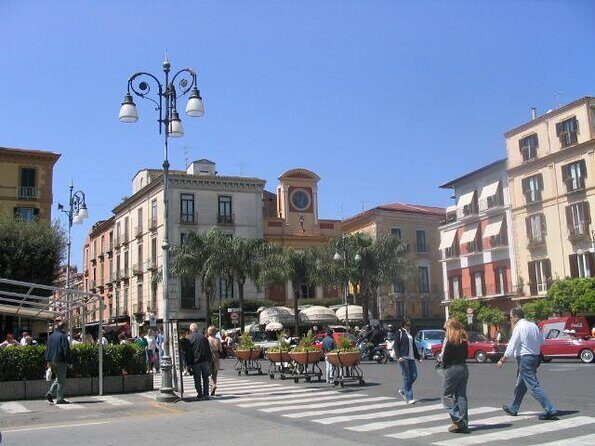
Pickup is offered from a lot of places in Naples: all Naples’ hotels, ports, train station, and airport. If you’re in a cruise, the pickup happens in the Naples area where your ship docks.
One practical detail: pickup is straight from your accommodation if streets allow. If not, you’ll meet the car at the closest spot that the vehicle can reach. That avoids the usual “Where exactly are you?” scramble, which can be stressful before a big day of ruins.
Also note: the tour is daily, and it’s a private tour/activity. Only your group rides together.
Pompeii route: from Porta Marina to the civic heart
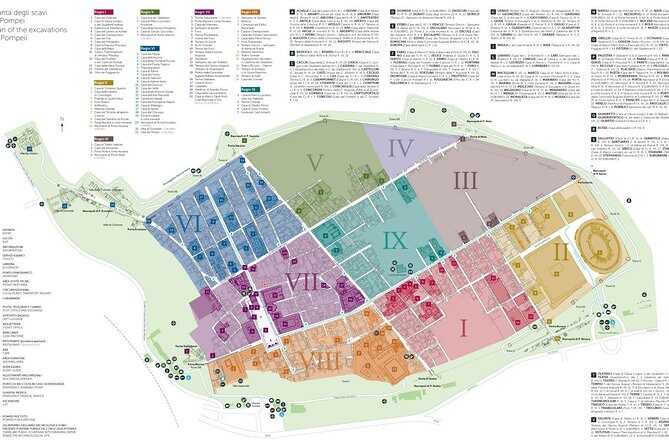
Pompeii is the show-stopper, and this itinerary is built to cover a lot without wandering randomly.
Stop 1: Porta Marina
You start at Porta Marina where you meet a licensed guide after tickets are purchased. This is your entry into Pompeii’s world, so it’s a good place to begin because you get oriented right away.
What to watch for here: Porta Marina sets the tone. It’s not just “pretty ruins.” It’s a living street-and-gate start that helps you understand where people moved in and out of town.
One note for planning: Porta Marina’s entrance is listed as not included.
Other Herculaneum tours and tickets


Stop 2: Foro di Pompei (10 minutes)
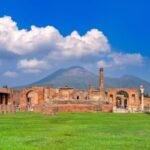
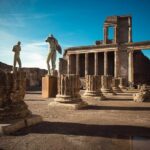
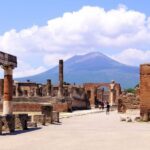
Next comes the Foro di Pompei, Pompeii’s civil forum and civic center. This is where you connect the dots between city life, administration, justice, business, markets, and worship.
Even in a short stop, the forum gives you a mental map. It helps later when you see how the city’s public buildings sit together.
Stop 3: Via dell’Abbondanza (20 minutes)
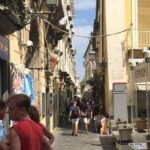
The Via dell’Abbondanza—the street of abundance—shows how prosperous families and businesses organized life along a main spine.
This is also a “slow enough to notice” stop. Don’t rush. Look at the openings, the rhythms of storefronts, and the way space was laid out for daily movement.
Stop 4: Teatro Grande (10 minutes)
The Teatro Grande area pulls in the main theatre complex: the Large Theatre, the Odeon, and the Quadriporticum. These spaces weren’t only for shows. They were also meeting points.
A practical tip: theatres and meeting areas are where you’ll feel how social Pompeii could be. If you like people-watching (even in ruins form), this is where it clicks.
Pompeii houses, baths, and the Lupanar: where the details live
This part of the Pompeii day is the stuff you remember later.
Stop 5: Casa del Menandro (10 minutes)
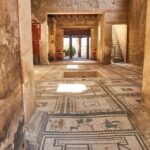
The Casa del Menandro is one of Pompeii’s richer homes. The focus here is the scale—around 1,800 square metres—and how architecture, decoration, and contents show wealth.
Short stop, big payoff. Even at a glance, you start seeing how elite households used space for privacy, display, and status.
Stop 6: Stabian Baths / Terme Stabiane (10 minutes)
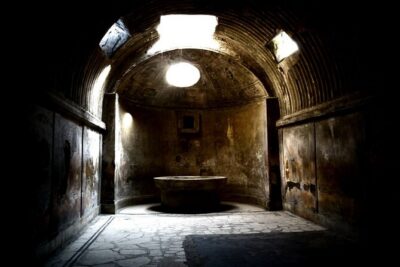
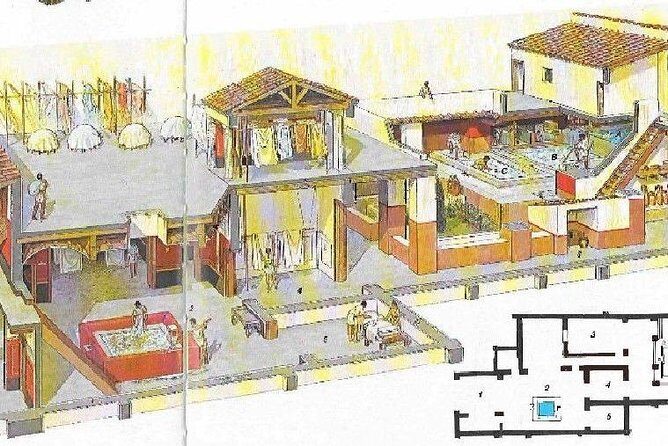
Roman bathing wasn’t just hygiene. It was social life. The Terme Stabiane are described as the oldest and largest of Pompeii’s public baths.
If you want a reality-check on Roman routines, baths are it. People gathered, talked, and moved through a sequence of rooms—just like a modern social facility, but with different rules and different architecture.
Stop 7: Lupanar (10 minutes)
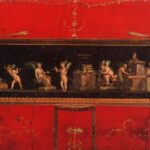
The Lupanar is the Pompeii brothel, famous for the erotic paintings on its walls. It’s a “purpose-built brothel,” and the name comes from Latin for brothel.
This is one of those stops where you either love the frankness or you find it odd. Either way, it tells you something important: Pompeii wasn’t sterile. It had the full range of human life, including commerce and desire.
Stop 8: Antiquarium of Pompeii (10 minutes)
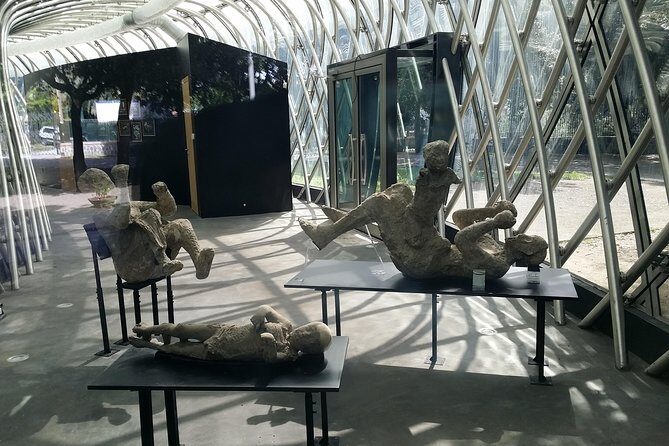
The Antiquarium helps you connect what you saw in the streets to the evidence underneath. You can see finds representing daily life, casts of victims from the Vesuvius eruption, and displays about Pompeii’s timeline before and after the Roman era.
This is a good “mental reset” stop. After walking through buildings, the museum-type content helps the whole day make more sense.
Herculaneum at Parco Acheologico di Ercolano: smaller, better preserved
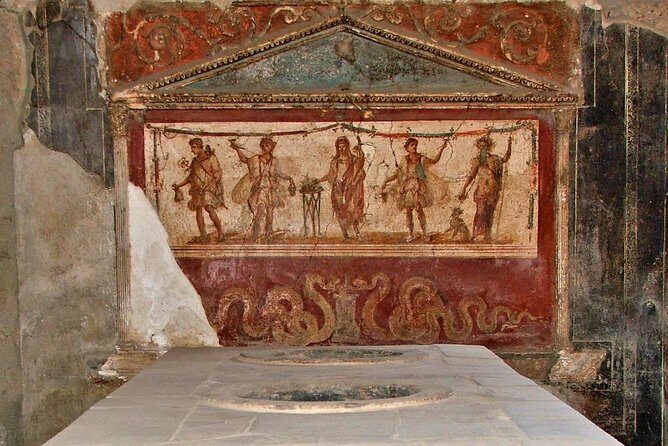
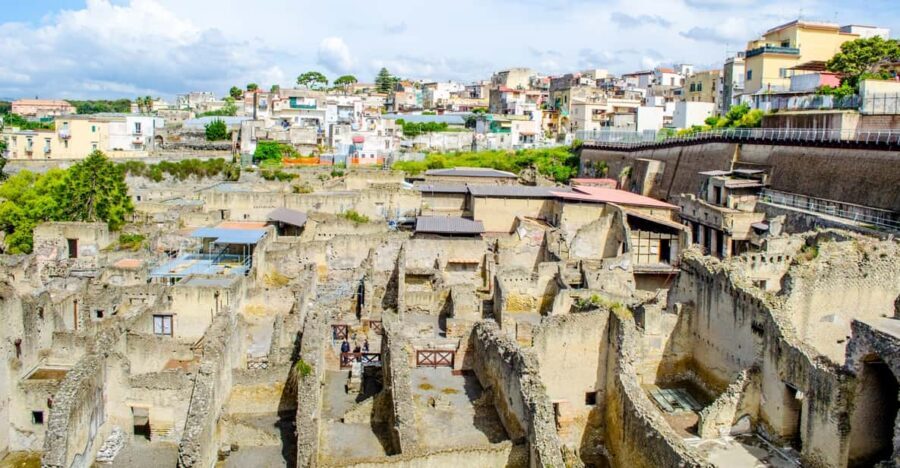
If Pompeii feels massive, Herculaneum feels more intimate—and the preservation is often the reason.
Stop 9: Parco Acheologico di Ercolano
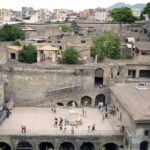
This is the archaeological site of Herculaneum (Scavi di Ercolano), listed as a UNESCO World Heritage Site. The key idea: Herculaneum was buried by lava and mud, and the different volcanic materials meant the town is better preserved than Pompeii.
Admission for this stop is listed as not included. But the payoff is worth planning for, because Herculaneum can feel more legible at street level.
Also, it’s interesting that Herculaneum was discovered before Pompeii, but excavation was interrupted because Pompeii was easier to dig. That history adds context to why you see what you see today.
Herculaneum houses, main street, and the Augustals
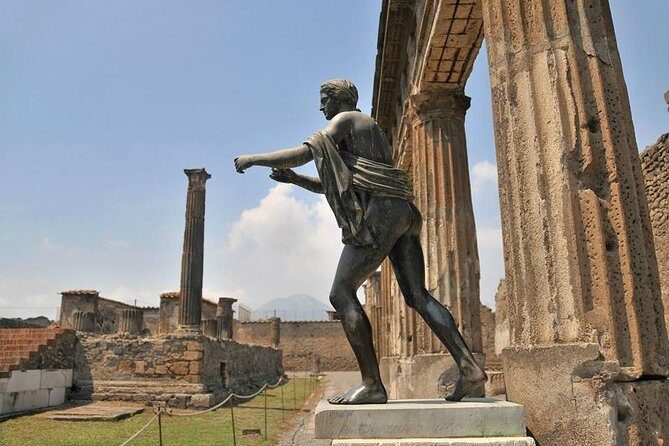
After the main park stop, the itinerary continues through major household and civic remnants.
Stop 10: House of the Hotel (5 minutes)
This is described as the ruins of a large wealthy house. It’s a quick stop, but it helps keep the theme going: in Herculaneum, you’re constantly moving through spaces that were built for real routines.
Stop 11: House of the Wooden Sacellum (10 minutes)
This one is very specific: it’s an early house from around the 1st century BC, with a wooden partition door inside the atrium. The wood was charred by the eruption, and there are bronze rings where lamps could rest.
If you care about physical objects and how people actually lived, this stop is a highlight. Wooden details are rare in archaeology, so anything preserved like this feels extra meaningful.
Stop 12: Decumano Massimo (5 minutes)
Decumano Massimo is the main street. The point here is orientation. Even if the stop feels brief, it anchors you to the town’s layout.
Stop 13: College of the Augustales (5 minutes)
This building was built at the end of the first century B.C., likely around 14 B.C., during the Augustan redevelopment. It’s tied to two brothers who financed it and is linked to an epigraph connected to an inauguration banquet.
Even in a quick stop, it gives you a civic/religious frame for how the town worked.
Bathhouses and the Antiquarium di Ercolano
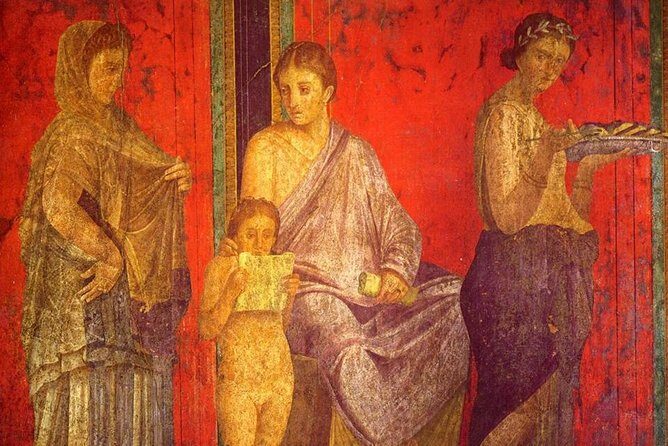
Herculaneum wraps up with bathing and a museum stop.
Stop 14: Suburban Baths (5 minutes)
These are the public bathhouse remains. As with Pompeii, it’s another reminder that bathing and socializing were woven into everyday life.
Stop 15: Antiquarium di Ercolano (10 minutes)
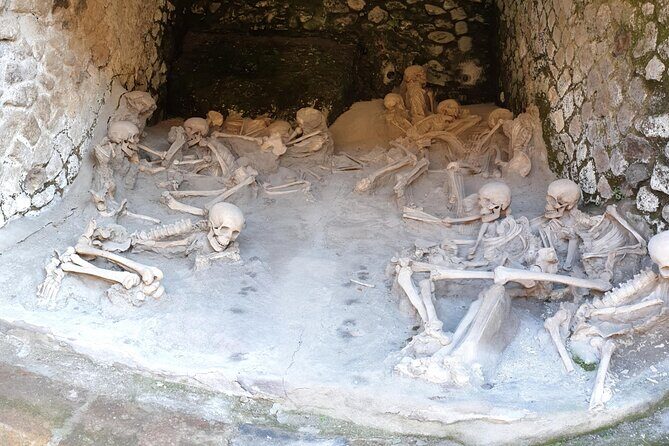
This museum is described as holding objects found next to skeletons, plus other archaeological material. That combination makes the site feel personal in a way that ruins alone sometimes can’t.
The museum also helps you slow down after a day of walking. You’ll be grateful for the break, even if you love ruins.
Guides, pacing, and crowd strategy that actually works
This tour offers a professional guide at the ruins if you choose the option that includes it. If you don’t, you still have the private driver and the planned itinerary, but the commentary will be lighter.
From the info you’re given, the guides being praised for making things clear is a big deal. Names that come up include Antonino/Tony and Anna, with praise for being able to adjust the tour based on sensory needs, including visual and hearing impairment.
Crowds are real at Pompeii. A practical strategy is simple: if you want fewer people blocking views, start early. The “get there when it opens” advice shows up for a reason. Even with a planned route, arriving early helps you beat the worst of the crowd flow.
What to expect for walking, timing, and comfort
This is a 6 to 7 hour day. It’s not a “sit and look” experience.
You’ll move between multiple stops with short on-site windows at many points. That’s intentional. It lets you cover both cities in one run, but it means you should be realistic about your pace.
Comfort-wise, you’ve got the air-conditioned vehicle and bottled water, which helps. What you don’t get is lunch, so you’ll want to plan your meal timing around the schedule.
Also: service animals are allowed, and most travelers can participate. The listing also notes a current requirement for mouth mask use on the private vehicle.
Who this Pompeii and Herculaneum day trip suits best
This is a good fit if you:
- Want two major Roman sites in one day without transportation headaches
- Prefer a private group so your timing stays in your hands
- Like ruins that cover both civic life and everyday life (not only famous buildings)
- Are traveling with kids and want them engaged—this kind of structured stop-by-stop route tends to work well for families
It’s especially smart if you care about comparison. Pompeii is larger and more famous; Herculaneum is smaller and often feels more preserved. Seeing both back-to-back helps you understand the eruption’s impact in a more grounded way.
Should you book this day trip with A Drive Into the Blue?
If your priority is value through organization—a private driver, smooth pickup, and a structured Pompeii-plus-Herculaneum route—this is the kind of tour that makes sense. The $429.69 price is easier to justify when you factor in what the alternative costs you in time, energy, and potential confusion on the ground.
My main caution is the ticket math. Plan for the separate entry fees, especially the Porta Marina ticket and the Herculaneum park entry called out as not included. If you’re strict on total cost, do the quick add before you book.
If you’re okay with a full day and you want to see a lot without losing control of your schedule, I’d book it—and I’d also aim to be ready for an early start to cut down crowd pain.