REVIEW · NAPLES
Pompeii & Herculaneum Guided Tour – High Speed Train from Rome
Book on Viator →Operated by Askos Tours · Bookable on Viator
Pompeii and Herculaneum in one long day can work. This trip strings together high-speed trains, a minibus, and an archaeologist-guided route so you spend more time seeing ruins and less time hunting logistics.
I really like the skip-the-line entry setup for both sites, plus the included headsets that help you stay on track even when the group moves.
One thing to consider: it’s a serious walking day, with Pompeii in particular known for very limited shade and lots of uneven stone underfoot.
In This Review
- Quick hits: what makes this day trip tick
- Price and logistics: what you’re really paying for
- Rome Termini start: train tickets sent ahead, meet-up happens in Naples
- Naples meet-up at Starhotels Terminus: where the group forms
- Porta Marina and the Pompeii route: seeing the city’s spine, not just the big spots
- Via dell’Abbondanza: the street-level feel
- House of Menander: domestic life in a preserved setting
- Granaries of the Forum: food storage and public power
- Stabian Baths (Terme Stabiane): the city’s social engine
- Lupanar (brothel): the uncomfortable reality people forget
- House of the Faun and the theater duo: Pompeii’s scale shows up here
- A note on pace: you won’t see everything
- MaxiMall Pompeii break: air, restrooms, and that welcome kit
- Herculaneum Archaeological Park: smaller, better preserved, and easier to read
- Headsets and guide quality: how you get more out of short stops
- Getting back to Naples and returning to Rome Termini
- Pacing and comfort: what to expect on your feet
- Who should book this Pompeii and Herculaneum train day trip
- Should you book this Pompeii and Herculaneum guided day trip?
- FAQ
- How long is the Pompeii and Herculaneum guided tour from Rome?
- Is the tour offered in English?
- Are entrance tickets to Pompeii and Herculaneum included?
- Where do I meet in Naples?
- What about meals during the day?
- How do I get my Rome to Naples train tickets?
- Is there a luggage option if I’m traveling with suitcases?
- Is this tour accessible for visually impaired guests?
Quick hits: what makes this day trip tick
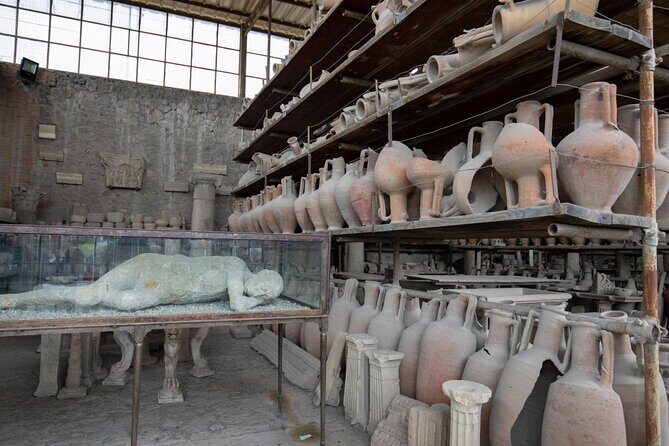
- Fast train + private minibus transfers: you’re not stuck in traffic and station chaos.
- Archaeologist guidance in both Pompeii and Herculaneum (names praised include Michele, Alfredo, Raphael, Carmine, and Gennaro).
- Headsets included so you can hear your guide around the busiest areas.
- A carefully selected Pompeii route that hits major landmarks and then pivots to Herculaneum.
- MaxiMall Pompeii stop (50 minutes) for a real break and an included welcome kit + discount card.
- Small-group size up to 20 helps the pace feel controlled instead of herd-like.
Price and logistics: what you’re really paying for

At $204.38 per person for roughly 11 hours 30 minutes, the headline cost looks steep—until you break down what’s bundled. You’re paying for the roundtrip high-speed train from Rome Termini, minibus transport in Naples, and ruins entry tickets for both Pompeii and Herculaneum (plus the on-site archaeologist guidance and headsets). You’re also paying for time savings, which is the big deal on this route.
Pompeii and Herculaneum aren’t next door. Doing them together means you need a plan that keeps you moving without burning hours. This itinerary is built around that reality: train first, then guided site time, then train back. For many people, that time-value is exactly why the price makes sense.
Meals are not included, so budget for snacks or lunch on your own. Also expect the day to feel long even when the schedule is efficient.
Other Pompeii + Herculaneum tours
Rome Termini start: train tickets sent ahead, meet-up happens in Naples
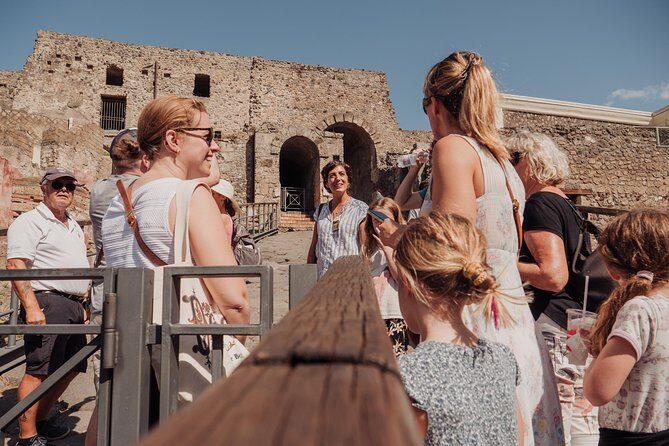
You start independently from Roma Termini. Your high-speed train tickets are sent to you one day before the tour, so you’re not waiting around for a same-day pickup. You just board the train and go.
The guide does not meet you at Roma Termini. Instead, you join the group once you arrive in Naples. That matters because it makes the beginning simpler: you’re responsible for your rail portion, but the rest is organized once you’re in Naples.
If you’re the type who likes clear instructions, this is a good match. You’re basically doing a managed hop to Naples, then transitioning into a guided day.
Naples meet-up at Starhotels Terminus: where the group forms
After your train arrives, you head to Starhotels Terminus in Piazza Giuseppe Garibaldi, right across from Naples Central Station. This is where you meet your local guide and the Askos Tours driver who then handle the transfer to the archaeological sites.
There’s also a practical upside here: the meeting point is near major transport. You’re not getting dumped into a far-away neighborhood and hoping a bus shows up. From there, everything runs like a loop—Naples out to the ruins, then back near the station.
Porta Marina and the Pompeii route: seeing the city’s spine, not just the big spots
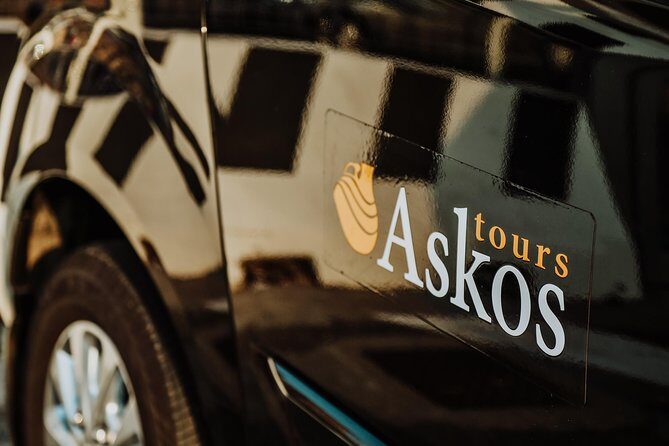
Pompeii is huge. The best way to experience it in a single day is to focus on the parts that tell the story of daily life and how the city functioned.
Your Pompeii tour begins at the Porta Marina entrance, one of the key gateways into the ancient city. From there, the route is structured to give you both orientation and atmosphere: you walk major streets, then move through standout buildings and public spaces.
Here’s what you can expect as the day unfolds in Pompeii:
Via dell’Abbondanza: the street-level feel
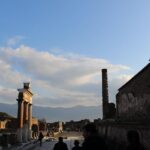
You’ll walk along Via dell’Abbondanza, one of the city’s main thoroughfares. This is where Pompeii starts to make sense. You’re not just looking at stones; you’re building a mental map of how people moved around the city.
Other Herculaneum tours and tickets



House of Menander: domestic life in a preserved setting
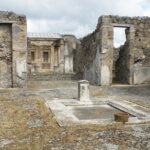
You’ll stop at the House of Menander, a home associated with the everyday world of Pompeii. It’s a quick stop, but the point is bigger than the length: you’re seeing how wealthy and middle-class households arranged rooms, courtyards, and decorative spaces.
Granaries of the Forum: food storage and public power
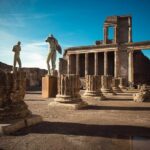
Next comes the Granaries of the Forum, the sort of site that connects daily survival to civic structure. Pompeii wasn’t only beauty and villas. It also ran on logistics—grain storage, workforce needs, and public infrastructure.
Stabian Baths (Terme Stabiane): the city’s social engine
You’ll visit the Stabian Baths. Baths were for cleaning, sure, but also for social life. This stop helps you picture Pompeii as a living city with routines, not just a backdrop for tragedy.
Lupanar (brothel): the uncomfortable reality people forget
The Lupanar is a brief but memorable look at the darker side of Roman life. If you want Pompeii to feel real, this is the kind of stop that keeps the story balanced. It won’t be a long lecture—more like a guided pointer so you understand what you’re looking at.
House of the Faun and the theater duo: Pompeii’s scale shows up here
You’ll see the House of the Faun, then the Odeon (Teatro Piccolo) and Teatro Grande. This is where Pompeii starts reminding you how big it was and how public entertainment mattered. The theater stops give you a clear sense of crowd energy and urban design, even if you’re only visiting portions of the complex.
A note on pace: you won’t see everything
Even with a focused route, Pompeii is still a place where you can lose hours. This tour is designed for highlights, with many stops kept to around 5–10 minutes. That’s great if you’re visiting once and want structure. If you crave hidden corners and long wandering time, you may feel the compressed feel—some people come away wanting more hours at Pompeii.
MaxiMall Pompeii break: air, restrooms, and that welcome kit
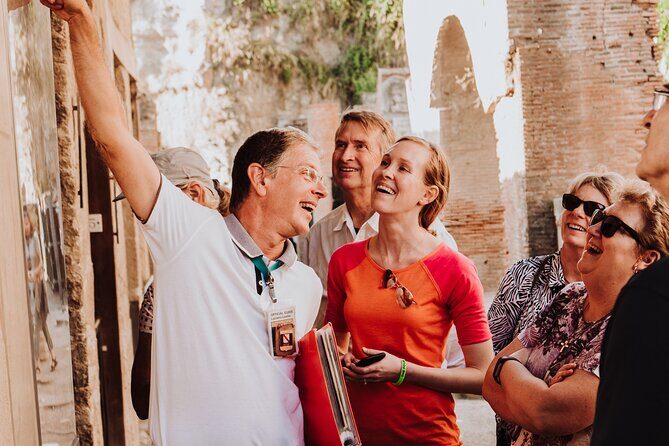
After Pompeii, there’s a 50-minute break at Maximall Pompeii. This is the kind of stop that makes the day easier, especially because Pompeii can be tough on the feet. You’ll also receive an exclusive welcome kit and a discount card with deals in stores.
Even if you don’t do much shopping, this break is still valuable. It gives you time to recover before Herculaneum—plus it’s a convenient moment to refuel on your own schedule.
Also, you’ll want to take this stop seriously if you tend to get tired on walking days. The second half of the itinerary is still active-site time.
Herculaneum Archaeological Park: smaller, better preserved, and easier to read
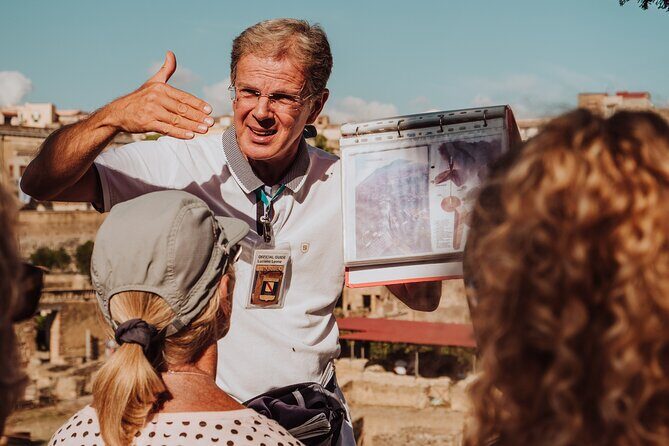
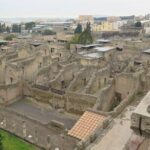
Then you switch gears. Herculaneum is smaller than Pompeii and tends to feel more intimate. The big win here is that many features are more preserved, and the guided approach helps you notice what that means.
Your time in Herculaneum is about 2 hours, with entry included. The route includes:
- Partem Domus lignea / Casa del Tramezzo di Legno (the House of the Wooden Partition)
- House of the Skeleton
- Central Thermae
- Casa del Rilievo di Telefo
- Casa Sannitica
- Casa del Bel Cortile
- House of the Grand Portal
- House of the Black Salon
In plain terms: Herculaneum is the place where Pompeii’s story feels less abstract. Frescoes and mosaics are part of what people remember here, and a skilled guide can point out why the preservation changes how you interpret the rooms. One review note that stuck with me: it’s not only buildings—it’s decoration that still reads like a lived-in world.
If Pompeii feels like a wide city, Herculaneum can feel like a close-up. And guides who’ve worked on both sites (names like Alfredo and Michele have been praised) often explain how the eruption affected each place differently, which makes the two ruins click together in your head.
Headsets and guide quality: how you get more out of short stops
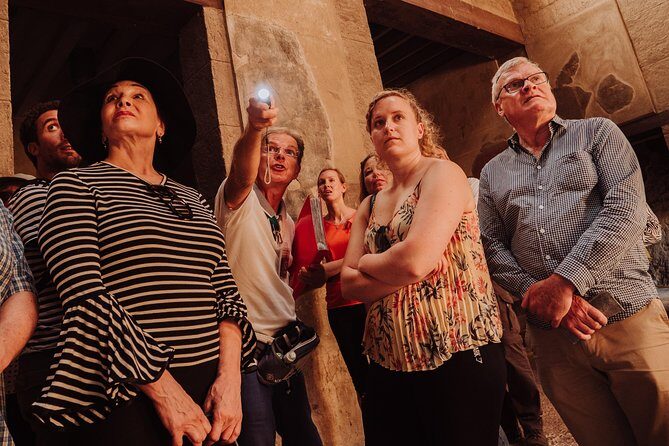
You’re given headsets, which is a big quality-of-life detail. Pompeii and Herculaneum get loud, and groups can move fast between locations. With headsets, you’re less likely to miss the explanation that makes each stop meaningful.
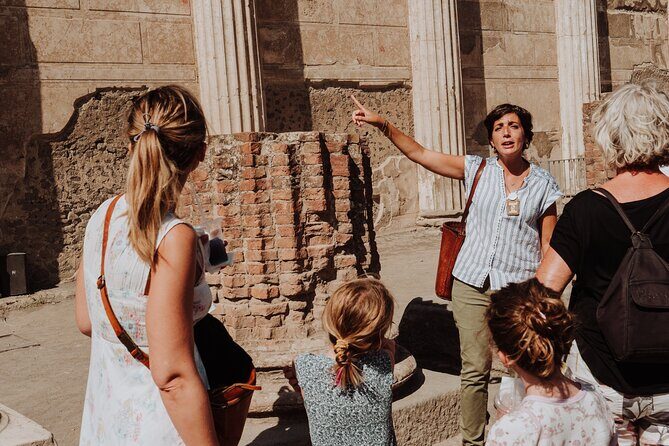
Guide styles seem to vary, but the most praised archaeologist guides share a few traits: they connect artifacts to daily life, and they keep the route moving without turning it into a sprint. Names that came up positively include Paolo, Michele, Raphael, Alfredo, Diego Michelle, Bruno, Carmine, and Gennaro.
If you’re doing both sites in one day, guide clarity is the difference between seeing ruins and understanding what you’re seeing.
Getting back to Naples and returning to Rome Termini
After Herculaneum, you’re driven back to Naples. The transfer leaves you near Naples Central Station, so you can reach your platform and board your train back to Rome on your own. The train takes you back to Roma Termini, where your day ends.
That independence on both ends is intentional. You own the train segments, and the tour operator owns everything in the Naples-to-ruins-to-Naples loop.
One practical tip: the day runs on tight timing. Plan to be ready when the group moves, and don’t assume you’ll have tons of extra minutes for detours.
Pacing and comfort: what to expect on your feet
This is a long day, and it’s not a sit-down tour. You’re walking Pompeii’s streets and then doing a second site afterward. Some people find it strenuous, especially if you’re sensitive to uneven ground.
Two comfort notes I’d take seriously:
- Pompeii has very limited shade, so plan for sun exposure.
- Footing matters: the tour involves lots of walking across archaeological surfaces and open areas.
Good shoes are non-negotiable. If you have knee or mobility issues, consider whether a full day across both sites is the right choice. The itinerary is efficient, but it doesn’t have the padding of a slower pace.
Who should book this Pompeii and Herculaneum train day trip
This fits best if you want:
- One-day coverage of both sites with structure
- Archaeologist-led interpretation rather than just self-guided wandering
- Less time planning trains and transfers, more time at the ruins
- A small group (maximum 20 travelers) with headsets to keep the experience coherent
It’s also a solid choice for families and students who need a guided framework. Several praised accounts highlighted how the guides made Roman life feel real, and how the pacing stayed manageable even with kids—though it’s still a long day, so small legs will still feel it.
If you’re the type who wants hours alone in Pompeii’s quieter corners, you might prefer a longer, Pompeii-only plan. This one is optimized for highlights plus an excellent second half at Herculaneum.
Should you book this Pompeii and Herculaneum guided day trip?
Yes—if you want maximum ruins time with minimum logistics stress. The combo of high-speed rail, minibus transfers, headsets, and archaeologist guidance is the real value here. And the Pompeii-to-Herculaneum switch is smart: it gives you both scale and close-up preservation, so the story lands better.
Hold off or reconsider if you:
- need a very slow pace and long free time inside Pompeii
- have significant mobility limits (the walking load can be real)
- expect a long lecture style at each stop (the stops are short, designed for highlights)
My bottom line: if you’re doing Rome and you want one day that meaningfully hits both ancient cities, this is a well-built way to make it happen.
FAQ
How long is the Pompeii and Herculaneum guided tour from Rome?
The total duration is about 11 hours 30 minutes.
Is the tour offered in English?
Yes, it is offered in English.
Are entrance tickets to Pompeii and Herculaneum included?
Yes. Entrance tickets are included. The listed adult entry prices are 20 euros for Pompeii and 16 euros for Herculaneum, and the tour includes the corresponding ruin entry tickets.
Where do I meet in Naples?
You meet at Piazza Giuseppe Garibaldi, 91, 80142 Naples, near Starhotels Terminus, close to Naples Central Station.
What about meals during the day?
Meals and drinks are not included, so you’ll need to plan your own food.
How do I get my Rome to Naples train tickets?
Your high-speed train tickets are sent to you one day before the tour, and you board the train independently.
Is there a luggage option if I’m traveling with suitcases?
You may want to use a luggage deposit at the station or nearby, because it may not always be possible to accommodate luggage on the minibus.
Is this tour accessible for visually impaired guests?
It is not recommended for visually impaired guests unless accompanied by a dedicated personal assistant.