REVIEW · POMPEII ARCHAEOLOGICAL SITE
Pompeii: Exclusive Tour with Archaeologist and Entry Tickets
Book on GetYourGuide →Operated by Grand Tour Experience · Bookable on GetYourGuide
Pompeii feels impossibly close. With a skip-the-line entry and a licensed archaeologist guide, you trade long queues for a focused walk through the ruins near Mt. Vesuvius. I like how the tour turns the site into a story you can actually follow, and how the stop at the Macellum connects the tragedy to real human remains via plaster casts. One consideration: the ruins involve lots of uneven ground and stairs, and this experience is not suitable for wheelchair users or people with mobility impairments.
You’ll get small-group attention and headsets, which is a big deal in a place where noise and crowding can swallow details. At 2 hours, the pace hits the major civic, religious, and residential highlights without turning your day into a marathon.
In This Review
- Key reasons this Pompeii tour works
- Where Porta Marina puts you in the action
- Skip-the-line entry: what you actually gain
- Basilica and the civic heartbeat of Pompeii
- Temples of Jupiter, Venus, and Apollo: religion you can see
- Forum Baths and the Houses of the Vettii and the Faun
- The Macellum plaster casts: the most sobering stop
- Market, food, and street life at the edges
- Large Theatre and the experience of public spectacle
- Your 2-hour route: what you gain, what you might still want
- What makes the guides matter: real archaeologists, not scripts
- Price and value: is $50 worth it?
- Before you go: IDs, shoes, and the new ticket rules
- Who should book this Pompeii archaeologist tour
- Should you book Pompeii VIP with a licensed archaeologist?
- FAQ
- Where is the meeting point for the Pompeii tour?
- How long is the tour, and what’s included?
- What languages are offered?
- Is private or small-group service available?
- What should I bring for Pompeii entry?
- Is transportation included from where I stay?
Key reasons this Pompeii tour works

- Skip-the-line entry means you start seeing ruins sooner, not standing in paperwork-and-bodies lines
- Licensed archaeologist guidance helps you connect everyday Pompeian life to what happened in 79 AD
- Headsets included so you can hear explanations clearly across a big, noisy site
- Macellum plaster casts bring the eruption’s human scale into focus
- A tight 2-hour route that also sets you up to keep exploring after the tour
Where Porta Marina puts you in the action
Most Pompeii tours start with a long walk from wherever you’re dropped. This one starts at Porta Marina Superiore, the Roman gate that still stands as a clear “here we enter the city” marker. It’s an easy beginning point to orient yourself, and it matters because Pompeii is huge—if you start off disoriented, you’ll waste time later.
The meeting spot is outside the Porta Marina entrance, in front of the Pompei Scavi – Villa dei Misteri train station (the Circumvesuviana). Your guide holds a sign reading Pompei VIP, which makes the meetup simpler than guessing which group is yours.
From the first minutes, the tone is practical: you’re not just looking at stones, you’re learning how the city was laid out and why certain places mattered. That’s especially helpful if you’re visiting in a day that also includes Naples, Sorrento, or the Amalfi Coast, because a good opening beats a rushed ending.
And yes, Mt. Vesuvius is part of the emotional backstory here—Pompeii sits under its shadow. Your guide’s job is to keep that context close, so the disaster doesn’t feel like a random legend you hear at the end.
Other Pompeii tours with an archaeologist
Skip-the-line entry: what you actually gain
The tour includes Pompeii’s admission Express ticket, plus skip-the-line entry. In a site like Pompeii, that’s not a small perk. Queues can gobble up your best daylight, and waiting often makes people move faster than they should—meaning you miss the tiny layout details that make Pompeii click.
Because the group is led by a licensed archaeologist (and not just a general guide), the time you save doesn’t get wasted. You’re guided straight into the ruins with context ready to go. That leads to a better experience even if you’re an informed history person. It also helps first-timers avoid the common trap of treating Pompeii like a photo scavenger hunt.
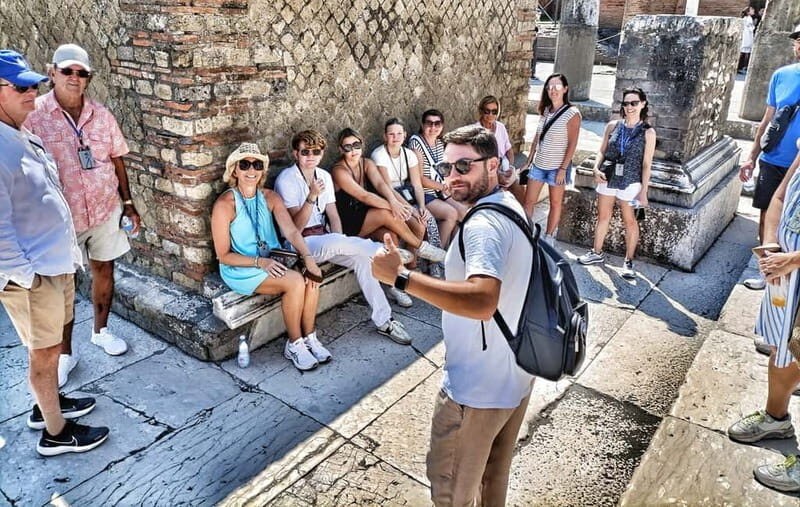
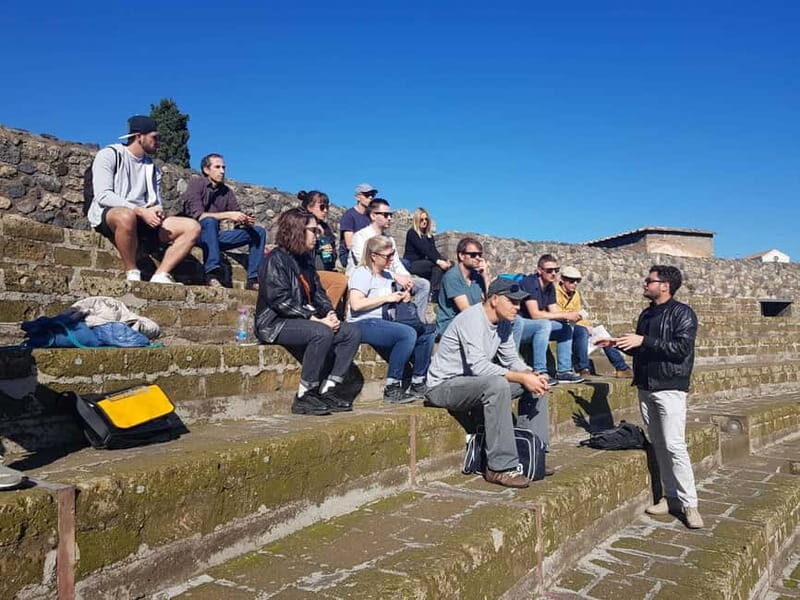
You’ll also travel with a small group (and you can choose private if you want). That matters because Pompeii isn’t built for herding. A smaller group keeps movement smoother and makes it easier to ask questions without the guide talking over you—or you talking over everyone else.
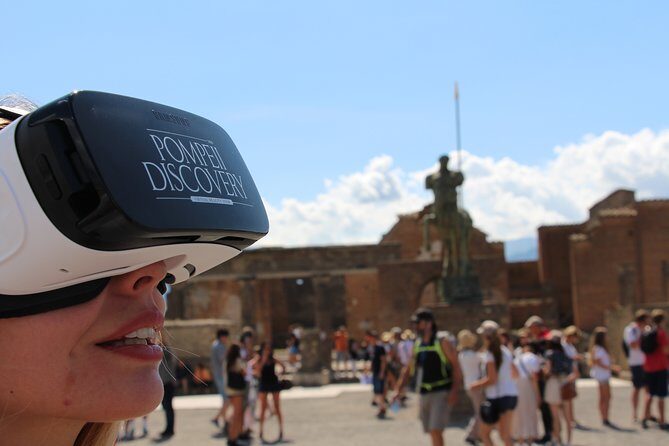
One more practical win: headsets are included. In open-air ruins, voices can vanish quickly, especially when people are stopping suddenly for photos. The headset system helps you stay connected to the explanation even when you’re near crowds.
Basilica and the civic heartbeat of Pompeii
One of the first big questions Pompeii answers is this: how did the city function day to day? The tour focuses on that through stops that represent civic power and public life, starting with the Basilica.
At the Basilica, you’re in the zone where administration and business would have felt real. Even if you don’t know Roman architecture terms, you can usually grasp the purpose quickly: this was a place for public interaction and legal or administrative activity. Your guide helps you read the space so it stops feeling like “a big building” and starts feeling like a working part of the city.
Then you move into the Forum/Civic areas, which is where Pompeii’s political and social rhythm becomes clear. The Forum isn’t just one spot—it’s an entire civic landscape. The guide’s approach helps you understand why people gathered there, what kinds of conversations happened, and how religion and politics were intertwined in a city that looked ordinary until it didn’t.
I like that this tour doesn’t just jump from monument to monument. It builds a line of logic: city gate → civic center → religion and public spaces → homes and markets → the human story of the eruption.
Temples of Jupiter, Venus, and Apollo: religion you can see
Pompeii was deeply religious, but it wasn’t religious in a distant, museum way. It was part of daily routines: festivals, patron gods, and public worship that shaped what people felt safe, honored, or protected by.
This tour includes temples you can anchor your understanding to, including the Temple of Jupiter, the Temple of Apollo, and other religious stops connected to those areas. The value here is the guide’s interpretation. You’re not just looking at carved remnants; you’re learning how Romans used sacred spaces to give meaning to civic life.
A temple stop also helps you understand the city’s social layers. If you only tour houses, Pompeii can start to feel like “rich people vs. poor people.” Temples add the civic ceiling: the community’s shared beliefs, displayed in stone and space.
The pacing through these religious areas is important too. Pompeii sites can get crowded fast, and moving with a plan helps you keep momentum without feeling frantic.
Forum Baths and the Houses of the Vettii and the Faun
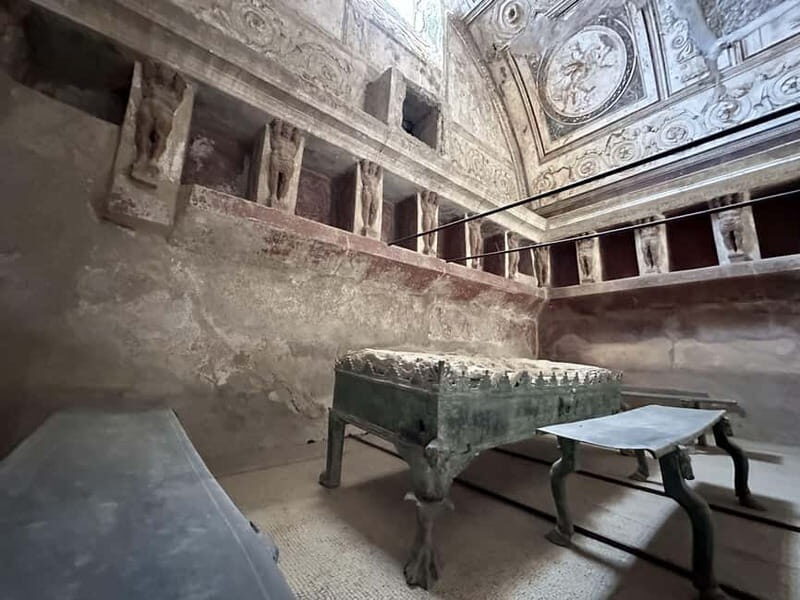
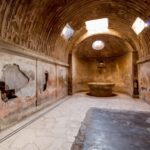
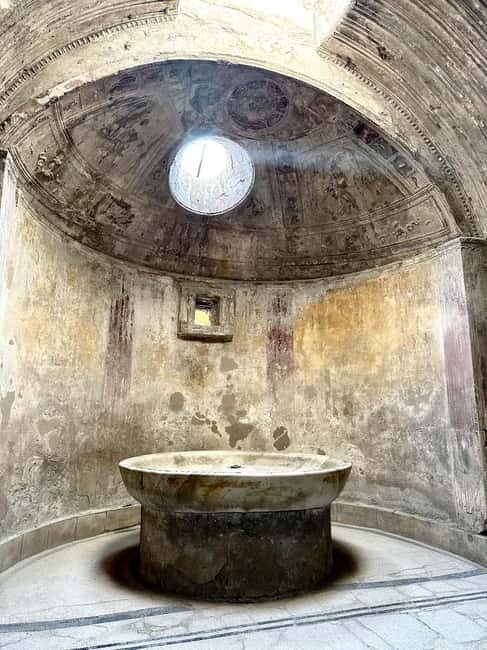
Next comes the everyday Pompeii story—the places where life happened in repeated, human routines. The tour includes the Forum Baths, which are a great reminder that ancient hygiene wasn’t only about cleanliness. Baths were social, too. People met, talked, traded news, and spent time together. It’s a good moment to reset your brain from the civic and religious scale into something closer to daily rhythm.
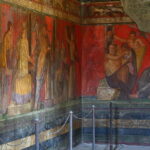
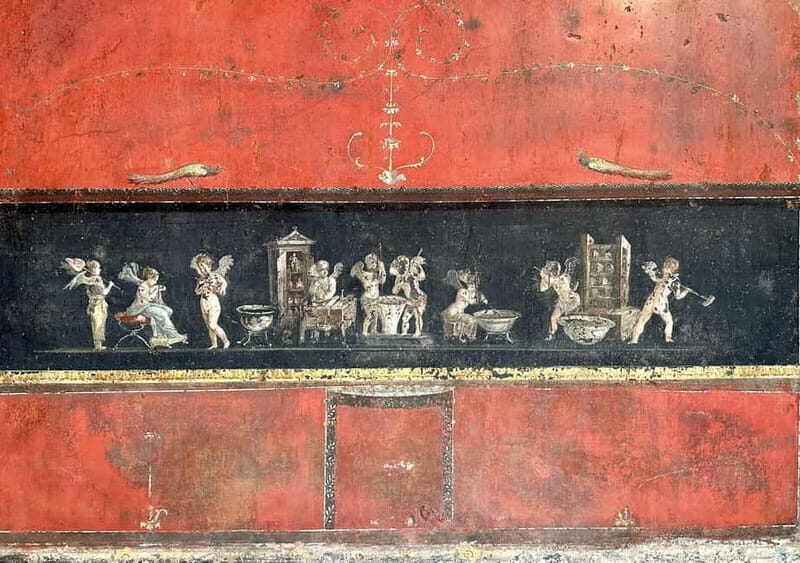
Then you get into high-interest houses, including the House of the Vettii and the House of the Faun. These stops are where Pompeii’s art shows up with force: frescoes and mosaics. Even if you’re not an art expert, you’ll probably notice two things right away:
- the scenes are specific enough to suggest personal taste, not just decoration
- the colors and designs help you picture how a house would have felt when people lived in it
What I like about visiting houses with a guide is that you’re less likely to miss the visual logic. You learn what to look for and why it mattered in the household, from layout to how art functioned as status and identity.
A common drawback with Pompeii house tours is that people rush through. Here, the 2-hour structure keeps you moving, but it also keeps you from getting lost in side alleys with no context.
Other Pompeii entry tickets and audio guides
The Macellum plaster casts: the most sobering stop
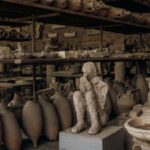
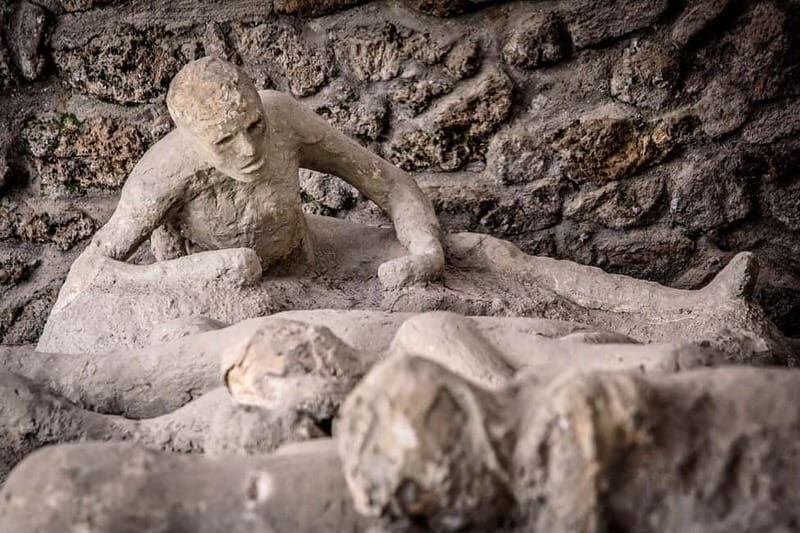
If you want one place that makes the tragedy of 79 AD hit like a fact, not a story, it’s the Macellum area. The tour includes the market zone where plaster casts show victims in the positions they held during the eruption.
This is the emotional center of many Pompeii visits, and it’s where a good archaeologist guide adds real value. The casts don’t just provide shock. With the right explanation, they help you understand what people were doing and how sudden the catastrophe was—how a daily public space turned into a sealed moment in time.
I also like that this stop helps correct a frequent misconception. Pompeii isn’t only about disaster and ruins. It’s a city with routines: commerce, food, greetings, gossip. Then the eruption interrupts all of it.
Expect this part to feel quiet in a different way than the rest of the site. Even people who are chatty at the start tend to slow down here.
Market, food, and street life at the edges
After the civic core and the houses, the tour transitions toward street-level Pompeii—where you understand how people moved, shopped, ate, and spent time. The itinerary includes the House of the Tragic Poet, then continues into areas linked to commerce and public spectacle.
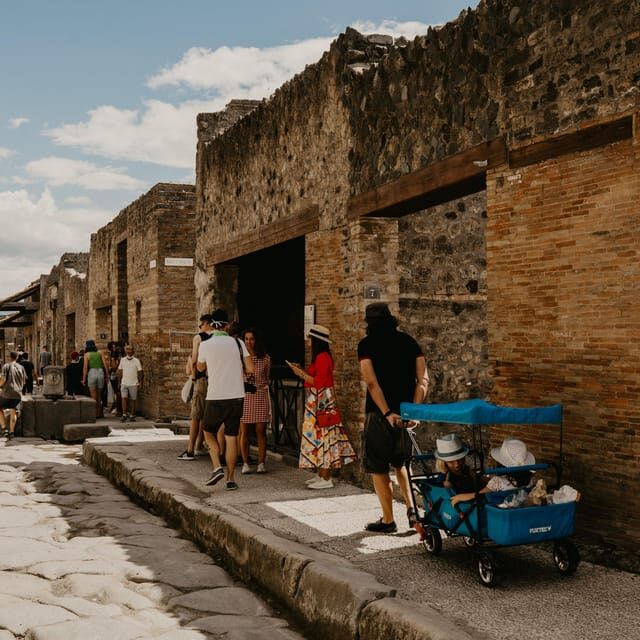
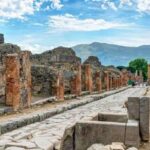
One of the better parts of having a guide in this zone is learning what to notice. Pompeii can tempt you to focus only on the biggest buildings. But once you’re trained to spot the smaller cues—like where goods were handled or where people gathered—you start seeing a city, not a pile of ruins.
The tour also includes Lupanare, the famous brothel area. This stop can be uncomfortable for some people, but it’s an important slice of urban life. It tells you Pompeii wasn’t sanitized for us. It was real, and that reality includes sex, commerce, and the social rules of the time.
If you’re the type who prefers gentle, family-friendly content, you might want to consider how you feel about sites like this. It isn’t “adult-themed” entertainment. It’s historical evidence, shown in its place.
Large Theatre and the experience of public spectacle
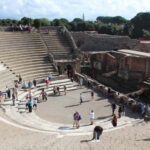
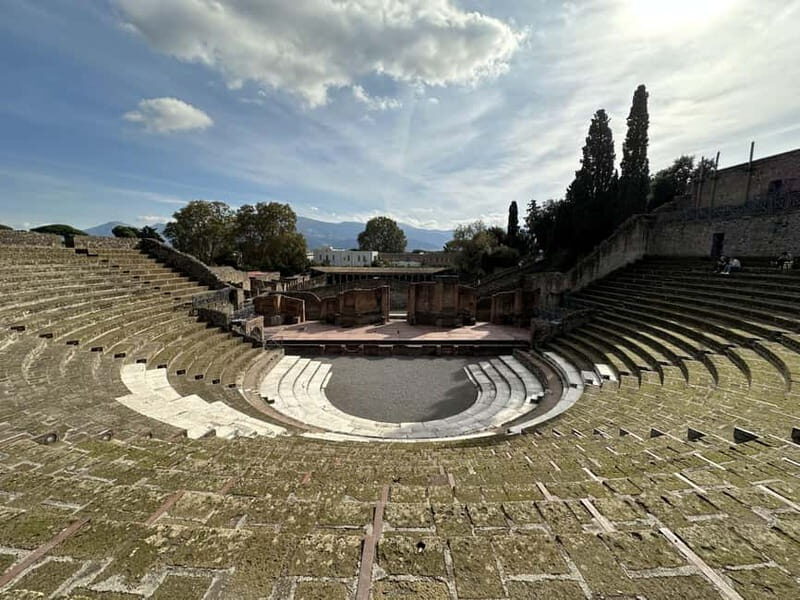
The final set of major stops leads into the Large Theatre area. Public entertainment is one of the ways Roman cities created shared identity, and the theatre district helps you see Pompeii as more than households and temples.
This is where the guide’s “how to look” approach helps again. Instead of only spotting stones, you’ll understand seating and circulation and why the theatre fit into civic life. Even in ruins, you can often feel the structure of the gathering.
In practical terms, it’s also a smart place to end your guided portion. It’s an area where your sense of the city’s scale locks into place, and you can more easily decide what to return to on your own after the tour.
Your 2-hour route: what you gain, what you might still want

Two hours is exactly long enough to get Pompeii’s biggest ideas in focus. But it also means you won’t cover everything. That’s not a failure; it’s the trade.
The upside is that you leave the tour with clear mental bookmarks. You’ll know where the civic core is, why the temples matter, how Roman baths functioned socially, and what the plaster casts mean beyond a shock image.
The guide also points out what to see after the visit with the group, which is a smart move. Pompeii has so many named spaces that a short recommendation list is often more useful than another hour of aimless wandering.
At the end, you’ll be dropped off at one or two locations, including Pompeii Ruins and Piazza Esedra. That can help you plan a self-guided follow-up without backtracking.
If you’re hoping for a full-day read of Pompeii (and not just the highlights), you’ll likely want to add extra time after this tour. One practical tip: bring water and don’t underestimate walking between areas.
What makes the guides matter: real archaeologists, not scripts
The standout theme behind this tour is the guide quality. This experience is led by an archaeologist and licensed guide, and the explanations are the reason a 2-hour visit feels longer than it is.
In the past, names like Livio, Raffaelle, Ivan, Antonio, Ricardo, and Loredana have been praised for things that matter on-site: pacing, humor, clear explanations, and responsiveness to questions. Even better, the headset system helps those strengths reach everyone in the group, not only the people nearest the guide.
I also like that the tour doesn’t talk like a textbook. Guests often mention the way guides connect daily life to what you’re standing in front of. That connection is what turns Pompeii from ruins into a story you can retell later.
Languages are another practical advantage. The tour offers English, Italian, French, and Spanish, so you’re not stuck with a one-size-fits-all explanation style.
Price and value: is $50 worth it?
At $50 per person for a 2-hour tour that includes skip-the-line entry tickets and an admission Express ticket, the value comes from three buckets:
1) Time saved
Skip-the-line access matters because Pompeii’s queues can eat the day. When you buy a guided experience, you’re buying back the minutes you’d otherwise spend waiting.
2) Interpretation
Pompeii is big, and without guidance, it’s easy to miss why things are arranged the way they are. A licensed archaeologist guide helps you understand what you’re seeing in the moment, not later from an app.
3) Comfort and listening
Headsets and a small group reduce the “stand still, squint, guess” problem.
Is it the cheapest way to enter Pompeii? No. But if you’re trying to see more than the basic highlights—and you want context that makes the site stick—this price is fair.
This tour also fits travelers who want structure. If you like having a plan and then continuing on your own, the format works well.
Before you go: IDs, shoes, and the new ticket rules
Pompeii is strict about entry details. You’ll want a passport or ID card for yourself, and children need IDs too. It’s also important because the tour follows newer ticketing rules where full names and ages must match what’s sent for the ticket. Plan for that ahead of time and send participant details through the booking messages when requested.
For practical comfort:
- wear comfortable shoes with solid grip
- bring water
- expect lots of walking on uneven ground
Also note what’s not allowed on the tour: swimwear, alcohol and drugs, electric wheelchairs, and pets. If you’re traveling with anything unusual for a day trip, check first so you’re not scrambling at the entrance.
Who should book this Pompeii archaeologist tour
This is a strong fit if:
- you want Pompeii’s best-known areas plus context in a tight window
- you like asking questions and hearing explanations in real time
- you prefer guided structure over navigating the site alone
- you’re visiting from Naples/Sorrento and need a dependable plan
It may not be the best fit if:
- you need wheelchair access or mobility accommodations
- you want a slow, hour-by-hour wandering style with lots of unscheduled time
- you’re only interested in one tiny niche (like art only or architecture only)
If your goal is a high-impact visit that makes the city make sense, this route is built for that.
Should you book Pompeii VIP with a licensed archaeologist?
I’d book it if you want Pompeii to feel like a real city, not just ruins you walked through. The combination of skip-the-line entry, headsets, and a licensed archaeologist guide is what makes a short 2-hour visit feel purposeful. And the Macellum stop with plaster casts is the kind of moment you’ll remember long after the photos fade.
I would skip it or reconsider if accessibility is a concern for your group, because the tour is not suitable for wheelchair users and involves challenging terrain. Also, if you’re the type who needs a full-day deep wander, plan extra time beyond these 2 hours.
If you want a smart first look at Pompeii with enough guidance to fuel your self-guided follow-up, this is a solid choice.
FAQ
Where is the meeting point for the Pompeii tour?
The meeting point is outside Pompeii’s Porta Marina entrance, directly in front of the train station Pompei Scavi – Villa dei Misteri (Circumvesuviana). Your guide holds a sign with the name Pompei VIP.
How long is the tour, and what’s included?
The tour lasts 2 hours. It includes skip-the-line entry tickets, Pompeii’s admission Express ticket, a licensed archaeologist guide, and headsets for better listening.
What languages are offered?
The live guide is available in English, Italian, French, and Spanish.
Is private or small-group service available?
Yes. You can choose a sharing small group experience or a private slot.
What should I bring for Pompeii entry?
Bring passport or ID card, comfortable shoes, and water. Children also need a passport or ID card.
Is transportation included from where I stay?
No. Food and drinks are not included, and transportation is not included.