REVIEW · POMPEII ARCHAEOLOGICAL SITE
Pompeii: Skip-the-Line Guided Tour with Expert Archaeologist
Book on GetYourGuide →Operated by Walks of Italy · Bookable on GetYourGuide
Pompeii is easy to get lost in. This skip-the-line guided walk turns the ruins into a clear story, including what’s still being uncovered today.
I love that an archaeologist leads you through the site, and I love the headsets that keep the narration easy to hear without crowding the guide.
The main drawback is simple: it’s a walking tour on uneven ancient ground, and it’s not set up for wheelchairs, strollers, or high-heeled shoes.
In This Review
- Key takeaways before you go
- Skip-the-line entry and an archaeologist guide: why this format works
- Where you meet: Via Villa dei Misteri and the green walks sign
- The first stretch inside the park: streets you can actually understand
- Shops, temples, villas, and baths: Pompeii’s daily-life backbone
- The emotional highlight: plaster casts and the fate of 79 AD
- Food that still makes sense: the Roman bakery and more
- Temple of Apollo and the Roman Forum: power, belief, and civic life
- Pompeii is still changing: ongoing excavations and preservation
- Brothel stop (when appropriate) and a walk along city walls toward Naples
- Pompeii Express vs longer routes: choose the right amount of walking
- Small groups, headsets, and how you actually hear your guide
- Practicalities: heat, footwear, and limited facilities
- Price and value at about $70 per person: what you’re paying for
- Who should book this Pompeii archaeologist tour (and who should think twice)
- Should you book this Pompeii skip-the-line archaeologist tour?
- FAQ
- Is this Pompeii tour really skip-the-line?
- How long is the Pompeii guided tour?
- Where do I meet the guide?
- What’s included in the price?
- Is the tour in English?
- Will I get to see the Forum and temples?
- Does the tour include the brothel and city walls?
- What should I bring?
- Is this tour suitable for wheelchairs or strollers?
Key takeaways before you go
- Archaeologist-led, story-first tour that helps you understand everyday life, not just names on stone
- Skip-the-line entry + pre-reserved tickets, so you spend time in Pompeii, not in lines
- More Pompeii on the longer option (including a Complete Pompeii route when selected)
- Real discoveries in motion: the itinerary can adapt as new excavation and preservation work happens
- Big emotional moments like the plaster casts of people caught in the eruption
- Not just the famous stops: bakery remains, Temple of Apollo, Forum areas, an ancient cemetery, and more
Skip-the-line entry and an archaeologist guide: why this format works

Pompeii is huge. Even if you’re a confident self-tourist, you’ll miss the connections that make the place click. This tour is built to fix that by using an official Pompeii guide and a trained archaeologist to connect the dots between buildings, streets, and the people who lived there.
I especially like the structure: you’re not just walking from attraction to attraction. You’re guided through a “what life looked like” route—shops, baths, villas, houses—then hit the emotional core of what happened in 79 AD. It makes the city feel human, not like a museum floor.
There’s also a practical side. You get skip-the-line pre-reserved tickets, which helps a lot because the park can feel slow to enter. And when you add headsets (included), you can actually listen while moving at Pompeii’s pace.
Other Pompeii tours with an archaeologist
Where you meet: Via Villa dei Misteri and the green walks sign
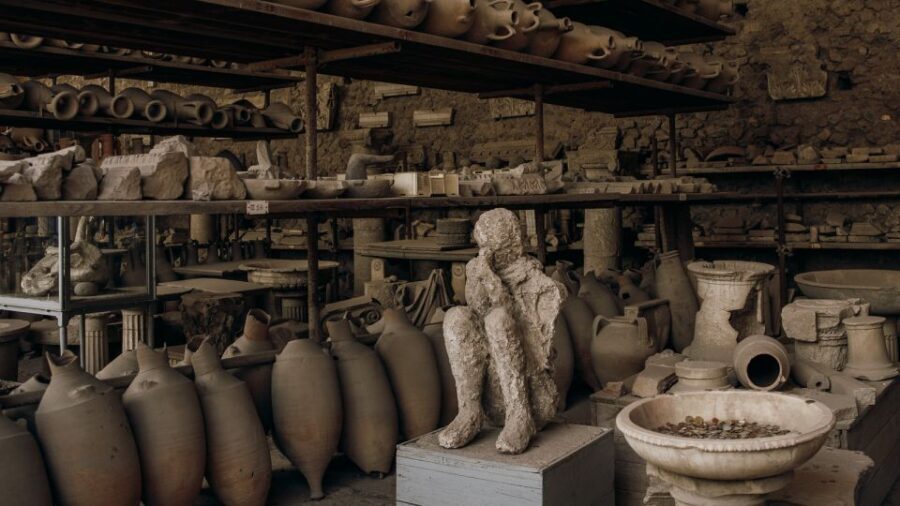
Meet at Via Villa dei Misteri, 1. Plan to arrive 15 minutes early so the group can check in without stress.
The tour meets at the Entrance Gate for the Pompeii Archaeological Park, across from the Hortus Pompei restaurant. Your guide will be holding a green walks sign, so you can identify them quickly once you’re there.
This matters more than it sounds. Pompeii’s entrances and adjacent areas can feel confusing the first time, and arriving early gives you a buffer for locating the exact spot and settling in.
The first stretch inside the park: streets you can actually understand

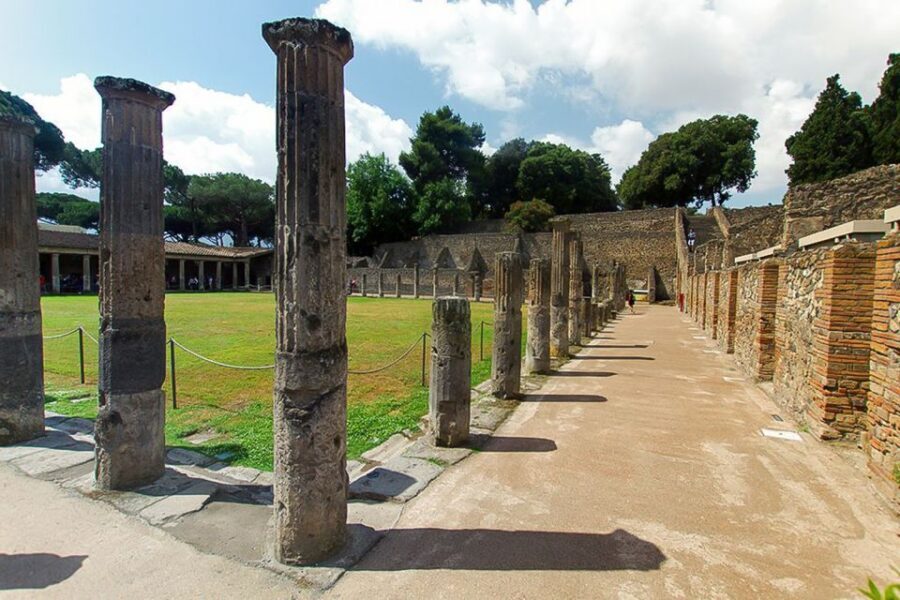
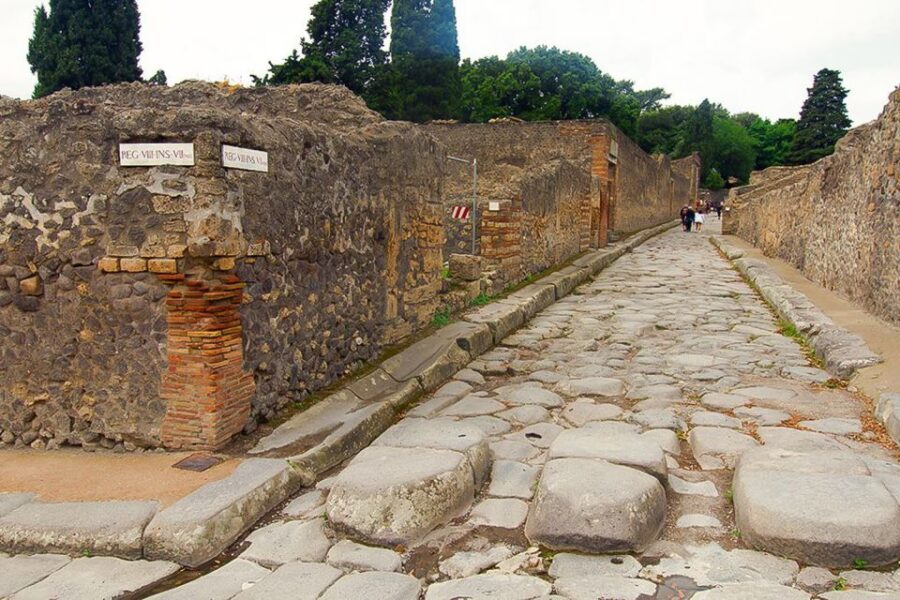
Once you’re inside, the tour leans into one of Pompeii’s best features: fully preserved streets. They’re not just pretty to look at; they’re a big clue to how people moved through daily life—how shops faced the street, where foot traffic naturally gathered, and how the city’s layout shaped routines.
A trained archaeologist guide helps you read what you’re seeing. Instead of guessing what a building function was, you hear how the site connects to public life (temples, forums, baths) and everyday business (shops and food production).
You’ll also get context about Pompeii as a city under the Roman Empire and what changed leading up to the eruption. The tour is designed so you don’t feel like you’re staring at random walls.
Shops, temples, villas, and baths: Pompeii’s daily-life backbone
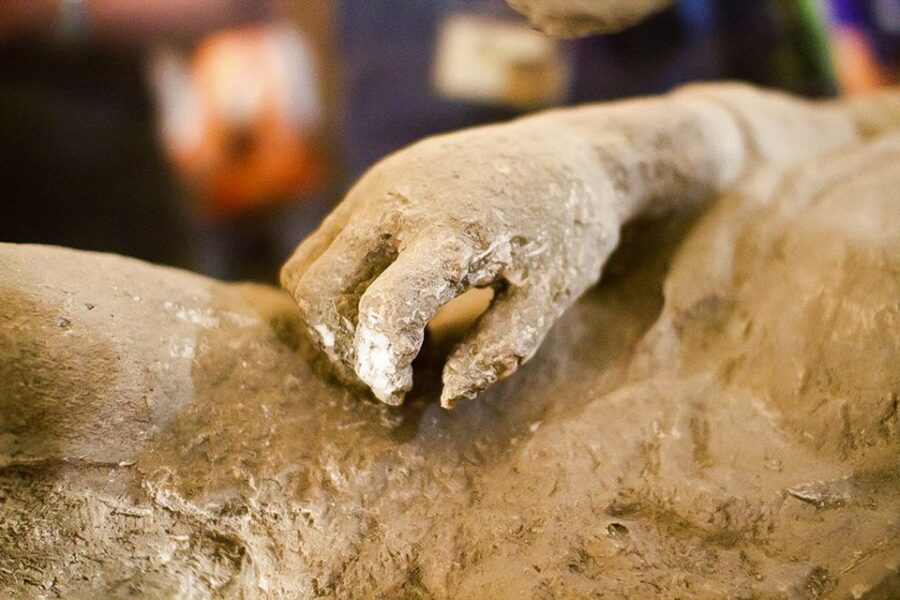
One of the biggest wins here is breadth without feeling like you’re rushing. You’ll walk past the remains of shops, temples, public baths, and houses that made Pompeii feel like a real town.
Why this part matters: Pompeii can look like “ruins” until someone explains what those spaces were for. Once you learn the purpose—where people ate, washed, traded, worshiped, and worked—you start noticing details you’d otherwise ignore.
From what you’ll likely see, this includes the Roman Republic–to–Roman Empire feel of the city, plus a focus on ordinary life nearly 2,000 years ago. That shift—from grand highlights to day-to-day reality—is what makes the guided format worth it.
The emotional highlight: plaster casts and the fate of 79 AD
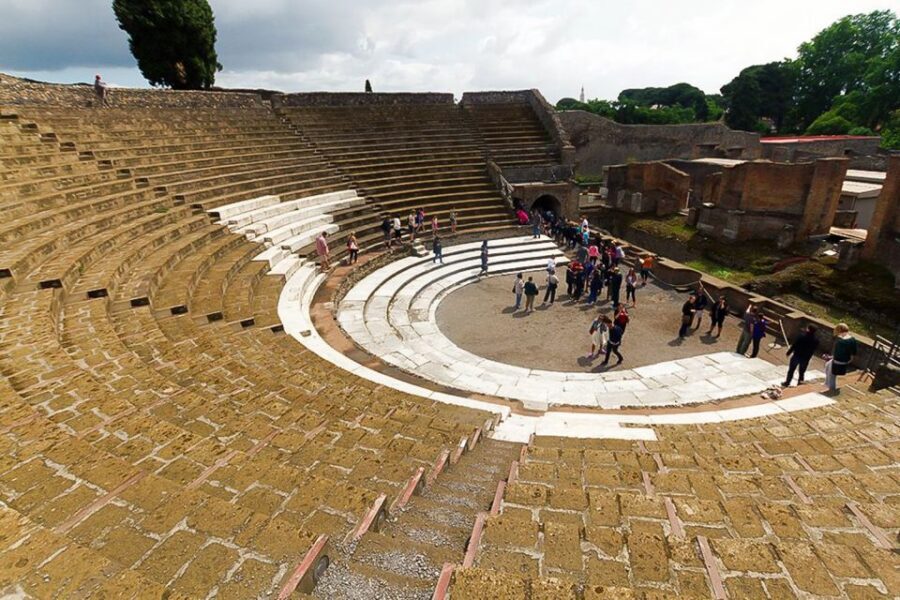
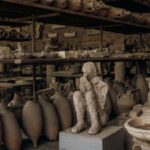
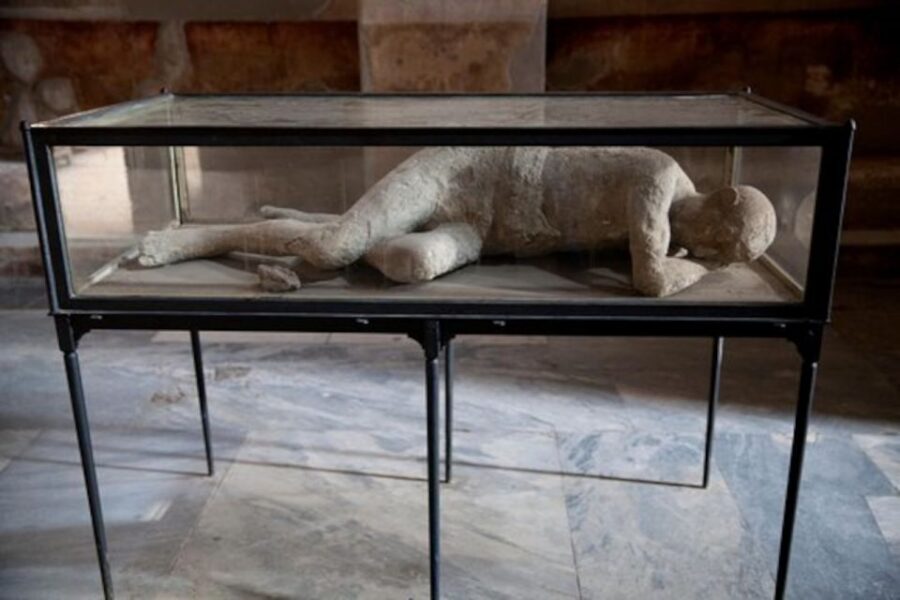
Pompeii’s tragedy isn’t theoretical once you see the plaster casts of people caught in the eruption at the moment of their death. The tour includes these plaster casts as one of the most moving stops.
Even if you’ve read about Vesuvius, this is the moment that changes the tone of the visit. It becomes less about architecture and more about human survival, fear, and sudden loss—right in the streets you’re walking.
In a place like this, context isn’t optional. A guide’s framing makes the experience both respectful and clearer, so you understand what you’re looking at rather than just reacting.
Other skip-the-line Pompeii tickets and tours


Food that still makes sense: the Roman bakery and more
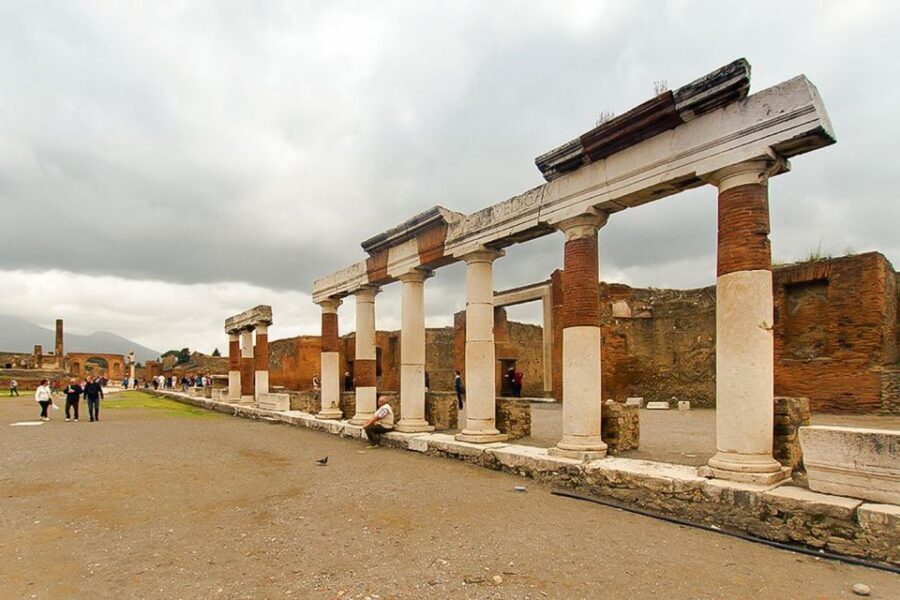
If you like details you can almost taste, you’re in luck. The tour includes a visit to the remains of a Roman bakery where the food is still almost intact. That stop is a standout because it’s evidence you can practically picture: real production, real daily meals, and a way of life preserved in place.
It also connects to other daily-life sights mentioned for the route, including an ancient supermarket stop. Together, these help you understand that Pompeii wasn’t only temples and theaters—it was commerce and routines, too.
This is also where a guide’s voice matters. Pompeii’s layout is not always intuitive. With an archaeologist explaining how these spaces functioned, you’ll connect “what it looks like” to “what it did.”
Temple of Apollo and the Roman Forum: power, belief, and civic life
The route is also designed around Pompeii’s major civic and religious centers.
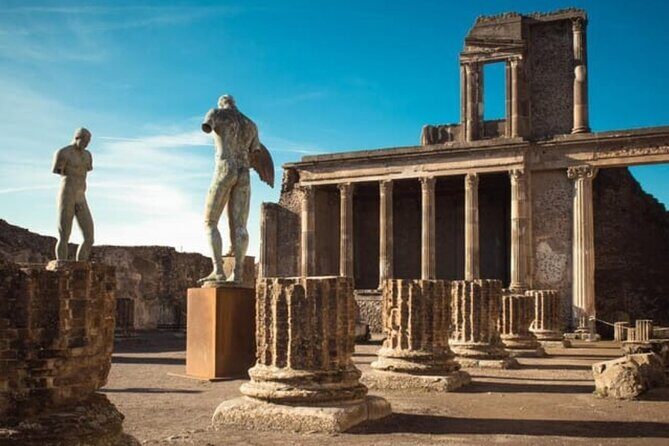
You’ll see the Temple of Apollo and areas tied to the Roman Forum. This combo is powerful: one part is tied to belief and ritual, while the other reflects civic authority—where public life gathered and decisions played out.
Why I think this stop is worth paying for: a self-guided tour can leave you stuck in translation. You might read plaques and still wonder why a forum mattered or how temple spaces shaped daily thinking. With the archaeologist-led approach, you get an explanation that turns those stones into a believable system.
You’ll also hear how ordinary people fit into that system, not just elites.
Pompeii is still changing: ongoing excavations and preservation
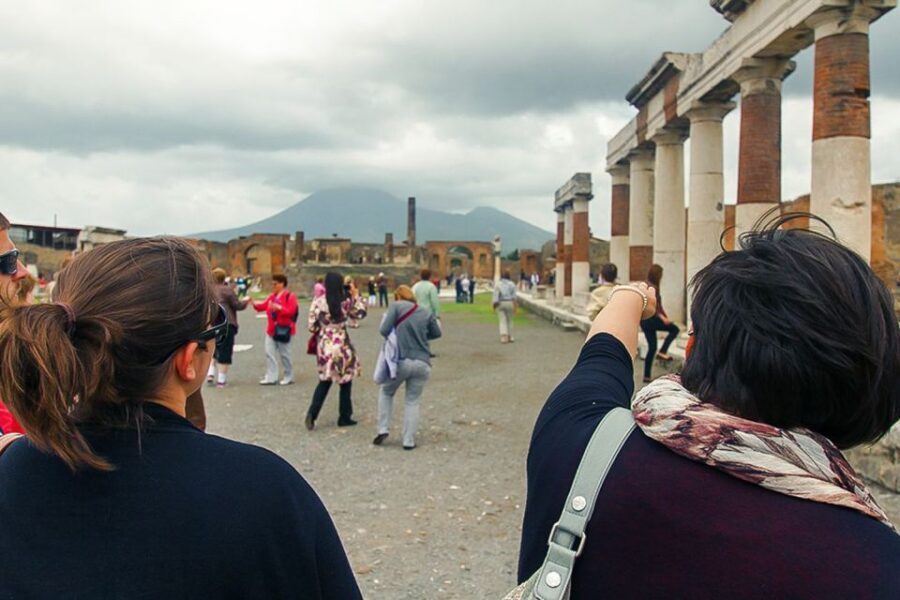
This tour has a useful message baked into it: Pompeii is not finished. Only about a third of the site remains uncovered, and excavation and preservation work continues.
In practice, that means your guide may adapt the route as new discoveries appear. That dynamic quality is part of the “real archaeology” value you’re paying for. It turns Pompeii from a static checklist into a living research project where new evidence can refine how we understand the city.
You’ll also get specific examples of what’s still being revealed, including a newly opened archaeological dig mentioned as a highlight on some tours. Even if your specific route varies day to day, the theme stays the same: this is ongoing work, not a museum that stopped talking.
Brothel stop (when appropriate) and a walk along city walls toward Naples
The tour can include a stop at one of Pompeii’s old brothels, but it’s only included when appropriate for your group. That’s especially useful if you’re traveling with kids—because it signals the operator is thinking about who’s on the walk.
Another distinctive add-on is a stroll along the old city walls for panoramic views of Naples. This is a good breather in the day and a great moment to reset your perspective. After all the close-up ruins, stepping back to view the surrounding area helps you understand Pompeii’s setting and why the city’s geography mattered.
Pompeii Express vs longer routes: choose the right amount of walking
You’ll have two main timing choices.
- The standard tour runs about 2–3 hours and is described as showing you more of the site than most alternatives, especially if you choose a Complete Pompeii option.
- If you want less time on your feet, you can book the Pompeii Express option (about 2 hours), focused on a curated highlights route including the Forum, temples, and shops.
Here’s how I’d choose: if Pompeii is your only major stop in the area, go longer. You’ll have time for the emotional centerpiece and the daily-life details (bakery remnants and other sites). If it’s a side trip from another plan, Express is a smart way to keep the day manageable without losing the core structure.
Small groups, headsets, and how you actually hear your guide
A big reason this experience tends to land well is audio comfort. The tour includes headsets when needed, and the guide uses them so you don’t have to crowd close to hear the explanation.
That listening setup matters inside Pompeii, where the space opens and closes and people naturally drift. With headsets, you can stay in motion and still catch the key points.
You’ll be in a small group or private group setting, which usually means more room for questions. Guides for this tour are often praised for answering questions clearly and keeping the mood from turning stiff—some have even been described as bringing humor into the story.
Examples of archaeologist guides mentioned include Anna, Iliana, Enzo, Brunella, Ilaria T., Sonya, and others. Across those names, the common thread in the feedback is clarity and a strong grasp of how the site works.
Practicalities: heat, footwear, and limited facilities
This is where you need to plan like a realist.
Pompeii is hot, sunny, and dusty, and there’s very limited shade. You’ll want comfortable shoes—the tour explicitly warns against high-heeled shoes—and closed-toe footwear is a safer bet. Bring a water bottle, and consider a hat or sunscreen. One smart tip: a UV umbrella can help with the sun when you’re exposed for long stretches.
Facilities are also limited on-site during the walk. One of the reviews points out there’s only one place to use the toilets during the tour and that a drink/food stop can have long queues. So I recommend you do two things:
- Take bathroom care before you start
- Bring what you need (water and shade help) so you aren’t stuck waiting at the wrong time
Also, the pace is described as moderate, but it is still a walking tour. If you know your limits ahead of time, you’ll feel much better during the day.
Price and value at about $70 per person: what you’re paying for
At $70 per person for a 2–3 hour guided experience, you’re not only paying for someone to lead you around. You’re paying for a set of things that add up fast in Pompeii:
1) Skip-the-line tickets that are pre-reserved
2) An official Pompeii tour guide and a trained archaeologist style of interpretation
3) Headsets when needed so the experience is easy to follow
4) Access to a route designed to show more than the usual “top 10” crowd-pleasers
5) Context about ongoing excavations and preservation, including how new discoveries can change what you see
If you self-tour, you can absolutely enter Pompeii and wander. But you’ll likely spend extra time figuring out what you’re looking at. In Pompeii, that guesswork is the difference between seeing ruins and understanding a city.
If Pompeii is a top priority for your trip, this guide-led format is strong value because it compresses meaning into the time you have.
Who should book this Pompeii archaeologist tour (and who should think twice)
This tour fits best if you want to understand Pompeii instead of just photographing it.
You’ll likely be happiest here if you:
- Enjoy learning how ordinary Roman life worked (food, commerce, baths, houses)
- Want the emotional centerpiece (the plaster casts) placed in context
- Prefer a guided route so the site doesn’t overwhelm you
- Are comfortable walking a moderate pace for a couple hours
You should think twice (or choose a different plan) if you:
- Need wheelchair access or have mobility impairments
- Need a stroller-friendly route (strollers aren’t allowed)
- Want to wear high heels (not allowed)
The tour also follows strict ID matching rules for names provided at booking, so plan for that if traveling with a group.
Should you book this Pompeii skip-the-line archaeologist tour?
Yes—if Pompeii is your must-do and you want to leave with real understanding, not just a list of buildings you passed. The combination of skip-the-line entry, small-group pacing, an archaeologist-led explanation, and stops that go beyond the obvious makes this a smart way to spend your time in Campania.
If you’re the type who loves to wander freely with minimal structure, you might feel constrained by the walking route. But for most people, especially first-timers to Pompeii, this guided approach turns a confusing site into a story you can follow.
FAQ
Is this Pompeii tour really skip-the-line?
Yes. It includes pre-reserved skip-the-line tickets for entry into the Pompeii Archaeological Park.
How long is the Pompeii guided tour?
The main tour runs about 2 to 3 hours. There’s also a Pompeii Express option that takes about 2 hours.
Where do I meet the guide?
Meet at the Entrance Gate of the Pompeii Archaeological Park, across from the Hortus Pompei restaurant. The meeting point is at Via Villa dei Misteri, 1, and the guide will be holding a green walks sign.
What’s included in the price?
Included are Pompeii pre-reserved skip-the-line tickets, an official Pompeii tour guide, and headsets when needed.
Is the tour in English?
Yes. The tour is offered in English.
Will I get to see the Forum and temples?
Yes. The tour includes major stops such as the Roman Forum and the Temple of Apollo. The Express option specifically includes the Forum, temples, and shops.
Does the tour include the brothel and city walls?
The tour may include a brothel stop if appropriate for your group, and it includes a stroll along the city walls with panoramic views of Naples.
What should I bring?
Bring passport or ID card. Wear comfortable shoes. For kids, the tour also requires passport or ID card.
Is this tour suitable for wheelchairs or strollers?
No. It is not suitable for guests with mobility impairments, wheelchairs, or strollers. High-heeled shoes are also not allowed.